Brazil
Paraty
Car-free colonial center, a bay of islands, Trindade and alembic cachaça
Days Start with the basic programme and choose extensions for the time you have.
How the guide reaches this number
The first is for the historic center on foot, early in the morning along the side streets and the churches, and in the afternoon at the Forte Defensor Perpétuo and Praia do Pontal. The second is for the bay, by schooner or trawler, because Paraty's islands and clear-water beaches can almost only be reached by sea. The third is for Trindade, which has the open-sea beaches and the Piscina Natural do Cachadaço. With a fourth day, I'd go to Penha for the Caminho do Ouro with a guide, the Cachoeira do Tobogã and a distillery; with a fifth, to the Saco do Mamanguá, leaving by boat from Paraty-Mirim. With only one day, I'd do the historic center in the morning and board the 11 a.m. schooner. I'd avoid long holiday weekends and the Flip dates if the plan is to wander calmly: the town fills up, inns in the center go up in price and Trindade has nowhere to park. Outside those dates, a weekday in Paraty is much calmer than the weekend.
3–5
When June to September: June, July and August are the driest months, good for boat trips and hikes, and September may already bring rain; from December to March it rains more, and long holiday weekends and school vacations fill the town in any month
How the guide reaches this number
Paraty has a hot, rainy summer and a drier winter, subject to cold fronts. June, July and August are the driest months and the best for boat trips and hikes; they are also the coldest, with average lows near 11 °C, and when a cold front passes the day cools down and swimming in the sea is less inviting. September may already bring rain. From December to March it rains more, and January is the rainiest month, with about 19 days of rain; heavy rains in that season have caused landslides and blocked roads, as in April 2022. Average highs range from 23 °C to 29 °C over the year, and the sea temperature stays between about 22 °C and 26 °C. More than the weather, what fills the town is long holiday weekends, school vacations, Carnival, Réveillon and the Flip, which in 2026 was in July; in any month, weekdays are calmer and inns are cheaper. In the rain, the historic center, the churches, the museums and the distilleries are still worth a visit.
Per person/day Add up lodging per night, meals per person and the boat trips or the Trindade outing of each day; the Flip and holidays change the total a lot.
How the guide reaches this number
Per person per day: accommodation, meals, urban transport, visits and a small allowance for extras. Flights excluded; larger purchases vary. Editorial estimate, not a quote.
 What Nilo thinks
Stay three days. The first is for the historic center on foot, early in the morning along the side streets and the churches, and in the afternoon at the Forte Defensor Perpétuo and Praia do Pontal. The second is for the bay, by schooner or trawler, because Paraty's islands and clear-water beaches can almost only be reached by sea. The third is for Trindade, which has the open-sea beaches and the Piscina Natural do Cachadaço. With a fourth day, I'd go to Penha for the Caminho do Ouro with a guide, the Cachoeira do Tobogã and a distillery; with a fifth, to the Saco do Mamanguá, leaving by boat from Paraty-Mirim. With only one day, I'd do the historic center in the morning and board the 11 a.m. schooner. I'd avoid long holiday weekends and the Flip dates if the plan is to wander calmly: the town fills up, inns in the center go up in price and Trindade has nowhere to park. Outside those dates, a weekday in Paraty is much calmer than the weekend.Paraty was the port through which Minas Gerais gold came down in the 18th century, and afterward it spent almost a hundred years off everyone's route. That is why the historic center has reached today intact: colonial mansions, churches of brotherhoods that separated freed people, enslaved people and ladies of the elite, and streets of uneven stone where cars do not enter. At high tides under a full moon, the bay still comes into the streets near the pier. Around it, the Serra do Mar comes down covered in forest to a bay of dozens of islands, and Trindade, to the south, has the open-sea beaches. At the distilleries on the road to Cunha they make the cachaça that once gave the town's name to the drink, and at the festivals of the Divino and the Rosário the town still crowns an emperor, a king and a queen. During the five days of the Flip, the square fills with writers and readers.
Quick facts
- Population
- 47,694 residents in the municipality (IBGE estimate for 2026); 45,243 in the 2022 Census
- Founded
- Settlement on the Morro da Vila Velha at the turn of the 16th to the 17th century; move to the present site in the 1640s; town created by Royal Charter of February 28, 1667; city since 1844
- Country and region
- Brazil, state of Rio de Janeiro, Southeast Region; municipality on the Costa Verde, on the border with São Paulo, 249 km from Rio de Janeiro along the Rio-Santos highway
- Language
- Portuguese
- Currency
- Real (R$, BRL)
- Time zone
- UTC−3 year-round, with no daylight saving time
- Best time to visit
- June to September: June, July and August are the driest months, good for boat trips and hikes, and September may already bring rain; from December to March it rains more, and long holiday weekends and school vacations fill the town in any month
- Average daily cost
- Add up lodging per night, meals per person and the boat trips or the Trindade outing of each day; the Flip and holidays change the total a lot.
When to go
June to September: June, July and August are the driest months, good for boat trips and hikes, and September may already bring rain; from December to March it rains more, and long holiday weekends and school vacations fill the town in any month
How the year changes
Paraty has a hot, rainy summer and a drier winter, subject to cold fronts. June, July and August are the driest months and the best for boat trips and hikes; they are also the coldest, with average lows near 11 °C, and when a cold front passes the day cools down and swimming in the sea is less inviting. September may already bring rain. From December to March it rains more, and January is the rainiest month, with about 19 days of rain; heavy rains in that season have caused landslides and blocked roads, as in April 2022. Average highs range from 23 °C to 29 °C over the year, and the sea temperature stays between about 22 °C and 26 °C. More than the weather, what fills the town is long holiday weekends, school vacations, Carnival, Réveillon and the Flip, which in 2026 was in July; in any month, weekdays are calmer and inns are cheaper. In the rain, the historic center, the churches, the museums and the distilleries are still worth a visit.
Nilo's tips
Save the boat for the first sunny day
The bay shows its water color only in the sun, and the weather changes quickly between the mountains and the sea. That is why I'd leave the boat day open and swap it with the historic center day if the morning dawns cloudy. The schooner is the cheapest way, at about five hours and leaving at 10:30 a.m. or 11 a.m.; the wooden trawler, agreed at the pier, can leave at 9 a.m. and reach the stops before the schooners.
Check opening days before planning the church day
The hours are short and don't coincide: the Matriz is open Wednesday to Sunday in the morning and early afternoon, the Igreja do Rosário Tuesday to Saturday, the Museu de Arte Sacra Wednesday to Sunday and the Capelinha only on Saturday afternoons. Between Wednesday and Saturday, in the morning, almost all are open.
Go to Trindade on a weekday, by bus
On weekends and holidays, the village has nowhere to park and the Piscina Natural do Cachadaço gets crowded. The Colitur bus leaves the bus station every one or two hours and takes about an hour; check the day's schedule at the bus station. For the pool, I'd arrive early, before it fills up.
Combine waterfall and distillery on the road to Cunha
In Penha, about 9 km away, are the entrance to the Caminho do Ouro, the Cachoeira do Tobogã and distilleries open to visitors. On a cloudy day, it is the outing that makes the most of the time outside the center.
Explore the map
Explore the map, read about the other places and plan your travel days in the app.
Open the appWhat to see
Paraty: Between the mountains and the bay
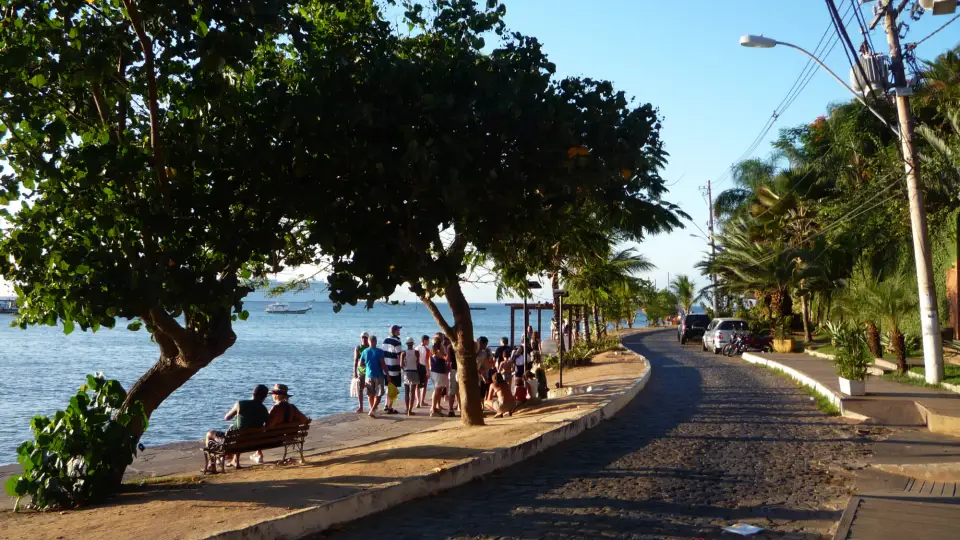
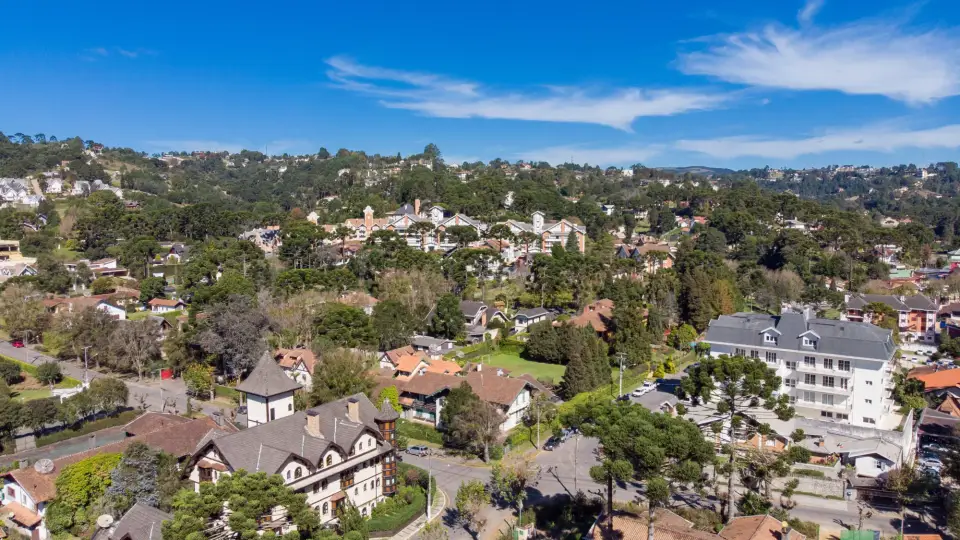
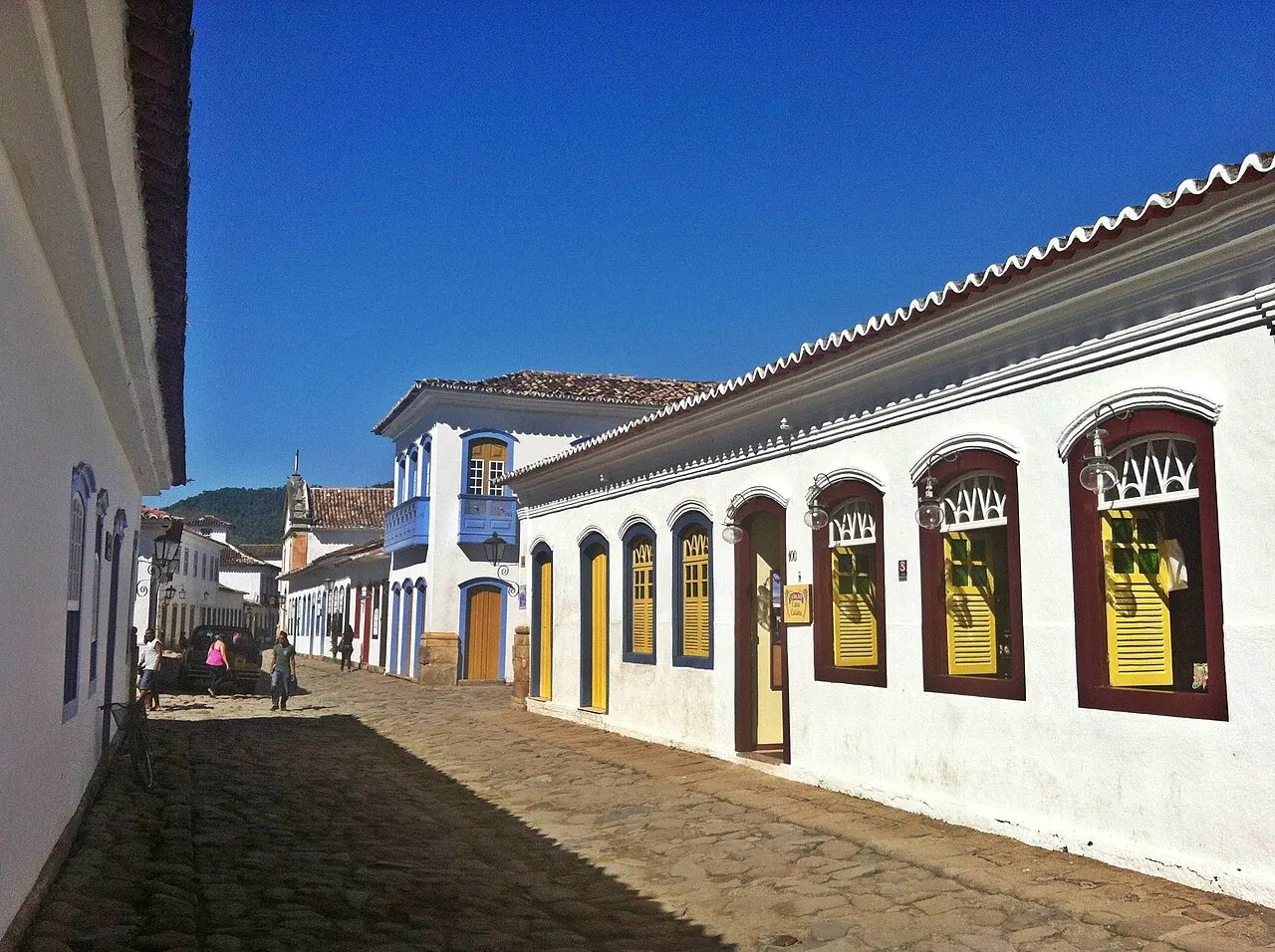
The historic center sits on a plain almost at sea level, between the Perequê-Açu and Patitiba rivers. It has the urban beach closest to the center, with kiosks and sailboat departures, quiet streets with inns and hostels, and the path to the Forte Defensor Perpétuo.
Centro Histórico de Paraty
Houses from the 18th and 19th centuries between the Perequê-Açu and Patitiba rivers, with pé de moleque streets and geometric symbols in relief on the façades, attributed to Freemasonry. The center is closed to cars by chains and floods at high tides under a full moon near the pier. It is worth going into the side streets off Rua do Comércio, which are emptier, and looking for the Chafariz do Pedreira, from 1851, and the six Passos da Paixão, oratories that open only during Holy Week.
The historic houses and car-free cobbled streets are why Paraty has World Heritage status, and early in the morning the side streets off Rua do Comércio are still empty.
Check access
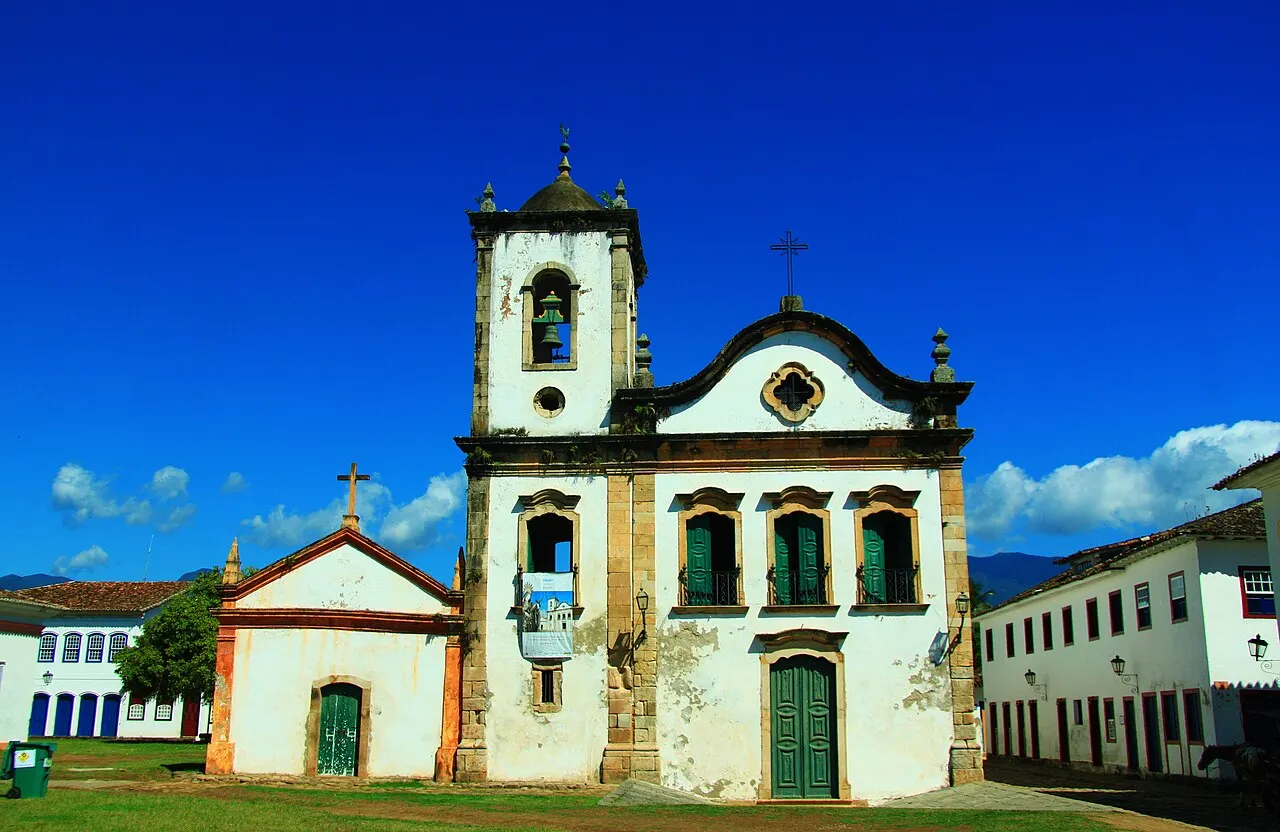
Igreja de Santa Rita
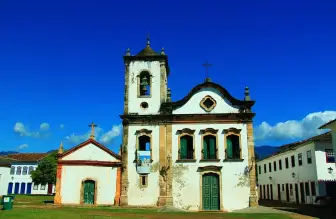
Built in 1722 by the freed pardos, it is the oldest church in the historic center and the best-known image of Paraty, beside the pier. The Museu de Arte Sacra de Paraty, run by Ibram, is housed here, with clay, wood and metal pieces from the 17th to the 20th century from the municipality's churches, among them the Corpus Christi monstrance, the crowns of the Imperador do Divino and those of the Rei and Rainha do Rosário. It is open Wednesday to Sunday, 9 a.m. to 12 p.m. and 2 to 5 p.m., with free admission; photography is not allowed and swimwear is not permitted. Next door is the Antiga Cadeia, home of the Instituto Histórico e Artístico de Paraty.
Built in 1722 by freed pardos, people of mixed ancestry, it is the oldest church in the historic center and houses the free Sacred Art Museum, with the crowns of the Divino and the Corpus Christi monstrance used in the festivals.
Check access
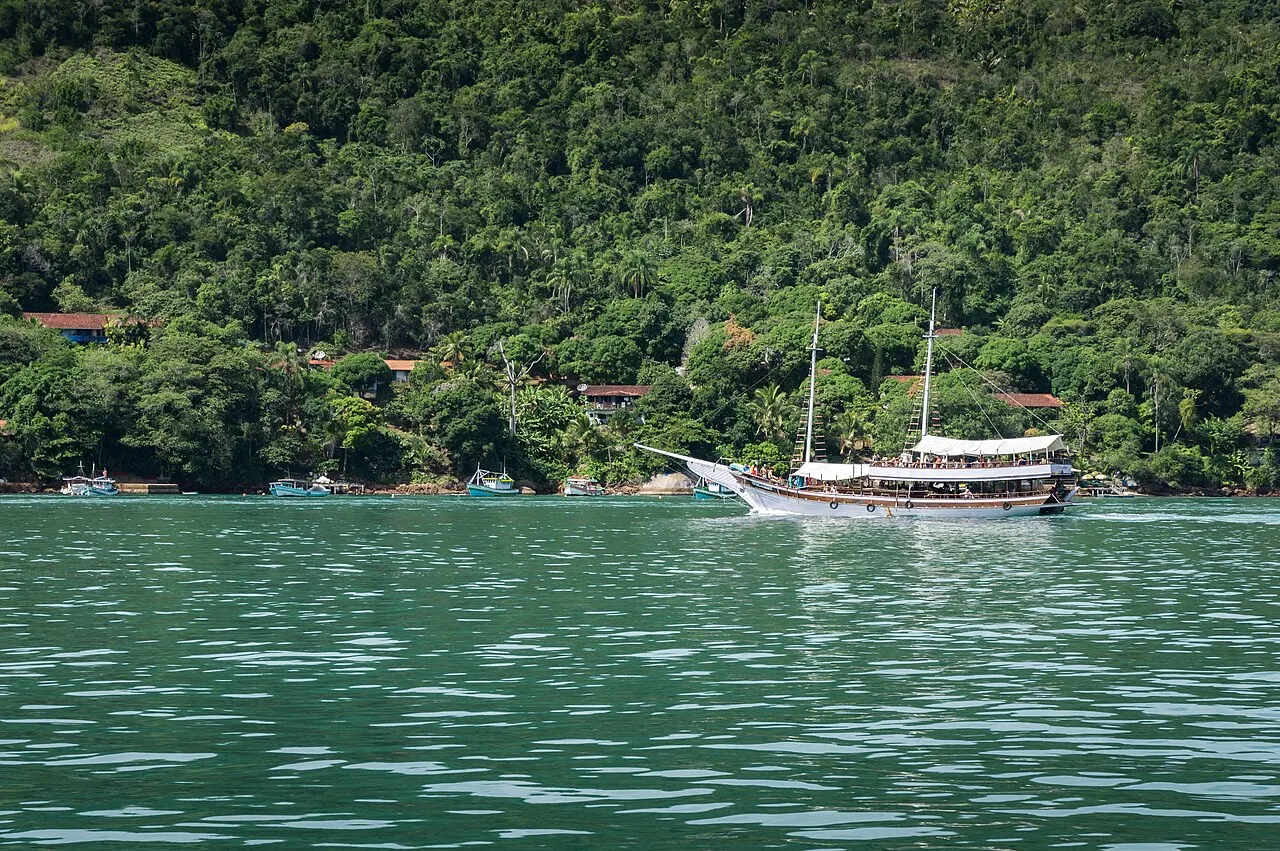
Baía de Paraty
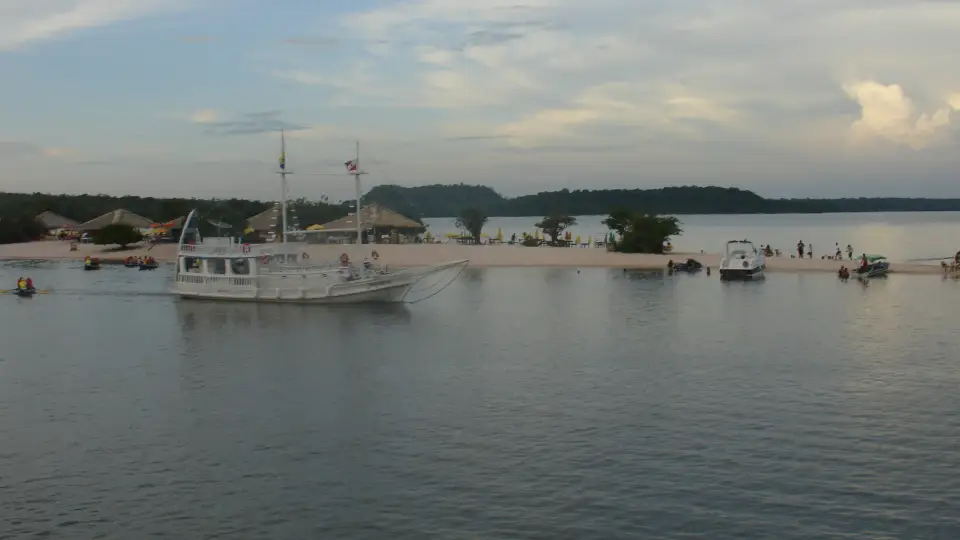
The sheltered bay has dozens of islands and beaches that can only be reached by sea. Schooners leave from the pier in the historic center at around 10:30 a.m. and 11 a.m. for trips of about five hours, with stops for swimming and snorkeling at places such as Ilha Comprida, Lagoa Azul and Praia da Lula; the meal on board is paid separately. For small groups, wooden trawlers and motorboats can be hired at the pier, with the route and stops agreed in advance.
The bay’s islands and clear-water beaches are reached almost exclusively by sea, and the roughly five-hour schooner trip leaves right from the historic center’s pier.
Check access

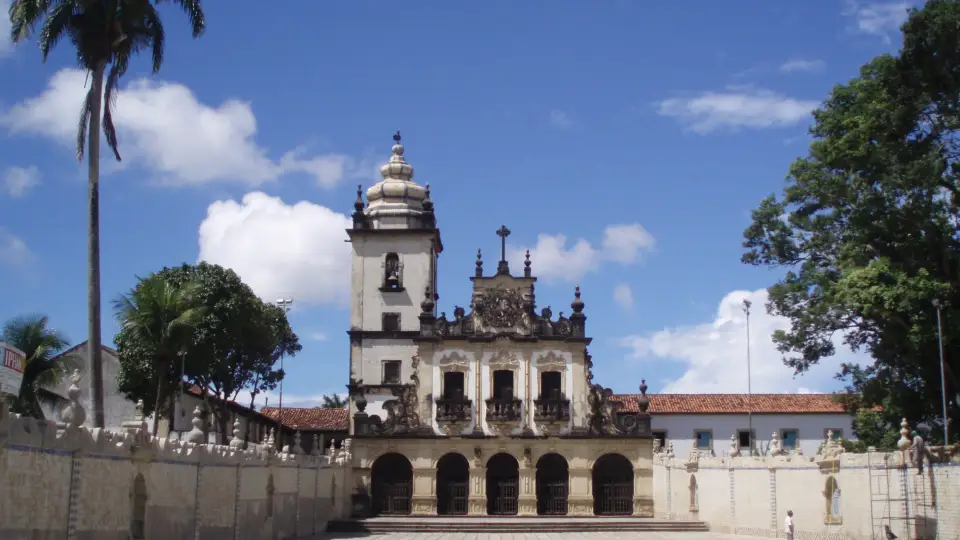
Igreja Matriz de Nossa Senhora dos Remédios
The town's largest church takes up an entire block on Praça da Matriz. Construction began in 1787 and was finished only with the money of Geralda Maria da Silva, who paid for the end of the work; the church opened for worship on September 7, 1873. It is neoclassical, with unfinished towers, and holds life-size Holy Week images and a 17th-century baptismal font. It is open Wednesday to Sunday, 9 to 11 a.m. and 1:30 to 4 p.m.
The town’s largest church, built from 1787 to 1873, with unfinished towers and life-size Holy Week images; it opens only Wednesday to Sunday, in two short visiting periods.
Check access
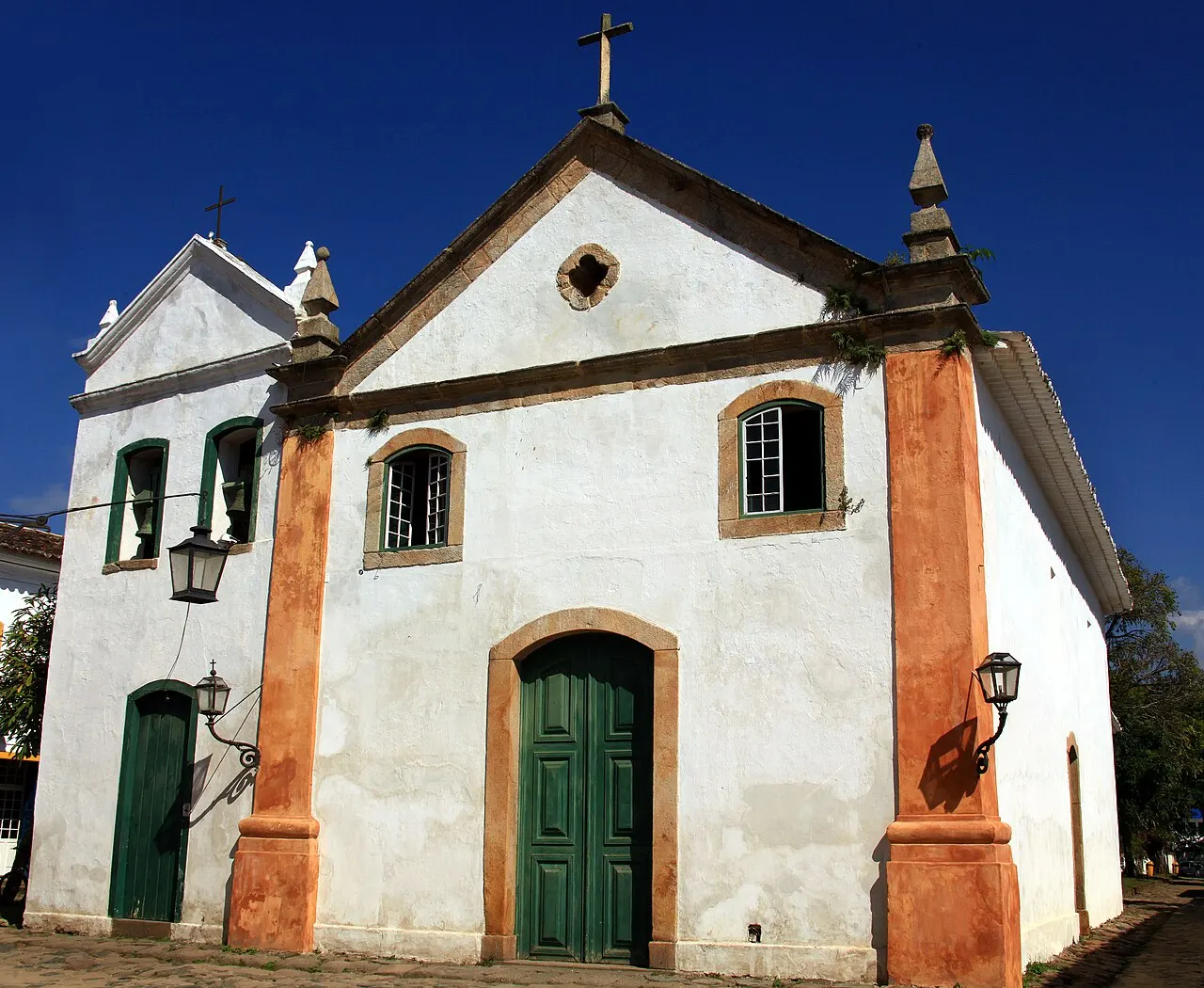
Igreja de Nossa Senhora do Rosário e São Benedito
The church of the enslaved people, begun in 1725 and rebuilt around 1757 by the Irmandade do Rosário dos Pretos. It is the only church in Paraty with gilded altars, but the gilding dates from the early 20th century. The carving on the altars of São Benedito and São João Batista is the most important of the town's churches. It is the center of the November festival, with a King and Queen. It is open Tuesday to Saturday, 9 to 11 a.m. and 2 to 5 p.m.
The church of enslaved people, begun in 1725, has Paraty’s most important altar carving, on the altars of São Benedito and São João Batista. It is the only church with gilded altars, but the gilding dates from the early 20th century.
Check access
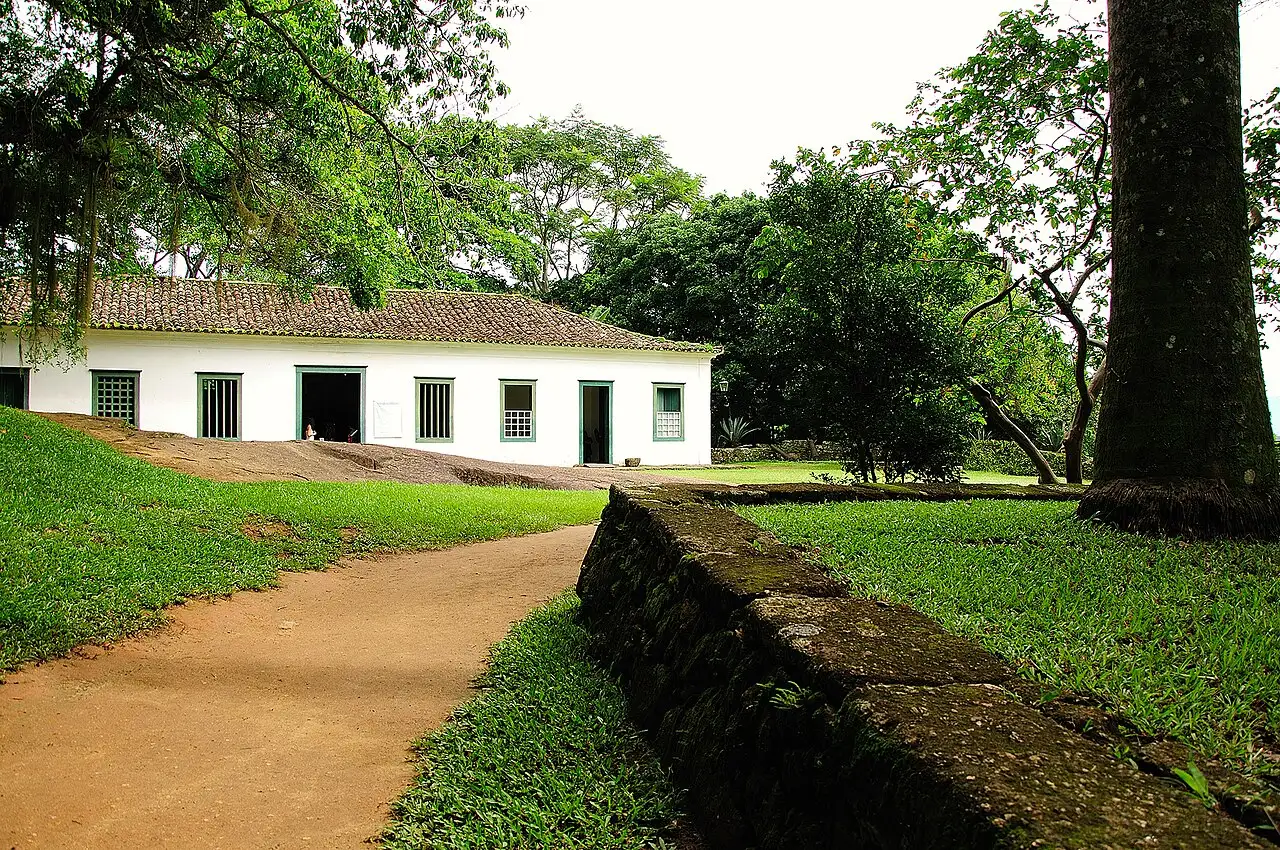
Forte Defensor Perpétuo
A battery built in 1793 on the hill where the settlement began, to protect the port of gold and sugar, and rebuilt in 1822 with a name that honors Pedro I. Today it is an Ibram museum, with English cannons, sugar kettles, a stock used to punish enslaved people and jongo drums. It is about 1.3 km from Largo de Santa Rita, by way of Pontal, with the final climb along a path through the forest. The museum is open Wednesday to Friday, 10 a.m. to 5 p.m., and on Saturdays, Sundays and holidays, 10 a.m. to 2 p.m.; the outdoor area, with a view of the bay and the center, is open every day from 7 a.m. to 7 p.m.
The 1793 battery on the hill where the settlement began overlooks the bay and historic center, and the museum holds English cannons, sugar kettles and jongo drums. The outdoor area opens every day.
Check access
Teatro Espaço
A hall in the historic center that stages puppet theater for adults, with shows at 9 p.m. on Wednesdays and Saturdays, and extra showtimes during vacations and holidays. The program changes, and seats are limited: check the show and buy tickets in advance.
Puppet theater for adults is Paraty’s most distinctive evening outing, with performances on Wednesdays and Saturdays and limited seating.
Check access
Caminho do Ouro
A preserved stretch of the old Estrada Real, paved with stones by enslaved labor, which climbs the mountains inside the forest of the Serra da Bocaina National Park. The entrance is in the Penha neighborhood, opposite the church on the rock, about 9 km from the center. Because the path crosses private property, visits are allowed only with an authorized guide and must be scheduled.
It is the preserved stretch of the route used to bring gold down from Minas, paved in stone by enslaved labor. It can be visited only with an authorized guide and advance scheduling.
Check access

Cachoeira do Tobogã
Also called Cachoeira da Penha, it is a large smooth rock down which water runs to a natural pool, and it is a stop on most jeep tours to the waterfalls and distilleries. You slide down seated; sliding down standing has caused accidents. It is behind the Centro de Informações Turísticas do Caminho do Ouro, in Penha, and a little above it is the Poço do Tarzan, with a suspension bridge.
The smooth rock slide into a natural pool is next to the Caminho do Ouro and the distilleries, so all three can fit into the same morning. Slide down seated.
Check access
Nilo’s itinerary
Start with the basic programme and choose extensions for the time you have.
Plan my days in the app ↗Day 1 · The historic center, the churches and the fort
Do this day between Wednesday and Saturday, when the three churches open to visitors are working. Start at 8 a.m. at Largo de Santa Rita, beside the pier, and walk the side streets off Rua do Comércio before the crowds build.
At 9 a.m., go into the Museu de Arte Sacra, in the Igreja de Santa Rita (Wednesday to Sunday, free admission), and continue to the Igreja do Rosário, which is open Tuesday to Saturday.
Before 11 a.m., reach the Igreja Matriz de Nossa Senhora dos Remédios, on Praça da Matriz, and stop by the Casa da Cultura, on the corner next to it.
Have lunch in the center and, in the afternoon, cross the bridge to Pontal and climb on foot to the Forte Defensor Perpétuo, about 1.3 km from Largo de Santa Rita; on weekends the museum closes at 2 p.m., but the outdoor area stays open until 7 p.m.
Go down to Praia do Pontal late in the afternoon and eat camarão casadinho at one of the kiosks.
If it's Wednesday or Saturday, end the night at the Teatro Espaço; on other days, at the bars around Praça da Matriz.
Day 2 · The bay by boat
Check the weather forecast the day before and book the schooner or agree on a trawler at the pier.
Board at the pier in the historic center: schooners leave at around 10:30 a.m. and 11 a.m., and the trawler can leave at 9 a.m. to reach the stops before them.
Bring a diving mask, sunscreen and money for whatever you consume on board; the schooner trip lasts about five hours, with swimming stops at islands and beaches such as Ilha Comprida and Praia da Lula.
Return to the pier late in the afternoon and cross the footbridge from Largo de Santa Rita to the Mercado de Peixe, on Ilha das Cobras, if it is still open.
Have dinner in the historic center.
Day 3 · Trindade
Day trip
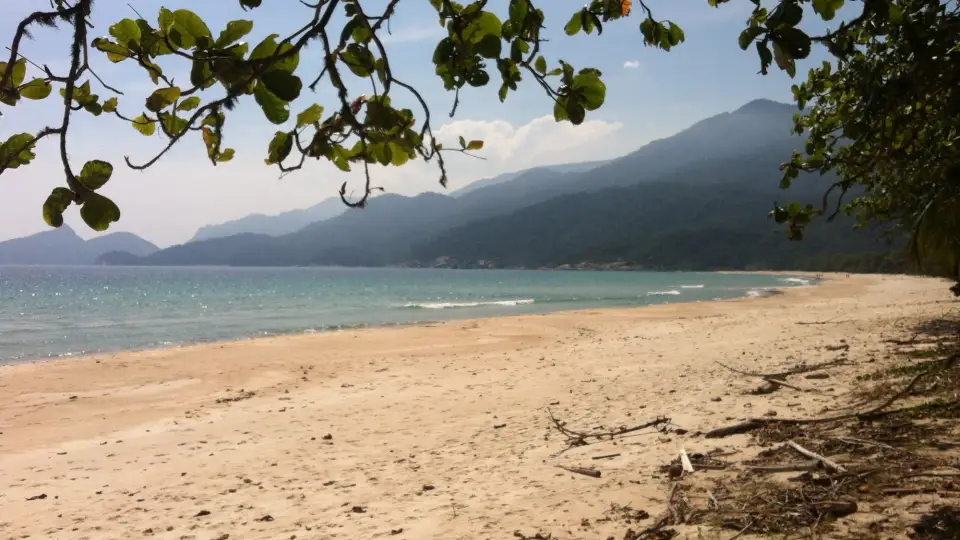
A caiçara village 25 km to the south, about 30 minutes by car along the Rio-Santos and the Deus-me-livre hill road, or about 1 hour on the Colitur local bus, which leaves the bus station every one or two hours. Praia do Cepilho, on arrival, is for surfers; Praia dos Ranchos has restaurants; Praia do Meio, except on a day of rough seas, has calm water. From Praia do Meio, a trail of about 5 minutes leads to Praia do Cachadaço; after crossing it, in about 10 minutes, about 25 more minutes of trail through the forest reach the Piscina Natural do Cachadaço, among large rocks. Anyone who prefers can hire a small boat at Praia do Meio. Go on a weekday: on holidays the pool gets crowded and there is no place to park. Vans and tour buses do not enter the village.


If you stay longer
Day 4 · Penha: Caminho do Ouro, waterfall and distillery
Book the walk with an authorized guide on the Caminho do Ouro in advance.
Head out early by car, taxi or local bus to Penha, about 9 km along the road to Cunha; the trail entrance is opposite the church on the rock.
After the walk, take the short trail behind the Centro de Informações Turísticas to the Cachoeira do Tobogã and climb up to the Poço do Tarzan.
Have lunch in Penha and visit a distillery on the road to Cunha, such as Engenho d'Ouro, at km 8, to see the production and taste the cachaça.
Return to Paraty before nightfall.
Day 5 · Saco do Mamanguá and Paraty-Mirim
Day trip
Paraty-Mirim is about 16 km from the center, 20 minutes by car on a road, partly unpaved, that crosses Guarani land, and it also has a local bus. Boats leave from there for the Saco do Mamanguá, an inlet 8 km long and 2 km wide with 33 beaches and eight caiçara communities, surrounded by forest and with no road access. At the back there is a mangrove that can only be explored by kayak or canoe, and a trail climbs to Pico do Pão de Açúcar, with a view of the inlet. Go with a local guide or boatman and set aside the whole day.

Food
Cachaça de Paraty
A spirit of sugarcane juice distilled in Paraty since the 17th century. It was so well known that “parati” became a synonym for cachaça, and in 2007 it received a Geographical Indication of Provenance from INPI: only cachaça produced in the municipality carries the name on the label. Of the more than 150 distilleries in the region around 1820, six are open to visitors today, most of them on the road to Cunha.
Farofa de feijão
Food of the tropeiros who went up and down the Caminho do Ouro, cited by the town in its bid to become a Creative City of gastronomy. It is served at the community lunch of the Festa do Divino, on the Saturday of the festival.
Fish with banana in a clay pot
A fish steak cooked with banana in a clay pot, a dish of caiçara cooking that restaurants in the historic center serve.
Camarão casadinho
A shrimp snack with farofa served at the kiosks of Pontal, along with fried small fish, shrimp skewers and coconut water.
Tray cakes and sweets
From midafternoon, tray carts with homemade cakes and sweets stop at spots in the historic center. It is the town's simplest dessert.
Fish from the Mercado de Peixe
The market, beside the Cais de Pesca on Ilha das Cobras, sells fresh fish and seafood next to where the fishing boats dock. Ilha do Araújo holds a shrimp festival in June.
Where to eat
- Banana da Terra · Centro Histórico · $$$
Caiçara cooking by chef Ana Bueno, such as the fish steak cooked with banana in a clay pot.
Source · 2026-10-15
- Quintal das Letras · Centro Histórico · $$$
Contemporary cooking with organic vegetables and greens from Fazenda Murycana, at the restaurant of the Pousada Literária, open to the public on Rua do Comércio.
Source · 2026-10-15
- Thai Brasil · Centro Histórico · $$
Thai cooking on Rua do Comércio.
Source · 2026-10-15
- Quiosque do Lapinha · Pontal · $
A beach kiosk popular with locals, with snacks such as camarão casadinho with farofa.
Source · 2026-10-15
- Rua da Cadeia · $$
Bars and taverns beside Praça da Matriz, for drinks and snacks at night.
- Trindade, Praia dos Ranchos · $$
Restaurants at the edge of the village beach, for a fish lunch on the day in Trindade.
$: beach kiosk, bakery or tray cake · $$: main course at a restaurant in the center · $$$: signature-cuisine restaurant in the historic center · 2026-10-15
Day trips
Trindade
A caiçara village 25 km to the south, about 30 minutes by car along the Rio-Santos and the Deus-me-livre hill road, or about 1 hour on the Colitur local bus, which leaves the bus station every one or two hours. Praia do Cepilho, on arrival, is for surfers; Praia dos Ranchos has restaurants; Praia do Meio, except on a day of rough seas, has calm water. From Praia do Meio, a trail of about 5 minutes leads to Praia do Cachadaço; after crossing it, in about 10 minutes, about 25 more minutes of trail through the forest reach the Piscina Natural do Cachadaço, among large rocks. Anyone who prefers can hire a small boat at Praia do Meio. Go on a weekday: on holidays the pool gets crowded and there is no place to park. Vans and tour buses do not enter the village.
Saco do Mamanguá and Paraty-Mirim
Paraty-Mirim is about 16 km from the center, 20 minutes by car on a road, partly unpaved, that crosses Guarani land, and it also has a local bus. Boats leave from there for the Saco do Mamanguá, an inlet 8 km long and 2 km wide with 33 beaches and eight caiçara communities, surrounded by forest and with no road access. At the back there is a mangrove that can only be explored by kayak or canoe, and a trail climbs to Pico do Pão de Açúcar, with a view of the inlet. Go with a local guide or boatman and set aside the whole day.
Where to begin
The historic center, the churches and the fort
Do this day between Wednesday and Saturday, when the three churches open to visitors are working. Start at 8 a.m. at Largo de Santa Rita, beside the pier, and walk the side streets off Rua do Comércio before the crowds build.
Penha: Caminho do Ouro, waterfall and distillery
Book the walk with an authorized guide on the Caminho do Ouro in advance.
Money
The currency is the real (R$, BRL). The historic center itself charges no admission, and several places are free: the Museu de Arte Sacra, in the Igreja de Santa Rita, the Capelinha and the Casa da Cultura. The roughly five-hour schooner trip on the Estrela da Manhã cost R$ 110 per adult in October 2026, with half price for children aged 6 to 9 and free for children up to 5; the price changes with the season, holidays and events, and what you consume on board is paid separately, at the end of the trip. Trawlers and motorboats have a price agreed at the pier, per boat and per hour or per route, so settle the price and the stops before boarding. Inns in the historic center cost more than those in Pontal and in the neighborhoods around the bus station, and are cheaper early in the week and outside holidays and vacations. To pay with Pix you need an account at a participating institution; carry a card and some cash for kiosks, boatmen and local buses, and confirm the payment method before ordering.
Getting there and around
Getting here by bus or car
Paraty's airport receives small planes and helicopters; there have been scheduled routes on small aircraft, but the service has never been consistent, so check whether any is operating on your dates. The nearest airports with scheduled flights are Galeão, in Rio de Janeiro, about 240 km away, and Guarulhos, in São Paulo, about 280 km away. Viação Costa Verde connects Rio to Paraty in about 4 hours 40 minutes, with nine departures a day, and Reunidas connects São Paulo to Paraty in six to seven hours; Colitur runs the line to Angra dos Reis. The bus station is on Rua Jango Pádua, about 10 minutes on foot from the historic center, and has a taxi stand. By car, it is 249 km from Rio along the Rio-Santos, about 3 hours 45 minutes without traffic. From São Paulo, the shortest route comes down from Cunha on the Paraty-Cunha road (269 km), but the stretch inside the Serra da Bocaina National Park has a 20 km/h limit and is closed to traffic at night (sources give the opening between 7 a.m. and 9 a.m. and the closing at 5 p.m.), and it is not recommended in heavy rain; the alternative via Taubaté and Ubatuba is 298 km and takes about 4 hours 15 minutes.
Within the town and around it
The historic center is covered on foot, and cars stay on the edge streets; if you stay in the center or in Pontal you don't need a car for the center, the boat or Trindade. Colitur runs the municipal lines from the bus station: to Trindade there are departures every one or two hours, from the first at 5:20 a.m. until about 11 p.m., and there are also lines to Paraty-Mirim and to Penha. Agencies sell jeep tours to the waterfalls and distilleries, trips to Trindade and boat trips. Tour buses and vans need authorization from the city government to enter the town and may not enter Trindade. By car, Trindade is about 30 minutes away, but parking in the village is hard on weekends.
By boat
Schooners leave from the pier in the historic center at around 10:30 a.m. and 11 a.m. Trawlers and motorboats are hired at the pier itself or through an agency, with the price agreed before leaving; anyone who leaves at 9 a.m. reaches the stops before the schooners. For the Saco do Mamanguá, boats leave from Paraty-Mirim, and there are motorboats that make the trip from the center.
Safety
Paraty is a small town, and the risks that weigh most come from nature and the paving. The uneven stones of the historic center cause trips and sprains, especially at night and at high tide, when part of the streets near the pier is covered with water. In heavy rain, the mountains and the roads are the danger: in April 2022, about 300 mm in 48 hours caused landslides that killed eight people and blocked the access highways. On an alert day, follow the Defesa Civil, avoid slopes and swollen rivers and postpone the road to Cunha. At waterfalls, don't jump into an unfamiliar pool or slide down the Tobogã standing; on boat trips, follow the crew's instructions. During the crowds of the Flip, Carnival and Réveillon, look after your belongings in the packed streets of the center. Emergencies: 190 for the police, 192 for emergency medical care (Samu) and 193 for the fire department.
Etiquette tips
Swimwear stays out of the churches
The Matriz, the Capelinha and the Museu de Arte Sacra do not allow in people who arrive from the beach in swimwear, and do not allow photography or filming. At the museum, bags go in the lockers at the entrance.
The Corpus Christi carpets are for the procession
Residents spend the morning laying out the carpets of sawdust, lime and flowers in the streets of the center. Walk around the designs and let the procession be the first to pass over them.
In the Mamanguá mangrove, only boats without engines
The mangrove area at the back of the Saco do Mamanguá may only be explored by kayak or canoe. A motorboat there destroys the balance of the place, and a visit with a local guide is the recommended way.
Caminho do Ouro and the quilombo, with the people who live there
The visitable stretch of the Caminho do Ouro crosses private property and may only be walked with an authorized guide. The Quilombo do Campinho receives visitors through its ethnocultural tour, with a guided visit.
Trash goes back with you
More than 80% of the municipality is protected area, and the official tourism guide asks visitors not to leave trash and to keep quiet and be respectful in the forest and in the communities. Bring back what you took to the beach, the trail or the boat.
Mistakes to avoid
Spending the sunny day on the churches
The weather changes quickly between the mountains and the sea. Save the boat for the first sunny day and leave the historic center, the churches and the fort for a cloudy or rainy day.
Counting on the churches being open on Monday
The Matriz and the Museu de Arte Sacra are open Wednesday to Sunday, the Igreja do Rosário Tuesday to Saturday and the Capelinha only on Saturday afternoons. On a Monday, none of them is open to visitors.
Driving to Trindade on a holiday
Parking in the village is hard on weekends and holidays, and the Piscina Natural do Cachadaço gets crowded. The Colitur bus leaves the bus station every one or two hours, and it is best to go on a weekday.
Coming down the Cunha mountains at night
The Paraty-Cunha road crosses the Serra da Bocaina National Park with a 20 km/h limit and is closed to traffic at night; sources differ on the opening time, between 7 a.m. and 9 a.m., and the closing is at 5 p.m. Anyone coming from São Paulo late in the afternoon should come down by way of Ubatuba.
Going to the Caminho do Ouro without booking
The visit to the preserved stretch happens only with an authorized guide. Anyone who arrives in Penha without a booking ends up at the waterfall and the distillery.
Sliding down the Tobogã standing up
At the Cachoeira do Tobogã, local youngsters slide down the rock standing, and that way has caused several accidents. Slide down seated.
Useful phrases
Que horas sai a escuna?
What time does the schooner leave? Ask at the pier or the agency; schooners usually leave between 10:30 a.m. and 11 a.m.
Quanto fica a traineira até a Praia da Lula?
How much is the wooden boat to Praia da Lula? Agree on the price, the stops and the return time before boarding
A maré está enchendo?
Is the tide coming in? Useful near the pier, where water comes into the streets at high tide
Caiçara
A traditional resident of the coast between Rio de Janeiro and São Paulo, who lives from fishing, farming and, today, tourism
Pé de moleque
The paving of uneven stones on the streets of the historic center
Uma dose de cachaça de Paraty, por favor
Said at the counter; at distilleries and cachaça shops it is customary to taste before buying the bottle
Where to stay
- Centro Histórico · First trip and anyone who wants to do everything on foot · $$$: The inns occupy colonial mansions a few steps from the churches, the pier and the restaurants. It is the most expensive lodging in town, and the inns on Praça da Matriz and Rua da Cadeia have bar noise at night, especially on weekends.
- Pontal · Anyone who wants a beach, lower prices and the center one bridge away · $$: It is across the Perequê-Açu, with the urban beach, inns and hostels facing the sea and the path to the fort. The historic center is a walk away.
- Centro and Chácara · Tight budgets and anyone arriving by bus · $: Around the bus station and Avenida Roberto Silveira are the hostels and the simplest inns, about 10 minutes on foot from the historic center, with streets where cars circulate.
- Jabaquara · Families with children and anyone with a car · $$: The inns are near the beach without waves, but the historic center is a longer walk or a short ride by car or taxi.
- Trindade · Anyone going for the beaches and trails, and campers · $: Sleeping in the village avoids the daily 25 km round trip and lets you reach the Piscina Natural do Cachadaço early. The inns and campgrounds are simple, and the historic center of Paraty is about 30 minutes away by car.
$: hostel or simple inn near the bus station · $$: inn in Pontal or Jabaquara · $$$: inn in a mansion in the historic center · 2026-10-15
Districts
Centro Histórico
The colonial core between the Perequê-Açu and Patitiba rivers, closed to cars, with the four colonial churches, the Casa da Cultura, the pier and most of the boutique inns, restaurants, shops and studios. Rua do Comércio and Praça da Matriz concentrate the activity; one or two blocks to the side, the streets are empty.
Pontal
Across the bridge over the Perequê-Açu, from the end of Rua do Comércio. It has the urban beach closest to the center, with kiosks and sailboat departures, quiet streets with inns and hostels, and the path to the Forte Defensor Perpétuo.
Jabaquara
A beach neighborhood beyond the fort's hill, about 1.3 km from the center by road. The beach is long, without waves, with kiosks and mud that gives its name to the Bloco da Lama of Carnival; it suits families and people who kayak and stand-up paddle.
Centro and Chácara
The new part of town, around the bus station and Avenida Roberto Silveira, about 10 minutes on foot from the historic center. It has everyday shops, cheaper inns and hostels, and streets where cars circulate.
Ilha das Cobras
A neighborhood linked to Largo de Santa Rita by a pedestrian bridge. The Cais de Pesca and the Mercado de Peixe are here, where you can watch the boats come and go and buy fish.
Penha
On the road to Cunha, about 9 km from the center. It brings together the church on the rock, the entrance to the visitable stretch of the Caminho do Ouro, the Cachoeira do Tobogã and cachaça distilleries.
Trindade
A caiçara village about 25 km to the south, inside the Cairuçu Environmental Protection Area and the Serra da Bocaina National Park. It has the most sought-after open-sea beaches in the municipality, plus simple inns and campgrounds.
Paraty-Mirim and Mamanguá
The old settlement of Paraty-Mirim, about 16 km by road, partly unpaved, with a beach and the small church of Nossa Senhora da Conceição. Boats leave from there for the Saco do Mamanguá, an inlet with caiçara communities and no road access.
History
about 1000 · The Tupi arrive at the bay
The region was inhabited by the Guaianás, of the Macro-Jê family. Around the year 1000 the Tupi arrive, ancestors of the Tamoio whom the Portuguese met in the 16th century. The Guaianá trail, which climbed the Serra do Mar to the Paraíba valley, is the origin of the Caminho do Ouro.
1597 · The Martim Correia de Sá expedition
Leaving Rio de Janeiro with about 700 Portuguese and 2,000 Indigenous people, the expedition lands at the cove of Paraty and climbs the mountains along the Guaianá trail. Soon after, settlers from São Vicente take up residence on the hill now called Vila Velha, around a chapel of São Roque.
1640s · The donation by Maria Jácome de Melo
The settlement moves to the flat area between the Perequê-Açu and Patitiba rivers, donated by Maria Jácome de Melo on two conditions: a chapel to Nossa Senhora dos Remédios, and that the Indigenous people living there not be molested. Nossa Senhora dos Remédios is still the town's patron saint.
1667 · Vila de Nossa Senhora dos Remédios de Paraty
After a protest from the council of Angra dos Reis, to which the settlement belonged, a Royal Charter of February 28, 1667 creates the town. The first council takes office in October of the same year.
1703 · The gold registry
With the discovery of gold in Minas Gerais, the mountain route becomes an official road, and Paraty gets its first Casa de Registro do Ouro, where the metal was taxed before continuing by sea to Rio de Janeiro and from there to Lisbon.
1722–1725 · The Caminho do Ouro made official
The Crown formalizes the route to Vila Rica, today's Ouro Preto, and stretches of the mountain road are paved with stone by enslaved labor. In 1722 the freed pardos build the Igreja de Santa Rita, today the oldest church in the historic center.
1728 · The pirates and the overland route
Because of privateers, pirates and shipwrecks on the stretch of sea between Paraty and Sepetiba, King João V recommends changing the route. An overland road to Rio de Janeiro begins to compete with Paraty, and the port loses importance with the end of the gold cycle, at the end of the 18th century.
18th–19th c. · Cachaça and coffee
The economy comes to revolve around sugarcane and spirits: around 1820 there were more than 150 distilleries in the region, and “parati” became a synonym for cachaça. In the 19th century the port also shipped coffee from the Paraíba valley.
1844 · A city, and then isolation
A provincial law of March 12, 1844 raises the town to the status of city. In the 1870s, the railway between Rio and São Paulo through the Paraíba valley takes the coffee to other ports, and Paraty enters a long period of isolation.
1958 · Listing by Iphan
After being declared a state monument in 1945, Paraty has its historic center listed by the Instituto do Patrimônio Histórico e Artístico Nacional in 1958.
1970s · The Rio-Santos
The opening of the Rio-Santos highway (BR-101) ends the isolation and brings tourism and real estate speculation. In Trindade, the caiçara residents win in court a dispute with a company that wanted the area for a condominium.
2003 · The first Flip
The Festa Literária Internacional de Paraty, conceived by the English publisher Liz Calder with the Hay-on-Wye festival as a model, holds its first edition from July 31 to August 3, in tribute to Vinicius de Moraes.
2019 · Mixed World Heritage site
On July 5, 2019, meeting in Baku, the World Heritage Committee inscribes Paraty and Ilha Grande as Brazil's first mixed site. The area of about 149,000 hectares includes the historic center, the Morro da Vila Velha, the Serra da Bocaina National Park and the Cairuçu Environmental Protection Area, among other units.
2022 · The April rains
Between March 31 and April 2, 2022, Paraty receives about 300 mm of rain in 48 hours. Landslides kill eight people from one family, and the closure of the access roads, the Rio-Santos among them, ends up isolating the town.
Complete history
A port at the foot of the mountains
Paraty exists because of a path. The Guaianás already climbed the Serra do Mar from this cove to the Paraíba valley, and it was along this trail that the Martim Correia de Sá expedition entered the interior in 1597. The settlement began on the hill now called Vila Velha and, in the 1640s, came down to the plain between the Perequê-Açu and Patitiba rivers, on land donated by Maria Jácome de Melo. The town, founded in 1667, lay sheltered at the back of a bay full of islands and leaned against a mountain range that separated the coast from the plateau.
Minas gold and cachaça
When gold was found in Minas Gerais, at the end of the 17th century, the old trail became the first official route of the Estrada Real. The trip to the mines took about 95 days; enslaved people, tools and provisions went up it, and the gold came down, registered in Paraty from 1703 and shipped to Rio de Janeiro and Lisbon. The stretch of sea attracted privateers, and in 1728 the Crown recommended replacing it with an overland road. With the end of gold, the town turned to sugarcane: in 1820 there were more than 150 distilleries, and the spirit made here became so well known that “parati” became a synonym for cachaça across the country. The port still shipped coffee from the Paraíba valley until the railway took that cargo elsewhere, in the 1870s.
The isolation that preserved the town
With neither a port nor a road that mattered, Paraty spent almost a hundred years with little activity beyond fishing, farming and spirits. The houses and churches were not replaced by new buildings, and the layout of stone streets from before 1820 reached the 20th century intact. The state declared the town a monument in 1945, and Iphan listed the historic center in 1958. A road to Cunha, opened in the middle of the century, brought the first summer residents; the Rio-Santos, in the 1970s, brought tourism on a large scale and the struggle over land with the caiçara communities, such as Trindade.
Heritage of culture and nature
UNESCO's recognition in 2019 joined what usually comes separately: the colonial center, the Morro da Vila Velha, and the forests and sea around them, with the caiçara, quilombola and Guarani communities that live in them. More than 80% of the municipality lies within conservation areas. The Festa do Divino, registered as Brazilian Cultural Heritage in 2013, the Flip, created in 2003, and the title of Creative City of gastronomy, from 2017, show how the town came to live on the culture that isolation kept. The April rains of 2022, which killed eight people and isolated the town, are a reminder of the other side of living between the mountains and the sea.
Geography and shape of the city
Between the mountains and the bay
Paraty occupies a narrow strip of plain at the back of the Baía de Paraty, part of the Baía da Ilha Grande, at the southernmost and westernmost point of Rio de Janeiro state. Behind the town, the Serra do Mar rises to about 1,300 m covered in Atlantic Forest, with rivers and waterfalls running down to the sea. The bay is sheltered and has dozens of islands and beaches, many of them reachable only by boat. To the southeast, the roadless peninsula of the Reserva Ecológica da Joatinga holds the Saco do Mamanguá and beaches of caiçara communities.
The layout of the historic center
The historic center sits on a plain almost at sea level, between the Perequê-Açu and Patitiba rivers. The streets were laid out on east-west and north-south axes, paved with pé de moleque, and buildings followed municipal rules. The rivers, the tides and the port shaped the design: at high tides under a full moon, water comes into the streets closest to the pier and recedes soon after. Chains close the center to cars, which circulate only on the edge streets, such as Patitiba, Domingos Gonçalves de Abreu, Aurora and Rua Fresca. Many streets have two names: Rua do Comércio, for example, is also Tenente Francisco Antônio.
The climate
The climate is humid tropical. Average lows range from 11 °C to 19 °C and highs from 23 °C to 29 °C, depending on the month; January is the rainiest, and June, July and August are the driest. The mountains hold the moisture that feeds the forest, and in winter the passage of cold fronts brings days colder than average. Sea temperature varies from about 22 °C to 26 °C over the year.
At high tides under a full moon, the bay comes in through the openings in the pier and covers the lowest streets of the historic center for a short time.
Culture
The calendar of religious festivals
Catholic festivals organize the year in Paraty, and many keep forms from the colonial period. At the Festa do Divino, registered by Iphan as Brazilian Cultural Heritage in 2013, a teenager is crowned Emperor, meat is distributed to the poor, lunch is served to the public and the Emperor symbolically frees a prisoner; in the evening there are performances of the Dança das Fitas, the Dança dos Velhos, the congada called Marrapaiá and the puppets of the Boi, the Cavalinho, the Peneirinha and the Miota. The festival of Nossa Senhora do Rosário e São Benedito, in November, has a King and Queen and has been called “the Festa do Divino of the Black people of Paraty.” On Corpus Christi, the streets are covered with carpets of sawdust, lime and flowers for the procession.
Books, puppets and music
Since 2003, the Flip has brought authors from many countries to Paraty, from Toni Morrison to Salman Rushdie and Conceição Evaristo, with panels, book launches and programming for children and young people, and the Off Flip fills the town with a parallel program. The Teatro Espaço stages puppet theater for adults, the Casa da Música is home to the Santa Cecília band, and the Cinema da Praça and Sesc keep up programming throughout the year. In May, the Bourbon Festival brings jazz and blues to stages on Praça da Matriz and Largo de Santa Rita.
Caiçaras, quilombolas and Guaranis
Outside the center live the communities that weighed on the UNESCO title. There are at least 40 caiçara communities, of fishers and farmers of Indigenous, African and European origin, who make dugout canoes from tree trunks and have fought to stay on their land since the roads arrived. The Quilombo do Campinho da Independência, at km 584 of the Rio-Santos, receives visitors with a restaurant, a craft shop and an ethnocultural tour. The Guarani-Mbya villages of Paraty-Mirim and Araponga also sell crafts in the historic center.
On Pentecost Sunday, the last day of the Festa do Divino, the Emperor, a teenager crowned at the Matriz the day before, symbolically frees a prisoner at the Paço Municipal.
Festivals and events
Carnival and Bloco da Lama, February or March
On the Saturday before Carnival, the Bloco da Lama gathers at the end of Praia do Jabaquara, where revelers cover themselves in mud.
Holy Week, March or April
Processions in the historic center and the only time of year when the six Passos da Paixão open. In 2026 it ran from March 30 to April 5.
Festa do Divino Espírito Santo, May or June
Ten days ending on Pentecost Sunday, with Masses, auctions, the Divino lunch, the crowning of the Emperor, traditional dances and the symbolic release of a prisoner. In 2026 it ran from May 15 to 24. It has been Brazilian Cultural Heritage since 2013.
Corpus Christi, May or June
On the Thursday of Corpus Christi, residents make carpets of colored sawdust, lime, coffee grounds and flowers in the streets of the center starting in the morning, for the procession that leaves the Matriz late in the afternoon.
Flip, usually in midyear
The Festa Literária Internacional de Paraty lasts five days, with author panels, book launches and parallel programming. The month changes from one edition to the next: in 2026 it ran from July 22 to 26. Check the dates at flip.org.br. The town fills up and inns are booked well in advance.
Festival da Cachaça, Cultura e Sabores, August
Held since 1983, formerly under the name Festival da Pinga, it brings together local producers, concerts and food on Praça da Matriz. The 2026 edition ran from August 20 to 23.
Festa de Nossa Senhora dos Remédios, September
The festival of the patron saint runs from August 30 to September 8, with processions, the transfer of the images from the Igreja de Santa Rita to the Matriz on the 7th and children dressed as angels in the procession on the 8th.
Festa de Nossa Senhora do Rosário e São Benedito, November
Masses, night processions with banners, the crowning of the King and Queen, the mast with the images of the saints and a distribution of sweets after Sunday Mass. In 2026, from November 6 to 16.
Books and films
Paraty, a Cidade e as Festas (2008), Marina de Mello e Souza
A book about the festivals of Paraty and their place in the memory and daily life of the town, cited by the municipal tourism guide. It helps explain the calendar that visitors find in the streets.
Gabriela (1983), Bruno Barreto
The film, with Sônia Braga and Marcello Mastroianni, used Paraty in the role of the Bahian town of Ilhéus. It shows the historic center as a period set, a few years after the arrival of the Rio-Santos.
Camisa Listrada, by Assis Valente, sung by Carmen Miranda
The marchinha says that the character, instead of having tea and toast, “drank parati.” It is the best-known record of the time when the town's name was a synonym for cachaça.
Trindadeiros: 30 Anos Depois, by Davi Paiva and Silvio Delfim
A documentary about the struggle of Trindade's residents against the company that, in the 1970s, wanted the village for a luxury condominium. It helps explain the land dispute that the Rio-Santos brought to the coast of Paraty.
Frequently asked questions
Paraty: How do you get there from Rio or São Paulo?
Viação Costa Verde connects Rio to Paraty in about 4 hours 40 minutes, with nine departures a day, and Reunidas connects São Paulo to Paraty in six to seven hours; by car, it is 249 km from Rio along the Rio-Santos, about 3 hours 45 minutes without traffic.
Paraty: How many days should you stay?
Three days: one for the historic center on foot, one for the bay, by schooner or trawler, and one for Trindade. With only one day, I'd do the historic center in the morning and board the 11 a.m. schooner.
Paraty: Schooner or trawler for the boat trip?
The schooner is the cheapest way, at about five hours and leaving at 10:30 a.m. or 11 a.m.; the wooden trawler, agreed at the pier, can leave at 9 a.m. and reach the stops before the schooners.
Paraty: How do you get to Trindade?
Trindade is 25 km to the south, about 30 minutes by car or about 1 hour on the Colitur local bus, which leaves the bus station every one or two hours; go on a weekday, because on holidays the pool gets crowded and there is no place to park.
Paraty: When is the best time to go?
June to September: June, July and August are the driest months, good for boat trips and hikes; from December to March it rains more, and long holiday weekends and school vacations fill the town in any month.
Other cities in the country
Brazil ↗- Days
- 4
- When
- Apr–Jun
- Per person/day
- Average 615 BRLMid-range · per person/day
Cost scope
Per person per day: accommodation, meals, urban transport, visits and a small allowance for extras. Flights excluded; larger purchases vary. Editorial estimate, not a quote.
- Days
- 2–3
- When
- Apr–May · Sep
- Per person/day
- Average 400–700 BRLMid-range · per person/day
Cost scope
Per person per day: accommodation, meals, urban transport, visits and a small allowance for extras. Flights excluded; larger purchases vary. Editorial estimate, not a quote.
- Days
- 2–3
- When
- Jan–Mar · Sep–Dec
- Per person/day
- Average 350–550 BRLMid-range · per person/day
Cost scope
Per person per day: accommodation, meals, urban transport, visits and a small allowance for extras. Flights excluded; larger purchases vary. Editorial estimate, not a quote.
- Days
- 1–2
- When
- May–Sep
- Per person/day
- Average 260–520 BRLMid-range · per person/day
Cost scope
Per person per day: accommodation, meals, urban transport, visits and a small allowance for extras. Flights excluded; larger purchases vary. Editorial estimate, not a quote.
- Days
- 3–4
- When
- Jun–Sep
- Per person/day
- Average 400–700 BRLMid-range · per person/day
Cost scope
Per person per day: accommodation, meals, urban transport, visits and a small allowance for extras. Flights excluded; larger purchases vary. Editorial estimate, not a quote.
- Days
- 2–3
- When
- Apr–Jun
- Per person/day
- Average 350–550 BRLMid-range · per person/day
Cost scope
Per person per day: accommodation, meals, urban transport, visits and a small allowance for extras. Flights excluded; larger purchases vary. Editorial estimate, not a quote.
- Days
- 3–5
- When
- Mar–Apr · Nov
- Per person/day
- Average 397 BRLMid-range · per person/day
Cost scope
Per person per day: accommodation, meals, urban transport, visits and a small allowance for extras. Flights excluded; larger purchases vary. Editorial estimate, not a quote.
- Days
- 2–4
- When
- Mar–May · Sep
- Per person/day
- Explore costsGuide estimate
Cost scope
Per person per day: accommodation, meals, urban transport, visits and a small allowance for extras. Flights excluded; larger purchases vary. Editorial estimate, not a quote.
- Days
- 4–5
- When
- Aug–Nov
- Per person/day
- Explore costsGuide estimate
Cost scope
Per person per day: accommodation, meals, urban transport, visits and a small allowance for extras. Flights excluded; larger purchases vary. Editorial estimate, not a quote.
- Days
- 3–4
- When
- Jul–Sep
- Per person/day
- Explore costsGuide estimate
Cost scope
Per person per day: accommodation, meals, urban transport, visits and a small allowance for extras. Flights excluded; larger purchases vary. Editorial estimate, not a quote.
- Days
- 3–4
- When
- Sep–Nov
- Per person/day
- Explore costsGuide estimate
Cost scope
Per person per day: accommodation, meals, urban transport, visits and a small allowance for extras. Flights excluded; larger purchases vary. Editorial estimate, not a quote.
- Days
- 2–4
- When
- May–Sep
- Per person/day
- Explore costsGuide estimate
Cost scope
Per person per day: accommodation, meals, urban transport, visits and a small allowance for extras. Flights excluded; larger purchases vary. Editorial estimate, not a quote.
- Days
- 3–4
- When
- Jun–Aug
- Per person/day
- Explore costsGuide estimate
Cost scope
Per person per day: accommodation, meals, urban transport, visits and a small allowance for extras. Flights excluded; larger purchases vary. Editorial estimate, not a quote.
- Days
- 4–5
- When
- Jan–Mar · Sep–Dec
- Per person/day
- Explore costsGuide estimate
Cost scope
Per person per day: accommodation, meals, urban transport, visits and a small allowance for extras. Flights excluded; larger purchases vary. Editorial estimate, not a quote.
- Days
- 3–4
- When
- Oct–Dec
- Per person/day
- Average 1,110 BRLMid-range · per person/day
Cost scope
Per person per day: accommodation, meals, urban transport, visits and a small allowance for extras. Flights excluded; larger purchases vary. Editorial estimate, not a quote.
- Days
- 3–4
- When
- Aug–Sep
- Per person/day
- Explore costsGuide estimate
Cost scope
Per person per day: accommodation, meals, urban transport, visits and a small allowance for extras. Flights excluded; larger purchases vary. Editorial estimate, not a quote.
- Days
- 4–7
- When
- Apr–Sep
- Per person/day
- Explore costsGuide estimate
Cost scope
Per person per day: accommodation, meals, urban transport, visits and a small allowance for extras. Flights excluded; larger purchases vary. Editorial estimate, not a quote.
- Days
- 3–4
- When
- Jan · Sep–Dec
- Per person/day
- Explore costsGuide estimate
Cost scope
Per person per day: accommodation, meals, urban transport, visits and a small allowance for extras. Flights excluded; larger purchases vary. Editorial estimate, not a quote.
- Days
- 2
- When
- Aug–Dec
- Per person/day
- Average 442 BRLMid-range · per person/day
Cost scope
Per person per day: accommodation, meals, urban transport, visits and a small allowance for extras. Flights excluded; larger purchases vary. Editorial estimate, not a quote.
- Days
- 3–5
- When
- Jan–Feb · Sep–Dec
- Per person/day
- Explore costsGuide estimate
Cost scope
Per person per day: accommodation, meals, urban transport, visits and a small allowance for extras. Flights excluded; larger purchases vary. Editorial estimate, not a quote.
- Days
- 3–5
- When
- May–Sep
- Per person/day
- Explore costsGuide estimate
Cost scope
Per person per day: accommodation, meals, urban transport, visits and a small allowance for extras. Flights excluded; larger purchases vary. Editorial estimate, not a quote.
- Days
- 2–3
- When
- Apr–Sep
- Per person/day
- Average 484 BRLMid-range · per person/day
Cost scope
Per person per day: accommodation, meals, urban transport, visits and a small allowance for extras. Flights excluded; larger purchases vary. Editorial estimate, not a quote.
- Days
- 3
- When
- Apr–May · Aug
- Per person/day
- Average 478 BRLMid-range · per person/day
Cost scope
Per person per day: accommodation, meals, urban transport, visits and a small allowance for extras. Flights excluded; larger purchases vary. Editorial estimate, not a quote.
- Days
- 3–4
- When
- Aug–Dec
- Per person/day
- Explore costsGuide estimate
Cost scope
Per person per day: accommodation, meals, urban transport, visits and a small allowance for extras. Flights excluded; larger purchases vary. Editorial estimate, not a quote.
- Days
- 2
- When
- Apr–May · Sep
- Per person/day
- Explore costsGuide estimate
Cost scope
Per person per day: accommodation, meals, urban transport, visits and a small allowance for extras. Flights excluded; larger purchases vary. Editorial estimate, not a quote.
- Days
- 3
- When
- Sep–Dec
- Per person/day
- Explore costsGuide estimate
Cost scope
Per person per day: accommodation, meals, urban transport, visits and a small allowance for extras. Flights excluded; larger purchases vary. Editorial estimate, not a quote.
- Days
- 3–5
- When
- Apr–Nov
- Per person/day
- Average 427 BRLMid-range · per person/day
Cost scope
Per person per day: accommodation, meals, urban transport, visits and a small allowance for extras. Flights excluded; larger purchases vary. Editorial estimate, not a quote.
- Days
- 4
- When
- Jul–Sep
- Per person/day
- Explore costsGuide estimate
Cost scope
Per person per day: accommodation, meals, urban transport, visits and a small allowance for extras. Flights excluded; larger purchases vary. Editorial estimate, not a quote.
- Days
- 4–5
- When
- May–Sep
- Per person/day
- Explore costsGuide estimate
Cost scope
Per person per day: accommodation, meals, urban transport, visits and a small allowance for extras. Flights excluded; larger purchases vary. Editorial estimate, not a quote.
- Days
- 3
- When
- May–Sep
- Per person/day
- Explore costsGuide estimate
Cost scope
Per person per day: accommodation, meals, urban transport, visits and a small allowance for extras. Flights excluded; larger purchases vary. Editorial estimate, not a quote.