Brazil
Belo Horizonte
Niemeyer's Pampulha, the Mercado Central, Praça da Liberdade and Inhotim, 60 km away
Days Start with the basic programme and choose extensions for the time you have.
How the guide reaches this number
One for the planned center: the Mercado Central in the morning, the Parque Municipal, Praça da Estação and the Rua Sapucaí murals, the afternoon in the free museums of Praça da Liberdade and the sunset at the Mirante do Mangabeiras. Another for Pampulha, preferably Wednesday to Friday, when the Igrejinha, the Casa do Baile and the Museu Casa Kubitschek all take visitors on the same day and the Mineirão tour runs; on Saturday and Sunday Pampulha still works, with the church depending on the schedule of services. The third is for Inhotim, which needs the whole day, from opening to closing. With a fourth day I would not stay in Belo Horizonte: I would go to Ouro Preto and sleep there.
3
When May to September; this is the dry season, with minimal rain from June to August and cooler nights in June and July.
How the guide reaches this number
From November to March it rains heavily, with December and January above 330 mm in the climate normal.
May to September; this is the dry season, with minimal rain from June to August and cooler nights in June and July. From November to March it rains heavily, with December and January above 330 mm in the climate normal.
Per person/day Adds up lodging per night, meals per person, museum admissions and the day at Inhotim with transport to Brumadinho; holidays and large events change the total considerably.
How the guide reaches this number
Per person per day: accommodation, meals, urban transport, visits and a small allowance for extras. Flights excluded; larger purchases vary. Editorial estimate, not a quote.
 What Nilo thinks
I would stay three days. One for the planned center: the Mercado Central in the morning, the Parque Municipal, Praça da Estação and the Rua Sapucaí murals, the afternoon in the free museums of Praça da Liberdade and the sunset at the Mirante do Mangabeiras. Another for Pampulha, preferably Wednesday to Friday, when the Igrejinha, the Casa do Baile and the Museu Casa Kubitschek all take visitors on the same day and the Mineirão tour runs; on Saturday and Sunday Pampulha still works, with the church depending on the schedule of services. The third is for Inhotim, which needs the whole day, from opening to closing. With a fourth day I would not stay in Belo Horizonte: I would go to Ouro Preto and sleep there.Belo Horizonte was invented on a drafting board. In the late 19th century, Minas needed a new capital, and engineers laid out grid streets, diagonal avenues and a ring, Avenida do Contorno, at the foot of the Serra do Curral. The mountain appears at the end of many avenues, and from the Mirante do Mangabeiras the city shows up in full, spread far beyond the original design. To the north, around a lagoon, Juscelino Kubitschek gave a young Oscar Niemeyer the chance to test concrete curves: the Igrejinha da Pampulha, with Portinari's Stations of the Cross and Burle Marx's gardens, is part of the ensemble that is now a World Heritage Site. In the center, the Mercado Central explains Minas cooking aisle by aisle, from cheese to cachaça, and the botecos turn the snack into an evening out. 60 km away, Inhotim spreads contemporary art galleries across a botanical garden, and the city becomes a base for visiting the gold towns.
Quick facts
- Population
- 2,415,451 inhabitants in the municipality, per the IBGE estimate as of July 1, 2026; 2,315,560 in the 2022 Census. The metropolitan region has about 6.0 million (IBGE, 2025 estimate)
- Founding
- Inaugurated on December 12, 1897 as Cidade de Minas, on the site of the old settlement of Curral del-Rei; the name Belo Horizonte took effect in 1901
- Country and region
- Brazil: capital of Minas Gerais, Southeast region, at the foot of the Serra do Curral; at an elevation of 852 m in the municipal seat, 38 km from Confins International Airport and 96 km by road from Ouro Preto
- Language
- Portuguese, in the Minas accent
- Currency
- Real (R$, BRL)
- Time zone
- UTC−3 year-round, no daylight saving time
- Best time to go
- May to September; this is the dry season, with minimal rain from June to August and cooler nights in June and July. From November to March it rains heavily, with December and January above 330 mm in the climate normal.
- Average daily cost
- Adds up lodging per night, meals per person, museum admissions and the day at Inhotim with transport to Brumadinho; holidays and large events change the total considerably.
When to go
May to September; this is the dry season, with minimal rain from June to August and cooler nights in June and July. From November to March it rains heavily, with December and January above 330 mm in the climate normal.
How the year changes
Belo Horizonte has two well-defined seasons. May to September is the dry season: in the 1991 to 2020 normal, June, July and August add up to a little over 25 mm of rain, days are steady and nights in June and July hover around 15 °C. It is the best time for the viewpoints and for walking outdoors at Inhotim. From November to March it rains heavily, with December (339 mm) and January (331 mm) the wettest months; the Parque da Serra do Curral may close on stormy days. From October to March average highs stay between 27.7 °C and 29.1 °C. Carnival, in February or March, fills the city. In January and July, school vacation months, Inhotim also opens on Tuesdays.
Nilo's tips
Build the week around the calendar
Monday is the worst day: Inhotim, the Pampulha museums, the Palácio da Liberdade, the MM Gerdau, the Museu Mineiro, the Museu de Artes e Ofícios and the Parque Municipal are closed. From Wednesday to Friday almost everything is open; on Saturday there is no Mineirão tour, the Igrejinha depends on the sanctuary schedule, and the Pampulha Art Museum is still closed for restoration.
Free Wednesday at Inhotim
Every Wednesday and every last Sunday of the month admission is free, but you must pick up the ticket in advance on Sympla. Parking is half price on those days.
Fair Sunday and free buses
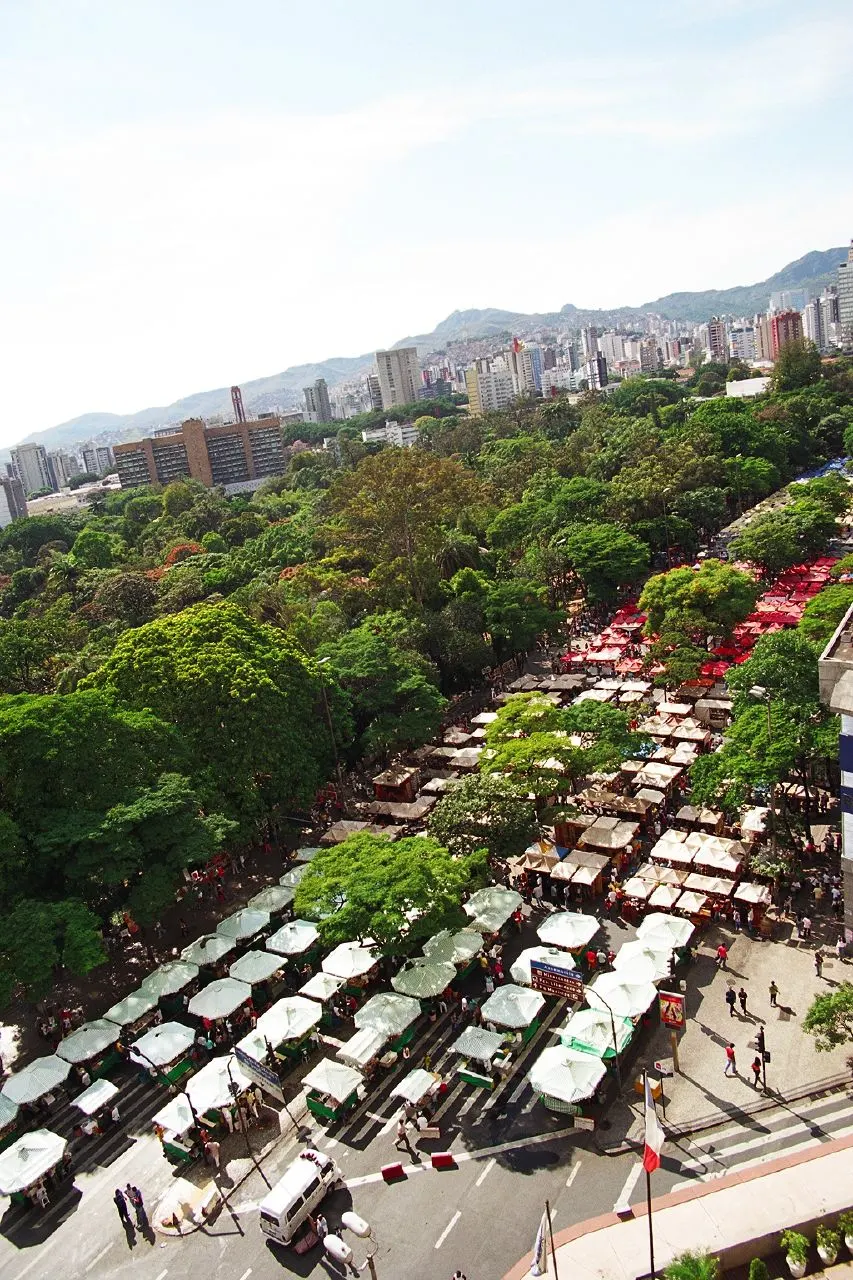
On Sunday, combine the Feira Hippie (8 a.m. to 2 p.m.) with the Mercado Central (until 1 p.m.) and use the municipal buses, which charge no fare under Catraca Livre.
Sunset at Mangabeiras
The Mirante do Mangabeiras stays open until 9 p.m., free. The Parque da Serra do Curral closes entry at 4 p.m.
Museu de Arte da Pampulha
The building is closed for restoration, and the museum holds periodic activities in the gardens. Without a program, it is seen from outside, from the shore.
Explore the map
Explore the map, read about the other places and plan your travel days in the app.
Open the appWhat to see
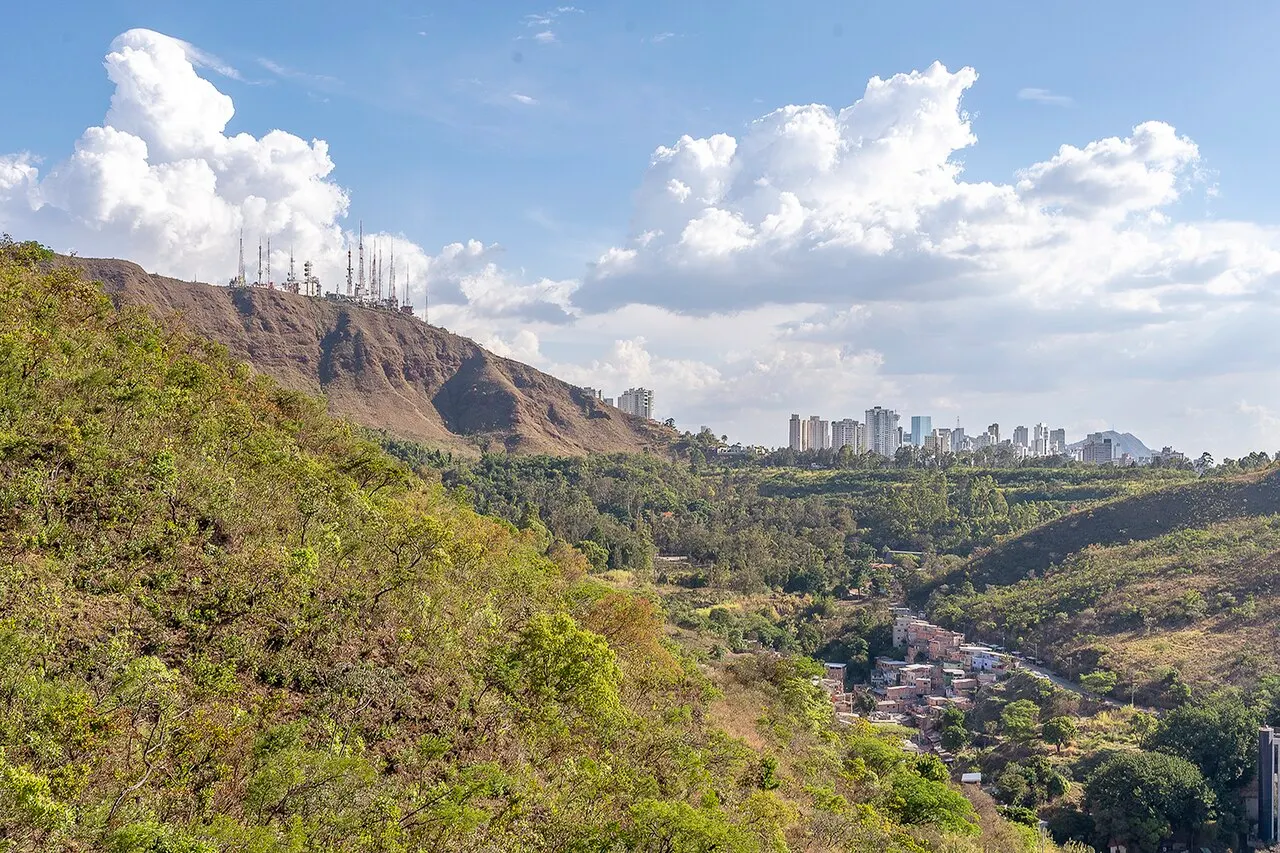
Belo Horizonte: Serra do Curral
The neighborhoods outside it grew without the same layout, and hills are part of the routine: almost every walk goes up or down. Residential neighborhoods west of Praça da Liberdade, with restaurants and hotels.
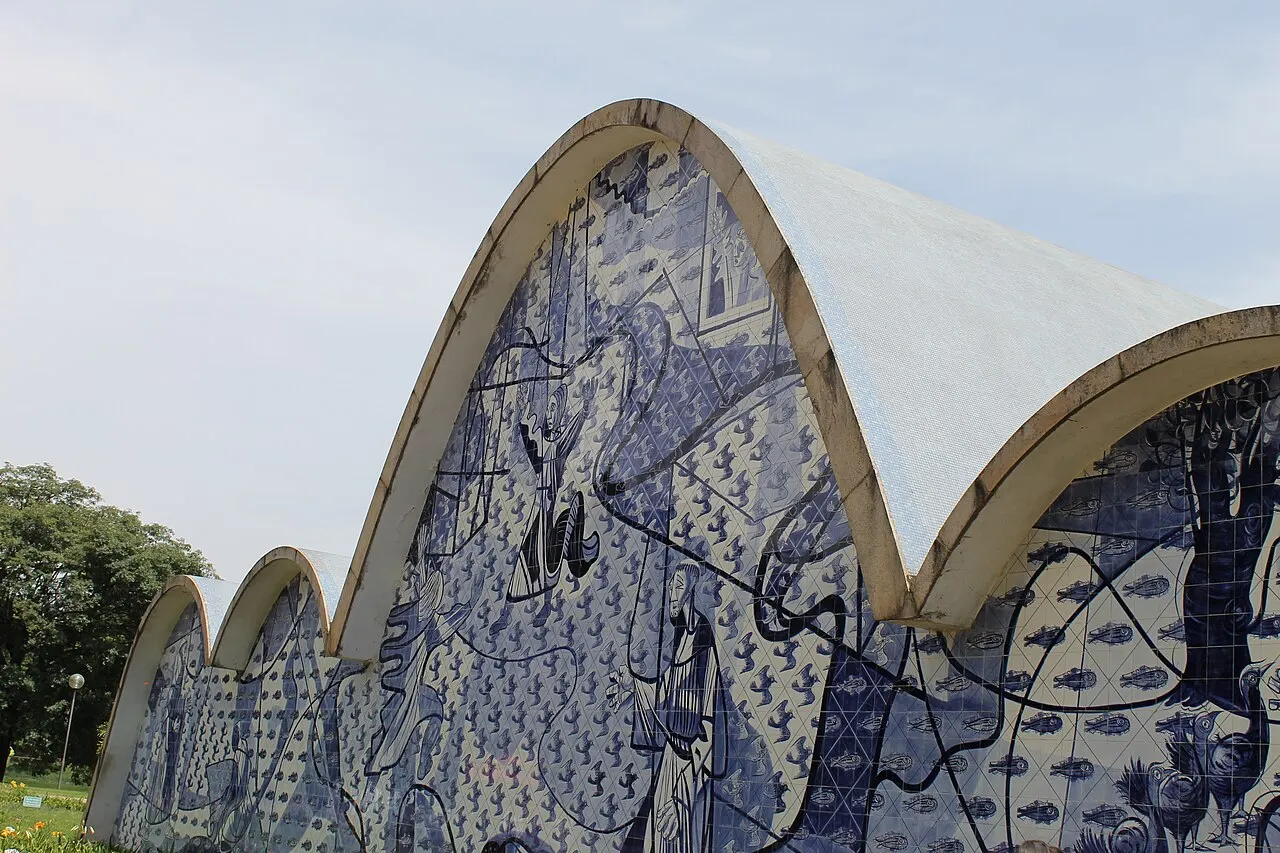
Igreja São Francisco de Assis
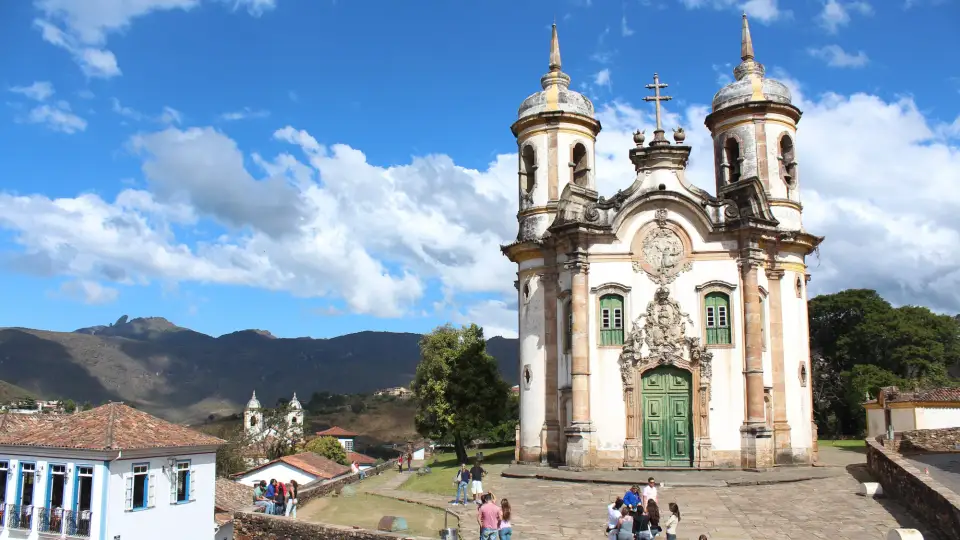
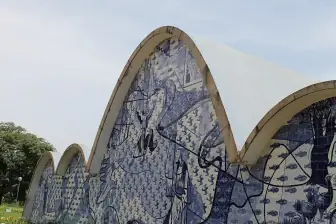
The Igrejinha da Pampulha is the best-known building of Oscar Niemeyer's ensemble: parabolic concrete vaults, until then used only in hangars, serve as structure and wall at once. Outside, Portinari's figurative panel, Paulo Werneck's abstract panel and the cladding of light blue and white tiles; inside, Portinari's Stations of the Cross in fourteen panels and Alfredo Ceschiatti's bronze bas-reliefs in the baptistery, with Burle Marx gardens all around. The archdiocese refused to consecrate it for years, and worship began only in 1959. Guided visits, of about 40 minutes, run Monday to Saturday, 8 a.m. to noon and 1 p.m. to 5 p.m. (Fridays until 4 p.m.), subject to the sanctuary's schedule, especially on Saturdays; on Sunday there is a visit outside Mass times (7 a.m., 10 a.m. and 4 p.m.). Groups of more than 15 people book by email. The visit is paid; the price is not published, and is confirmed at the entrance.
Belo Horizonte is not cut by a large river.
Check access

Mercado Central
More than 400 stores under one roof on Avenida Augusto de Lima, with aisles of cheeses, sweets, cachaças, herbs, roots and religious items, plus counter bars. It is the best place in the city to understand what Minas eats. Open Monday to Saturday, 8 a.m. to 6 p.m., and on Sunday from 8 a.m. to 1 p.m.
The commercial heart of the original plan, between Praça Sete, Praça da Estação and the bus station.
Check access
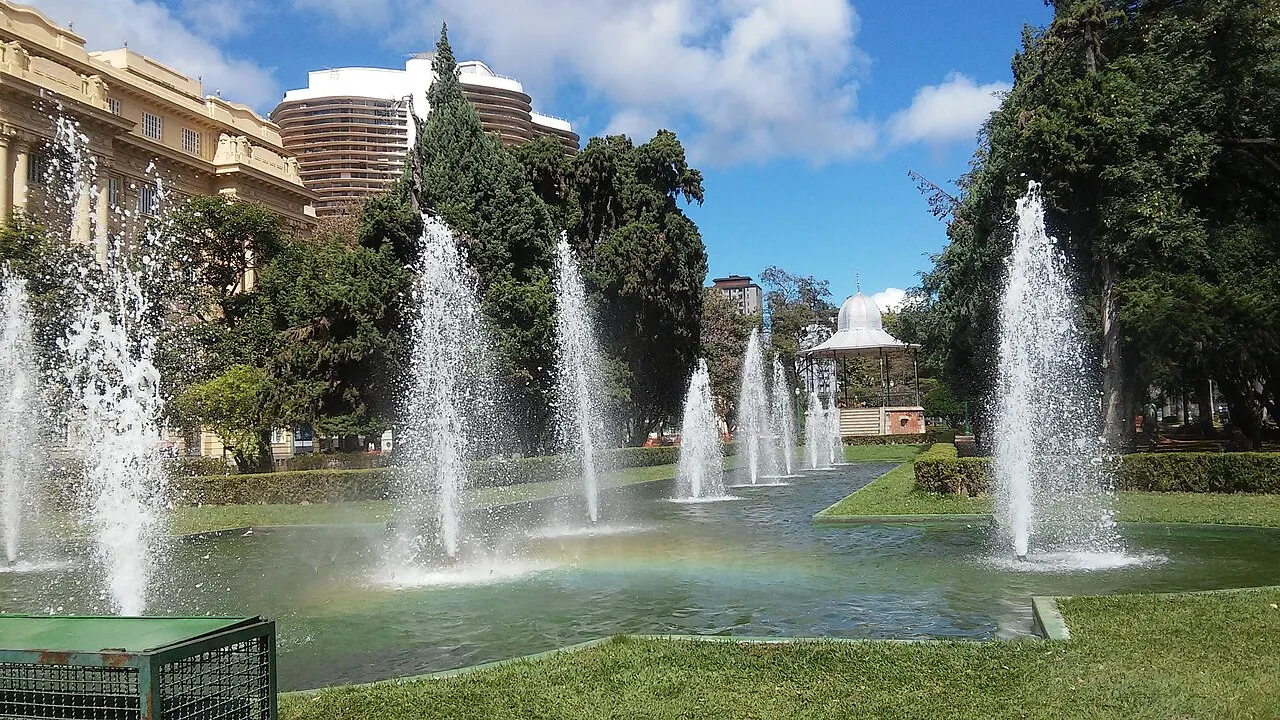
Praça da Liberdade
It was the seat of state power from 1897 to 2010: French-style gardens, paths, a bandstand and fountains, surrounded by the buildings of the former secretariats. Around it are buildings from various periods, from the eclectic to the art deco, the modernist Edifício Niemeyer and the postmodern Rainha da Sucata. Since 2010, when the government moved to the Cidade Administrativa, it has been the axis of the Circuito Liberdade, the group of museums and cultural centers in the area.
The area planned in the 19th century lies inside Avenida do Contorno: grid streets cut by diagonal avenues, such as Afonso Pena, the axis that crosses the center toward the mountain.
Check access

Mirante do Mangabeiras
One of the most sought-after spots for watching the sunset, at about 1,170 m, with two wooden decks, a free telescope and landscaping inspired by Burle Marx. Open every day from 8 a.m. to 9 p.m. (entry until 8:30 p.m.), with free admission; cars are not allowed in, and there are spaces only for people with reduced mobility. On the same slope is the Praça do Papa, officially Praça Israel Pinheiro, which got its nickname after John Paul II's open-air Mass in 1980, when he is said to have exclaimed “que belo horizonte” (what a beautiful horizon). Open 24 hours, with a similar view, it reopened on August 7, 2026 after renovation work.
The city rests on a north-facing slope, with the Serra do Curral as the southern limit of the municipality.
Check access
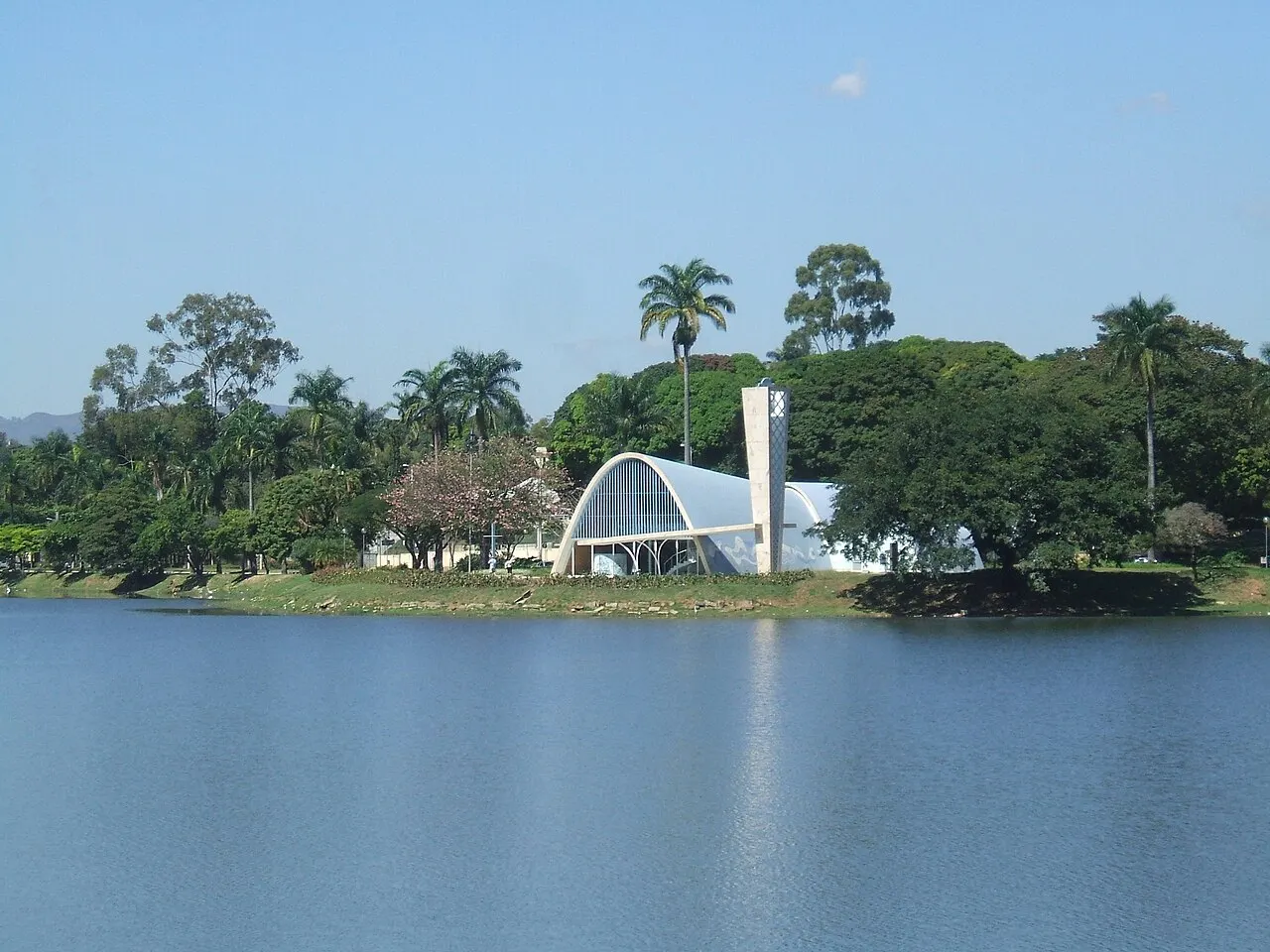
Lagoa da Pampulha
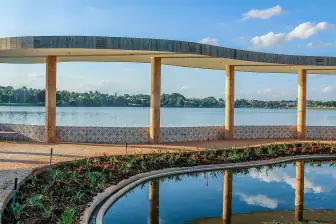
The reservoir completed in 1943, which Juscelino Kubitschek surrounded with modern architecture. The shore has a walking and cycling path and links Niemeyer's buildings to the Mineirão and the Parque Ecológico da Pampulha. The water has been polluted since the 1980s; the plan is to walk, bike and look at the architecture across the water's mirror. On the way is the Museu de Arte da Pampulha, the former casino from 1943, with a travertine and glass facade and Burle Marx gardens with sculptures by Ceschiatti, Zamoyski and José Pedrosa. The casino operated until 1946 and became a museum in 1957; today the building is closed for restoration, and the museum holds periodic activities in the gardens. Without a program, it is seen from outside.
The Ribeirão Arrudas crosses the city from west to east, almost entirely channeled, and farther north runs the Ribeirão da Onça; both flow into the Rio das Velhas, in the São Francisco basin.
Check access
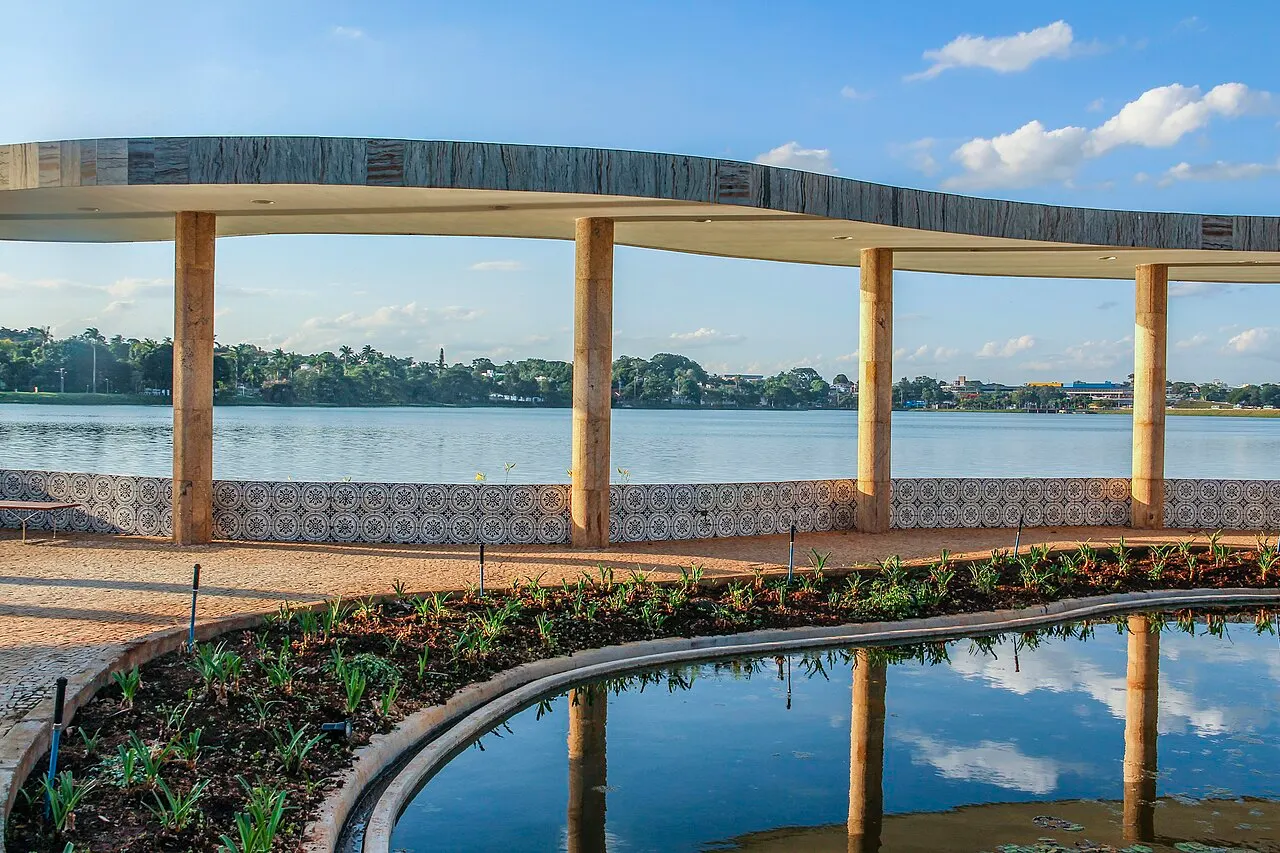
Casa do Baile
A dance restaurant from 1943 on a small island linked to the shore by a little bridge, with a sinuous canopy that follows the water's edge. It closed in 1948 and since 2002 has been the Centro de Referência de Arquitetura, Urbanismo e Design, with temporary exhibitions. Open Wednesday to Sunday, 10 a.m. to 6 p.m., with free admission.
To the north, around the lagoon: the Igreja São Francisco de Assis, the Casa do Baile, the Museu Casa Kubitschek, the Museu de Arte da Pampulha, the Mineirão and the Mineirinho.
Check access

Museu Casa Kubitschek
The weekend house Niemeyer designed for Juscelino Kubitschek, with a garden and orchard by Burle Marx. The museum, opened in 2013, shows the furniture and the modernist way of living of the 1940s. Open Wednesday to Sunday, 10 a.m. to 6 p.m., with free admission.
It is a spread-out area, best covered by car, by bike along the shore or by bus, not on foot from end to end.
Check access

Palácio da Liberdade
The former seat of government, inaugurated in 1898, with eclectic architecture of French influence and an iron and marble staircase made in Belgium. All visits are free and subject to capacity, with no tickets: you just register on the day. The interior is open Wednesday to Friday, noon to 5:30 p.m. (last entry 5 p.m.), and on Saturday, Sunday and holidays from 10 a.m. to 5 p.m. (last entry 4:30 p.m.); the gardens stay open until 6 p.m. Walk-in visits go in groups of up to 50 people, and the guided visit, of up to 25, takes place Wednesday to Friday at 4:30 p.m. and on weekends at 11 a.m. and 3 p.m. Because the palace is in institutional use, the hours may change. On the first Sunday of the month there is a changing of the guard.
Inside this ring are the Centro, Praça da Liberdade, Savassi and Lourdes.
Check access
Museu das Minas e do Metal
The MM Gerdau, in the Prédio Rosa on Praça da Liberdade, brings together 44 attractions in 18 rooms on mining and metallurgy, two of the main economic activities of Minas, with interactive features and an architectural design by Paulo Mendes da Rocha and Pedro Mendes da Rocha. Free admission, Tuesday to Sunday from 10 a.m. to 5 p.m., with Thursday until 10 p.m.
Music is the city's most famous contribution.
Check access
Nilo’s itinerary
Start with the basic programme and choose extensions for the time you have.
Plan my days in the app ↗Day 1 · Center, markets and Praça da Liberdade
Do this day from Wednesday to Saturday: the Museu de Artes e Ofícios is closed on Sunday and Monday, the Parque Municipal on Monday and the Palácio da Liberdade on Monday and Tuesday.
8 a.m.: Mercado Central, on Avenida Augusto de Lima. Coffee with pão de queijo and a walk through the cheese, sweets and cachaça aisles before you fill up.
10 a.m.: walk to the Parque Municipal, on Avenida Afonso Pena (closed on Mondays), and cross the paths to the exit on Avenida dos Andradas.
11 a.m.: Museu de Artes e Ofícios, at Praça da Estação (Tuesday to Saturday). Allow an hour.
12:30 p.m.: cross over to Floresta and see the murals from the Mirante de Arte Urbana da Rua Sapucaí; have lunch at a bar on the street or go back to the Mercado Novo.
2:30 p.m.: bus, taxi or ride-hailing app to Praça da Liberdade. Visit the Palácio da Liberdade (Wednesday to Sunday) and the MM Gerdau (Tuesday to Sunday, until 5 p.m.); the Museu Mineiro is one block away.
5:30 p.m.: ride-hailing app to the Mirante do Mangabeiras for the sunset; the Praça do Papa is on the way.
8 p.m.: dinner in Savassi or back to the Mercado Novo, which has bars open until midnight Tuesday to Saturday.
Day 2 · Niemeyer's Pampulha
Prefer Wednesday to Friday: the Casa do Baile and the Museu Casa Kubitschek close on Monday and Tuesday, the Mineirão tour does not run on Saturday or Sunday, and on Saturday the church visit depends on the sanctuary's schedule. On Sunday you can do the day, with the church only outside Mass times (7 a.m., 10 a.m. and 4 p.m.).
9 a.m.: bus or ride-hailing app to the Igreja São Francisco de Assis, at Avenida Otacílio Negrão de Lima, 3000. The guided visit lasts about 40 minutes and runs from 8 a.m. to noon and 1 p.m. to 5 p.m. (Friday until 4 p.m.).
10 a.m.: Museu Casa Kubitschek, on the same avenue, number 4188. One hour is enough.
11:15 a.m.: Casa do Baile, on the island along the shore, with the exhibition on view.
12:30 p.m.: lunch of Minas food at Trevo, near the shore, or at a Pampulha restaurant.
2 p.m.: walk or bike a stretch of the shore and see from outside the former casino, now the Museu de Arte da Pampulha, closed for restoration.
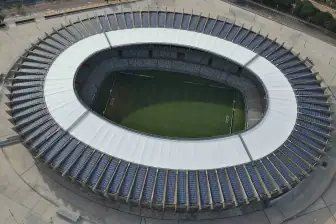
3:30 p.m.: Mineirão esplanade; the stadium tour runs Monday to Friday, by appointment.
Late afternoon: go back to the center for dinner in Savassi or Lourdes.
Day 3 · Inhotim
Day trip
It is in Brumadinho, 60 km from Belo Horizonte, via the BR-381 (through Contagem and Betim) or the BR-040; work out the road time the day before, because it depends on the route and traffic. According to Inhotim, there are two transfer services from BH, and the institute's official agency is Belvitur. Inhotim is a museum and a botanical garden at once: galleries dedicated to Adriana Varejão, Tunga, Cildo Meireles, Lygia Pape, Miguel Rio Branco and Yayoi Kusama and open-air works by Chris Burden, Olafur Eliasson and others, spread across more than 140 hectares of gardens and forest, where the Atlantic Forest meets the Cerrado. In 2024 it became the first botanical garden in Brazil certified by BGCI, according to the institute. Open Wednesday to Friday from 9:30 a.m. to 4:30 p.m. and on weekends and holidays from 9:30 a.m. to 5:30 p.m.; in January and July, also on Tuesdays. Ticket R$ 65 (half price R$ 32.50), checked in October 2026; Wednesday and the last Sunday of the month are free, with advance pickup on Sympla. Some galleries and gardens close for maintenance: check the day's list on the website. A full day is the minimum; the two-day pass costs R$ 114.




Food
Pão de queijo
A small roll of manioc starch and cheese, baked until elastic inside, originating in Minas Gerais around 1750. In Belo Horizonte it shows up at breakfast, at the afternoon snack and at bakery and market counters.
Feijão-tropeiro
Cooked beans mixed with manioc flour, sausage, bacon, egg and chopped herbs, sometimes with pork crackling and collard greens. It began as travel food for the tropeiros who carried goods on mule back and is now a lunch dish.
Torresmo
Pork skin with fat, cut and fried until it crackles. It is the bar snack most associated with Minas cooking, served with cachaça or beer and also used in feijão-tropeiro.
Liver with jiló
Liver with onions served with jiló, a small, bitter fruit. It is the classic snack at the counter bars of the Mercado Central.
Minas cheese, guava paste and sweets
The aisles of the Mercado Central sell cheeses from several regions of Minas, guava paste, dulce de leche and fruit in syrup.
Cachaça
Farm-made cachaça is among the most sought-after products at the Mercado Central, which has stores dedicated to it. In the bars, it goes with the snack.
Boteco food
Belo Horizonte presents itself as the capital of the botecos, and the Comida di Buteco contest, created in the city in 2000, picks the best bar snack each year among the participating bars. The counter snack, served to share, is the most typical way of eating in the city.
Where to eat
- Bar da Lora · Mercado Central (Centro)
Liver with onions and jiló and other counter snacks, at the bar that won the 2010 Comida di Buteco. It is the most direct way to try the snack the Mercado Central made a classic. Opens at 9 a.m. and follows the market's hours: until 6 p.m. Monday to Saturday and until 1 p.m. on Sunday.
Source · 2026-10-16
- Casa Cheia · Mercado Central (Centro)
Minas lunch food and snacks at a restaurant open since 1978 inside the market; the house dish is the “Mexidoido Chapado”. Serves until 6 p.m. on weekdays and Saturday, and only until 1 p.m. on Sunday.
Source · 2026-10-16
- Cozinha Tupis · Mercado Novo (Centro)
Dishes with ingredients from the Minas tradition in a kitchen that shares space with a brewery, to try the contemporary version of the city's food. Closed on Mondays; on Sunday, only until 4 p.m.
Source · 2026-10-16
- Xapuri · Trevo (Pampulha)
À la carte Minas cooking in a rustic setting, with a wood-fired stove and a buffet of more than 30 homemade sweets. It is in the Pampulha area and works for lunch on the day you do the shore; closed on Mondays.
Source · 2026-10-16
- Restaurante Dona Lucinha · São Pedro (Centro-Sul)
A buffet of traditional Minas recipes, for trying several dishes at once. Open every day for lunch and, Monday to Saturday, until 10 p.m.
Source · 2026-10-16
- Santa Tereza
Neighborhood bars around Praça Duque de Caxias, where the boteco is the evening's plan and the music of the Clube da Esquina is local memory. Good for anyone who wants to eat and drink away from the Savassi circuit.
$: pão de queijo and coffee at the counter, a bar snack at a market bar or a plate of the day at lunch · $$: Minas lunch at a restaurant or buffet · $$$: dinner at an author-cuisine restaurant in Savassi or Lourdes · 2026-10-16
Day trips
Inhotim
It is in Brumadinho, 60 km from Belo Horizonte, via the BR-381 (through Contagem and Betim) or the BR-040; work out the road time the day before, because it depends on the route and traffic. According to Inhotim, there are two transfer services from BH, and the institute's official agency is Belvitur. Inhotim is a museum and a botanical garden at once: galleries dedicated to Adriana Varejão, Tunga, Cildo Meireles, Lygia Pape, Miguel Rio Branco and Yayoi Kusama and open-air works by Chris Burden, Olafur Eliasson and others, spread across more than 140 hectares of gardens and forest, where the Atlantic Forest meets the Cerrado. In 2024 it became the first botanical garden in Brazil certified by BGCI, according to the institute. Open Wednesday to Friday from 9:30 a.m. to 4:30 p.m. and on weekends and holidays from 9:30 a.m. to 5:30 p.m.; in January and July, also on Tuesdays. Ticket R$ 65 (half price R$ 32.50), checked in October 2026; Wednesday and the last Sunday of the month are free, with advance pickup on Sympla. Some galleries and gardens close for maintenance: check the day's list on the website. A full day is the minimum; the two-day pass costs R$ 114.
Ouro Preto
The former Vila Rica is 96 km away, with Pássaro Verde buses from the Belo Horizonte Rodoviária. You can go and come back the same day, but the churches by Aleijadinho and Mestre Ataíde, the hills and neighboring Mariana call for at least one night there. See the guide to Ouro Preto.
Where to begin
Center, markets and Praça da Liberdade
Do this day from Wednesday to Saturday: the Museu de Artes e Ofícios is closed on Sunday and Monday, the Parque Municipal on Monday and the Palácio da Liberdade on Monday and Tuesday.
Niemeyer's Pampulha
Prefer Wednesday to Friday: the Casa do Baile and the Museu Casa Kubitschek close on Monday and Tuesday, the Mineirão tour does not run on Saturday or Sunday, and on Saturday the church visit depends on the sanctuary's schedule. On Sunday you can do the day, with the church only outside Mass times (7 a.m., 10 a.m. and 4 p.m.).
Money
The currency is the real (R$). Cards and Pix are common, but not every stall accepts credit: the Mercado Central lists cash and debit as payment methods, and it is worth carrying some cash for the Feira Hippie. A good part of what you visit is free: the museums of the Circuito Liberdade, the Palácio da Liberdade, the Casa do Baile, the Museu Casa Kubitschek, the parks and the viewpoints. The biggest expense is Inhotim, checked in October 2026: R$ 65 full price and R$ 32.50 half price, R$ 114 full price for two days; the internal electric cart costs R$ 45 per person and car parking R$ 35, at half price on Wednesdays and on the last Sunday of the month. The municipal bus fare is R$ 6.25.
Getting there and around
From Confins airport
Belo Horizonte International Airport (CNF) is in Confins, 38 km from the center. The Conexão Aeroporto express bus links the terminal to the Terminal Álvares Cabral (Avenida Álvares Cabral, 387, on the border between Centro and Lourdes) and to the Rodoviária, at Praça Rio Branco; there is also a regular line, the 5250. Current schedules and fares are on the operator's timetable, at conexaoaeroporto.com.br. Taxis and ride-hailing cars also make the trip. Pampulha Airport (Carlos Drummond de Andrade) is inside the city and is also served by the express bus.
Buses and metro
The municipal bus fare is R$ 6.25, and with the BHBUS card you can change lines within 90 minutes without paying another fare. On Sundays and national holidays, the Catraca Livre program, in force since December 14, 2025, makes municipal buses free of charge; riders without a card pass through the turnstile released by the driver. On those days there is no integration with the metro. The metro has a single line, from Eldorado, in Contagem, to Vilarinho, in Venda Nova, with 19 stations over 28.1 km; it helps little on the tourist route, which lies off that axis.
On foot and by car
The planned center can be covered on foot, but with hills: Avenida Afonso Pena climbs from the Hipercentro toward the mountain. Between the center, Pampulha and Mangabeiras, the distances call for a bus, taxi or ride-hailing app. In Pampulha, the shore has a bike lane and shops that rent bicycles.
To Inhotim and the historic towns
Inhotim is in Brumadinho, 60 km away. By car, the BR-381, through Contagem and Betim, is the shortest route, and the BR-040 is the alternative. According to Inhotim, there are two transfer services from Belo Horizonte; the institute's official agency is Belvitur, which also sells the internal electric cart. To Ouro Preto, 96 km away, Pássaro Verde departs from the Rodoviária, at Praça Rio Branco.
Safety
The precautions are those of a Brazilian metropolis. In crowds, such as the Sunday Feira Hippie, Carnival blocos and the exit of stadiums, keep your phone and wallet in front of your body. At night, in the Hipercentro, stay on busy stretches and use a taxi or ride-hailing app to cross empty streets. In parks and viewpoints, respect the hours: the Parque da Serra do Curral and the Mangabeiras park close at 5 p.m., and the one on the mountain may close earlier on days of storm, strong wind or fire risk. The Fundação de Parques Municipais recommends a yellow fever vaccine for visiting the parks. In the rainy season, use repellent. Emergencies: SAMU 192, Military Police 190, Fire Department 193.
Etiquette tips
Mass at the Igrejinha
The Igreja São Francisco de Assis is a working sanctuary. On Sundays Masses are at 7 a.m., 10 a.m. and 4 p.m., with limited seating; tourists visit outside those times and quietly during services.
Groups book ahead
At the Pampulha sanctuary, school or tour groups of more than 15 people must book the visit by email. At the Palácio da Liberdade, walk-in visits go in groups of up to 50 people at a time, and the guided visit, up to 25.
Park rules
The municipal parks have their own rules: the Parque da Serra do Curral and the Parque das Mangabeiras do not accept pets; the Mirante do Mangabeiras and the Parque Municipal accept dogs on a leash. At Inhotim, bicycles, scooters and musical instruments are not allowed.
Mistakes to avoid
Going to Inhotim on Monday or Tuesday
The park is open Wednesday to Sunday; Tuesday only in January and July. Arriving in the afternoon is also a mistake: it covers more than 140 hectares, and it closes at 4:30 p.m. on weekdays.
Leaving Pampulha for Monday or Tuesday
The Casa do Baile and the Museu Casa Kubitschek close on those days, and the Museu de Arte da Pampulha building is closed for restoration. On Monday and Tuesday, what's left is the shore and the church.
Going to the Mercado Central on Sunday afternoon
On Sunday it closes at 1 p.m., and the bars and restaurants inside follow that schedule. Combine it with the Feira Hippie in the morning.
Counting on the metro for everything
The single line does not go through Pampulha, Praça da Liberdade or Mangabeiras. For those places, take a bus, taxi or ride-hailing app.
Going up the mountain late
The Parque da Serra do Curral lets people in only until 4 p.m. and caps visitors at 700 a day. For sunset, the place is the Mirante do Mangabeiras, open until 9 p.m.
Useful phrases
Uai
An interjection widely used in Minas Gerais for surprise, doubt or confirmation (“É isso, uai”)
Trem
In Minas, besides a train, it means “thing”, any object or fact
Tira-gosto
Snack that goes with the drink at a bar
Me vê um pão de queijo
Counter order: “give me a pão de queijo”
A Igrejinha está aberta para visita?
A useful question before going to Pampulha, outside Mass times
Esse ônibus passa na Pampulha?
A question to confirm the line with the driver before paying
Where to stay
- Savassi and Funcionários · First visit, anyone who wants to walk out to dinner and do the Circuito Liberdade: Praça da Liberdade and its museums are a walk away, and Savassi concentrates bars, restaurants and shops for the evening. The downside: Pampulha and Inhotim are far, and the trip calls for a car, ride-hailing app or transfer; so does Confins airport.
- Lourdes and Santo Agostinho · Those who prefer a calmer street and a good table nearby, with easy access to the airport bus: Residential neighborhoods, with restaurants and hotels, a walk from Praça da Liberdade and near the Terminal Álvares Cabral, on the edge of the Centro, where the express bus from Confins stops. Nightlife is more subdued than in Savassi, and the hills weigh on anyone who walks a lot.
- Centro · Those who arrive and leave by bus, go to Ouro Preto or want to be within walking distance of the Mercado Central: The Rodoviária, the Mercado Central, the Mercado Novo, the Parque Municipal and the Feira Hippie are close, and the bus to Ouro Preto leaves from the Rodoviária. The downside: the Hipercentro is noisy by day and, after the shops close, calls for a taxi or ride-hailing app to get back at night.
- Pampulha · Those coming for a match at the Mineirão, an event at the Mineirinho or a flight at Pampulha Airport: It is close to the shore, the stadiums and the domestic airport, and far from everything else: the center, Praça da Liberdade and the road to Inhotim all call for a long trip. For a first visit without those commitments, the central area works better.
$: hostel or simple hotel in the Centro · $$: mid-range hotel in Savassi, Funcionários or Lourdes · $$$: upscale hotel in Lourdes or Savassi · 2026-10-16
Districts
Centro (Hipercentro)
The commercial heart of the original plan, between Praça Sete, Praça da Estação and the bus station. Here are the Mercado Central, the Mercado Novo, the Parque Municipal, the Museu de Artes e Ofícios and, on Sundays, the Feira Hippie on Avenida Afonso Pena. By day it is crowded and noisy; at night, after the shops close, take a taxi or a ride-hailing app along the empty stretches.
Funcionários and Savassi
Around Praça da Liberdade, with the Palácio da Liberdade, the MM Gerdau, the Museu Mineiro and the CCBB. Savassi, a piece of the old Funcionários neighborhood, is known for its many bars and shops, and stays lively at night.
Lourdes and Santo Agostinho
Residential neighborhoods west of Praça da Liberdade, with restaurants and hotels. They are close to the Terminal Álvares Cabral (Avenida Álvares Cabral, 387, on the edge of the Centro), where the express bus to the airport departs.
Floresta and Santa Tereza
East of the center, on the other side of the train line. Rua Sapucaí, in Floresta, has become a viewpoint for the giant murals of the CURA festival. Santa Tereza, listed as an urban ensemble in 2015, keeps old houses, bars and the memory of the Clube da Esquina.
Pampulha
To the north, around the lagoon: the Igreja São Francisco de Assis, the Casa do Baile, the Museu Casa Kubitschek, the Museu de Arte da Pampulha, the Mineirão and the Mineirinho. It is a spread-out area, best covered by car, by bike along the shore or by bus, not on foot from end to end.
Mangabeiras
An upscale neighborhood on the slope of the Serra do Curral, with the Parque das Mangabeiras, the Mirante do Mangabeiras and the Praça do Papa. People go up to see the city from above, preferably in the late afternoon.
History
1701 · The Fazenda do Cercado
The bandeirante João Leite da Silva Ortiz settles the then Serra dos Congonhas, today's Serra do Curral, and founds the Fazenda do Cercado there, the core of the settlement that would be named Curral del-Rei.
1750 · Parish of Boa Viagem
By order of the Crown, the district of Nossa Senhora da Boa Viagem do Curral is created. The settlement lives off cattle, small farms and manioc flour to supply the gold region, without the wealth of Vila Rica or Sabará.
1893 · Chosen as the capital
With the Republic, Minas decides to move the capital out of Ouro Preto, hemmed in by its slopes. The Minas Congress, meeting in Barbacena, chooses Curral del-Rei, which becomes a municipality and capital under the name Cidade de Minas.
1894–1897 · The Construction Commission
Aarão Reis heads the construction of the new capital. The old settlement is demolished, and its residents, without the money to buy the now valuable lots in the center, move mostly to Venda Nova.
1897 · Inauguration
On December 12 the new capital is inaugurated. The Parque Municipal opens earlier, on September 26, and the Palácio da Liberdade is finished the following year.
1901 · Belo Horizonte
The name Belo Horizonte, already proposed in the days of the settlement, takes effect in place of Cidade de Minas.
1943 · Juscelino's Pampulha
Mayor Juscelino Kubitschek commissions Oscar Niemeyer to design an ensemble around the artificial Pampulha lagoon: casino, dance hall, club and church, with gardens by Burle Marx and panels by Portinari. Gambling is banned in Brazil in 1946, and the church is not consecrated until 1959.
1957 · The casino becomes a museum
The former Pampulha Casino begins to house the Museu de Arte da Pampulha.
1963–1972 · The Clube da Esquina
Milton Nascimento arrives in Belo Horizonte in 1963 and joins the Borges brothers in the Santa Tereza neighborhood. From that group comes the 1972 album Clube da Esquina.
1965 · Mineirão
The stadium is inaugurated on September 5, with an original capacity of 130,000 fans.
1991 · The Feira Hippie moves to Afonso Pena
The crafts fair, born in 1969 at Praça da Liberdade, is moved to Avenida Afonso Pena, where it takes place on Sundays.
2010 · Circuito Liberdade
The state government moves to the Cidade Administrativa, in the north of the city, and the buildings of the former secretariats around Praça da Liberdade become museums and cultural centers.
2016 · World Heritage
On July 17, UNESCO inscribes the Pampulha Modern Ensemble on the World Heritage List, as a cultural landscape.
2019 · Gastronomy and mourning
UNESCO adds Belo Horizonte to the Creative Cities Network, in the field of gastronomy. In the same year, on January 25, the Vale dam at the Córrego do Feijão Mine, in Brumadinho, the municipality where Inhotim is located, collapses and kills 272 people.
Complete history
From the king's corral to the capital
Before it was a capital, the place was a settlement of cattle ranchers. The bandeirante João Leite da Silva Ortiz settled in 1701 on the slopes of the range now called Curral, and the village grew by selling meat, flour and farm produce to the gold towns. When the Republic arrived, Ouro Preto had no room to grow among its hills, and Minas decided to build a new capital. In 1893 the choice fell on Curral del-Rei.
A city drawn before it existed
The Construction Commission, headed by Aarão Reis, designed between 1894 and 1897 a city of regular blocks, grid streets and diagonal avenues, with the government buildings at the top of Praça da Liberdade. Avenida do Contorno marked the edge of the urban zone. The price of this plan was the old settlement, which was demolished; residents who could not afford the new lots moved outside the layout, mostly to Venda Nova. The planners imagined 100,000 inhabitants in a century, and the city passed that long before: in the 1950s alone the population doubled from 350,000 to 700,000.
Juscelino and Pampulha
In the 1940s, Mayor Juscelino Kubitschek used the reservoir being built on the Ribeirão Pampulha to draw the city northward. He called in a young architect, Oscar Niemeyer, who made his first great concrete curves there, with the engineer Joaquim Cardozo, gardens by Roberto Burle Marx and Cândido Portinari's Stations of the Cross in the church. The casino lasted until 1946, when gambling was banned in the country; the church, rejected by the archdiocese because of its form and Portinari's panel, waited until 1959 to be consecrated. In 2016 the ensemble became a World Heritage Site.
The metropolis of today
From the second half of the 20th century, the city gained skyscrapers, the Mineirão and a metropolitan region of 34 municipalities. In 2010 the state government left Praça da Liberdade for the Cidade Administrativa, and the secretariat palaces became the Circuito Liberdade, a group of museums, almost all of them free. The same decade brought back the street Carnival, which had practically disappeared in the 1990s. In 2019, UNESCO's title of Creative City of Gastronomy recognized what the markets and botecos had already shown.
On January 25, 2019, the Vale dam at the Córrego do Feijão Mine, in the same municipality as Inhotim, collapsed and killed 272 people. The museum was not affected. The tragedy is still present in Brumadinho, and it is worth remembering when you pass through the town.
The Pampulha Modern Ensemble completed ten years on the UNESCO list on July 17, 2026, and the city government is keeping up a program of commemorative events in the following months.
Geography and shape of the city
Serra do Curral
The city rests on a north-facing slope, with the Serra do Curral as the southern limit of the municipality. It is the mountain line that appears at the end of many avenues. At the top are the Parque da Serra do Curral, the Praça do Papa and the Mirante do Mangabeiras, at about 1,170 m, from where you can see the whole city.
The center inside the Contorno
The area planned in the 19th century lies inside Avenida do Contorno: grid streets cut by diagonal avenues, such as Afonso Pena, the axis that crosses the center toward the mountain. Inside this ring are the Centro, Praça da Liberdade, Savassi and Lourdes. The neighborhoods outside it grew without the same layout, and hills are part of the routine: almost every walk goes up or down.
Hidden rivers
Belo Horizonte is not cut by a large river. The Ribeirão Arrudas crosses the city from west to east, almost entirely channeled, and farther north runs the Ribeirão da Onça; both flow into the Rio das Velhas, in the São Francisco basin. Lagoa da Pampulha is a reservoir built between 1936 and 1943.
Climate
The climate is tropical with a dry season. In the 1991 to 2020 normal for the city's weather station, July has an average high of 24.9 °C and a low of 15.2 °C, with 5 mm of rain for the month; January reaches a high of 28.7 °C and 331 mm of rain, and December 339 mm.
Culture

Clube da Esquina
Music is the city's most famous contribution. In the 1960s, Milton Nascimento, the brothers Márcio and Lô Borges, Beto Guedes, Toninho Horta, Wagner Tiso and Fernando Brant came together in the Santa Tereza neighborhood, and the 1972 album Clube da Esquina mixed bossa nova, jazz, Beatles-style rock and Minas music. Decades later, Sepultura and Skank came out of the same neighborhood.
Botecos and markets
Social life happens around a bar table. UNESCO's title of Creative City of Gastronomy, granted in 2019, builds on this culture and on the markets: the traditional Mercado Central and the Mercado Novo, where a generation of cooks and brewers reinterpreted Minas cooking.
Street Carnival
After almost two decades dormant, Carnival returned from 2009 with street blocos and with the Praia da Estação movement, which occupied the square in protest against restrictions on events. Today it gathers millions of people in blocos across the city, and in 2025 a municipal law recognized it as a cultural expression.
Art and museums
The Circuito Liberdade concentrates free museums around the square. The Escola Guignard, directed by the painter Alberto da Veiga Guignard, trained artists such as Amilcar de Castro. 60 km away, Inhotim brings together galleries and open-air works of contemporary art.
Football
The Mineirão is the largest stadium in Minas, with a capacity of about 62,000 people, and has been considered Cruzeiro's home since 1965. Atlético has the Arena MRV, and América plays at the Independência.
Festivals and events
Carnival
February or March, depending on each year's calendar: street blocos in several neighborhoods, samba school parades and parades of caricature blocos. It is the busiest time in the city.
Comida di Buteco
Between April and May, for about a month: the participating bars create a snack for the contest, and the public votes by going around among them.
Arraial de Belô
A municipal June festival at the Mineirinho, with a quadrilha dance contest, shows and a food village, with free admission. In the 2025 and 2026 editions it took place in July; the 47th edition began on July 24, 2026.
Festa de São Francisco
In October, the Pampulha sanctuary celebrates its patron saint with Masses and the blessing of animals.
City anniversary
December 12, the date of the inauguration in 1897.
Books and films
Clube da Esquina (Milton Nascimento and Lô Borges, 1972)
The album that came out of the gatherings in Santa Tereza and shows what the city's music did with bossa nova, rock and Minas song.
O encontro marcado (Fernando Sabino)
A novel that follows the formation of Eduardo Marciano and his generation in the Belo Horizonte of the 1940s.
Os sonhos não envelhecem (Márcio Borges)
The stories of the Clube da Esquina told by one of the group's lyricists.
Frequently asked questions
Belo Horizonte: How do you get from Confins airport?
Confins (CNF) is 38 km from the center. The Conexão Aeroporto express bus goes to the Terminal Álvares Cabral and the Rodoviária, and there is the regular line 5250; schedules and fares are at conexaoaeroporto.com.br. Taxis and ride-hailing cars also make the trip.
Belo Horizonte: How many days should you stay?
Three days: one for the planned center and Praça da Liberdade, one for Pampulha, preferably Wednesday to Friday, and one for Inhotim, from opening to closing. With a fourth day, it is worth going to Ouro Preto and sleeping there.
Belo Horizonte: How do you get to Inhotim and when is it open?
It is in Brumadinho, 60 km away, by car or on one of the two transfer services from BH. Open Wednesday to Sunday (also on Tuesdays in January and July), 9:30 a.m. to 4:30 p.m. on weekdays and until 5:30 p.m. on weekends and holidays.
Belo Horizonte: How much does Inhotim cost?
Full price is R$ 65 and half price R$ 32.50; the two-day pass, R$ 114 (October 2026). Wednesday and the last Sunday of the month are free, with the ticket picked up in advance on Sympla. Parking costs R$ 35, half price on those days.
Belo Horizonte: What is the best day for Pampulha?
Wednesday to Friday, when the Igrejinha, the Casa do Baile and the Museu Casa Kubitschek are all open on the same day and the Mineirão tour runs. On Monday and Tuesday the two houses close; on Sunday, the church takes visitors only outside Mass times (7 a.m., 10 a.m. and 4 p.m.).
Belo Horizonte: When is the best time to go?
May to September, the dry season, with steady days and June and July nights around 15 °C; it is the best time for the viewpoints and for Inhotim. From November to March it rains heavily, especially in December and January.
Belo Horizonte: Which neighborhood should you stay in?
Savassi and Funcionários on a first visit, a walk from Praça da Liberdade and the bars; Lourdes, calmer and near the airport bus; the Centro, for those arriving by bus or going to Ouro Preto, with a taxi or ride-hailing app to get back at night. Pampulha suits a match, an event or a flight there.
Belo Horizonte: Where should you watch the sunset?
At the Mirante do Mangabeiras, open every day until 9 p.m. (entry until 8:30 p.m.), with free admission. The Parque da Serra do Curral does not work for this: it lets people in only until 4 p.m. and closes at 5 p.m.
Belo Horizonte: What should you do on a Sunday?
In the morning, combine the Feira Hippie (8 a.m. to 2 p.m.) with the Mercado Central, which closes at 1 p.m. on Sunday; in the afternoon, Pampulha works, with the Casa do Baile and the Museu Casa Kubitschek open and the Igrejinha outside Mass times (7 a.m., 10 a.m. and 4 p.m.). Municipal buses charge no fare.
Other cities in the country
Brazil ↗- Days
- 4
- When
- Apr–Jun
- Per person/day
- Average 615 BRLMid-range · per person/day
Cost scope
Per person per day: accommodation, meals, urban transport, visits and a small allowance for extras. Flights excluded; larger purchases vary. Editorial estimate, not a quote.
- Days
- 2–3
- When
- Apr–May · Sep
- Per person/day
- Average 400–700 BRLMid-range · per person/day
Cost scope
Per person per day: accommodation, meals, urban transport, visits and a small allowance for extras. Flights excluded; larger purchases vary. Editorial estimate, not a quote.
- Days
- 2–3
- When
- Jan–Mar · Sep–Dec
- Per person/day
- Average 350–550 BRLMid-range · per person/day
Cost scope
Per person per day: accommodation, meals, urban transport, visits and a small allowance for extras. Flights excluded; larger purchases vary. Editorial estimate, not a quote.
- Days
- 1–2
- When
- May–Sep
- Per person/day
- Average 260–520 BRLMid-range · per person/day
Cost scope
Per person per day: accommodation, meals, urban transport, visits and a small allowance for extras. Flights excluded; larger purchases vary. Editorial estimate, not a quote.
- Days
- 3–4
- When
- Jun–Sep
- Per person/day
- Average 400–700 BRLMid-range · per person/day
Cost scope
Per person per day: accommodation, meals, urban transport, visits and a small allowance for extras. Flights excluded; larger purchases vary. Editorial estimate, not a quote.
- Days
- 2–3
- When
- Apr–Jun
- Per person/day
- Average 350–550 BRLMid-range · per person/day
Cost scope
Per person per day: accommodation, meals, urban transport, visits and a small allowance for extras. Flights excluded; larger purchases vary. Editorial estimate, not a quote.
- Days
- 3–5
- When
- Mar–Apr · Nov
- Per person/day
- Average 397 BRLMid-range · per person/day
Cost scope
Per person per day: accommodation, meals, urban transport, visits and a small allowance for extras. Flights excluded; larger purchases vary. Editorial estimate, not a quote.
- Days
- 2–4
- When
- Mar–May · Sep
- Per person/day
- Explore costsGuide estimate
Cost scope
Per person per day: accommodation, meals, urban transport, visits and a small allowance for extras. Flights excluded; larger purchases vary. Editorial estimate, not a quote.
- Days
- 4–5
- When
- Aug–Nov
- Per person/day
- Explore costsGuide estimate
Cost scope
Per person per day: accommodation, meals, urban transport, visits and a small allowance for extras. Flights excluded; larger purchases vary. Editorial estimate, not a quote.
- Days
- 3–4
- When
- Jul–Sep
- Per person/day
- Explore costsGuide estimate
Cost scope
Per person per day: accommodation, meals, urban transport, visits and a small allowance for extras. Flights excluded; larger purchases vary. Editorial estimate, not a quote.
- Days
- 3–4
- When
- Sep–Nov
- Per person/day
- Explore costsGuide estimate
Cost scope
Per person per day: accommodation, meals, urban transport, visits and a small allowance for extras. Flights excluded; larger purchases vary. Editorial estimate, not a quote.
- Days
- 2–4
- When
- May–Sep
- Per person/day
- Explore costsGuide estimate
Cost scope
Per person per day: accommodation, meals, urban transport, visits and a small allowance for extras. Flights excluded; larger purchases vary. Editorial estimate, not a quote.
- Days
- 3–5
- When
- Jun–Sep
- Per person/day
- Explore costsGuide estimate
Cost scope
Per person per day: accommodation, meals, urban transport, visits and a small allowance for extras. Flights excluded; larger purchases vary. Editorial estimate, not a quote.
- Days
- 3–4
- When
- Jun–Aug
- Per person/day
- Explore costsGuide estimate
Cost scope
Per person per day: accommodation, meals, urban transport, visits and a small allowance for extras. Flights excluded; larger purchases vary. Editorial estimate, not a quote.
- Days
- 4–5
- When
- Jan–Mar · Sep–Dec
- Per person/day
- Explore costsGuide estimate
Cost scope
Per person per day: accommodation, meals, urban transport, visits and a small allowance for extras. Flights excluded; larger purchases vary. Editorial estimate, not a quote.
- Days
- 3–4
- When
- Oct–Dec
- Per person/day
- Average 1,110 BRLMid-range · per person/day
Cost scope
Per person per day: accommodation, meals, urban transport, visits and a small allowance for extras. Flights excluded; larger purchases vary. Editorial estimate, not a quote.
- Days
- 3–4
- When
- Aug–Sep
- Per person/day
- Explore costsGuide estimate
Cost scope
Per person per day: accommodation, meals, urban transport, visits and a small allowance for extras. Flights excluded; larger purchases vary. Editorial estimate, not a quote.
- Days
- 4–7
- When
- Apr–Sep
- Per person/day
- Explore costsGuide estimate
Cost scope
Per person per day: accommodation, meals, urban transport, visits and a small allowance for extras. Flights excluded; larger purchases vary. Editorial estimate, not a quote.
- Days
- 3–4
- When
- Jan · Sep–Dec
- Per person/day
- Explore costsGuide estimate
Cost scope
Per person per day: accommodation, meals, urban transport, visits and a small allowance for extras. Flights excluded; larger purchases vary. Editorial estimate, not a quote.
- Days
- 2
- When
- Aug–Dec
- Per person/day
- Average 442 BRLMid-range · per person/day
Cost scope
Per person per day: accommodation, meals, urban transport, visits and a small allowance for extras. Flights excluded; larger purchases vary. Editorial estimate, not a quote.
- Days
- 3–5
- When
- Jan–Feb · Sep–Dec
- Per person/day
- Explore costsGuide estimate
Cost scope
Per person per day: accommodation, meals, urban transport, visits and a small allowance for extras. Flights excluded; larger purchases vary. Editorial estimate, not a quote.
- Days
- 3–5
- When
- May–Sep
- Per person/day
- Explore costsGuide estimate
Cost scope
Per person per day: accommodation, meals, urban transport, visits and a small allowance for extras. Flights excluded; larger purchases vary. Editorial estimate, not a quote.
- Days
- 2–3
- When
- Apr–Sep
- Per person/day
- Average 484 BRLMid-range · per person/day
Cost scope
Per person per day: accommodation, meals, urban transport, visits and a small allowance for extras. Flights excluded; larger purchases vary. Editorial estimate, not a quote.
- Days
- 3
- When
- Apr–May · Aug
- Per person/day
- Average 478 BRLMid-range · per person/day
Cost scope
Per person per day: accommodation, meals, urban transport, visits and a small allowance for extras. Flights excluded; larger purchases vary. Editorial estimate, not a quote.
- Days
- 3–4
- When
- Aug–Dec
- Per person/day
- Explore costsGuide estimate
Cost scope
Per person per day: accommodation, meals, urban transport, visits and a small allowance for extras. Flights excluded; larger purchases vary. Editorial estimate, not a quote.
- Days
- 2
- When
- Apr–May · Sep
- Per person/day
- Explore costsGuide estimate
Cost scope
Per person per day: accommodation, meals, urban transport, visits and a small allowance for extras. Flights excluded; larger purchases vary. Editorial estimate, not a quote.
- Days
- 3
- When
- Sep–Dec
- Per person/day
- Explore costsGuide estimate
Cost scope
Per person per day: accommodation, meals, urban transport, visits and a small allowance for extras. Flights excluded; larger purchases vary. Editorial estimate, not a quote.
- Days
- 3–5
- When
- Apr–Nov
- Per person/day
- Average 427 BRLMid-range · per person/day
Cost scope
Per person per day: accommodation, meals, urban transport, visits and a small allowance for extras. Flights excluded; larger purchases vary. Editorial estimate, not a quote.
- Days
- 4
- When
- Jul–Sep
- Per person/day
- Explore costsGuide estimate
Cost scope
Per person per day: accommodation, meals, urban transport, visits and a small allowance for extras. Flights excluded; larger purchases vary. Editorial estimate, not a quote.
- Days
- 4–5
- When
- May–Sep
- Per person/day
- Explore costsGuide estimate
Cost scope
Per person per day: accommodation, meals, urban transport, visits and a small allowance for extras. Flights excluded; larger purchases vary. Editorial estimate, not a quote.