Brazil
Fernando de Noronha
Spinner dolphins, tide-timed natural pools and Baía do Sancho
Days Start with the basic programme and choose extensions for the time you have.
How the guide reaches this number
One day is for arriving, buying the ticket, booking Atalaia and seeing Vila dos Remédios and the fort. Another is for the inner sea, with the dolphins at the lookout at 6:30 a.m., Sancho in the 8 a.m. window and Baía dos Porcos in the afternoon. The third is for the outer sea, built around the Atalaia time, which follows the tide: the view of Sueste and the late afternoon at Leão and Caracas. The fourth is by boat, to see the inner-sea coast from outside and to dive. With a fifth day, which costs only R$ 97.33 more in TPA, I'd do the Capim-Açu trail with a guide or a day of scuba diving, and I'd keep some slack in case the tide or the weather disrupts one of the bookings. With fewer than three days it isn't worth it: the airfare and fees weigh too much to see only one side of the island.
4–5
When August to November: dry season and outside the peak occupancy of New Year's Eve and January; from February to July it rains more, peaking in April, and the trails get muddy
How the guide reaches this number
The temperature barely changes on Noronha: highs stay between 28 °C and 30 °C and lows between 24 °C and 25 °C all year, and the water stays around 26 °C. What changes is the rain. From February to July it rains more, with March to May the wettest months and April at the top; from March to July the trails get muddy, and ICMBio asks you to arrive at least 30 minutes before your scheduled time. In the rainy season the spinner dolphins also enter the bay less and stay less time. August to January is the dry season, the best for the sea and the trails; within it, New Year's Eve and January concentrate the year's highest occupancy, and August to November fall outside that peak. Green turtle nesting at Praia do Leão runs from December to May.
Per person/day Add up the Environmental Preservation Fee for the days of your stay, the park ticket, the guesthouse per night and the boat or diving trips; extra days and the season change the total a lot.
How the guide reaches this number
Per person per day: accommodation, meals, urban transport, visits and a small allowance for extras. Flights excluded; larger purchases vary. Editorial estimate, not a quote.
 What Nilo thinks
I'd stay four days on Noronha. One day is for arriving, buying the ticket, booking Atalaia and seeing Vila dos Remédios and the fort. Another is for the inner sea, with the dolphins at the lookout at 6:30 a.m., Sancho in the 8 a.m. window and Baía dos Porcos in the afternoon. The third is for the outer sea, built around the Atalaia time, which follows the tide: the view of Sueste and the late afternoon at Leão and Caracas. The fourth is by boat, to see the inner-sea coast from outside and to dive. With a fifth day, which costs only R$ 97.33 more in TPA, I'd do the Capim-Açu trail with a guide or a day of scuba diving, and I'd keep some slack in case the tide or the weather disrupts one of the bookings. With fewer than three days it isn't worth it: the airfare and fees weigh too much to see only one side of the island.Fernando de Noronha is the top of a volcanic mountain 545 km from Recife, and almost everything you do there is timed by the sea. The Atalaia natural pools open only at low tide, with limited spots and no sunscreen on the skin. The ladder down the cliff to Baía do Sancho alternates down and up shifts through the day. And in the neighboring bay a group of spinner dolphins, which feeds in the open sea, enters nine days out of ten to rest, while visitors watch from the lookout, without going down. On the opposite side of the island, the green turtle nests at Praia do Leão from December to May. In Vila dos Remédios stand the church of 1772 and the fort ruins, from the time when the island was a penal colony, from 1739 to 1957; then came the military territory, from 1942 to 1988, and the national park, created in 1988.
Quick facts
- Population
- 3,167 residents in the state district of Fernando de Noronha (IBGE, 2022 Census)
- Founding
- Island granted to Fernão de Loronha on January 16, 1504; the Portuguese began fortifying Vila dos Remédios in 1737
- Country and region
- Brazil, Northeast; a state district of Pernambuco in the Atlantic, 545 km from Recife and 360 km from Natal
- Language
- Portuguese
- Currency
- Real (BRL, R$)
- Time zone
- UTC−2 all year, one hour ahead of Recife, where most flights depart from
- Best time to go
- August to November: dry season and outside the peak occupancy of New Year's Eve and January; from February to July it rains more, peaking in April, and the trails get muddy
- Average daily cost
- Add up the Environmental Preservation Fee for the days of your stay, the park ticket, the guesthouse per night and the boat or diving trips; extra days and the season change the total a lot.
When to go
August to November: dry season and outside the peak occupancy of New Year's Eve and January; from February to July it rains more, peaking in April, and the trails get muddy
How the year changes
The temperature barely changes on Noronha: highs stay between 28 °C and 30 °C and lows between 24 °C and 25 °C all year, and the water stays around 26 °C. What changes is the rain. From February to July it rains more, with March to May the wettest months and April at the top; from March to July the trails get muddy, and ICMBio asks you to arrive at least 30 minutes before your scheduled time. In the rainy season the spinner dolphins also enter the bay less and stay less time. August to January is the dry season, the best for the sea and the trails; within it, New Year's Eve and January concentrate the year's highest occupancy, and August to November fall outside that peak. Green turtle nesting at Praia do Leão runs from December to May.
Nilo's tips
Sort out the TPA, ticket and booking before you arrive
These are three steps that depend on each other. The TPA is paid on the administration's website, and with a foreign card only at the island's airport. The park ticket is bought at tickets.parnanoronha.com.br and is valid for 10 days, which only start counting at first access or at activation, at a control post or at the Visitor Center ticket office. With the ticket number, you book the natural pools. Since their time follows each day's low tide, I'd book Atalaia before any other paid tour.
Use the 8 a.m. window at Sancho
From 8 to 8:50 a.m. the Sancho ladder allows going down and up; after that, from 9 to 10:20 a.m., it is down-only, and the next ascent is at 10:30. I'd go first to the dolphin lookout, which opens at 6:30 a.m. at the same post, and go down to Sancho right after. If you prefer to avoid the line, you can go in the afternoon, and the 4:30 to 5:20 p.m. window is two-way again.
Do the TPA math before locking in your dates
The TPA table grows more slowly from the fifth day. In 2026, four days cost R$ 423.17 and five cost R$ 520.50; the sixth and seventh cost about R$ 76 each. That is why the fifth day, which I'd use for the Capim-Açu trail or for diving, comes out cheaper than the first ones.
A bus every half hour covers a good part of the island
The BR-363 line runs from the port to Sueste every 30 minutes, at R$ 5 for tourists. I'd rent a buggy only on the outer-sea day, when Atalaia, Sueste and Leão are at different points on the road.
Turtles at Leão, not at Sueste
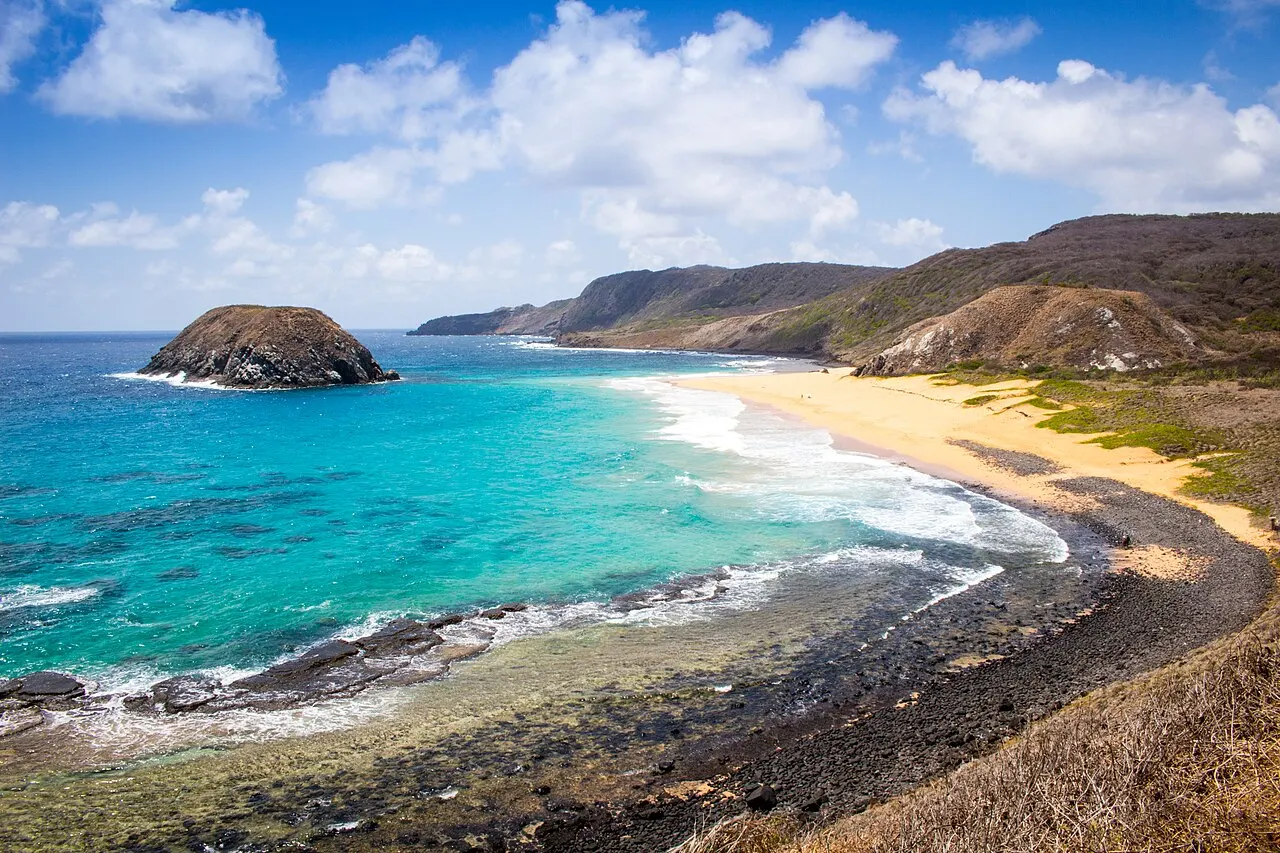
With Sueste temporarily closed to swimming, snorkeling and floating, anyone who wants to see turtles has a better chance at Praia do Leão, a nesting area from December to May, or by diving with an authorized operator. At Leão, I'd swim only in the sandy-bottomed pools, away from the reefs and the currents.
Explore the map
Explore the map, read about the other places and plan your travel days in the app.
Open the appWhat to see
Fernando de Noronha: A volcanic archipelago of 26 km²
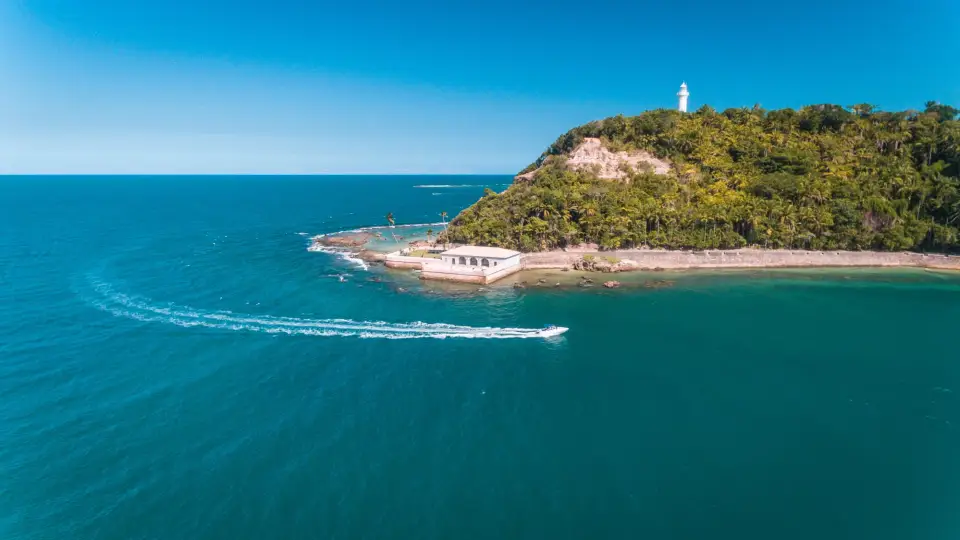
The archipelago is the top of a volcanic mountain rising from the Atlantic seabed, and totals 21 islands, islets and rocks. Where the BR-363 ends and where boat tours depart.
Baía do Sancho
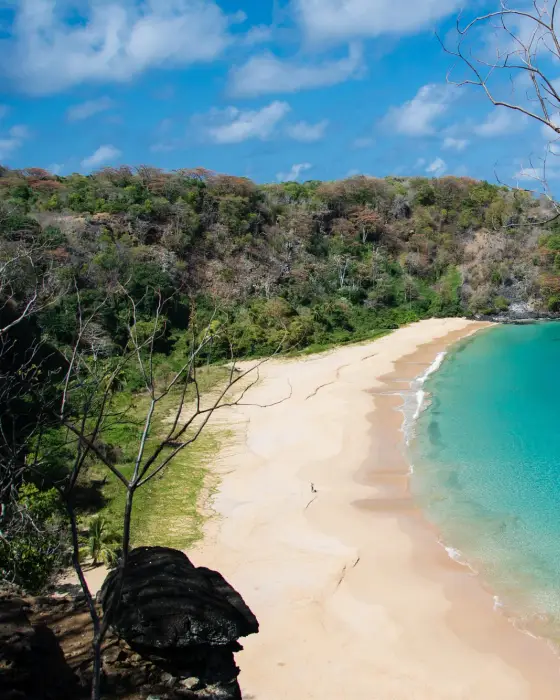
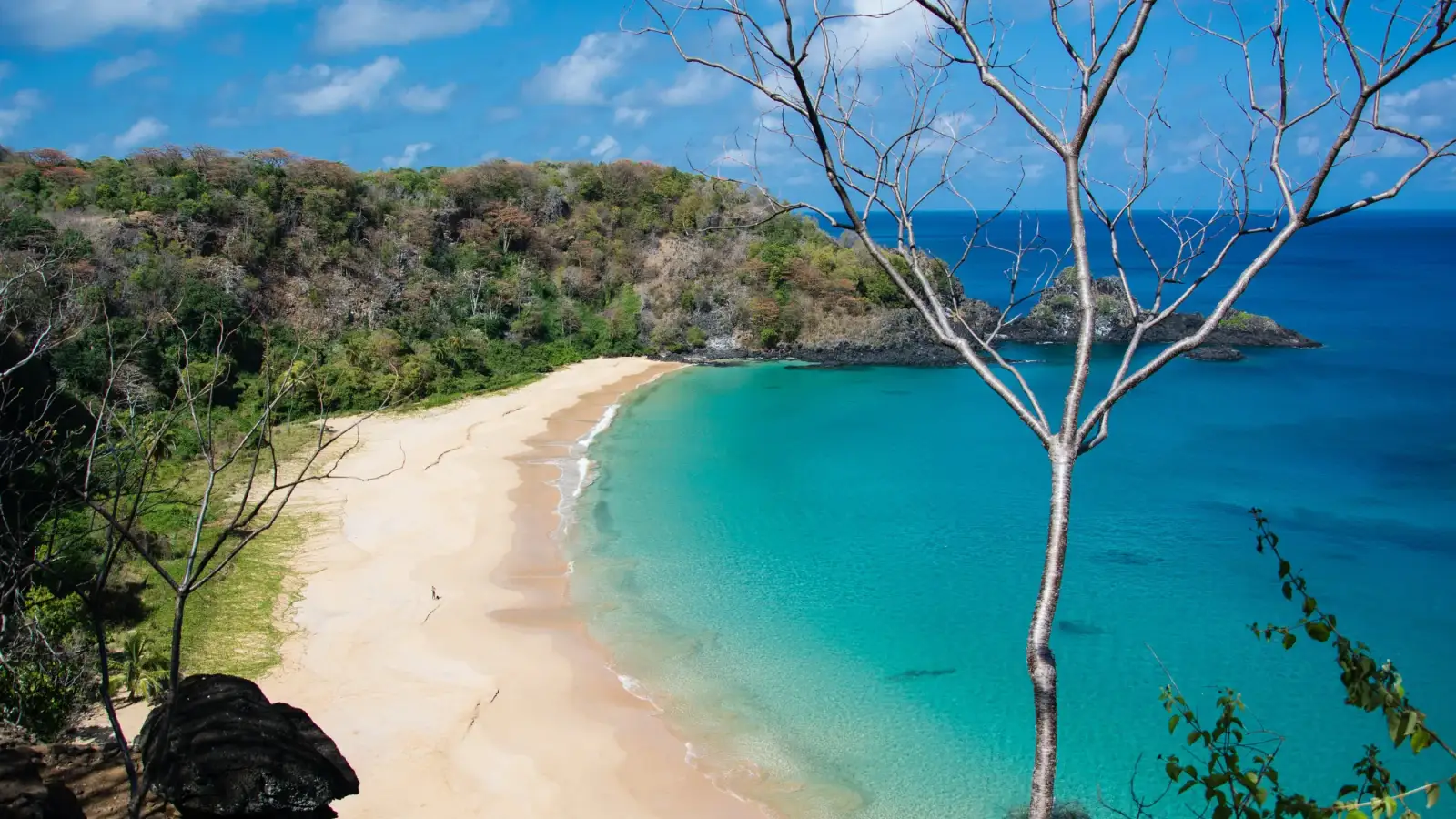
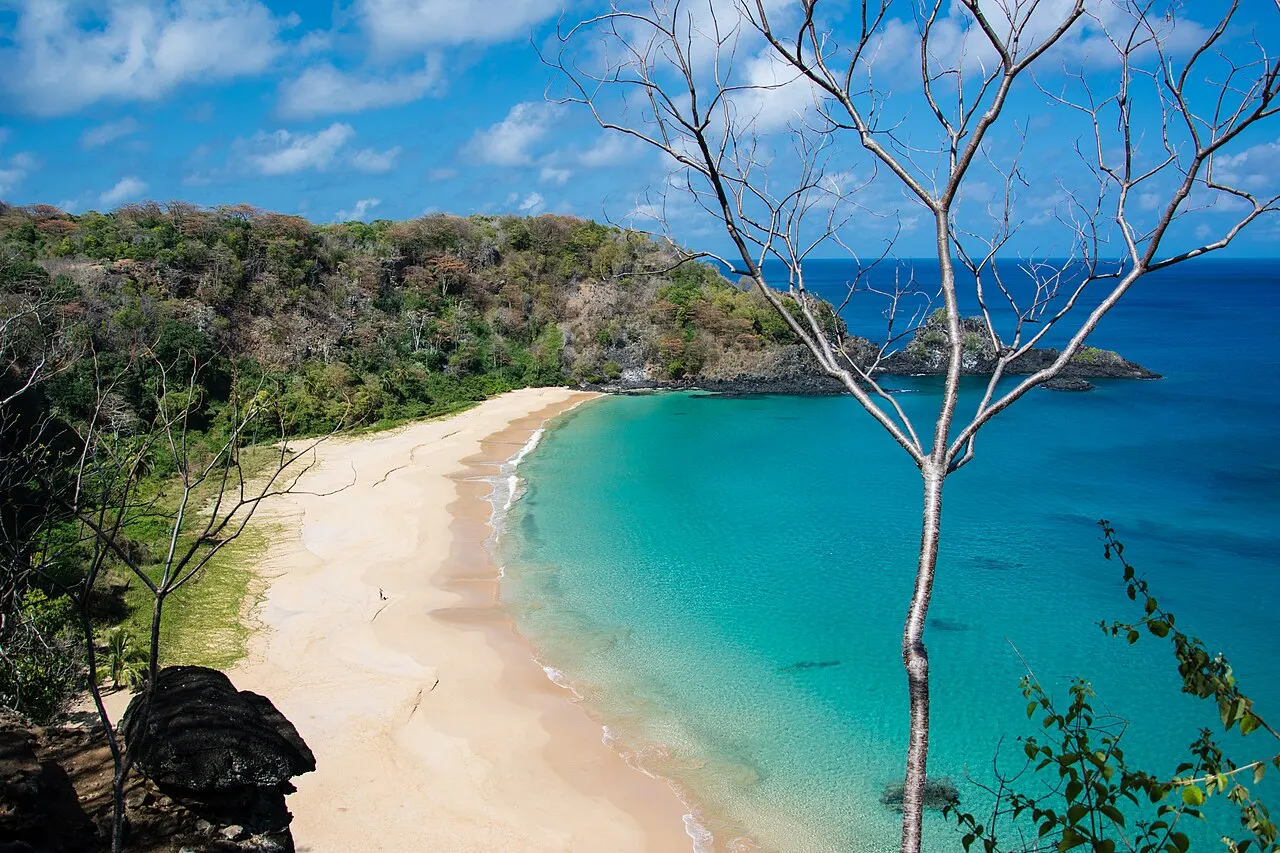
An inner-sea beach, several times voted the best beach in the world by Tripadvisor users. It is part of the park, and the ticket is checked at the Golfinho-Sancho post. It is open from 8 a.m. to 6 p.m. From above you descend by a sailor's ladder that runs in shifts: from 8 to 8:50 a.m. and from 4:30 to 5:20 p.m. in both directions, and the rest of the day in alternating blocks of down-only or up-only, so the morning line can be long. A suspended walkway made of recycled material leads to the lookouts and serves people with reduced mobility. Tour boats stop there for snorkeling, at most four at the same time.
The park's best-known beach has a descent ladder operated in shifts: from 8 to 8:50 a.m. it allows both directions, and later the morning queue can be long.
Check access
Baía dos Golfinhos
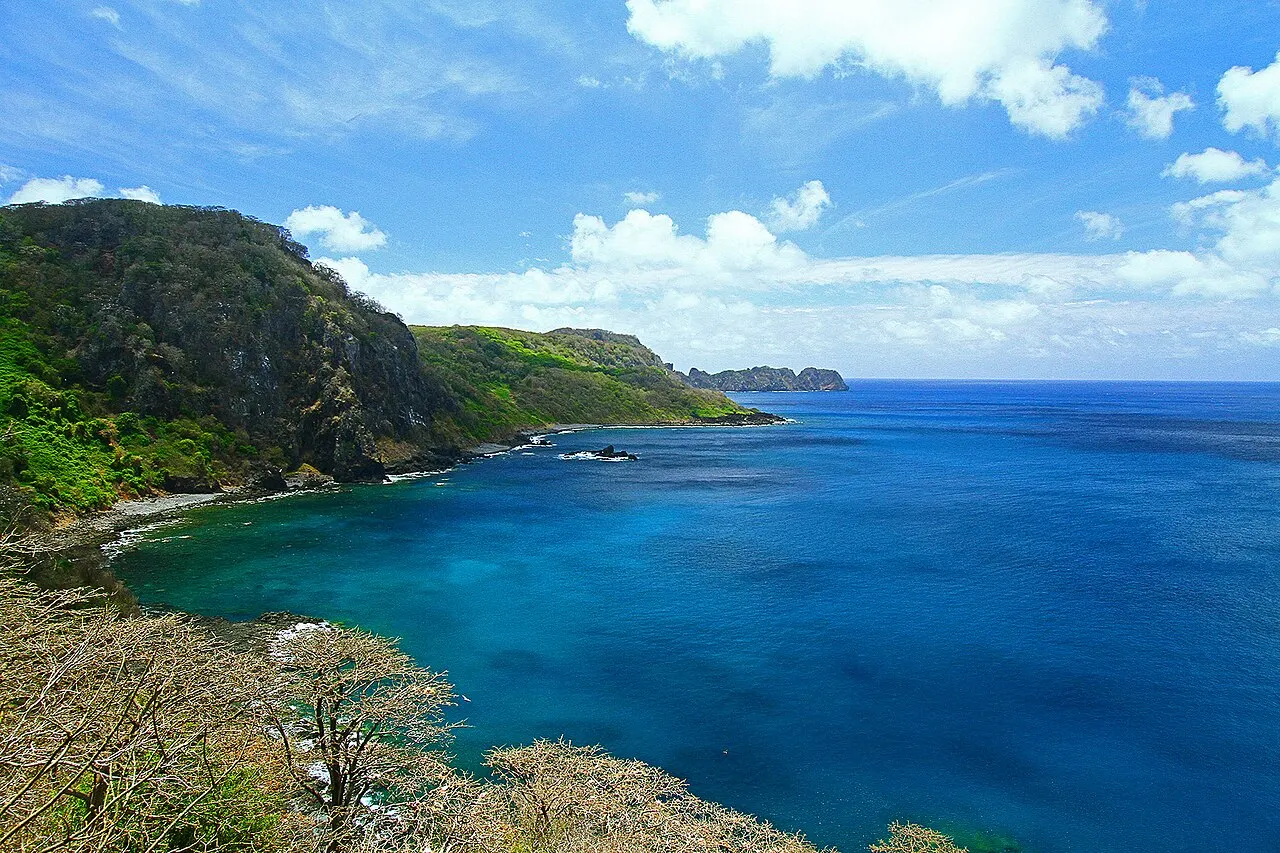
A lookout on top of the cliff above the bay where the resident group of spinner dolphins comes to rest, care for their calves and mate; they feed far from there, in the outer sea. Between 2004 and 2024 the spinners were in the bay on 90% of days, averaging 352 animals per day. The lookout is open from 6:30 a.m. to 6:30 p.m., and early morning is the most likely time to see them. Nobody goes down, swims or enters the bay by boat. Bring binoculars if you have them.
Between 2004 and 2024, spinner dolphins were in the bay on 90% of days, averaging 352 animals; the lookout opens at 6:30 a.m., the most likely time to see them.
Check access
Praia do Atalaia
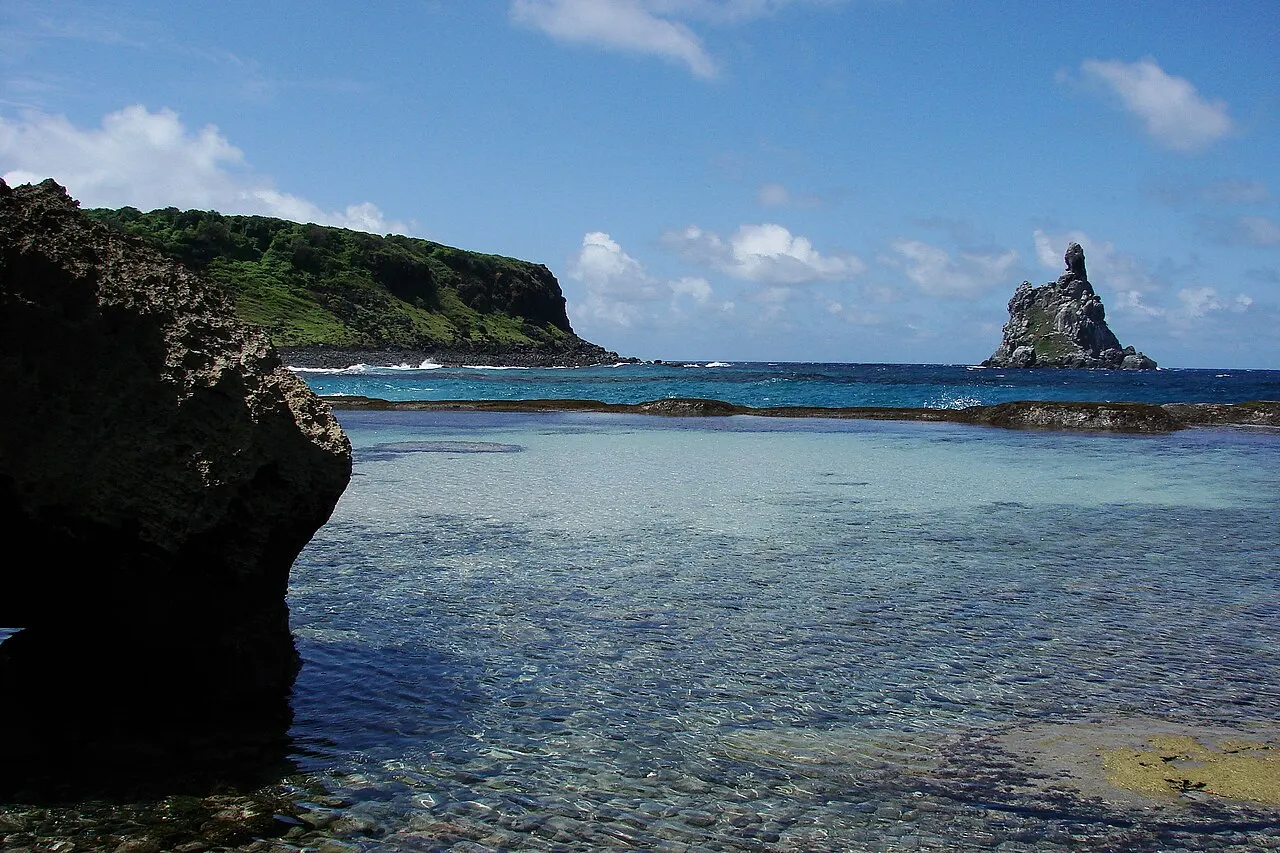
The park's best-known natural pool, in the outer sea, visited only at low tide, with a coral-covered floor and daily spots set by a carrying-capacity study. The trail is 3 km round trip, about 30 minutes each way, and the time slot is set each day by the peak of low tide. It requires booking with the ticket number. In the water, a life vest, mask and snorkel are mandatory, and you may not stand, kneel or lean on the bottom. Sunscreen and other cosmetics may not be applied before the swim.
The natural pool has a coral-covered bottom, daily places set by a carrying-capacity study and a time that changes each day with low tide: book with your ticket number, bring a life vest, mask and snorkel, and apply no sunscreen before entering the water.
Check access
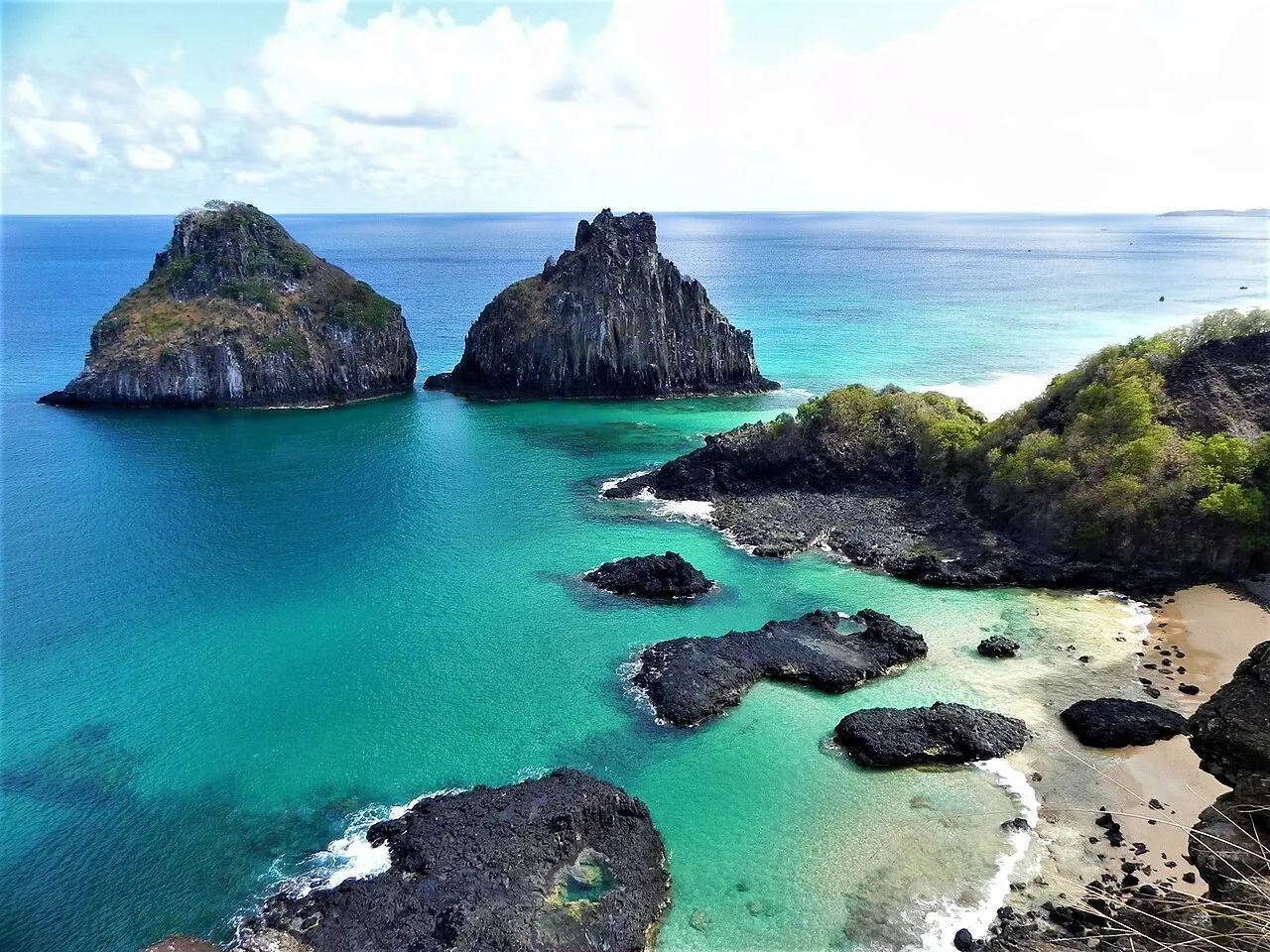
Baía dos Porcos
A small cove between rocks, with pools that are good for snorkeling when the sea is calm, next to Sancho. Access is by a trail that starts at the left end of Praia da Cacimba do Padre, with entry and exit control and its own hours, which ICMBio publishes. No booking needed.
The pools among the rocks are good for snorkeling in calm seas, and the trail starts at Cacimba do Padre without advance booking, allowing you to combine the bay with an afternoon at Sancho.
Check access
Praia do Leão
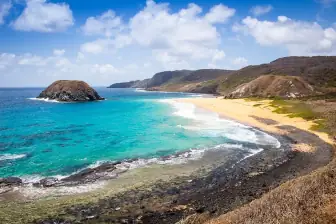
A long outer-sea beach, with two islets in front, Morro do Leão and Viuvinha, and the main green turtle nesting site from December to May. It is open from 8 a.m. to 6 p.m., with control at the Leão post. The sea has strong currents: swimming and snorkeling are allowed on the strip of sand and in the sandy-bottomed pools, never over the reefs at the sides. Through the same gate at the Leão post you reach the Ponta das Caracas lookout, between Leão and Sueste, good for seabirds, and the ruins of the Forte de São Joaquim do Sueste; both are open from 8 a.m. to 6 p.m. Sunset, between 6 and 6:30 p.m. depending on the season, falls after closing.
The main green turtle nesting site from December to May; the Leão post gate also leads to the Ponta das Caracas lookout and Forte de São Joaquim do Sueste, open until 6 p.m. Strong currents mean swimming is restricted to the sand strip and sandy-bottomed pools, never the reefs at the sides.
Check access
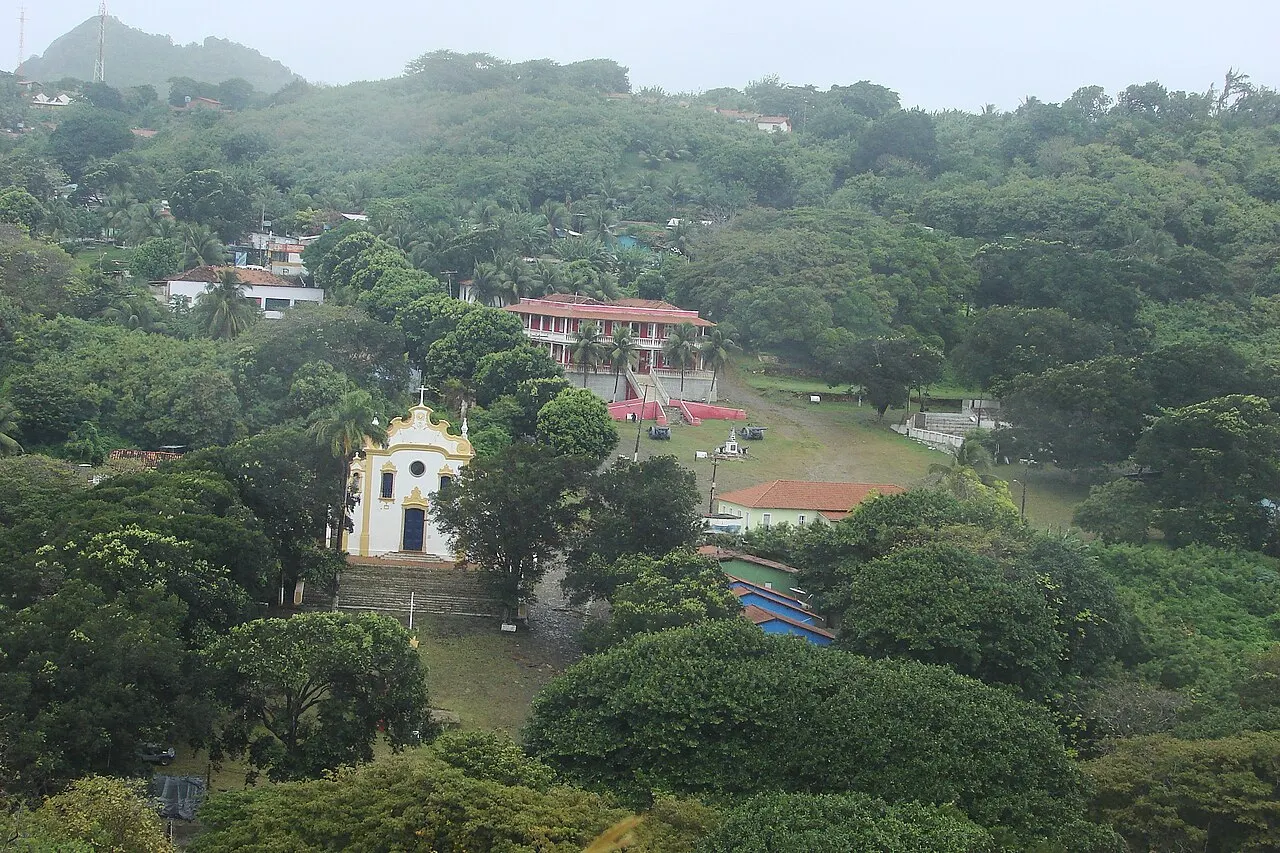
Vila dos Remédios
The settlement founded within the 18th-century military project and a walled town during the penal period. Around the square are the church, the Palácio de São Miguel, seat of the district administration, and the Memorial Noronhense, a cultural space on the island's history. Stretches of the old wall remain, 50 cm to 1 m high, behind the church and next to the memorial. It is also where restaurants and shops cluster.
The 18th-century settlement preserves stretches of the penal-era wall, Palácio de São Miguel and Memorial Noronhense, and is where the restaurants are.
Check access
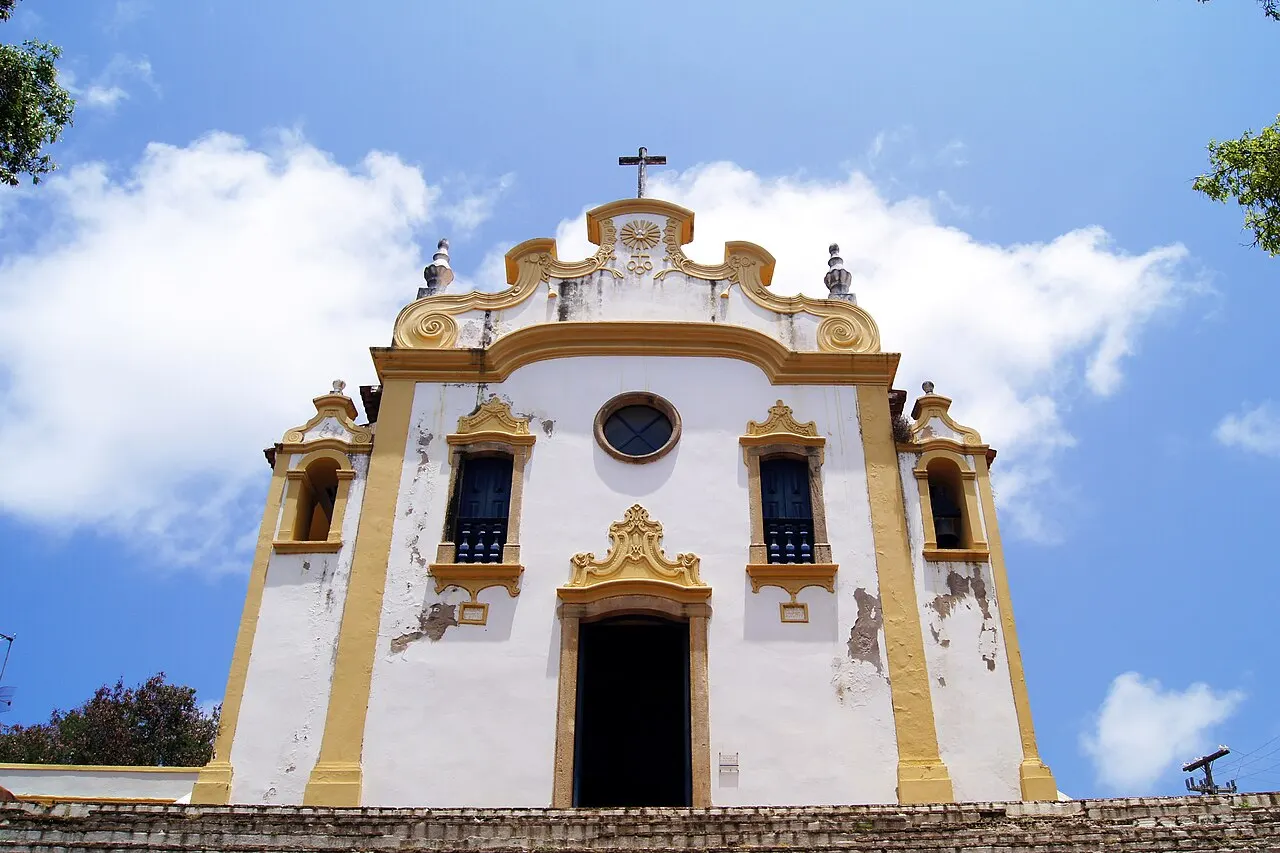
Igreja de Nossa Senhora dos Remédios
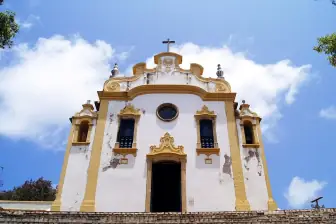
Begun in 1737 together with the fort and completed in 1772, the year engraved on the façade, it has a single nave with a choir and a main chapel, in sandstone masonry. It has been a listed monument since 1937 and was last restored in 1988. The patron saint is celebrated on August 29, a district holiday since 1947.
Begun with the fort in 1737 and completed in 1772, the year carved on the facade, the patron saint's church has been listed since 1937 and hosts the August 29 celebration.
Check access
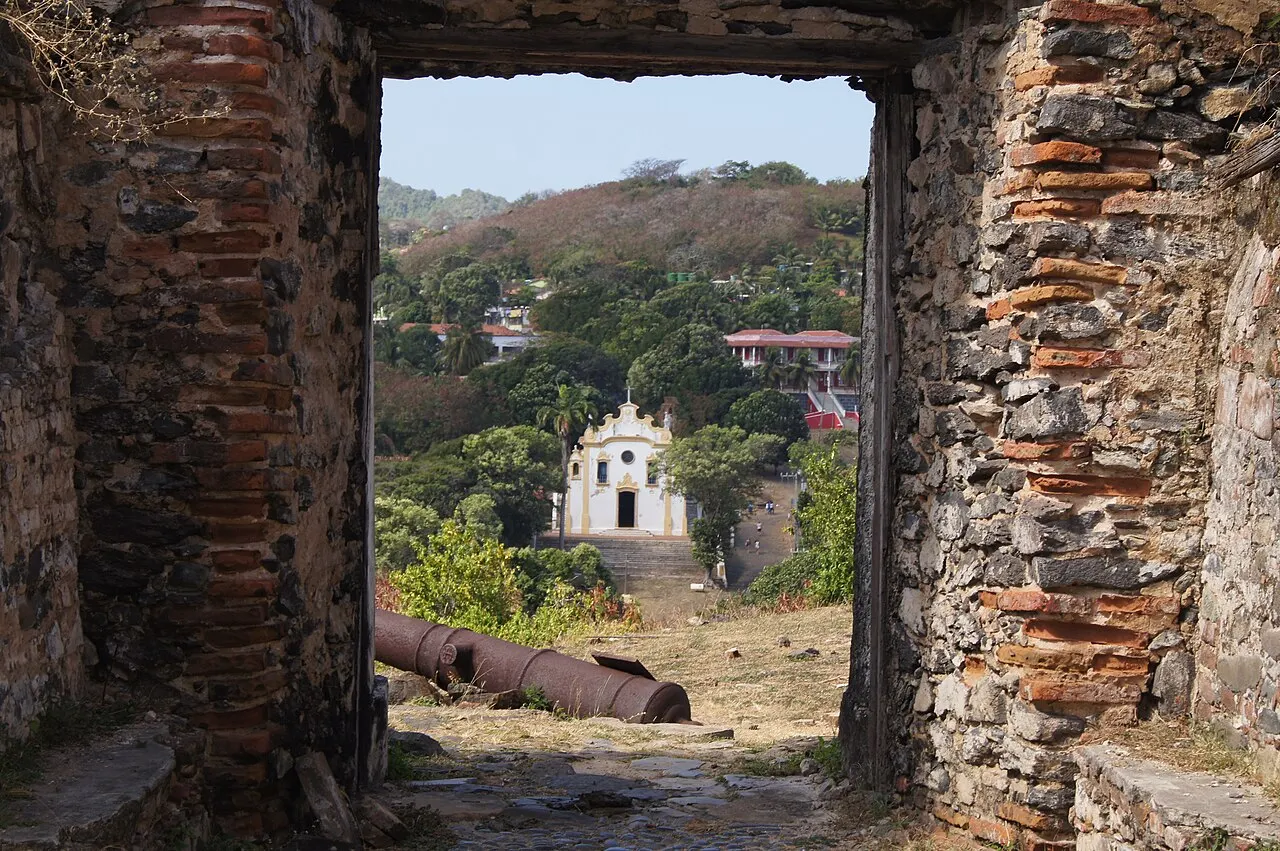
Forte de Nossa Senhora dos Remédios
The ruins of the island's main fortification, begun in 1737 over a Dutch position and expanded from 1741, stand 45 m above Baía de Santo Antônio, next to Vila dos Remédios. They have been listed since 1937 and are open to visit, but the state of conservation is poor: go for the position over the bay and for the history, and watch out for walls and uneven floors.
The island's main fortification, begun in 1737, stands 45 m above Baía de Santo Antônio; open to visitors but in poor condition.
Check access

Praia da Cacimba do Padre
An inner-sea beach that is not on the list of park beaches requiring a ticket, known for the barreling waves that make Noronha a surf destination, as are Boldró and Praia do Cachorro. The trail to Baía dos Porcos starts at the left end.
The beach of barreling waves that make Noronha a surf destination is also the starting point for the Baía dos Porcos trail; it is not on the list of park beaches requiring a ticket.
Check access
Nilo’s itinerary
Start with the basic programme and choose extensions for the time you have.
Plan my days in the app ↗Day 1 · Arrival, ticket and Vila dos Remédios
On arrival, check the TPA at the airport; with a card from outside Brazil, that is where you pay it.
Take the bus or a taxi to the Visitor Center in Boldró (8 a.m. to 7 p.m.), buy or validate the park ticket and book Atalaia for day 3.
Late in the afternoon, head to Vila dos Remédios and see the Igreja de Nossa Senhora dos Remédios, with 1772 on the façade, and the stretches of old wall behind it.
Climb to the ruins of the Forte de Nossa Senhora dos Remédios, 45 m above Baía de Santo Antônio, taking care on the uneven floors.
Have dinner in the village and sleep early: the next day starts at 6:30 a.m.
Day 2 · Dolphins, Sancho and Baía dos Porcos
Be at the Golfinho-Sancho post at 6:30 a.m. and go to the Baía dos Golfinhos lookout to watch the spinners resting.
Follow the trail to Sancho and go down the ladder between 8 and 8:50 a.m., when it runs in both directions.
Climb back up in one of the up windows (10:30 to 11:20 a.m. or 12:30 to 1:20 p.m.) and have lunch.
In the afternoon, go to Cacimba do Padre and take the trail from the left end of the beach to Baía dos Porcos, checking the trail's hours on the park's website first.
Stay at Cacimba do Padre until late afternoon.
Day 3 · The outer sea: Atalaia, Sueste and Leão
Build the day around your booked Atalaia time, which follows the low tide and may fall in the morning or afternoon; Baía do Sueste closes its beach at 4 p.m.
At Atalaia, arrive without sunscreen on your skin: it is 3 km round trip, and a life vest, mask and snorkel are mandatory in the pool.
At Baía do Sueste (beach open from 9 a.m. to 4 p.m.), watch the orientation video and see the bay from the sand, without getting in the sea.
Go to Praia do Leão, which is open from 8 a.m. to 6 p.m., and swim only on the strip of sand and in the sandy-bottomed pools.
Through the gate at the Leão post, climb to the Ponta das Caracas lookout and the ruins of the Forte de São Joaquim do Sueste before 6 p.m., when they close, to see seabirds in the late afternoon.
Day 4 · The inner sea seen from a boat
In the morning, take a boat tour with a park-authorized company, departing from the port (R$ 150 to R$ 300 per person in 2026).
On the boat, dolphins are watched from outside their groups, and the snorkeling stop at Sancho depends on there being a spot among the four boats allowed.
In the afternoon, take an introductory dive with an ICMBio-authorized operator or return to one of the inner-sea beaches.




If you stay longer
Day 5 · Capim-Açu trail
Day trip
The park's longest trail, 7.5 km one way, over dirt, gravel and lookouts, ending at Praia do Leão: arrange your ride back from there beforehand. It requires booking and an accredited guide; you can go to the lighthouse and back from the entrance gate without a guide. Bring water, a snack, sunscreen and trail shoes.
Food
Fish and seafood
Moqueca, sururu and fish appear on island menus listed by travel guides, from low-priced restaurants in Boldró to places with a higher average ticket. Ask which fish is the catch of the day and whether the price is per person or per portion.
Açaí bowl
Frozen, blended açaí pulp, served in a bowl with granola and banana, is a common breakfast at the port before the boat tours.
Where to eat
- Port · $
Açaí bowl and breakfast before boarding the boat tour.
- Boldró · $
Moqueca, sururu and fish at a simple restaurant on the side of the BR-363.
- Floresta Nova and Praia da Conceição · $$
Fish and seafood at an inn's restaurant or a beach bar.
- Vila dos Remédios and Boldró · $$$
Dinner at a tourist-oriented restaurant, R$ 120 to R$ 200 per person.
$: up to R$ 50: coffee or açaí · $$: R$ 50 to R$ 120 per meal, such as a set-menu lunch · $$$: more than R$ 120 per person at dinner · 2026-10-15
Day trips
Capim-Açu trail
The park's longest trail, 7.5 km one way, over dirt, gravel and lookouts, ending at Praia do Leão: arrange your ride back from there beforehand. It requires booking and an accredited guide; you can go to the lighthouse and back from the entrance gate without a guide. Bring water, a snack, sunscreen and trail shoes.
Scuba diving
Visibility reaches 50 m and the warm water allows dives of 30 to 40 m without a wetsuit; the corvette Ipiranga, wrecked at 62 m, is a destination for experienced divers. The park ticket is mandatory, and only operators authorized by ICMBio take divers out. In 2026, a tank dive costs R$ 250 to R$ 450.
Pontinha-Caieira
A 4.3 km trail one way only, about 3.5 hours of walking, with natural pools along the way; there is also a version that starts at Atalaia, at 6 km. It requires booking, an accredited guide, a life vest, mask and snorkel, and the time follows the day's low tide.
Where to begin
Arrival, ticket and Vila dos Remédios
On arrival, check the TPA at the airport; with a card from outside Brazil, that is where you pay it.
Dolphins, Sancho and Baía dos Porcos
Be at the Golfinho-Sancho post at 6:30 a.m. and go to the Baía dos Golfinhos lookout to watch the spinners resting.
The outer sea: Atalaia, Sueste and Leão
Build the day around your booked Atalaia time, which follows the low tide and may fall in the morning or afternoon; Baía do Sueste closes its beach at 4 p.m.
Money
The currency is the real (R$). Staying on Noronha involves two mandatory charges, and it is best to settle them before the trip. The Environmental Preservation Fee is charged by the district per day of stay, on a table that grows more slowly from the fifth day: in 2026 it is R$ 105.79 for one day, R$ 423.17 for four, R$ 520.50 for five and R$ 672.85 for seven. Days beyond those declared are charged double if the stay is not regularized beforehand. The Marine National Park ticket costs R$ 384, with a 50% discount for Brazilians (R$ 192), is valid for 10 days and is free for children under 12 and Brazilians over 60; it is bought on the park's website or at the Visitor Center in Boldró. In 2026, a budget inn costs between R$ 300 and R$ 600 a night, a mid-range one between R$ 600 and R$ 1,200 and a luxury one more than R$ 1,500; a set-menu lunch costs R$ 50 to R$ 90, and dinner at a tourist-oriented restaurant R$ 120 to R$ 200. A boat tour costs R$ 150 to R$ 300 per person, and a tank dive R$ 250 to R$ 450.
Getting there and around
Getting there: flight from Recife or São Paulo
Only private vessels arrive by sea; the normal way in is by plane, at Aeroporto Governador Carlos Wilson (FEN), which opened the first phase of its new terminal on May 15, 2026, with 3,000 m², almost triple the old one. In August 2026 Anac counted 34 weekly flights: 18 by Azul, departing from Recife, about an hour's flight; 11 by Gol and 5 by Latam, mostly departing from Guarulhos, in São Paulo. Before boarding, pay the TPA on the administration's website; with a card issued outside Brazil, it can only be paid at the counter at the island's airport. From the airport, the BR-363 bus line, which runs from the port to Sueste, passes by the door; there are also taxis and buggy rentals, and if you travel light you can walk to the road.
Getting around the island: one bus, buggies and your own feet
The BR-363, the only road, is about 7 km long and links the port to Sueste. A bus line runs this route with three vehicles, every 30 minutes; the fare is R$ 5 for tourists. To reach more places in the same day, you can rent a buggy, R$ 250 to R$ 450 per day, a motorbike, R$ 120 to R$ 200, or a bicycle, R$ 50 to R$ 80 (2026 prices). The park's beaches are reached on foot from the control posts, and several trails can only be done with a guide accredited by ICMBio.
Safety

Noronha doesn't have the crime of a big city, and what calls for attention is the sea. In the outer sea the currents are strong, and at Praia do Leão swimming is only allowed on the strip of sand and in the sandy-bottomed pools. The archipelago is a feeding area for sharks, there have been incidents with swimmers, and Baía do Sueste is temporarily closed to swimming: swim only in the open areas, near the shore, in daylight and with good visibility. Scuba diving only with operators authorized by ICMBio. On long trails, such as Capim-Açu, bring water, a snack, sunscreen and closed shoes, as ICMBio recommends. In the rainy season, from February to July, the trails get slippery.
Etiquette tips
Sunscreen waits until after the pool
In the natural pools of Atalaia, Pontinha-Caieira and Abreu it is forbidden to enter with sunscreen or any other cosmetic on your skin, because the floor of these pools is covered in coral. Wear sun-protective clothing and apply sunscreen after the swim.
Don't step on the bottom
In the pools with booking, float with a life vest, mask and snorkel: standing, kneeling or leaning on the bottom is forbidden.
Don't bring disposable plastic
A 2018 district decree bans the entry, use and sale of disposable plastic on the island. Bring a reusable bottle and bag.
Don't feed or touch the animals
In the park it is forbidden to touch, feed or collect anything, and on the boat you don't feed fish and birds either. Boats go around groups of dolphins, never toward them.
Drones only within the rules
In the environmental protection area, flying a drone doesn't need an environmental license, but it follows Anac and Decea rules. Inside the park, it is, as a rule, for research and scientific outreach only.
Secondary islands are for looking
You may not land on the secondary islands or climb the islets at Praia do Leão.
Mistakes to avoid
Confusing the TPA with the park ticket
They are two charges from two different bodies. The TPA belongs to the district and is paid per day; the ticket belongs to ICMBio, is valid for 10 days and gives access to the park's beaches and trails. Having paid one doesn't excuse you from the other.
Leaving Atalaia to sort out on the island
The natural pools have limited daily spots, and the time changes every day with the low tide. Book as soon as you have the ticket number, through the park's platform or at the Visitor Center in Boldró.
Arriving at Sancho in mid-morning
From 9 to 10:20 a.m. the ladder is down-only, and the morning line can be long. Go down between 8 and 8:50 a.m., when it runs in both directions, or in the afternoon, which tends to be calmer.
Going to Sueste to swim with turtles
Baía do Sueste is temporarily closed to swimming, snorkeling and floating. The beach is open for the view. Praia do Leão is a nesting area from December to May: observing turtles there does not mean swimming with them; swimming and snorkeling are allowed along the sandy strip and in sandy-bottomed pools, never over the reefs at the sides; the sea has strong currents. For diving, use an authorized operator and check the permitted sites.
Staying extra days without telling anyone
Days beyond those declared in the TPA are charged double. If you decide to extend your stay, regularize it before it expires.
Useful phrases
TPA
Taxa de Preservação Ambiental, the Environmental Preservation Fee, charged by the district per day of stay
PIC
Posto de Informação e Controle (Information and Control Post): where ICMBio checks the ticket at the entrance to the park's beaches
Agendamento
The time-slot booking for natural-pool trails, made with the ticket number
Mar de dentro / mar de fora
The more sheltered northwest coast (the inner sea) and the southeast coast facing the open ocean (the outer sea)
Condutor
A guide accredited by ICMBio, mandatory on some park trails
Rotador
The spinner dolphin, which spins in the air when it leaps
Where to stay
- Vila dos Remédios · For those who won't rent a buggy and want restaurants within walking distance · $$: It is the island's commercial center, with the church, the fort and restaurants nearby, and the bus passes right by.
- Boldró · For those who want to stay midway between the two seas · $$: It is near the ICMBio Visitor Center, where you buy the ticket and book trails, and near Cacimba do Padre, where the trail to Baía dos Porcos starts.
- Along the BR-363 · Tight budget, no car · $: With the bus passing every 30 minutes between the port and Sueste, a simple inn near any point on the road works. Check the distance to the stop before booking.
$: budget inn, R$ 300 to R$ 600 a night · $$: mid-range inn, R$ 600 to R$ 1,200 a night · $$$: more than R$ 1,500 a night · 2026-10-15
Districts
Vila dos Remédios
The historic core and the island's main commercial center. It holds the Igreja de Nossa Senhora dos Remédios, the Palácio de São Miguel (seat of the administration), the Memorial Noronhense and the fort ruins above Baía de Santo Antônio, plus restaurants and shops.
Port and Baía de Santo Antônio
Where the BR-363 ends and where boat tours depart. It is the starting point of the bus line and a place for breakfast before the boat.
Boldró
Home to the ICMBio Visitor Center, where you buy the ticket and book trails from 8 a.m. to 7 p.m., and the Centro Golfinho Rotador.
Inner sea
The northwest coast, with the sheltered beaches: Cacimba do Padre, Baía dos Porcos, Sancho and Baía dos Golfinhos. The Golfinho-Sancho Information and Control Post controls entry to the last two.
Outer sea
The southeast coast, facing the open ocean, with Praia do Leão, Baía do Sueste and Atalaia. It is the side of the natural pools with booking, green turtle nesting and the strongest currents.
History
1502–1504 · The island appears on maps and gets an owner
An island called Quaresma appears on the Cantino planisphere of 1502. On January 16, 1504, King Manuel I grants the island of São João to Fernão de Loronha as a hereditary captaincy, and the grantee's name stays on the archipelago.
1629–1654 · Dutch occupation
During the Dutch presence in the Northeast, the archipelago is occupied and renamed Pavônia.
1700 · Tied to Pernambuco
A royal decree of September 24 annexes the island to the captaincy of Pernambuco.
1736–1737 · The French and the Portuguese response
The French East India Company occupies the island in 1736 and calls it Isle Dauphine. An expedition from Recife retakes it in 1737, and construction begins on the Forte de Nossa Senhora dos Remédios over a ruined Dutch position.
1739 · The penal colony
The island is organized as the Presídio de Fernando de Noronha, with a fortification plan by the engineer Diogo da Silveira Veloso that included the settlements of Vila dos Remédios and Quixaba.
1772 · The village church
The Igreja de Nossa Senhora dos Remédios, begun in 1737 together with the fort, is completed; the year is on the façade.
1832 · Darwin comes ashore
HMS Beagle arrives on the night of February 19, and the next day Charles Darwin goes ashore and records the vegetation in his voyage diary.
1833–1910 · Prison island
The island begins receiving convicts sentenced to the galleys. There were 187 prisoners in 1844 and 2,364 in 1885. The ordinary prison operates until 1910.
1938–1957 · Political prison and air base
A federal political prison operates from 1938 to 1957. In 1942 the island becomes a Federal Territory under military administration, and the United States air forces build an airport for the route between Natal and Dakar.
1988 · District of Pernambuco and national park
The Federal Territory is abolished, and the archipelago returns to Pernambuco as a state district. On October 14 the Marine National Park is created, with about 11,270 hectares.
2001 · World Heritage
UNESCO inscribes Fernando de Noronha and Atol das Rocas as a natural World Heritage site.
2025–2026 · Solar power and the visitor cap
A floating solar plant goes into operation on the Xaréu reservoir in November 2025. In 2026, the agreement between the Union and Pernambuco, ratified by the Supreme Federal Court, sets a cap of 11,000 visitors per month, and the state government asks Anac to reorganize flights to comply with it.
Complete history
An island useful for its position
For three centuries, Fernando de Noronha mattered more for its place on the map than for what it had on land. The island lies on the routes that crossed the Atlantic near the Equator, which is why the Dutch, between 1629 and 1654, and the French, in 1736, tried to settle it. The Portuguese response, starting in 1737, was to fortify it: the Forte de Nossa Senhora dos Remédios, 45 m above Baía de Santo Antônio, and a system of forts and redoubts that by the end of the 18th century totaled five regular fortifications and 54 cannons. Vila dos Remédios was born inside that military project, with a church, a command house and a wall.
Two centuries as a prison
From 1739 the island was a penal colony, and that role lasted longer than any other. Convicts sentenced to the galleys arrived in growing numbers in the 19th century, and in 1885 there were 2,364 prisoners on an island with no other economy. The village worked as a walled town, and stretches of that wall still appear behind the Igreja de Nossa Senhora dos Remédios and next to the Memorial Noronhense. Most of the original forest was cut down in this period, which helps explain the low vegetation of the main island. After the ordinary prison, which ended in 1910, came the federal political prison, from 1938 to 1957.
War, the military and the return to Pernambuco
In 1942 the island became a Federal Territory under military command, and the United States air forces built a landing strip for the route between Natal and Dakar. The territory lasted 46 years. The first inn for tourists opened in 1972, still under military administration. In 1988 the archipelago returned to Pernambuco as a state district, governed by a general administration based in the Palácio de São Miguel, in Vila dos Remédios.
The park and the limit
The Marine National Park, created in 1988, turned most of the archipelago into a fully protected area, and visits came to be regulated: tickets, checkpoints, trails scheduled by the tide and tours only with authorized companies. Outside the park, the environmental protection area holds the houses, inns and shops. Today's tension is over how many people the island can bear: the agreement between the Union and Pernambuco set a cap of 11,000 visitors per month, or 132,000 per year, but about 140,000 arrived in 2025, and in August 2026 the state government asked Anac to redistribute landing slots to respect the limit.
During the penal period, Vila dos Remédios worked as a walled town; stretches of the wall remain behind the church.
Geography and shape of the city
A volcanic archipelago of 26 km²
The archipelago is the top of a volcanic mountain rising from the Atlantic seabed, and totals 21 islands, islets and rocks. The main island is about 10 km long and 3.5 km at its widest; the Quixaba plateau sits in the middle, and the highest point is Morro do Pico, at 323 m. The secondary islands, such as Rata, Sela Gineta and Cabeluda, receive no visitors ashore.
The inner sea and the outer sea
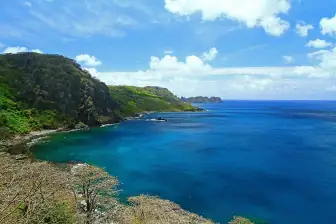
The island has two sides to its sea. The inner sea (mar de dentro), on the northwest coast, holds the more sheltered bays and beaches, such as Baía de Santo Antônio, where the port is, Cacimba do Padre, Baía dos Porcos, Sancho and Baía dos Golfinhos. The outer sea (mar de fora), on the southeast coast, faces the open ocean, with Leão, Sueste and Atalaia, where waves and currents are stronger. The spinner dolphins feed in the outer sea and enter the inner-sea bays to rest.
Equatorial climate and a single road
The climate is tropical, with an average annual temperature of about 27 °C and little variation between months. Rain is concentrated from February to July, peaking in April, and the rest of the year is dry. The BR-363, about 7 km long, links the port, at Baía de Santo Antônio, to Sueste, passing through Vila dos Remédios and the airport, and almost all of the island's life happens along it.
The spinner dolphins feed in the outer sea and enter the inner-sea bays to rest.
Culture
An island of researchers
Much of what is known about the sea around Noronha comes from projects based on the island itself. The Projeto Golfinho Rotador has studied the bay's dolphins since 1991 and keeps a center in Boldró, and Projeto Tamar has a visitor center in the archipelago. The 2004 to 2024 data on how many dolphins enter the bay, and for how long they stay, come from this continuous monitoring.
Surfing, soccer and everyday life for residents
With barreling waves at Cacimba do Padre, Boldró and Cachorro, the island is one of the best-known surf destinations in Brazil. Among residents, soccer has its own championship, the Noronhão, and an amateur team that plays in the district stadium. The island has a TV station, TV Golfinho, and a radio station, FM Noronha.
The patron saint's festival
The festival of Nossa Senhora dos Remédios, on August 29, has been a district holiday since 1947 and is the main religious event on the island's calendar, centered on the 18th-century church in Vila dos Remédios.
Festivals and events
Festa de Nossa Senhora dos Remédios: August 29
The archipelago's patron saint is celebrated at the church in Vila dos Remédios, on a district holiday established in 1947. Check the program with the district administration before you travel.
Green turtle nesting: December to May
It isn't a festival, but it is the event that changes Praia do Leão the most: it is the time when green turtles come up onto the sand to lay their eggs. The beach is open from 8 a.m. to 6 p.m., and the nests are on the sand.
Books and films
The Voyage of the Beagle (1839), Charles Darwin
Darwin came ashore on Noronha on February 20, 1832, at one of the stops of HMS Beagle's voyage, and described the vegetation as a dense forest, before the penal period cut down most of it. Read on the island, the account shows how much the landscape has changed.
Frequently asked questions
Fernando de Noronha: How do you get to the island?
By plane, at Aeroporto Governador Carlos Wilson (FEN). In August 2026 there were 34 weekly flights: 18 by Azul, departing from Recife, about an hour's flight, and 11 by Gol and 5 by Latam, mostly departing from Guarulhos, in São Paulo.
Fernando de Noronha: How much do the TPA and the park ticket cost?
In 2026 the TPA is R$ 105.79 for one day, R$ 423.17 for four and R$ 520.50 for five. The Marine National Park ticket costs R$ 384, with a 50% discount for Brazilians (R$ 192), and is valid for 10 days. Children under 12 and Brazilians over 60 are exempt from the park admission fee; its 10 days start at first access or activation.
Fernando de Noronha: How many days should you stay?
Four days: one to arrive and sort out the ticket and bookings, one for the inner sea, one for the outer sea and one by boat. With fewer than three days it isn't worth it, because the airfare and fees weigh too much to see only one side of the island.
Fernando de Noronha: Can you swim with turtles at Sueste?
Baía do Sueste is temporarily closed to swimming, snorkeling and floating. The beach is open for the view. Praia do Leão is a nesting area from December to May: observing turtles there does not mean swimming with them; swimming and snorkeling are allowed along the sandy strip and in sandy-bottomed pools, never over the reefs at the sides; the sea has strong currents. For diving, use an authorized operator and check the permitted sites.
Fernando de Noronha: When is the best time to go?
August to November: dry season and outside the peak occupancy of New Year's Eve and January. From February to July it rains more, peaking in April, and the trails get muddy.
Other cities in the country
Brazil ↗- Days
- 4
- When
- Apr–Jun
- Per person/day
- Average 615 BRLMid-range · per person/day
Cost scope
Per person per day: accommodation, meals, urban transport, visits and a small allowance for extras. Flights excluded; larger purchases vary. Editorial estimate, not a quote.
- Days
- 2–3
- When
- Apr–May · Sep
- Per person/day
- Average 400–700 BRLMid-range · per person/day
Cost scope
Per person per day: accommodation, meals, urban transport, visits and a small allowance for extras. Flights excluded; larger purchases vary. Editorial estimate, not a quote.
- Days
- 2–3
- When
- Jan–Mar · Sep–Dec
- Per person/day
- Average 350–550 BRLMid-range · per person/day
Cost scope
Per person per day: accommodation, meals, urban transport, visits and a small allowance for extras. Flights excluded; larger purchases vary. Editorial estimate, not a quote.
- Days
- 1–2
- When
- May–Sep
- Per person/day
- Average 260–520 BRLMid-range · per person/day
Cost scope
Per person per day: accommodation, meals, urban transport, visits and a small allowance for extras. Flights excluded; larger purchases vary. Editorial estimate, not a quote.
- Days
- 3–4
- When
- Jun–Sep
- Per person/day
- Average 400–700 BRLMid-range · per person/day
Cost scope
Per person per day: accommodation, meals, urban transport, visits and a small allowance for extras. Flights excluded; larger purchases vary. Editorial estimate, not a quote.
- Days
- 2–3
- When
- Apr–Jun
- Per person/day
- Average 350–550 BRLMid-range · per person/day
Cost scope
Per person per day: accommodation, meals, urban transport, visits and a small allowance for extras. Flights excluded; larger purchases vary. Editorial estimate, not a quote.
- Days
- 3–5
- When
- Mar–Apr · Nov
- Per person/day
- Average 397 BRLMid-range · per person/day
Cost scope
Per person per day: accommodation, meals, urban transport, visits and a small allowance for extras. Flights excluded; larger purchases vary. Editorial estimate, not a quote.
- Days
- 2–4
- When
- Mar–May · Sep
- Per person/day
- Explore costsGuide estimate
Cost scope
Per person per day: accommodation, meals, urban transport, visits and a small allowance for extras. Flights excluded; larger purchases vary. Editorial estimate, not a quote.
- Days
- 3–4
- When
- Jul–Sep
- Per person/day
- Explore costsGuide estimate
Cost scope
Per person per day: accommodation, meals, urban transport, visits and a small allowance for extras. Flights excluded; larger purchases vary. Editorial estimate, not a quote.
- Days
- 3–4
- When
- Sep–Nov
- Per person/day
- Explore costsGuide estimate
Cost scope
Per person per day: accommodation, meals, urban transport, visits and a small allowance for extras. Flights excluded; larger purchases vary. Editorial estimate, not a quote.
- Days
- 2–4
- When
- May–Sep
- Per person/day
- Explore costsGuide estimate
Cost scope
Per person per day: accommodation, meals, urban transport, visits and a small allowance for extras. Flights excluded; larger purchases vary. Editorial estimate, not a quote.
- Days
- 3–5
- When
- Jun–Sep
- Per person/day
- Explore costsGuide estimate
Cost scope
Per person per day: accommodation, meals, urban transport, visits and a small allowance for extras. Flights excluded; larger purchases vary. Editorial estimate, not a quote.
- Days
- 3–4
- When
- Jun–Aug
- Per person/day
- Explore costsGuide estimate
Cost scope
Per person per day: accommodation, meals, urban transport, visits and a small allowance for extras. Flights excluded; larger purchases vary. Editorial estimate, not a quote.
- Days
- 4–5
- When
- Jan–Mar · Sep–Dec
- Per person/day
- Explore costsGuide estimate
Cost scope
Per person per day: accommodation, meals, urban transport, visits and a small allowance for extras. Flights excluded; larger purchases vary. Editorial estimate, not a quote.
- Days
- 3–4
- When
- Oct–Dec
- Per person/day
- Average 1,110 BRLMid-range · per person/day
Cost scope
Per person per day: accommodation, meals, urban transport, visits and a small allowance for extras. Flights excluded; larger purchases vary. Editorial estimate, not a quote.
- Days
- 3–4
- When
- Aug–Sep
- Per person/day
- Explore costsGuide estimate
Cost scope
Per person per day: accommodation, meals, urban transport, visits and a small allowance for extras. Flights excluded; larger purchases vary. Editorial estimate, not a quote.
- Days
- 4–7
- When
- Apr–Sep
- Per person/day
- Explore costsGuide estimate
Cost scope
Per person per day: accommodation, meals, urban transport, visits and a small allowance for extras. Flights excluded; larger purchases vary. Editorial estimate, not a quote.
- Days
- 3–4
- When
- Jan · Sep–Dec
- Per person/day
- Explore costsGuide estimate
Cost scope
Per person per day: accommodation, meals, urban transport, visits and a small allowance for extras. Flights excluded; larger purchases vary. Editorial estimate, not a quote.
- Days
- 2
- When
- Aug–Dec
- Per person/day
- Average 442 BRLMid-range · per person/day
Cost scope
Per person per day: accommodation, meals, urban transport, visits and a small allowance for extras. Flights excluded; larger purchases vary. Editorial estimate, not a quote.
- Days
- 3–5
- When
- Jan–Feb · Sep–Dec
- Per person/day
- Explore costsGuide estimate
Cost scope
Per person per day: accommodation, meals, urban transport, visits and a small allowance for extras. Flights excluded; larger purchases vary. Editorial estimate, not a quote.
- Days
- 3–5
- When
- May–Sep
- Per person/day
- Explore costsGuide estimate
Cost scope
Per person per day: accommodation, meals, urban transport, visits and a small allowance for extras. Flights excluded; larger purchases vary. Editorial estimate, not a quote.
- Days
- 2–3
- When
- Apr–Sep
- Per person/day
- Average 484 BRLMid-range · per person/day
Cost scope
Per person per day: accommodation, meals, urban transport, visits and a small allowance for extras. Flights excluded; larger purchases vary. Editorial estimate, not a quote.
- Days
- 3
- When
- Apr–May · Aug
- Per person/day
- Average 478 BRLMid-range · per person/day
Cost scope
Per person per day: accommodation, meals, urban transport, visits and a small allowance for extras. Flights excluded; larger purchases vary. Editorial estimate, not a quote.
- Days
- 3–4
- When
- Aug–Dec
- Per person/day
- Explore costsGuide estimate
Cost scope
Per person per day: accommodation, meals, urban transport, visits and a small allowance for extras. Flights excluded; larger purchases vary. Editorial estimate, not a quote.
- Days
- 2
- When
- Apr–May · Sep
- Per person/day
- Explore costsGuide estimate
Cost scope
Per person per day: accommodation, meals, urban transport, visits and a small allowance for extras. Flights excluded; larger purchases vary. Editorial estimate, not a quote.
- Days
- 3
- When
- Sep–Dec
- Per person/day
- Explore costsGuide estimate
Cost scope
Per person per day: accommodation, meals, urban transport, visits and a small allowance for extras. Flights excluded; larger purchases vary. Editorial estimate, not a quote.
- Days
- 3–5
- When
- Apr–Nov
- Per person/day
- Average 427 BRLMid-range · per person/day
Cost scope
Per person per day: accommodation, meals, urban transport, visits and a small allowance for extras. Flights excluded; larger purchases vary. Editorial estimate, not a quote.
- Days
- 4
- When
- Jul–Sep
- Per person/day
- Explore costsGuide estimate
Cost scope
Per person per day: accommodation, meals, urban transport, visits and a small allowance for extras. Flights excluded; larger purchases vary. Editorial estimate, not a quote.
- Days
- 4–5
- When
- May–Sep
- Per person/day
- Explore costsGuide estimate
Cost scope
Per person per day: accommodation, meals, urban transport, visits and a small allowance for extras. Flights excluded; larger purchases vary. Editorial estimate, not a quote.
- Days
- 3
- When
- May–Sep
- Per person/day
- Explore costsGuide estimate
Cost scope
Per person per day: accommodation, meals, urban transport, visits and a small allowance for extras. Flights excluded; larger purchases vary. Editorial estimate, not a quote.