Brazil
Maceió
Pajuçara's natural pools, Gunga Beach, the Galés of Maragogi and Mundaú Lagoon
Days Start with the basic programme and choose extensions for the time you have.
How the guide reaches this number
One day is for Pajuçara: raft to the natural pools at low tide, afternoon at Ponta Verde and the end of the day at the crafts fair. Another is for the city: the Museu Théo Brandão to understand the folguedos, the Centro and Jaraguá, and Pontal da Barra with the filé lacemakers. The third is for the south coast, with Gunga and the stop at Francês on the way back. The fourth is for Maragogi, for the Galés, on a low-tide day between 0.0 and 0.6 and with the booking made beforehand. With a fifth day, I'd continue to São Miguel dos Milagres and Porto de Pedras, preferably sleeping a night there. With three days, I'd leave Maragogi for another trip; with two, I'd keep Pajuçara and Gunga.
4–5
When September to March; April to August brings most of the rain, with May and June the rainiest months, and December to February is the busiest and most expensive season
How the guide reaches this number
Maceió is warm all year, with an average around 25 °C, and what changes is the rain. From April to August it rains more, and May and June are the rainiest months: this is when the water in the natural pools tends to be less clear and the sea can cancel trips. From September to March is the dry season and the best for the pools and the Galés. Within it, December to February is the busiest and most expensive period, with New Year's Eve; October, November and March tend to combine good weather and lower prices. In any month, what decides the sea days is the tide: the Pajuçara pools need a tide below 0.5 m, and the Galés between 0.0 and 0.6.
Per person/day Add up lodging per night, meals per person and each day's raft or catamaran trips; day trips to the north and south coasts change the total a lot.
How the guide reaches this number
Per person per day: accommodation, meals, urban transport, visits and a small allowance for extras. Flights excluded; larger purchases vary. Editorial estimate, not a quote.
 What Nilo thinks
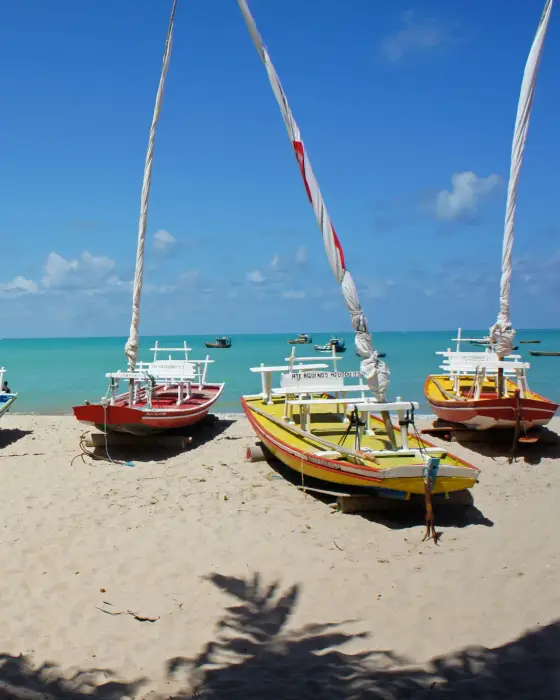
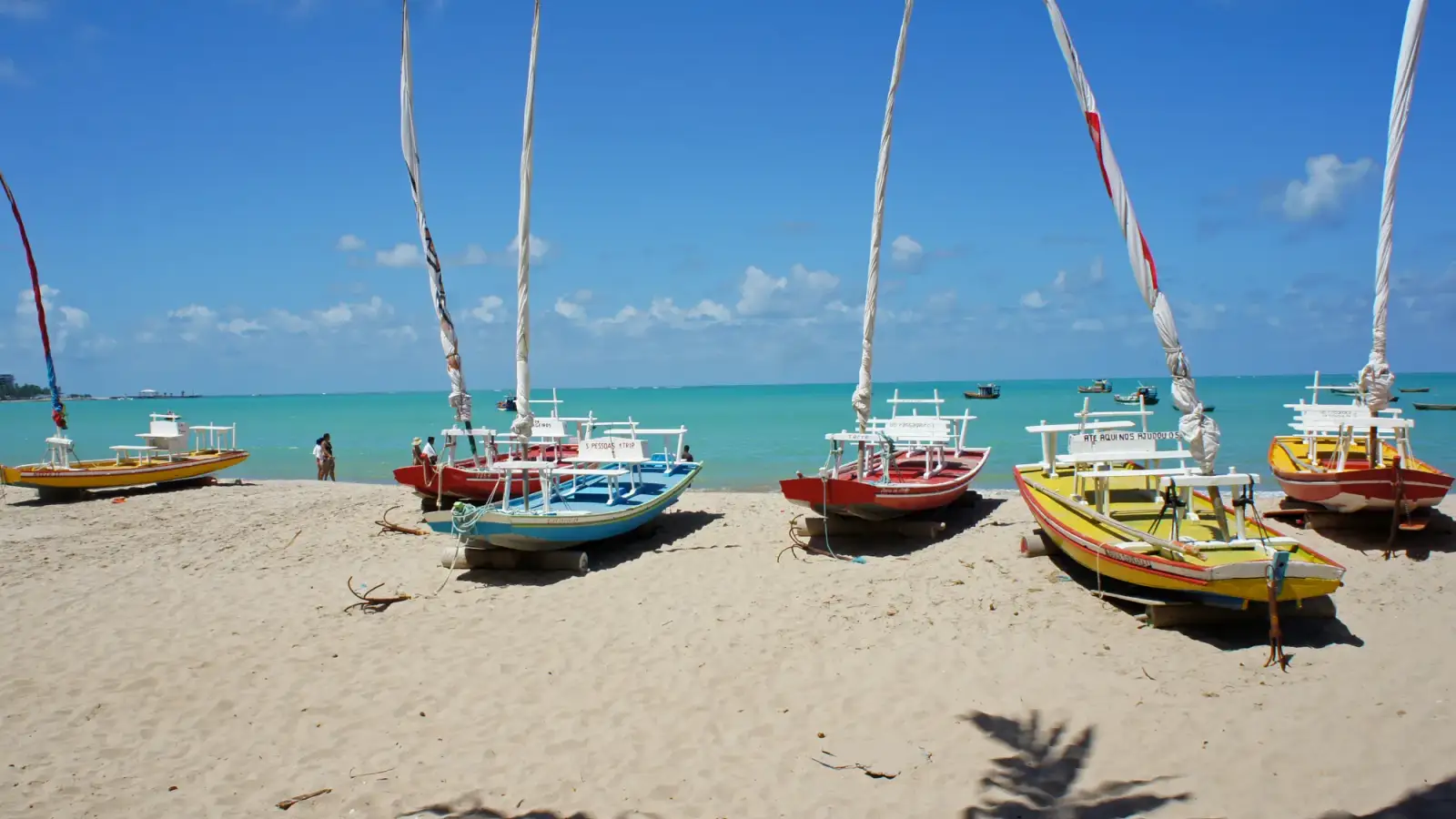
I'd stay four days in Maceió, built around the tide table. One day is for Pajuçara: raft to the natural pools at low tide, afternoon at Ponta Verde and the end of the day at the crafts fair. Another is for the city: the Museu Théo Brandão to understand the folguedos, the Centro and Jaraguá, and Pontal da Barra with the filé lacemakers. The third is for the south coast, with Gunga and the stop at Francês on the way back. The fourth is for Maragogi, for the Galés, on a low-tide day between 0.0 and 0.6 and with the booking made beforehand. With a fifth day, I'd continue to São Miguel dos Milagres and Porto de Pedras, preferably sleeping a night there. With three days, I'd leave Maragogi for another trip; with two, I'd keep Pajuçara and Gunga.In front of Pajuçara Beach, a line of reefs lies hidden at high tide. When the tide goes out, pools of shallow, clear water appear over it, and the sailing rafts waiting on the sand start making the crossing. In Maceió, the tide table decides the sea day, here and 130 km away, at the Galés of Maragogi. The city's name comes from Tupi and recalls the lagoons beside the sea: to the west lies Mundaú Lagoon, where the lacemakers of Pontal da Barra work the filé and where the sururu for the broth comes from. On the same shore, five neighborhoods have been emptied since 2018, after rock salt mining made the ground give way, and about 60,000 people left their homes. To the south, the coconut grove of Gunga occupies a sand peninsula between Roteiro Lagoon and the sea.
Quick facts
- Population
- 957,916 residents in the municipality (IBGE 2022 Census); 995,134 in the IBGE estimate for 2026
- Founded
- Town split off from Vila de Alagoas (today's Marechal Deodoro) on December 5, 1815; city and provincial capital on December 9, 1839
- Country and region
- Brazil, Northeast region: capital of the state of Alagoas; municipality of about 509 km²
- Language
- Portuguese
- Currency
- Real (BRL, R$). Pix requires access to a participating account; if you don't have one, combine card and cash
- Time zone
- UTC−3 all year, no daylight saving time
- Best time to go
- September to March; April to August brings most of the rain, with May and June the rainiest months, and December to February is the busiest and most expensive season
- Average cost per day
- Add up lodging per night, meals per person and each day's raft or catamaran trips; day trips to the north and south coasts change the total a lot.
When to go
September to March; April to August brings most of the rain, with May and June the rainiest months, and December to February is the busiest and most expensive season
How the year changes
Maceió is warm all year, with an average around 25 °C, and what changes is the rain. From April to August it rains more, and May and June are the rainiest months: this is when the water in the natural pools tends to be less clear and the sea can cancel trips. From September to March is the dry season and the best for the pools and the Galés. Within it, December to February is the busiest and most expensive period, with New Year's Eve; October, November and March tend to combine good weather and lower prices. In any month, what decides the sea days is the tide: the Pajuçara pools need a tide below 0.5 m, and the Galés between 0.0 and 0.6.
Nilo's tips
Plan your sea days by the tide table
The Pajuçara pools need a tide below 0.5 m, and the Galés a tide between 0.0 and 0.6. I'd open the tide table before buying the plane ticket and fit the two trips into the days of lowest tide, leaving museums and Pontal da Barra for the others.
A licensed raft captain and an agreed price
I'd choose the raft for safety, not for price: a licensed raft captain, a life jacket for everyone and everything agreed before setting out, including whether snorkel and photos are included.
Gunga and Francês on the same day
Praia do Francês is on the way between Maceió and Gunga. I'd go straight to Gunga in the morning, passing by the lookout, and stop at Francês on the way back, on the left end, where the reefs hold back the waves.
Check the bathing water report before swimming
The IMA publishes bathing water reports for Alagoas beaches. I'd look at the latest one before going into the sea on the urban waterfront, especially at Jatiúca.
One or two nights on the Rota dos Milagres
São Miguel dos Milagres and Porto de Pedras are about 100 km away. With five days, I'd sleep one night there instead of going back and forth the same day, to have the morning free on the beaches and the scheduled visit to the manatee sanctuary.
Explore the map
Explore the map, read about the other places and plan your travel days in the app.
Open the appWhat to see
Maceió: Between the sea and the lagoon
Maceió covers about 509 km² on the coast of Alagoas. It has hotels, restaurants and the same waterfront to walk along.
Pajuçara Natural Pools
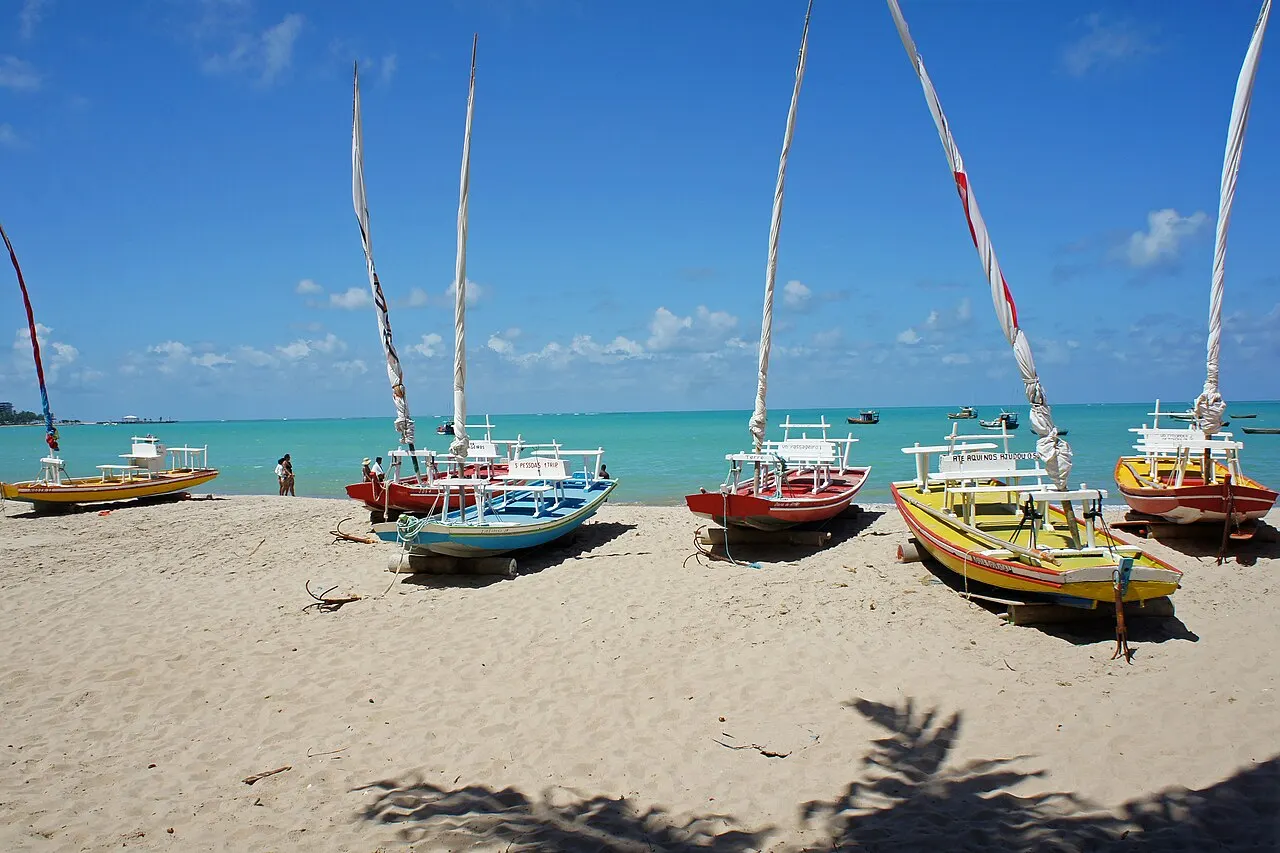
Over the reefs in front of Pajuçara Beach, low tide leaves pools of clear, shallow water, with small fish, sponges and crustaceans. You get there by sailing raft, leaving from the sand near the crafts fair: the crossing takes 15 to 25 minutes, depending on the wind, and you stay between an hour and an hour and a half, before the tide rises again. The guides recommend going with the tide below 0.5 m and choosing a licensed raft captain, with life jackets for everyone. With strong wind or a rough sea the trip may be canceled. Do not step on the coral or feed the fish.
The reason for most trips to Maceió: the pools over the reefs appear only at low tide, preferably below 0.5 m, 15 to 25 minutes from the sand by sailing raft.
Check access
Gunga Beach
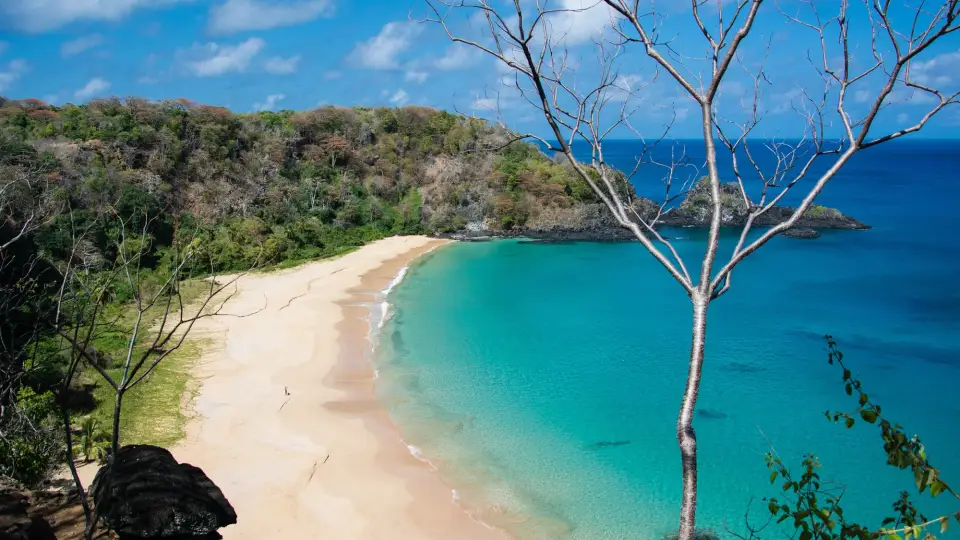
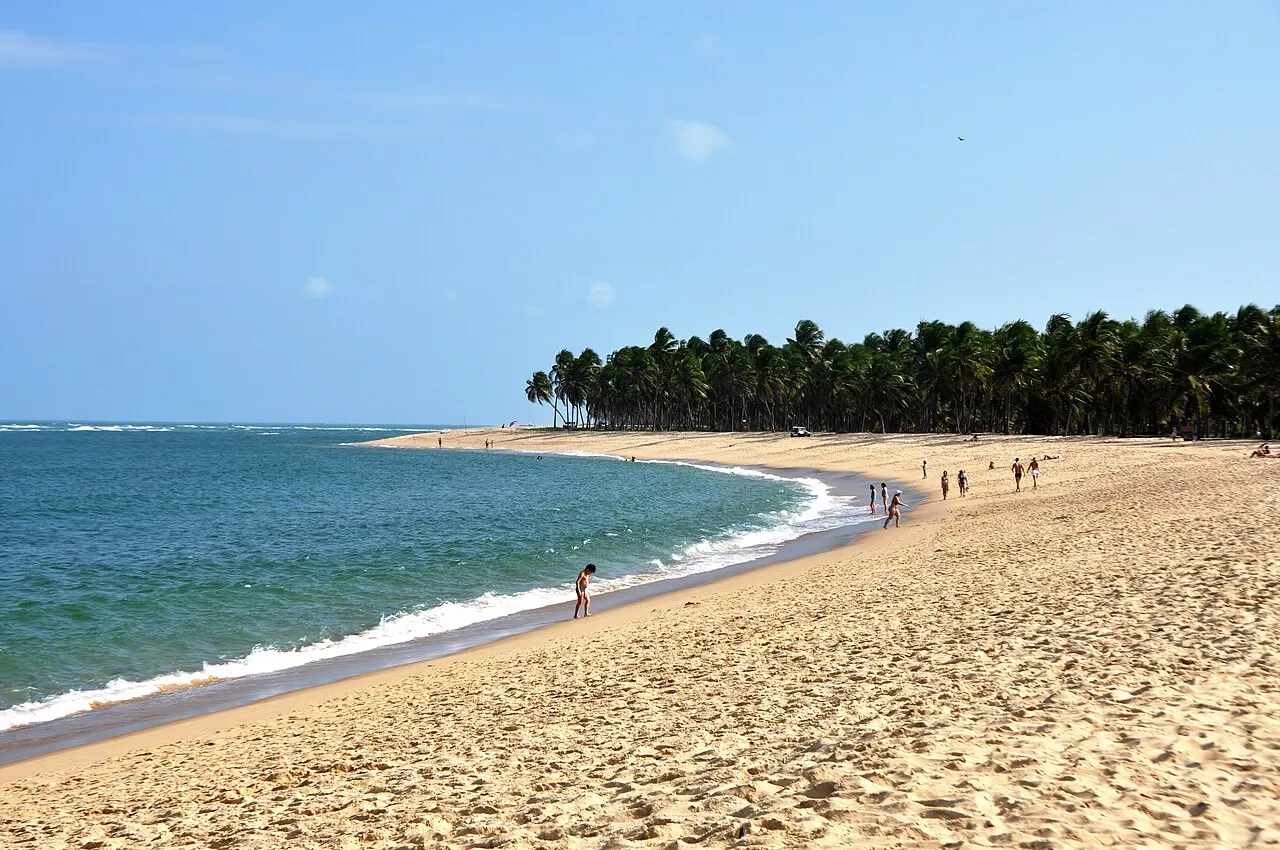
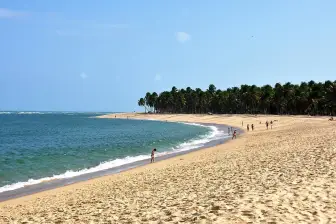
In the municipality of Roteiro, about 35 km from Maceió, Gunga is a white-sand peninsula covered by a large coconut grove, between the calm waters of Roteiro Lagoon and the sea, which is sheltered by reefs at the start of the beach. You get there by car along AL-101 Sul or by speedboat from Barra de São Miguel, on a trip of about an hour with stops at a natural pool and a sandbank. On the beach there are stands and restaurants, with a charge for use of umbrella and chair; by buggy or quad bike you can go to the cliffs, on a route of about 13 km round trip. The Mirante do Gunga, on AL-101, is on private property and charges a small fee.
The sandy peninsula and coconut grove between Roteiro Lagoon and the sea, about 35 km away, call for a full day, by car on AL-101 Sul or by speedboat from Barra de São Miguel.
Check access
Pajuçara Crafts Fair
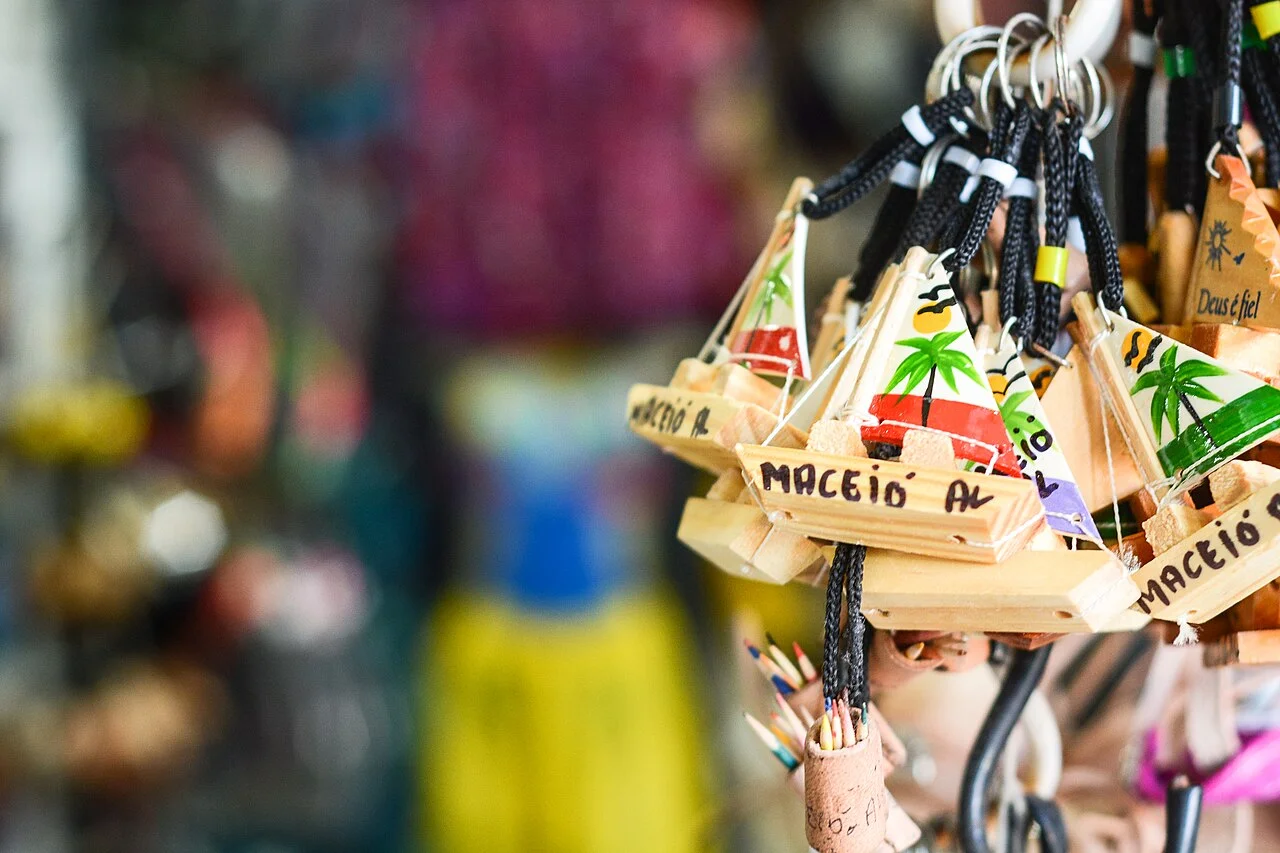
On Pajuçara's beachfront avenue, the fair brings together stalls of Alagoas crafts, such as filé lace and ceramic pieces, and sweet and savory tapioca. It is the most practical place to see the state's crafts gathered together, and it sits next to where the rafts board.
It brings together Alagoas crafts, such as filé lace and ceramics, and tapioca, next to the raft boarding point.
Check access

Ponta Verde Beach
The point between Pajuçara and Jatiúca, with the Ponta Verde Lighthouse, the Marco dos Corais and a waterfront with a bike path for walking or cycling. It is a walk from where the rafts board, which makes it a good beach for the rest of the day after the pools.
Within walking distance of the raft boarding point, with the lighthouse, the Marco dos Corais and a waterfront bike path, it rounds out the natural-pools day.
Check access

Pontal da Barra
A neighborhood listed as heritage by the state and the traditional hub of the filé lacemakers, the handmade lace most identified with Alagoas, on the shore of Mundaú Lagoon. From there leave the schooner tours of the lagoon's nine islands, formed by sediment from the Mundaú and Paraíba do Meio rivers. Since the end of 2023, navigation has been banned, indefinitely, on the stretch of the lagoon near the Mutange mine: confirm with the operator whether the tour is running and where it goes.
The traditional hub of filé lacemakers, on Mundaú Lagoon; the nine-island schooner tour needs confirmation with the operator, because navigation has been prohibited on the stretch near the Mutange mine since late 2023.
Check access

Museu Théo Brandão
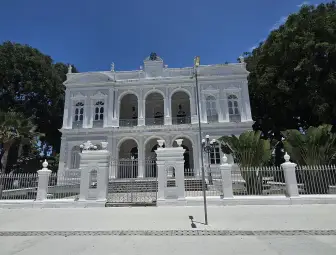
The Théo Brandão Museum of Anthropology and Folklore, part of the Federal University of Alagoas, has occupied an eclectic building on Avenida da Paz since 1977. It holds the folk art collection donated by the folklorist Théo Brandão, pieces by Alagoas artists, creations from Alagoas's popular festivals, recordings of regional music and folguedos, and films about the state's folklore traditions. It is a good introduction to Alagoas culture. Check the hours on the UFAL website.
Théo Brandão’s folk-art collection, with records and creations from Alagoas folk festivities, explains the state’s culture in a short visit.
Check access

Praia do Francês
In the municipality of Marechal Deodoro, on the way between Maceió and Gunga. The left end is sheltered by the reefs, with calm sea, natural pools, bars and restaurants; the right side has strong waves and is sought out by surfers.
The left end, sheltered by reefs, has calm water and natural pools and is on the way back from Gunga.
Check access
Galés Natural Pools
The Galés of Maragogi are reef formations that, at low tide, form natural pools a few kilometers off the coast, inside the Costa dos Corais Environmental Protection Area, managed by ICMBio, where visits are controlled. Maragogi is about 130 km from Maceió by road, 2 to 2.5 hours by car. The catamaran trip takes about three hours in total and only goes out at low tide, between 0.0 and 0.6; in June 2026 it cost R$ 90 to R$ 180 per person, depending on the season and the agency, and there is a per-person conservation fee that sometimes comes included and sometimes is charged separately. Ask what is included, book ahead and check the tide beforehand.
The Galés require a tide between 0.0 and 0.6, advance booking and a full day, about 130 km from Maceió; with that day free, they are worth the trip.
Check access

Museu Palácio Floriano Peixoto
The former seat of the Alagoas government, in the Centro, holds furniture from the late 19th and early 20th centuries, silverware, crystal and paintings by Rosalvo Ribeiro and other Alagoas artists. Worth it for those already in the Centro; check the hours before going.
The former seat of government, with furniture, silverware and Alagoas paintings, is worthwhile if you are already in the Centro, but does not justify a trip on its own.
Check access
Nilo’s itinerary
Start with the basic programme and choose extensions for the time you have.
Plan my days in the app ↗Day 1 · Pajuçara: natural pools at low tide and the waterfront
The day before, check the tide table for the low tide time and whether it falls below 0.5 m; if it doesn't, swap this day with day 2.
An hour before low tide, go to Pajuçara Beach, near the Crafts Fair, and arrange the raft with a licensed raft captain: price per person, duration and life jackets.
Make the 15 to 25 minute crossing and stay an hour to an hour and a half at the pools, without stepping on the coral.
After lunch, walk along the waterfront to Ponta Verde Beach and spend the afternoon there.
Late in the afternoon, go back to the Pajuçara Crafts Fair to see the filé and the ceramics and have a tapioca.
Day 2 · Centro, Jaraguá and Pontal da Barra
In the morning, go to the Museu Théo Brandão, on Avenida da Paz, to learn about the folguedos of Alagoas; check the hours first on the UFAL website.
Continue through the Centro to the Teatro Deodoro and the Museu Palácio Floriano Peixoto, checking the visiting hours.
Have lunch and walk through Jaraguá, the port district, with the restored mansions and the Museu de Arte Brasileira.
In the afternoon, take a taxi or ride-hailing car to Pontal da Barra to see the work of the filé lacemakers and the shore of Mundaú Lagoon.
If the operator confirms that the nine-islands tour is running, do it late in the afternoon; return to the waterfront by taxi or ride-hailing.
Day 3 · South coast: Gunga Beach and Praia do Francês
Leave in the morning by car or on a tour along AL-101 Sul toward Roteiro.
Stop at the Mirante do Gunga, right on AL-101, on a restaurant's private land, to see the coconut grove, the beach and Roteiro Lagoon from above; there is a small fee.
Head down to Gunga Beach and spend the day between the lagoon side and the sea side; if you like, go by buggy or quad bike to the cliffs, about 13 km round trip.
As an alternative to the road, arrive by speedboat from Barra de São Miguel, on a trip of about an hour with stops at a natural pool and a sandbank.
On the way back to Maceió, stop late in the afternoon at Praia do Francês, on the left end, sheltered by the reefs.
Day 4 · Maragogi and the Galés
Day trip
About 130 km north of Maceió by road, 2 to 2.5 hours by car, or on a day tour with transport. The catamaran to the Galés only goes out at low tide, between 0.0 and 0.6, lasts about three hours and cost R$ 90 to R$ 180 per person in June 2026, not counting the per-person conservation fee when it isn't included; with the fee, the same survey gave R$ 110 to R$ 200 in low season and R$ 150 to R$ 250 in high season. Visits are controlled inside the Costa dos Corais Environmental Protection Area: book ahead and check the tide before picking the day. Maragogi also has other pools, such as Taocas and those of Barra Grande, and the beaches of São Bento and Barra Grande.




If you stay longer
Day 5 · São Miguel dos Milagres and Porto de Pedras
Day trip
About 100 km north of Maceió, on the Rota Ecológica dos Milagres, calm beaches with coconut groves, such as Toque and Patacho, and small inns. In Porto de Pedras, near the Tatuamunha River, a manatee protection sanctuary receives visits arranged with the local association, with a guide, a mangrove walkway and a raft trip; seeing the animals in the open is not guaranteed. Worth it as a full day by car, or as one or two nights at an inn on the route.
Food
Sururu
A small mussel (Mytella strigata) that lives in the Mundaú and Manguaba lagoons and was declared intangible heritage of Alagoas in 2014. The most common preparation is sururu broth, with vegetables, coconut milk and dendê or olive oil; it also appears with tomato sauce, with farofa and, in Alagoas, raw with lime and salt. Fishing on the Mundaú has been affected by the ban on navigating near the mine, since 2023: ask where it comes from.
Tapioca
Made with goma, the starch extracted from cassava, and served with a sweet or savory filling. It is sold all over the city, including at the Pajuçara Crafts Fair, and works as breakfast before the raft or as a snack in the late afternoon.
Fish and seafood from the lagoon
Massagueira, a village in Marechal Deodoro, is known as a gastronomic hub for fish and seafood. In Roteiro Lagoon, near Gunga, sururu, fish and oysters are caught.
Where to eat
- Pajuçara · $
Sweet or savory tapioca at the crafts fair, before the raft or late in the afternoon.
- Massagueira (Marechal Deodoro) · $$
Fish and seafood in the village's gastronomic hub.
- Pajuçara, Ponta Verde and Jatiúca · $$
Sururu broth and seafood in the waterfront restaurants.
$: tapioca and snacks at the fair or on the waterfront · $$: fish or seafood dish in a restaurant · $$$: chef-driven restaurant or hotel restaurant · 2026-10-15
Day trips
Maragogi and the Galés
About 130 km north of Maceió by road, 2 to 2.5 hours by car, or on a day tour with transport. The catamaran to the Galés only goes out at low tide, between 0.0 and 0.6, lasts about three hours and cost R$ 90 to R$ 180 per person in June 2026, not counting the per-person conservation fee when it isn't included; with the fee, the same survey gave R$ 110 to R$ 200 in low season and R$ 150 to R$ 250 in high season. Visits are controlled inside the Costa dos Corais Environmental Protection Area: book ahead and check the tide before picking the day. Maragogi also has other pools, such as Taocas and those of Barra Grande, and the beaches of São Bento and Barra Grande.
São Miguel dos Milagres and Porto de Pedras
About 100 km north of Maceió, on the Rota Ecológica dos Milagres, calm beaches with coconut groves, such as Toque and Patacho, and small inns. In Porto de Pedras, near the Tatuamunha River, a manatee protection sanctuary receives visits arranged with the local association, with a guide, a mangrove walkway and a raft trip; seeing the animals in the open is not guaranteed. Worth it as a full day by car, or as one or two nights at an inn on the route.
Marechal Deodoro and Massagueira
About 28 km to the south, the first capital of Alagoas, founded in 1591 as Vila Madalena do Sumaúma, has churches and mansions recognized as national historic heritage in 2006 and the Museu Marechal Deodoro da Fonseca, in the hometown of Brazil's first president. On the way back, Massagueira, on the shore of Manguaba Lagoon, is the place to eat fish and seafood.
Where to begin
Pajuçara: natural pools at low tide and the waterfront
The day before, check the tide table for the low tide time and whether it falls below 0.5 m; if it doesn't, swap this day with day 2.
Centro, Jaraguá and Pontal da Barra
In the morning, go to the Museu Théo Brandão, on Avenida da Paz, to learn about the folguedos of Alagoas; check the hours first on the UFAL website.
South coast: Gunga Beach and Praia do Francês
Leave in the morning by car or on a tour along AL-101 Sul toward Roteiro.
Money
The currency is the real (R$). Pix, Brazil's instant payment system, requires a participating account; bring some cash for raft captains, beach stands and small fees, such as the one at the Mirante do Gunga. In March 2026, the ride from the airport to the waterfront cost about R$ 80 by taxi and about R$ 50 by app. In February 2026, the raft to the Pajuçara pools cost R$ 60 to R$ 90 per person, depending on demand, duration and day of the week, and a private raft R$ 350 to R$ 600; snorkel, photos and drinks may be charged separately. In June 2026, the catamaran to the Galés of Maragogi cost R$ 90 to R$ 180 per person, depending on the season and the agency, and the conservation fee may be included or separate. On the Gunga speedboat, agree beforehand on the price per person and what is included. At the Gunga stands, umbrella and chair use is charged.
Getting there and around
Zumbi dos Palmares Airport (MCZ), in Rio Largo
The airport is in Rio Largo, about 22 km from Maceió's Centro and about 24 km from the waterfront, and has been run by Aena since 2019. In March 2026, a guide estimated a taxi to the waterfront at about R$ 80 and a ride-hailing car at about R$ 50. If you plan to do the north and south coasts, you can rent a car right at the airport.
In the city: on foot along the waterfront, by app for the rest
Pajuçara, Ponta Verde and Jatiúca are linked by a beachfront avenue with a bike path, and you can do this stretch on foot. For the Centro, Jaraguá and Pontal da Barra, taxi and ride-hailing are the simplest way; the city buses are run by four companies. The VLT links the Centro to Rio Largo via Bebedouro, an area affected by the subsidence, and does not serve tourist itineraries.
North and south coasts: car, transfer or tour
The beaches outside the city are reached along AL-101: to the south, Praia do Francês, Barra de São Miguel and Gunga; to the north, Ipioca, the Rota Ecológica dos Milagres and Maragogi. There are day tours leaving from Maceió and transfers arranged with the inns; with a rental car, you choose the time by the tide. To go from Porto de Pedras to Maragogi, you have to cross the Manguaba River by ferry.
Safety
In Maceió, keep your phone put away on empty streets, use a taxi or ride-hailing at night away from the waterfront and watch your belongings on the sand. The Pajuçara, Ponta Verde and Jatiúca waterfront has the most foot traffic and hotels. At sea, the risks are different: on the right side of Praia do Francês the waves are strong, the natural pools trip can be canceled in wind and rough seas, and not every beach is fit for swimming every day, so check the IMA bathing water reports. In the areas hit by ground subsidence, respect the closures: they are geological risk areas, with maps updated periodically by the city government. On the Gunga cliffs, the Fire Department recommends safety equipment and specialized guides for adventure activities.
Etiquette tips
Don't step on the coral or feed the fish
In the natural pools, the reefs are alive: float instead of standing on them and do not feed the fish. The restaurant boats that served food at the pools were banned after reports of trash thrown into the sea, and throwing trash in the water is an environmental offense.
Agree on everything before boarding
On the raft and the speedboat, settle the price per person, the duration and what is included before setting out. Prefer a licensed raft captain and check that there are life jackets for everyone.
Ask before sitting at a beach stand
At Gunga and other beaches, umbrella and chair are usually charged by the day. Ask the price before settling in.
The emptied neighborhoods are not an attraction
Pinheiro, Mutange, Bebedouro, Bom Parto and part of Farol were home to tens of thousands of people who had to leave. Respect the closures and do not enter isolated areas.
Mistakes to avoid
Booking the raft without checking the tide
The Pajuçara pools only exist at low tide. With the tide above 0.5 m the trip loses its point, even if someone offers it. Look at the day's tide table and go at the time it indicates.
Buying the Galés trip for any day
The Galés need a tide between 0.0 and 0.6, and Maragogi is more than two hours away by car. Pick the day by the tide table and book ahead, especially in high season.
Thinking Gunga is a Maceió beach
Gunga is in Roteiro, about 35 km away. It is a whole day, by car or on a tour, and pairs well with Praia do Francês and Barra de São Miguel, which are on the same road.
Going in the sea without checking the bathing water report
Not every urban beach is fit for swimming every day, and the sea at Jatiúca often shows up as unfit. The Alagoas Environment Institute (IMA) publishes bathing water reports for the beaches and lagoons.
Counting on Mundaú Lagoon as in any old guidebook
Since the end of 2023, navigation has been banned, indefinitely, on the stretch of the lagoon near the Mutange mine. Before booking the nine-islands tour, confirm with the operator that it is running and where it goes.
Useful phrases
Maré baixa
The time when the sea is lowest; this is when the natural pools appear
Tábua de marés
The table with the times and heights of each day's tides, in meters
Jangada
A traditional sailing fishing boat, used to take visitors to the Pajuçara pools
Piscinas naturais
The shallow, clear pools of water that form over the reefs at low tide
Filé
The handmade Alagoas lace, made by the lacemakers of Pontal da Barra
Sururu
The lagoon mussel, served in broth
Folguedo
A popular festival with dance, music and characters, such as the Guerreiro and the reisado
Where to stay
- Pajuçara · First trip, without a car · $$: It has the best tourist infrastructure on the waterfront, with the raft boarding and the crafts fair on foot.
- Ponta Verde · Those who want a calm waterfront and restaurants nearby · $$: It sits next to Pajuçara, with a beach sheltered by the reefs and the same waterfront for walking to the rafts.
- Jatiúca · Those who want more restaurants and nightlife · $$: It concentrates hotels and restaurants, but the sea often shows up as unfit for swimming; check the IMA report and, to swim, consider the neighboring beaches.
- North coast: Ipioca and Garça Torta · Those with a car who want quiet or a resort · $$$: About 20 km from the Centro, with inns and resorts beside beaches with coconut groves, and closer to the road to the Costa dos Corais.
$: simple inn or hostel · $$: hotel on the Pajuçara or Ponta Verde waterfront · $$$: resort on the north coast or upscale hotel on the waterfront · 2026-10-15
Districts
Pajuçara
The most sought-after hotel district, with the best tourist infrastructure on the waterfront. The rafts to the natural pools leave from the beach, and along the beachfront avenue are the Pajuçara Crafts Fair and a bike path.
Ponta Verde
Next to Pajuçara, on the point that gives the district its name, with the Ponta Verde Lighthouse and the Marco dos Corais. It has hotels, restaurants and the same waterfront to walk along.
Jatiúca
The continuation of the waterfront to the north, with hotels, restaurants and nightlife. The sea at Jatiúca often shows up as unfit for swimming: before going in, check the latest bathing water report from the IMA.
Jaraguá and Centro
The port district, which gave rise to the city, has mansions restored in the 1990s, the city hall, the Commercial Association and the Museu de Arte Brasileira. The Centro, right next door, has the Teatro Deodoro, the Museu Palácio Floriano Peixoto and the Museu Théo Brandão.
Pontal da Barra
A neighborhood listed as heritage by the state, on the point between the sea and Mundaú Lagoon, a traditional hub of filé lacemakers, with fish and seafood restaurants and boat trips on the lagoon. The Braskem plant is also in Pontal da Barra.
North coast: Garça Torta and Ipioca
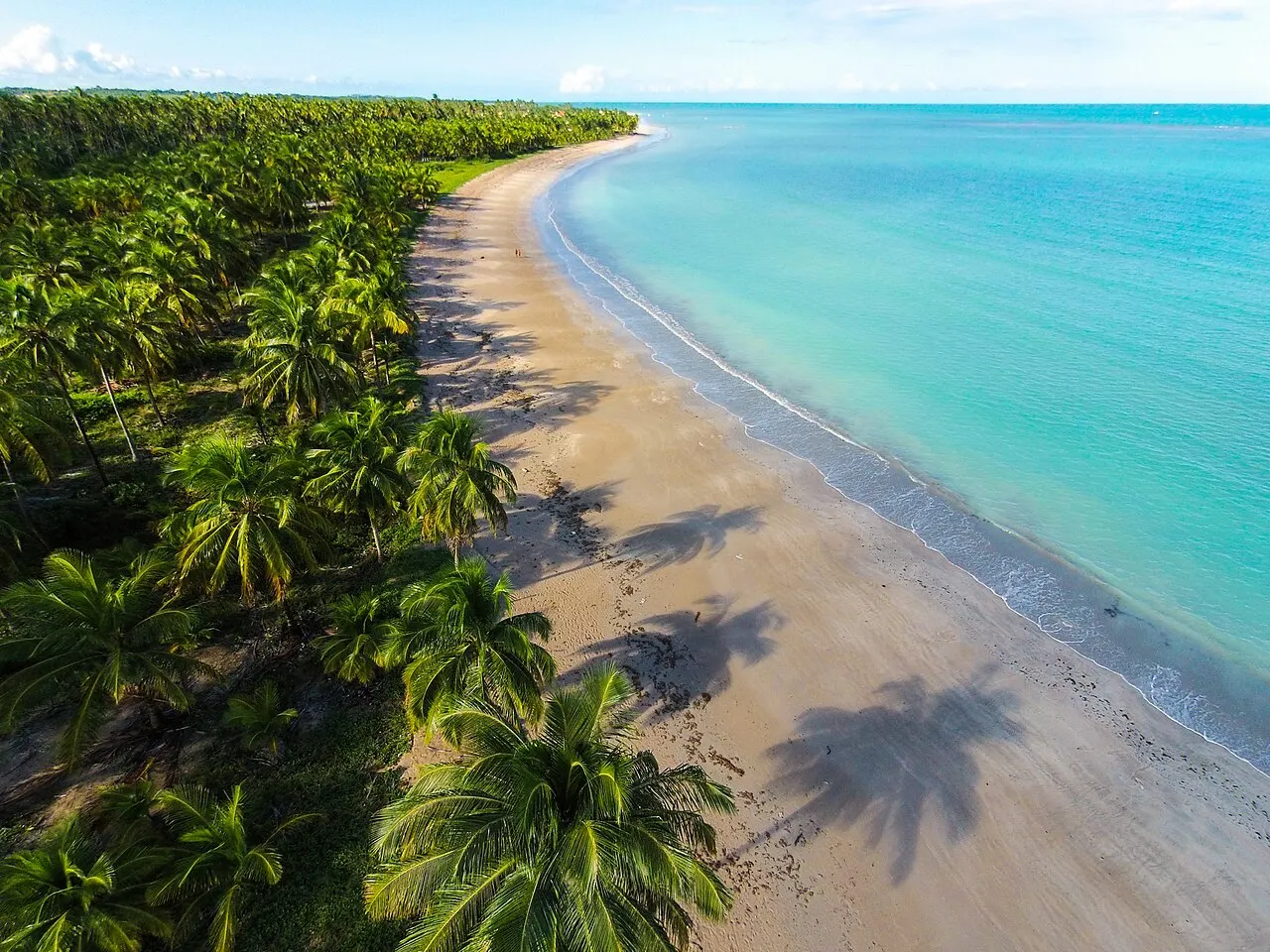
Outside the central area, about 20 km from the Centro, the municipality's north coast has the fishing village of Garça Torta, with small natural pools and coconut groves, and Ipioca Beach, about 8 km long, with inns and resorts. It makes sense for those with a car who want more quiet.
Pinheiro, Mutange, Bebedouro, Bom Parto and Farol
The five neighborhoods hit by ground subsidence, on the shore of Mundaú Lagoon. Much of the area has been vacated and closed off since 2019, and the city government updates the map of risk areas. There is nothing to visit there; anyone driving through on the open roads sees empty streets and houses.
History
16th c. · Land of the Caetés
When the first Europeans arrive, the region is occupied by the Caetés, a Tupi people. In the 17th century, Portuguese ships load timber at the natural anchorage of Jaraguá, which later begins shipping the sugar of the mills.
1673 · The fort and the chapel
The Portuguese Crown orders a fort built at Jaraguá. The settlement grows and gets a chapel dedicated to Nossa Senhora dos Prazeres, today the city's patron saint.
1815 · Vila de Maceió
On December 5, Maceió is split off from the Vila de Santa Maria Madalena da Alagoa do Sul, the Vila de Alagoas, today's Marechal Deodoro.
1839 · City and capital
On December 9, Legislative Resolution No. 11 raises Maceió to city and capital of the Province of Alagoas, because of the traffic at the port of Jaraguá.
1844 · Attacks on the new capital
In October, rebel troops from the interior attack Maceió in more than one assault and even storm the British consulate, before being defeated.
1910 · Teatro Deodoro
The state theater, built in neoclassical style since 1905, opens on November 15 on Praça Marechal Deodoro, in the Centro.
1912 · The Quebra de Xangô
In February, a militia tied to the political opposition, the Liga dos Republicanos Combatentes, invades and destroys the capital's Afro-Brazilian houses of worship; sacred objects are burned in a public square.
1975–1977 · Museu Théo Brandão
In 1975 the Federal University of Alagoas creates the anthropology and folklore museum with the collection donated by the folklorist Théo Brandão, which in 1977 gets a home in an eclectic building on Avenida da Paz.
1997 · The fall of Suruagy
On July 17, public employees owed months of salary protest in front of the Legislative Assembly, and the episode leads to the departure of Governor Divaldo Suruagy.
2002 · American Capital of Culture
Maceió is the third city to receive the title, and the first in Brazil.
2018–2019 · The cracks in Pinheiro
In February 2018 cracks appear in the Pinheiro neighborhood, and they grow after an earth tremor in March. In May 2019, the Brazilian Geological Survey ties the subsidence to Braskem's rock salt mining, and the company announces that same year the end of extraction in Maceió.
2023 · Mine 18
On November 30, the city government declares an emergency over the risk of a mine collapsing in Mutange, and navigation is banned on the stretch of Mundaú Lagoon near the mine. On December 10, mine 18 collapses.
Complete history
A natural port and the fight for the capital
Maceió grew because of the sea. In the 17th century, Portuguese ships loaded timber at the Jaraguá anchorage, a sheltered natural port, and later began shipping out the sugar of the region's mills there, along with tobacco, coconut and spices. In 1673 the Crown ordered a fort built at Jaraguá, and the settlement got a chapel dedicated to Nossa Senhora dos Prazeres, who is now its patron saint. Power, however, lay in the Vila de Alagoas, today's Marechal Deodoro, on the shores of Manguaba Lagoon. Maceió only split from it in 1815, and on December 9, 1839 it became a city and the provincial capital, pulled along by the traffic at the port. The change was not peaceful: in October 1844, rebel troops from the interior attacked the new capital and even stormed the British consulate.
The 20th century: persecution, literature and crisis
In February 1912, a militia tied to the political opposition invaded and destroyed the capital's Afro-Brazilian houses of worship, an episode known as the Quebra de Xangô or Quebra de 1912; pais and mães de santo were beaten and sacred objects burned in a public square, and the movement spread to the interior. In the 1930s, the city brought together writers of the so-called regionalist novel, such as Graciliano Ramos, Rachel de Queiroz and José Lins do Rego. The end of the century brought a political crisis that marked the state: on July 17, 1997, public employees owed months of salary protested in front of the Legislative Assembly, and the episode led to the fall of Governor Divaldo Suruagy.
Rock salt mining and the emptied neighborhoods
For about four decades, Braskem extracted rock salt from beneath the shore of Mundaú Lagoon, in 35 mines, to make caustic soda and PVC. In February 2018 cracks appeared in the Pinheiro neighborhood; in May 2019, the Brazilian Geological Survey concluded that the extraction had destabilized the underground cavities, and the risk area, previously concentrated in Pinheiro, was expanded to Mutange and Bebedouro; today five neighborhoods are affected, including Bom Parto and part of Farol. The company ended mining in 2019. About 14,000 properties were condemned and about 60,000 people left their homes; the city government says 64,000. Churches, schools, hospitals, the CSA headquarters in Mutange and a VLT station were closed. On November 30, 2023 the city declared an emergency over the risk of a mine collapsing in Mutange, navigation was banned on the stretch of the lagoon near the mine, and on December 10 mine 18 collapsed. Braskem does not officially admit responsibility, but it signed an agreement in the Alagoas courts providing for more than R$ 12 billion in compensation and in relocating schools and health units, and in November 2024 the Federal Police indicted 20 people tied to the company.
The city the visitor finds
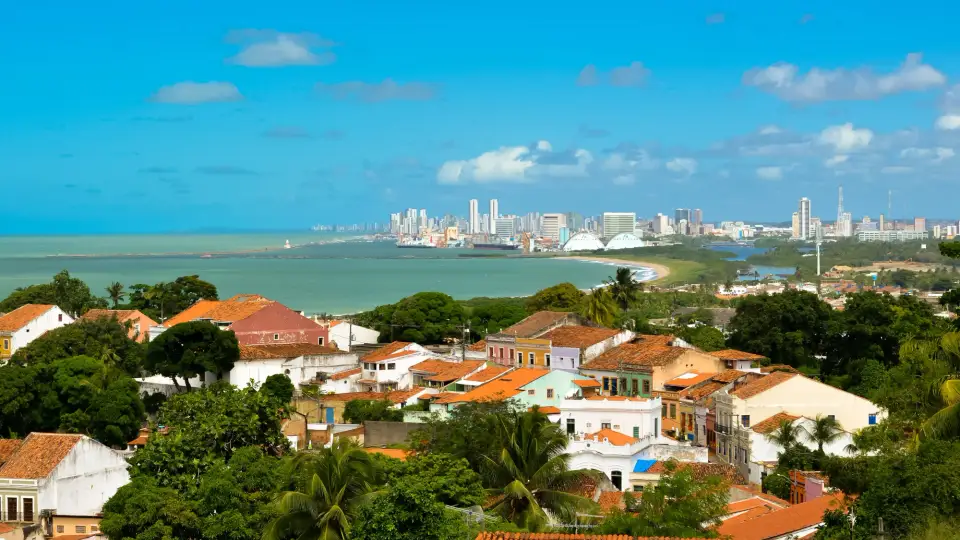
The Maceió of hotels and sailing rafts lies to the east, on the waterfront of Pajuçara, Ponta Verde and Jatiúca, far from the affected area. Jaraguá, the port district, went through a restoration of streets and mansions in the 1990s and houses the city hall and museums, but has lost foot traffic again in recent years. At the other end, Pontal da Barra keeps the filé lacemakers on the lagoon shore. In 2002, Maceió was chosen American Capital of Culture, the first city in Brazil with the title.
In 1912, in the Quebra de Xangô, the capital's Afro-Brazilian houses of worship were invaded and destroyed, and the sacred objects burned in a public square.
Geography and shape of the city
Between the sea and the lagoon
Maceió covers about 509 km² on the coast of Alagoas. To the east is the Atlantic, with urban beaches sheltered by a line of reefs; to the west and south, Mundaú Lagoon, a 23 km² lagoon about 2 m deep on average, which connects to the sea through a network of channels and forms, with Manguaba Lagoon, the Mundaú-Manguaba estuarine complex. Sediment from the Mundaú and Paraíba do Meio rivers formed an archipelago of nine islands there. The city's name comes from Tupi and is interpreted as “what covers the marshland,” a reference to these lagoons beside the sea. The upper part of the city spreads across the tabuleiros, such as Tabuleiro do Martins, where residential neighborhoods and the federal university are located.
Humid tropical climate
The climate is tropical, hot and humid, with an average temperature around 25 °C, average highs near 29 °C and lows near 22 °C. About 1,800 mm of rain falls per year, concentrated from April to August, with May and June the rainiest months.
The Costa dos Corais
North of Maceió begins the Costa dos Corais Environmental Protection Area, created by decree on October 23, 1997 and managed by ICMBio: more than 413,000 hectares and about 135 km of coastline between Alagoas and Pernambuco, with coral reefs and the West Indian manatee among the protected species. The boundaries were expanded by decree in June 2025. This is the stretch where the Galés of Maragogi and the beaches of São Miguel dos Milagres and Porto de Pedras are found.
The name Maceió comes from Tupi and is interpreted as “what covers the marshland,” a reference to the lagoons beside the sea.
Culture
Folguedos and the Guerreiro
Alagoas has a calendar of folguedos, popular festivals with dance, music and characters: caboclinho, cavalhada, chegança, coco alagoano, pastoril, reisado, quilombo and the Guerreiro. Created between 1927 and 1929 from the fusion of reisados, chegança, pastoris and the auto das caboclinhas, the Guerreiro is a Christmas folguedo of multicolored costumes, hats shaped like churches and palaces and many characters, from the king and queen to the Indian Peri and the clowns. It is intangible heritage of the state, and the Museu Théo Brandão keeps records and creations of Alagoas folguedos.
Filé, music and literature
Filé lace is the craft most identified with Maceió, alongside ceramics, and has its traditional hub in Pontal da Barra. In music, Maceió is the hometown of Djavan, born in 1949, who began playing there before moving to Rio de Janeiro; Hermeto Pascoal is also from Alagoas. In literature, the city is linked to Graciliano Ramos and Jorge de Lima, and in the 1930s it brought together authors of the regionalist novel. In 2002, it was the first Brazilian city chosen American Capital of Culture.
Soccer and theater
CSA and CRB play the crowd-drawing derby at Estádio Rei Pelé, the Trapichão, with a capacity of about 19,000 people. CSA's headquarters, in Mutange, was closed in 2020 because of the ground subsidence. The Teatro Deodoro, from 1910, and the Teatro Gustavo Leite, the city's largest, with about 1,250 seats, host most of the stage programming.
Festivals and events
Festa de Reis: January 6
It closes the Christmas cycle, which in Alagoas is the season of folguedos such as the Guerreiro and the reisado. The Museu Théo Brandão has been lit up at Christmas since 2005.
São João Massayó: June
The city's June festivals, gathered in the event that was once called Maceió Forró e Folia. Check the year's schedule.
Nossa Senhora dos Prazeres: August 27
The day of the city's patron saint, whose devotion comes from the chapel built in Jaraguá after 1673.
Maceió's anniversary: December 5
It marks the creation of the town in 1815. In summer, the city holds Verão Massayó, the former Maceió Verão; check the dates for the year.
Books and films
Milagreiro (2001), Djavan
An album recorded in the home studio of the singer born in Maceió, described as a return to Alagoas and to Northeastern themes. Heard before the trip, it places the city through the voice of its best-known musician.
Frequently asked questions
Maceió: How do you get from the airport to the waterfront?
The airport is in Rio Largo, about 24 km from the waterfront; in March 2026, a guide estimated a taxi to the waterfront at about R$ 80 and a ride-hailing car at about R$ 50.
Maceió: How many days should you stay?
I'd stay four days, built around the tide table: Pajuçara, the city, the south coast with Gunga, and Maragogi. With three days, I'd leave Maragogi for another trip; with two, I'd keep Pajuçara and Gunga.
Maceió: How do you do the Galés at Maragogi?
Maragogi is about 130 km north, 2 to 2.5 hours by car, and the catamaran to the Galés only goes out at low tide, between 0.0 and 0.6, and lasts about three hours; book ahead and check the tide before picking the day.
Maceió: Is the nine-islands tour on Mundaú Lagoon running?
Since the end of 2023, navigation has been banned, indefinitely, on the stretch of the lagoon near the Mutange mine. Before booking, confirm with the operator that the tour is running and where it goes.
Maceió: When is the best time to go?
September to March; April to August brings most of the rain, with May and June the rainiest months, and December to February is the busiest and most expensive season.
Other cities in the country
Brazil ↗- Days
- 4
- When
- Apr–Jun
- Per person/day
- Average 615 BRLMid-range · per person/day
Cost scope
Per person per day: accommodation, meals, urban transport, visits and a small allowance for extras. Flights excluded; larger purchases vary. Editorial estimate, not a quote.
- Days
- 2–3
- When
- Apr–May · Sep
- Per person/day
- Average 400–700 BRLMid-range · per person/day
Cost scope
Per person per day: accommodation, meals, urban transport, visits and a small allowance for extras. Flights excluded; larger purchases vary. Editorial estimate, not a quote.
- Days
- 2–3
- When
- Jan–Mar · Sep–Dec
- Per person/day
- Average 350–550 BRLMid-range · per person/day
Cost scope
Per person per day: accommodation, meals, urban transport, visits and a small allowance for extras. Flights excluded; larger purchases vary. Editorial estimate, not a quote.
- Days
- 1–2
- When
- May–Sep
- Per person/day
- Average 260–520 BRLMid-range · per person/day
Cost scope
Per person per day: accommodation, meals, urban transport, visits and a small allowance for extras. Flights excluded; larger purchases vary. Editorial estimate, not a quote.
- Days
- 3–4
- When
- Jun–Sep
- Per person/day
- Average 400–700 BRLMid-range · per person/day
Cost scope
Per person per day: accommodation, meals, urban transport, visits and a small allowance for extras. Flights excluded; larger purchases vary. Editorial estimate, not a quote.
- Days
- 2–3
- When
- Apr–Jun
- Per person/day
- Average 350–550 BRLMid-range · per person/day
Cost scope
Per person per day: accommodation, meals, urban transport, visits and a small allowance for extras. Flights excluded; larger purchases vary. Editorial estimate, not a quote.
- Days
- 3–5
- When
- Mar–Apr · Nov
- Per person/day
- Average 397 BRLMid-range · per person/day
Cost scope
Per person per day: accommodation, meals, urban transport, visits and a small allowance for extras. Flights excluded; larger purchases vary. Editorial estimate, not a quote.
- Days
- 2–4
- When
- Mar–May · Sep
- Per person/day
- Explore costsGuide estimate
Cost scope
Per person per day: accommodation, meals, urban transport, visits and a small allowance for extras. Flights excluded; larger purchases vary. Editorial estimate, not a quote.
- Days
- 4–5
- When
- Aug–Nov
- Per person/day
- Explore costsGuide estimate
Cost scope
Per person per day: accommodation, meals, urban transport, visits and a small allowance for extras. Flights excluded; larger purchases vary. Editorial estimate, not a quote.
- Days
- 3–4
- When
- Jul–Sep
- Per person/day
- Explore costsGuide estimate
Cost scope
Per person per day: accommodation, meals, urban transport, visits and a small allowance for extras. Flights excluded; larger purchases vary. Editorial estimate, not a quote.
- Days
- 3–4
- When
- Sep–Nov
- Per person/day
- Explore costsGuide estimate
Cost scope
Per person per day: accommodation, meals, urban transport, visits and a small allowance for extras. Flights excluded; larger purchases vary. Editorial estimate, not a quote.
- Days
- 2–4
- When
- May–Sep
- Per person/day
- Explore costsGuide estimate
Cost scope
Per person per day: accommodation, meals, urban transport, visits and a small allowance for extras. Flights excluded; larger purchases vary. Editorial estimate, not a quote.
- Days
- 3–5
- When
- Jun–Sep
- Per person/day
- Explore costsGuide estimate
Cost scope
Per person per day: accommodation, meals, urban transport, visits and a small allowance for extras. Flights excluded; larger purchases vary. Editorial estimate, not a quote.
- Days
- 3–4
- When
- Jun–Aug
- Per person/day
- Explore costsGuide estimate
Cost scope
Per person per day: accommodation, meals, urban transport, visits and a small allowance for extras. Flights excluded; larger purchases vary. Editorial estimate, not a quote.
- Days
- 3–4
- When
- Oct–Dec
- Per person/day
- Average 1,110 BRLMid-range · per person/day
Cost scope
Per person per day: accommodation, meals, urban transport, visits and a small allowance for extras. Flights excluded; larger purchases vary. Editorial estimate, not a quote.
- Days
- 3–4
- When
- Aug–Sep
- Per person/day
- Explore costsGuide estimate
Cost scope
Per person per day: accommodation, meals, urban transport, visits and a small allowance for extras. Flights excluded; larger purchases vary. Editorial estimate, not a quote.
- Days
- 4–7
- When
- Apr–Sep
- Per person/day
- Explore costsGuide estimate
Cost scope
Per person per day: accommodation, meals, urban transport, visits and a small allowance for extras. Flights excluded; larger purchases vary. Editorial estimate, not a quote.
- Days
- 3–4
- When
- Jan · Sep–Dec
- Per person/day
- Explore costsGuide estimate
Cost scope
Per person per day: accommodation, meals, urban transport, visits and a small allowance for extras. Flights excluded; larger purchases vary. Editorial estimate, not a quote.
- Days
- 2
- When
- Aug–Dec
- Per person/day
- Average 442 BRLMid-range · per person/day
Cost scope
Per person per day: accommodation, meals, urban transport, visits and a small allowance for extras. Flights excluded; larger purchases vary. Editorial estimate, not a quote.
- Days
- 3–5
- When
- Jan–Feb · Sep–Dec
- Per person/day
- Explore costsGuide estimate
Cost scope
Per person per day: accommodation, meals, urban transport, visits and a small allowance for extras. Flights excluded; larger purchases vary. Editorial estimate, not a quote.
- Days
- 3–5
- When
- May–Sep
- Per person/day
- Explore costsGuide estimate
Cost scope
Per person per day: accommodation, meals, urban transport, visits and a small allowance for extras. Flights excluded; larger purchases vary. Editorial estimate, not a quote.
- Days
- 2–3
- When
- Apr–Sep
- Per person/day
- Average 484 BRLMid-range · per person/day
Cost scope
Per person per day: accommodation, meals, urban transport, visits and a small allowance for extras. Flights excluded; larger purchases vary. Editorial estimate, not a quote.
- Days
- 3
- When
- Apr–May · Aug
- Per person/day
- Average 478 BRLMid-range · per person/day
Cost scope
Per person per day: accommodation, meals, urban transport, visits and a small allowance for extras. Flights excluded; larger purchases vary. Editorial estimate, not a quote.
- Days
- 3–4
- When
- Aug–Dec
- Per person/day
- Explore costsGuide estimate
Cost scope
Per person per day: accommodation, meals, urban transport, visits and a small allowance for extras. Flights excluded; larger purchases vary. Editorial estimate, not a quote.
- Days
- 2
- When
- Apr–May · Sep
- Per person/day
- Explore costsGuide estimate
Cost scope
Per person per day: accommodation, meals, urban transport, visits and a small allowance for extras. Flights excluded; larger purchases vary. Editorial estimate, not a quote.
- Days
- 3
- When
- Sep–Dec
- Per person/day
- Explore costsGuide estimate
Cost scope
Per person per day: accommodation, meals, urban transport, visits and a small allowance for extras. Flights excluded; larger purchases vary. Editorial estimate, not a quote.
- Days
- 3–5
- When
- Apr–Nov
- Per person/day
- Average 427 BRLMid-range · per person/day
Cost scope
Per person per day: accommodation, meals, urban transport, visits and a small allowance for extras. Flights excluded; larger purchases vary. Editorial estimate, not a quote.
- Days
- 4
- When
- Jul–Sep
- Per person/day
- Explore costsGuide estimate
Cost scope
Per person per day: accommodation, meals, urban transport, visits and a small allowance for extras. Flights excluded; larger purchases vary. Editorial estimate, not a quote.
- Days
- 4–5
- When
- May–Sep
- Per person/day
- Explore costsGuide estimate
Cost scope
Per person per day: accommodation, meals, urban transport, visits and a small allowance for extras. Flights excluded; larger purchases vary. Editorial estimate, not a quote.
- Days
- 3
- When
- May–Sep
- Per person/day
- Explore costsGuide estimate
Cost scope
Per person per day: accommodation, meals, urban transport, visits and a small allowance for extras. Flights excluded; larger purchases vary. Editorial estimate, not a quote.