
Puerto Rico
San Juan
San Juan, the Atlantic fortresses and the neighborhoods of Santurce
Days Start with the basic programme and choose extensions for the time you have.
How the guide reaches this number
A night on the bioluminescent bay at Fajardo or a short flight to Vieques is already a different trip, with an overnight in the east: if it goes into the plan, I'd add one or two more days after those three, so the transfers don't turn into a rush.
3
When December to April; May and November are a wetter transition with moderate prices, while June to November is the official Atlantic hurricane season, peaking between August and October.
How the guide reaches this number
Temperatures change little over the year, with daily highs between 28 °C and 32 °C and a constant sea breeze. The driest and busiest period runs from December to April, when it rains less, cold fronts from the North Atlantic bring cooler winds, and the Christmas season and the Fiestas de la Calle San Sebastián take place; in exchange, hotel prices rise and the forts receive more cruise passengers. May and the first half of June bring stronger heat, more moderate lodging rates and shorter lines at the attractions. The official Atlantic hurricane season runs from June 1 to November 30, with the greatest historical activity and humidity in August, September and October: traveling in those three months means following the National Hurricane Center bulletins and choosing bookings with flexible cancellation.
Per person/day Budget around USD99; mid-range around USD218; comfortable around USD447 per person per day, based on spending reported by travelers to Budget Your Trip (checked October 2026).
How the guide reaches this number
Indicative figures, excluding travel to the destination.
Budget around USD99; mid-range around USD218; comfortable around USD447 per person per day, based on spending reported by travelers to Budget Your Trip (checked October 2026). Indicative figures, excluding travel to the destination.
Per person per day: accommodation, meals, urban transport, visits and a small allowance for extras. Flights excluded; larger purchases vary. Editorial estimate, not a quote.
 What Nilo thinks
I'd stay three full days in San Juan: the first for the two forts and the slopes of Viejo San Juan, the second combining the beach at Escambrón or Condado with the Museo de Arte de Puerto Rico and the evening in Santurce, and the third to head up early to the El Yunque rainforest or cross the bay by ferry to Cataño. A night on the bioluminescent bay at Fajardo or a short flight to Vieques is already a different trip, with an overnight in the east: if it goes into the plan, I'd add one or two more days after those three, so the transfers don't turn into a rush.I'd choose San Juan for the way the city joins two scales that almost never fit into the same outing: at the tip of the islet, two of the largest fortresses Spain built in the Americas watch over the meeting of the Atlantic and the bay; fifteen minutes past the bridges, the blocks of Santurce swap military stone for murals, art galleries, fruit markets and salsa on the sidewalk.
Read more
In Viejo San Juan, the best plan is to walk without a car between Castillo San Cristóbal and the El Morro lawn, then down along the Paseo de la Princesa at the foot of the outer wall. Outside the islet, I'd split my time between a sheltered swim on the Escambrón reefs, an afternoon at the Museo de Arte de Puerto Rico and an early morning on the trails of the El Yunque rainforest.
Quick facts
- Population
- About 330,000 residents in the municipality of San Juan: 342,259 in the 2020 decennial census of the U.S. Census Bureau and an estimate of 329,737 in July 2025.
- Founded
- 1521 on today's islet of Viejo San Juan, after the move from the initial settlement of Caparra, established by Juan Ponce de León in 1508.
- Country and region
- Puerto Rico (Commonwealth / unincorporated territory of the United States), northeast coast of the island, in the Greater Antilles.
- Language
- Spanish and English are official languages. Puerto Rican Spanish predominates in daily life; English is widely spoken in tourism, hospitality and the federal parks.
- Currency
- U.S. dollar (USD).
- Time zone
- America/Puerto_Rico: UTC-4 all year, with no daylight saving time.
- Best time to visit
- December to April; May and November are a wetter transition with moderate prices, while June to November is the official Atlantic hurricane season, peaking between August and October.
- Average daily cost
- Budget around USD99; mid-range around USD218; comfortable around USD447 per person per day, based on spending reported by travelers to Budget Your Trip (checked October 2026). Indicative figures, excluding travel to the destination.
When to go
December to April; May and November are a wetter transition with moderate prices, while June to November is the official Atlantic hurricane season, peaking between August and October.
May
24° to 31°C
141 mm of rain
June
25° to 32°C
118 mm of rain
July
25° to 32°C
153 mm of rain
August
25° to 32°C
160 mm of rain
September
25° to 32°C
165 mm of rain
October
25° to 32°C
132 mm of rain
November
24° to 30°C
187 mm of rain
How the year changes
Temperatures change little over the year, with daily highs between 28 °C and 32 °C and a constant sea breeze. The driest and busiest period runs from December to April, when it rains less, cold fronts from the North Atlantic bring cooler winds, and the Christmas season and the Fiestas de la Calle San Sebastián take place; in exchange, hotel prices rise and the forts receive more cruise passengers. May and the first half of June bring stronger heat, more moderate lodging rates and shorter lines at the attractions. The official Atlantic hurricane season runs from June 1 to November 30, with the greatest historical activity and humidity in August, September and October: traveling in those three months means following the National Hurricane Center bulletins and choosing bookings with flexible cancellation.
The same numbers as a table
| Month | Temperature °C | Rain mm |
|---|---|---|
| January · | 22 to 29 | 103 |
| February · | 22 to 29 | 66 |
| March · | 22 to 29 | 55 |
| April · | 23 to 30 | 117 |
| May | 24 to 31 | 141 |
| June | 25 to 32 | 118 |
| July | 25 to 32 | 153 |
| August | 25 to 32 | 160 |
| September | 25 to 32 | 165 |
| October | 25 to 32 | 132 |
| November | 24 to 30 | 187 |
| December · | 23 to 29 | 123 |
Nilo's tips
Keep the forts' receipt for 24 hours
The 10 USD National Park Service ticket is valid for 24 consecutive hours for El Morro and San Cristóbal, which are open from 9 a.m. to 5 p.m. I'd enter El Morro at 9 a.m. and San Cristóbal around 3 p.m., avoiding the midday sun at both; if the first day runs short, the same receipt covers the second fort the next morning.
Rent a car only on the day you leave the city
To explore Viejo San Juan, Condado and Santurce, I'd use walking, Uber, AMA buses or the fixed-fare airport taxis. I'd pick up a rental car only on the morning of the drive up to El Yunque or on to Fajardo.
Be at the El Yunque gate at 8 a.m.
Since the main PR-191 corridor no longer requires an advance reservation and controls access by parking spaces, I'd go in at the 8 a.m. opening to hike before the spaces fill up and the afternoon rain closes down the mountain.
Check the moon phase before booking the bioluminescent bay
I'd check the lunar calendar before booking the night kayak in Fajardo or the trip to Vieques. Near the full moon, the bright sky washes out the bioluminescence in the water.
Explore the map
Explore the map, read about the other places and plan your travel days in the app.
Open the appWhat to see
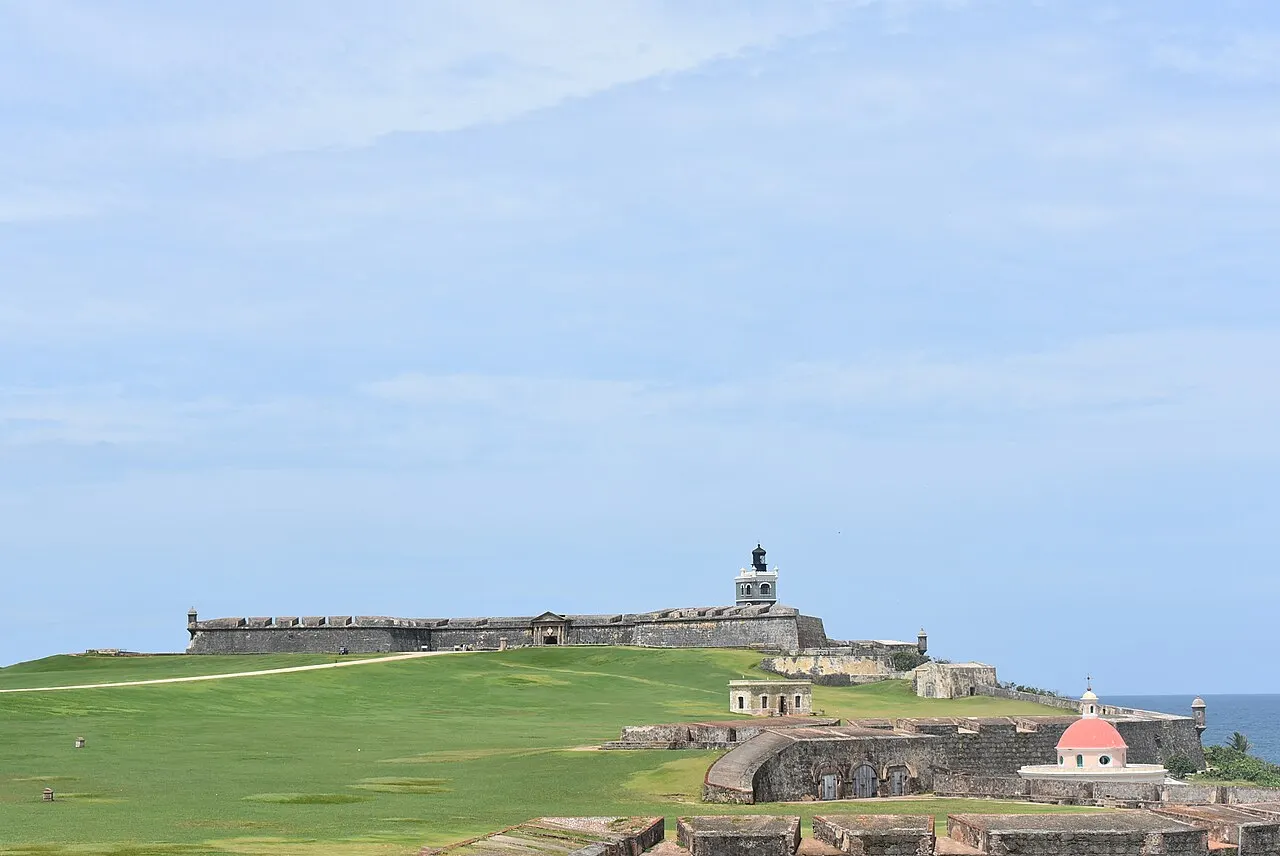
Castillo San Felipe del Morro
Built starting in 1539 on the northwest headland of the islet to guard the mouth of San Juan Bay, El Morro spreads six levels of batteries, ramps, barracks and sentry boxes (garitas) over the meeting of the Atlantic and the harbor channel. The wide lawn outside (Campo del Morro) is free to enter and fills with families flying kites in the wind. The interior is part of the San Juan National Historic Site, managed by the National Park Service (NPS): as of the October 2026 check, it's open daily from 9 a.m. to 5 p.m. (closed on Thanksgiving, Christmas and New Year's Day), with a 10 USD ticket for adults 16 and over (free through age 15) valid for 24 hours, also at Castillo San Cristóbal. Payment at the ticket window is by card only; federal passes such as America the Beautiful are accepted.
Check access
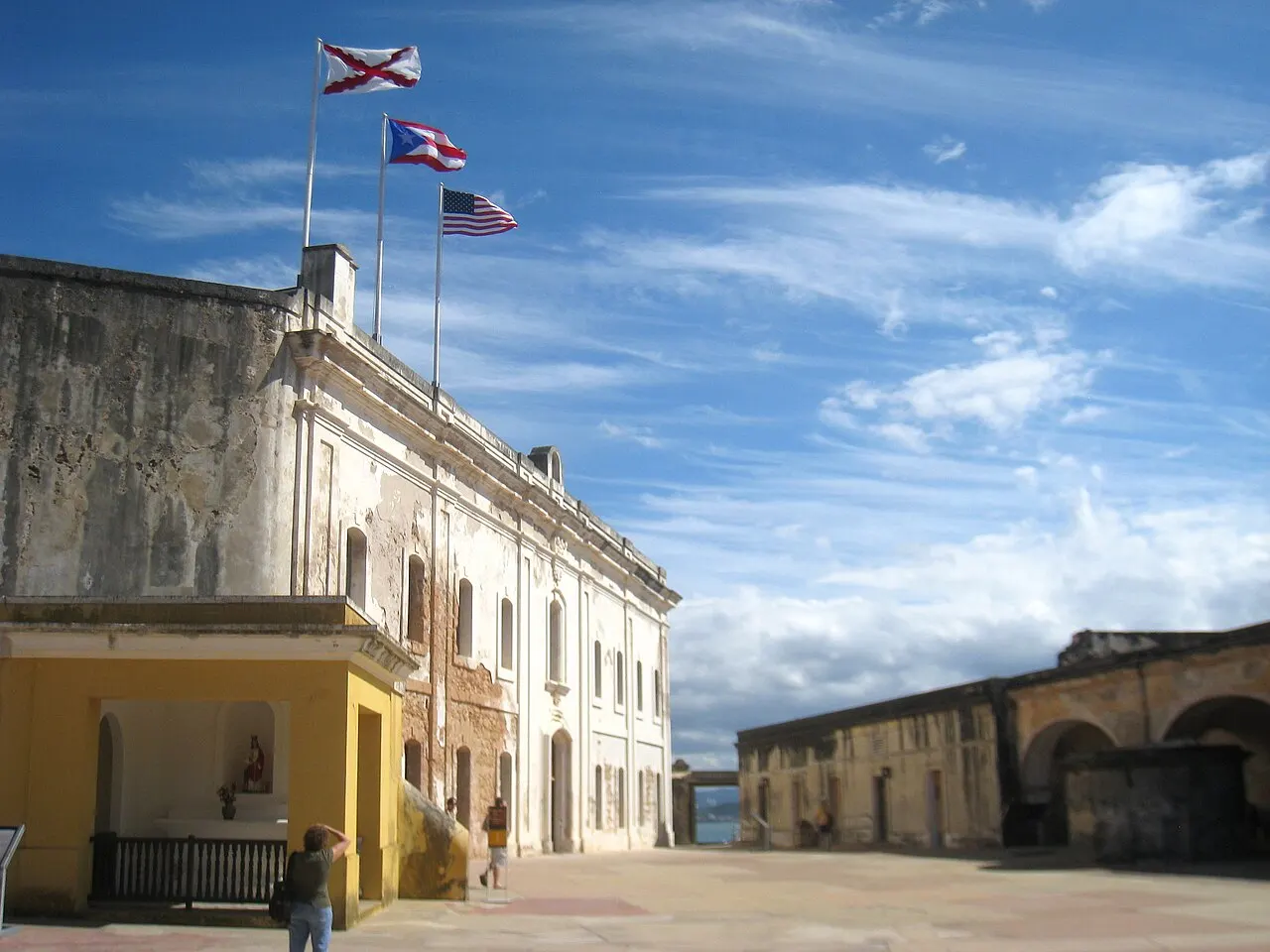
Castillo San Cristóbal
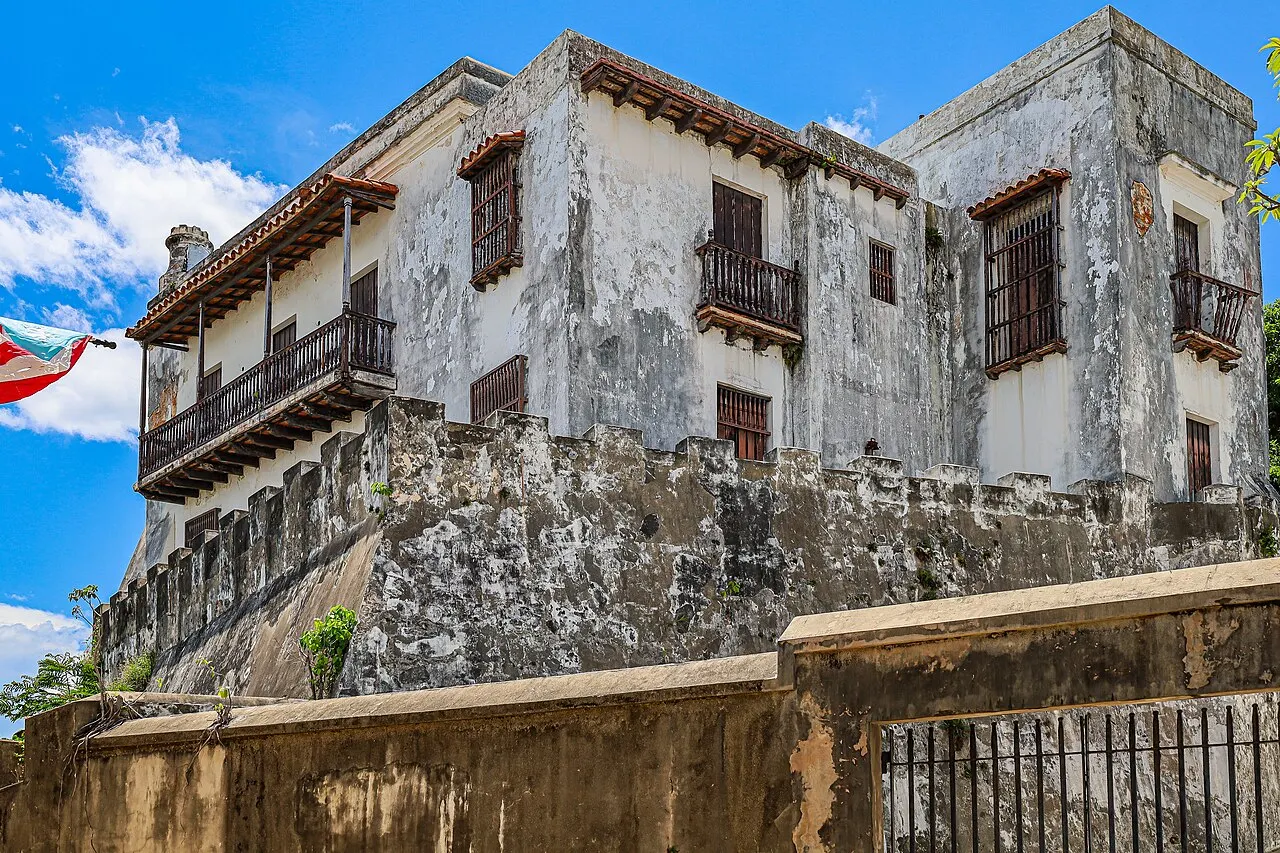
Raised in the second half of the 18th century by the engineers Thomas O'Daly and Juan Francisco Mestre, it covers about 11 hectares at the eastern entrance to Viejo San Juan and is the largest fortification Spain built in the Americas. While El Morro watched for ships, San Cristóbal protected the city against armies landing on the eastern beaches and advancing overland. The visit runs through countermine tunnels, cisterns, casemates and the upper parade ground, from which you can see the whole historic grid and the coast as far as Condado. It's open daily from 9 a.m. to 5 p.m. and shares the same 10 USD, 24-hour ticket with El Morro.
Check access
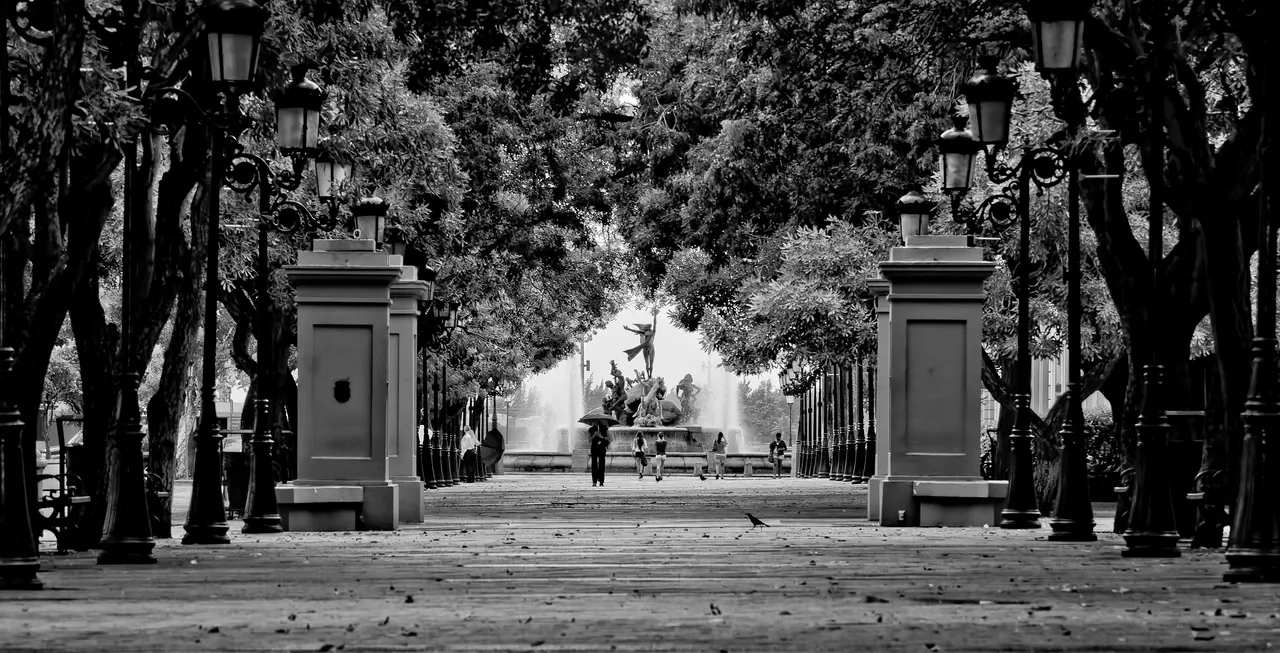
Paseo de la Princesa
A tree-lined 19th-century promenade that skirts the outer base of the south wall, beside the waters of the bay. It starts near the cruise terminals and the former La Princesa prison (now home to the Tourism Company, with an art gallery) and continues to the monumental Raíces fountain, then turns right at the foot of the stone wall toward the Puerta de San Juan. It's free, flat and breezy; late in the afternoon and on weekends it usually hosts craft stalls and kiosks selling drinks and snacks.
Check access
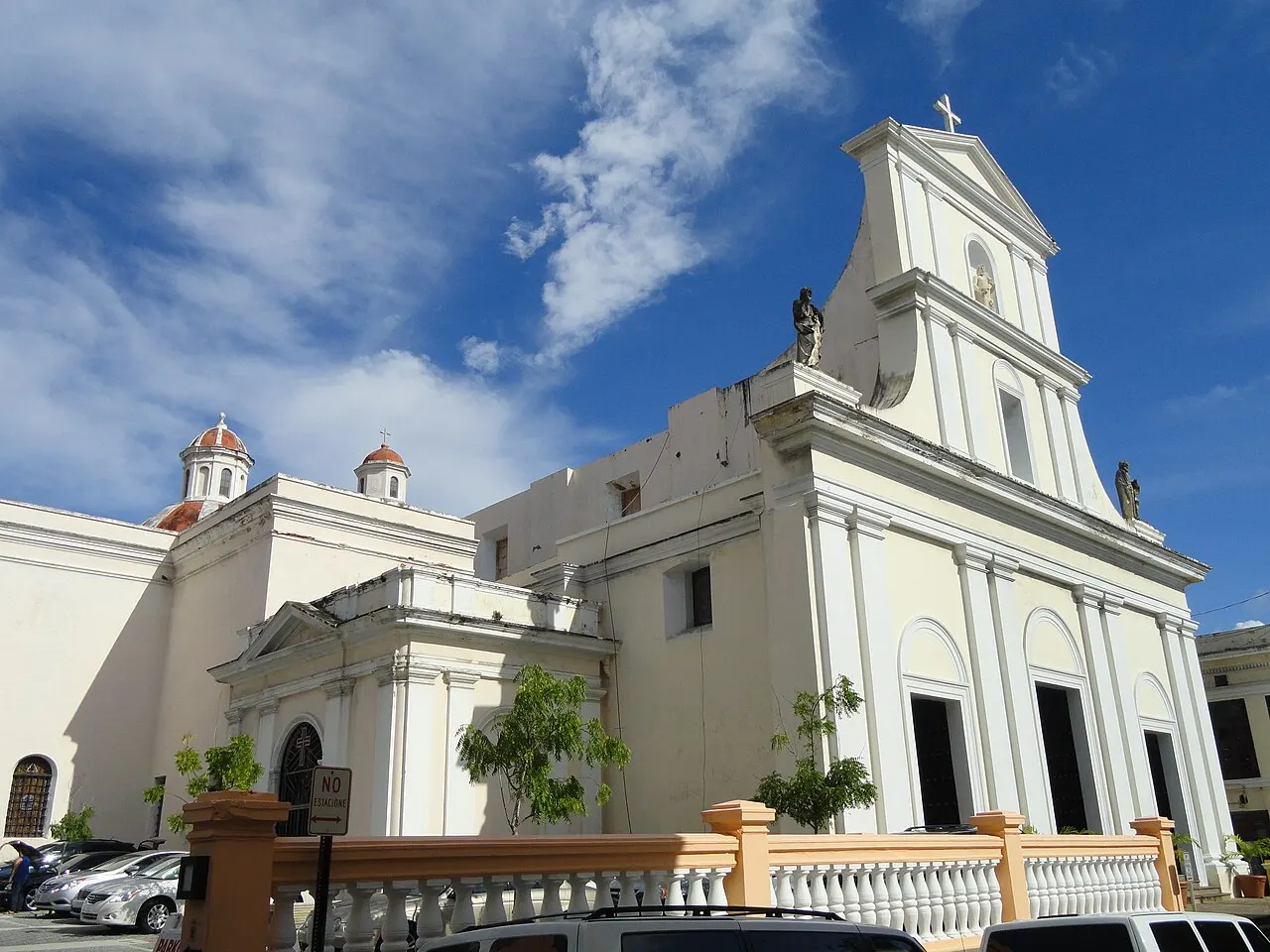
Basilica Cathedral of San Juan Bautista
Begun in wood in 1521 and rebuilt in stone over the following centuries after hurricanes and the Dutch sack of 1625, the cathedral on Calle del Cristo is one of the oldest churches in the Americas. The interior combines Gothic vaults in the oldest chapels with a neoclassical nave, and it holds the marble mausoleum with the remains of Juan Ponce de León, moved from the church of San José in the early 20th century, along with the relic of St. Pius. Check the opening hours, and avoid wandering the nave as a tourist during Mass.
Check access
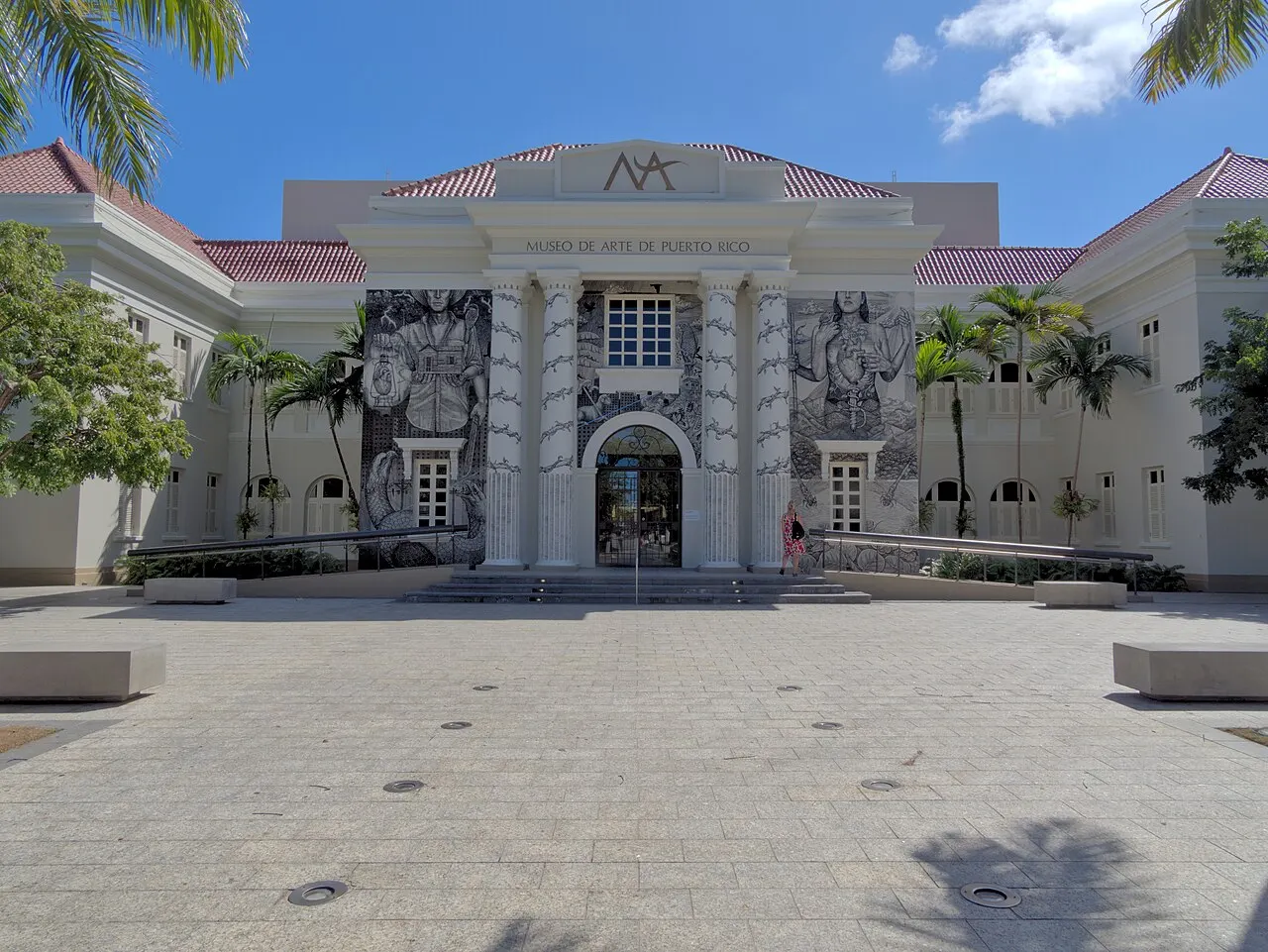
Museo de Arte de Puerto Rico
Housed in a former neoclassical municipal hospital from the 1920s on Avenida de Diego, in Santurce, expanded with a contemporary wing and a sculpture garden with a pond and native species. The collection runs through Puerto Rican painting, printmaking and sculpture from José Campeche and Francisco Oller to contemporary artists. As of the October 2026 check, the galleries are open Wednesday, Friday and Saturday from 10 a.m. to 5 p.m., Thursday from 10 a.m. to 8 p.m. (with free admission from 5 p.m. to 8 p.m., subject to change) and Sunday from 11 a.m. to 5 p.m.; they close on Mondays, Tuesdays and holidays. The sculpture garden is open Monday to Friday from 8 a.m. to 5:30 p.m. and on weekends from 11 a.m. to 5 p.m. General admission is 20 USD, 12 USD for residents with ID, and 7 USD for children 5 and older, students with ID, people over 65, people with disabilities, veterans and active-duty military; children under 5 are free, and temporary exhibitions cost 3 USD extra. The museum's own website contradicts itself on whether the IVU, the sales tax, is included: confirm at the ticket window.
Check access
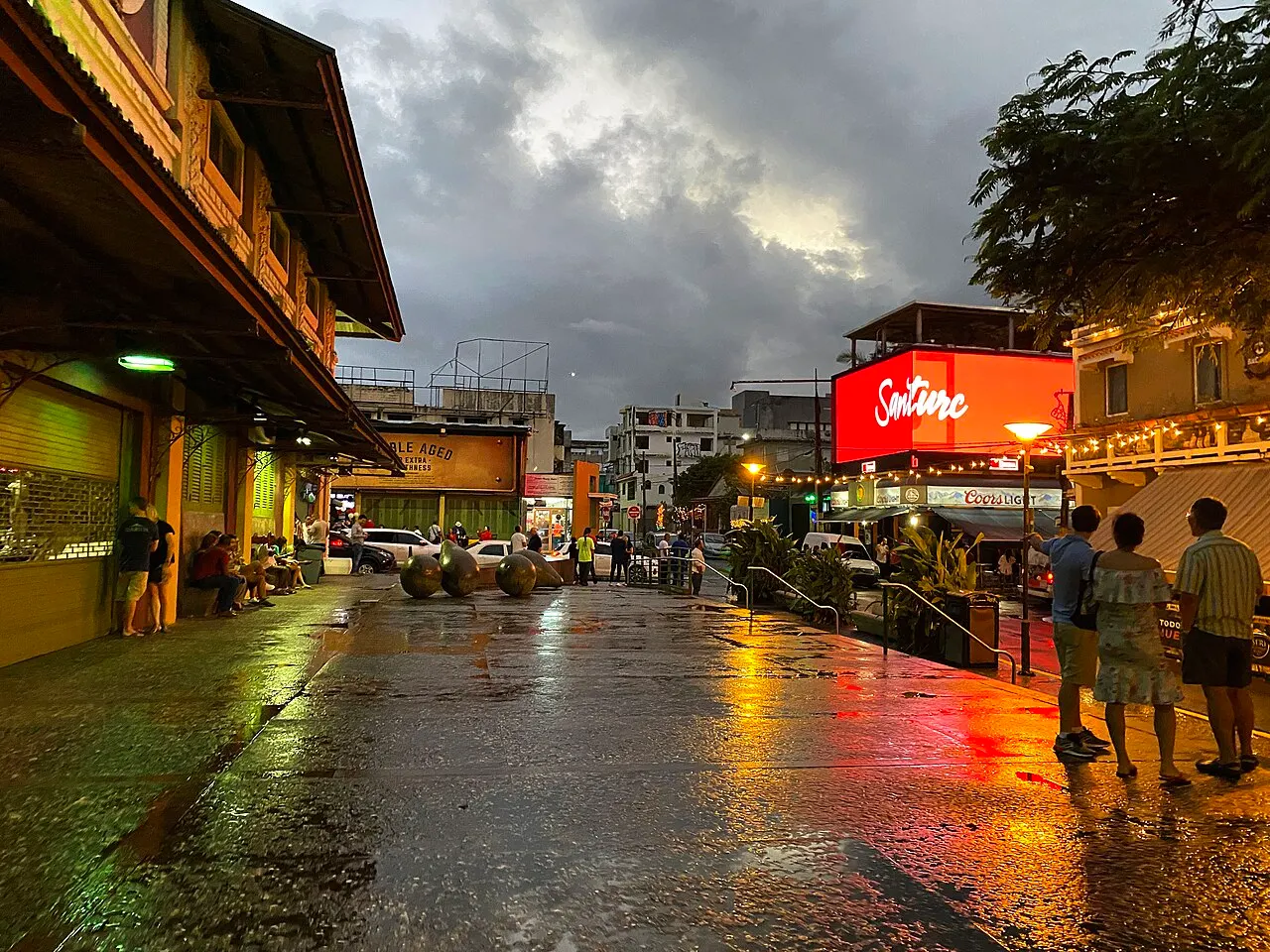
La Placita de Santurce
Built around the Plaza del Mercado de Santurce (1910), it runs on two opposite shifts: in the morning and early afternoon, the central pavilion sells tropical fruit, root vegetables, spices and home-cooked lunches to neighborhood residents; from late afternoon Thursday through Sunday, the surrounding streets close to cars and the bars and restaurants around it put tables out on the sidewalks with live salsa and Caribbean music. It's worth visiting at both times if you want to understand the difference between the supply market and the nightly party.
Check access
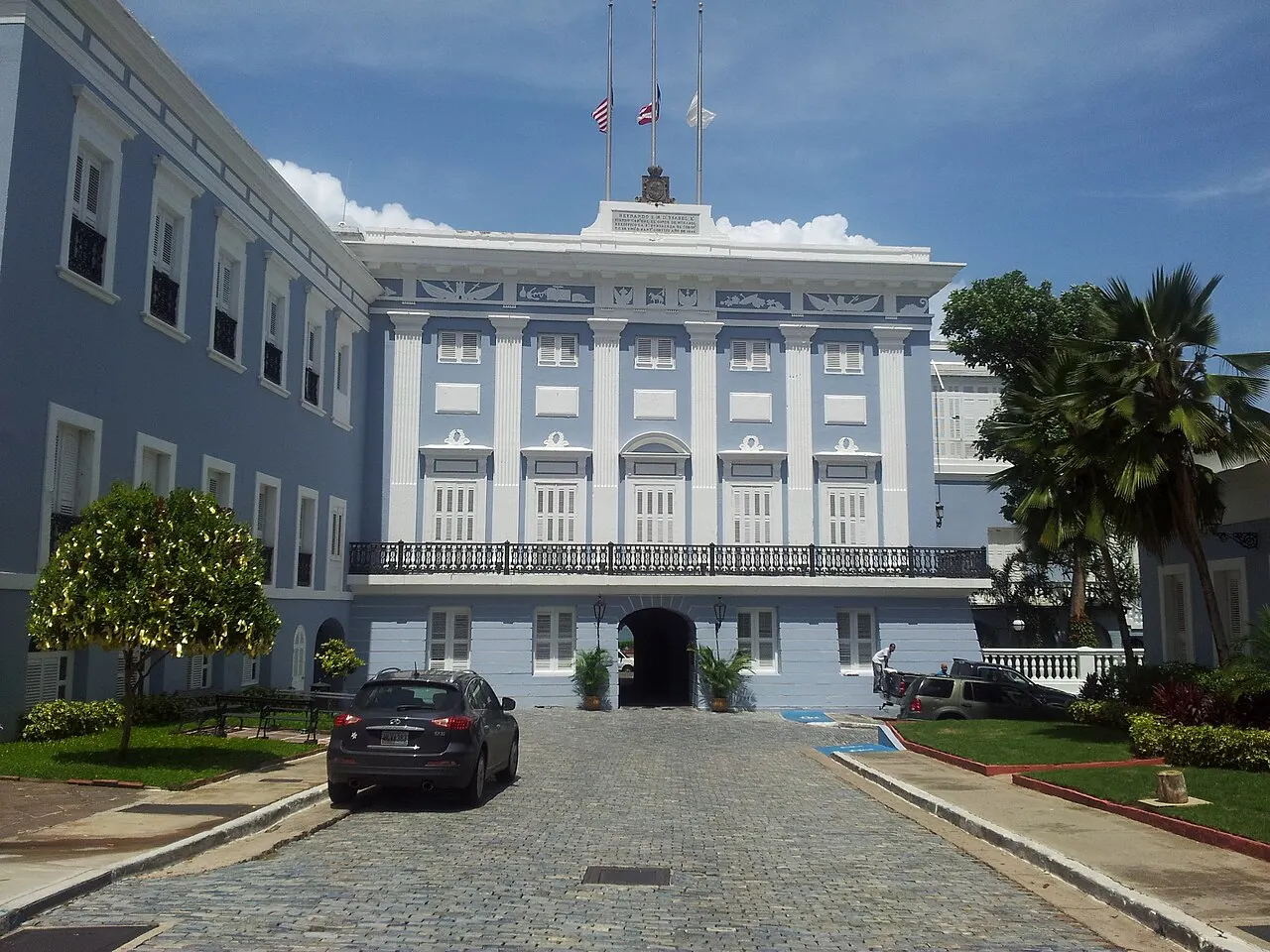
La Fortaleza
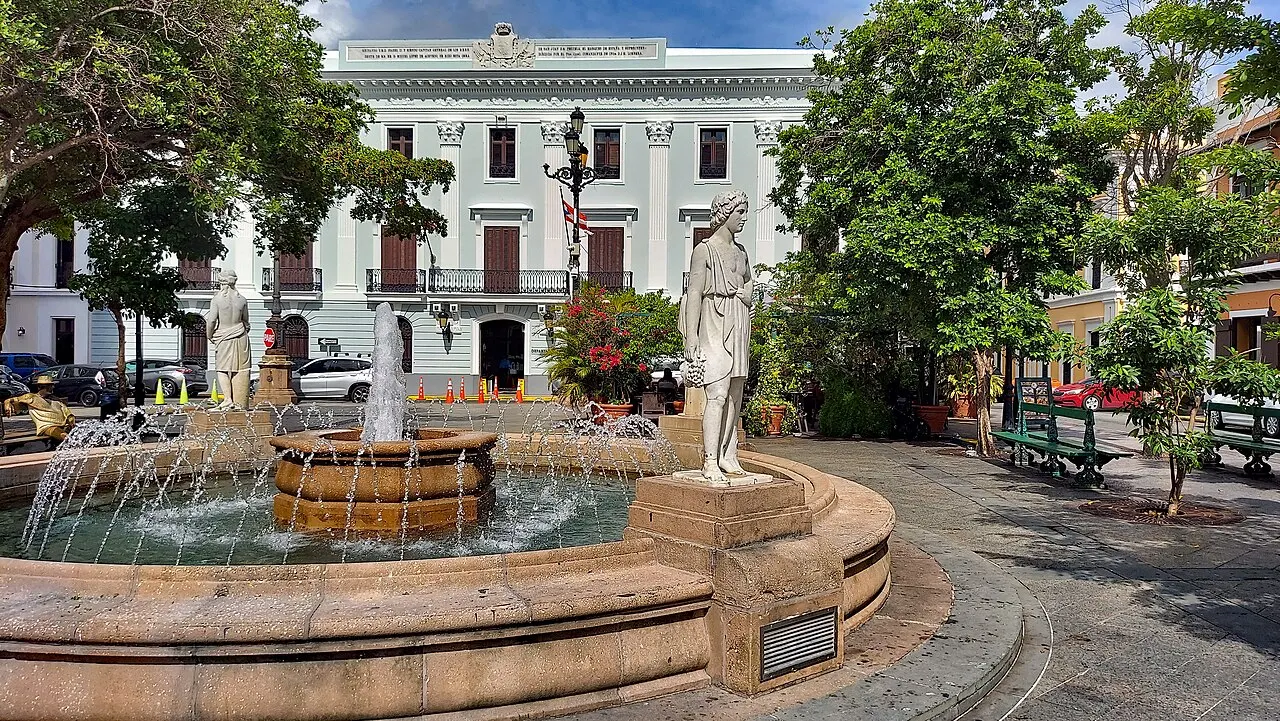
Built between 1533 and 1540 as the port's first defense and soon converted into the residence of the island's governors, the Palacio de Santa Catalina is the oldest executive seat in continuous use in the Americas. It stands at the far western end of Calle Fortaleza, with a pale blue facade and gardens above the wall. Because it is the active seat of the Puerto Rican government, guided visits to the gardens and halls depend on the official schedule and may be suspended; check availability and entry conditions before you go. Even from outside, the view along the street justifies the walk.
Check access
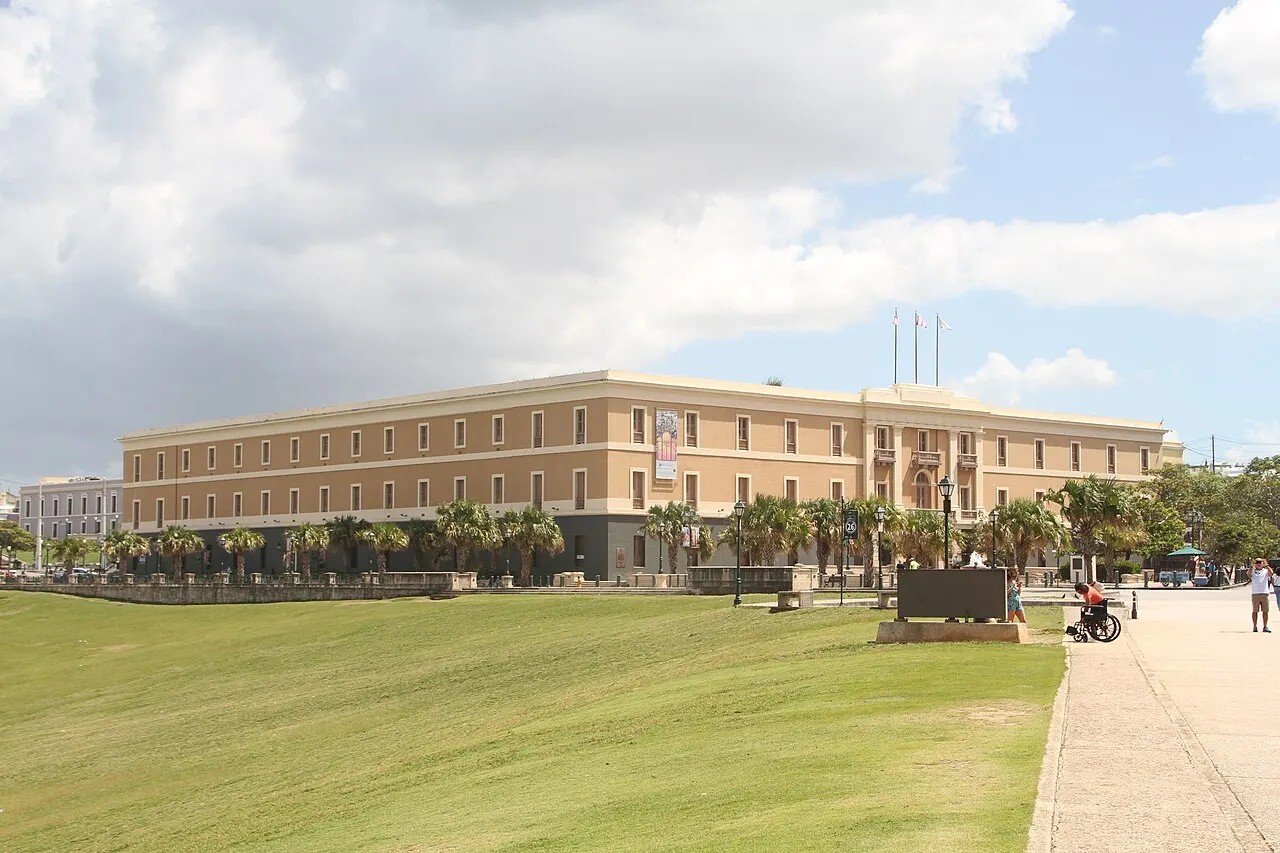
Cuartel de Ballajá
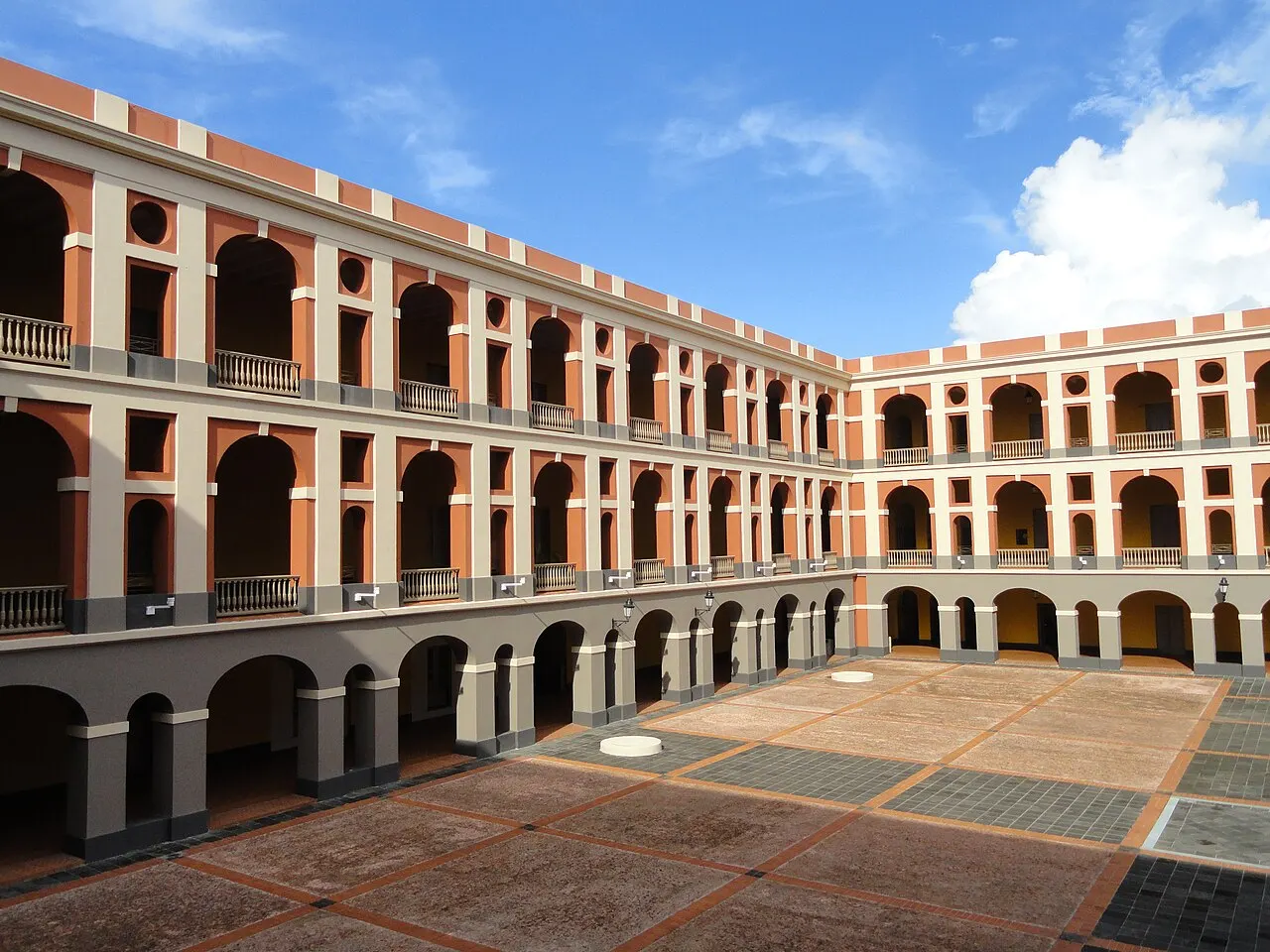
Taking up an entire block across from the El Morro lawn, this three-story barracks was built by the Spanish administration between 1854 and 1864 to house more than a thousand soldiers and their families. The austere facade hides one of the largest neoclassical courtyards in the Caribbean, with double arcades that serve as an open passage during the day. The building was hit in the naval bombardment of 1898, later served the U.S. Army as a hospital, and today houses the Museo de las Américas, art schools and cafés.
Check access
Museo de las Américas
Founded by the anthropologist Ricardo Alegría in 1992 on the second floor of the Cuartel de Ballajá, it presents an overview of the cultural roots of the continent and of Puerto Rico in permanent rooms devoted to Indigenous heritage, the African presence, folk arts and the process of colonization, along with temporary contemporary art exhibitions. As of the October 2026 check, it's open Tuesday to Friday from 9 a.m. to 12 p.m. and from 1 p.m. to 4 p.m. (closed for lunch) and on Saturdays and Sundays from 11 a.m. to 4 p.m.; it's closed on Mondays, and special holiday hours are announced on the museum's social media. Admission is 8 USD for adults and 5 USD for seniors, children, teachers and students.
Check access
Nilo’s itinerary
Start with the basic programme and choose extensions for the time you have.
Plan my days in the app ↗Day 1 · The two forts, the south wall and Viejo San Juan
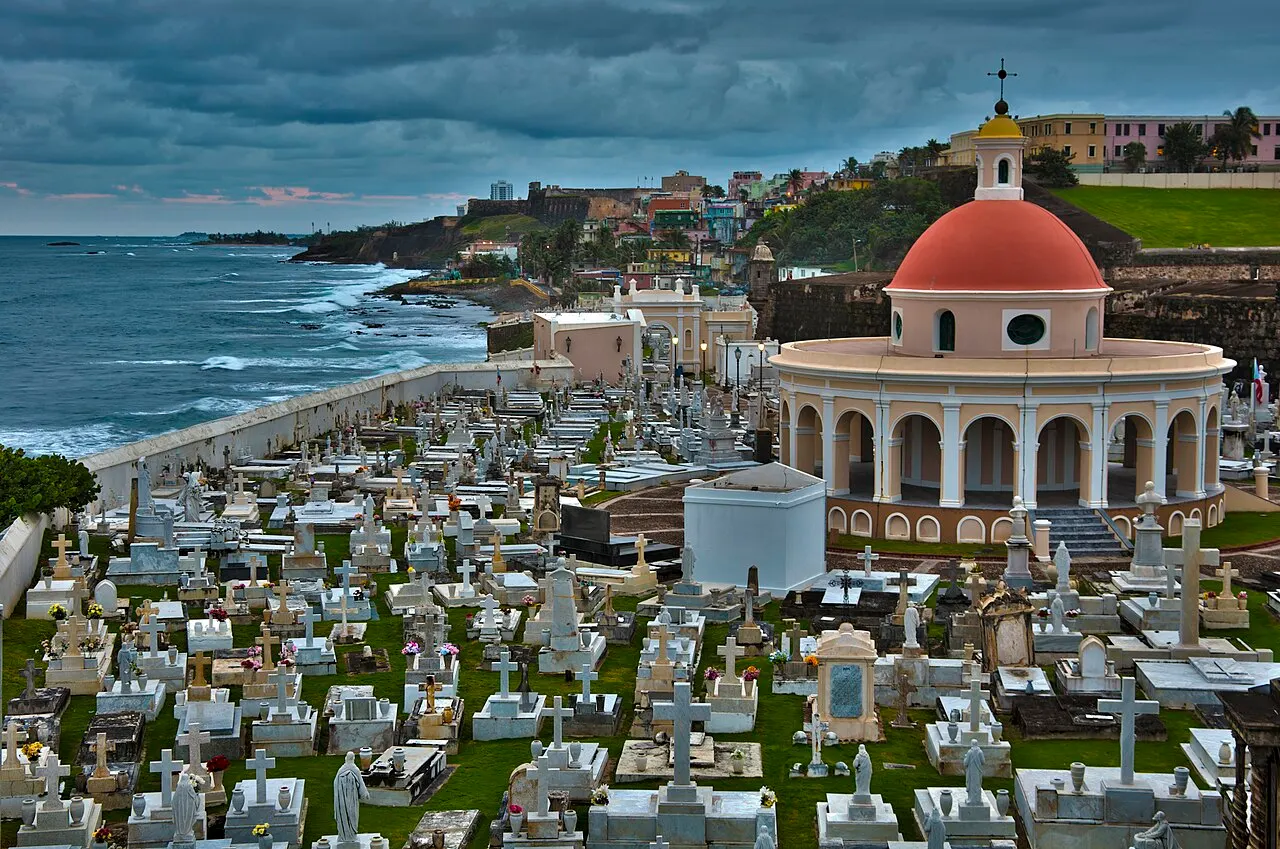
Start at 9 a.m. when Castillo San Felipe del Morro opens, before the sun has heated the exposed ramps. Buy the 10 USD NPS ticket (card only), walk the batteries facing the mouth of the bay and look down on the Cementerio Santa María Magdalena de Pazzis. Keep the receipt: it's also good for San Cristóbal in the afternoon.
On your way out across the Campo del Morro, step into the courtyard of the Cuartel de Ballajá. From Tuesday to Sunday, the Museo de las Américas, on the second floor, deepens the historical and ethnographic context; on weekdays it closes from 12 p.m. to 1 p.m., and on weekends it opens only at 11 a.m. On Mondays, or if you prefer a garden to a museum, walk on to the Museo Casa Blanca.
Walk down Calle del Cristo to the Cathedral of San Juan Bautista to see Ponce de León's tomb, pass in front of the blue facade of La Fortaleza and stop for lunch in Viejo San Juan, saving a toasted mallorca with coffee for dessert.
Around 3 p.m., cross the Plaza de Armas and follow Calle San Francisco to Castillo San Cristóbal, which closes at 5 p.m. With the same receipt from El Morro, use the two hours for the countermine tunnels and the upper parade ground, from which you can see the Atlantic coast as far as Condado.
When the fort closes, head down to the Paseo de la Princesa to walk in the bay breeze at the foot of the wall as far as the Puerta de San Juan. End the night at the bars of Calle San Sebastián or Calle Fortaleza.
Day 2 · A sheltered beach, art in Santurce and a night at the Placita
Spend the morning by the sea at Balneario El Escambrón, in Puerta de Tierra, where the reefs shelter the water for swimming, or walk the shoreline of Playa del Condado and Ocean Park if you prefer a long stretch of sand and a stiff breeze.
Go on to lunch on Calle Loíza, in Santurce, taking advantage of the neighborhood's independent restaurants and looking at the street art murals on the nearby blocks.
In the afternoon, Wednesday to Sunday, visit the galleries of the Museo de Arte de Puerto Rico, on Avenida de Diego, and the sculpture garden; on Thursdays admission is free from 5 p.m. to 8 p.m. On Mondays and Tuesdays the galleries are closed, but the garden stays open until 5:30 p.m.: stroll through it and extend the walk through Miramar and along the edge of the Laguna del Condado.
Late in the afternoon, pass through the Plaza del Mercado de Santurce to see the shift from daytime trade to the opening of the restaurants around it. From Thursday to Sunday, have dinner right there and catch the live music on the closed streets of La Placita de Santurce; from Monday to Wednesday, when the area is quieter, go back to Calle Loíza for dinner.
Day 3 · Ferry to Cataño, or a day trip to the rainforest and the east
For a third day on San Juan Bay, go to the ferry's San Juan Terminal (Muelle de Viejo San Juan) and board the Cataño ferry (0.50 USD each way for adults, about a 12-minute crossing) to see the full silhouette of the walled city from the water.
When you get off at the Cataño terminal, stroll the malecón facing the bay or take a 5- to 8-minute Uber to Casa Bacardí if you've booked one of the tours, all of them for ages 18 and over.
Take the ferry back to Viejo San Juan for lunch. If you rented a car for the day, you can head east along the shore late in the afternoon to the kiosks of Piñones, in Loíza, past Isla Verde, and try alcapurrias and bacalaítos fried in wood-fired pots facing the sea; without a car, the stretch calls for a round-trip taxi or Uber arranged in advance.
If you'd rather have mountain nature, replace the bay program with the full-day trip to the El Yunque rainforest and Luquillo beach, as described under the day trips.
Food
Mofongo
Green plantain (plátano verde) fried and mashed in a wooden mortar with garlic, olive oil or butter and pork cracklings (chicharrón), shaped into a half sphere and served with hot broth or stuffed with shrimp, octopus, pork or vegetables. There is also trifongo, which mixes green plantain, ripe plantain and cassava.
Lechón asado and pernil
Whole pig slow-roasted on a spit (at the lechoneras in the mountains, such as in Guavate) or pernil seasoned with garlic, oregano and vinegar at restaurants in the city, with crackling skin (cuerito) served with arroz con gandules (rice with pigeon peas and sofrito seasoning) and morcilla.
Alcapurrias, bacalaítos and empanadillas
The street and beach fried foods: the alcapurria is made of grated green plantain and yautía dough stuffed with meat or crab (jueyes) and fried in oil colored with annatto (achiote); the bacalaíto is a thin, crisp disc of batter with flakes of salt cod; the empanadilla is a half-moon pastry of wheat dough stuffed with meat, chicken or seafood. The kiosks of Piñones, east of Isla Verde, are the classic reference.
Mallorca
A soft, sweet spiral bread of Majorcan origin, pressed on the griddle with butter (or filled with ham and cheese) and topped with a generous layer of powdered sugar. It is the traditional breakfast at the historic bakeries and cafés of Viejo San Juan.
Piragua, Puerto Rican coffee and rum cocktails
The piragua is ice shaved by hand from a block at the carts in the historic center, shaped into a cone (like a small pyramid) and drenched in syrup of parcha (passion fruit), tamarind, coconut or raspberry. For a drink while seated, look for the arabica coffee grown in the island's central highlands (Adjuntas, Yauco, Jayuya) and for cocktails made with the local rum, such as the piña colada, whose authorship is disputed: the Caribe Hilton hotel claims to have created it in 1954, and the Barrachina restaurant in Viejo San Juan in 1963.
Where to eat
- Viejo San Juan
Historic bakeries and comida criolla restaurants serve mallorcas pressed in butter with powdered sugar and Puerto Rican coffee in the morning, plus mofongo stuffed with seafood or pernil at lunch. On the streets near El Morro, the traditional carts sell piraguas shaved to order.
- Santurce (La Placita and Calle Loíza)
Around the Plaza del Mercado de Santurce, simple restaurants serve arroz con gandules, viandas (boiled root vegetables) and fried fish at lunch, giving way to bars and chef-driven kitchens at night. Calle Loíza ranges from mofongo houses and Caribbean tacos to contemporary restaurants built on local ingredients.
- Piñones (Loíza, east of Isla Verde)
A rustic strip of seaside kiosks where alcapurrias of meat or crab, bacalaítos, piononos and skewers (pinchos) are fried in wood-heated pots. It works best during the day on weekends or on the way back from a trip east; bring cash.
· 2026-10-17
Day trips
El Yunque National Forest and Balneario La Monserrate (Luquillo)
The only tropical rainforest in the U.S. Forest Service system, about 45 km east of San Juan (45 minutes to 1 hour by car along PR-26 and PR-66, then the climb on PR-191 in Río Grande). As of the October 2026 check, the main recreation corridor of PR-191 is open daily from 8 a.m. to 5 p.m. with free entry and no advance reservation required, but the gates close temporarily when the inner parking lots reach capacity, so it's best to arrive at 8 a.m. The El Portal visitor center is open from 8 a.m. to 4 p.m. and charges 8 USD for visitors over 16 (4 USD for those with a federal pass); in 2026 the Forest Service proposed a new fee at El Portal and in the La Mina area, not yet in effect as of the check, and trails and river swimming spots often close for maintenance or after rain. Before heading out, check the forest alerts. Walk to the observation towers (Yokahú or Mount Britton) and the approved river swimming spots and, on the way down in the afternoon, stop at Balneario La Monserrate and the food kiosks of Luquillo. Go by rental car or accredited tour, since ride-hailing apps do not pick up passengers in the forest.
Cataño and Casa Bacardí
Across San Juan Bay, a 12-minute crossing on the Cataño ferry from the ferry's San Juan Terminal, the Muelle de Viejo San Juan (0.50 USD each way for adults). From the Cataño terminal, an Uber or taxi covers the final 3 km to the Casa Bacardí distillery. All experiences are for ages 18 and over and are booked on the website: the history tour (Legacy Tour) costs 40 USD plus tax and lasts 50 minutes, and the cocktail class (Mixology Class) costs 80 USD plus tax and lasts 75 minutes.
Laguna Grande (Fajardo) and bioluminescent bays
About 60 km east of San Juan (1 hour to 1 hour 15 minutes by car to Las Croabas, in Fajardo), the Laguna Grande nature reserve lets you paddle a kayak at night along a mangrove channel to the lagoon where dinoflagellate microorganisms (Pyrodinium bahamense) glow at the movement of the water. It requires advance booking with operators authorized by the Departamento de Recursos Naturales y Ambientales (DRNA) and nights of low moonlight. Those with an extra night to spare can go to the island municipality of Vieques (reached by ferry from Ceiba or a short flight from Isla Grande/SJU), home to Puerto Mosquito, the island's most concentrated bioluminescent bay.
Where to begin
The two forts, the south wall and Viejo San Juan
Start at 9 a.m. when Castillo San Felipe del Morro opens, before the sun has heated the exposed ramps. Buy the 10 USD NPS ticket (card only), walk the batteries facing the mouth of the bay and look down on the Cementerio Santa María Magdalena de Pazzis. Keep the receipt: it's also good for San Cristóbal in the afternoon.
A sheltered beach, art in Santurce and a night at the Placita
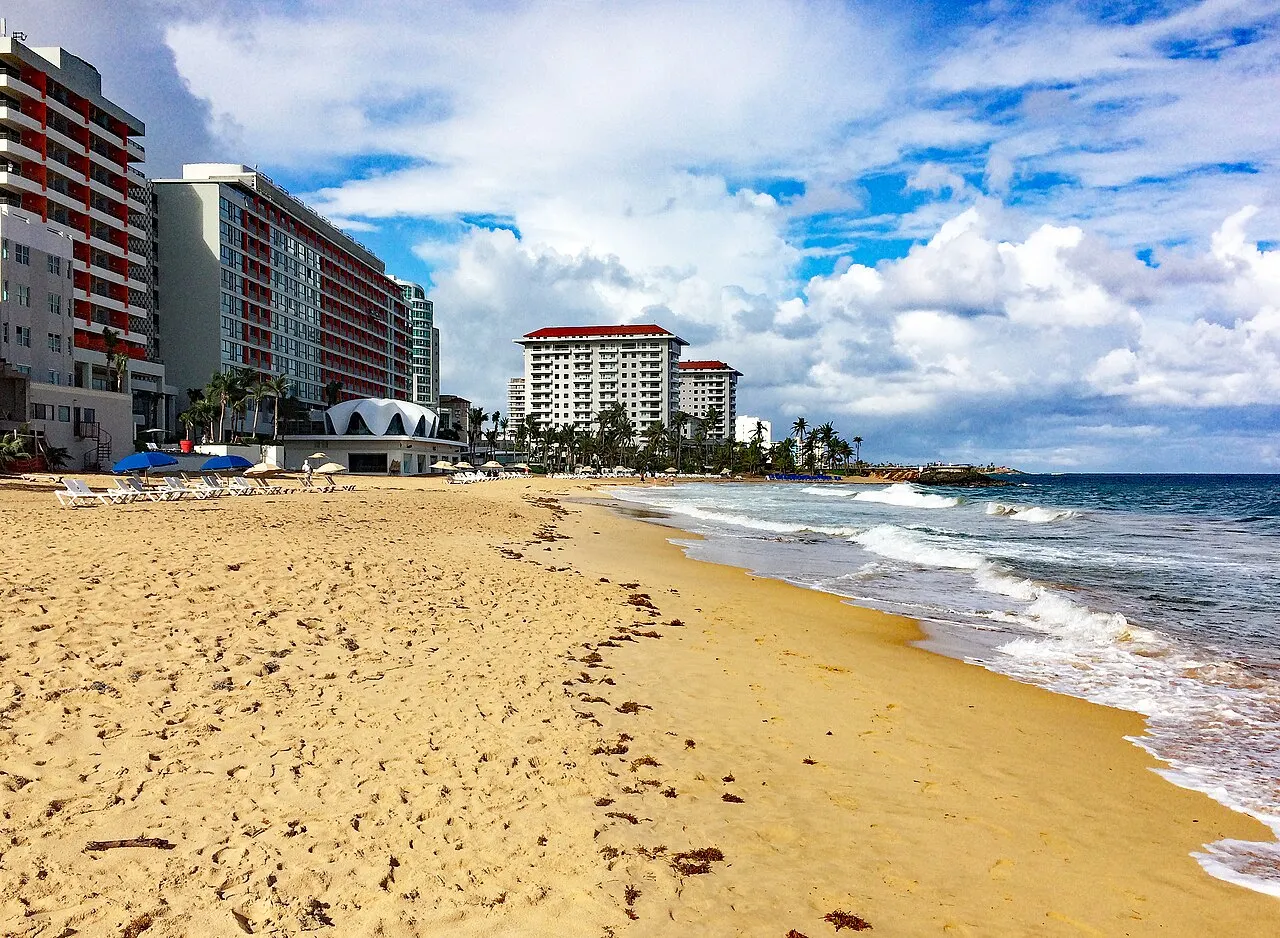
Spend the morning by the sea at Balneario El Escambrón, in Puerta de Tierra, where the reefs shelter the water for swimming, or walk the shoreline of Playa del Condado and Ocean Park if you prefer a long stretch of sand and a stiff breeze.
Money
The official currency is the U.S. dollar (USD). As a U.S. territory, credit and debit cards and contactless payments are accepted in practically every establishment, including the ticket windows of the federal NPS forts (which do not accept cash). Keep small 1 and 5 USD bills and 25-cent coins only for piragua carts, beach kiosks in Piñones, AMA buses (0.75 USD, exact amount) and tips. Puerto Rico charges a Sales and Use Tax (IVU) of 11.5% on most goods, restaurants and services (1% municipal plus 10.5% state), which is almost always added when the bill is settled on top of the menu or tag price; hotels apply a tourist occupancy tax (room tax, generally 9% to 11% depending on whether there is a casino). At restaurants with table service, the usual tip follows the U.S. standard of 15% to 20% before tax.
Getting there and around
Puerto Rico follows United States immigration rules: depending on your passport, entry requires a U.S. visa or ESTA electronic authorization, including for those arriving by cruise; check the requirement on the U.S. Customs and Border Protection website before buying your ticket. Luis Muñoz Marín International Airport (SJU) is in Carolina, next to Isla Verde; Ocean Park and Condado come next along the shore, and Viejo San Juan is about 15 to 20 minutes away by car without traffic. At arrivals, the official Taxi Turístico line charges fixed fares by zone to the tourist neighborhoods: the dispatcher notes the amount and hands the receipt to the driver, and airport fees, luggage and tolls may be added. Ask for that paper before you get in. Uber is authorized to pick up and drop off passengers in the marked areas of SJU. The T5 line of the AMA, the metropolitan bus, links the airport to the Covadonga terminal in Viejo San Juan for 0.75 USD, but it takes only small luggage and does not leave the airport on Sundays, according to travel guides; confirm the route and schedule with the AMA before counting on it.
Within the city, Viejo San Juan is best covered on foot; entering the historic islet in a private car means facing one-way streets and competing for expensive spaces in the multi-level garages of Doña Fela or Covadonga. To go from Viejo San Juan to Condado, Santurce or Isla Verde, ride-hailing cars (Uber) and taxis are the most predictable option. The buses of the Autoridad Metropolitana de Autobuses (AMA), called guaguas, leave the Covadonga terminal along the main corridors and charge 0.75 USD in exact coins at the fare box, with no change given. Line numbers and routes change: check the current AMA map before boarding.
The Tren Urbano has 16 stations between Sagrado Corazón (at the southern edge of Santurce), Hato Rey (the area of the Coliseo de Puerto Rico), Río Piedras (University) and Bayamón, running from 5:30 a.m. to 11:30 p.m.; it does not reach the airport, Condado or Viejo San Juan. The Cataño ferry (Lancha de Cataño), operated by Puerto Rico Ferry from the San Juan Terminal (Muelle de Viejo San Juan), on PR-1, crosses the bay in about 12 minutes. On the operator's fare table checked in October 2026, the trip costs 0.50 USD for ages 3 to 59 and 0.25 USD for ages 60 to 70 and for people with disabilities; children up to age 2 and seniors ride free (the table says from age 71, and a note on the same page says over 75), and these free tickets are issued only at the terminal ticket window, with photo ID. From San Juan, the first departure is at 6 a.m. and the last at 10 p.m. on weekdays; on weekends, from 8 a.m. to 11 p.m. To explore El Yunque, the eastern beaches (Luquillo, Fajardo) or the interior of the island, rent a car only for the days you head out, since ride-hailing apps are not allowed to pick up passengers inside El Yunque.
Safety
San Juan is one of the most visited capitals in the Caribbean, and the neighborhoods of Viejo San Juan, Condado, Ocean Park, Miramar and the main axis of Santurce have visible policing and constant foot traffic. As in any large metropolitan area, avoid walking alone in the small hours on deserted streets in the transition between neighborhoods, and don't leave objects in view inside rental cars. Don't walk down, especially at night, the ramps that lead to the La Perla neighborhood (outside the north wall, below the cemetery and San Cristóbal) without a local companion or without knowing the community's rules, especially regarding unauthorized photos and filming. On the beaches facing the open Atlantic, especially in Condado and Ocean Park, the main physical risk is rip currents: check the daily advisories of the National Weather Service San Juan and prefer Balneario El Escambrón or Playita del Condado when the sea is rough. The island has dengue transmission, spread by mosquitoes: in March 2024 the Department of Health declared a public health emergency over the rise in cases, with San Juan among the hardest-hit municipalities. Use repellent, prefer rooms with screens or air conditioning, and check the current advisories of the Department of Health and the CDC before traveling. For police or medical emergencies, the number is 911.
Etiquette tips
Swimwear stays on the sand
Even in the coastal neighborhoods of Condado and Ocean Park, walking shirtless or in just a bikini or swim trunks inside restaurants, shops, museums or Viejo San Juan is frowned upon and often gets you turned away at the door. Put on a T-shirt, dress or beach cover-up when you leave the strip of sand.
Greeting when you walk in
Saying 'buenos días', 'buenas tardes' or 'buen provecho' (when passing someone who is eating) is part of everyday courtesy in bakeries, taxis and shops, even if you'd rather switch to English afterward.
Respect at the fortresses and the cemetery
At the castles of El Morro and San Cristóbal, don't climb on the parapets or sit inside the sentry boxes hanging over the cliff; besides the risk of a fall, the sandstone is fragile and watched over by NPS rangers. At the Santa María Magdalena de Pazzis cemetery, remember that it is an active family burial ground.
Mistakes to avoid
Paying twice for the forts' ticket, or reaching the second castle in the last half hour before the 5 p.m. closing. The 10 USD NPS ticket is valid for 24 hours for El Morro and San Cristóbal: keep the receipt, enter San Cristóbal around 3 p.m. so you have two hours inside, and, if the day runs short, leave one of the two for the next morning.
Renting a car for every day of the stay while staying in Viejo San Juan. Traffic in the narrow streets is slow, street parking is restricted to residents and paid garages raise the daily cost; rent the vehicle only on the days you head out to El Yunque or other parts of the island.
Going to El Yunque by Uber and counting on ordering another car from your phone on the way out. Ride-hailing apps are not authorized to pick up passengers at the forest gates and cell signal drops in the mountains; go by rental car, a round-trip taxi arranged in advance, or an accredited tour.
Assuming the Cataño ferry drops you at the door of Casa Bacardí. The ferry terminal in Cataño is about 3 km from the distillery along an expressway without a continuous sidewalk; when you get off the ferry, take an Uber or taxi from the pier for the final stretch of 5 to 8 minutes.
Booking a bioluminescent bay tour on a full-moon night without checking the lunar calendar. Moonlight sharply reduces how much of the dinoflagellates' glow you can see in the water; schedule the outing near the new moon or for nights when the moon rises late.
Useful phrases
Buen provecho
Enjoy your meal; also said in passing to strangers who are already eating at a restaurant.
Un pocillo de café / un cortadito
A small cup of straight Puerto Rican espresso, or cut with a little steamed milk.
China / Parcha
Sweet orange ('jugo de china') and passion fruit ('piragua de parcha') in Puerto Rican Spanish.
Guagua
City bus of the AMA, or a shared-transport van.
Boricua
A native of Puerto Rico, a term derived from Borikén, the Taíno name for the island.
Where to stay
- Viejo San Juan · For those who put history first, want early walks on foot and like classic bars without depending on a car.: It puts the forts, the plazas and the ferry terminal to Cataño a few minutes' walk away. On the other hand, colonial buildings tend to have compact rooms or stairs without an elevator, the night noise is greater near Calle San Sebastián, and keeping a rental car is expensive and a hassle.
- Condado · For those who want the infrastructure of a seafront hotel with restaurants, lit promenades and an easy taxi ride to the historic center.: It sits on the shore between SJU airport and Viejo San Juan, with short taxi or Uber trips to both and shops open late on Avenida Ashford. It's the priciest hotel zone in the city, and the sea in front of the open beach often has a strong current.
- Ocean Park and Miramar · For those looking for a quiet residential scale, smaller guesthouses and immediate proximity to Santurce.: Ocean Park offers a wide beach and walking access to the restaurants of Calle Loíza; Miramar sits on the lagoon, near museums and cinemas, with good value for those who will rent a car for daytime outings. It requires an Uber or a bus to get to Viejo San Juan.
- Isla Verde (Carolina) · For those who put a wide beach of pale sand first, want beachfront resorts or need to be next to SJU airport.: It has one of the best urban swimming strips in the metropolitan region and is 5 minutes from the air terminal, but it's farther from the historic center and calls for motorized transport for almost every cultural outing.
· 2026-10-17
Districts
Viejo San Juan
The historic center at the western tip of the islet, with narrow streets of blue cobblestones (adoquines), colorful two- and three-story houses and large civic plazas. It's entirely walkable and holds the forts, the history museums and classic bars, but it has steep slopes and slow traffic for anyone arriving by car.
Puerta de Tierra
The eastern half of the same islet, between Castillo San Cristóbal and the bridges to the mainland. It holds the Capitol of Puerto Rico, Luis Muñoz Rivera Park and Balneario El Escambrón, and offers a transition on foot or by bicycle between the old center and Condado.
Condado and Ocean Park
A coastal strip east of the Laguna del Condado. Condado concentrates tall hotels, casinos and restaurants along Avenida Ashford; right next door, Ocean Park trades the high-rises for low residential streets and a long beach used by locals and kitesurfers.
Santurce and Miramar
A central neighborhood south of Condado, organized around Avenida Ponce de León, Calle Loíza and the area around the Placita. It holds the Museo de Arte de Puerto Rico, street art murals, concert halls and the city's most active food scene; Miramar, to the west, is more residential and has independent cinemas and restaurants.
Isla Verde
Although it belongs administratively to the neighboring municipality of Carolina, in practice it works as the eastern extension of San Juan's waterfront, right next to SJU airport. It has a wide beach of pale sand and large resorts, and you depend on a taxi or ride-hailing car to reach the historic center.
Convention District (Isla Grande)
A peninsula south of the San Antonio Channel where the Puerto Rico Convention Center and the T-Mobile District entertainment complex are located. It makes sense for those attending events or looking for modern venues, but it requires motorized transport for historic outings.
History
Before 1508 · Taíno Borikén
The island, called Borikén by the Taíno peoples, was organized into agricultural and fishing chiefdoms before the Spanish arrived.
1508–1521 · From Caparra to the islet of San Juan
Juan Ponce de León founded the first settlement at Caparra, inland from the bay, in 1508. In 1521 the colony moved to the breezy islet at the mouth of the harbor, giving rise to Viejo San Juan.
1533–1634 · Fortifying the bay entrance
The construction of La Fortaleza and Castillo San Felipe del Morro turned the city into a defensive bastion against privateers and European fleets. English attacks (Francis Drake in 1595 and George Clifford in 1598) and a Dutch one (Boudewijn Hendricksz in 1625) led the Crown to build a wall around the city.
1765–1790 · The military reforms of the 18th century
The engineers Thomas O'Daly and Juan Francisco Mestre expanded the defensive system and built Castillo San Cristóbal to block land invasions from the east of the islet.
1797 · Abercromby's British siege
British troops landed east of the city but were held at the defensive lines of Puerta de Tierra and the San Antonio bridge, cementing the stronghold's military reputation.
1898 · The Spanish-American War
After the American naval bombardment in May 1898 and the Treaty of Paris, Spain ceded Puerto Rico to the United States. In 1917 the Jones Act extended U.S. citizenship to Puerto Ricans.
1951–1983 · Río Piedras, the Commonwealth and UNESCO
The neighboring municipality of Río Piedras, home of the University of Puerto Rico, was incorporated into San Juan in 1951. In 1952 the Constitution of the Commonwealth took effect, and in 1983 La Fortaleza and the San Juan National Historic Site were added to the UNESCO World Heritage List.
Complete history
San Juan was born of a geographic correction. When Juan Ponce de León began the Spanish colonization in 1508, he set up the first settlement at Caparra, on the mainland, in what is now the municipality of Guaynabo. The swampy ground and the distance to the anchorage convinced the colonists to move the city, in 1521, to the rocky islet that closes off the north side of the bay. Its position at the entrance to the Caribbean, on the route of ships crossing the Atlantic pushed by the trade winds, made the port a strategic piece of the Spanish empire and turned the island into a constant target for rival powers.
Each foreign attack redrew the city. Francis Drake tried to force his way into the bay in 1595 and was repelled; three years later the Earl of Cumberland landed to the east, marched overland and held the city until an epidemic forced him to withdraw. In 1625 the Dutch commander Boudewijn Hendricksz entered the bay, occupied the streets and burned a good part of the houses before failing against El Morro. The Spanish response was to enclose the islet with sandstone walls and, in the 18th century, under the military reforms of Charles III carried out by engineers such as the Irishman Thomas O'Daly and Juan Francisco Mestre, to build Castillo San Cristóbal to protect the landward front. Walking today between San Cristóbal and El Morro, you can see how the residential streets came to be wedged between the batteries and the wall.
In the 19th century, the end of the Spanish colonies on the American continent made Puerto Rico and Cuba the empire's last two strongholds in the Caribbean. Crowding inside the walls led to the construction of the Cuartel de Ballajá in the 1850s and, in 1897, to the demolition of a stretch of the eastern wall so the city could breathe toward Puerta de Tierra and Santurce. A year later, the Spanish-American War ended four centuries of Spanish rule: under the 1898 Treaty of Paris, the island passed to United States administration.
Over the 20th century, San Juan's everyday center of gravity shifted out of the islet. Santurce grew along the old electric streetcar line, Condado replaced coastal smallholdings with seafront hotels, and the 1951 annexation of Río Piedras brought the university hub and the southern neighborhoods into the municipality. Meanwhile, the restoration led by the Instituto de Cultura Puertorriqueña from the 1950s on preserved the colonial facades and the adoquín paving of Viejo San Juan. That double layer explains a visit today: the islet concentrates imperial memory and the federal forts, while music, the visual arts and contemporary cooking are spread across Santurce, Miramar and Río Piedras.
I wouldn't walk through the Cuartel de Ballajá just as a shortcut to El Morro. Looking at the 19th-century inner courtyard next to the 16th-century fortress helps you see that the Spanish military presence in San Juan lasted until the eve of 1898.
Geography and shape of the city
The municipality is divided among the islet of San Juan, the Atlantic coastal strip and the inland plain. The islet of Viejo San Juan and Puerta de Tierra is about 4 km long, connected to the main island by the Dos Hermanos, Constitución and San Antonio bridges. South of it opens San Juan Bay, a sheltered natural harbor where cruise ships dock and from which the ferry to Cataño departs; to the north, the Atlantic Ocean pounds directly against the sea walls of El Morro and San Cristóbal. Crossing the Laguna del Condado to the east, the shoreline continues through Condado and Ocean Park to Isla Verde (already in the neighboring municipality of Carolina, next to SJU airport). South of the San Antonio Channel and the lagoon lies Santurce, a dense cultural and residential heart, and farther south stretch Hato Rey (the financial Milla de Oro) and Río Piedras. The climate is tropical maritime all year, with averages around 25–29 °C, steady trade winds and quick rain showers.
Before going into the sea in front of the hotel in Condado, I'd look at the current flags. When the Atlantic pounds the open beach, a short taxi ride to the sheltered cove at Escambrón saves the swim.
Culture
Music in San Juan is not limited to one showcase genre. In the plazas of Viejo San Juan and in Santurce you'll find the bomba (an Afro-Puerto Rican tradition in which the dancer challenges and leads the beats of the barrel drum, with strong historical roots in Loíza and Cangrejos/Santurce), the plena (called the sung newspaper for narrating everyday events to the accompaniment of panderetas), which Rafael Cortijo and Ismael Rivera, names tied to Santurce, brought to the dance halls and the records, the salsa of orchestras like El Gran Combo, and contemporary reggaeton. Live music at the Placita or in the bars of Calle San Sebastián is part of the weekly calendar, not just the January festivities.
In the visual arts, from the 1940s Puerto Rico developed a graphic tradition of silkscreen posters and woodcuts at the Division of Community Education (DIVEDCO) and the Instituto de Cultura Puertorriqueña, with artists such as Lorenzo Homar, Rafael Tufiño and Myrna Báez. This work can be seen at the Museo de Arte de Puerto Rico and in the galleries of Viejo San Juan, while the muralist spirit has spread to the exterior walls of Santurce. In sports, winter baseball (the Roberto Clemente Professional Baseball League, played at Hiram Bithorn Stadium between November and January) and boxing carry deep weight in the island's identity.
I'd visit the Placita de Santurce twice on the same day or on consecutive days: in the morning to see the fruit and root vegetable stalls working as a neighborhood market, and then after 7 p.m. to hear music in the street.
Festivals and events
Fiestas de la Calle San Sebastián (SanSe)
Held Thursday through Sunday in the third week of January in Viejo San Juan, they close the long Puerto Rican Christmas season. They bring parades of cabezudos (giant puppets inspired by local folklore and history), plena groups on the corners, a crafts fair at the Cuartel de Ballajá and evening concerts in the plazas. The islet is closed to private cars, and access is by special buses, the Cataño ferry or on foot from Puerta de Tierra.
Christmas season, Día de Reyes and Octavitas
Puerto Rico celebrates one of the longest Christmas seasons in the world, starting right after Thanksgiving in November and running through the Día de Reyes (January 6, an official holiday with gift-giving and traditional aguinaldo and parranda music) to the Octavitas and the SanSe.
Festival Casals
Founded in 1957 by the Catalan cellist Pablo Casals, who spent his last decades in Puerto Rico, the classical and symphonic music festival presents concerts at the Centro de Bellas Artes Luis A. Ferré, in Santurce, usually between May and June; check the annual schedule from the music corporation.
Noche de San Juan
On the night of June 23, the eve of the patron saint, John the Baptist, residents fill the beaches of Condado, Ocean Park and Isla Verde and follow the custom of walking backward into the sea at midnight to bring good luck for the coming year.
Books and films
La carreta, by René Marqués (1953)
A classic play of Puerto Rican literature that follows a peasant family's displacement from the mountains to the poor neighborhoods of San Juan and then to New York in the mid-20th century, helping explain the capital's urbanization and the diaspora.
La guaracha del Macho Camacho, by Luis Rafael Sánchez (1976)
A novel set in San Juan's gridlocked traffic and heat, built on the musical rhythm and orality of Caribbean Spanish to portray the island's urban society in the 1970s.
When I Was Puerto Rican, by Esmeralda Santiago (1993)
A childhood memoir spanning the rural countryside, Santurce and the move to the United States, originally published in English and later published in Spanish as Cuando era puertorriqueña; useful for recognizing domestic customs, foods and cultural tensions between the island and the mainland.
Frequently asked questions
San Juan: how do I get from the airport to Viejo San Juan and the beach neighborhoods?
Luis Muñoz Marín International Airport (SJU) is in Carolina, next to Isla Verde; Ocean Park and Condado come next along the shore, and Viejo San Juan is about 15 to 20 minutes away by car without traffic. At arrivals, the official Taxi Turístico line charges fixed fares by zone to the tourist neighborhoods: the dispatcher notes the amount and hands the receipt to the driver, and airport fees, luggage and tolls may be added. Ask for that paper before you get in. Uber is authorized to pick up and drop off passengers in the marked areas of SJU. The T5 line of the AMA, the metropolitan bus, links the airport to the Covadonga terminal in Viejo San Juan for 0.75 USD, but it takes only small luggage and does not leave the airport on Sundays, according to travel guides; confirm the route and schedule with the AMA before counting on it.
San Juan: do I need a visa to enter Puerto Rico?
Puerto Rico follows United States immigration rules: depending on your passport, entry requires a U.S. visa or ESTA electronic authorization, including for those arriving by cruise; check the requirement on the U.S. Customs and Border Protection website before buying your ticket.
San Juan: how many days should I stay?
I'd stay three full days in San Juan: the first for the two forts and the slopes of Viejo San Juan, the second combining the beach at Escambrón or Condado with the Museo de Arte de Puerto Rico and the evening in Santurce, and the third to head up early to the El Yunque rainforest or cross the bay by ferry to Cataño. A night on the bioluminescent bay at Fajardo or a short flight to Vieques is already a different trip, with an overnight in the east: if it goes into the plan, I'd add one or two more days after those three, so the transfers don't turn into a rush.
San Juan: how does the ticket for El Morro and San Cristóbal work?
The interior of El Morro is part of the San Juan National Historic Site, managed by the National Park Service (NPS): as of the October 2026 check, it's open daily from 9 a.m. to 5 p.m. (closed on Thanksgiving, Christmas and New Year's Day), with a 10 USD ticket for adults 16 and over (free through age 15) valid for 24 hours, also at Castillo San Cristóbal, which keeps the same hours. Payment at the ticket window is by card only; federal passes such as America the Beautiful are accepted. Keep the receipt, enter San Cristóbal around 3 p.m. so you have two hours inside, and, if the day runs short, leave one of the two for the next morning.
San Juan: how do I visit the El Yunque rainforest?
El Yunque is about 45 km east of San Juan (45 minutes to 1 hour by car along PR-26 and PR-66, then the climb on PR-191 in Río Grande). As of the October 2026 check, the main recreation corridor of PR-191 is open daily from 8 a.m. to 5 p.m. with free entry and no advance reservation required, but the gates close temporarily when the inner parking lots reach capacity, so it's best to arrive at 8 a.m. The El Portal visitor center is open from 8 a.m. to 4 p.m. and charges 8 USD for visitors over 16 (4 USD for those with a federal pass); in 2026 the Forest Service proposed a new fee at El Portal and in the La Mina area, not yet in effect as of the check, and trails and river swimming spots often close for maintenance or after rain. Before heading out, check the forest alerts. Go by rental car or accredited tour, since ride-hailing apps do not pick up passengers in the forest.
San Juan: how do I take the ferry to Cataño and Casa Bacardí?
The Cataño ferry crosses San Juan Bay in 12 minutes from the ferry's San Juan Terminal, the Muelle de Viejo San Juan (0.50 USD each way for adults). From the Cataño terminal, an Uber or taxi covers the final 3 km to the Casa Bacardí distillery. All experiences are for ages 18 and over and are booked on the website: the history tour (Legacy Tour) costs 40 USD plus tax and lasts 50 minutes, and the cocktail class (Mixology Class) costs 80 USD plus tax and lasts 75 minutes.
San Juan: how can I see a bioluminescent bay?
About 60 km east of San Juan (1 hour to 1 hour 15 minutes by car to Las Croabas, in Fajardo), the Laguna Grande nature reserve lets you paddle a kayak at night along a mangrove channel to the lagoon where dinoflagellate microorganisms glow at the movement of the water. It requires advance booking with operators authorized by the Departamento de Recursos Naturales y Ambientales (DRNA) and nights of low moonlight: the light of a full moon sharply reduces how much of the glow you can see, so schedule the outing near the new moon or for nights when the moon rises late. Those with an extra night to spare can go to the island municipality of Vieques (reached by ferry from Ceiba or a short flight from Isla Grande/SJU), home to Puerto Mosquito, the island's most concentrated bioluminescent bay.
San Juan: when is the best time to go, and when is hurricane season?
The driest and busiest period runs from December to April, when it rains less and the Christmas season and the Fiestas de la Calle San Sebastián take place; in exchange, hotel prices rise and the forts receive more cruise passengers. May and the first half of June bring stronger heat, more moderate lodging rates and shorter lines at the attractions. The official Atlantic hurricane season runs from June 1 to November 30, with the greatest historical activity and humidity in August, September and October: traveling in those three months means following the National Hurricane Center bulletins and choosing bookings with flexible cancellation.
San Juan: do I need cash, and how much do tax and tips add?
The official currency is the U.S. dollar (USD). Credit and debit cards and contactless payments are accepted in practically every establishment, including the ticket windows of the federal NPS forts (which do not accept cash). Keep small 1 and 5 USD bills and 25-cent coins only for piragua carts, beach kiosks in Piñones, AMA buses (0.75 USD, exact amount) and tips. Puerto Rico charges a Sales and Use Tax (IVU) of 11.5% on most goods, restaurants and services, which is almost always added when the bill is settled on top of the menu or tag price; hotels apply a tourist occupancy tax (room tax, generally 9% to 11% depending on whether there is a casino). At restaurants with table service, the usual tip follows the U.S. standard of 15% to 20% before tax.
San Juan: where is it safe to swim?
On the beaches facing the open Atlantic, especially in Condado and Ocean Park, the main physical risk is rip currents: check the daily advisories of the National Weather Service San Juan and prefer Balneario El Escambrón or Playita del Condado when the sea is rough.