
Curaçao (Kingdom of the Netherlands)
Curaçao
Colorful Willemstad, reef beaches in the west and the wild coast of the parks
Days Start with the basic programme and choose extensions for the time you have.
How the guide reaches this number
The first, on foot and on a weekday, because the synagogue closes on weekends: the Handelskade and the fort in the morning, the synagogue at 9 a.m., lunch at the Plasa Bieu, the bridge to Otrobanda and the Kurá Hulanda Museum in the afternoon, and dinner in Pietermaai. The other two, by car in the west: one starting early at the Christoffelberg, with Shete Boka and the Westpunt turtles afterward, and another just for beaches, Grote Knip, Tula's plantation and the snorkeling at Playa Lagun, returning past the Sint Willibrordus flamingos. With a fourth day, I'd go by boat to Klein Curaçao. With only one day, I'd stay in Willemstad and not try the west, which calls for the hour-long road and the whole day. The Hato Caves and the Chobolobo distillery I'd leave for anyone with time to spare: they are short guided visits, close to the capital, but they replace neither the historic center nor the west coast.
3–4
When May and June; February to April is also dry, but it coincides with the high season and carnival, and October to December are the rainiest months
How the guide reaches this number
Curaçao lies outside the main hurricane track and is warm all year, with highs of 28 °C to 32 °C, nights of 24 °C to 26 °C and a sea of 26 °C to 28 °C. Little rain falls, 500 to 600 mm a year according to the tourism board, and the east trade wind cools the day. February to June is the driest period; October, November and December are the rainiest months, with short showers, usually in the early morning or at night. A tropical storm is rare but does happen: in 2010 the passage of Tomas dumped 265 mm in a day and caused floods. The high season runs from December to April, with carnival, the year-end holidays and full beaches and restaurants; July and August are a second peak, during school vacations. May and June combine dry weather and fewer people, and September to November is also low season, with the warmest sea. The UV index goes above 11 at noon in any month.
Per person/day Add up lodging per night, meals per person and the rental car, which weighs heavily on the beach day and the park day; the Dicard is free.
How the guide reaches this number
Per person per day: accommodation, meals, urban transport, visits and a small allowance for extras. Flights excluded; larger purchases vary. Editorial estimate, not a quote.
 What Nilo thinks
I'd stay three days, based in Willemstad. The first, on foot and on a weekday, because the synagogue closes on weekends: the Handelskade and the fort in the morning, the synagogue at 9 a.m., lunch at the Plasa Bieu, the bridge to Otrobanda and the Kurá Hulanda Museum in the afternoon, and dinner in Pietermaai. The other two, by car in the west: one starting early at the Christoffelberg, with Shete Boka and the Westpunt turtles afterward, and another just for beaches, Grote Knip, Tula's plantation and the snorkeling at Playa Lagun, returning past the Sint Willibrordus flamingos. With a fourth day, I'd go by boat to Klein Curaçao. With only one day, I'd stay in Willemstad and not try the west, which calls for the hour-long road and the whole day. The Hato Caves and the Chobolobo distillery I'd leave for anyone with time to spare: they are short guided visits, close to the capital, but they replace neither the historic center nor the west coast.Willemstad has a bridge that swings. The Queen Emma Bridge, from 1888, floats on 16 pontoons and moves as a whole to the Otrobanda bank when a ship needs to enter the harbor, and in that interval a free ferry carries pedestrians. On the other side are the yellow, blue and green facades of the Handelskade, painted on the orders of a governor who in 1817 believed the white of the walls was bad for the eyes. Behind them, Punda keeps a fort from 1634 and a synagogue from 1732 with a sand floor, the oldest in continuous use in the Americas, and in Otrobanda the Kurá Hulanda Museum tells of the slave trade that passed through this same port. The island speaks Papiamento, eats keshi yena, stuffed Dutch cheese, and the landscape that draws the most visitors lies in the dry west: white-sand beaches between rock walls, such as Grote Knip, turtles by the Westpunt fishermen's pier and, on the north coast, the sea bursting into the Boka Tabla cave.
Quick facts
- Population
- 158,006 inhabitants on the whole island on January 1, 2026 (CBS Curaçao); most live in the Willemstad urban area
- Founding
- Taken from Spain by the Dutch West India Company in August 1634, when construction of Fort Amsterdam begins; the name Willemstad is recorded in 1680
- Country and region
- Curaçao, a country of the Kingdom of the Netherlands since 2010; an island in the southern Caribbean, about 65 km north of Venezuela
- Language
- Papiamento, Dutch and English are official; in the 2023 census, 78% spoke Papiamento at home, 8.4% Spanish, 7.9% Dutch and 3.8% English
- Currency
- Caribbean guilder (XCG, written Cg) since March 31, 2025, pegged to the dollar at 1.79; shops use 1.82 and accept dollars; about 2.05 per euro (Sept. 24, 2026)
- Time zone
- UTC−4 year-round, no daylight saving time
- Best time to visit
- May and June; February to April is also dry, but it coincides with the high season and carnival, and October to December are the rainiest months
- Average daily cost
- Add up lodging per night, meals per person and the rental car, which weighs heavily on the beach day and the park day; the Dicard is free.
When to go
May and June; February to April is also dry, but it coincides with the high season and carnival, and October to December are the rainiest months
How the year changes
Curaçao lies outside the main hurricane track and is warm all year, with highs of 28 °C to 32 °C, nights of 24 °C to 26 °C and a sea of 26 °C to 28 °C. Little rain falls, 500 to 600 mm a year according to the tourism board, and the east trade wind cools the day. February to June is the driest period; October, November and December are the rainiest months, with short showers, usually in the early morning or at night. A tropical storm is rare but does happen: in 2010 the passage of Tomas dumped 265 mm in a day and caused floods. The high season runs from December to April, with carnival, the year-end holidays and full beaches and restaurants; July and August are a second peak, during school vacations. May and June combine dry weather and fewer people, and September to November is also low season, with the warmest sea. The UV index goes above 11 at noon in any month.
Nilo's tips
Fill out the Digital Immigration Card on your phone before leaving home
The form at dicardcuracao.com is mandatory for every foreign visitor, one per person and per trip, children included. It opens seven days before departure and accepts registration up to one hour before arrival. Use the same passport you will travel with and keep the PDF or the confirmation email, which the airline may ask for at check-in.
Rent a car only for the days in the west
In Willemstad everything is done on foot, and the BUS vans go to Mambo Beach and Jan Thiel. The car starts to matter in Bandabou, where Christoffelpark, Shete Boka and the Westpunt beaches are 40 or 45 km away and the buses run on fixed schedules. Pick up the car the evening before the Christoffelberg day and return it after the third day.
At the Christoffelberg, the departure time decides the day
The climb has to start by 10 a.m., and the park opens at 6 a.m. Leaving Punda at 6 a.m., you are on the trail before 7 a.m. and finish before the midday heat, with time for Shete Boka, which is 3 km away, opens at 8 a.m. and admits no one after 3 p.m. Bring 2 liters of water per person; the ticket office sells it.
Pay in dollars, but take your change in guilders
The dollar is accepted everywhere, but shops convert at 1.82 instead of the official rate of 1.79 and give change in guilders. For the attractions and beaches of the west, bring cash in small bills: taxis don't take cards and neither do some ticket offices outside Willemstad.
See the Handelskade from the Otrobanda side
From the Punda quay you are inside the facades; the full view, with the bridge in front, is from the opposite bank. Cross the Queen Emma Bridge in the late afternoon and stay at the water's edge, near Rif Fort. If the bridge opens while you are there, you see the whole swing.
Explore the map
Explore the map, read about the other places and plan your travel days in the app.
Open the appWhat to see
Curaçao: The bay that divides the city
Curaçao is long and narrow, with low relief that rises in the west to the 372 m of the Christoffelberg, the highest point. It has narrow lanes with murals, Rif Fort, the Kurá Hulanda Village with the slavery museum, the Curaçao Museum and the cruise ship terminal.

Handelskade
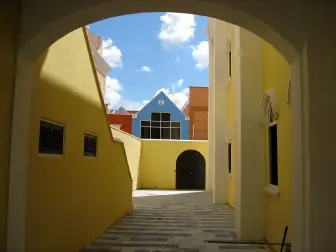
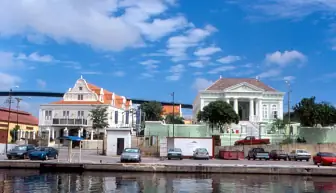
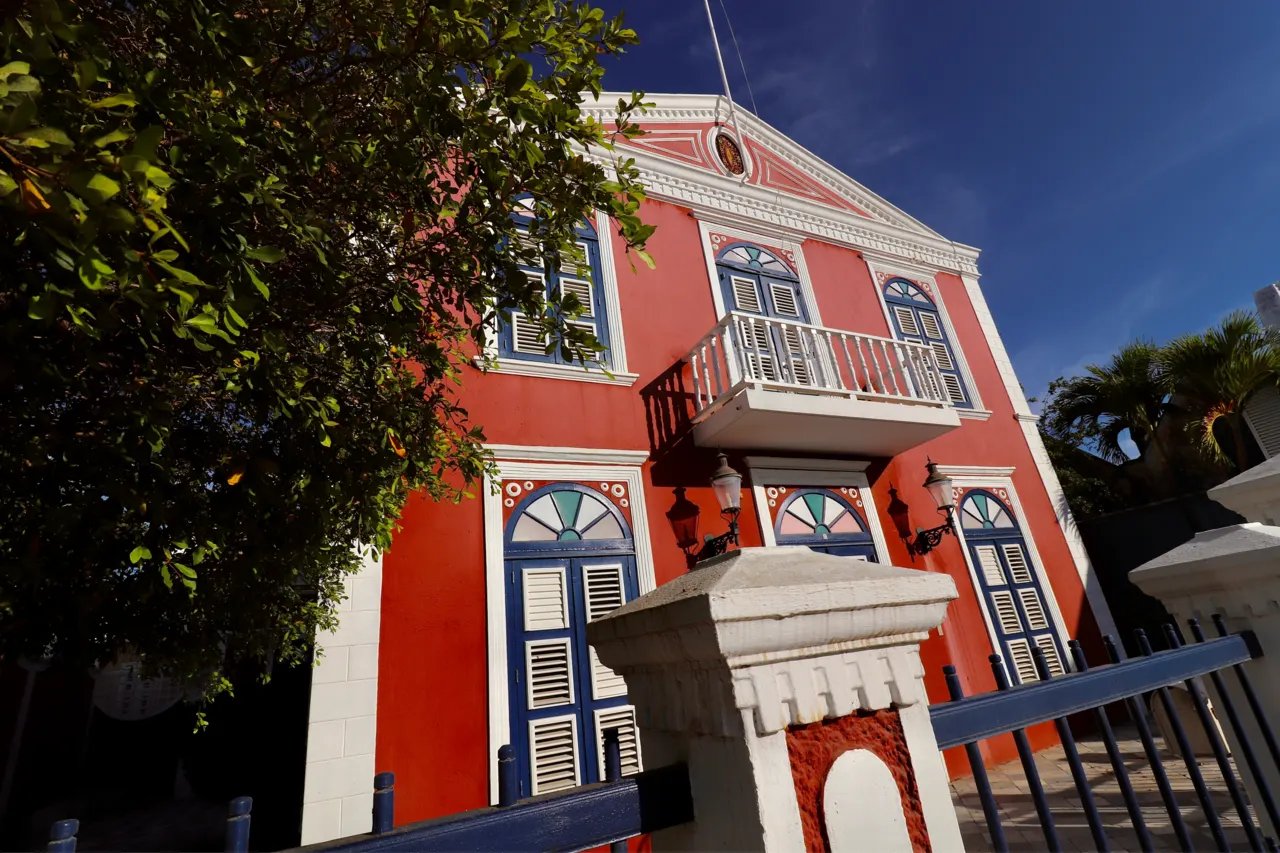
The Punda quay along St. Anna Bay, with its row of Dutch-gabled houses painted yellow, blue, green and pink. The houses were white, built of coral stone, until in 1817 Governor Albert Kikkert ordered the facades painted, with a 25-peso fine for anyone who disobeyed; the doctor who proposed the rule wrongly believed that sunlight reflecting off white walls harmed the eyes. The classic view is from Otrobanda, across the bridge.
The row of colorful Handelskade facades at the mouth of St. Anna Bay sums up Willemstad, and the colors have a history: an 1817 law ordered the town's formerly white houses to be painted.
Check access
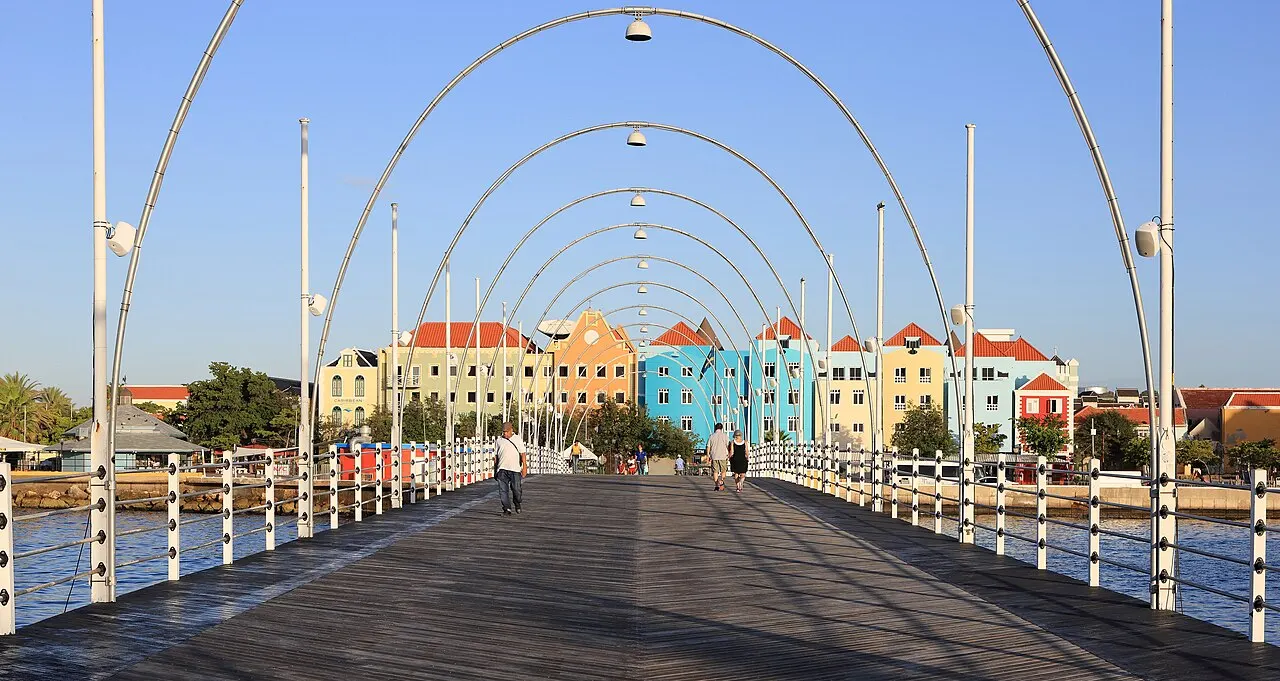
Koningin Emmabrug (Queen Emma Bridge)
A 168 m pedestrian bridge resting on 16 pontoons, opened on May 8, 1888 under a concession to L. B. Smith. When a ship needs to enter the harbor, the bridge swings as a whole and rests against the Otrobanda bank; in that interval, a free ferry carries pedestrians. It charged a toll from 1901 to 1934, with free passage for those who walked barefoot, and has been pedestrian-only since 1974.
The 168 m floating bridge, opened in 1888, swings as a whole to let ships pass; when it does, the crossing continues free of charge on the ferry between the two banks.
Check access
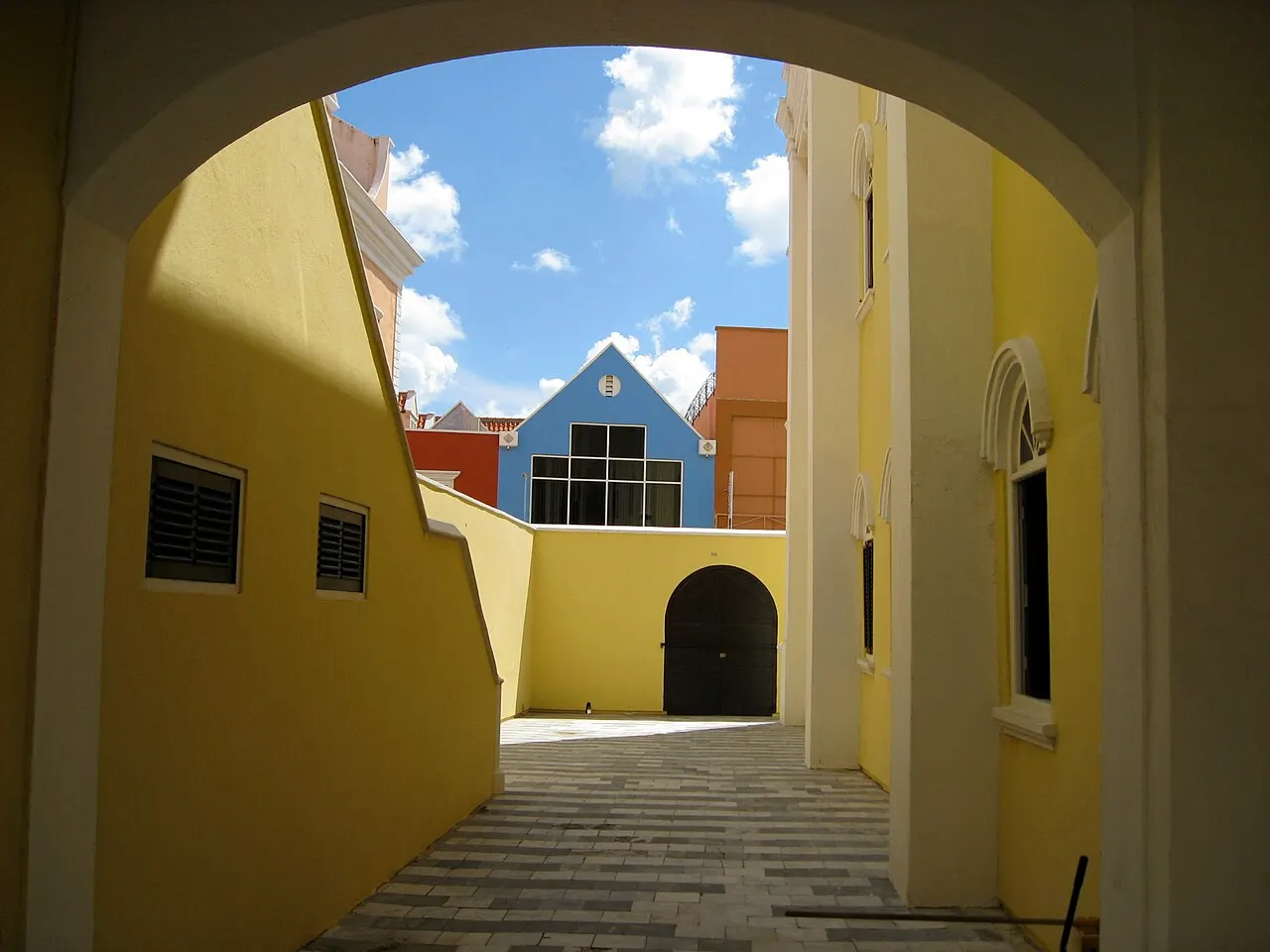
Mikvé Israel-Emanuel Synagogue
Completed in 1732 for the congregation founded in 1651, it is the oldest synagogue in continuous use in the Americas. The interior follows the model of the Portuguese Synagogue in Amsterdam, with mahogany furniture, four 24-arm brass chandeliers and a sand-covered floor; the congregation links the sand to an 18th-century Dutch custom. Visits Monday to Friday, 9 a.m. to 4:30 p.m., with last entry at 3:30 p.m.; admission, US$18 or Cg 32 in October 2026, includes the adjoining Jewish Museum and an audio guide, and a photo ID must be shown.
Completed in 1732, this is the oldest synagogue in continuous use in the Americas, with a sand floor, mahogany furniture and four brass chandeliers; visitors are admitted only Monday to Friday, with last entry at 3:30 p.m.
Check access
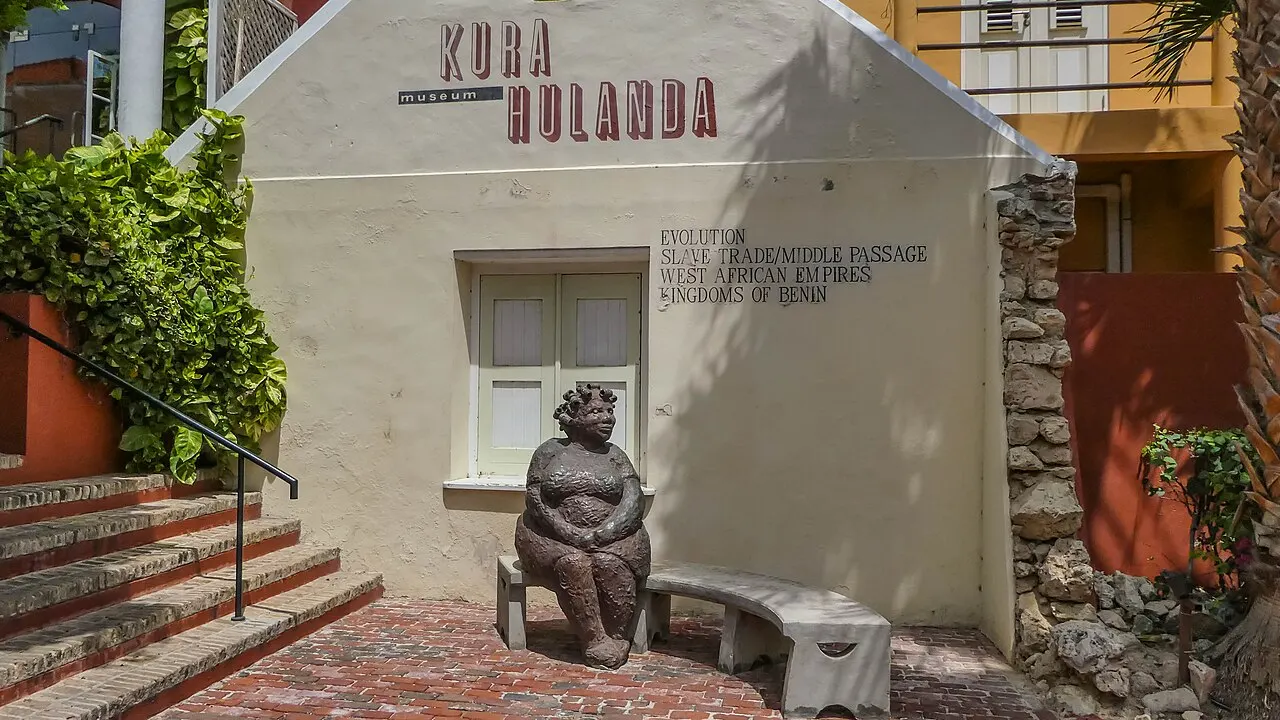
Kurá Hulanda Museum
Opened in 1999 in restored houses on the Otrobanda quay, where the slave ships arrived, the museum tells the story of the Atlantic slave trade from capture in Africa to the crossing and arrival in the Caribbean, with West African kingdoms, the African heritage on the island and more than 5,000 pieces. It is open Monday to Saturday from 8 a.m. to 4 p.m. and Sunday from 9 a.m. to 2 p.m.; the museum itself recommends the guided visit.
The museum occupies the Otrobanda quay where enslaved Africans were landed and sold, and tells the story of the Atlantic slave trade from capture in Africa to arrival in the Caribbean, with more than 5,000 objects.
Check access
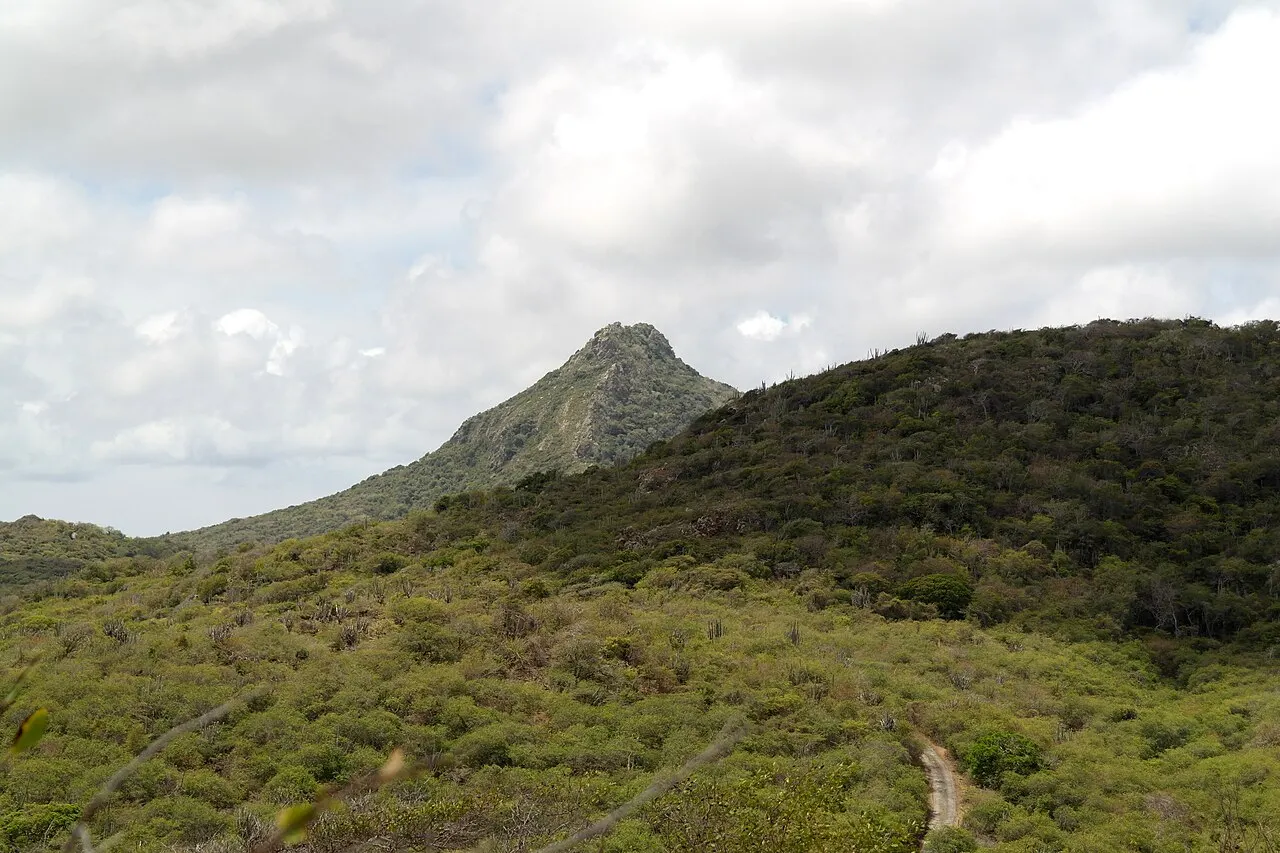
Christoffelpark
A national park opened in 1978 on the lands of the former Savonet plantation, in the west. The Christoffelberg trail, to the island's highest point at 372 m, takes two to three hours and may only start by 10 a.m. because of the heat; bring 2 liters of water. There are short trails in the white-tailed deer sanctuary and two paved routes for cars. The park is open from 6 a.m. to 3 p.m., the ticket office closes at 1:30 p.m., and admission costs US$15 per adult and US$2 for ages 6 to 12 (Oct. 2026), with the Savonet Museum included.
The climb up Christoffelberg, the island's highest point at 372 m, takes two to three hours and must start by 10 a.m. because of the heat; the park opens at 6 a.m. and is home to most of the island's white-tailed deer.
Check access
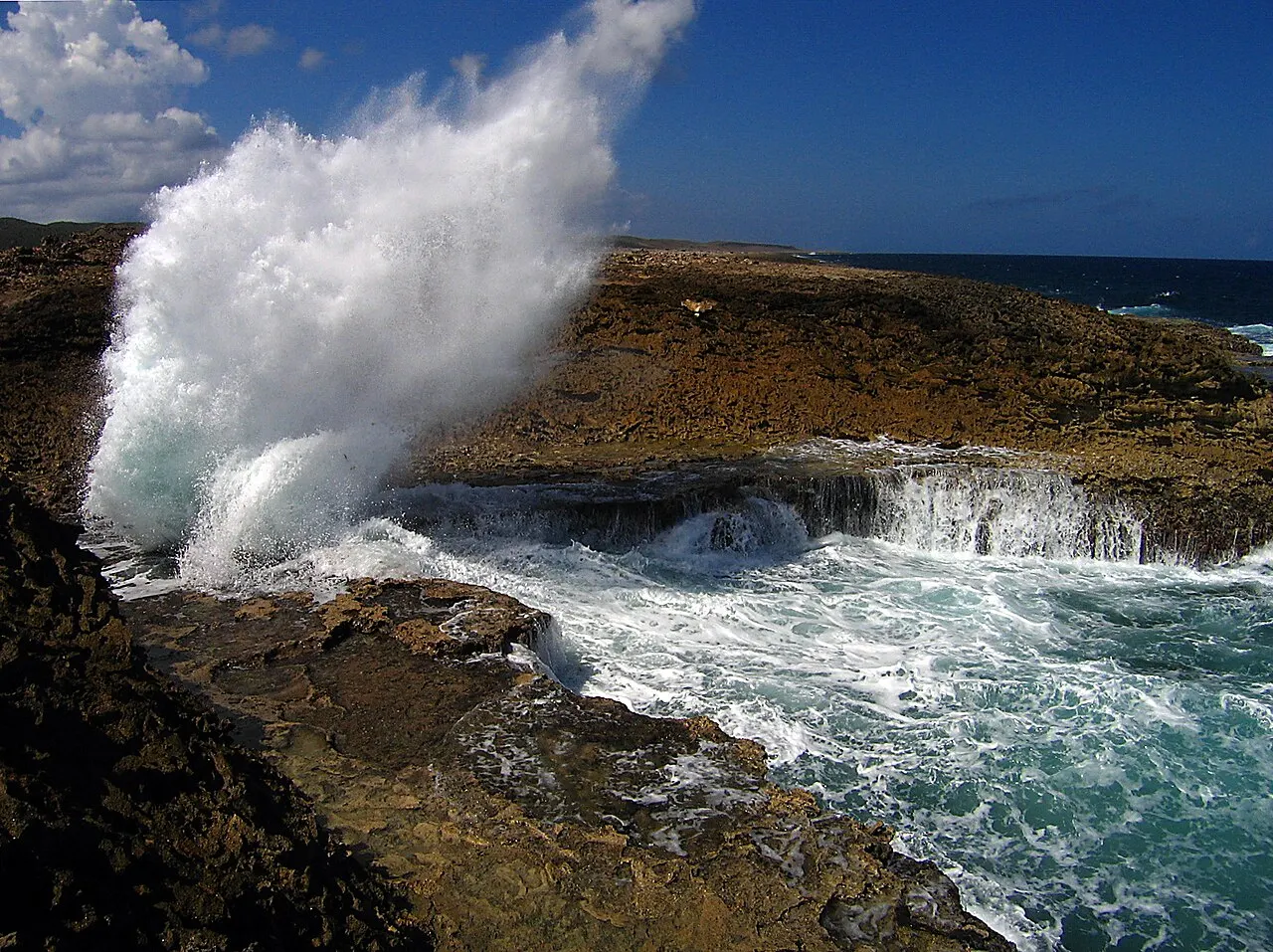
Shete Boka National Park
A park from 1994 along almost 10 km of the north coast, created to protect the coves where three species of sea turtle nest, from May to December. At Boka Tabla, steps descend to the mouth of a cave where waves rush in with a roar; a one-hour trail leads to Boka Pistol, and another to Boka Wandomi, with a natural rock bridge. According to the park's opening-hours page, it is open from 8 a.m. to 4 p.m. and admits no one after 3 p.m. (the FAQ on the same site still says 9 a.m. to 5 p.m., so count on the shorter hours), and charges US$15 per adult and US$2 for ages 6 to 12 (Oct. 2026).
On the wind-battered north coast, the sea rushes into the Boka Tabla cave and crashes through the Boka Pistol fissure; the park's coves are nesting grounds for three species of sea turtle.
Check access
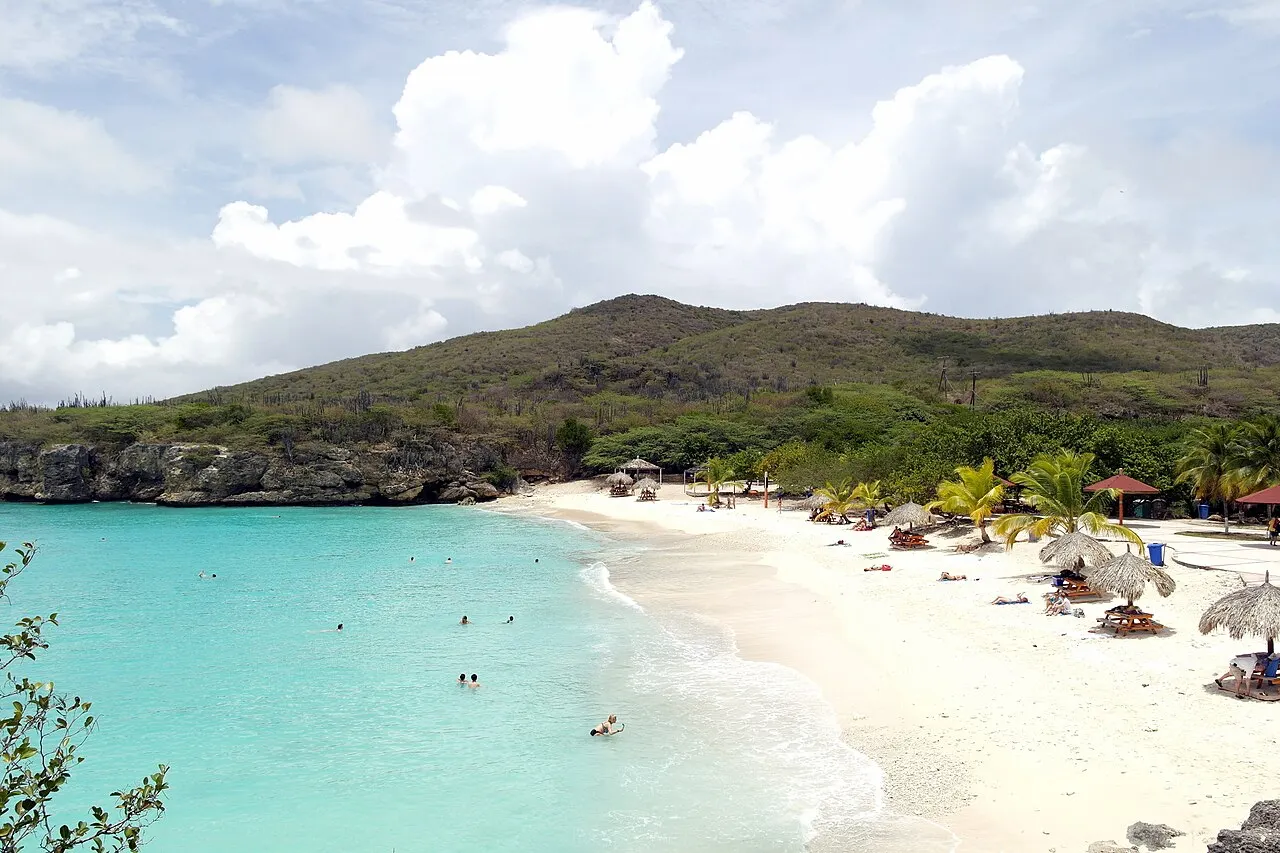
Grote Knip
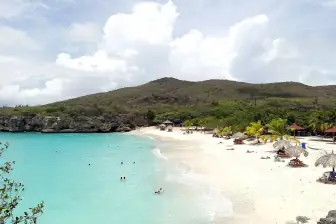
Also called Playa Kenepa Grandi or Playa Abou, it is a white-sand beach wedged between rock walls in the west, about an hour's drive from Willemstad, at the point where a reef begins. The smaller Kleine Knip lies just to the south.
White sand between two rock walls at the start of a reef makes Grote Knip the west's postcard beach, about an hour's drive from Willemstad.
Check access
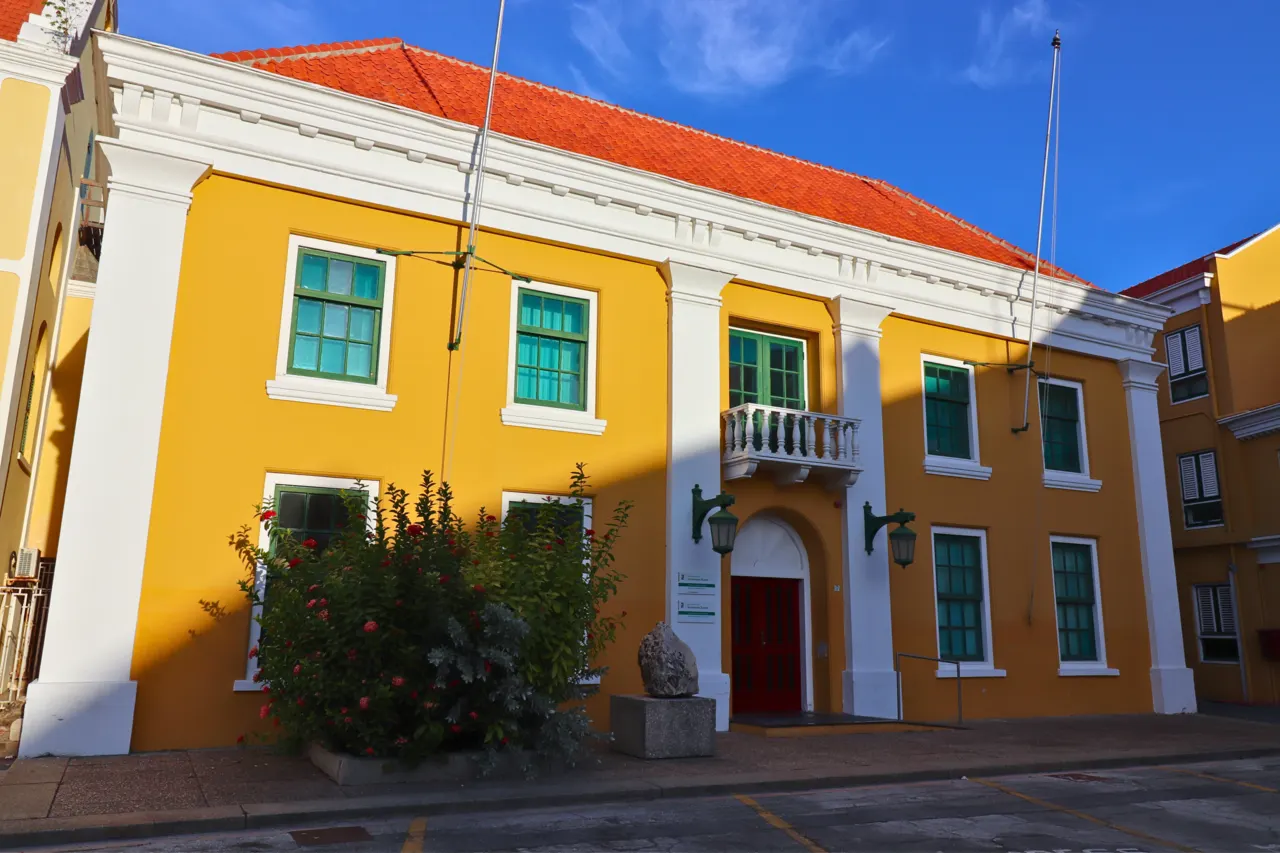
Fort Amsterdam
The fort built from 1634 at the entrance to the bay was the seat of the West India Company and today houses the government and the governor. In the courtyard stands the Fortkerk, a Protestant church from 1769, with a mahogany pulpit, a small museum and the cannonball that a British ship lodged in the wall in 1804.
The fort of 1634–1636 still houses the government, and its 1769 courtyard church keeps the cannonball fired by a British ship in 1804 in its wall; it fits into half an hour on a walk through Punda.
Check access
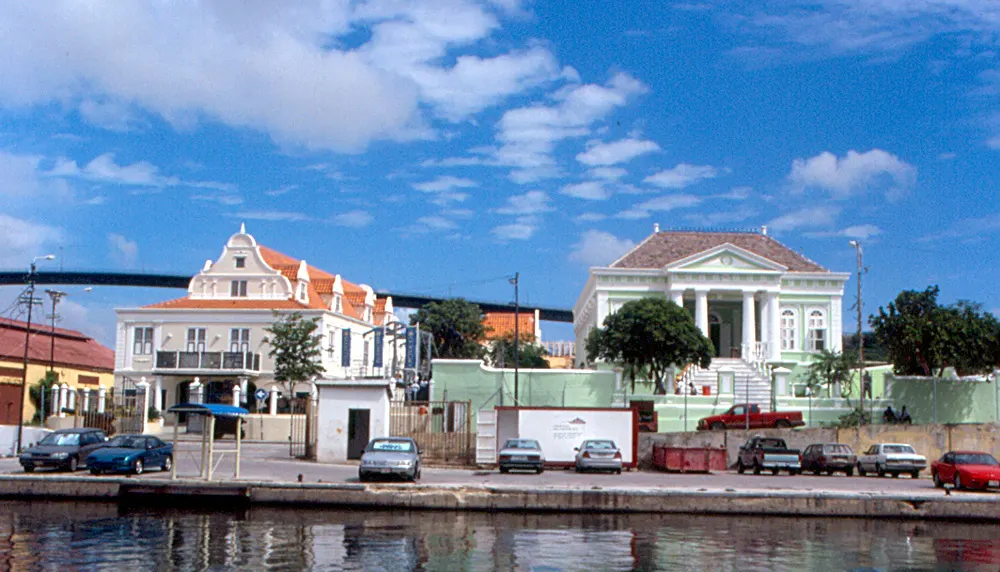
Scharloo
A neighborhood across the Waaigat where Jewish merchants built mansions from 1870. On the Scharlooweg stands the Bolo di Batrei, the “wedding cake,” delivered in 1917 as a gift to a couple and today the seat of the National Archives. The Maritime Museum, in a 1729 building, charges US$10 and is open almost every day from 10:30 a.m. to 3:30 p.m.
The mansions Jewish merchants built from 1870 along Scharlooweg, including the 1917 Bolo di Batrei, now the National Archives, can be seen on a short walk across the Waaigat.
Check access
Nilo’s itinerary
Start with the basic programme and choose extensions for the time you have.
Plan my days in the app ↗Day 1 · Willemstad on foot: Punda, the bridge and Otrobanda (Monday to Friday)
At 8:30 a.m., start at Fort Amsterdam and the Fortkerk and continue along the Handelskade, with its colorful facades facing the bay.
At 9 a.m., visit the Mikvé Israel-Emanuel Synagogue and the adjoining Jewish Museum (US$18, photo ID); last entry is at 3:30 p.m.
Cross Punda to the Waaigat, pass the floating market stalls and have lunch at the Plasa Bieu: stoba, yambo or fried fish.
Cross the Queen Emma Bridge to Otrobanda (if it is open, the ferry is free) and reach the Kurá Hulanda Museum by 2 p.m.; it closes at 4 p.m. Monday to Saturday.
In the late afternoon, stay on the Otrobanda bank, near Rif Fort, to see the Handelskade across the bay; then return over the bridge, pass through Scharloo along the Scharlooweg and have dinner in Pietermaai, on the Nieuwestraat. On Thursdays, Punda has Punda Vibes from 6 p.m. to 10 p.m.
Day 2 · Northern Bandabou: Christoffelberg, Shete Boka and Westpunt
Leave Willemstad by car at 6 a.m.: it is about 38 km and 50 minutes to the Christoffelpark entrance, at the Savonet plantation, which opens at 6 a.m.
Start the Christoffelberg trail by 10 a.m., the park's cutoff; it takes two to three hours, and the park recommends 2 liters of water, a hat and trail shoes.
Continue 3 km to Shete Boka (opens at 8 a.m., last entry at 3 p.m., US$15): Boka Tabla and, if you still have the legs, the one-hour trail to Boka Pistol.
Have lunch in Westpunt and spend the afternoon at Playa Grandi, watching the turtles at the pier without touching them, or at Playa Kalki, going down the cliff stairs.
Return to Willemstad before dusk, about an hour by road.
Day 3 · Western beaches, Tula's plantation and the flamingos
Leave Willemstad at 8 a.m. for Grote Knip, about 45 km away, and arrive before the beach fills up.
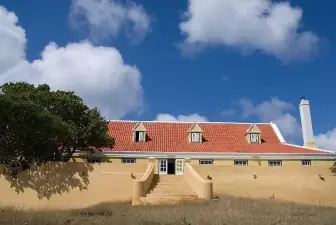
Late in the morning, about 1 km from the beach, stop at Landhuis Knip, where Tula's revolt began in 1795, and see the Museo Tula; the museum's hours are not published, so confirm beforehand.
Continue a few kilometers south to Playa Lagun for snorkeling in the cove between the cliffs.
On the way back, have Creole food at Komedor Krioyo, in the Landhuis Dokterstuin, and spend the afternoon at Cas Abao (US$6 per car Monday to Saturday, open until 6 p.m.).
Before entering the city, detour to the Sint Willibrordus salt flats, where flamingos tend to gather, and return to Willemstad for dinner.





If you stay longer
Day 4 · Klein Curaçao
Day trip
An uninhabited 1.7 km² islet about 10 km southeast of Curaçao, with a long white-sand beach, lighthouse ruins and the hull of a tanker that ran aground in 1982. It can only be reached by boat, on full-day tours from boat and diving operators, which take about two hours to get there and usually include snorkeling and lunch. There is little shade on the island.
Food
Keshi yena
Dutch cheese, Gouda or Edam, stuffed with seasoned meat, almost always chicken, with olives and raisins, baked or steamed. It is regarded as the island's dish; the most cited origin is the cheese rinds that enslaved people stuffed with leftovers.
Stoba
A stew served with funchi or rice. The goat one (stoba di kabritu) is the most common, and there are versions with oxtail and with green papaya cooked with salted meat.
Sopi kadushi and yambo
Two slimy soups that divide opinion: the kadushi cactus one and the okra and seafood one, the yambo. They are eaten with funchi, and the yambo is one of the dishes at the Plasa Bieu, in Punda.
Funchi and tutu
Funchi is the firm cornmeal mush that goes with fish, soup and stew. Tutu mixes cornmeal and beans, rolled into a cylinder, sometimes with melted cheese.
Pastechi
A half-moon fried pastry filled with cheese, chicken, beef or tuna, the island's most common breakfast, sold at roadside snack bars and bakeries.
Piska hasá
Seasoned fried fish, served with funchi, fried plantain or tutu, at the fishermen's houses and beach restaurants of the west.
Sopi di yuana
Iguana soup, a traditional dish that some Bandabou restaurants still serve; iguana is still hunted for food on the island.
Ayaka
Corn dough filled with meat, raisins and olives, wrapped in banana leaf, adapted from the Venezuelan hallaca. It is the dish of the year-end holidays.
Curaçao liqueur and awa di lamunchi
The liqueur is made from the dried peel of the laraha, the island's bitter orange, and the blue version is the best known. Without alcohol, the street drink is awa di lamunchi, a limeade made with small, aromatic limes.
Where to eat
- Plasa Bieu · Punda · $
Creole lunch, stews, soups and fried fish, at counters side by side in the old De Ruyterkade market.
Source · 2026-10-15
- Komedor Krioyo · Bandabou, Landhuis Dokterstuin · $$
Creole dishes such as stoba in a restored plantation house, on the way west.
Source · 2026-10-15
- Jaanchie's · Westpunt · $$
Fish, seafood and local dishes, among them iguana soup.
Source · 2026-10-15
- Eddy's Place · Boka Sami (Sint Michiel) · $$
Fish and octopus in the fishing village of Sint Michiel, west of the capital.
Source · 2026-10-15
- Pietermaai · $$$
Dinner at restaurants and bars in restored houses along the Nieuwestraat, from local to international cooking.
$: up to about Cg 40 per meal at a simple restaurant · $$: Cg 100 to 200 for a three-course dinner for two, without drinks · $$$: above Cg 200 for two people · 2026-10-15
Day trips
Klein Curaçao
An uninhabited 1.7 km² islet about 10 km southeast of Curaçao, with a long white-sand beach, lighthouse ruins and the hull of a tanker that ran aground in 1982. It can only be reached by boat, on full-day tours from boat and diving operators, which take about two hours to get there and usually include snorkeling and lunch. There is little shade on the island.
Hato Caves and Chobolobo
Half a day around the capital: the Hato cave is 12 km from Punda, about 20 minutes by car, with a guided visit every hour from 9 a.m. to 3 p.m., and the Landhuis Chobolobo distillery is 4 km from the center, with a 60-minute visit for US$20. It suits a day of strong wind at sea or anyone with time to spare.
Spaanse Water and Caracas Bay
East of the capital, 12 km from Punda, the Spaanse Water lagoon and Caracas Bay bring together small beaches such as Tugboat, a starting point for boat tours, and lookouts over the lagoon. The BUS vans from Punda that go to Jan Thiel, in 20 to 30 minutes, pass by Caracas Bay.
Where to begin
Willemstad on foot: Punda, the bridge and Otrobanda (Monday to Friday)
At 8:30 a.m., start at Fort Amsterdam and the Fortkerk and continue along the Handelskade, with its colorful facades facing the bay.
Northern Bandabou: Christoffelberg, Shete Boka and Westpunt
Leave Willemstad by car at 6 a.m.: it is about 38 km and 50 minutes to the Christoffelpark entrance, at the Savonet plantation, which opens at 6 a.m.
Western beaches, Tula's plantation and the flamingos
Leave Willemstad at 8 a.m. for Grote Knip, about 45 km away, and arrive before the beach fills up.
Money

The currency is the Caribbean guilder (XCG, written Cg), which replaced the Netherlands Antillean guilder on March 31, 2025 at the same value. The old guilder ceased to be valid on July 1, 2025; old notes are only exchanged at the central bank. The official rate is fixed at Cg 1.79 per dollar, but shops and restaurants use 1.82 to make the math easier; dollars are accepted everywhere, with change in guilders, and euros are only exchanged at banks (about Cg 2.05 per euro on September 24, 2026). Cards work in most shops, restaurants and hotels, but taxis don't take them, and some attractions far from Willemstad accept only cash, so bring small bills in dollars or guilders to the west. The displayed price already includes the sales tax, 6%, or 7% on lodging. Restaurants charge about 10% for service and hotels 12%, already on the bill; a tip beyond that is optional, 5% to 10% at restaurants and about 10% for taxis. In a price sample updated on October 2, 2026 (Numbeo), a meal at an inexpensive restaurant came to about Cg 33, and a three-course dinner for two at a mid-range restaurant, without drinks, to about Cg 133. The admissions that weigh on the trip are charged in dollars: US$15 at Christoffelpark and Shete Boka, US$18 at the synagogue with the Jewish Museum, US$10 at the Hato Caves and the Maritime Museum, and US$6 per car, Monday to Saturday, at Cas Abao beach (Oct. 2026).
Getting there and around
From the airport to the center, about 14 km
Curaçao International Airport (CUR), in Hato, on the north coast, is about 14 km from Punda, some 20 minutes by car without traffic. Registered taxis have a TX plate, have no meter and charge by destination: agree on the price before getting in. Many rental companies serve the airport. ABC bus lines 2A, 2B, 2C and 4A serve the airport, heading to the Punda and Otrobanda terminals. The departure tax is already included in the ticket for most airlines, such as KLM, American, Copa, Avianca and Azul.
Bus, taxi and car
ABC's big buses, called konvoi, leave the Punda and Otrobanda terminals at fixed times; the ABC Online app shows routes and schedules and sells the Smartpass card. Vans with the BUS plate run flexible routes, stop anywhere along the way and leave when full, and they are the simplest way to get from the center to Mambo Beach and Jan Thiel. For the west, Christoffelpark, Shete Boka and the Bandabou beaches, a rental car is the practical way: Westpunt is about 45 km from Punda, close to an hour on the road, and the tourism board reckons that almost the whole island is 30 or 45 minutes away by car. Rental companies ask for a valid driver's license and sometimes a minimum age and years of driving experience.
On foot in the center
The four historic neighborhoods are 10 or 15 minutes' walk from one another, and many streets in Punda are pedestrian only. Between Punda and Otrobanda you cross the Queen Emma Bridge; when it opens for ships, the free ferry makes the crossing in a few minutes. For Scharloo, you cross the Waaigat on the Queen Wilhelmina Bridge.
Safety
Curaçao is considered safe in the tourist areas, and the risk that most affects visitors is theft: a bag left on the sand, items in view in the rental car and pickpockets. Punda, Pietermaai, Jan Thiel and Mambo Beach are busy at night; avoid isolated places and beaches after dark. There is violent crime tied to the drug trade, which rarely involves tourists, and the island is a smuggling route to Europe and North America: never carry anyone's package and don't leave luggage alone at the airport. The British government advises always carrying a copy of the passport photo page. At sea, the current can be strong at beaches such as Playa Grandi, and on the north coast the sea hits hard: at Shete Boka, stay on the trails and platforms. The manzanilla, a tree with poisonous fruit, grows on some beaches. The health risks are those of the mosquito, dengue, Zika and chikungunya, and the sun, with a UV index above 11. Tap water is desalinated and drinkable. Emergencies: 911 for police and fire, 912 for ambulance and 910 for medical emergencies. Before flying, check the flight status with the airline.
Etiquette tips
Don't go into a shop or restaurant in swimwear alone
Going into a shop, supermarket or restaurant in only a bikini or swim trunks is frowned upon, and service may be refused. Bring a T-shirt and a cover-up for the way back from the beach.
At the synagogue, clothing and kippah
To visit, a photo ID is enough. To attend the Friday evening or Saturday morning service, men wear long trousers and a kippah, and women cover their shoulders, with no miniskirts or shorts.
Greet in Papiamento
A “bon dia” or “bon tardi” before asking for something opens the conversation, and “danki” says thanks. Everyone understands English, but a greeting in the island's language is noticed.
Agree on the taxi fare first
Taxis have no meter: state the destination and settle the fare before getting in. Prefer those with a TX plate, which are registered.
Respect the turtles and the reef
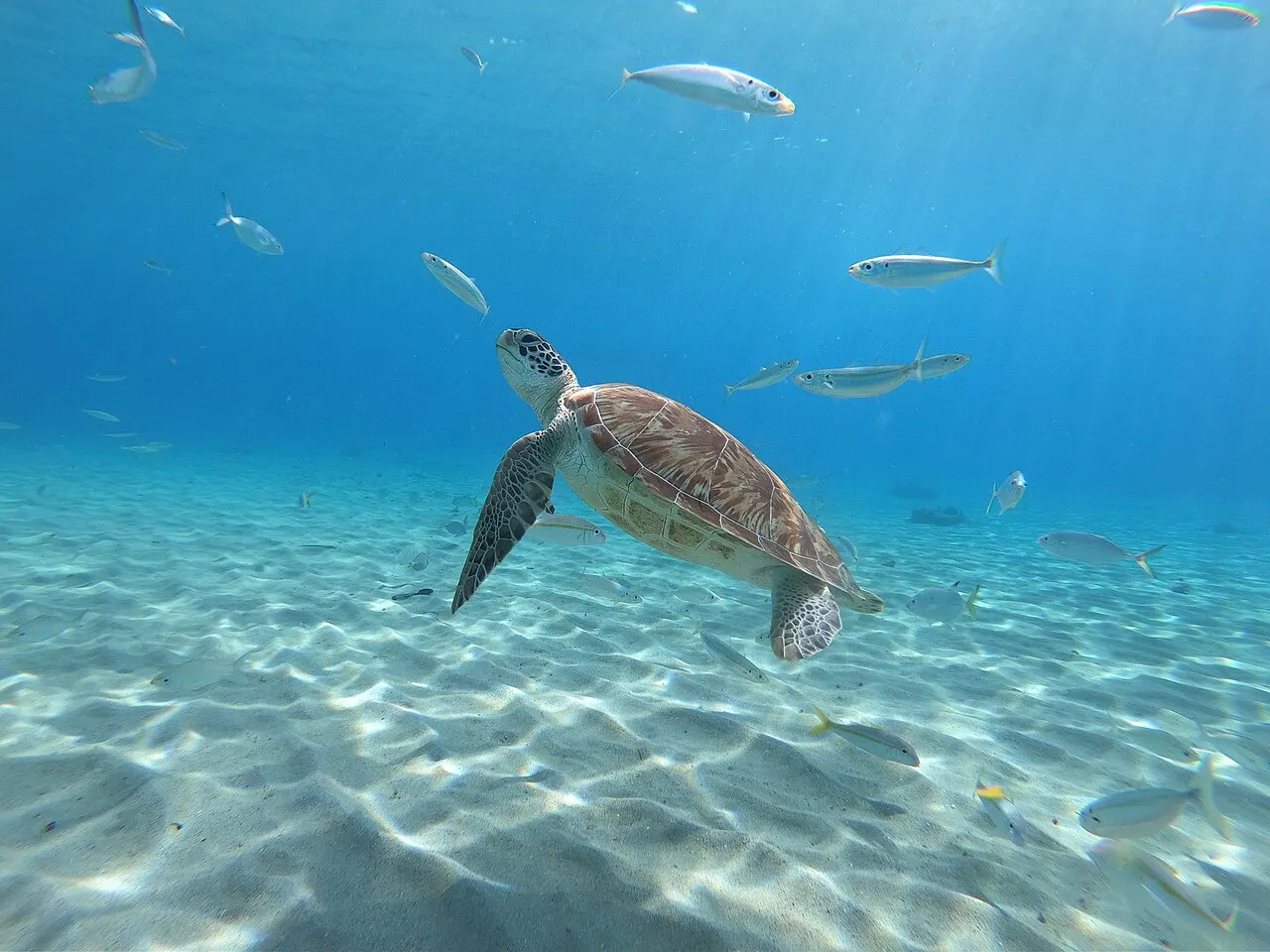
Don't touch or feed the turtles at Playa Grandi and Playa Lagun, and don't step on coral. At Shete Boka, stay on the trails and viewing platforms.
Mistakes to avoid
Forgetting the Digital Immigration Card
Arriving without having filled out the form at dicardcuracao.com. It is mandatory for every foreign visitor, per person and per trip, children included, and the passport entered must be the one used for the trip.
Leaving the Christoffelberg climb for after lunch
The trail may only start by 10 a.m. and the park closes at 3 p.m. Anyone leaving Willemstad after 8 a.m. arrives at the last minute; leave at 6 or 7 a.m.
Going west without a car and without a plan
Bandabou is about an hour from Punda, the buses run on fixed schedules and the beaches are spread out. Without a rental car, spend the day on an organized tour.
Leaving things in view in the car
Theft from cars parked at beaches and bags left on the sand are the most common problems. Take only what you need and leave nothing on the seat.
Leaving the synagogue for the weekend
Mikvé Israel-Emanuel receives visitors only Monday to Friday, with last entry at 3:30 p.m. Put the Willemstad day on a weekday.
Eating the fruit of the wrong tree
The manzanilla, the manchineel, grows on some beaches and bears poisonous fruit; at Playa Kalki there is a warning sign. Don't eat fruit that looks like a green apple.
Useful phrases
Bon bini
Welcome; it is written at the arrival area and on many doors
Bon dia / Bon tardi / Bon nochi
Good morning / good afternoon / good evening
Kon ta bai?
How are you?; the answer is “Mi ta bon, danki,” I'm fine, thank you
Danki
Thank you
Por fabor
Please
Dushi
Tasty, dear, good; a compliment for food, music and people
Te otro biaha
Until next time
Where to stay
- Pietermaai · Couples and anyone who wants to have dinner and go out on foot · $$$: It concentrates boutique hotels in restored houses and most of the restaurants and nightlife bars, a 10- or 15-minute walk from Punda. At night, the Nieuwestraat is the busiest street.
- Punda · First short trip, without a car · $$: The synagogue, the fort, the bridge, the market and the bus terminals are a few steps away, on pedestrian streets. After the shops close, the neighborhood empties out, except on Thursdays for Punda Vibes.
- Otrobanda · Small budgets and anyone who likes a residential neighborhood · $: It has guesthouses and small hotels in old houses and the Kurá Hulanda Village. The view of the Handelskade is on this side of the bridge, and Punda is a walk across it.
- Jan Thiel and Mambo Beach · Families and anyone who wants a beach with facilities · $$: Hotels and apartments with a club beach, restaurants and water sports, linked to the center by BUS vans. Nightlife is that of the beach clubs, far from the historic center.
- Westpunt and Bandabou · Divers and anyone who wants quiet near the western beaches · $$: They are a few minutes from Grote Knip, Playa Lagun, Shete Boka and Christoffelpark, with guesthouses and dive shops. There are few restaurants, and Willemstad is an hour away by car.
$: a hostel dorm bed or a simple room in Otrobanda; rates only on each property's website · $$: a mid-range hotel or apartment in Punda or Jan Thiel; rates vary with the season · $$$: a boutique hotel in Pietermaai or a beach resort; rates vary with the season · 2026-10-15
Districts
Punda
The old core, on the east bank of the bay, with Fort Amsterdam, the Handelskade, the synagogue, the floating market, the Plasa Bieu and the pedestrian shopping streets. It is the starting point of almost every outing and where the bus terminals for the rest of the island are. On Thursdays, from 6 p.m. to 10 p.m., the neighborhood hosts Punda Vibes, with music and a street fair.
Otrobanda
The west bank, across the bridge, founded in 1707. It has narrow lanes with murals, Rif Fort, the Kurá Hulanda Village with the slavery museum, the Curaçao Museum and the cruise ship terminal. It is the most residential neighborhood in the center and the one with the simplest lodging.
Scharloo
Across the Waaigat, north of Punda, with the mansions that Jewish merchants built from 1870 on the Scharlooweg, today offices, galleries and the Maritime Museum. It is quiet and suits anyone who wants to walk and have lunch away from the main axis.
Pietermaai
The strip along the sea east of Punda, founded in 1675, run down in the 1970s and renovated in this century. It concentrates boutique hotels in restored houses and most of the restaurants and nightlife bars, around the Nieuwestraat.
Saliña and Piscadera
Modern areas between the center and the rest of the island. Saliña has shops and the Chobolobo plantation house; Piscadera is home to the World Trade Center, which hosts North Sea Jazz, and beach hotels a few minutes by car from the center.
Jan Thiel and Mambo Beach
Resort beaches and beach clubs east of the capital, 5 km (Mambo) and 12 km (Jan Thiel) from Punda. They suit families and anyone who wants a beach with facilities and a bus to the center.
Bandabou and Westpunt
The rural west, 40 or 45 km from Willemstad, with the best reef beaches, the parks and fishing villages. It has few guesthouses and restaurants and calls for a car.
History
before 1499 · The Caquetío on the island
The Caquetío, an Arawak-speaking people, live on the island before the Europeans arrive. Some of today's Papiamento words, such as kunuku, the countryside, come from the indigenous languages.
1499–1527 · The Spanish island
Alonso de Ojeda's expedition arrives in 1499, and Spain formally occupies the island in 1527. With no precious metal and little farming, Curaçao becomes one big cattle ranch and earns the nickname “useless island.”
1634 · The West India Company takes the island
Johannes van Walbeeck lands with about 200 soldiers, and the Spanish surrender in August 1634. The company begins Fort Amsterdam at the entrance to St. Anna Bay, and the city grows around it, in Punda.
1651–1732 · The Jewish community and the synagogue
Sephardic Jews from Amsterdam and Dutch Brazil found the Mikvé Israel congregation in 1651 and take up trade and shipping. The current synagogue is completed in 1732.
1662 · A center of the Atlantic slave trade
From 1662 the company makes the island a hub of the trade in enslaved Africans, resold to the Caribbean and the mainland. By the end of the 17th century, Willemstad receives ships from many countries as an open port.
1707 · Otrobanda, the other side
With no room left inside the Punda walls, the city crosses the bay and founds Otrobanda, “the other bank” in Papiamento. Pietermaai had already begun in 1675, and Scharloo comes later.
1795 · Tula's revolt
On August 17, 1795, Tula and about 40 to 50 enslaved people refuse to work on the Knip plantation and march through the plantations of the west, gathering about two thousand. The revolt is crushed in about a month, and Tula is executed on October 3, 1795.
1863 · The end of slavery
The Netherlands abolishes slavery in 1863. With wage labor, part of the population emigrates to other islands, such as Cuba, in search of sugar jobs.
1888 · The floating bridge
In 1888 the Queen Emma Bridge opens, resting on pontoons and linking Punda to Otrobanda. The old city walls had already been torn down in the 1860s.
1915 · The Shell refinery
After oil is found in Lake Maracaibo, Shell sets up a refinery next to the Schottegat in 1915. The city grows around it, with neighborhoods built for the workers, such as Emmastad and Julianadorp.
1969 · The 30th of May
A strike at a refinery contractor turns into a revolt on May 30, 1969, and part of downtown Willemstad is set on fire; two people die. The Netherlands sends marines, and the episode opens political space for the Afro-Curaçaoan population and for Papiamento.
1997–2010 · World Heritage and autonomous country
UNESCO inscribes the historic center and harbor of Willemstad in 1997. On October 10, 2010 the Netherlands Antilles are dissolved and Curaçao becomes a country of the Kingdom of the Netherlands.
2025 · Caribbean guilder and World Cup
On March 31, 2025 the Caribbean guilder replaces the Netherlands Antillean guilder. That same year the national team qualifies for the 2026 World Cup and becomes the smallest country ever to reach one.
Complete history
A port before a city
Curaçao interested the Dutch for the same reason the Spanish had set it aside: the dry land yields little, but the Schottegat is a deep, sheltered natural harbor, linked to the sea by a narrow channel. When the Dutch West India Company took the island in 1634, in the middle of the Netherlands' war against Spain, the priority was to fortify that entrance: Fort Amsterdam, at the east end of the channel, and later Rif Fort, on the opposite bank. The walled city was born hugging the fort, on the point of land the Dutch called De Punt and Papiamento turned into Punda.
The trade that made the city
With no profitable plantations, the island lived on trade, smuggling and privateering along the Spanish coast opposite, on salt and, from 1662, on the trade in enslaved Africans, landed at the port and resold to the Caribbean and the mainland. In the same period Sephardic Jews arrived from Amsterdam and Recife, became shipowners, merchants and bankers, and in 1651 founded the oldest congregation in the Americas. The mix of Africans, Dutch, Portuguese Jews and Spaniards from the mainland explains Papiamento, a Creole with a Portuguese and Spanish base and Dutch, African and Arawak vocabulary, and it also explains the architecture: Dutch gables adapted to the heat, with galleries and colors.
Tula and abolition
Slavery on Curaçao's plantations, which produced little and depended on hard labor on dry land, led to the biggest revolt in the island's history. In August 1795, inspired by the news that the enslaved people of Saint-Domingue had won their freedom, Tula led the refusal to work on the Knip plantation and a march through the plantations of the west. The revolt lasted about a month and ended with the execution of its leaders. Tula was declared a national hero in 2010, and August 17 is a day to remember the struggle for freedom. Abolition only came in 1863.
Oil, 1969 and autonomy
The 20th century changed the scale with the Shell refinery, opened in 1915 to process Venezuelan oil: Willemstad spread around the Schottegat, and the island came to live off the refinery and the port. The dependence had a cost. On May 30, 1969, a strike turned into a revolt against layoffs and racial discrimination, and part of Punda and Otrobanda was set on fire. The response included reforms that gave the Afro-Curaçaoan population more political weight. In 1985 Shell sold the refinery to the government for a symbolic sum. Since then tourism, financial services and the port have shared the economy, and in 2010 Curaçao became an autonomous country within the Kingdom of the Netherlands, which retains defense and foreign policy.
The historic center today
The 1997 UNESCO inscription recognized a rare ensemble: a Dutch colonial city with a walled part, Punda, and an open one, Otrobanda, joined by a harbor still in use. More than 700 properties in the center are protected monuments. Otrobanda, a working-class neighborhood in the 20th century, was renovated from the 1990s on, Pietermaai left behind the decay of the 1970s and became a neighborhood of restaurants, and Scharloo has the late 19th-century merchants' mansions occupied by offices, museums and galleries.
Geography and shape of the city
The bay that divides the city
Willemstad occupies both banks of St. Anna Bay, the channel about a kilometer long that connects the sea to the Schottegat, the large inner bay where the port, the shipyards and the refinery are. On the east bank are Punda, the walled core of straight streets, and Pietermaai, which follows the line of the coast; on the west bank is Otrobanda. North of Punda, the Waaigat inlet separates the center from Scharloo. Two bridges cross the bay: the Queen Emma Bridge, floating and pedestrians only, by the sea, and the Queen Juliana Bridge, 56.4 m above the water, for cars.
A dry island
Curaçao is long and narrow, with low relief that rises in the west to the 372 m of the Christoffelberg, the highest point. The climate is semiarid: little rain falls, and the vegetation is cacti, thorny scrub and trees such as the watapana. The trade wind blows from the east almost all year, cools the heat and leaves the north coast rough, with waves pounding the limestone terraces. The south coast, on the leeward side, is calm and cut by coves with small beaches, reefs reachable by swimming and the diving the island sells.
Bandabou and the east end
The western half of the island is Bandabou, the region of old plantations, of villages such as Soto, Lagun and Westpunt, and of the Christoffel and Shete Boka parks. The main road, the Weg naar Westpunt, runs through the region to the tip. East of the capital are the Spaanse Water lagoon, Caracas Bay and the resort beaches of Jan Thiel and Mambo Beach. About 10 km to the southeast is Klein Curaçao, an uninhabited islet of 1.7 km².
The Queen Juliana Bridge passes 56.4 m above the bay so tankers can enter the port, and from the top of it you can see Punda, Otrobanda and the Schottegat.
Culture
Papiamento
Papiamento is the home language of nearly eight in ten residents, spoken across all classes, in parliament, on television and in the daily papers. It is a Creole with a Portuguese and Spanish base and Dutch, African and Arawak vocabulary, taught in primary school since 1993, and the word every visitor learns first is dushi, which serves for good food, music, a beloved person and almost anything pleasing. Most residents also speak Dutch, English and Spanish, so visitors almost never lack a common language. Literature in Papiamento and in Dutch has names such as Frank Martinus Arion, Pierre Lauffer and Tip Marugg.
Tambú, seú and tumba
Music of African origin marks the calendar. Tambú, made of drum, hand claps and iron, was born as an expression of enslaved people and was banned for a long time. Seú is the rhythm of the harvest festival, with the wapa step that mimics planting, and takes to the streets on Easter Monday. Tumba became the music of carnival in 1971, when the festival that picks each year's theme song was created. Otrobanda is the cradle of composers such as Jan Gerard Palm, who in the 19th century wrote waltzes, mazurkas and tumbas for the salon.
Baseball, soccer and faith
The sport the island exports is baseball: Willemstad teams won the Little League World Series in 2004 and in 2026, and players such as Andruw Jones, Kenley Jansen and Ozzie Albies reached the major leagues of the United States. In soccer, the national team qualified for the 2026 World Cup. Most of the population is Catholic, there are growing evangelical churches, and the small Jewish community keeps up the 1732 synagogue. Nightlife is concentrated in Pietermaai and at the Mambo and Jan Thiel beach clubs.
Dushi, the most-used word in Papiamento, serves for food, music, a beloved person and almost anything pleasing.
Festivals and events
Carnival, January to February or early March
It opens in the first week of January and lasts about two months, with the Tumba Festival in late January, which picks the song of the year, jump-in parties and seven parades. The main one, the Gran Marcha, takes place on the Sunday before Ash Wednesday (February 15 in 2026), and the season ends with the burning of King Momo. The dates change with Easter.
Seú, Easter Monday
The harvest festival parade gathers thousands of people in traditional dress and seú music groups, from Tesoro Plaza in Santa Maria to Mundu Nobo in Otrobanda. There is a second parade in Bandabou.
Tula Day, August 17
The date of the 1795 revolt, remembered since 1985 as a day of the struggle for freedom, with ceremonies around the Knip plantation and in Willemstad.
Kaya Kaya, August
A street festival in Otrobanda, with murals painted by local and visiting artists, stages and food. The organizers signaled that the full edition would become biennial, with smaller editions in between; confirm the format for the year.
Curaçao North Sea Jazz, early September
Three nights at the World Trade Center, in Piscadera, with a lineup that runs from jazz to Latin pop. In 2026 it took place from September 3 to 5.
Flag Day, July 2
A national holiday celebrating the adoption of the flag and anthem, with ceremonies and cultural events.
Fuikdag, first Sunday of the year
A day of anchored boats and partying in Fuik Bay, at the east end of the island, which opens the January calendar.
Books and films
Dubbelspel (1973), Frank Martinus Arion
A novel by a writer born in Curaçao and raised in Otrobanda, about a game of dominoes on a Sunday afternoon in which two of the four players are having affairs with the other players' wives. Beneath the plot, it describes class differences in Antillean society; in 2006 it was the book handed out in the Nederland Leest campaign. Published in Dutch.
Tula: The Revolt (2013), by Jeroen Leinders
A Dutch and Curaçaoan film about Tula and the 1795 revolt, with Obi Abili in the lead role and Danny Glover in the cast. It helps explain why the Knip plantation and August 17 weigh so much on the island.
Boys of Summer (2010)
A documentary about the Pabao children's baseball team from Willemstad in its 2008 Little League World Series run. It shows the place baseball holds in the island's neighborhoods.
Frequently asked questions
Curaçao: how do you get from the airport to Willemstad?
The airport (CUR), in Hato, is about 14 km from Punda, some 20 minutes by car, and ABC lines 2A, 2B, 2C and 4A go to the Punda and Otrobanda terminals. Registered taxis have TX plates and charge by destination, with no meter: agree on the price first.
Curaçao: what is the Digital Immigration Card?
The form at dicardcuracao.com is mandatory for every foreign visitor, one per person and per trip, children included, and it opens seven days before departure. Use the same passport as for the trip and keep the confirmation, which the airline may ask for at check-in.
Curaçao: how many days should I stay?
I'd stay three days, based in Willemstad: the first on foot, on a weekday, because the synagogue closes on weekends, and the other two by car in the west. With only one day, I'd stay in Willemstad and not try the west, which calls for the hour-long road and the whole day.
Curaçao: do I need to rent a car?
In Willemstad everything can be done on foot, and the BUS vans go to Mambo Beach and Jan Thiel. A car makes a difference in Bandabou, where Christoffelpark, Shete Boka and the Westpunt beaches are 40 or 45 km away and the buses run on a fixed schedule.
Curaçao: can you pay in dollars?
The dollar is accepted everywhere, with change in guilders, but shops and restaurants convert at 1.82 instead of the official rate of Cg 1.79. Cards work in most places, but taxis don't take them, and some attractions far from Willemstad only accept cash.
