Cuba
Havana
Habana Vieja, the Malecón, rumba and colonial fortresses
Days Start with the basic programme and choose extensions for the time you have.
How the guide reaches this number
Stay three days. The first is for Habana Vieja and the bay, the second for Centro Habana, El Vedado and the night, and the third for the Plaza de la Revolución, the Colón cemetery and the east side. With just one day, start early at the Plaza de Armas, walk to the Plaza Vieja and have lunch at a paladar. In the late afternoon, take the lanchita to Regla and end on the Malecón at sunset, with a drink bought earlier, because little stays open after dark. The Hemingway circuit disappoints: the Bodeguita del Medio and the Floridita charge a lot for a mojito or a daiquiri in a packed room. The same drink costs a fraction two streets over. The museum-piece Havana sold before the trip also has its limits, because the restoration only reaches two blocks beyond the plazas.
3
When December to April: dry, 22–27 °C, outside hurricane season
How the guide reaches this number
December to April is the dry season, with 22–27 °C, lower humidity and little rain, and also high season: December, January and Holy Week sell out the casas particulares and push prices up. From May to October it's hot and humid, with highs of 31–33 °C, a much higher heat index and almost daily late-afternoon downpours, so regular you can plan the day around them. Hurricane season runs from June 1 to November 30, peaking between mid-August and early October, which is why September is the month I'd avoid, for rain, heat and cyclone risk. Blackouts get worse in summer, when demand for air-conditioning hits the limit of generating capacity, and they affect museums, restaurants and the water pump of wherever you're staying, shower included. February and March strike the best balance of weather, cultural calendar and price.
Per person/day US$50–90 per person with a casa particular, meals at a paladar and taxis (approximate, 2026)
How the guide reaches this number
Per person per day: accommodation, meals, urban transport, visits and a small allowance for extras. Flights excluded; larger purchases vary. Editorial estimate, not a quote.
 What Nilo thinks
Come to see the city of the early 20th century still standing and in use, and be ready to improvise, because cards, internet and air-conditioning rarely work at the same time. Stay three days. The first is for Habana Vieja and the bay, the second for Centro Habana, El Vedado and the night, and the third for the Plaza de la Revolución, the Colón cemetery and the east side. With just one day, start early at the Plaza de Armas, walk to the Plaza Vieja and have lunch at a paladar. In the late afternoon, take the lanchita to Regla and end on the Malecón at sunset, with a drink bought earlier, because little stays open after dark. The Hemingway circuit disappoints: the Bodeguita del Medio and the Floridita charge a lot for a mojito or a daiquiri in a packed room. The same drink costs a fraction two streets over. The museum-piece Havana sold before the trip also has its limits, because the restoration only reaches two blocks beyond the plazas.Havana preserves almost the entire city of 1900, still inhabited: behind the restored blocks of Habana Vieja, buildings propped up with wooden beams remain full of residents. The four plazas and five fortresses date from the two centuries when the bay gathered the fleets carrying silver from the Americas to Europe, and at La Cabaña soldiers still fire the cañonazo every night. In the late afternoon, residents meet along the 8 km of the Malecón; in El Vedado you'll find the line at Coppelia ice cream parlor, where you ask “¿el último?”, and the Fábrica de Arte Cubano. Order ropa vieja at a paladar and swap Bodeguita's expensive mojito for a guarapo, freshly squeezed sugarcane juice. Come ready to improvise, because blackouts close museums and restaurants without notice, and choose December to April, with 22 to 27 °C and outside hurricane season, for the three days the city calls for.
Quick facts
- Population
- about 2.0 million in the city-province and about 2.1 million in the metro area (2026 estimate, falling due to emigration)
- Founded
- 1514 on the south coast; moved to the current bay on November 16, 1519
- Country and region
- Cuba, La Habana province, 15 municipalities, north coast of the Greater Antilles
- Language
- Spanish, Cuban variant: aspirated final -s, final r swapped for l, its own vocabulary
- Currency
- Cuban peso (CUP), the only legal currency since 2021; dollars and euros in cash circulate in practice
- Time zone
- UTC−5, with daylight saving UTC−4 from March to November
- Best time to visit
- December to April: dry, 22–27 °C, outside hurricane season
- Average daily cost
- US$50–90 per person with a casa particular, meals at a paladar and taxis (approximate, 2026)
When to go
December to April: dry, 22–27 °C, outside hurricane season
How the year changes
December to April is the dry season, with 22–27 °C, lower humidity and little rain, and also high season: December, January and Holy Week sell out the casas particulares and push prices up. From May to October it's hot and humid, with highs of 31–33 °C, a much higher heat index and almost daily late-afternoon downpours, so regular you can plan the day around them. Hurricane season runs from June 1 to November 30, peaking between mid-August and early October, which is why September is the month I'd avoid, for rain, heat and cyclone risk. Blackouts get worse in summer, when demand for air-conditioning hits the limit of generating capacity, and they affect museums, restaurants and the water pump of wherever you're staying, shower included. February and March strike the best balance of weather, cultural calendar and price.
Nilo's tips
Bring euros or dollars in cash, in varied bills
Cards fail often, and ATMs are usually out of cash. On the street, in taxis and at casas particulares, almost everything is paid in cash, and a mix of bills makes change easier. Change euros, Canadian dollars or US dollars with whoever hosts you, in small amounts and more than once. The informal rate reaches almost six times the official one and shifts from week to week.
Ask the price in pesos before sitting down
Before you sit down, ask “¿cuánto es en pesos?”, because the same dish has one price in CUP and another in dollars. At a window in Centro Habana, a pizza de peso or a cajita costs 300–600 CUP, while lunch at a paladar runs US$8–15. Avoid restaurants with no prices on the menu, where the bill tends to swell, and leave the 10% tip for the end, if the service earned it.
The almendrón runs a fixed route, for 200 to 500 CUP
The almendrones, private shared taxis, run fixed routes along Línea, calle 23, Neptuno and Reina. Raise your hand on the sidewalk, get in and pay for each leg of the ride, currently between 200 and 500 CUP. They don't leave their routes, and on days of fuel shortages they simply don't appear. On those days, agree on a taxi fare before getting in: 1,500 to 4,000 CUP, about US$2 to US$6 at the informal exchange rate, between El Vedado and Habana Vieja.
Cross the bay on the Regla ferry, in five minutes
It's the only way to see the city from inside the bay itself, for a few pesos. The lanchita runs from Habana Vieja to Regla and Casablanca, and you can make the round trip without getting off. Go in the late afternoon, when the light hits the façades of the Malecón. Get off in Regla and you reach the church of the Virgen de Regla, associated with Yemayá, the center of Afro-Cuban religious life on the east side.
For the Sunday rumba, arrive at 11:30am
If you arrive at 11:30am, you'll be close to the drums, and by noon you'll already be behind three rows of people. The rumba starts around that time, in a narrow alley of the Callejón de Hamel, in Centro Habana, and there you hear the difference between guaguancó, yambú and columbia, one after the other. Afterward, walk down to the Malecón, a few blocks away.
At the 9pm cañonazo, arrange the return before you leave
Once the shot is fired, the crowd leaves all at once, and there's no transport waiting on the other side of the bay. The cañonazo happens at La Cabaña, which you reach by taxi through the tunnel, so arrange the ride back with the same driver before getting out. Keep your phone flashlight handy, because in a blackout the street back has no lighting.
Explore the map

© OpenStreetMap · OpenFreeMap · © OpenMapTiles
Explore the map, read about the other places and plan your travel days in the app.
Open the appWhat to see
Havana: The bay and its two shores
The terrain is low: stepped marine terraces, almost nothing above 60 m except the hills of La Cabaña and Marianao. The only urban river is the Almendares, which separates El Vedado from Miramar and is crossed by bridges and a tunnel, and the bay has its own tunnel, from 1958. Centro Habana is the dense late-19th-century grid between the Prado and Belascoaín, with no squares and the city's worst-kept façades.
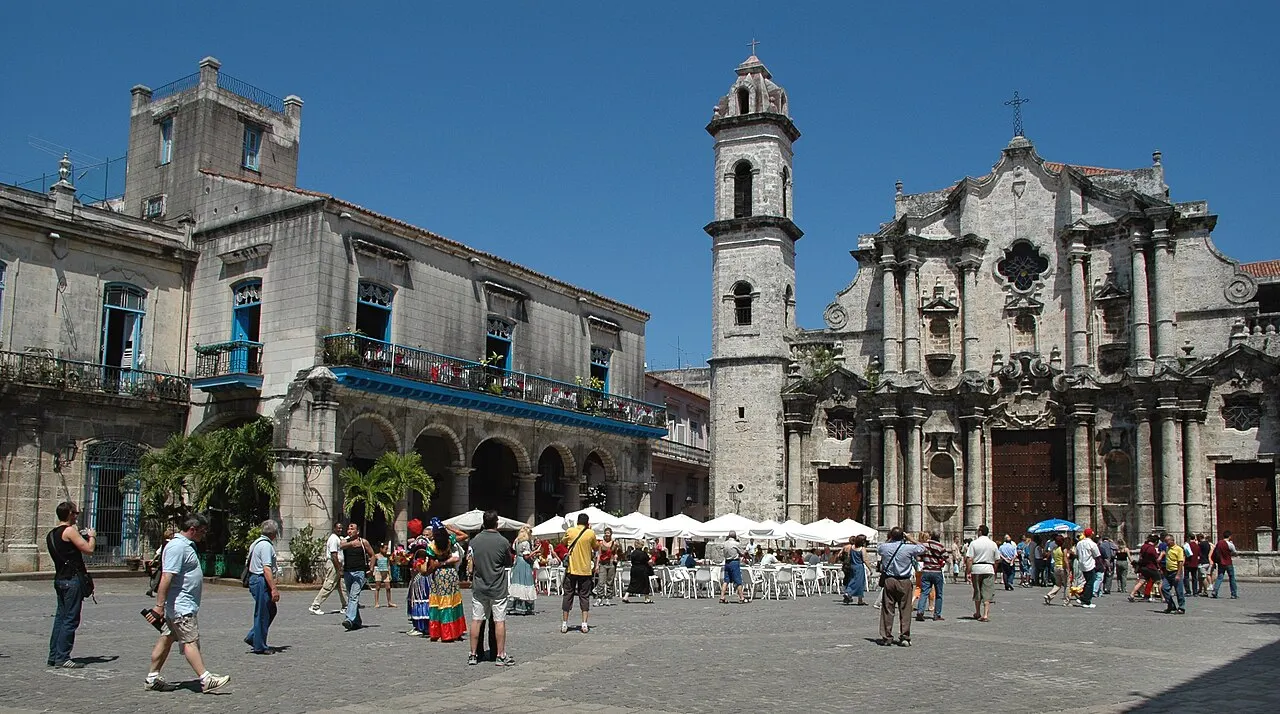
Plaza de la Catedral
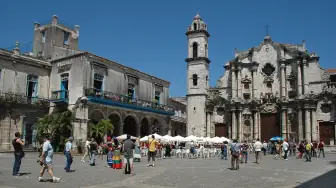
An early-18th-century square closed off by the Catedral de San Cristóbal, completed in 1777 in coral stone with visible fossils in the façade and two towers of different widths: asymmetrical Cuban baroque. The remains attributed to Columbus stayed here between 1796 and 1898.
Finished in 1777, the coral-stone cathedral closes off the square opened at the start of the 18th century, with fossils in the façade and a pair of towers of different widths, a trait of asymmetrical Cuban baroque, and the remains attributed to Columbus stayed on the square from 1796 to 1898.
Check access
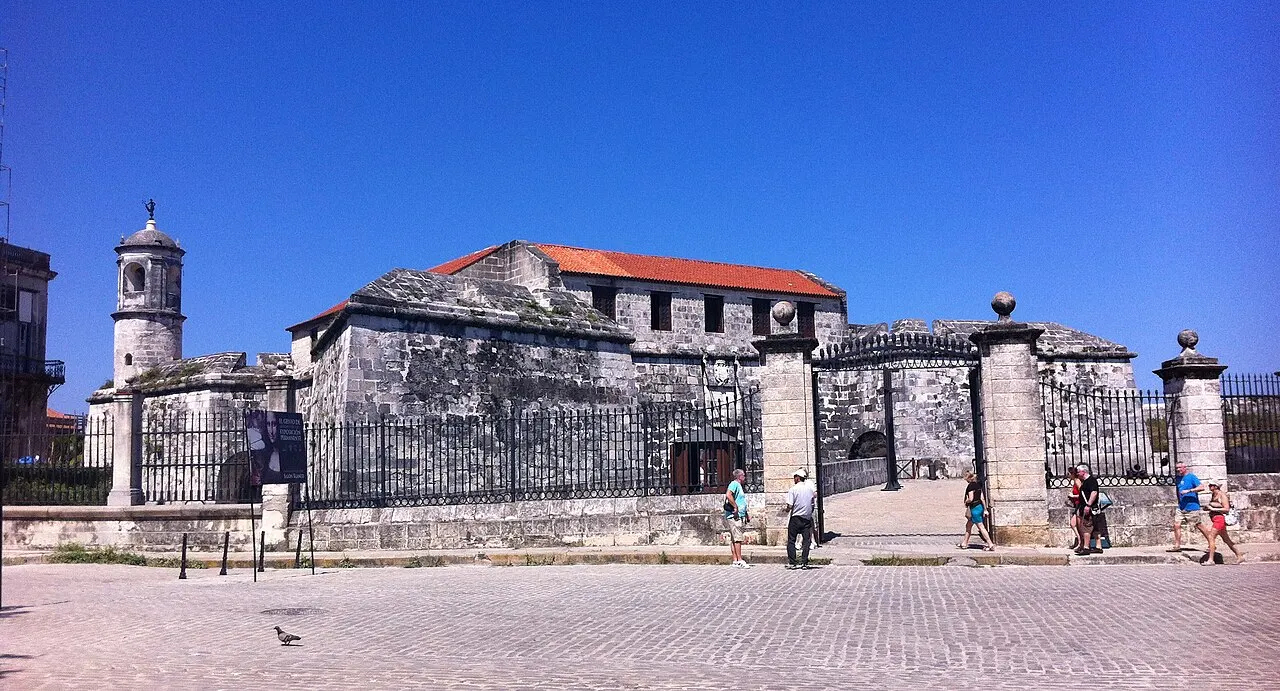
Castillo de la Real Fuerza
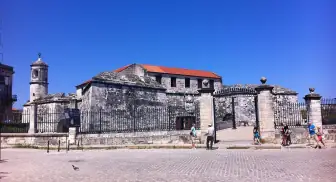
A fortress from 1558–1577 at the harbor entrance, the oldest stone fort still standing in the Americas. On its turret spins the Giraldilla, a bronze weathervane cast in 1632 and symbol of the city; the original is in the museum and the one on top is a copy.
It's the oldest stone fort still standing in the Americas, and on top turns the Giraldilla, a bronze weathervane cast in 1632; the original is in the museum, and the piece up there is a copy.
Check access

Malecón
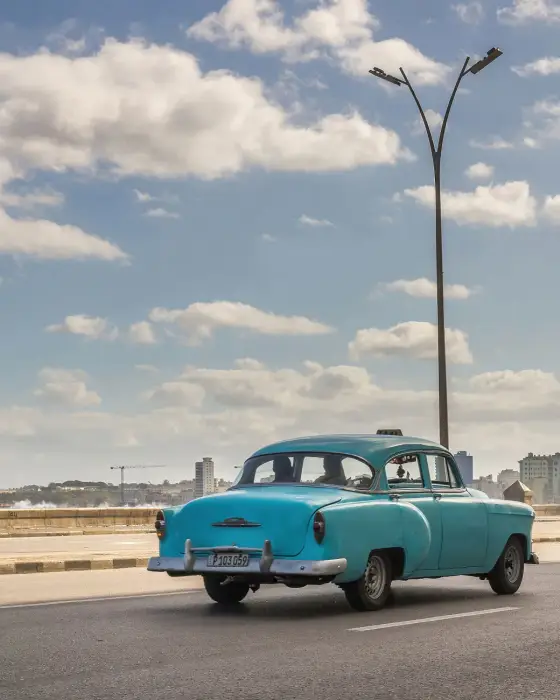
An 8-km seawall avenue, begun in 1901 during the American occupation and finished in the 1950s. It works as a promenade, a lookout, a fishing spot and a meeting place after sunset; with no shade, it's unbearable at midday.
The avenue along the water combines a stroll, a view, fishing and conversation once it gets dark, and under the midday sun it's hard to stand still; it's 8 km, built from 1901 to the 1950s; no shade at noon.
Check access

El Morro and La Cabaña
Across the channel, the Castillo de los Tres Reyes del Morro (1589–1630) and the Fortaleza de San Carlos de la Cabaña (1763–1774), the largest Spanish military work in the Americas. Every day at 9pm, soldiers dressed in 18th-century uniform fire the cañonazo, which once announced the closing of the walls.
At the forts on the other side of the channel, soldiers in 18th-century uniforms fire the cañonazo daily at 9pm, which once announced the closing of the city walls.
Check access
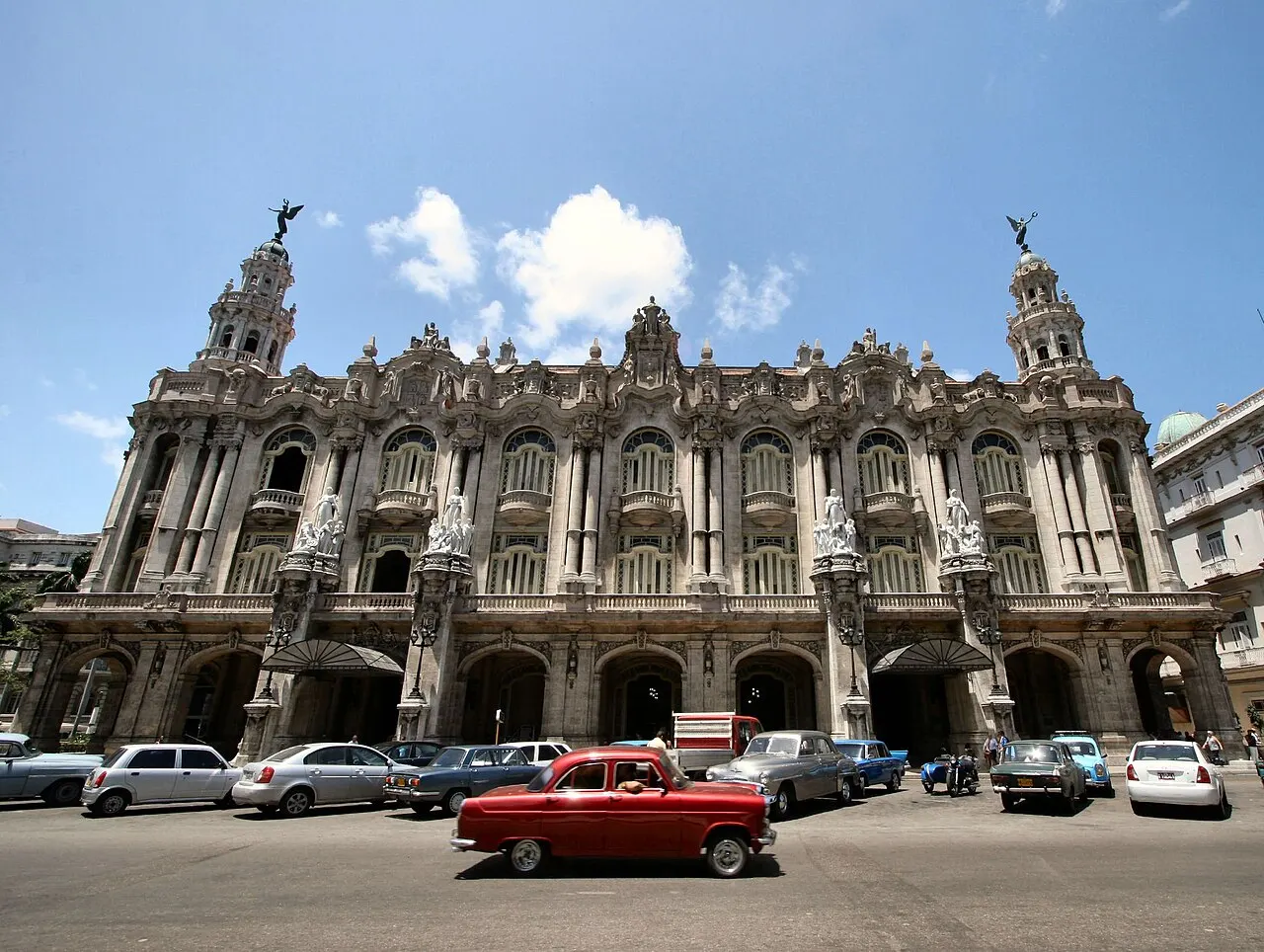
Gran Teatro de La Habana Alicia Alonso
Home of the Cuban National Ballet, inside the 1915 Centro Gallego, with a neo-baroque façade and four sculptural groups up top. The company, founded by Alicia Alonso in 1948, keeps Giselle and Don Quixote in repertoire.
It's worth it for a night of ballet: the Gran Teatro is home to the Ballet Nacional de Cuba, founded by Alicia Alonso in 1948, which keeps Giselle and Don Quixote in its repertoire. Book the ticket in advance.
Check access
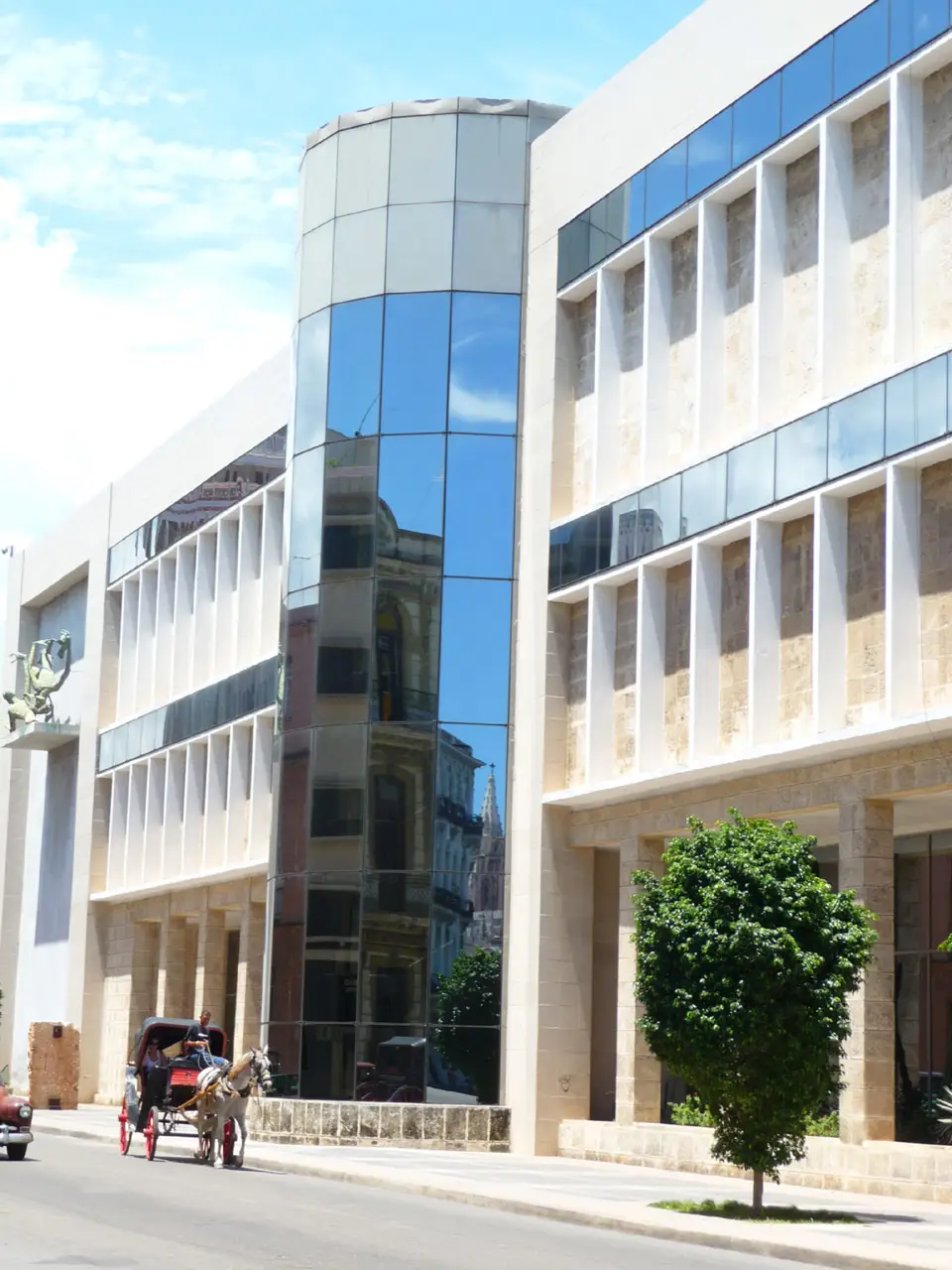
Museo Nacional de Bellas Artes
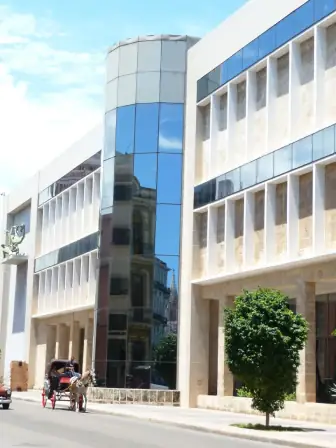
Two buildings three blocks apart: Arte Cubano, a 1954 modernist building with Wifredo Lam, Amelia Peláez and René Portocarrero; and Arte Universal, in the 1927 Centro Asturiano, with European painting and antiquities. A combined ticket covers both.
Two buildings a few blocks apart split the island's production from European painting with antiques, and there's a single ticket for both; a 1954 modernist building; the 1927 Centro Asturiano.
Check access
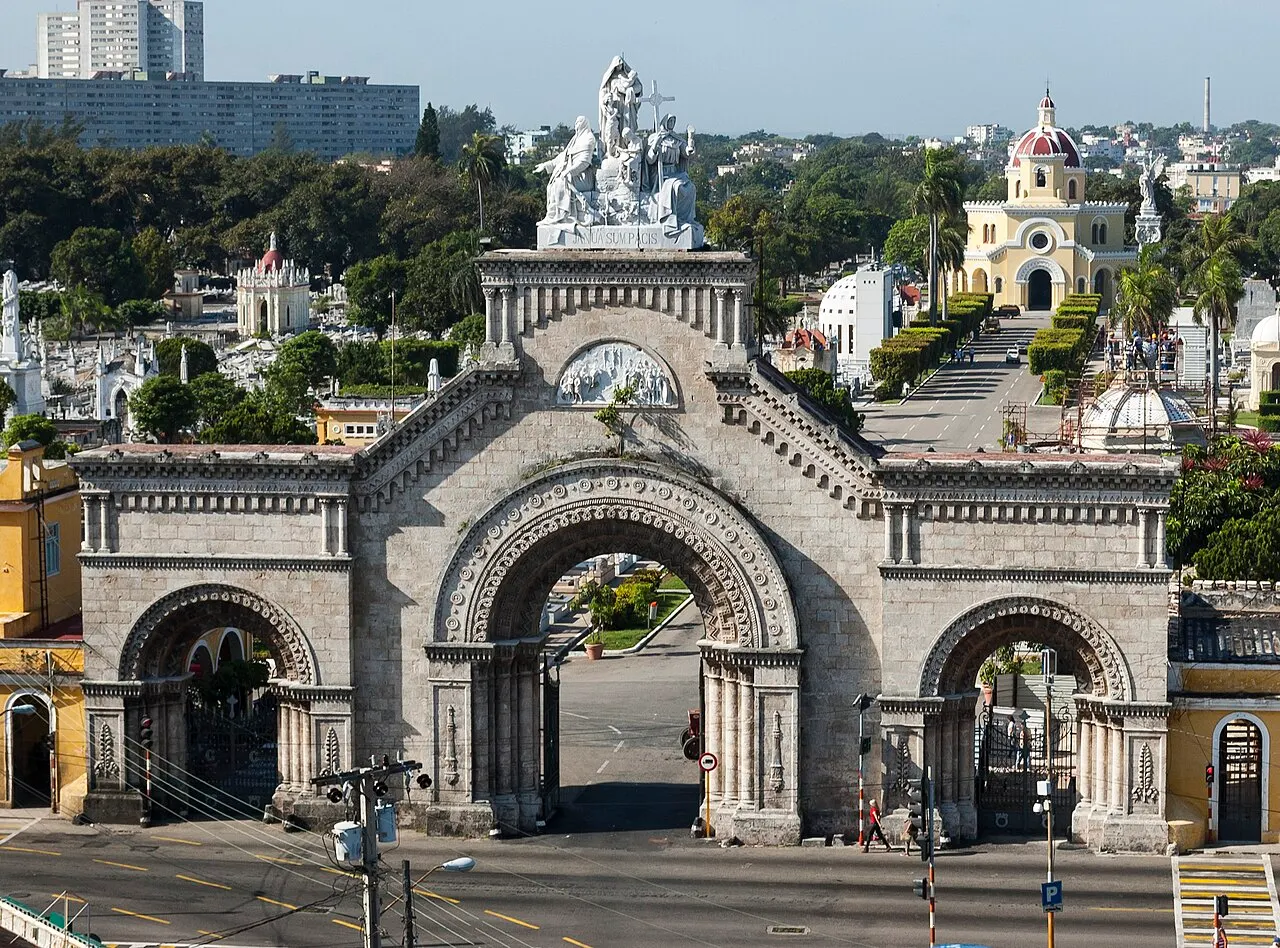
Necrópolis de Cristóbal Colón
A cemetery opened in 1876, spanning 56 hectares on a grid of named streets with about a million burials. The most visited tomb is that of Amelia Goyri, “La Milagrosa”, who died in 1901: those asking for something knock three times on the bronze ring and walk away backward.
Anyone making a request at Amelia Goyri's tomb knocks three times on the bronze ring and walks away backward, in the cemetery of named streets laid out in a grid.
Check access
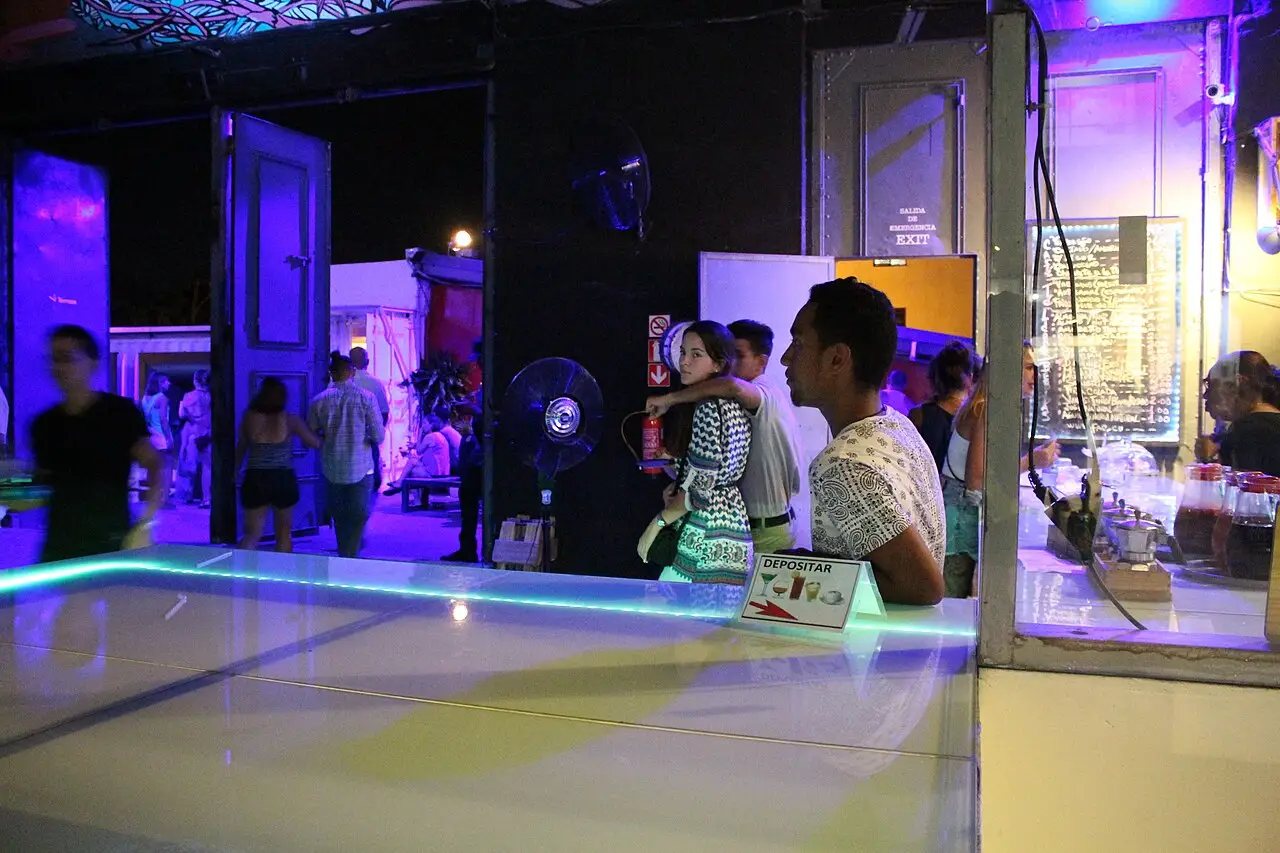
Fábrica de Arte Cubano
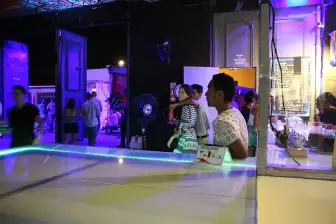
A former cooking-oil factory in El Vedado converted into a cultural center in 2014 by musician X Alfonso, with galleries, cinema, shows and bars on the same ticket. It opens Thursday through Sunday nights; you're handed a spending card at the door, paid on the way out.
An oil factory became a cultural center with a gallery, cinema, concerts and bar on the same ticket, open only at night on part of the week; converted in 2014 by X Alfonso; a tab card, paid on the way out.
Check access
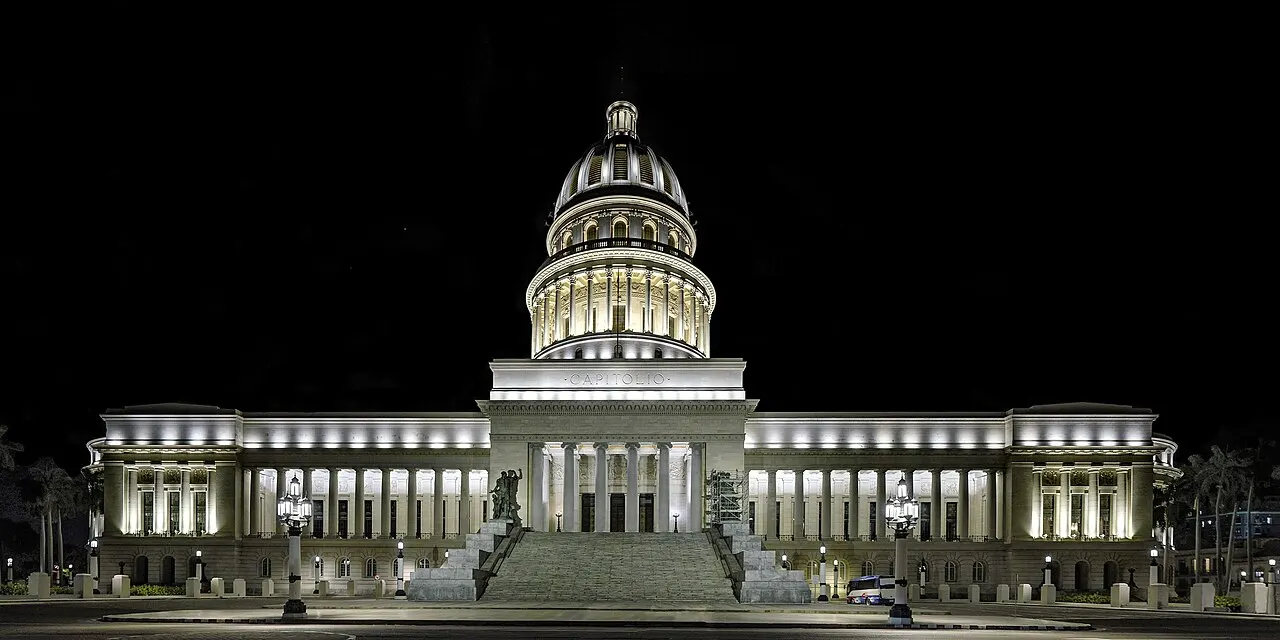
El Capitolio
Inaugurated in 1929, designed by Eugenio Rayneri Piedra, with a 91.7-m dome and a diamond set into the floor of the central hall marking the zero-kilometer point of Cuba's roads. Restored between 2013 and 2019, it now houses the National Assembly of People's Power.
Inside, the 1929 Capitolio comes down to a marble hall on a guided tour, with the kilometer-zero diamond set in the floor. The 91.7 m dome, which is what impresses, can be seen whole from the sidewalk of the Prado, for free.
Check access
Nilo’s itinerary
Start with the basic programme and choose extensions for the time you have.
Plan my days in the app ↗Day 1 · Habana Vieja and the waterfront
Start at 9am at Plaza de Armas, with the Castillo de la Real Fuerza still empty, then head to Plaza de la Catedral before the heat sets in.
Cross over to Plaza Vieja and climb to the Cámara Oscura to see the neighborhood's layout from above in five minutes.
Have lunch at a paladar on Mercaderes or Obispo streets and save the afternoon for the Museo Nacional de Bellas Artes, the Arte Cubano building.
Late in the afternoon, take the little ferry to Regla and back: a five-minute crossing and the best view of the city from inside the bay.
Have dinner early and cross the tunnel by taxi for the 9pm cañonazo at La Cabaña, with the return arranged with the same driver.
Day 2 · Centro Habana, El Vedado and the night
Walk up the Paseo del Prado to the Capitolio and the Gran Teatro, then head into the Barrio Chino and along calle Zanja.
Have lunch in Centro Habana, paying in CUP, and if it's Sunday, stop by the Callejón de Hamel at noon for the rumba.
Follow the Malecón on foot toward El Vedado, stopping at the Hotel Nacional garden and the cannons facing the channel.
Walk up calle 23 to the Coppelia ice-cream parlor, order the five-scoop ensalada, and continue to the steps of the Universidad de La Habana.
Spend the evening at the Fábrica de Arte Cubano (Thursday to Sunday) or at a live-music venue in El Vedado, with a taxi arranged for the ride back.
Day 3 · Revolution, the cemetery and the east side
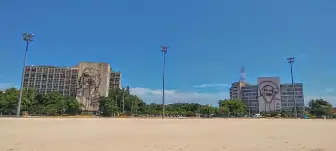
Start at Plaza de la Revolución before 10am, while there's still shade at the edges, and take a close look at the two wire portraits.
Head to the Necrópolis de Cristóbal Colón and walk the central axis to La Milagrosa's tomb; allow an hour.
Have lunch in El Vedado and take a taxi to Cojímar and the Museo Hemingway, at the Finca Vigía, in San Francisco de Paula, 15 km from downtown.
If you'd rather have a beach, swap the afternoon for Santa María del Mar, 25 km east, with a round-trip taxi agreed in advance and a return before dark.
End at the Malecón at sunset, with a drink bought earlier: after nightfall, little stays open.


Food
 AI illustration
Ropa vieja
Boiled, shredded brisket sautéed in a sofrito of tomato, bell pepper, onion, garlic and cumin, almost always with dry wine. It's the standard lunch dish at a paladar, served with rice and fried plantain.
 AI illustration
Congrí and moros y cristianos
Rice cooked together with beans (black beans in moros y cristianos, red beans in eastern-style congrí) in the beans' own broth with bacon. It goes with practically everything, and it's how you judge a household's cooking.
 AI illustration
Lechón asado
Slow-roasted pork, seasoned with a mojo of sour orange, garlic and oregano. It's the December 24 dish and the filling for pan con lechón, a street sandwich topped with raw onion.
 AI illustration
Tostones and yuca con mojo
Green plantain fried, flattened, and fried again, and boiled cassava drizzled with garlic in oil and sour orange. They're the standard side, served before the main dish in most homes.
 AI illustration
Frita habanera
A ground-beef burger mixed with chorizo and bread, served in a round bun topped with shoestring fries. It's been street food since the 1930s and returned to private cafés over the last decade.
 AI illustration
Pizza de peso and cajita
An individual thick-crust pizza sold at a window and folded in half to eat while walking, and the cajita, a cardboard box with rice, beans, meat and salad. They're the base of cheap lunch paid in CUP.
 AI illustration
Helado de Coppelia
A state ice-cream parlor opened in 1966 in El Vedado, designed by Mario Girona, in a concrete pavilion that takes up a whole block. There's a line, there's “el último”, and the classic order is the ensalada, five scoops in the same bowl; the menu depends on what's available that day.
 AI illustration
Mojito, daiquirí and guarapo
The mojito, made with rum, mint, lime, sugar and soda water, is tied to the Bodeguita del Medio, and the blended daiquirí to the Floridita, both linked to Hemingway and now expensive and crowded. Off the tourist circuit, people drink guarapo, freshly pressed sugarcane juice, and mamey or soursop shakes.
Day trips

Playas del Este
Santa María del Mar and Guanabo, 20 to 30 km east via the Vía Blanca, 30 to 45 minutes by car. White sand and shallow water; bring food and water, since infrastructure is minimal outside summer.

Viñales
180 km west, 3 hours to 3 hours 30 minutes via the Autopista Nacional. A valley of limestone mogotes, tobacco fields and leaf-drying houses; it works better as an overnight at a casa particular than as a day trip.

Matanzas and Varadero
Matanzas is 100 km and Varadero 140 km to the east, 1 hour 30 minutes to 2 hours via the Vía Blanca. Matanzas has the 1863 Teatro Sauto and the Yumurí valley; Varadero has 20 km of unbroken beach and package hotels.
Where to begin
Habana Vieja and the waterfront
Start at 9am at Plaza de Armas, with the Castillo de la Real Fuerza still empty, then head to Plaza de la Catedral before the heat sets in.
Centro Habana, El Vedado and the night
Walk up the Paseo del Prado to the Capitolio and the Gran Teatro, then head into the Barrio Chino and along calle Zanja.
Revolution, the cemetery and the east side
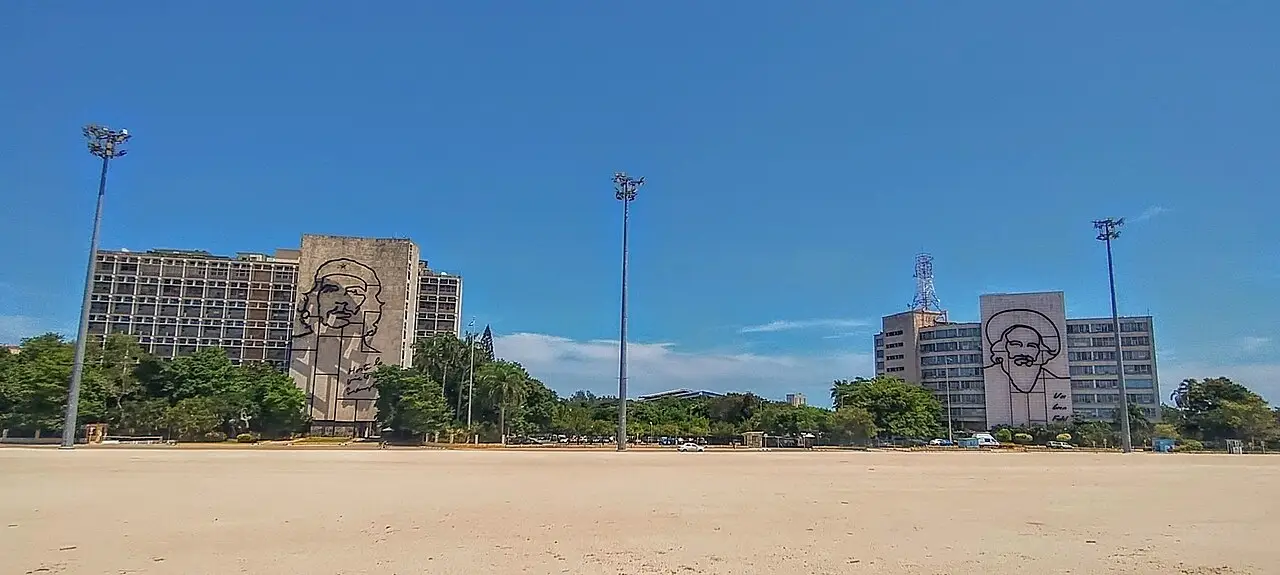
Start at Plaza de la Revolución before 10am, while there's still shade at the edges, and take a close look at the two wire portraits.
Money
The currency is the Cuban peso (CUP), the only legal tender since the 2021 unification that abolished the CUC. In practice, three exchange rates coexist on the same block: the official one, around 120 CUP to the dollar at banks and CADECA booths; the informal one, which on September 1, 2026 stood near 675–680 CUP to the dollar and 765–770 to the euro; and that of stores that only sell for cash dollars or with an MLC card. Cards issued by US banks never work, other cards work intermittently, and ATMs are often empty. Approximate 2026 ranges: street coffee, 50–150 CUP; pizza de peso or cajita, 300–600 CUP; lunch at a paladar, US$8–15; full dinner with a drink, US$15–30; casa particular, US$25–45 a night; chain hotel, US$80–200. A 10% tip is customary at restaurants and welcome in CUP or foreign currency. Change only what you plan to spend, because the peso can't be converted outside the island and the informal rate shifts from one week to the next.
Getting there and around
José Martí Airport: 15 km south, no train and no bus
José Martí International Airport (HAV) is in Boyeros, 15–18 km south of downtown, and almost all international flights arrive at Terminal 3. With no train or practical city bus to the terminal, your options are a taxi, with the price agreed before you get in, at around US$25–35 to Habana Vieja or El Vedado (2026), or a transfer arranged through your casa particular, which tends to be cheaper and more reliable. There's no Uber or international ride-hailing app, and the local apps, such as La Nave and Yosi, only work when there's internet and fuel at the same time. Bring cash for the taxi and the first few days, because the exchange lines at the airport are long.
Line P guaguas: a few pesos, diesel shortages
Getting around the city means combining whatever is available, so take whatever passes nearby. The articulated P-line guaguas, the state buses, cost about 5 CUP, but they run packed and have had their frequency cut by the diesel shortage since 2024. The almendrones, private shared taxis, follow fixed routes along the main downtown streets, stop for a raised hand and charge per stretch, but on many days they vanish for lack of fuel. Tourist and private taxis charge per ride, negotiated in advance, and the lanchita across the bay is the cheapest ride of all, with a view of the city. Habana Vieja, Centro Habana and El Vedado are walkable, in stretches of 20 to 40 minutes, but expect broken sidewalks, open manholes and unlit streets during blackouts, so carry a flashlight. Bicitaxis and electric tricycles cover short trips and are replacing the stranded almendrones, although there's no bike lane anywhere in the city.
Safety
Violent crime against visitors is rare in Havana, and there's a heavy police presence in the historic center. The real risks are theft and scams: bags and phones snatched in Centro Habana, on the Prado and on the streets of El Vedado, especially at night and during blackouts; wrong change; inflated bills at restaurants with no prices on the menu; street money changers passing counterfeit bills; and classic jineterismo, where someone strikes up a conversation in English, takes you to a bar “run by friends” and disappears when the check arrives. Carry little cash, leave your passport at the house and bring a copy. Physically, the dangers are broken sidewalks, uncovered manholes, exposed wiring and the risk of balconies collapsing on the propped-up buildings of Centro Habana. After heavy rain, don't walk close to the façades: walk down the middle of the street, as locals do. Residential neighborhoods such as Cerro, Diez de Octubre and Alamar aren't no-go zones, but they have less lighting and fewer landmarks, so at night choose a prearranged taxi. Health insurance is an entry requirement, care for foreigners is billed in foreign currency and pharmacies are poorly stocked, so bring your own medication.
Etiquette tips
Ask “¿el último?” on arrival
The line isn't a physical row: whoever arrives asks who's last, memorizes the person who answered, and can wait sitting in the shade. Cutting in without asking is the one truly serious offense in a Cuban line.
Greet before asking
“Buenos días” or simply “buenas” comes before any question, including to an official or a street vendor. Getting straight to the point sounds rude.
“Compañero” and “señor” aren't interchangeable
“Compañero/a” is the institutional form and still works in government offices; “señor/señora” is normal on the street and in private commerce. Use “asere” only after someone uses it with you.
Don't photograph uniforms, military works or government lines
Avoid photographing uniforms, military sites or lines at government offices, including at airports, ports and ministry buildings. Ask before photographing people; costumed performers and musicians downtown charge for photos, and you agree on the price first.
Politics: let your host bring it up
Cubans criticize the government harshly among themselves, but the conversation changes once a foreigner starts it in public. Listen, don't lead, and don't record or publish the name of whoever spoke.
Practical gifts matter more than money
Painkillers, common antibiotics, soap, batteries, clothes and school supplies are scarce and the gift a host expects. Leave what's left in your suitcase instead of taking it back.
Mistakes to avoid
Counting on a card or ATM
Arriving without enough cash, counting on cards or ATMs. American cards never work, other cards often fail and ATMs are frequently out of bills, so bring the money for your first days from home.
Exchanging money with someone offering a “buena tasa”
Exchanging money on the street with someone offering a “buena tasa” on the Prado or Obispo. The count comes out wrong, and bills out of circulation turn up. There's also the trick of a conversation interrupted by a supposed police officer. It only serves to make you tuck the wad away fast, without checking it.
Cigars offered on the street
Buying cigars offered on the street as “straight from the factory, from a friend who works there”. They're counterfeit, and customs requires an official receipt to carry out more than 20 units. It's the same line, repeated by different people every few blocks.
Assuming everything is open
Planning the day assuming everything is open. A museum closed by a blackout, a restaurant missing half the menu and a shop with no stock are routine. Always keep a backup a few blocks away. Don't build a day that depends on three doors opening in sequence.
Counting on stable internet
Counting on stable internet. Buy an ETECSA Nauta card or a local eSIM and download offline maps, because your phone can go without signal for hours. Set meetings for a fixed time and place, which is how people find each other without confirming by phone.
Useful phrases
¿Quién es el último?
Secures your place in a line that never shows on the ground, only in the memory of whoever was already in it;
Asere, ¿qué bolá?
“Hey, what's up?”: informal Havana greeting between acquaintances
No es fácil
“It's not easy”: the standard answer about everyday life; it sums up and closes the subject
Está en candela
“It's on fire”, meaning it's terrible, complicated, with no solution in sight
¿Cuánto es en pesos?
“How much is it in pesos?”. Always ask, because the same price shifts with the currency
Voy a resolver
“I'll figure it out”: resolver means getting through unofficial channels what the shop doesn't have
Districts
Habana Vieja
The 1519 colonial core and its fortresses have been a UNESCO World Heritage Site since 1982. Four squares (Armas, Catedral, San Francisco and Vieja) hold museums, hotels and restored restaurants; two blocks further on, the restoration stops and the wooden props begin.
Centro Habana
The dense late-19th-century grid between the Prado and Belascoaín, with no squares and the city's worst-kept façades. It's where you eat cheapest in CUP, where the Barrio Chino sits (with almost no Chinese residents left), and where the Callejón de Hamel is.
El Vedado
A district planned from 1859 onward, it's the seat of institutional life and nightlife: the University of Havana, the Hotel Nacional (1930), the Coppelia ice-cream parlor, La Rampa (calle 23) and, at the southern edge, the Plaza de la Revolución. Addresses are given by intersection, in the format “23 y 12”.
Miramar and Playa
On the other side of the Almendares, wide avenues and mansions from the 1920s–50s now occupied by embassies and joint ventures. Quinta Avenida is the axis; that's where the business hotels, the Marina Hemingway and the Acuario Nacional are.
Cerro and Diez de Octubre
Residential districts further inland, off the tourist circuit: 19th-century summer estates in Cerro, the 1946 Estadio Latinoamericano, home of Industriales, and the long Calzada de Diez de Octubre. This is the Havana of the line, the car under repair, and the farmers' market.
Regla and Guanabacoa
The bay's eastern shore, reachable by the little ferry or the tunnel. This is the center of Afro-Cuban religion: the Virgen de Regla, associated with Yemayá, has a procession on September 8, and Guanabacoa keeps a museum devoted to the rules of Ocha, Palo and Abakuá.
Habana del Este
Casablanca, with the 1958 Cristo de Havana, by sculptor Jilma Madera; Cojímar, the fishing village linked to Hemingway; Alamar, a set of housing blocks built by microbrigades in the 1970s; and the Playas del Este, 20–30 km away via the Vía Blanca.
History
1519 · The city moves coasts
Founded in 1514 on the south of the island, San Cristóbal de La Habana was moved on November 16, 1519 to the Puerto de Carenas. The narrow-channel bay with three inner coves defines everything that follows.
1561–1607 · Meeting port for the fleets
The Spanish crown forces ships to return to Europe in convoy, and the convoy forms in Havana. In 1607 the city replaces Santiago as the colony's capital.
1555–1630 · The ring of fortresses
After French corsair Jacques de Sores sacks the city in 1555, Spain raises the Real Fuerza (1558–1577) and, at the mouth of the channel, El Morro and La Punta, designed by the Antonelli engineers.
1762–1763 · The eleven-month British occupation
An English fleet lands to the east in August 1762 and takes the Morro from the rear, opening the port to free trade. In 1763 Spain recovers the city in exchange for Florida and orders La Cabaña built.
1791–1837 · Sugar, slavery and rails
The Saint-Domingue revolt destroys the world's largest sugar producer and Cuba takes its place. In 1837 the island opens Latin America's first railway, Havana–Bejucal, eleven years before Spain itself.
1859–1863 · Outside the walls
El Vedado is laid out in 1859 with a mandatory garden and portico, a rule still visible in the street. The colonial wall is torn down starting in 1863 because the city no longer fit inside it.
1898–1902 · The Maine, war and republic
On February 15, 1898 the battleship USS Maine explodes in the bay and serves as pretext for the Spanish-American War. After four years of occupation, the republic is born in 1902 with the Platt Amendment.

1920–1930 · The city of concrete
The sugar boom pays for the Capitolio, inaugurated in 1929, the urban plan of Frenchman Forestier, and the advance of the Malecón, begun in 1901. Sugar prices collapse the same year as the Capitolio.
1930–1958 · Casinos and hotels
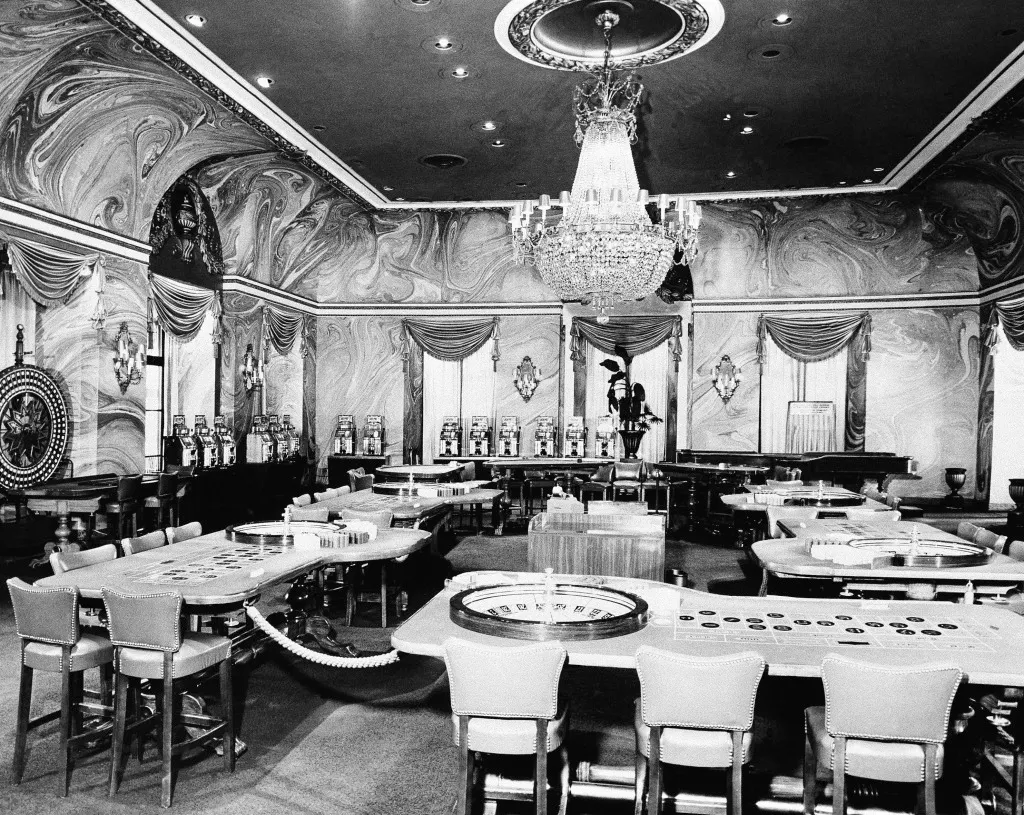
Havana becomes a destination for American gambling and tourism: Hotel Nacional (1930), Riviera (1957) and Habana Hilton (1958). The tunnel under the bay opens in 1958.
1959–1962 · Fidel Castro enters the city, January 8, 1959
Fidel Castro enters the city on January 8, 1959. The nationalization of businesses follows, along with the 1962 American embargo and the departure of hundreds of thousands of residents.

1991–2026 · Special Period and blackouts
The fall of the USSR cuts off nearly all foreign trade; in 1993 the dollar is legalized and the Oficina del Historiador gains the right to reinvest its revenue in Habana Vieja. Then come the 2021 monetary unification, the July 11 protests, mass emigration, and blackouts that by 2026 often run over ten hours a day.
 AI illustration
Complete history
The Gulf Stream, the bay and the silver fleets
Havana exists because of a current and a bay. The Gulf Stream forces sailing ships leaving the Caribbean to head up through the Florida Straits, and the only truly safe cove along that stretch is Havana Bay: a channel about 200 m wide, with a pouch-shaped interior holding three inner coves. In 1561 the Spanish crown ordered all ships to return to Europe in convoy, and the convoy formed here. The city spent two centuries living off what others brought (food, lodging, hull repair, smuggling) rather than what it produced. By 1607 it was already the colony's capital.
The fortresses of 1558 to 1774 and the British occupation
After the corsair Jacques de Sores sacked the city in 1555, Spain set about fortifying the bay: it built the Real Fuerza (1558–1577) and then El Morro and La Punta, by the Antonelli engineers, at the mouth of the channel. It wasn't enough: in August 1762 a British fleet landed to the east, took El Morro from the rear and occupied the city for eleven months, opening the port to free trade and bringing thousands of enslaved Africans to the island. Returned to Spain in 1763 in exchange for Florida, Havana got La Cabaña, the largest Spanish military work in the Americas, built right on the hill from which the British had fired.
Saint-Domingue changed the island's economy
The revolt of enslaved people in Saint-Domingue, starting in 1791, destroyed the world's largest sugar producer and shifted the business to Cuba. The plantation and the slave trade financed 19th-century Havana: courtyard mansions in the old city, gas lighting, Latin America's first railway in 1837, and the 1859 layout of El Vedado, with mandatory garden setbacks and porticos. The wall came down starting in 1863. Slavery only ended in 1886, and independence from Spain, in 1898, arrived along with American troops and four years of military occupation.
The republic was born with the Platt Amendment
The 1902 republic was born with the Platt Amendment, which gave the United States the right to intervene, and with city planning paid for by sugar: work on the Malecón began in 1901, landscape architect Jean-Claude Nicolas Forestier laid out avenues and squares between 1925 and 1930, and the Capitolio was inaugurated in 1929, the same year sugar prices crashed. In the 1950s Havana was a casino destination partly run by the American mob, with the Riviera in 1957 and the Habana Hilton in 1958, while the countryside lived off the seasonal harvest and went jobless the rest of the year. Fidel Castro entered the city on January 8, 1959.
Property nationalized, buying and selling banned until 2011
With property nationalized and buying and selling banned until 2011, the building stock aged without maintenance, and walls in Centro Habana still collapse after heavy rain; on the other hand almost nothing was torn down, which is why the city of 1900 is still standing. The Special Period, which began with the collapse of the USSR in 1991, brought blackouts, Chinese bicycles and, in 1993, the legalization of the dollar. That same year the Oficina del Historiador, led by Eusebio Leal until his death in 2020, began reinvesting tourist revenue in Habana Vieja and restored a few hundred buildings. The thaw with Washington between 2015 and 2017 didn't last. Since 2020 the toll has been heavy: monetary unification in 2021, triple-digit inflation, the emigration of more than a million Cubans, a sharp drop in tourism in 2026 and daily blackouts that close museums and restaurants without warning.
Havana was founded in 1514 on Cuba's south coast and only moved in 1519 to the bay on the north coast, where it stands today.
At the mouth of the bay's channel, about 200 m wide, El Morro and La Punta face each other, one on each shore.
Geography and shape of the city
The bay and its two shores
Havana occupies about 20 km of limestone coast on Cuba's northern edge, at 23° latitude, with the bay splitting the city into two uneven shores: the west holds almost everything; the east, Casablanca, Regla and the housing blocks of Alamar. The terrain is low: stepped marine terraces, almost nothing above 60 m except the hills of La Cabaña and Marianao, and the only urban river is the Almendares, which separates El Vedado from Miramar and is crossed by bridges and a tunnel; the bay has its own tunnel, from 1958.
The grid changes with each layer
The street grid changes with each historical layer: Habana Vieja is irregular and tight, organized around four colonial squares; Centro Habana is a dense grid from 1860–1900, with three- to four-story buildings pressed against each other and almost no public space; El Vedado, laid out in 1859, has regular blocks, streets numbered in pairs to the north and lettered to the west, and a mandatory front garden, which explains its shade; Miramar follows wide, tree-lined avenues starting from Quinta Avenida.
The climate and the hurricanes
The climate is tropical savanna, with a dry season from December to April and rain from May to October, and the city lies in the path of hurricanes: when seas come from the north, water washes over the Malecón, closing the road several times each winter.
Culture
Almost every Atlantic rhythm passed through here
Almost every rhythm danced in the Atlantic world passed through here. The danzón was born in Matanzas in 1879 and became a ballroom dance in Havana; son arrived from the east of the island in the 1910s and gave rise to the septet, Pérez Prado's mambo and Enrique Jorrín's chachachá in the 1940s and 1950s; rumba (guaguancó, yambú and columbia) is courtyard and dockside drumming, which you can hear at the Callejón de Hamel at noon on Sundays. In the 1990s the timba of Los Van Van and NG La Banda ruled the dance floors; today what you hear most in the street is Cuban reggaeton. The 1997 Buena Vista Social Club album, recorded at the Egrem studio in Centro Habana, and Wim Wenders's 1999 film exported one version of that story and brought a whole generation of musicians out of retirement.
Carpentier, Padura and ICAIC cinema
The city produces more literature than its size would suggest. Alejo Carpentier coined the “marvelous real”, José Lezama Lima published Paradiso in 1966, Guillermo Cabrera Infante rebuilt Havana speech in Three Trapped Tigers (1967), Reinaldo Arenas told of the repression in Before Night Falls, and Leonardo Padura has narrated the city since 1991 through detective Mario Conde. ICAIC, created in March 1959, gave Latin American cinema Memories of Underdevelopment (1968) and Strawberry and Chocolate (1993), both by Tomás Gutiérrez Alea. The Havana Biennial has existed since 1984 and was conceived for artists of the global South; in the visual arts, Wifredo Lam is the bridge between European surrealism and Afro-Cuban iconography.
Catholic and Afro-Cuban at once
Popular religion is Catholic and Afro-Cuban at the same time: the Regla de Ocha (santería), Bantu-rooted Palo Monte, and the all-male abakuá societies coexist with devotion to the Virgen de la Caridad del Cobre. Initiates spend a year dressed in white from head to toe and are part of the street scene. The sport is baseball: Industriales plays at the 1946 Estadio Latinoamericano in Cerro, and the argument over the team happens every day at the Esquina Caliente, in the corner of Parque Central. Nightlife splits between live-music houses, the Fábrica de Arte, and the Malecón, which charges no entry.
The white clothing can look like some profession's uniform at first: they're santería initiates.
Festivals and events
 AI illustration
Feria Internacional del Libro
Second half of February, inside the Fortaleza de San Carlos de la Cabaña. Books priced in pesos, shows, and a guest country each edition; afterward the fair tours the rest of the island through April.
 AI illustration
Festival Jazz Plaza
January, in theaters and venues across El Vedado and Habana Vieja. It has existed since 1980 and is the yearly meeting of Cuban jazz with foreign guests; it packs the city's best instrumental music into a few days.
 AI illustration
Festival Internacional del Nuevo Cine Latinoamericano
First half of December, since 1979. The city turns into a film circuit for about ten days, with lines at the Yara, Charles Chaplin and La Rampa cinemas and cheap tickets paid in CUP.

Bienal de La Habana
Since 1984, in irregular and increasingly spaced-out editions. It occupies museums, fortresses and the Malecón itself with outdoor installations; check whether an edition falls in the year of your trip.

Carnaval de La Habana
August, on the Malecón, with comparsas, floats and stalls selling beer by the pitcher. It depends on fuel and budget and has been suspended or shortened in several recent years: don't build your trip around it without confirming.
Books and films
Memories of Underdevelopment (1968), by Tomás Gutiérrez Alea
A bourgeois man decides to stay in Havana when his family leaves. It blends fiction with 1961–62 archival footage and is the best way in to what the revolution did to the city's daily life.
Three Trapped Tigers (1967), by Guillermo Cabrera Infante
A novel built from Havana's nighttime speech in 1958, moving among cabarets, cars and wordplay. It rebuilds the city's accent and humor on the eve of 1959.
Buena Vista Social Club (1997 album; Wim Wenders film, 1999)
Recorded at the Egrem studio in Centro Habana, with Compay Segundo, Rubén González, Ibrahim Ferrer and Omara Portuondo. It explains the origin of the repertoire heard in any bar of the historic center.
Frequently asked questions
Havana: Can you count on a card or ATM?
No: American cards never work, other cards often fail and ATMs are usually out of bills, so bring the money for your first days from home.
Havana: How do you get from the airport to downtown?
With no train or practical city bus to the terminal, your options are a taxi, with the price agreed before you get in, at around US$25 to 35 to Habana Vieja or El Vedado (2026), or a transfer arranged through your casa particular, which tends to be cheaper and more reliable.
Havana: How long does it take to get to Playas del Este?
Playas del Este, Santa María del Mar and Guanabo, are 20 to 30 km east via the Vía Blanca, 30 to 45 minutes by car.
Havana: What's the currency, and which exchange rate matters?
The currency is the Cuban peso (CUP), the only legal one since 2021, but the exchange rate that matters in practice is the informal one: on September 1, 2026, near 675 to 680 CUP to the dollar and 765 to 770 to the euro, against about 120 at the official rate of banks and CADECA booths. Change money with whoever hosts you, in small amounts and more than once; stores that only sell in dollars accept cash dollars or the MLC card, not pesos.
Havana: What's the real risk for visitors?
Violent crime against visitors is rare in Havana, and police presence in the historic center is high. The real risk is theft and scams: bags and phones snatched in Centro Habana, on the Prado and on the streets of El Vedado, mainly at night and during blackouts; wrong change; an inflated bill at restaurants with no prices on the menu; street currency exchange with counterfeit bills; and the classic jineterismo, where someone strikes up a conversation in English, leads you to a bar “of friends” and disappears when the bill arrives.