Mexico
Tulum
Maya ruins on a cliff, cenotes and the Caribbean Sea
Days Start with the basic programme and choose extensions for the time you have.
How the guide reaches this number
This is a proposal for two full days, not a compulsory minimum: arrival and departure need room for transfers, rest and check-in or check-out. With one day, prioritise the Tulum Archaeological Site, a meal and a break; add Pescadores or Paraíso only if public access, travel and local conditions allow. Parque del Jaguar and the archaeological site have their own entry conditions, with charges depending on category and documented exemptions. With more time, choose Cobá or Sian Ka’an as a separate outing, checking access, transport and return before fitting it into the itinerary. Living Maya culture is not confined to either stop. To me, one well-chosen visit and an afternoon with rest are worth more than piling ruins, cenotes, beach and a distant excursion into the same day.
2–3
When December to April for generally less rain; adjust to the forecast and conditions at your chosen beach
How the guide reaches this number
I would start by comparing December to April for a trip with ruins and beaches, because local historical records generally show less rain. Tulum remains warm: allow water, shade and breaks, and check the forecast for your dates. In the wetter period, leave flexibility to adjust outings and return travel. The official Atlantic hurricane season runs from June 1 to November 30; follow weather alerts and check accommodation and activity change or cancellation terms.
Per person/day Budget about 900 MXN; mid-range about 2,400 MXN; comfortable about 7,000 MXN per person, based on what travellers report to Budget Your Trip (checked October 2026).
How the guide reaches this number
Accommodation on the beach road costs far more than in town; include taxes, admissions and paid services.
Budget about 900 MXN; mid-range about 2,400 MXN; comfortable about 7,000 MXN per person, based on what travellers report to Budget Your Trip (checked October 2026). Accommodation on the beach road costs far more than in town; include taxes, admissions and paid services.
Per person per day: accommodation, meals, urban transport, visits and a small allowance for extras. Flights excluded; larger purchases vary. Editorial estimate, not a quote.
 What Nilo thinks
I would separate a morning at the ruins from a second day for one cenote whose access has been checked. This is a proposal for two full days, not a compulsory minimum: arrival and departure need room for transfers, rest and check-in or check-out. With one day, prioritise the Tulum Archaeological Site, a meal and a break; add Pescadores or Paraíso only if public access, travel and local conditions allow. Parque del Jaguar and the archaeological site have their own entry conditions, with charges depending on category and documented exemptions. With more time, choose Cobá or Sian Ka’an as a separate outing, checking access, transport and return before fitting it into the itinerary. Living Maya culture is not confined to either stop. To me, one well-chosen visit and an afternoon with rest are worth more than piling ruins, cenotes, beach and a distant excursion into the same day.The wall, cliff and El Castillo give the Maya city of Tulum its shape. Its coastal position supported maritime trade, and the religious precinct gathers temples built in several stages; the open paths let you read this complex while respecting its barriers. Today the archaeological site forms part of Parque del Jaguar, alongside protected areas with their own histories and the Museum of the East Coast.
Read more
For planning, separate time at the site from the journey to a public beach entrance. The sea, cenotes and an archaeological visit have different access conditions. Choose accommodation around the journeys you intend to make and leave space for a meal and rest; arrival at the airport or station still requires a connection to where you will sleep.
Quick facts
- Population
- 33,374 residents in the locality and 46,721 in the municipality, according to INEGI’s 2020 Census
- Historical development
- Visible buildings mainly date from 1250–1550, with earlier traces; municipality created in 2008
- Country and region
- Mexico: state of Quintana Roo, Yucatán Peninsula, Caribbean Sea coast
- Language
- Spanish; Yucatec Maya is also spoken in the region. Confirm the language of your chosen service or guide.
- Currency
- Mexican peso (MXN); check the rate and fees on the payment date
- Time zone
- UTC−5 year-round, no daylight saving; Quintana Roo changed time zone on February 1, 2015
- Best time to visit
- December to April for generally less rain; adjust to the forecast and conditions at your chosen beach
- Average daily cost
- Budget about 900 MXN; mid-range about 2,400 MXN; comfortable about 7,000 MXN per person, based on what travellers report to Budget Your Trip (checked October 2026). Accommodation on the beach road costs far more than in town; include taxes, admissions and paid services.
When to go
December to April for generally less rain; adjust to the forecast and conditions at your chosen beach
How the year changes
I would start by comparing December to April for a trip with ruins and beaches, because local historical records generally show less rain. Tulum remains warm: allow water, shade and breaks, and check the forecast for your dates. In the wetter period, leave flexibility to adjust outings and return travel. The official Atlantic hurricane season runs from June 1 to November 30; follow weather alerts and check accommodation and activity change or cancellation terms.
Sargassum varies through the year and between coastal stretches. Check recent bulletins and conditions at your chosen beach, keeping an alternative for the day; a month in a table does not guarantee sand without algae or water suitable for swimming. Compare prices for your dates and accommodation address, including travel. A lower September room rate needs to be assessed alongside outing conditions, without assuming a fixed discount or a whole week of rain.
Nilo's tips
Check the ruins ticket and the park access fee
The decree effective from July 20, 2026 distinguishes the charges, with rules for 2026 and 2027: Parque del Jaguar access costs 100 MXN for foreigners and is free for Mexican nationals; the unified Parque Nacional Tulum and archaeological-site charges are 165 MXN for foreigners and 80 MXN for Mexican nationals Monday to Saturday. For a foreign visitor without an exemption, the combined amount is 265 MXN. Sundays, residents and other statutory exemptions have specific rules: check your category and the documents required through the official channel, without choosing by the language of this guide. Reconfirm tickets, notices and payment methods before visiting.
Choose a cenote and leave room for a break
For the Cobá road corridor, compare Gran Cenote or Calavera according to access and your group’s preferred activity. Confirm hours, payment and equipment before travelling; an early arrival does not guarantee an open gate or few visitors. If you choose Dos Ojos along Highway 307, arrange it as an alternative with its own transport and return, rather than automatically adding it to the other two. Leave time to change clothes, eat and rest.
Confirm the taxi destination, fare and payment
Before boarding, confirm the driver, arrival address, total or calculation method and payment method. For the beach, specify your chosen access point or hotel rather than just “zona hotelera”; arrange the return too. Ask for a quote for the actual journey and time, including any waiting and additional services.
Check the colectivo stop and return
Before using a colectivo, confirm the current route, boarding point, drop-off, fare and last departure with the operator. A regional service does not guarantee a stop at every cenote entrance or a connection to the hotel zone. Compare the entire cycling or walking route, including heat, daylight and traffic conditions; arrange another form of transport and payment before setting out if conditions are unsuitable.
Leave time for meals as well as visits
I would leave a meal break along the route of the visits, with water, shade and rest. To try cochinita or a marquesita, check the address, service hours and menu at your chosen place; a regional custom does not guarantee food ready in Tulum at a fixed hour. Compare price, portion, currency, additional charges and return travel before ordering. A sweet can be a snack without replacing the meal and break your day needs.
Check Visitax and fees before paying
The official Visitax portal states that the contribution applies to foreign tourists visiting Quintana Roo. Check the amount and conditions for your trip at visitax.gob.mx; SATQ also allows authorised companies to collect payment. Check that authorisation and keep your receipt. The contribution is separate from admission to a park or archaeological site. Before withdrawing cash or paying, read the fees and confirm the currency and conversion before authorising the transaction.
Explore the map

© OpenStreetMap · OpenFreeMap · © OpenMapTiles
Explore the map, read about the other places and plan your travel days in the app.
Open the appWhat to see
Tulum: Between the site, park and coast
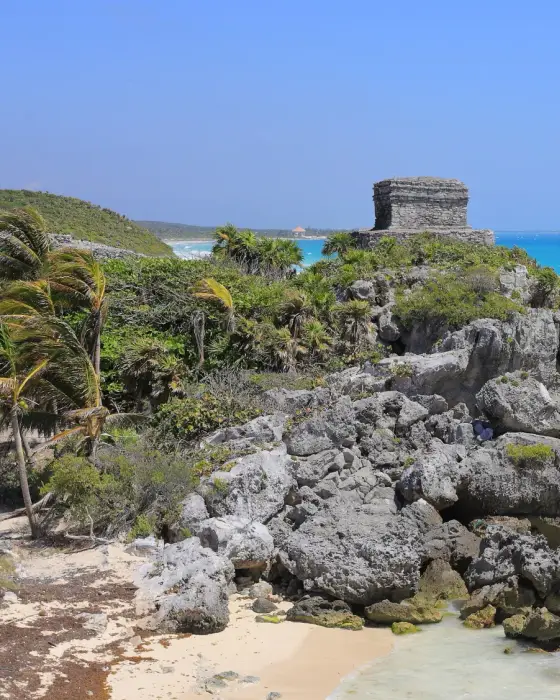
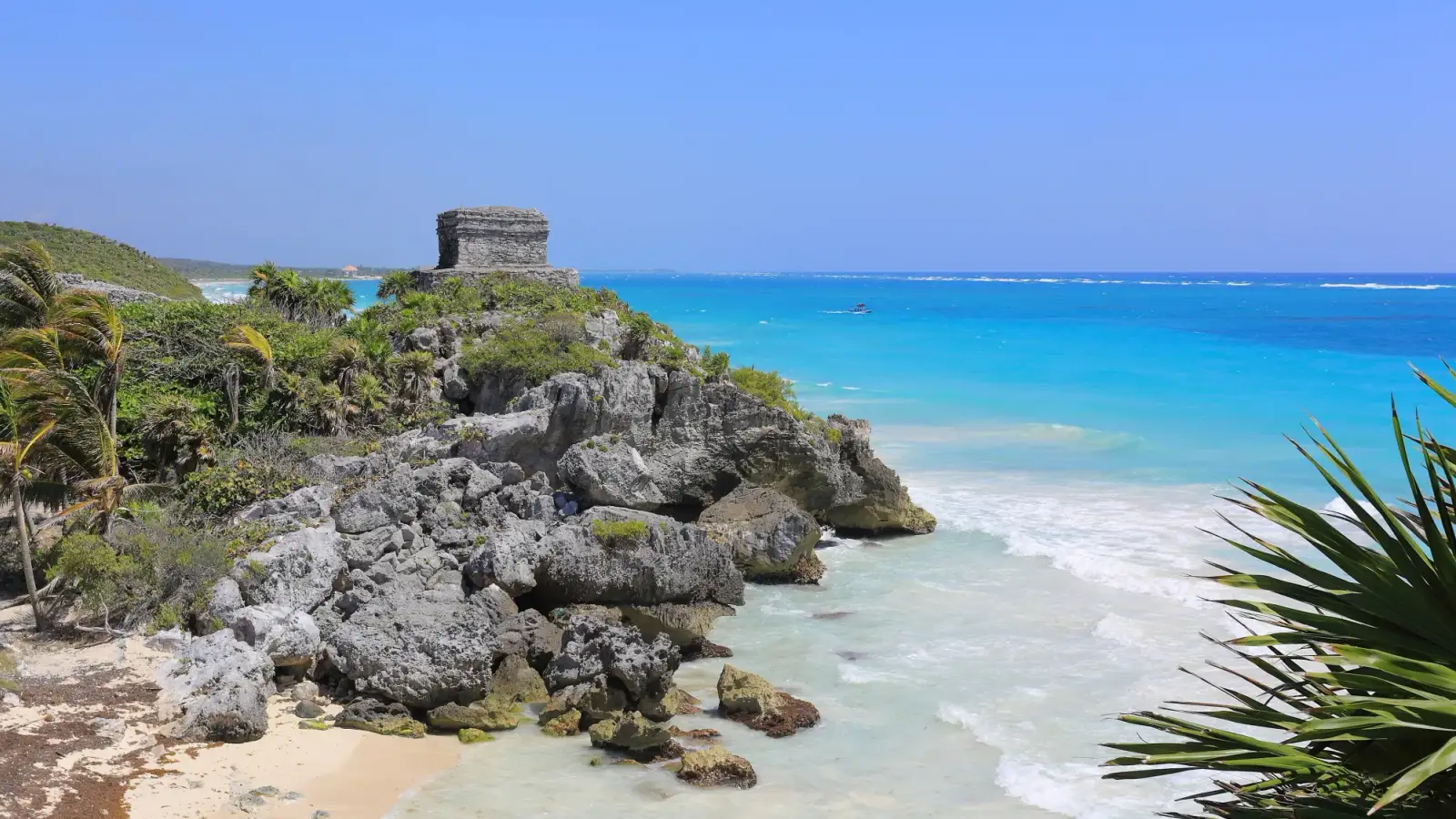
The archaeological site overlooks the coast within the Parque del Jaguar complex. The visitor precinct, public beach entrances and accommodation have different access points and journeys. Choose the arrival point and check the return before adding another stage; the presence of the reef does not guarantee calm seas or permitted swimming.

Tulum Archaeological Site
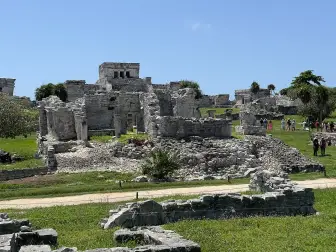
The walled Maya city overlooks the Caribbean coast; according to INAH, the buildings visible today mainly belong to the Middle and Late Postclassic, between 1250 and 1550. The wall has five historic gates and two towers, but the visitor circuit depends on the areas open to the public. INAH lists daily opening from 8am to 5pm, with last admission at 3:30pm; check notices and the entry point before setting out. The archaeological ticket and protected-area charges are separate from the Parque del Jaguar access fee.
The walled coastal city makes the visit worthwhile; check the entrance and 3:30pm last admission, with breaks and open areas.
Check access

Gran Cenote
A semi-open cenote on the Tulum–Cobá road, with vegetation and connections to caverns of the Sac Actun system. Choose only areas open to visitors and confirm access, hours, payment, equipment and swimming rules with the site manager. Caverns do not make it an easy entrance or suitable for every beginner; assess the activity and support your group needs.
A cenote option along the Cobá corridor; check open areas, swimming rules and suitable support for your group, without assuming ease for every beginner.
Check access

Beaches and public access
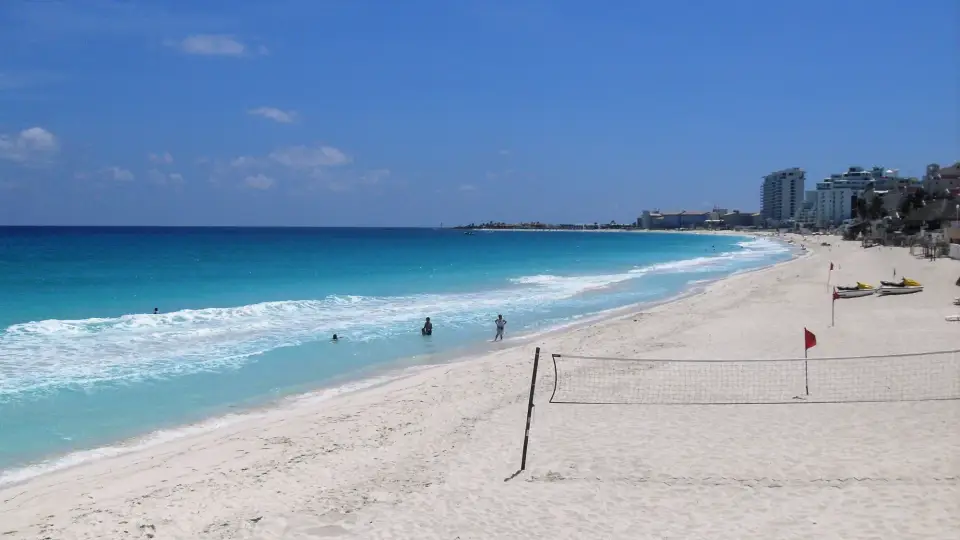
Pescadores and Paraíso can be coastal options after the ruins, depending on the exit open and the journey to your chosen public access. In November 2025, Sectur also announced public entrances at Conchitas and Del Pueblo in the hotel zone; check which are operating on your day. Beach access does not mean free parking, transport, loungers or club services, nor does it require spending at a hotel. Allow time to get there and back; enter the sea only where conditions and local guidance permit, respecting turtle-protection areas.
Choose a public entrance in operation and allow time to get there, take a break and return; paid services and swimming conditions are separate matters.
Check access

El Castillo
This is the tallest structure in the complex, built beside the cliff and religious precinct. The upper temple has three doorways, serpent-shaped columns and niches in its façade; it went through several building stages. View it from permitted paths and respect ropes and signs: its position above the sea is no invitation to climb the monument or approach the edge.
View the complex’s tallest structure from authorised paths; its position above the sea does not require climbing the monument.
Check access
Templo de los Frescos
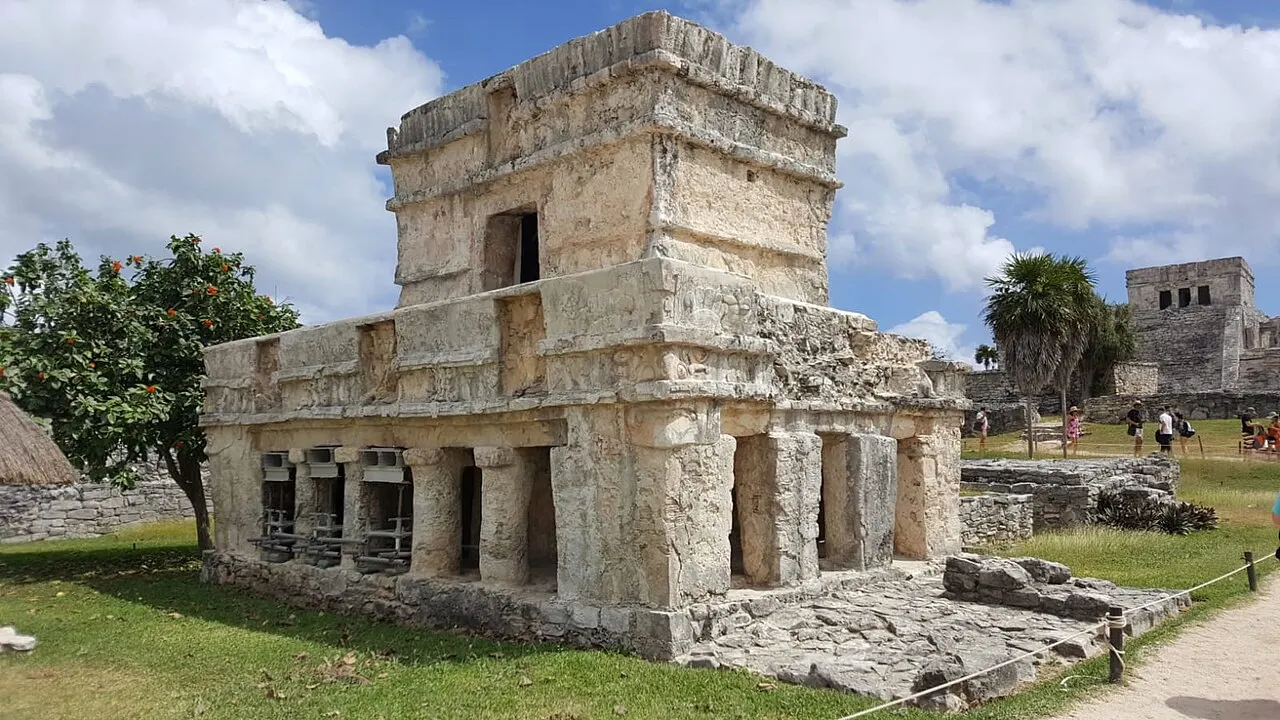
Also known as Building 16 or the Temple of the Paintings, it brings together architecture, reliefs and murals from different construction phases. Figures of deities and plant and aquatic motifs feature in interpretations of its religious art. What can be seen during a visit depends on open sectors and conservation; ask INAH which spaces are accessible before planning to view interior paintings.
Architecture, reliefs and paintings help interpret the site’s religious art; confirm accessible sectors and respect conservation areas.
Check access

Parque del Jaguar
This conservation, cultural and recreational complex brings together the archaeological site and protected areas, including Parque Nacional Tulum, declared in 1981. The Parque del Jaguar refurbishment and expansion was inaugurated on September 7, 2024; it did not create all these areas from scratch. The operator advertises trails, viewpoints and a main entrance through CATVI. To visit the ruins, check the archaeological entrance, its last admission time and the tickets required; park hours do not extend site hours.
It brings together culture and conservation, but park and archaeological access have separate conditions; check the entrance, tickets and hours for each visit.
Check access
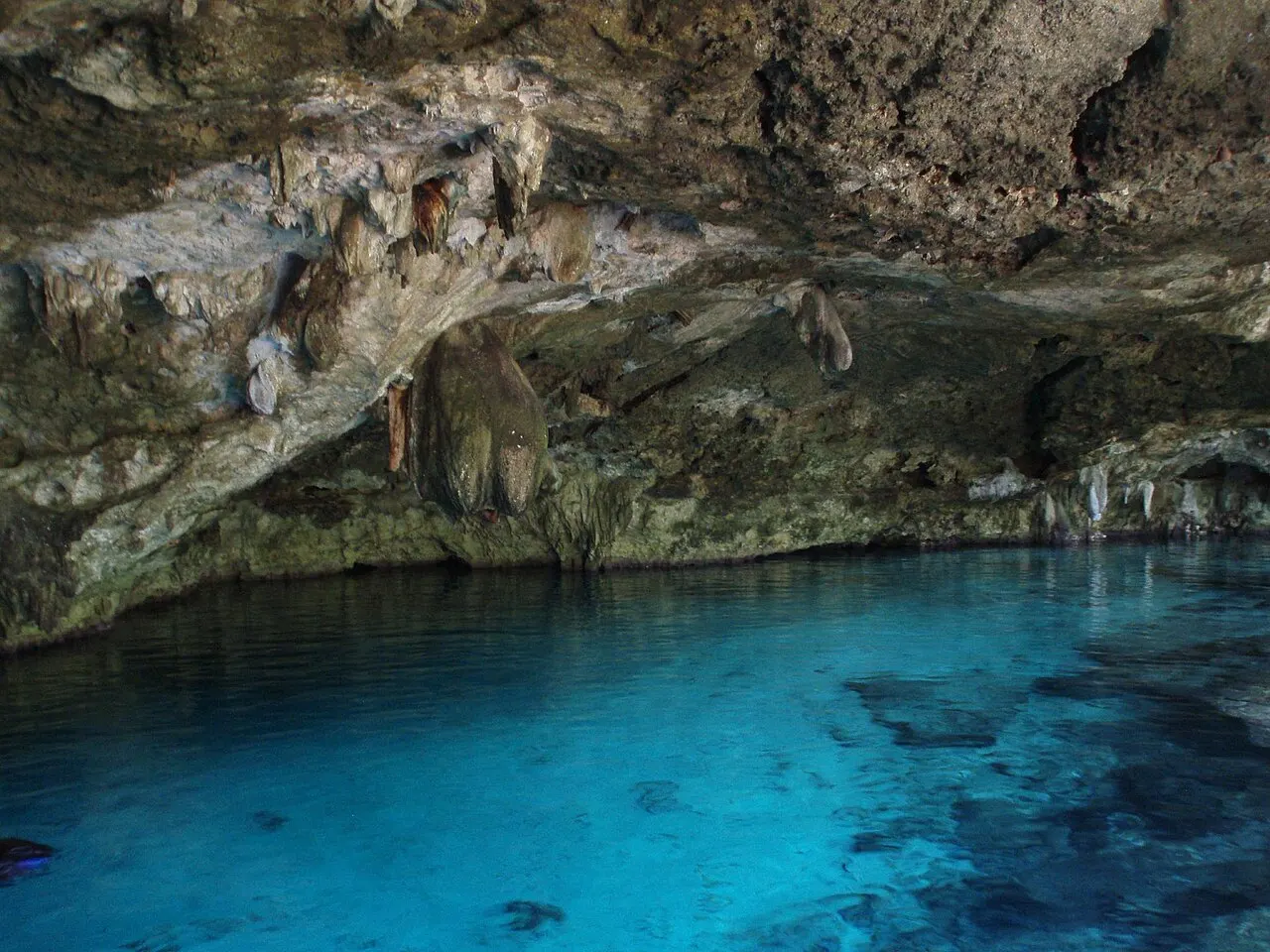
Dos Ojos and the Sac Actun system
Dos Ojos lies along the Highway 307 corridor, in the Ejido Jacinto Pat park. In 2018, the Gran Acuífero Maya research project announced its connection with Sac Actun; the size of an explored system does not define the route available to visitors. The operator distinguishes designated swimming areas, snorkelling services and separately purchased diving; confirm access, guide, equipment and requirements for your chosen activity. Cavern diving is a specific activity with daylight limits and guide assessment; a recreational certificate does not authorise entering passages beyond natural light.
Swimming areas and guided activities have different conditions; check access and equipment without treating recreational certification as permission for passages beyond natural light.
Check access

Cenote Calavera
On the Tulum–Cobá road, its openings resemble a skull from above. Before choosing a visit, confirm hours, ways of entering and leaving the water, equipment and supervision with the site manager; do not count on it being open or empty at 8am. Use only authorised access and assess ladders and swimming ability with your group. Do not turn jumps or submerged passages into an automatic part of the outing.
The openings give the place its identity; check access, hours and water entry and exit, without guaranteeing few visitors or requiring a jump.
Check access

Laguna Kaan Luum
A lagoon south of Tulum, surrounded by mangrove and marsh vegetation, with a cenote inside it. Confirm hours, access, swimming areas and services with the site manager before choosing a visit. Respect marked boundaries; a deep cenote does not grant permission to dive. Arrange sun protection, water and return travel without relying on a night visit or fitting it in after another excursion.
A lagoon alternative for its own programme, depending on access and open areas; do not automatically add it to the return from Sian Ka’an or assume a night visit or diving permission.
Check access
Nilo’s itinerary
Start with the basic programme and choose extensions for the time you have.
Plan my days in the app ↗Day 1 · The ruins, a break and the beach if it fits
Start with the Tulum Archaeological Site if your day allows a morning visit. INAH lists opening at 8am and last admission at 3:30pm; check notices, entrance and tickets before travelling. An early start makes use of the morning, without guaranteeing little heat or few groups.
Within the open areas, view the wall, Templo de los Frescos, Templo del Dios Descendente and El Castillo. Follow the circuit signs, without climbing structures or crossing barriers; bring water and sun protection that comply with entry rules.
Take a break after the visit. At Parque del Jaguar, confirm the exit and chosen public access before continuing to Pescadores or Paraíso; the route depends on the entrance and open areas. The beach is optional, and swimming depends on sea conditions and local guidance.
If you prefer to finish with the archaeological visit, return to town for lunch and rest. For cochinita pibil, check the chosen establishment’s hours and what is available.
In the evening, a marquesita around Avenida Tulum can be a short outing if a cart is open and you feel up to it. Arrange the return to your accommodation, without assuming the entire journey is suitable on foot. On an arrival or departure day, preserve transfer and check-in or check-out time instead of requiring every stage.
Day 2 · One chosen cenote, with a break and a return plan
Choose your visit before setting out: Gran Cenote as the initial proposal, Calavera as an alternative along the Cobá corridor or Dos Ojos as an alternative along Highway 307. These are programme choices, not three compulsory stops. Confirm hours, admission, payment, equipment and the connection to your chosen entrance.
For Gran Cenote, stay in areas open to visitors and follow the site manager’s rules for swimming, life jackets and supervision. Arrange outward and return travel according to the address; do not assume a continuous cycle lane or a colectivo stopping at the gate.
If you prefer Calavera, replace the Gran Cenote visit and check how to enter and leave the water. Do not rely on an 8am opening or an empty pool; jumping is not a requirement of the itinerary.
If you choose Dos Ojos, allow the part of the day needed for the activity and travel. The operator lists opening from 8am to 4pm and says a reserved slot suggests arrival without guaranteeing an exact admission time. Check notices and leave a margin. Swimming in designated areas, snorkelling and diving have different conditions; diving requires guide assessment, experience and appropriate documents, without automatic access to passages beyond natural light.
After your chosen visit, take a meal and rest break and follow the arranged return plan. Reduce the programme on arrival or departure days, preserving transfers and check-in or check-out. Do not extend a bicycle return into the night just to fit in another cenote.


If you stay longer
Day 3 · Choose a regional excursion, with a break and return travel
For Muyil, arrange travel and check access before setting out. INAH announced the site’s reopening on February 10, 2026 and lists visits from 8am to 5pm, with last admission at 4:30pm. Leave time for the site and follow open routes; a ruins visit does not automatically include a boat trip or canal float.
If you choose an activity on Sian Ka’an’s lagoons and canals, confirm the meeting point, route, guide, equipment, water rules, inclusions, total cost and return with an authorised provider. Muyil has different programmes; departure, duration and conditions depend on the activity and weather. Do not treat boating and floating as guaranteed parts of every visit.
Kaan Luum can replace the excursion, with its own confirmed access and return. Check hours and swimming areas; do not add it as a compulsory late-afternoon stop or count on admission at night.
Leave time for a meal, rest and the arranged return. On arrival or departure days, reduce the programme and preserve transfers and check-in or check-out. When choosing fish, confirm the portion and pricing method before ordering.
Cobá is another alternative for this day along the Highway 109 corridor. INAH lists visits from 8am to 5pm, with last admission at 4pm, and inaugurated the new Nohoch Mul staircase on December 7, 2025. Check that day’s notices and use only the open access if you wish and are able to climb; viewing the monument from the ground remains a choice. Arrange outward travel, the visit, a break and return without combining Cobá with Muyil and the lagoon.
Food
 AI illustration
Cochinita pibil
Pork marinated in achiote and sour orange. In the traditional preparation, it cooks in banana leaves in the pib, an underground oven; other cooking methods are also used today. It may come in a taco or torta, with pickled red onion and habanero salsa. The regional custom of eating it in the morning does not determine each kitchen’s hours in Tulum: check service at your chosen place.
 AI illustration
Panuchos and salbutes
Antojitos made with fried corn masa. A panucho is a tortilla filled with beans before frying; a salbute uses shaped and fried masa without that filling. Toppings vary and may include shredded chicken, lettuce, tomato and pickled onion. Versions are served in kitchens, markets and restaurants: check the menu and service hours at your chosen place in Tulum to fit the meal into your day.
 AI illustration
Sopa de lima
Chicken or turkey broth with the lima citrus used in Yucatecan cooking and strips of fried tortilla. Tomato and other additions may be included. The citrus lends aroma to the broth; ingredients and portion size vary by kitchen. Check service at your chosen place and leave a meal break, even when the main outing is to the beach or cenotes.
 AI illustration
Tikin xic
Fish seasoned with achiote recado and sour orange, roasted in preparations that vary between kitchens. Some use banana leaves; there are grilled and oven-cooked versions. Before ordering, check the available species, whether it comes whole or as a portion, the sides and whether the charge is per dish or by weight, so you understand the total.
 AI illustration
Marquesita
A thin, crisp shell rolled with queso de bola (Edam), with optional cajeta, chocolate or another addition. Sweet and savoury in the same bite. To try one in Tulum, check where and when your chosen vendor serves before adding the stop to your outing.
 AI illustration
Ceviche and aguachile
Ceviche may contain fish or shrimp with citrus; aguachile combines shrimp, lime and chilli in versions that may include cucumber and onion. Ingredients, preparation and chilli intensity vary: check before ordering. To reduce infection or food-poisoning risks, Mexico’s Ministry of Health recommends thoroughly cooked seafood and avoiding raw preparations. Lime is not sufficient to eliminate pathogens; prefer a cooked option rather than treating a busy restaurant as a safety guarantee.
 AI illustration
Chaya
Leaves of a shrub used in the cuisine of the Yucatán Peninsula, known as Maya spinach. They feature in soups, stews and tamales such as brazo de reina. Preparation matters: Mexico’s Ministry of Agriculture recommends preferring cooked leaves. Check how they were prepared before ordering, including in drinks; the presence of lime does not confirm that an appropriate process was followed.
Xtabentún

A sweet, aromatic Yucatecan honey and anise liqueur. It may be served neat, on ice or in mixed drinks, depending on the product and venue. If you want to try it, check the label or ask about ingredients, alcohol content, serving size and price for your chosen drink.
Day trips
Cobá
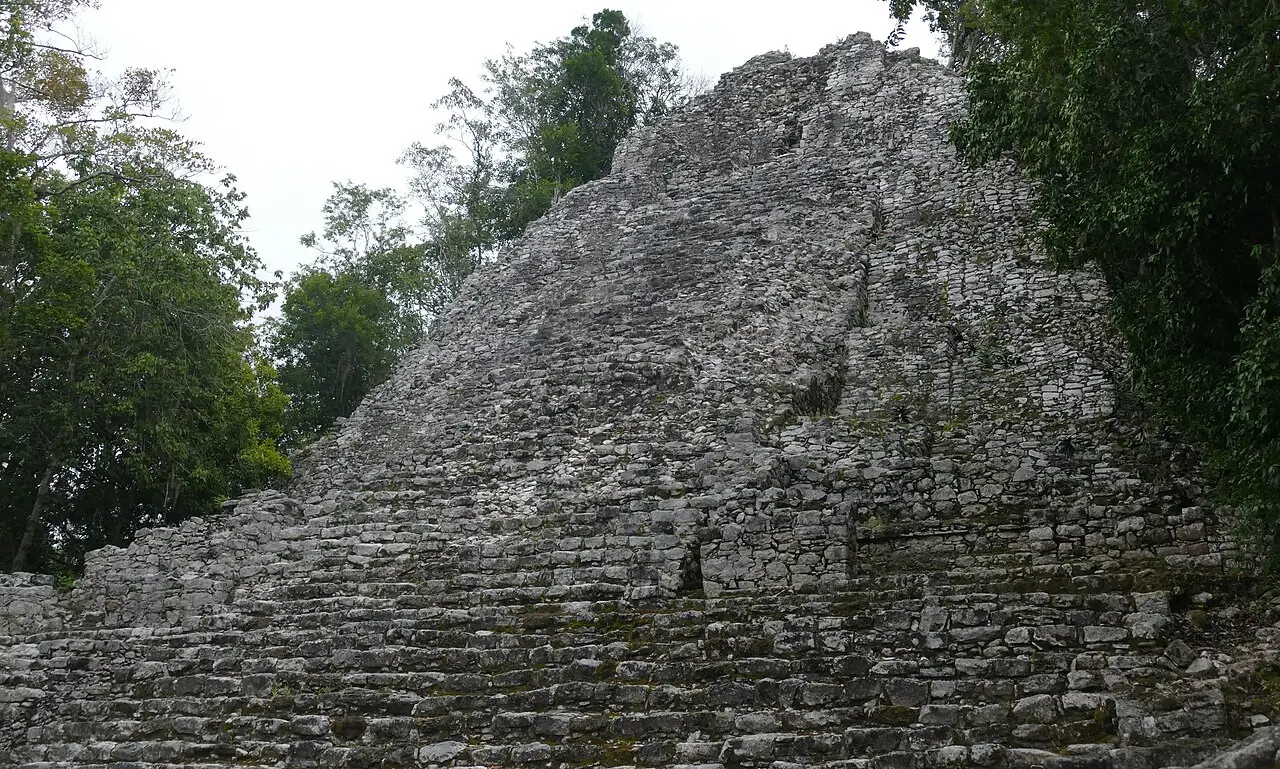
Cobá is a Maya city along the Highway 109 corridor from Tulum. Its sacbeob network connects building groups and includes a roughly 100-km route to Yaxuná. INAH lists opening from 8am to 5pm, with last admission at 4pm. The new staircase on the 42-metre Nohoch Mul was inaugurated on December 7, 2025, resuming the ascent suspended in 2019; check notices and follow only the open access. Choose a route to suit your group, heat and mobility; confirm any bicycle or tricycle service on site without assuming availability. Arrange transport from your address and the return, leaving time for a meal and a break; 45 minutes by car or colectivo is not a guarantee.
Sian Ka'an and Muyil
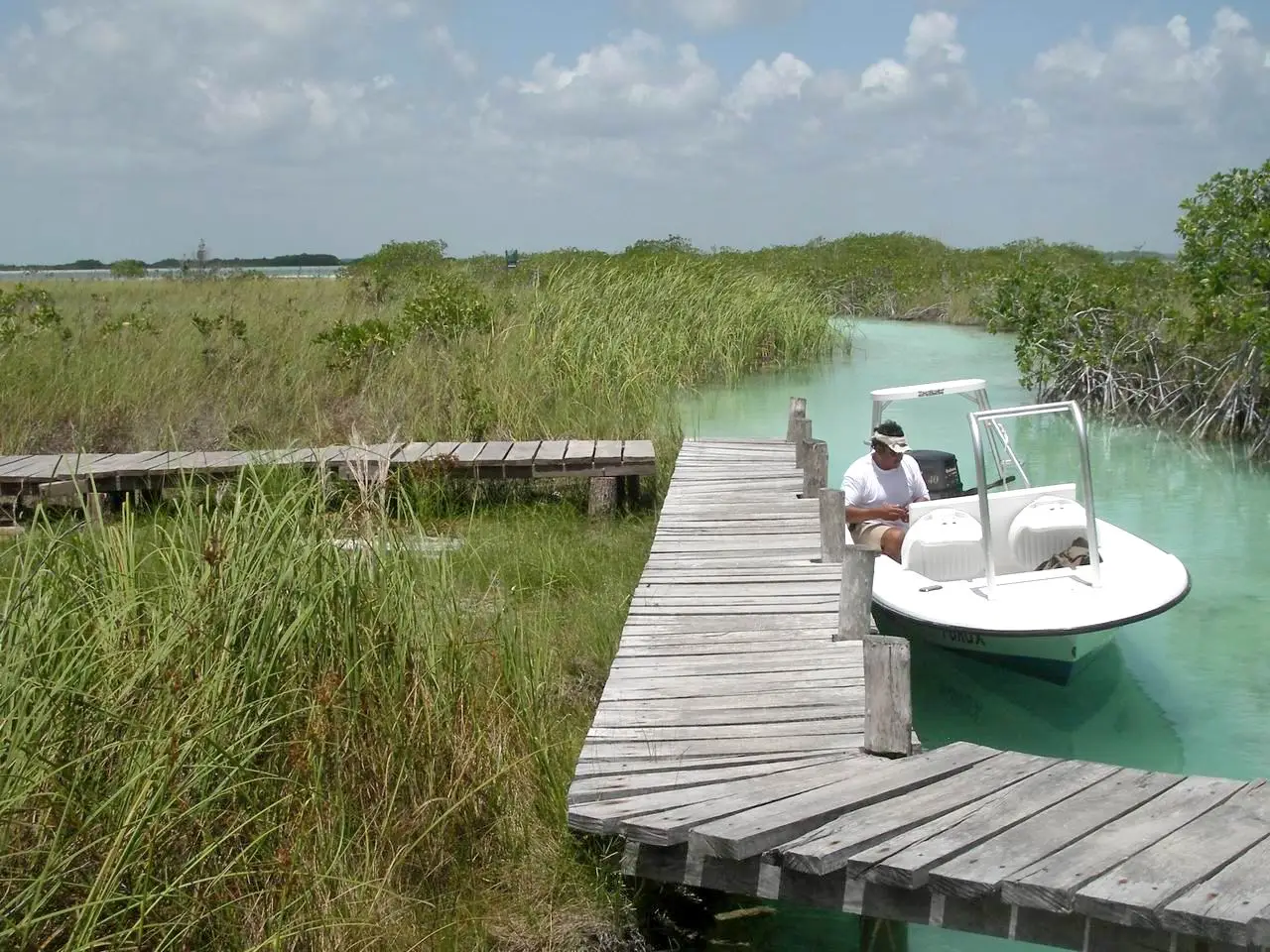
Sian Ka’an comprises tropical forests, mangroves, lagoons and a marine area with reefs across roughly 528,000 hectares; it has been a biosphere reserve since 1986 and a World Heritage Site since 1987. Muyil, on Highway 307 southwest of Tulum, is one regional access point. The archaeological site reopened on February 10, 2026; check hours and open routes. Ruins, boating and canal floating are distinct components: compare programmes, authorised providers, equipment, rules, included fees and duration before arranging the visit. Preserve a break and return travel; do not automatically add Kaan Luum. Travelling along the coastal strip to Punta Allen is a separate programme, subject to road and weather conditions, rather than a guaranteed short extension.
Valladolid and Chichén Itzá
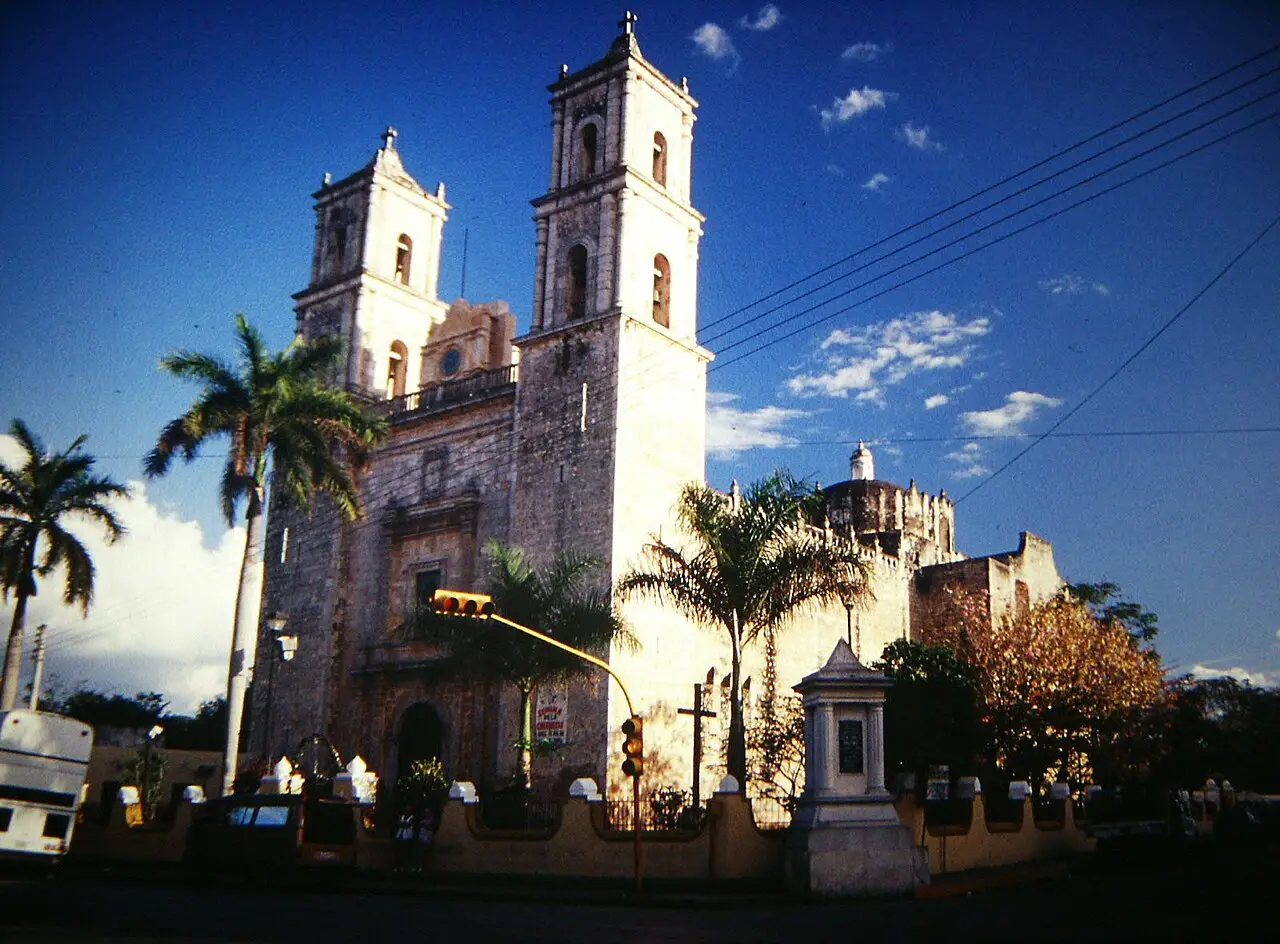
Valladolid, in Yucatán, includes a historic centre, the former San Bernardino de Siena convent in the Sisal neighbourhood and the Zací cenote in town. Choose the places you want to visit and check their access and hours. Chichén Itzá, near Pisté, can be a separate visit or a planned combination with Valladolid, without requiring the convent and cenote on the same day. INAH lists general opening at 8am; confirm last admission and notices for your date, especially during equinox operations. An early start makes use of the morning without guaranteeing an empty El Castillo or arrival before other groups. Yucatán is one hour behind Quintana Roo: arrange meeting and return times using each place’s local clock. Plan outward travel, the visit, a meal, rest and the return from your departure address, without treating 1 hour 30 minutes or 2 hours 15 minutes as guaranteed journey times. On an arrival or departure day, preserve transfers and check-in or check-out before deciding on the excursion.
Where to begin
The ruins, a break and the beach if it fits
Start with the Tulum Archaeological Site if your day allows a morning visit. INAH lists opening at 8am and last admission at 3:30pm; check notices, entrance and tickets before travelling. An early start makes use of the morning, without guaranteeing little heat or few groups.
One chosen cenote, with a break and a return plan
Choose your visit before setting out: Gran Cenote as the initial proposal, Calavera as an alternative along the Cobá corridor or Dos Ojos as an alternative along Highway 307. These are programme choices, not three compulsory stops. Confirm hours, admission, payment, equipment and the connection to your chosen entrance.
Money
The currency is the Mexican peso (MXN). Exchange rates change daily: Banco de México’s FIX rate is a reference, not necessarily the rate your bank, card or establishment will apply. Before paying, check the billing currency, conversion and fees. A dollar price cannot be compared directly with one in pesos.
To plan your budget, start from the average in the quick facts and get accommodation quotes for your travel dates: on the beach road, prices can run well above that average. Add transport between town and beach, meals, admission and your chosen activities, and compare totals including taxes, cancellation terms and paid services; confirm what is included before booking. In restaurants and bars, tipping is voluntary: check the bill and ask about charges you did not authorise.
Confirm payment methods before ordering and carry a small reserve of pesos for payments that require cash. The official Visitax portal states that the contribution applies to foreign tourists visiting Quintana Roo; check the current amount and conditions there and keep your receipt. It is separate from admission to a park or archaeological site.
Getting there and around
TQO airport and Maya Train stations
Felipe Carrillo Puerto Airport (TQO) began operations on December 1, 2023. When comparing arrival through Tulum or Cancún (CUN), consider the full journey to your accommodation: disembarkation, baggage, waiting and transfers, not just the flight. Ask the operator about departure times, boarding point, destination and price of a bus or transfer; arrival in the town centre is not arrival in the hotel zone.
The Maya Train has distinct stations for Tulum and Tulum Aeropuerto. Check the official channel for the station on your ticket, the service on your date and the connection between airport, station and accommodation; do not treat a station as the air terminal itself or the town centre. The network expanded in stages and completed its circuit in December 2024; the Puerto Morelos and Playa del Carmen inauguration on February 29 does not confirm service in Tulum on that date. Without reconfirmed timings and transfers, do not schedule the ruins’ 3:30pm last admission immediately after arrival.
Between town, beach and regional destinations
Choose transport according to your departure address, selected access point and return time. The municipality documented local and regional colectivos in its January 2026 report; confirm the current route, boarding point, drop-off, fare and last departure with the operator. Do not assume a regional service enters the hotel zone or stops anywhere along the highway. For cycling or walking, check the entire route, suitable conditions, heat and daylight; arrange another form of transport if they are unsuitable.
ADO maintains a terminal in central Tulum and advertises connections to Cancún, Playa del Carmen, Bacalar, Mérida and Cancún airport. Check the departure for your date and correct terminal; allow for the journey between terminal and accommodation, waiting and a boarding margin. For a taxi or transfer, confirm driver, destination, total and payment before boarding. When comparing a rental car, include parking, destination access, fuel and road conditions; it is not compulsory for every outing and does not remove the need to confirm your return.
Safety
Tulum calls for caution even in tourist areas. Consular advisories report crime and violent incidents in Quintana Roo that affected bystanders; avoiding drugs does not make the risk low or remove the possibility of being affected. Check current advice for the destination and follow local guidance. After dark, favour well-lit pedestrian streets and arrange your return before setting out.
For travel, use an authorised service or transport arranged with the establishment, and confirm the driver, destination, price and payment. Do not treat a light as a solution for a cycling route with poor visibility or unsuitable traffic: check the route during the day and choose another mode when conditions are unsuitable. Keep your belongings secure and do not leave drinks unattended. In an emergency, call 911.
At the beach, follow flags, notices and local guidance; sea conditions change, and lifeguard presence needs checking at your chosen stretch. Use safe drinking water, bottled with an intact seal or properly treated. To reduce mosquito bites, use repellent according to its label and clothing that covers your skin; protection also matters during the day, not only at dawn or dusk. If you develop a fever or other symptoms after exposure, seek medical care and mention your trip.
Before buying tickets, check entry requirements with INM and the Mexican consulate for your passport, residence, purpose and travel date. Visas, any exemption and accepted documents depend on these conditions; the language of this guide does not determine your nationality or right to enter.
Etiquette tips
Clothing for the beach and town
If your day combines beach and town, bring dry clothes for the market, restaurant or terminal. Check the establishment’s rules and choose footwear suited to the route; a simple change also avoids spending the rest of the day in wet swimwear.
Check the rules before swimming in a cenote
Each visit requires checking the site’s rules for showers, cosmetics, life jackets and swimming areas. Dos Ojos states that showering is mandatory and prohibits sunscreen, repellent and cosmetics when entering the water. For other cenotes, check conditions with the site manager before going; do not assume “biodegradable” means permitted. Use protective clothing where appropriate to the activity and maintain sun and mosquito protection outside the water.
Confirm the ride and payment before boarding
Use an authorised service or transport arranged with the establishment. Before boarding, confirm the driver, destination, price or calculation method, currency and payment method. If there is an app or published fare, check that service’s terms; negotiating an informal price is not a rule for every ride in Mexico.
Greet and make your request
You can begin a conversation in a shop or restaurant with “buenos días” or “buenas tardes” and make your request with “por favor”. If there is a queue or someone is being served, wait your turn.
Learn about the ceremony’s origins
Maya religious practices have distinct community and regional contexts. Before booking an activity advertised as a “Maya ceremony” or temazcal, ask who leads it, where its practices come from and how the organiser describes their relationship with the community. Also check duration, stages, participation conditions and whether you can leave.
Don't touch the turtle or the coral
Respect signs and protected areas without touching turtles or coral. On nesting beaches, follow the responsible team: do not step on nests, handle hatchlings or block their path to the sea. Visitors on nesting-observation walks do not use flash or their own lighting. For turtle-observation swimming in Akumal, confirm that the activity is operating and that the outing is authorised; the circuits require a certified, authorised guide, a life jacket and respect for designated routes and distances. Sea conditions and notices from the authorities may suspend the outing.
Mistakes to avoid
Booking “in Tulum” without checking the address and connections
Before booking, check the exact address and connections to the places you want to visit, restaurants and services. Compare accommodation and travel together, including boarding, waiting and the return. The name “Tulum” or “hotel zone” does not establish the distance to the beach, a suitable walking route or a need for taxis for every purchase.
Treating the month as a beach and price guarantee
Before booking, compare historical rainfall, the forecast near your travel dates, sargassum bulletins and conditions at your chosen beach. Keep breaks and an alternative for the day, and check change or cancellation terms. Check room rates and travel for your dates rather than counting on clean winter beaches, unavoidable summer sargassum or half-price hotels in September.
Relying on a single payment method
Check whether each establishment accepts cards and which currency it charges in. Carry a small reserve of pesos for expenses requiring cash; do not make your return depend on finding an ATM or a ride-hailing car at the last minute. Arrange transport and payment methods before setting out.
Treating a light as the solution for cycling back
Before choosing a bicycle for the beach, check the entire route and your return time. Lights and visible clothing do not remove the risks of poor visibility, traffic or inadequate cycling space. If conditions are unsuitable, arrange another form of transport and payment before setting out; do not decide how to return only after dark.
Stacking regional programmes into one day
Choose between the Tulum ruins with a nearby visit, a cenote, Cobá or a programme in Sian Ka’an. Compare the full journey, access hours, booked activity, waiting and return before combining visits. The Muyil archaeological site, boating and floating have their own conditions; allow the time required by your chosen activity and travel. Preserve meals, rest and arrival or departure commitments.
Useful phrases
¿Cuánto cuesta hasta esta dirección?
How much to this address? Show the destination and agree the total price, payment method and return arrangements before the ride.
¿Me trae la cuenta, por favor?
Could you bring the bill, please? One way to ask for the bill in Spanish; check its items before paying.
¿Está incluida la propina?
Is the tip already included? Check the bill’s items; tips are voluntary in restaurants and bars, with no compulsory percentage.
Sin picante, por favor. La salsa aparte.
No chilli, please. Sauce on the side. Also ask whether the dish already contains chilli in its preparation.
Ma'alob k'iin
Good morning, in Yucatec Maya. If you want to learn the pronunciation, ask the person to repeat the greeting.
Yuum bo'otik
Thank you very much, in Yucatec Maya. Ask the person to repeat the expression to learn the pronunciation.
Districts
Tulum Pueblo (Centro)
The town centre lies beside Federal Highway 307 and houses the ADO terminal. It can serve as a base if you arrive by bus and want to explore town. Compare accommodation, meals and the route to the terminal by address and prices for your date. For a beach day, add the outward and return journeys to your chosen access point.
Zona Hotelera Norte
Along the coast near Parque del Jaguar, first choose the beach and access point you intend to use. Check the current entrance, hours and route through official channels; beach access and visits to the park or archaeological zone have different conditions. To combine swimming and the ruins, include travel between entrances and confirm the site’s last admission time. Assess the whole route before deciding to walk.
Zona Hotelera Sur / Boca Paila
When comparing accommodation along the Carretera Tulum–Boca Paila, check the address and its connection to the beach, restaurants and services. Ask the establishment about access, lighting along the route and transport options; the zone name alone does not mean shopping or meals will always require a taxi. Add these journeys to the cost of your stay before booking.
Aldea Zamá
Aldea Zamá is a planned residential area between the town centre and coast. When comparing apartments or other accommodation, check the address, included services and connections to your itinerary’s places. Ask about current street, pavement and access conditions, including after rain. Add outward and return journeys to the cost of your stay to decide whether this base suits your trip.
La Veleta
In La Veleta, assess accommodation by its address and connections to the places you want to visit. Check current street and access conditions with the establishment, especially after rain, and arrange the outward and return journeys. The neighbourhood name does not guarantee a low price, a walkable route or a need to rent a bicycle or car.
Región 15 and Villas Tulum
Región 15 and Villas Tulum are distinct areas of the town. When comparing accommodation in either, check the exact location, included services and nearby food options. Assess connections to the centre, beaches and outings, including the return journey. Compare the total cost of accommodation and transport for your dates, rather than choosing by the area’s name alone.
Cobá
Cobá is a locality in the municipality of Tulum beside the archaeological site, along the Highway 109 corridor. If you choose accommodation there, check the address, meals and included services, and arrange connections to the other places on your trip. For a site visit from Tulum, arrange outward travel, admission, a break and the return; consult INAH’s hours rather than treating a generic distance as a guaranteed journey time.
Punta Allen
Punta Allen, also known as Javier Rojo Gómez, is a community in Sian Ka’an associated with fishing and community tourism. Travel along the coastal strip requires its own programme: confirm the route, road and weather conditions, and return arrangements with your transport provider. If staying overnight, ask your accommodation about meals, electricity, communication and payment. For reserve activities, check the authorised provider, meeting point, equipment, rules and inclusions; do not treat Punta Allen as an automatic extension of a Muyil visit.
History
AD 564 · The oldest stela
Stela 1 bears the date AD 564. INAH presents it, alongside elements of other structures, as evidence of phases earlier than the buildings visible today. These traces suggest an older history, without establishing one founding date or confirming that the stela came from elsewhere.
1250–1550 · The walled Maya city
According to INAH, the buildings visible today mainly belong to the Middle and Late Postclassic, between 1250 and 1550, with earlier traces. The wall encloses the monumental core beside the Caribbean. The name Tulum, associated with a wall or enclosure, is more recent than the city; INAH’s mini-guide records Zamá in sixteenth-century sources.

1400–1550 · The coast and the canoes
In the Late Postclassic, Tulum took part in coastal exchange. INAH considers it possible that the inlet served fishermen and merchants boarding boats. Regional navigation used canoes and connected maritime, river and land routes; this does not establish that Tulum controlled the whole network. At the site, the House of the Cenote stands above brackish water, and a chultun near another building was intended for water storage.
 AI illustration
1518 · Grijalva's fleet
During Juan de Grijalva’s coastal expedition in 1518, chaplain and chronicler Juan Díaz described a large city. INAH considers that it might have been Tulum: the identification remains a hypothesis, although the account is important to the history of the inhabited coast.
16th–17th c. · Ruins and vegetation
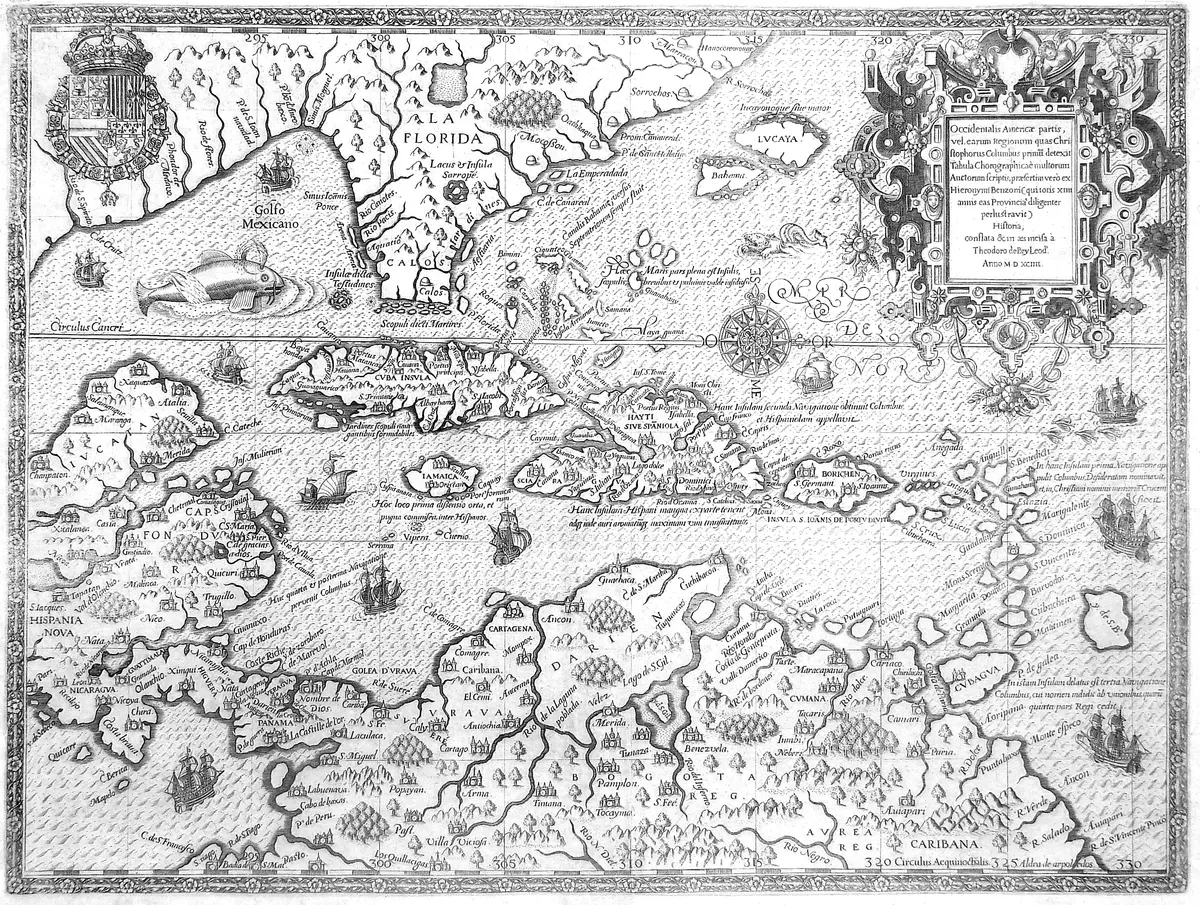
Spanish conquest and colonisation had a major impact on the region. According to INAH, Juan de Reigosa already described Tulum as a city in ruins in the Relaciones de Yucatán of 1579. Centuries later, Stephens’s account published in 1843 describes trees and vegetation among the buildings.
1843 · Stephens and Catherwood
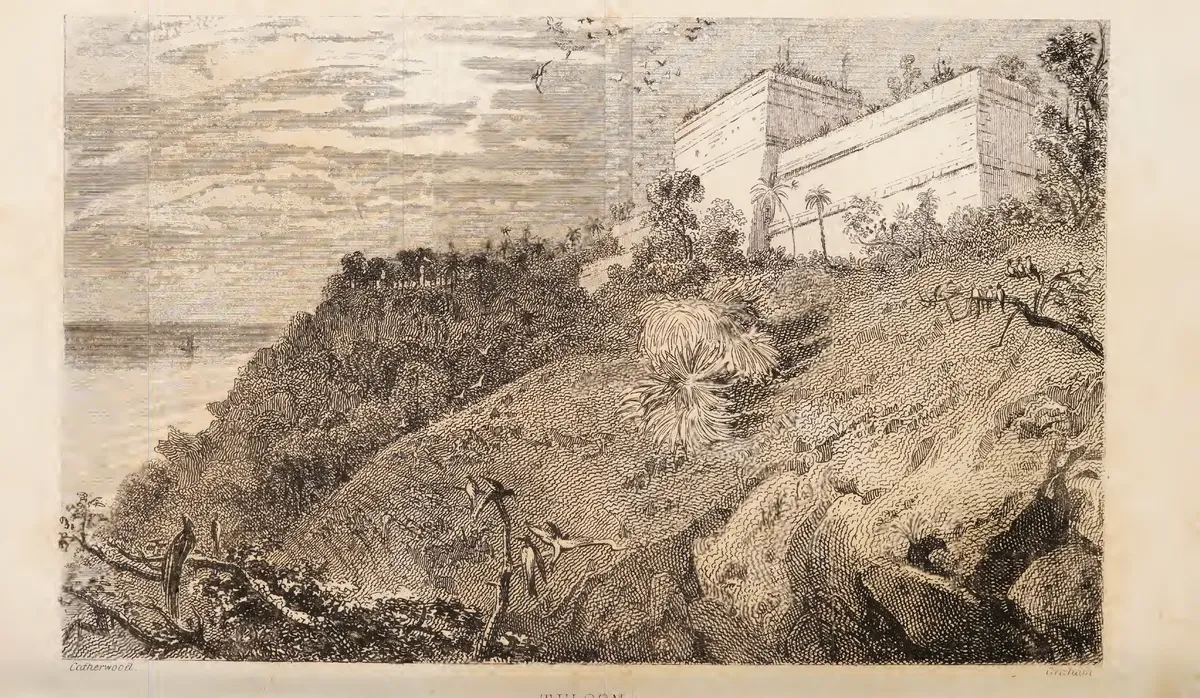
The second volume of “Incidents of Travel in Yucatan”, published in 1843, recounts John Lloyd Stephens and Frederick Catherwood’s visit to the ruins. It describes the coastal approach and help from a local guide, one of Molas’s sons. Catherwood’s plates record front and back views of the Castillo; the book’s date distinguishes publication from the earlier journey.

1847–1901 · Caste War
The Caste War began in 1847 amid the loss of Maya land and struggles for political control of Yucatán. Tulum was a sanctuary of the Talking Cross; INAH records María Uicab leading it in 1871.
1902 / 1974 · Territory, then state
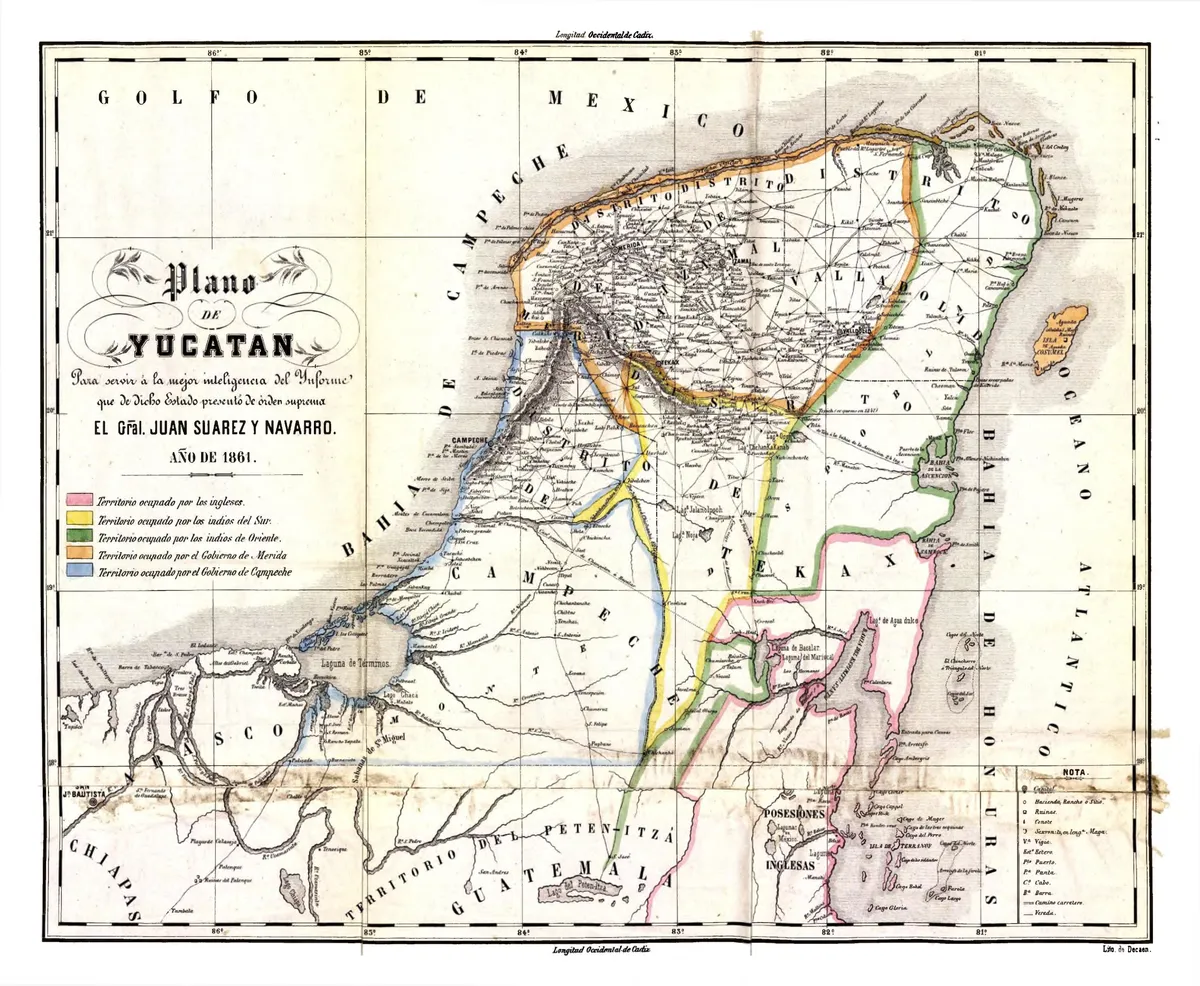
Created on November 24, 1902, the territory of Quintana Roo combined military objectives, control of the border with Belize and exploitation of forest resources. It became a state on October 8, 1974.
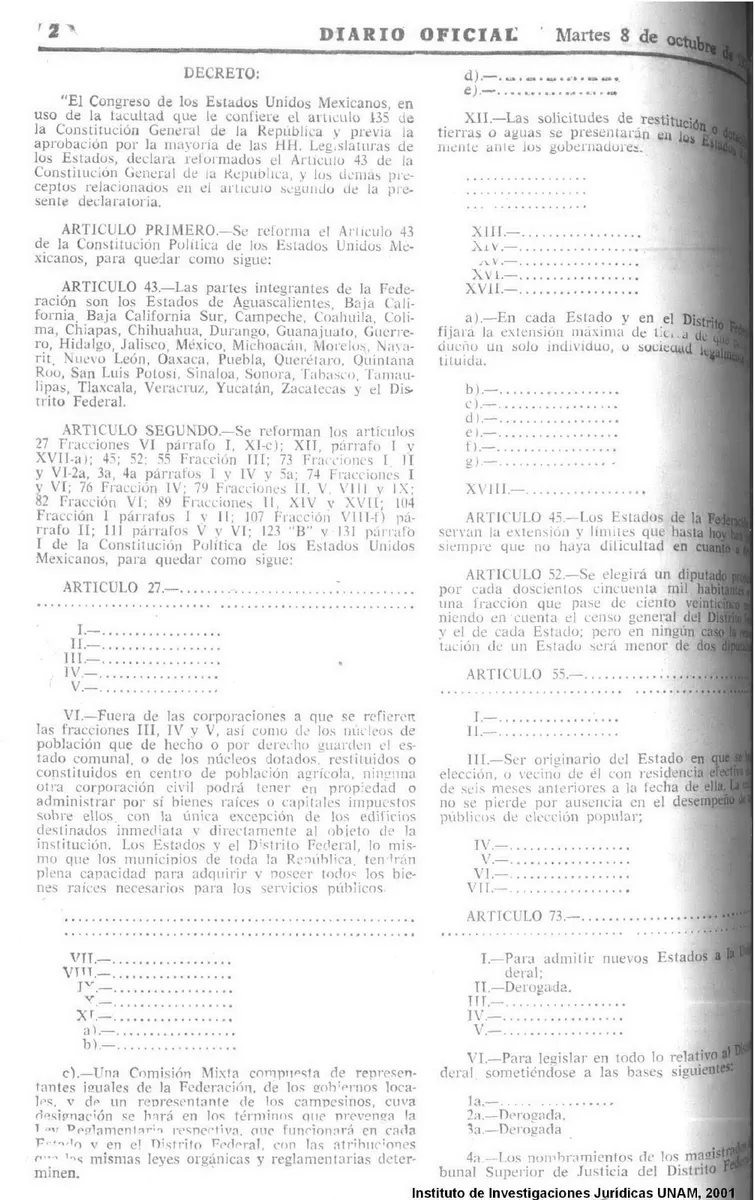
1969–1974 · Cancún reorganizes the coast
INAH dates the paved Carrillo Puerto–Tulum and Playa del Carmen–Tulum roads to 1969 and 1972. The Cancún project began with INFRATUR, created in 1969; FONATUR only emerged in 1974. Roads and tourism investment strengthened connections along this coast.

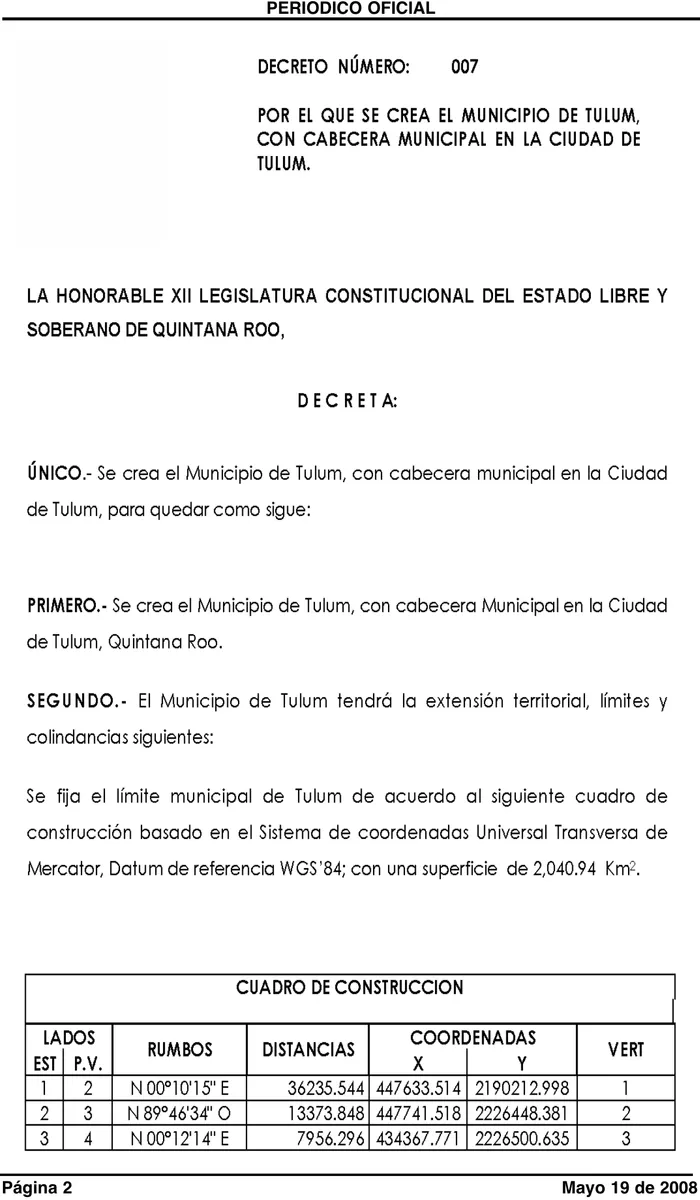
2008 · Its own municipality
The decree creating the municipality of Tulum, separated from Solidaridad, was approved on May 6, 2008 and published on May 19. Tulum became its municipal seat; this administrative change is a distinct stage from tourism expansion.
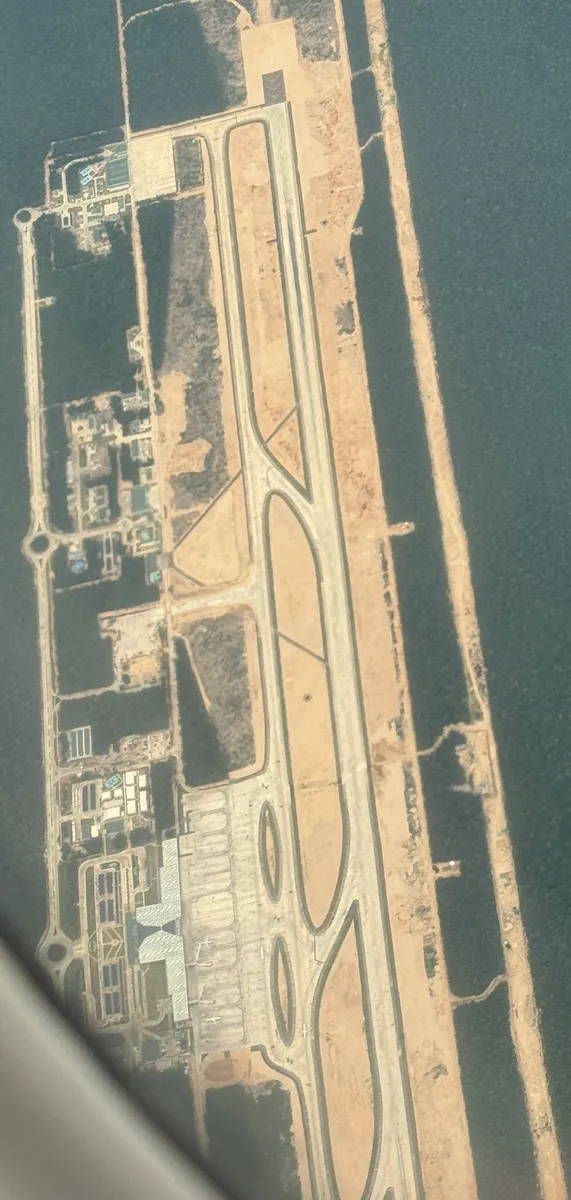
2023–2026 · Airport, park and new entry rules
Felipe Carrillo Puerto Airport (TQO) began operations on December 1, 2023. On September 7, 2024 the Parque del Jaguar refurbishment and expansion was inaugurated alongside the Museum of the East Coast. The Maya Train completed its circuit in December 2024, including the connection from Tulum Aeropuerto; the February 29 inauguration that year concerned Puerto Morelos and Playa del Carmen, not the arrival in Tulum. On July 20, 2026 a decree took effect distinguishing the Parque del Jaguar fee from the Parque Nacional Tulum and archaeological-site charges.
Complete history
Water in the limestone and archaeological complex
The region’s limestone landscape allows rain to infiltrate and circulate through underground cavities; cenotes expose parts of this network. In the archaeological complex, INAH describes the House of the Cenote above a brackish-water deposit and a chultun, a cavity prepared to store water, near the House of the Chultun. These are distinct pieces of evidence: a cenote alone does not demonstrate a freshwater supply for the entire city.
The monumental complex and coastal exchange
According to INAH, the buildings visible today mainly date from 1250–1550, with earlier traces. Palaces, temples, murals and the wall help identify the organisation of the complex and the East Coast style. The city participated in coastal exchange; INAH’s mini-guide places it within the ancient province of Ecab in the Late Postclassic. The inlet is interpreted as a possible canoe boarding and arrival area. Distinguish this local evidence from the regional navigation network, without attributing control of the entire route or one exclusively commercial purpose to Tulum.
Accounts of the coast and site
INAH treats the identification of Tulum with the large city described by Juan Díaz during Grijalva’s expedition in 1518 as a hypothesis. It also records Juan de Reigosa’s description of the ruined city in 1579 and a brief mention by Juan José Gálvez to Juan Pío Pérez in 1840. Stephens and Catherwood visited the site in the nineteenth century; Stephens’s account, with engravings based on Catherwood’s drawings, was published in 1843. These documents allow observations from different periods to be compared with later archaeological investigations.
The Caste War and the Talking Cross (1847–1901)
The Caste War began in 1847 amid the loss of Maya land and struggles for political control of Yucatán. The Cruzob organized around the Talking Cross and Chan Santa Cruz, today Felipe Carrillo Puerto. Tulum also housed a sanctuary: INAH records María Uicab leading it in 1871. The federal occupation of Santa Cruz in May 1901 marks a change in regional control; it does not end Maya cultural life. The creation of the territory of Quintana Roo on November 24, 1902 combined action against the rebels, control of the border with Belize and interests in forest resources.
New gateways, older protected areas
Felipe Carrillo Puerto Airport began operating in December 2023. The Parque del Jaguar refurbishment and expansion was inaugurated in September 2024 alongside the Museum of the East Coast. The complex brings together areas with distinct legal histories: Parque Nacional Tulum was declared in 1981, the Jaguar flora and fauna protection area in 2022, and the Tulum-Tancah archaeological monuments zone in 1993. It is not a single protected area created in 2023–24.
The Maya Train completed its circuit in December 2024, with a connection from Tulum Aeropuerto; the February opening of Puerto Morelos and Playa del Carmen must not be confused with Tulum’s. In July 2026, the new decree separated the Parque del Jaguar access fee from the Parque Nacional Tulum and archaeological-site charges. For a visit, these new gateways do not remove the journey between terminal, station, accommodation and entrance: organise each connection and leave room for queues, rest and admission time.
The buildings visible at the site today mainly date from 1250–1550, with traces of earlier phases. The modern municipality of Tulum was created in 2008.
Geography and shape of the city
Porous rock and the water underneath
Tulum lies on the Caribbean coast of the Yucatán Peninsula, in a limestone landscape where rain infiltrates pores, fractures and cavities. Beneath the surface, water circulates through a network of conduits and caves; cenotes expose parts of this network. The connection between the surface and aquifer also facilitates the transport of contaminants. When visiting a cenote, follow the site’s rules for entering the water and disposing of waste.
The reef, the dune, and the mangrove
The region’s coastal landscape includes reefs, beaches, dunes and mangroves. South of Tulum, Sian Ka’an protects roughly 528,000 hectares of forests, lagoons, wetlands and a marine portion of the Mesoamerican Reef. It has been a biosphere reserve since 1986 and a World Heritage Site since 1987. These environments are connected and depend on one another. For swimming or activities at sea, check local conditions, signs and open areas before entering.
Town centre, residential neighbourhoods and coast
Tulum combines a town centre beside Federal Highway 307, residential neighbourhoods such as Aldea Zamá and La Veleta, and a tourist strip along the coast. When planning your stay, compare these areas and check the accommodation’s exact address. Check access to the places you intend to visit and the journey there and back; the name “Tulum” or a neighbourhood alone does not tell you the distance to a beach or attraction. Group nearby visits and arrange transport before fitting different areas into the same day.
Compare town centre, neighbourhoods and coast by the accommodation’s address and the outward and return journeys to your chosen places.
Culture
Yucatec Maya food and language
Tulum is part of a peninsula where Maya culture remains alive through language, food and community life. Corn, tamales and festive dishes help introduce this context; recipes and customs vary between families and communities. Maya people also work in tourism and other professions. When discussing a dish or a word, ask about its origins and what it means to the person sharing it.
Electronic music and planning a night out
Zamna and Day Zero announce editions in Tulum with international DJs. Dates, venues, times and ticket categories depend on each event; check the official programme for your chosen edition. Before fitting a party into your itinerary, check entry, access and the journey back to your accommodation, including transport costs. Leave time to sleep the following day and choose fewer visits if the night runs late.
Contemporary art: “Ven a la Luz,” by Daniel Popper
Created for the Art With Me festival at Ahau Tulum in 2018, “Ven a la Luz” is an approximately ten-metre figure made of steel, wood, rope and natural fibres. The opening in its chest and rope decoration form part of Daniel Popper’s exploration of the relationship between people and nature. If you want to include it in an outing, confirm the visiting location, hours and admission before fitting it into your day.
Festivals and events
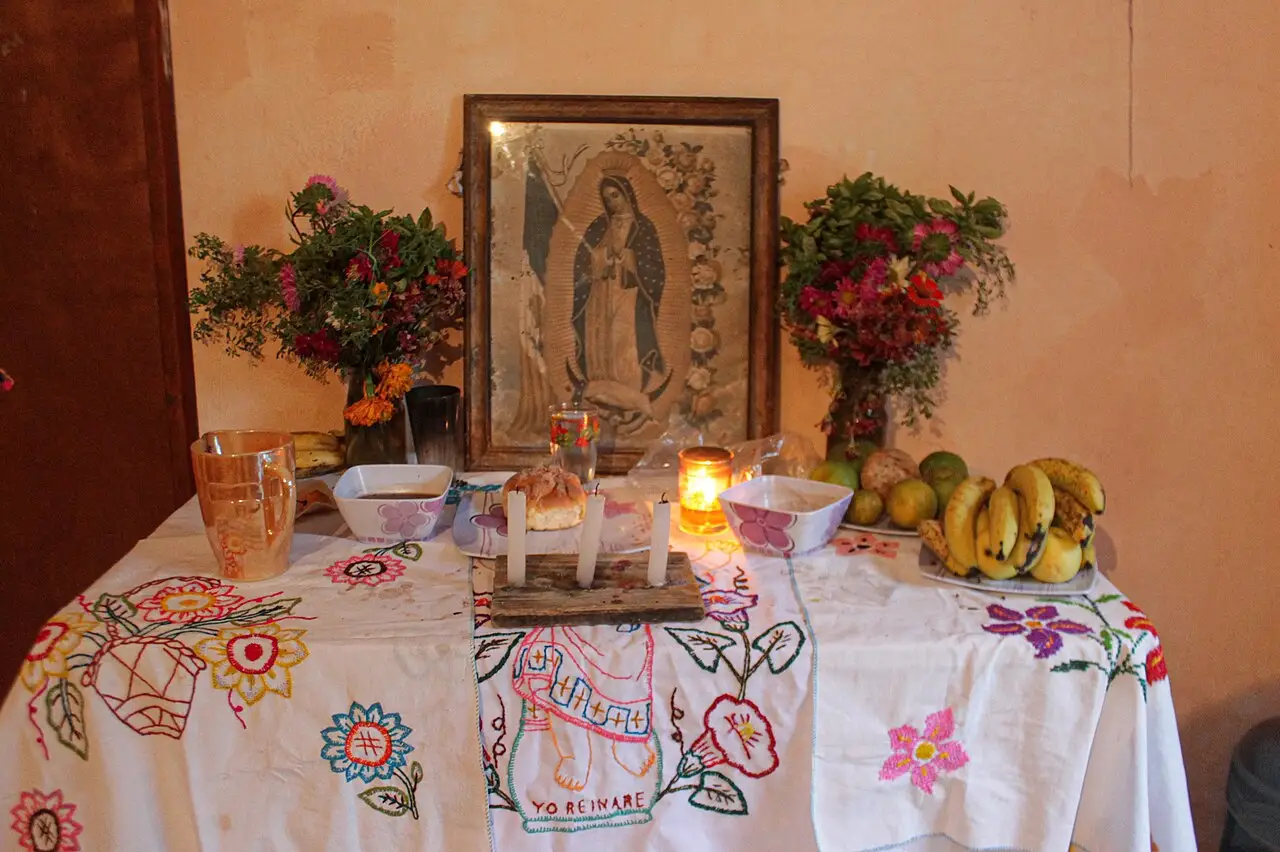
Hanal Pixán
From October 31 to November 2, Hanal Pixán remembers the dead with altars and food offerings, including mucbipollo, a large tamale baked in an earth oven. This Maya tradition of the Yucatán Peninsula includes family practices and public celebrations. To attend an activity in Tulum, check that edition’s programme and participation conditions; ask permission before photographing altars or entering family spaces.
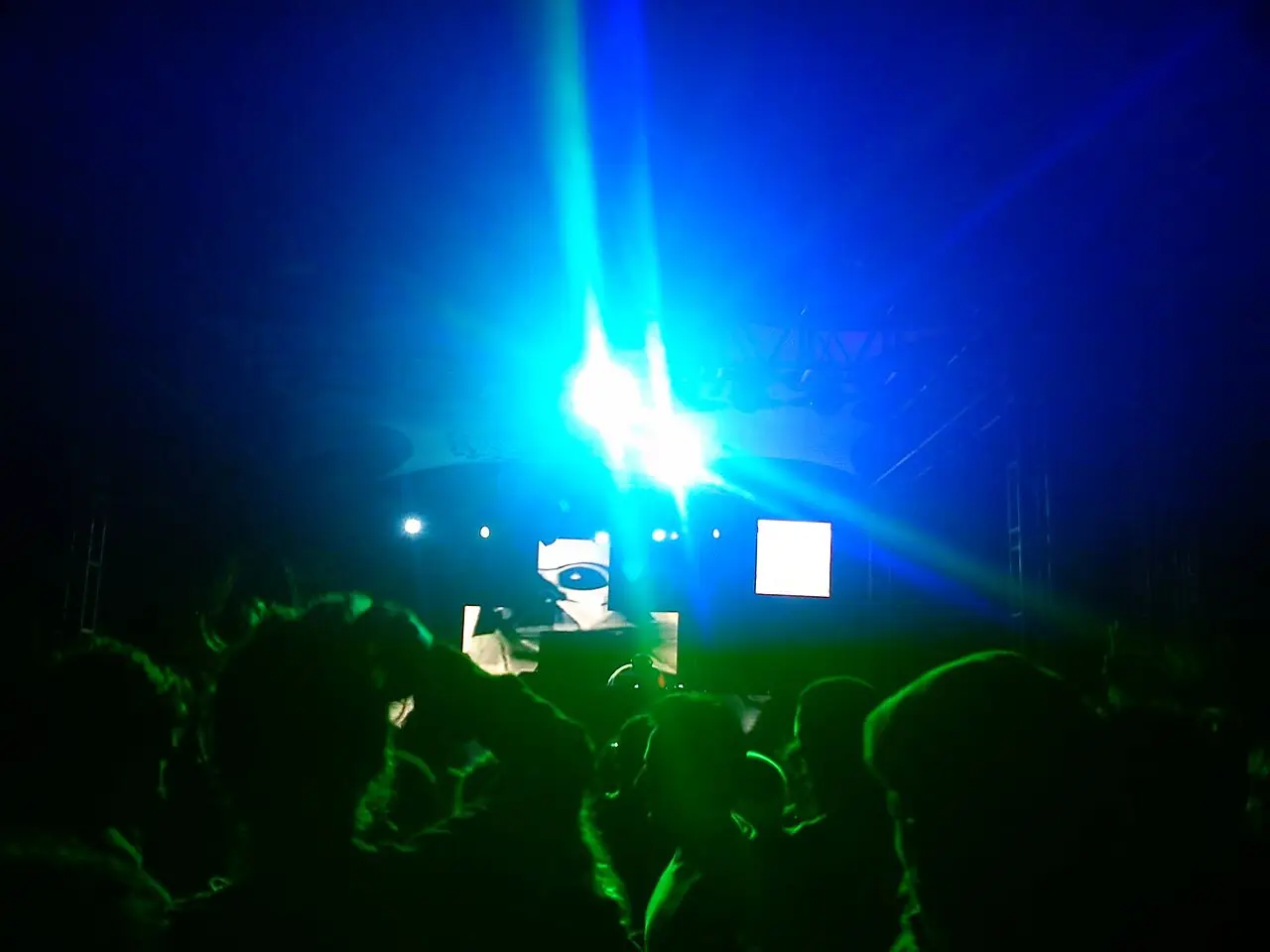
Electronic music festivals
Programmes such as Zamna and Day Zero vary by edition. Check dates, venue, times, tickets and access conditions through official channels; compare accommodation and transport for your trip and leave time to rest.
 AI illustration
Fiesta de la Santa Cruz
The Holy Cross is celebrated on May 3 in the Catholic calendar. In Quintana Roo, the Maya Talking Cross tradition is connected with the Caste War, and ceremonial centres have their own celebration dates and practices. For a visit in Tulum or another community, confirm the calendar with the organisers and ask permission to enter and take photographs.
 AI illustration
Holy Week
March or April, depending on the calendar. Holy Week is an important travel period with increased mobility in Mexico, including Tulum. Compare accommodation and transport for your chosen dates, check visiting hours and leave a buffer for journeys. Religious dates and school holidays do not mean every service closes; confirm each place’s schedule.
 AI illustration
Independence Cry
The Grito de Independencia is celebrated on the evening of September 15; Tulum’s programme varies by edition. Check the venue, time and traffic changes through municipal channels. September 16 is a national holiday. When planning your itinerary, confirm the opening hours of the places and services you intend to use.
Books and films
“Incidents of Travel in Yucatan,” by John Lloyd Stephens, with illustrations by Frederick Catherwood (1843)
Stephens’s account, with engravings based on Catherwood’s drawings. In the second volume, the visit to Tulum includes the Castillo and the wall, with help from residents of Tancah. Read the descriptions as observations by nineteenth-century travellers, alongside current archaeological research.
“The Caste War of Yucatan,” by Nelson Reed (1964; revised edition in 2001)
A study of the conflict that began in 1847 and of political and religious organisation around the Speaking Cross. It helps place Maya resistance in the Yucatán Peninsula in context; compare it with later research on its different communities.
“Cenote,” by Kaori Oda (2019)
A documentary bringing underwater images of cenotes in the northern Yucatán Peninsula together with memories of residents in nearby communities. The relationship between water, oral tradition and the world of the dead guides Kaori Oda’s film.
Frequently asked questions
Tulum: How do you get from the airport to town?
Compare the connection to your address, including disembarkation, baggage, waiting and transfers. Ask the operator about times, boarding point, destination, price and payment for your date; town centre, hotel zone, airport and station are distinct locations. Do not count on fixed travel times or fares, and leave room for check-in and rest.
Tulum: How long does it take to get to Cobá?
Travel time depends on your departure address, arranged transport, traffic, waiting and arrival at the site entrance. Check the connection and return for your date; do not count on a guaranteed 45 minutes or an available colectivo. INAH lists visits from 8am to 5pm, with last admission at 4pm, so leave time to enter and visit.
Tulum: What's the currency, and how much is the dollar worth?
The currency is the Mexican peso (MXN). Exchange rates change daily; consult Banco de México as a reference and check the conversion and fees your payment method actually applies.
Tulum: What's the risk of violence in the city?
Crime and violent incidents in Quintana Roo have affected bystanders, including in tourist areas. Avoiding drugs does not guarantee low risk. Check current advice, follow local guidance and arrange your return, especially after dark.
Tulum: What is cochinita pibil, and when do you eat it?
Pork marinated in achiote and sour orange. In the traditional preparation, it cooks in banana leaves in the pib, an underground oven; other cooking methods are also used today. It may come in a taco or torta, with pickled red onion and habanero salsa. The regional custom of eating it in the morning does not determine each kitchen’s hours in Tulum: check service at your chosen place.
Other cities in the country
Mexico ↗- Days
- 4–5
- When
- Oct–Nov
- Per person/day
- Average 1,100–2,000 pesosMid-range · per person/day
Cost scope
Per person per day: accommodation, meals, urban transport, visits and a small allowance for extras. Flights excluded; larger purchases vary. Editorial estimate, not a quote.
- Days
- 3
- When
- Feb–Apr · Oct–Nov
- Per person/day
- Average 900–1,800 MXNMid-range · per person/day
Cost scope
Per person per day: accommodation, meals, urban transport, visits and a small allowance for extras. Flights excluded; larger purchases vary. Editorial estimate, not a quote.
- Days
- 3–4
- When
- Jan–Apr · Dec
- Per person/day
- Average 2,820 MXNMid-range · per person/day
Cost scope
Per person per day: accommodation, meals, urban transport, visits and a small allowance for extras. Flights excluded; larger purchases vary. Editorial estimate, not a quote.
- Days
- 3–4
- When
- Jan–Apr · Dec
- Per person/day
- Explore costsGuide estimate
Cost scope
Per person per day: accommodation, meals, urban transport, visits and a small allowance for extras. Flights excluded; larger purchases vary. Editorial estimate, not a quote.