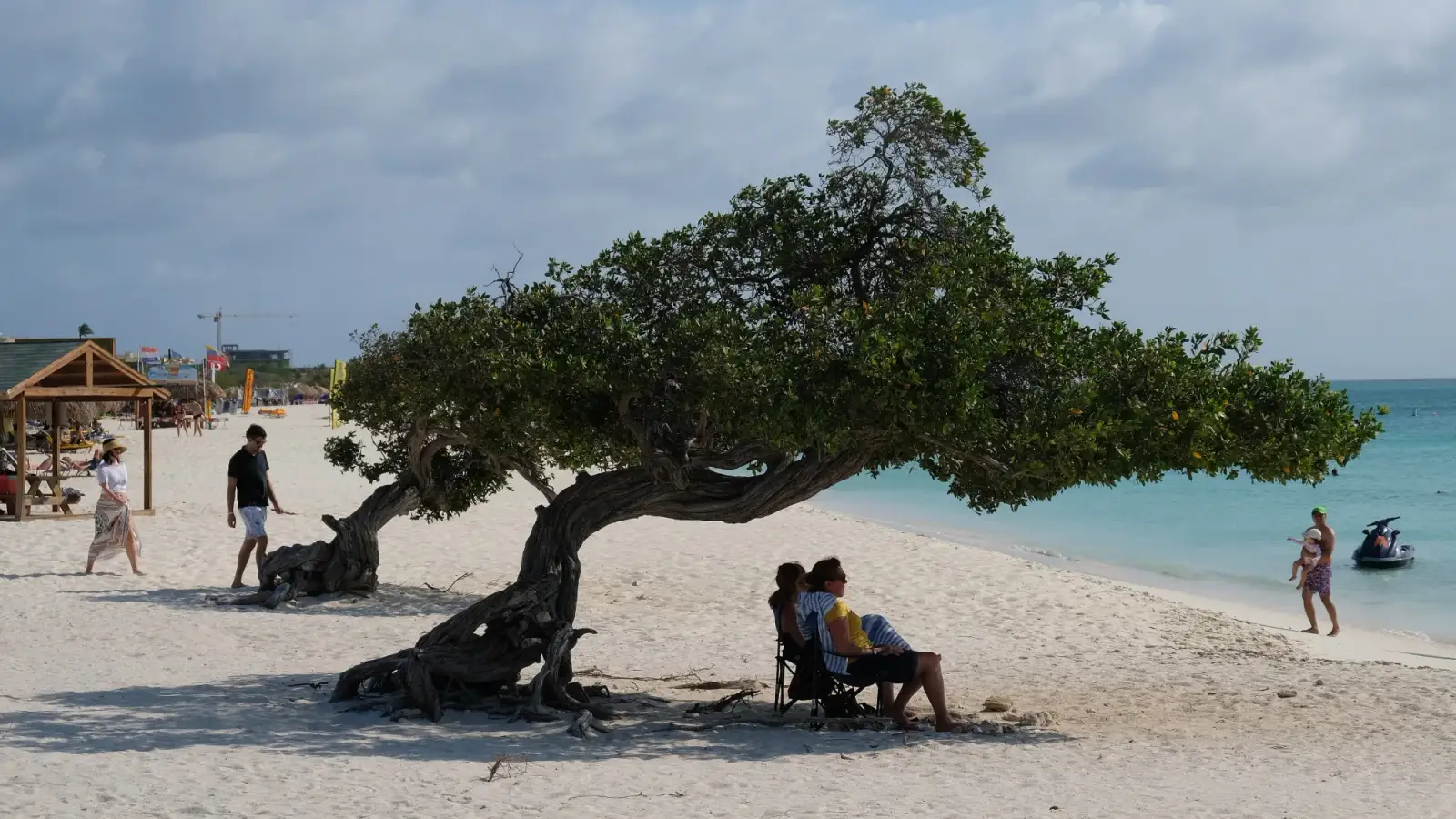
Aruba (Kingdom of the Netherlands)
Aruba
Calm-water beaches, Arikok park and Dutch Oranjestad
Days Start with the basic programme and choose extensions for the time you have.
How the guide reaches this number
The first would go to the center of Oranjestad, with the Archaeological Museum and Fort Zoutman, and the afternoon to Eagle Beach. The second would be Arikok National Park, entering at 8 a.m. to reach Conchi and the caves before the worst of the sun. The third, the north: the Ayo rocks, the Alto Vista chapel, the California lighthouse, snorkeling at Arashi and Palm Beach in the afternoon. The fourth would go to the southeast, with the San Nicolas murals in the morning and the Baby Beach lagoon in the afternoon. With a fifth day, I'd do the snorkeling at Mangel Halto and have lunch at Zeerover, in Savaneta; with a sixth, I'd stay put on a beach. Aruba is not a trip for anyone looking for a big historic city or an intense cultural life outside carnival: Oranjestad can be seen in a morning, and the rest of the island is beach, park and wind. With only two days, I'd do Arikok and Eagle Beach and leave San Nicolas for another time.
4–5
When March to September; it is the driest part of the year, with 9 to 43 mm of rain per month in the 1991–2020 normal, and from October to January 44 to 87 mm fall per month, in short downpours.
How the guide reaches this number
Carnival fills the island in January and February
March to September; it is the driest part of the year, with 9 to 43 mm of rain per month in the 1991–2020 normal, and from October to January 44 to 87 mm fall per month, in short downpours. Carnival fills the island in January and February
Per person/day Add up lodging per night, meals per person and the car rental or tours for each day; the sustainability fee is paid once, on entry.
How the guide reaches this number
Per person per day: accommodation, meals, urban transport, visits and a small allowance for extras. Flights excluded; larger purchases vary. Editorial estimate, not a quote.
 What Nilo thinks
I'd stay four days, with Oranjestad or Eagle Beach as the base. The first would go to the center of Oranjestad, with the Archaeological Museum and Fort Zoutman, and the afternoon to Eagle Beach. The second would be Arikok National Park, entering at 8 a.m. to reach Conchi and the caves before the worst of the sun. The third, the north: the Ayo rocks, the Alto Vista chapel, the California lighthouse, snorkeling at Arashi and Palm Beach in the afternoon. The fourth would go to the southeast, with the San Nicolas murals in the morning and the Baby Beach lagoon in the afternoon. With a fifth day, I'd do the snorkeling at Mangel Halto and have lunch at Zeerover, in Savaneta; with a sixth, I'd stay put on a beach. Aruba is not a trip for anyone looking for a big historic city or an intense cultural life outside carnival: Oranjestad can be seen in a morning, and the rest of the island is beach, park and wind. With only two days, I'd do Arikok and Eagle Beach and leave San Nicolas for another time.Aruba is a small, low island, 29 km off the coast of Venezuela, where the trade wind blows from the northeast almost all year and divides the landscape in two. On the sheltered side, the southwest, are Eagle Beach, the island's widest beach, with the fofoti trees and the turtle nests, and Palm Beach, with calm water and high-rise hotels. On the windward side, Arikok National Park holds hills of cacti, nineteenth-century gold mines, caves with Caquetío paintings and the Conchi natural pool, ringed by lava. In the middle is Oranjestad, a capital of colorful Dutch houses around an 1798 fort, and to the southeast, San Nicolas, the refinery town, with more than 50 murals on the main street and the carnival the Trinidadian workers brought. At the table, the island's criollo cooking has keshi yena, the stuffed cheese ball, pastechi for breakfast and fried fish on the pier at Savaneta.
Quick facts
- Population
- 108,166 inhabitants in Aruba and 28,658 in Oranjestad, adding the districts of Oranjestad Oost and Oranjestad West (2020 census, CBS Aruba)
- Founding
- Fort Zoutman built between 1796 and 1798 on Paardenbaai bay, around which the town grew; the settlement was named Oranjestad in 1824
- Country and region
- Aruba, a constituent country of the Kingdom of the Netherlands since January 1, 1986, in the southern Caribbean; the island lies 29 km north of the Paraguaná Peninsula in Venezuela
- Language
- Papiamento and Dutch are official (Papiamento since 2003); Spanish and English are widely spoken. In the 2010 census, 63.3% of residents had Papiamento as their main language
- Currency
- Aruban florin (AWG, Afl.), pegged to the US dollar at about 1.79 florins per dollar; about 2.04 florins per euro (site rate of Sept. 24, 2026). The dollar is accepted in most shops
- Time zone
- UTC−4 (Atlantic time), no daylight saving time
- Best time to visit
- March to September; it is the driest part of the year, with 9 to 43 mm of rain per month in the 1991–2020 normal, and from October to January 44 to 87 mm fall per month, in short downpours. Carnival fills the island in January and February
- Average daily cost
- Add up lodging per night, meals per person and the car rental or tours for each day; the sustainability fee is paid once, on entry.
When to go
March to September; it is the driest part of the year, with 9 to 43 mm of rain per month in the 1991–2020 normal, and from October to January 44 to 87 mm fall per month, in short downpours. Carnival fills the island in January and February
How the year changes
Aruba is hot all year and changes little in temperature: in the 1991–2020 normal, highs run from 30.3 °C in January to 33.2 °C in August and September, and lows from 24.8 °C to 27.3 °C. What varies is the rain, little in any month: from March to September 9 to 43 mm fall per month, and from October to January, 44 to 87 mm, in short downpours. The northeast trade wind cools the skin and deceives: the sun burns hard, especially between 11 a.m. and 2:30 p.m. The island lies south of the usual hurricane track and has no recent record of a strong hurricane, but tropical storms pass nearby from time to time, and the Caribbean season runs from June to November. In crowds and prices, the busiest weeks are those of the year-end holidays and carnival, in January and February; from September until before December, hotels usually offer fall rates and the beaches are emptier. Turtles nest from March to December.
Nilo's tips
Do the ED card on time and on the official site
The form opens only in the seven days before the trip, applies to every passenger and charges the US$20 sustainability fee there, by credit card, of those arriving by air without residency (children under 8 are exempt). Do it at edcardaruba.aw and keep the email receipt: intermediary sites charge to fill in the same form.
Enter Arikok at 8 a.m.
I'd get to San Fuego at opening, at 8 a.m., because the park is dry and almost without shade, and the visitor center closes at 3:30 p.m. With a 4x4, I'd do Conchi first and then the caves, which are cool, late in the morning.
Choose the beach by the wind
The calm-water beaches are all in the southwest: Eagle, Palm, Arashi, Mangel Halto and Baby Beach. The northeast coast is for looking and walking; I'd only get in the water there with the sea still and the rangers' approval.
Agree the taxi by the table
The taxi has no meter. Before getting in, check the fare on the car's QR code or at taxi.aw and remember that Sundays, late night and holidays carry US$5 more.
Bring cash to Savaneta
Zeerover takes only cash and closes on Mondays. I'd pair lunch there with the snorkeling at Mangel Halto, which is about 3 km away.
Explore the map
Explore the map, read about the other places and plan your travel days in the app.
Open the appWhat to see
Aruba: Two coasts and one wind
The stretch of waterfront between the marina and the cruise terminal, with malls, casinos and restaurants, and the private Renaissance island, with controlled access.

Eagle Beach
The widest beach in Aruba, with white sand and calm water, the two most photographed fofoti trees on the island, public shade huts and parking. It is also where most of the sea turtle nests are: four species nest on the island, in a season that runs from March to December, and marked nests are not to be stepped on.
The island's widest beach has calm water and public shade huts, and it holds most of the turtle nests; the sun is less intense in the late afternoon.
Check access

Arikok National Park
The national park covers about 20% of the island, in the northeast: hills of cacti, abandoned gold mines, cunucu houses, caves with indigenous paintings and the windward coast, with the bays of Boca Prins and Dos Playa. Entry requires the conservation pass (US$22 per adult, free for under 17), sold at San Fuego, from 8 a.m. to 3:30 p.m., and at Vader Piet. Inside the park, the speed limit is 20 km/h, you drive only on the marked roads, and ATVs, UTVs, motorcycles and drones are prohibited. The park foundation also runs guided hikes (US$25, up to 10 people, booking by email) through Rooi Tambu and Dos Playa, Jamanota, Miralamar and Cunucu Arikok.
This is the side of the island the beaches do not show: cacti, gold mines, caves with paintings and the windward coast. The pass is sold at the entrance from 8 a.m., and there is almost no shade inland.
Check access
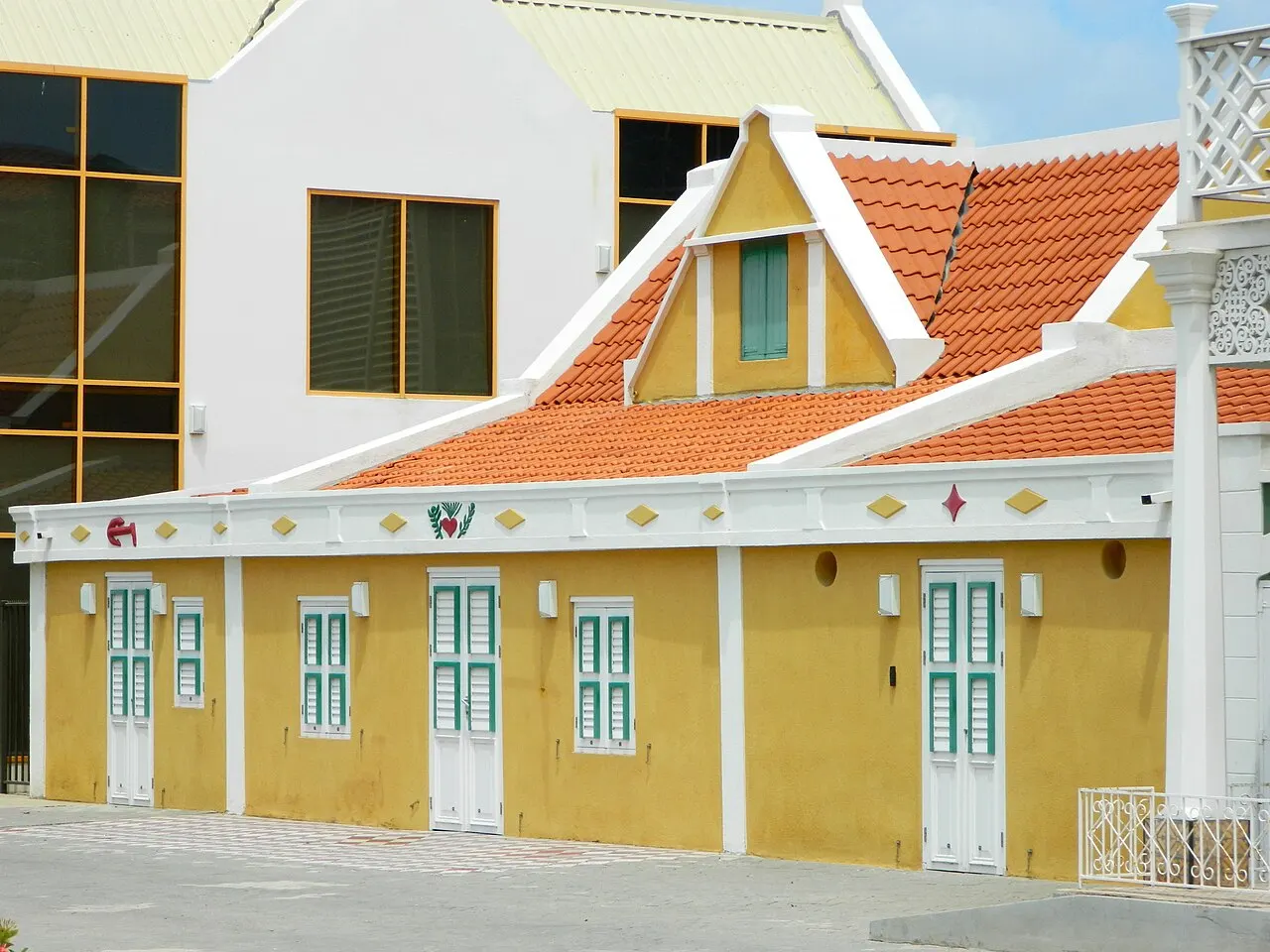
National Archeological Museum Aruba
Housed since 2009 in the restored group of houses of the Ecury family, in central Oranjestad, it holds more than 10,000 Amerindian pieces, of ceramic, shell, stone and bone, from the preceramic period on. It is the best explanation of what the cave paintings are. According to the museum's website, it is open Tuesday to Friday, 10 a.m. to 5 p.m., and Saturday and Sunday, 10 a.m. to 2 p.m.; it is closed on Mondays and some holidays. Check before going, because the page carries no update date.
With more than 10,000 Amerindian objects, this is the visit that helps make sense of Arikok's cave paintings; best before the park, and closed on Mondays.
Check access

Palm Beach
About three kilometers of sand 6 km from Oranjestad, with the high-rise hotels, piers, beach bars and the whole range of water sports. The water is calm and good for swimming and snorkeling; the trade-off is a crowded beach in front of the resorts. At the far north, at Hadicurari, is the windsurfing and kitesurfing school.
Calm water and a full range of water sports, but the sand in front of the resorts gets crowded; worth an afternoon, rather than the whole trip.
Check access
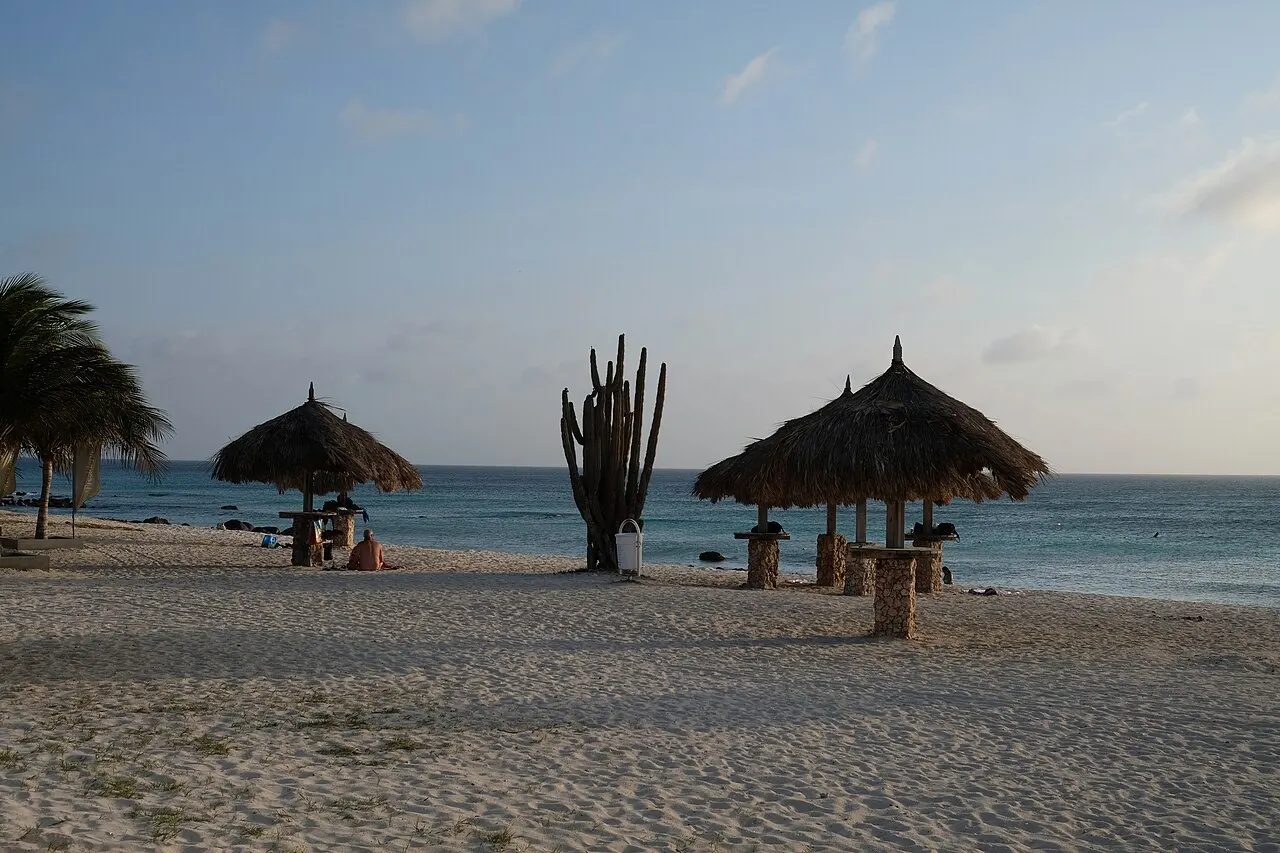
Arashi Beach
A beach of calm, shallow water on the northwest tip, near Malmok and the California lighthouse, frequented by locals. It has free shade huts, which fill up early, a reef with fish on the left side for snorkeling and a view of the sunset over the sea.
A beach frequented by locals, with a snorkeling reef on the left and sunset over the sea; the free shade huts fill up early.
Check access

Conchi (Natural Pool)
A natural pool ringed by lava rocks on the northeast coast of Arikok, also called Cura di Tortuga. You reach it only by 4x4, on horseback or, for experienced hikers, on a three- to four-hour round-trip walk; an ordinary car does not get past the park post. It is safe to get in only when the sea is calm, because waves can wash over the rocks, and water shoes help on the rocks. It is not accessible to anyone with reduced mobility.
The lava-rock pool is Arikok's most sought-after spot, but it can only be reached by 4x4, on horseback or on a long hike, and swimming depends on calm seas.
Check access

Guadirikiri Cave
The most visited limestone cave in Arikok, about 150 m long with three chambers linked by tunnels, lit by the light that enters through holes in the ceiling. Bats live in it. A little over 1 km away is Fontein Cave, with paintings by the island's Amerindians on its walls.
The chambers lit through holes in the roof are a cool stop during a day in Arikok; Fontein, just over 1 km away, adds Amerindian paintings.
Check access
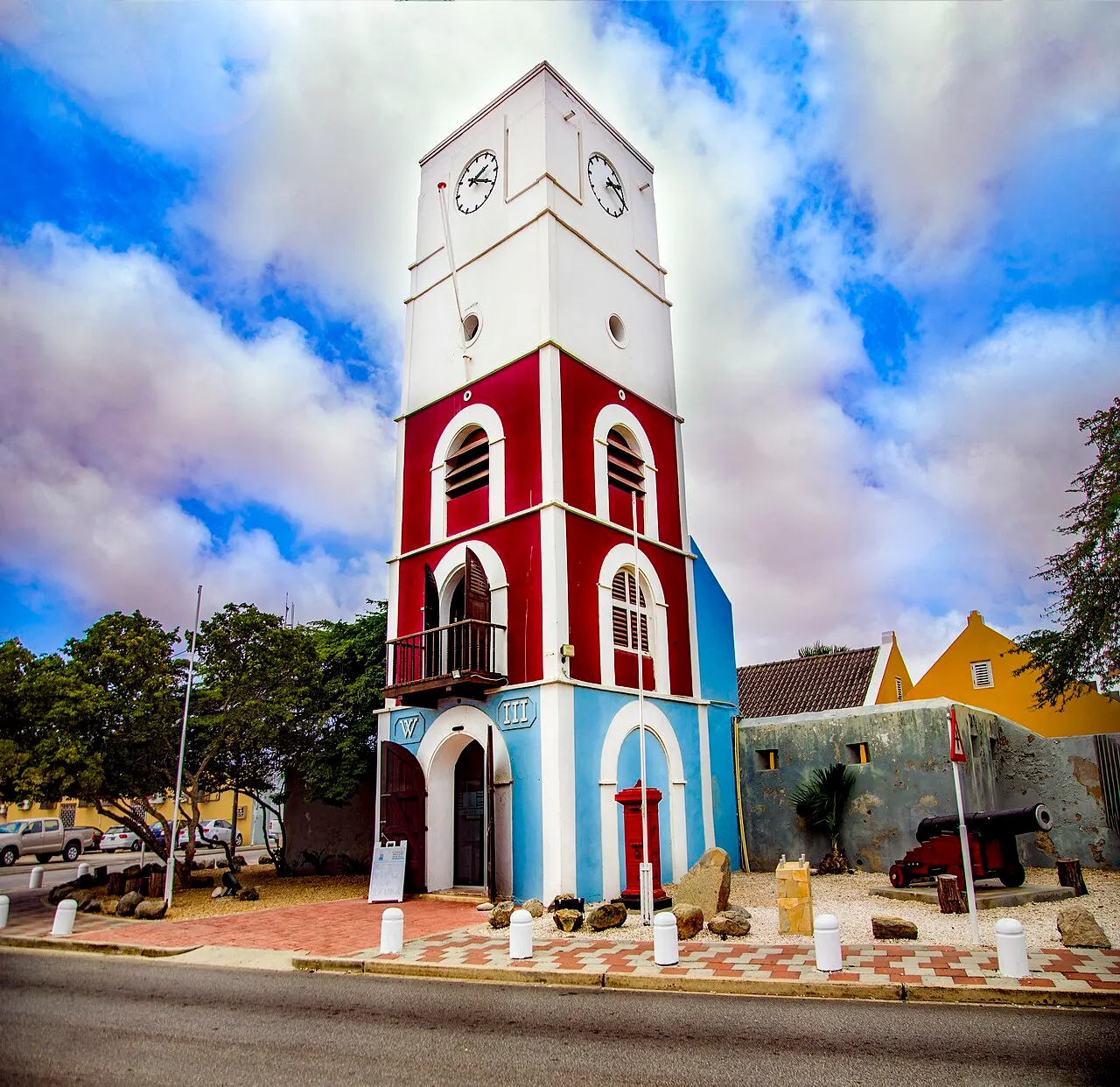
Fort Zoutman
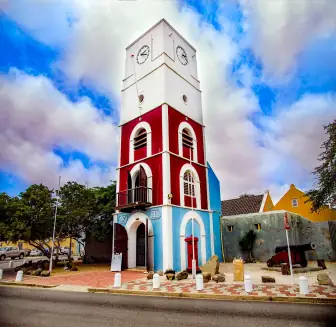
The oldest building in Oranjestad, finished in 1798 on the old shoreline to protect the port. Next to it, the Willem III Tower, lit as a lighthouse on February 19, 1868, also served as a public clock and stopped being a lighthouse in 1963. Since 1983, the fort has housed the Aruba Historical Museum, with documents of the island and the reconstruction of an old kitchen.
Oranjestad's oldest building and the 1868 lighthouse tower explain where the town began; the museum inside is small.
Check access

California Lighthouse
The 30 m lighthouse on the northwest tip, on a limestone plateau at Hudishibana, finished around 1916 and named for the British steamship California, which sank nearby in 1891. You can climb it: admission is US$5, no reservation, from 9 a.m. to 7 p.m.
The US$5 climb reveals the northwest tip and the hotel strip; combine it with Arashi Beach, just below.
Check access
Nilo’s itinerary
Start with the basic programme and choose extensions for the time you have.
Plan my days in the app ↗Day 1 · Oranjestad on foot and Eagle Beach in the afternoon
Start at 10 a.m. at the National Archaeological Museum, in the Ecury complex, to see the Caquetío pieces before going to the caves; according to the website, it is open Tuesday to Sunday, so do not schedule this day for a Monday.
Walk to Fort Zoutman and the Willem III Tower, from 1868, and check at the entrance whether the Historical Museum is open.
Continue along Caya Betico Croes, the Main Street, on foot or on the tram, looking at the colorful Dutch facades, and have lunch in the center.
After 3 p.m., take the L10 bus at the Oranjestad station to Eagle Beach (US$2.60) and stay until late afternoon near the fofoti trees, going around the marked turtle nests.
Return by L10 or by taxi (US$16 from Eagle Beach to Oranjestad, per the 2026 table) and have dinner on the harbor front.
Day 2 · Arikok National Park: caves and Conchi
Leave Oranjestad at 7:30 a.m. by car; it is about 11 km and 20 minutes to the San Fuego visitor center, which opens at 8 a.m. Buy the conservation pass there (US$22 per adult).
With a 4x4 or on a guided tour, go down to Conchi, the natural pool, at 20 km/h on the park trails. Get in the water only if the sea is calm and wear water shoes. Without a 4x4, the walk, recommended for those who already have experience, takes three to four hours round trip and has to start early.
On the way back, enter Guadirikiri Cave to see the chambers lit by the holes in the ceiling and, near it, Fontein Cave, with the Amerindian paintings.
Stop at Boca Prins to see the bay's dunes before leaving the park. Bring all the day's water, because there is almost no shade on the way, and remember that the San Fuego visitor center closes at 3:30 p.m.
Spend late afternoon at the pool or on the hotel's beach and have an early dinner.
Day 3 · The north: Ayo rocks, Alto Vista, the lighthouse and Palm Beach
In the morning, drive to the Ayo Rock Formation (about 9 km and 11 minutes from Oranjestad) and look for the rock drawings among the boulders, before the heat. The tourism pages do not publish opening hours, so check on site.
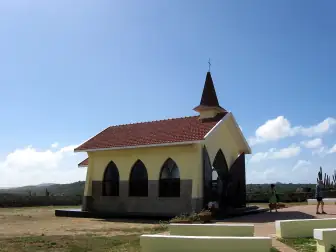
Continue to the north coast to Alto Vista Chapel and the path of white crosses of the Way of the Cross.
Keep going to the northwest tip and climb the California lighthouse (US$5, 9 a.m. to 7 p.m.).
Go down to Arashi Beach to swim and snorkel on the left side, where the reef is.
In the afternoon, head south to Palm Beach; at Hadicurari, at the start of the beach, you can watch the kitesurfing.
Return to Arashi Beach in late afternoon for the sunset, or stay in Palm Beach for dinner.
Day 4 · San Nicolas and Baby Beach
Day trip
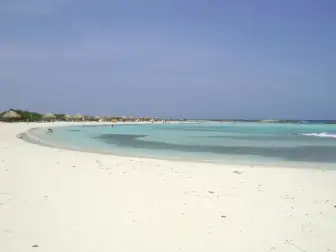
San Nicolas is about 18 km and 20 minutes by car from Oranjestad, and Baby Beach 7 km beyond. By bus, lines L1, L2 and L3 go from the Oranjestad station to the San Nicolas one, and the L900 continues to Baby Beach. In the morning, walk the main street of San Nicolas to see the Aruba Art Fair murals (there are daily guided visits leaving from the ArtisA gallery). In the afternoon, swim in the shallow lagoon of Baby Beach, inside the marked area, or at neighboring Rodger's Beach, quieter and with the fishermen's boats.




If you stay longer
Day 5 · Savaneta and Mangel Halto
Day trip
Mangel Halto is about 11 km and 15 minutes by car from Oranjestad: a small mangrove beach, with shallow, calm water, good for snorkeling, kayaking and diving from the sand to the reef. Zeerover, the fishermen's pier in Savaneta, is about 3 km farther; the kitchen opens 11 a.m. to 9 p.m., closes on Mondays and takes only cash. It is a half day that fits before the return flight or after the day in San Nicolas.
Food
Keshi yena
The dish the island calls national: a ball of gouda or edam cheese stuffed with seasoned meat, usually chicken, with olives and raisins, baked or steamed. Its attributed origin is the enslaved people of the Dutch Antilles, who filled leftover cheese rinds with scraps of meat. It appears on the criollo menu, the local cooking, of restaurants that serve Aruban food.
Pastechi
Half-moon fried pastry, filled with meat, chicken, fish or cheese, sometimes with onion, bell pepper, raisins, cumin and nutmeg. It is the island's breakfast and snack, sold at roadside snack bars and bakeries, and appears in a small version at parties.
Pan bati
A flat cornmeal pancake that goes with the stewpot dishes and fried fish. It comes alongside funchi and rice and beans in the criollo plates.
Stoba
The stews of local cooking: carni stoba, of beef, and the chicken and goat versions, served with pan bati, funchi or rice and beans.
Fried fish from the pier
At Zeerover, in Savaneta, the fishermen clean and fry the day's fish in front of the customer, served in baskets, with simple sides. The menu depends on what came out of the sea that day.
Ayaca and ponche crema
The foods of Christmas: ayaca, cornmeal dough filled and cooked in a leaf, and ponche crema, a creamy egg liqueur, served with baked ham at the end-of-year holidays.
Quesillo
A caramel pudding, the most common dessert in restaurants serving local food.
Where to eat
- Zeerover · Savaneta · $
Fish of the day cleaned and fried on the spot, served in baskets on the fishermen's pier. Cash only; the kitchen closes on Mondays.
Source · 2026-10-15
- The Old Cunucu House · Noord · $$
Criolla cooking in a country house about 150 years old: keshi yena, goat and chicken stews, local fish, pan bati, funchi and quesillo.
Source · 2026-10-15
- Oranjestad and roadsides · $
Pastechi for breakfast, at snack bars and bakeries; there are also street-food trailers.
- Palm Beach · $$$
Hotel and beach restaurants with fish, grilled meat and dinner on the sand; the price goes up in the resort strip.
- San Nicolas · $
Lunch on mural day, at the bars and snack shops on the main street, before continuing to Baby Beach.
$: a meal at a simple restaurant, US$11 to 30 (average US$18.50) · $$: a three-course dinner without drinks, about US$45 per person (US$90 for two) · $$$: above the range of the average dinner, which runs from US$50 to 110 for two · 2026-10-15
Day trips
San Nicolas and Baby Beach
San Nicolas is about 18 km and 20 minutes by car from Oranjestad, and Baby Beach 7 km beyond. By bus, lines L1, L2 and L3 go from the Oranjestad station to the San Nicolas one, and the L900 continues to Baby Beach. In the morning, walk the main street of San Nicolas to see the Aruba Art Fair murals (there are daily guided visits leaving from the ArtisA gallery). In the afternoon, swim in the shallow lagoon of Baby Beach, inside the marked area, or at neighboring Rodger's Beach, quieter and with the fishermen's boats.
Savaneta and Mangel Halto
Mangel Halto is about 11 km and 15 minutes by car from Oranjestad: a small mangrove beach, with shallow, calm water, good for snorkeling, kayaking and diving from the sand to the reef. Zeerover, the fishermen's pier in Savaneta, is about 3 km farther; the kitchen opens 11 a.m. to 9 p.m., closes on Mondays and takes only cash. It is a half day that fits before the return flight or after the day in San Nicolas.
Where to begin
Oranjestad on foot and Eagle Beach in the afternoon
Start at 10 a.m. at the National Archaeological Museum, in the Ecury complex, to see the Caquetío pieces before going to the caves; according to the website, it is open Tuesday to Sunday, so do not schedule this day for a Monday.
Arikok National Park: caves and Conchi
Leave Oranjestad at 7:30 a.m. by car; it is about 11 km and 20 minutes to the San Fuego visitor center, which opens at 8 a.m. Buy the conservation pass there (US$22 per adult).
The north: Ayo rocks, Alto Vista, the lighthouse and Palm Beach
In the morning, drive to the Ayo Rock Formation (about 9 km and 11 minutes from Oranjestad) and look for the rock drawings among the boulders, before the heat. The tourism pages do not publish opening hours, so check on site.
Money
The currency is the Aruban florin (AWG), pegged to the US dollar at about 1.79 florins per dollar, and the dollar is accepted in almost all shops, with change sometimes in florins. Banks take the dollar bill at 1.77 florins, and shops and hotels apply 1.75 to 1.80, according to VisitAruba; the official taxi table converts at 1.80. For the euro, the site's rate on September 24, 2026 gave about 2.04 florins. Credit cards are accepted in most places, but Zeerover, in Savaneta, takes only cash. Before the flight, anyone arriving by air without residency pays the US$20 sustainability fee on the ED card itself, by credit card. In October 2026, the average of prices Numbeo gathers for Aruba gave US$18.50 for a meal at a simple restaurant (US$11 to 30), US$90 for a three-course dinner for two without drinks, US$5.59 for a half-liter draft beer and US$4.84 for a cappuccino. Admissions are low: US$22 at Arikok and US$5 to climb the California lighthouse. Many restaurants and bars already add a 10% to 15% service charge to the bill; check before leaving a tip.
Getting there and around
From the airport, 2.5 km from the center
Queen Beatrix International Airport (AUA) is 2.5 km from the center of Oranjestad and has US customs preclearance for those continuing to the United States. Taxis have no meter: the fare is fixed by destination, set by the government and valid for up to four passengers; for five to seven, each extra person pays US$3, and the minimum fare is US$10. Since the revision of May 20, 2026, from the airport to Oranjestad costs US$26, to Eagle Beach US$37 and to Palm Beach US$41, with US$5 more on Sundays, between 11 p.m. and 7 a.m., from December 24 to January 1 and on holidays. Only a car with a “TX” plate is a legal taxi, and the driver displays a QR code that leads to the fare table at taxi.aw. There is no airport bus of its own, and the rental companies are across from the terminal.
Arubus bus
Arubus, the public company, leaves from the Oranjestad and San Nicolas stations. A fare costs US$2.60 or AWG 4.50; the round-trip card, US$5; and the one-day pass, US$15, sold at the booth of the Oranjestad station and at shops in several hotels. The L10 line links the Oranjestad station to Eagle Beach, Palm Beach and Arashi Beach. Lines L1, L2 and L3 go to San Nicolas, from where the L900 continues to Baby Beach. Check the schedules on the Arubus website before relying on the bus at night.
Car, tram and on foot
For Arikok, the interior and the small beaches, a rental car is the practical way; you drive on the right. The Conchi natural pool requires a 4x4, and the park does not admit ATVs or UTVs. In Oranjestad, a 1.9 km tram has run along Main Street since 2013, from the cruise port to the end of the shopping street; check that it is operating that day. The center is done on foot, but the distances between beaches and the midday heat call for a bus or a car.
Safety
The most common problem is theft: from a parked car, from a room and from a bag left on the sand. Do not take valuables or a lot of cash to the beach, do not leave anything in view in the car and avoid walking alone in isolated areas at night. The island is on the trafficking route between South America, Europe and North America, and the penalties for any drug crime are severe: never carry another person's package. At sea, the southwest beaches are calm; on the northeast coast and at Conchi, only get in the water when the sea is still and with the park rangers' warnings. The sun is the surest health risk: the wind disguises the heat, and it is strongest between 11 a.m. and 2:30 p.m. There are dengue and Zika, transmitted by mosquito, so use repellent; yellow fever is not required of those arriving from the United States, and the rule changes for those coming from a country with transmission. The emergency number is 911, and the legal taxi has a “TX” plate.
Etiquette tips
A bikini is beachwear
In Oranjestad, shorts are fine on the street, but bikinis and swim trunks stay on the beach and by the pool, and are not accepted in shopping and office areas. A taxi driver may refuse a shirtless or wet passenger.
The beach is public
Every beach in Aruba is public, including the sand in front of the resorts; it is the hotels' huts and loungers that belong to their guests. Public huts go to whoever arrives first.
Sand, shells and coral stay where they are
Do not take sand, shells or coral as souvenirs. In Arikok, collecting plants, animals and stones is prohibited by law, and so is stacking stones, even if it seems harmless.
Go around a turtle nest
On Eagle Beach and other beaches, nests are marked with stakes and tape. Do not step on them, do not light them with a flashlight or flash at night, and notify Turtugaruba (+297 592 9393) if you see a hatchling or a turtle on the sand.
A word in Papiamento opens the conversation
English handles almost everything, but a “bon dia” or a “danki” shows you know where you are. Aruba writes and says “Papiamento,” not “Papiamentu,” which is Curaçao's spelling.
Mistakes to avoid
Arriving at the airport without the ED card
The ED card can only be filled in during the seven days before the trip, applies to every passenger, babies included, and the airline asks for the confirmation before boarding. Do it at edcardaruba.aw: there are sites that charge to fill in the same form, which takes a few minutes.
Going to the natural pool in an ordinary car
A passenger car does not get past the park post on the way to Conchi. Without a 4x4, the options are the guided tour, a horse or the three- to four-hour round-trip walk, in the heat, which the official source indicates for those who already have experience.
Leaving Arikok for the afternoon
The San Fuego visitor center sells the pass from 8 a.m. to 3:30 p.m., and the interior has almost no shade. Anyone arriving after lunch gets the worst of the sun and little park time.
Swimming on the northeast coast as if it were Palm Beach
The Arikok coast takes the open sea. At Conchi, the wave passes over the rocks, and the park's bays do not have the still water of the southwest beaches. Follow the rangers' warnings.
Taking your phone and wallet onto the sand
Petty theft from cars and on the beach is the risk that travel advisories cite first. Leave documents and money at the hotel and nothing in view in a parked car.
Useful phrases
Bon dia
Good morning
Bon bini
Welcome; it is on the island's signs and at the Arikok entrance
Danki
Thank you
Con ta bay?
How are you?
Mi ta bon
I'm fine
Porfabor
Please
Where to stay
- Eagle Beach · A first beach-focused trip, couples and anyone who wants fewer buildings · $$: The hotels are low, the beach is the widest on the island and the center of Oranjestad is 4.5 km away, with the L10 bus at the door. There are fewer bars and less nightlife than in Palm Beach.
- Palm Beach · Families, anyone who wants everything on foot and nightlife · $$$: Calm water, piers, water sports, restaurants, malls and casinos in the same strip. In return, the beach is crowded in front of the resorts and the historic center is about 6 km away.
- Oranjestad (center) · Anyone traveling without a car who wants museums and shopping · $$: The museums, the port and the bus station are a few steps away, and the airport is 2.5 km off. The beach requires a bus or taxi, and the street empties at night.
- Noord · Long stays, groups and anyone who rents a car · $: Apartments and houses in the neighborhood behind Palm Beach, near supermarkets and local restaurants. Without a car, every beach becomes a trip.
- Savaneta · Anyone who wants quiet, snorkeling and the south side of the island · $: It lies between Mangel Halto and Zeerover, near the route to San Nicolas and Baby Beach, and far from the bustle of the resorts. It depends on a car.
$: an apartment or guesthouse away from the waterfront, in Noord, Oranjestad or Savaneta · $$: a low hotel on Eagle Beach or a hotel in the center of Oranjestad · $$$: a high-rise resort in Palm Beach · 2026-10-15
Districts
Oranjestad (center)
The historic center around Fort Zoutman and the Willem III Tower, with the museums, Caya Betico Croes (the Main Street, a pedestrian shopping street with a tram running along it) and the cruise port. It suits anyone who wants to see the Dutch island, shop and have dinner without a car; at night, away from the beach, things quiet down.
Renaissance and the harbor front
The stretch of waterfront between the marina and the cruise terminal, with malls, casinos and restaurants, and the private Renaissance island, with controlled access. It is the liveliest part of Oranjestad after business hours.
Eagle Beach
The widest beach in Aruba, with low hotels across the road, public shade huts and the fofoti trees. It is the address for anyone who wants wide sand, fewer buildings and the center 4.5 km away.
Palm Beach and Noord
Three kilometers of calm-water beach with the high-rise hotels, piers, water sports, malls and casinos. Noord, the inland neighborhood just behind, concentrates apartments and restaurants outside the hotel circuit.
Malmok and Arashi
The northwest tip, past Palm Beach: houses, small snorkeling beaches and Arashi Beach, which faces the sunset, with the California lighthouse above. It is quieter and calls for a car or the L10 bus.
Santa Cruz and the interior
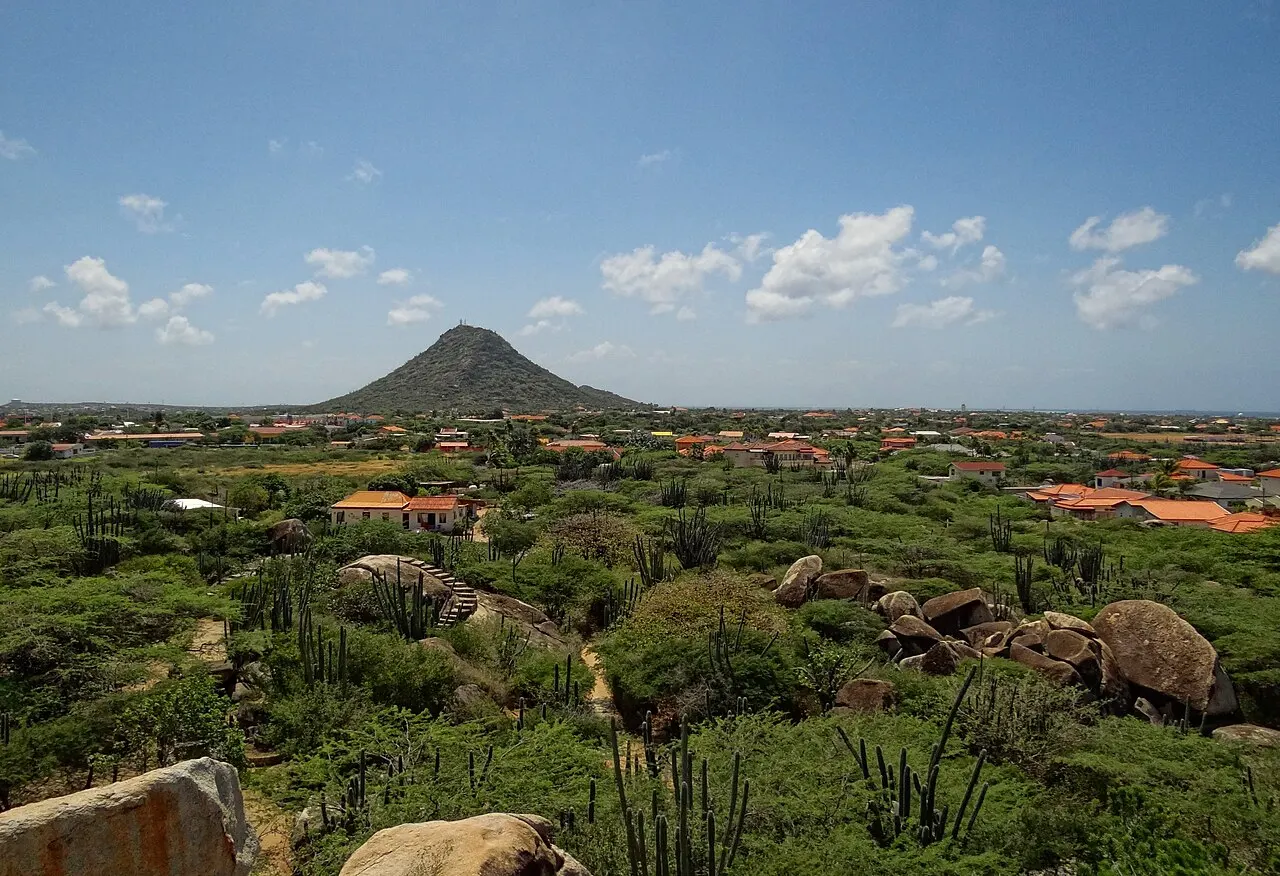
The heart of the island, between Hooiberg and the rocks of Casibari and Ayo, with cunucu (countryside) houses, cactus fences and the road to Arikok. It is not a lodging neighborhood for visitors, but it is where you pass through to understand the island.
Savaneta
The old capital, on the south coast, with the Zeerover fishermen's pier and, nearby, the mangrove beach of Mangel Halto. It is the place for fresh fish and easygoing snorkeling.

San Nicolas
The refinery town, in the southeast, with about 14,000 residents and more than 50 murals on the main street: the painting began in 2016 and multiplied with the Aruba Art Fair. The island's street carnival came from here. Baby Beach and Rodger's Beach are just to the south.
History
c. 2500 BC · The first inhabitants
The collections of the Archaeological Museum of Aruba begin around 2500 BC, in the preceramic period, with groups that lived from fishing and gathering along the coast.
c. 850–1000 · Arrival of the Caquetío
Caquetío peoples, speakers of an Arawakan language, cross from the western coast of Venezuela, probably from the Paraguaná and Guajira peninsulas. Place names such as Guadirikiri, Turibana and Bushiri come from them.
1499 · The first Spaniard
Alonso de Ojeda arrives on the island. The Spaniards find no gold, consider Aruba worthless and, between 1513 and 1515, take a good part of its inhabitants, enslaved, to the mines of Hispaniola.
1636 · The Dutch occupation
Two years after taking Curaçao, the Dutch West India Company occupies Aruba and Bonaire. In the early nineteenth century the British control the island for about ten years, until 1816, and then the Dutch return.
1750 · The Alto Vista chapel
The Venezuelan missionary Domingo Silvestre builds the island's first church on the heights of the north coast, the starting point of the Catholic conversion of the Caquetío. The present chapel dates from 1952.
1796–1798 · Fort Zoutman and the new capital
Merchants swap the old anchorage for Paardenbaai bay, easier for ships, and the fort is built there. The town grows around it and is named Oranjestad in 1824.
1824–1916 · The gold rush
A 12-year-old shepherd boy, Willem Rasmijn, finds gold in 1824. The mines, such as Miralamar, inside today's Arikok Park, operate until 1916.
1890 · The aloe island
Introduced in 1840, aloe becomes a major export from 1890. At one point two-thirds of the island was covered by the plant, and Aruba became the world's largest exporter.
1924 · The San Nicolas refinery
Lago Oil and Transport opens a refinery in San Nicolas that recruits workers in Trinidad, Jamaica and British Guiana. They bring calypso, steel bands and street carnival.
1958 · The Palm Beach hotels
The public land of Palm Beach is released for hotels. The first, Basiruti, was a cluster of bungalows on the sand, and the strip of high-rise hotels came later.
1976 · Anthem and flag
On March 18, 1976, Aruba adopts the flag and the anthem “Aruba Dushi Tera.” The date became Anthem and Flag Day, a national holiday.
1986 · Status Aparte
On January 1, 1986, Aruba leaves the Netherlands Antilles and becomes a constituent country of the Kingdom of the Netherlands, with the florin as its currency. Betico Croes, who led the movement, dies the same year. On March 31, 1985, Exxon had closed the refinery, and tourism takes over the economy.
2000 · Arikok National Park
A ministerial decree creates the park, which protects about 20% of the island, with the caves of indigenous paintings, the gold mines and the northeast coast.
Complete history
An island Spain looked down on
Aruba was occupied by groups of fishers and gatherers long before the arrival of the Caquetío, who crossed from Venezuela around the years 850 to 1000 and left in the northeastern caves the paintings seen today at Fontein and Ayo. The Spaniards landed in 1499, found no gold and decided the island was not worth the trouble: between 1513 and 1515, they took a good part of its inhabitants to the mines of Hispaniola. The Dutch, who had already taken Curaçao in 1634, occupied Aruba in 1636.
Gold, aloe and a capital by the bay
Oranjestad exists only from the end of the eighteenth century, when merchants swapped the old anchorage for Paardenbaai bay and Fort Zoutman was built, between 1796 and 1798. In 1824, gold found by a shepherd boy brought people and money, and the settlement took the name of the royal house, Orange. The mines operated until 1916; the ruins of the Miralamar mine are still in Arikok. Aloe, planted from 1840, covered two-thirds of the island and for a time made Aruba the world's largest exporter. That phase explains the size of Oranjestad: a small merchants' town, with low, colorful houses near the port.
The refinery century
The turning point came in 1924, when Lago Oil and Transport opened the San Nicolas refinery, in the southeast. It came to employ more than 8,000 people, 16% of the island's population, and brought workers from Trinidad, Jamaica and British Guiana, who spoke English and carried calypso, steel bands and street carnival to the island: the first parade in San Nicolas celebrated the Allied victory in the Second World War. That is why San Nicolas has a different face from Oranjestad, and why Aruba's carnival has two big parades, one in each town, since 1957. The refinery closed in 1985, reopened in 1991, passed through several owners and is idle; at the end of 2025 the government decided to close it for good.
Status Aparte and the tourism island
Twentieth-century politics revolved around separation from Curaçao. Betico Croes led the movement, and on January 1, 1986 Aruba left the Netherlands Antilles to become a country of the Kingdom of the Netherlands, with its own parliament, currency and government; full independence was postponed in 1990 and abandoned in 1995. Nine months before Status Aparte, on March 31, 1985, the closing of the refinery had taken a good part of the government's revenue from the island. Tourism, which had been growing in Palm Beach since the 1950s, took its place: in 2025, Aruba received 1,515,102 visitors who stayed overnight and 970,803 cruise passengers. The holidays tell this story: Betico Day, on January 25, and Anthem and Flag Day, on March 18.
Geography and shape of the city
Two coasts and one wind
Aruba is 179 km² and low: the highest point, Jamanota, reaches 188 m, and Hooiberg, the hill shaped like a haystack in the center of the island, 165 m. The trade wind blows from the northeast, coming off the Atlantic, and organizes everything. The southwest coast, the leeward side, has white sand, shallow, calm water and almost all the hotels, from Oranjestad to Palm Beach and Arashi. The northeast coast, the windward side, is limestone and lava, with strong waves, small bays such as Boca Prins and Dos Playa, and few people.
Ancient rock, cactus and little rain
The interior shows the island's geology. Aruba's lava formation is the oldest; over it formed the batholith, a massif of granitic rock that appears in the rounded tonalite boulders of Casibari and Ayo; and at the edges are limestone terraces of ancient coral, where the caves are. With about 450 mm of rain a year, the vegetation is columnar cacti, shrubs and the divi-divi and fofoti trees. Arikok National Park protects a good part of this interior, and the cascabel rattlesnakes, rattlesnakes found only in Aruba, live there.
One city, a coast of hotels and a second city
Oranjestad occupies the southwest coast, between the airport, 2.5 km from the center, and the port of Paardenbaai, which receives up to five cruise ships. To the north, the coastal road passes Eagle Beach, with low hotels, and Palm Beach, about 6 km northwest of the center, with the high-rise hotels, up to the California lighthouse on the northwest tip. The interior is residential neighborhoods, such as Noord and Santa Cruz. In the southeast is San Nicolas, the refinery town, and just below it Baby Beach, on the shallow lagoon of Seroe Colorado.
The trade wind blows from the northeast almost without pause: the calm beaches are all in the southwest, and the Arikok coast takes the waves.
Culture
Papiamento, the language of the street
Aruba speaks Papiamento, a Portuguese-based creole language, with influence from Spanish and Dutch, official on the island since 2003. Aruba writes “Papiamento,” with a spelling that follows the origin of the words, while Curaçao and Bonaire write “Papiamentu,” by pronunciation. In the 2010 census, 63.3% of residents had Papiamento as their main language, 15% Dutch, 11.5% Spanish and 5% English. The island says it has people of about a hundred nationalities, and place names mix Caquetío, Spanish and Dutch.
A two-month carnival
Aruba's carnival began in the social clubs in the 1920s and took to the street with the Trinidadian workers of the San Nicolas refinery, who brought masquerade bands and steel bands. The season officially opens at 11:11 a.m. on November 11, and the parades run from the Torch Parade, on the first Saturday of January, to the big parades of the weekend before Ash Wednesday, one in San Nicolas and another in Oranjestad. In between there are queen elections, calypso and tumba (the island's drum music) contests and the nighttime parades of light.
Music all year round
Outside carnival, music marks the calendar. From November to Christmas, gaita groups play in shops, restaurants and homes. At New Year, the dande takes musicians from house to house to wish a good year, and at the end of December shops set off the pagara, a long string of firecrackers. On June 24, Dera Gai, a harvest festival recorded since 1862, has its own song and yellow and red clothes. In San Nicolas, the murals began in 2016 and multiplied with the Aruba Art Fair, which turned the main street into a gallery.
Aruba's carnival has two big parades, one in San Nicolas and another in Oranjestad, since 1957.
Festivals and events
Betico Day, January 25
A holiday for the birthday of Betico Croes, who led the 1986 separation, with cultural and sports events across the island and a celebration at Plaza Betico, in Oranjestad.
Carnival, from January to Ash Wednesday
Parades from the first Saturday of January and the big parades on the weekend before Ash Wednesday, in San Nicolas and in Oranjestad. Carnival Monday is a holiday; in 2027, it falls on February 8. The island fills up in this period.
Anthem and Flag Day, March 18
Aruba's national day, which recalls the adoption of the flag and the anthem in 1976, with a celebration in the evening at Plaza Betico, in Oranjestad.
King's Day, April 27
The birthday of King Willem-Alexander, with an official ceremony, street fairs and kite contests at community centers.
Dera Gai, June 24
On Saint John's Day, a harvest festival with its own song and yellow and red clothes, recorded since 1862 and celebrated at community centers.
Aruba Hi-Winds, June or July
Windsurfing and kitesurfing competition on Hadicurari beach, at the north of Palm Beach, where the water is shallow and the trade wind is constant.
Aruba Art Fair, September
Three days of mural painting, workshops and music on the main street of San Nicolas; the ninth edition ran from September 11 to 13, 2026. The murals stay on the street all year.
Dande and pagara, late December and New Year
Musicians visit homes to sing in the good year, and shops set off the pagara, a string of firecrackers that closes the business year; at midnight there are fireworks across the island.
Books and films
Carnival in Aruba (1998), Victoria M. Razak
The story of the island's carnival, from the social clubs' dances in the 1920s to the Trinidadian bands brought by the San Nicolas refinery and the two big parades. It explains why the festival has two towns and two languages.
Aruba Dushi Tera, Juan Chabaya Lampe and Rufo Wever
The song from the early 1950s, in Papiamento, that became the official anthem on March 18, 1976. Hearing it helps in understanding Anthem and Flag Day and the pride of Status Aparte.
Macuarima, Ernesto Rosenstand
The Aruban writer told in a book the legend of Macuarima, the indigenous girl from Santa Cruz who flees by boat to Venezuela with Pati Blanco. One of the stories that give names to the places of the interior.
Frequently asked questions
Aruba: how do you get from the airport to the hotel?
The airport (AUA) is 2.5 km from the center of Oranjestad, and taxis have fixed fares for up to four passengers: US$26 to Oranjestad, US$37 to Eagle Beach and US$41 to Palm Beach. Only a car with a “TX” plate is a legal taxi. Under the May 20, 2026 revision, there is a US$5 supplement on Sundays, between 11 p.m. and 7 a.m., on holidays and from December 24 to January 1; check the table at taxi.aw.
Aruba: what is the ED card, and how much does it cost?
The ED card can only be filled in during the seven days before the trip and charges the US$20 sustainability fee of those arriving by air without residency (children under 8 are exempt). Do it at edcardaruba.aw, because intermediary sites charge for the same form.
Aruba: how many days should I stay?
I'd stay four days, with Oranjestad or Eagle Beach as the base: the center and Eagle Beach, Arikok entering at 8 a.m., the north with the California lighthouse and Palm Beach, and the southeast with San Nicolas and Baby Beach. With only two days, I'd do Arikok and Eagle Beach.
Aruba: how do you do the day in San Nicolas and Baby Beach?
San Nicolas is about 20 minutes by car from Oranjestad, and Baby Beach 7 km beyond; by bus, lines L1, L2 and L3 go to San Nicolas, and the L900 continues to the beach. In the afternoon, swim in the shallow lagoon of Baby Beach, inside the marked area.
Aruba: when is the best time to go?
From March to September 9 to 43 mm of rain fall per month, and from October to January, 44 to 87 mm, in short downpours. The busiest weeks are those of the year-end holidays and carnival, in January and February.
