Scotland
Edinburgh
Edinburgh joins a medieval city and one of straight streets
Days Start with the basic programme and choose extensions for the time you have.
How the guide reaches this number
A third, if you have it, goes to Arthur's Seat and the port of Leith, and a fourth only if you want to add a day trip. Anyone looking for sun, beach, or cheap nights that start late will be disappointed, and the center demands a tolerance for hills. With just one day, enter the castle at 9:30am and walk down the Royal Mile, ducking into two or three closes, in time to hear the one o'clock gun. In the afternoon, cross the Princes Street Gardens to the National Gallery, free, and climb Calton Hill at the end of the day for the best view of the whole. What disappoints is the middle stretch of the Royal Mile, a row of cashmere shops and airport whisky, and also August, when hotel rates more than double and there are lines for everything. To see mountains, go for Stirling or the Pentlands instead, because Loch Ness is more than 250 km away. I'd come in September, with the festivals already over.
2–3
When May–June and September; August concentrates the festivals, the crowds, and the high prices
How the guide reaches this number
July and August have average highs around 19°C, January stays near 7°C at the high and 1°C at the low, and rain is spread across the year, with about 700 mm in total: less than the reputation suggests, but in short, frequent showers. Wind is the real variable, and it's what decides your day; bring a windbreaker in any season. Light changes everything: at the end of June the sun sets after 10pm and the sky never fully darkens. At the end of December it gets light at 8:40am and dark before 4pm. In spring and early summer, the haar, the cold fog rolling in from the North Sea, can blot out the city for an entire morning and give it back with sunshine soon after. May, June, and September combine long days, reasonable temperatures, and normal prices. August is festival month: if you came for them, it's the only possible month; if you didn't, it's the month to avoid, with hotel rates more than doubling and lines for everything. November and January are the darkest and emptiest months, with the compensation of low prices.
Per person/day £110–170 per person at a mid-range standard; in August it jumps 40% to 60%
How the guide reaches this number
Per person per day: accommodation, meals, urban transport, visits and a small allowance for extras. Flights excluded; larger purchases vary. Editorial estimate, not a quote.
 What Nilo thinks
Stay two days: one for the castle, the Royal Mile, and Holyrood, another for the New Town, the museums, and Calton Hill. A third, if you have it, goes to Arthur's Seat and the port of Leith, and a fourth only if you want to add a day trip. Anyone looking for sun, beach, or cheap nights that start late will be disappointed, and the center demands a tolerance for hills. With just one day, enter the castle at 9:30am and walk down the Royal Mile, ducking into two or three closes, in time to hear the one o'clock gun. In the afternoon, cross the Princes Street Gardens to the National Gallery, free, and climb Calton Hill at the end of the day for the best view of the whole. What disappoints is the middle stretch of the Royal Mile, a row of cashmere shops and airport whisky, and also August, when hotel rates more than double and there are lines for everything. To see mountains, go for Stirling or the Pentlands instead, because Loch Ness is more than 250 km away. I'd come in September, with the festivals already over.Edinburgh rises around a castle planted on a volcanic rock, with the Royal Mile running 1.8 km of stone down to the Palace of Holyroodhouse. Across the valley of the Princes Street Gardens lies the Georgian New Town, its grid of streets laid out starting in 1767, and it's this pair of cities side by side that UNESCO protects. The best of the Old Town is in the closes, the stone alleys that drop in steps on both sides of the street, and the National Museum of Scotland and the National Gallery don't charge admission. From the top of Calton Hill you see both cities against the Firth of Forth, and Arthur's Seat can be climbed on foot without leaving the city. In the pubs, order the haggis with mashed rutabaga, or the cullen skink, the smoked haddock soup that becomes a meal with bread. Come in May, June, or September, outside the August festivals, set aside two days, and bring a windbreaker in any season.
Quick facts
- Population
- about 530,000 in the municipality; about 900,000 in the Lothian region
- Founded
- Din Eidyn fort mentioned around the year 600; royal burgh charter under David I, around 1124
- Country and region
- Scotland, United Kingdom: east coast, Lothian region, on the Firth of Forth
- Language
- English; Scots in everyday vocabulary; Gaelic on official signage and names
- Currency
- Pound sterling (GBP, £); notes issued by Scottish banks circulate alongside English ones
- Time zone
- GMT (UTC+0) in winter, BST (UTC+1) from late March to late October
- Best time to visit
- May–June and September; August concentrates the festivals, the crowds, and the high prices
- Average daily cost
- £110–170 per person at a mid-range standard; in August it jumps 40% to 60%
When to go
May–June and September; August concentrates the festivals, the crowds, and the high prices
January
1° to 5°C
94 mm of rain
February
0° to 6°C
77 mm of rain
March
2° to 8°C
66 mm of rain
April
3° to 11°C
50 mm of rain
July
10° to 18°C
79 mm of rain
August
10° to 18°C
82 mm of rain
October
6° to 12°C
99 mm of rain
November
3° to 8°C
95 mm of rain
December
1° to 6°C
101 mm of rain
How the year changes
July and August have average highs around 19°C, January stays near 7°C at the high and 1°C at the low, and rain is spread across the year, with about 700 mm in total: less than the reputation suggests, but in short, frequent showers. Wind is the real variable, and it's what decides your day; bring a windbreaker in any season. Light changes everything: at the end of June the sun sets after 10pm and the sky never fully darkens. At the end of December it gets light at 8:40am and dark before 4pm. In spring and early summer, the haar, the cold fog rolling in from the North Sea, can blot out the city for an entire morning and give it back with sunshine soon after. May, June, and September combine long days, reasonable temperatures, and normal prices. August is festival month: if you came for them, it's the only possible month; if you didn't, it's the month to avoid, with hotel rates more than doubling and lines for everything. November and January are the darkest and emptiest months, with the compensation of low prices.
The same numbers as a table
| Month | Temperature °C | Rain mm |
|---|---|---|
| January | 1 to 5 | 94 |
| February | 0 to 6 | 77 |
| March | 2 to 8 | 66 |
| April | 3 to 11 | 50 |
| May · | 5 to 14 | 54 |
| June · | 8 to 16 | 65 |
| July | 10 to 18 | 79 |
| August | 10 to 18 | 82 |
| September · | 8 to 15 | 69 |
| October | 6 to 12 | 99 |
| November | 3 to 8 | 95 |
| December | 1 to 6 | 101 |
Nilo's tips
At 1pm, see the gun and time ball, except on Sunday
The castle gun's shot coincides with the drop of the time ball on the Nelson Monument, on Calton Hill, which has fallen at 1pm since 1853. The gun doesn't fire on Sundays, Good Friday, or Christmas. Stay on the High Street to hear the gun, or on Calton Hill to see the ball drop, because the boom reaches there too.
The driver has no change
A £10 note becomes a £10 fare, when the Lothian rate is £2.40 per ride. Pay by contactless, which adds up on its own toward the daily cap, or board with exact change in coins. If you'll use bus and tram the same day, the £6 day ticket pays off from the third ride on.
From the airport, the bus beats the tram
The Airlink 100 costs around £5.50 and takes about 30 minutes to the center, compared with £8.50 and 30 to 35 minutes for the tram. The bus also runs 24 hours, a public transport option if you land at four in the morning, before the trams start. The tram makes sense if you are staying near its line, which crosses the New Town and has continued to Leith and Newhaven since 2023.
The best museums don't charge
The National Museum of Scotland, on Chambers Street, and the National Gallery, on the Mound, have free admission. The castle costs around £22, and Holyroodhouse about £20. Go up to the terrace on the museum's top floor, which most people don't look for. Set aside an hour for the Scottish art galleries, reopened in 2023 at garden level. On a day of haar or rain, that's where I'd spend the morning.
At the Free Fringe, pay £5-10 in the bucket on the way out
Admission is free, and that contribution at the end is the real price of the ticket for each show. For paid Tattoo and Fringe tickets, buy only through official channels, because fake ticket resale is August's most common scam.
Sunday is Stockbridge day
On Sunday, go to the Stockbridge market, 15 minutes' walk from the New Town, and pass through Circus Lane. Then drop down to the Water of Leith and follow the riverside path on foot to the Royal Botanic Garden, founded in 1670, with free entry to the grounds. Check beforehand which glasshouses are open, because they're undergoing restoration work.
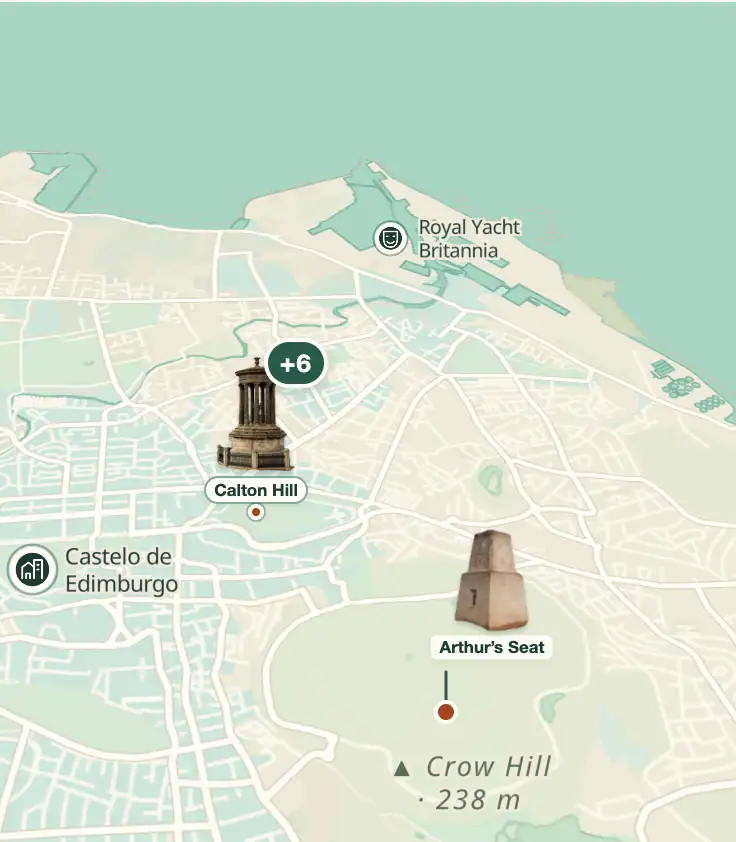
Explore the map
© OpenStreetMap · OpenFreeMap · © OpenMapTiles
Explore the map, read about the other places and plan your travel days in the app.
Open the appWhat to see
Edinburgh: The seven hills and the two ridges
Because the center splits into two ridges separated by a valley, almost every trip involves going up or down, and there are city bridges (South Bridge, George IV Bridge) whose "ground floor" is the fourth floor of the street below. It's where you'll spend the most time and the fewest nights, because lodging is expensive and noisy.

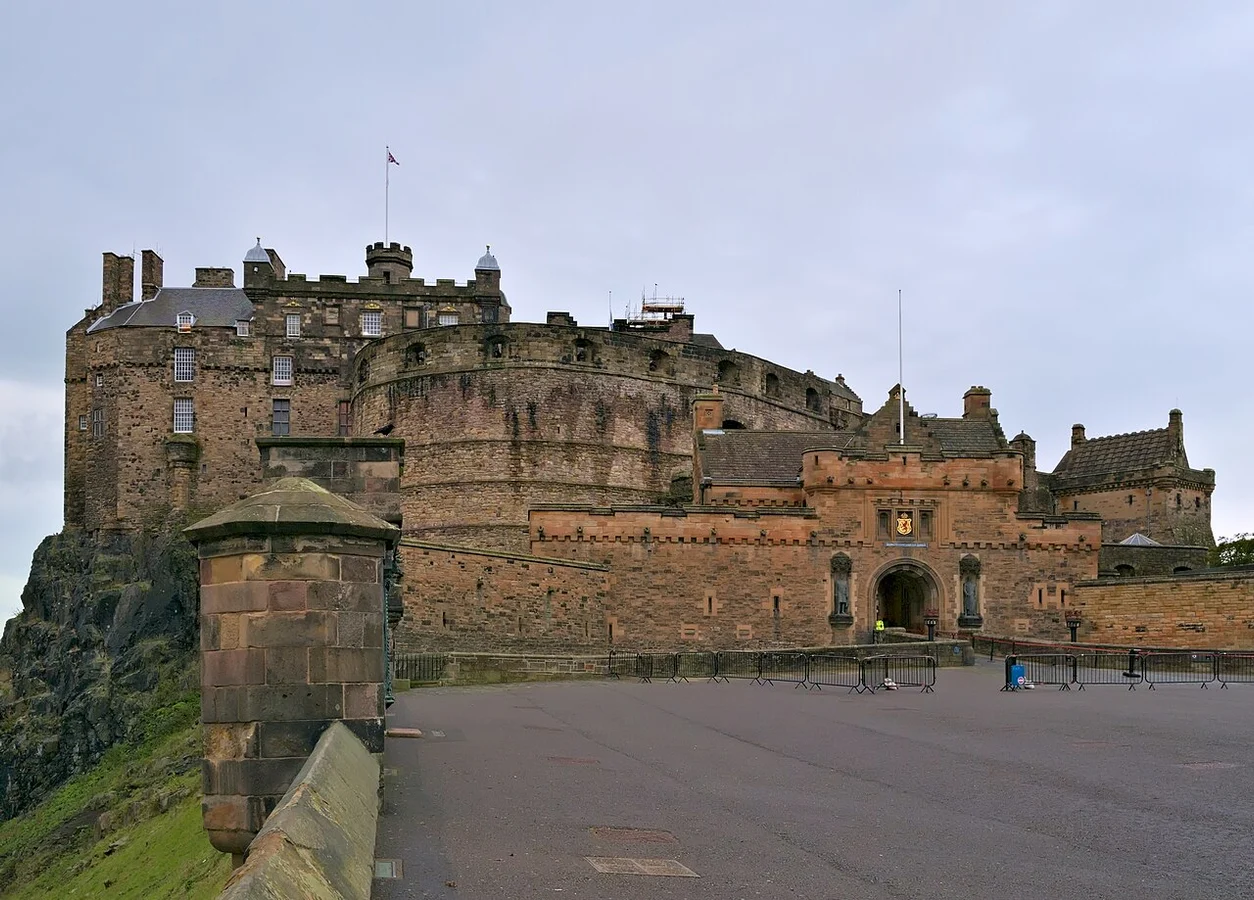
Edinburgh Castle
Fortress atop the volcanic plug, occupied since the Iron Age. Holds St Margaret's Chapel, dating to about 1130 and the city's oldest building, and the Honours of Scotland (crown, scepter, and sword). The one o'clock gun has been fired since 1861, every day except Sundays, Good Friday, and Christmas. The Stone of Destiny left the castle in 2024 and is on display at Perth Museum.
The fortress has been in use since the Iron Age, and St Margaret's Chapel, from around 1130, is Edinburgh's oldest building.
Check access
Royal Mile
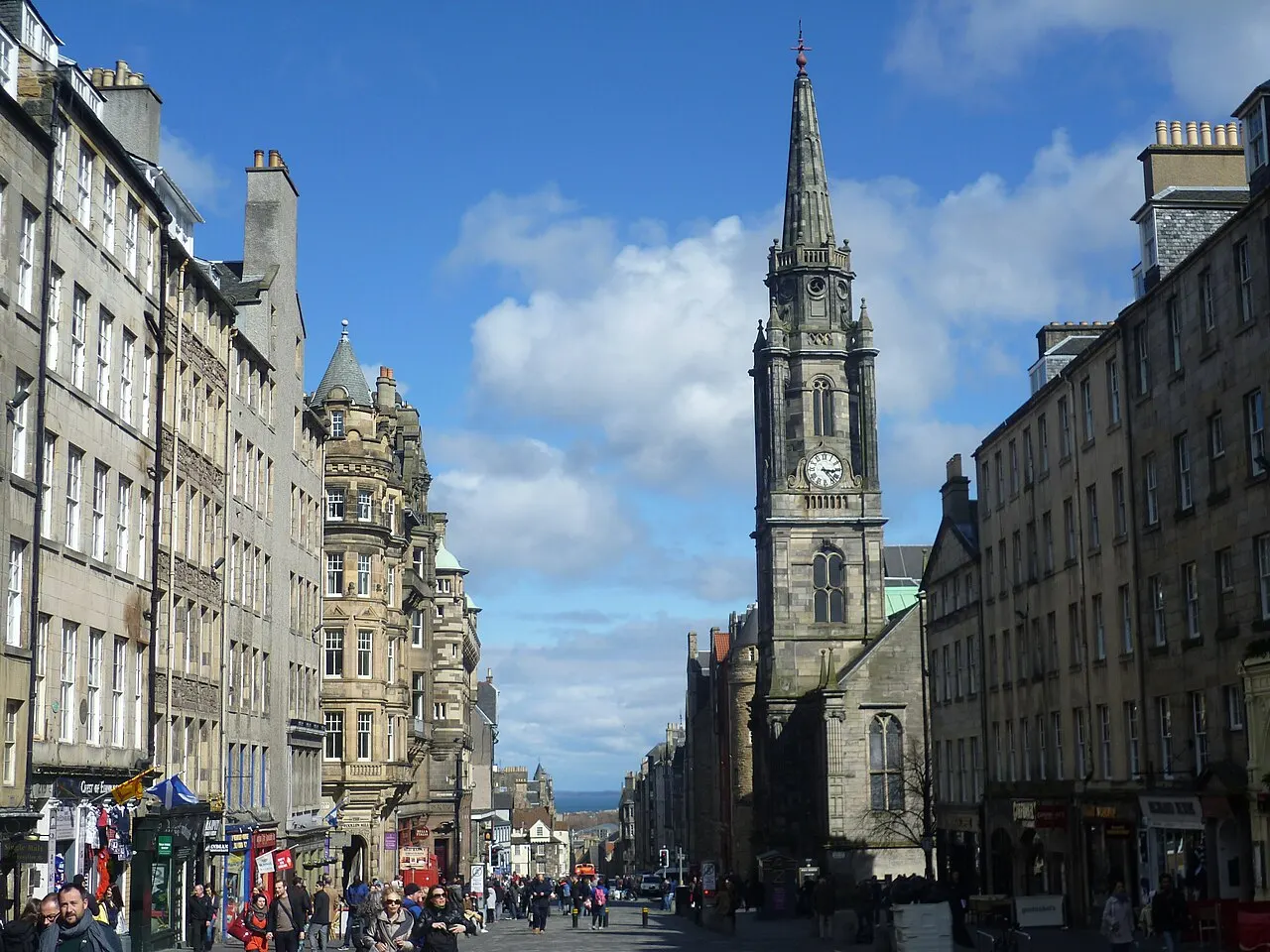
The 1.8 km spine of the Old Town between castle and palace, made up of four stretches with different names (Castlehill, Lawnmarket, High Street, Canongate). The real interest lies in the side closes (Advocate's, Riddle's, Dunbar's), steep stone alleys that drop away from the street and show the vertical scale of the medieval buildings.
The 1.8 km axis between castle and palace splits into Castlehill, Lawnmarket, High Street, and Canongate, and what pays off is ducking into Advocate's, Riddle's, and Dunbar's closes, steep stone alleys that drop away and reveal the height of the medieval buildings.
Check access
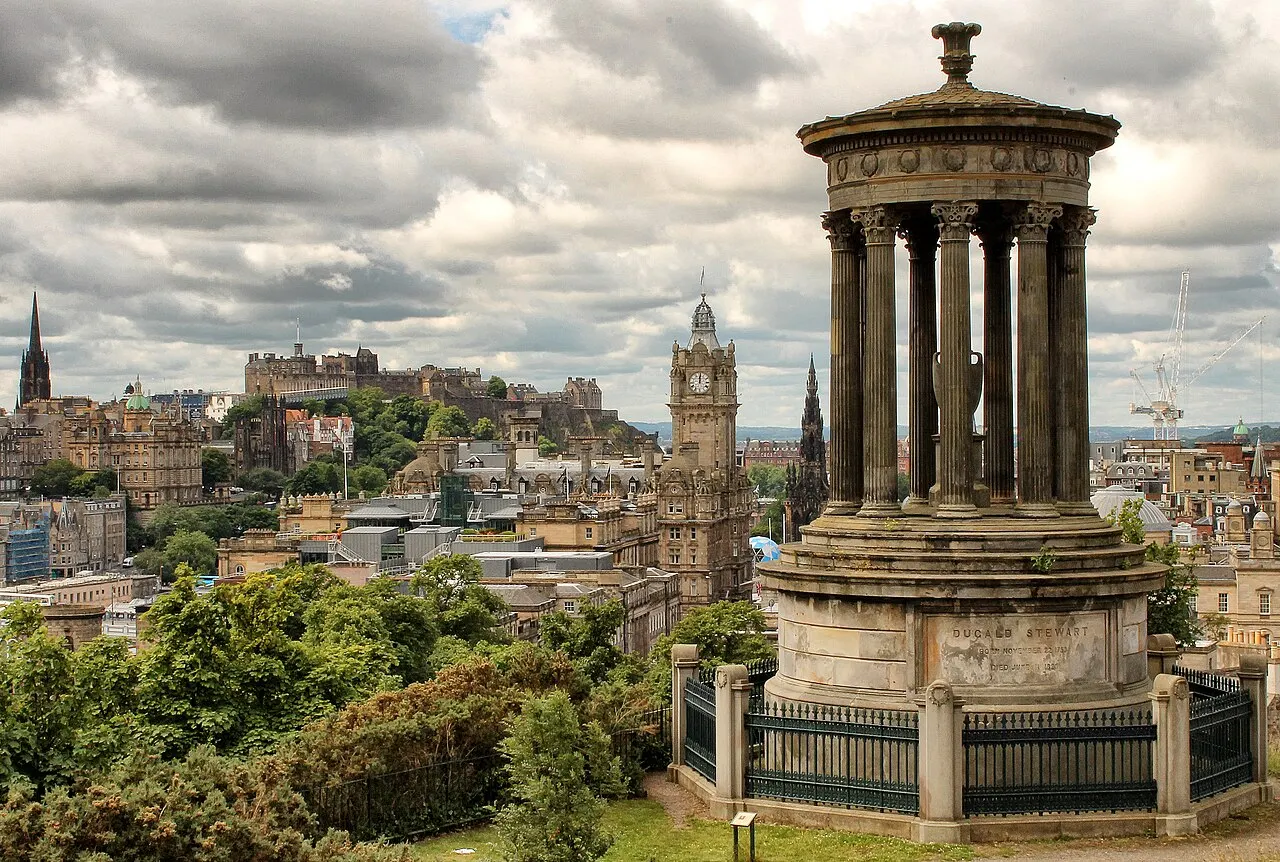
Calton Hill
A low hill east of Princes Street, with the city's best view after a 15-minute climb. It holds the National Monument, a replica of the Parthenon halted for lack of funds in 1829 and never finished, and the Nelson Monument (1816), whose time ball has dropped at 1pm since 1853 in sync with the castle gun.
A 15-minute climb gives the city's best view, with the National Monument, a Parthenon replica halted in 1829 and the Nelson Monument time ball, which has dropped at 1pm since 1853.
Check access

National Museum of Scotland
Free admission, on Chambers Street. It joins the Victorian Grand Gallery of 1866, with an iron and glass structure, to a modern 1998 building devoted to Scottish history. Home to Dolly the sheep, the first mammal cloned from an adult cell, and has an open rooftop terrace with a castle view.
Visitors today find in the museum, free admission, Dolly the sheep, the first mammal cloned from an adult cell.
Check access

Arthur's Seat and Holyrood Park
An extinct volcano, 251 m tall, inside the city limits, with a 40- to 60-minute climb from Holyrood. The alternative route via the Radical Road, under the Salisbury Crags cliff, has been closed due to rockfall. Check before you go. It was by reading these rocks that James Hutton formulated the idea of deep geological time.
It was reading the rocks of the cliff face that led Hutton to the notion of deep geological time.
Check access
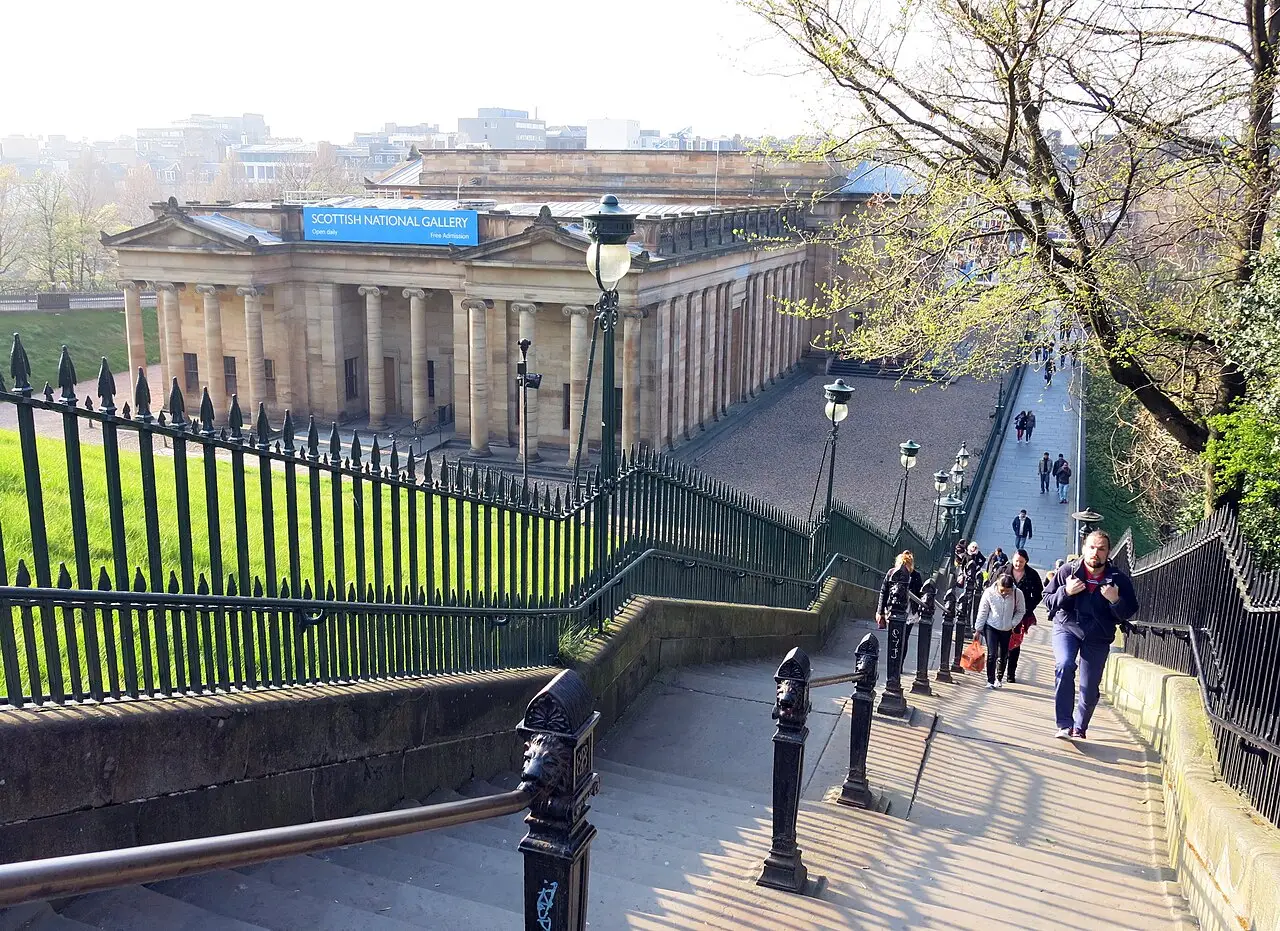
Scottish National Gallery
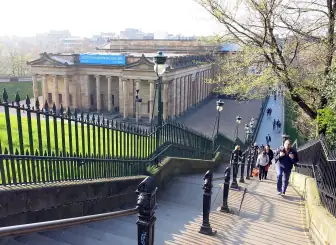
Free admission, on the Mound, between the two cities, in a neoclassical building by William Playfair opened in 1859. It holds Titian, Velázquez, Vermeer, and Raphael, plus the Scottish art galleries reopened in 2023 at garden level.
On the Mound, Playfair's neoclassical building dates from 1859; the rooms hold Titian, Velázquez, Vermeer, and Raphael.
Check access
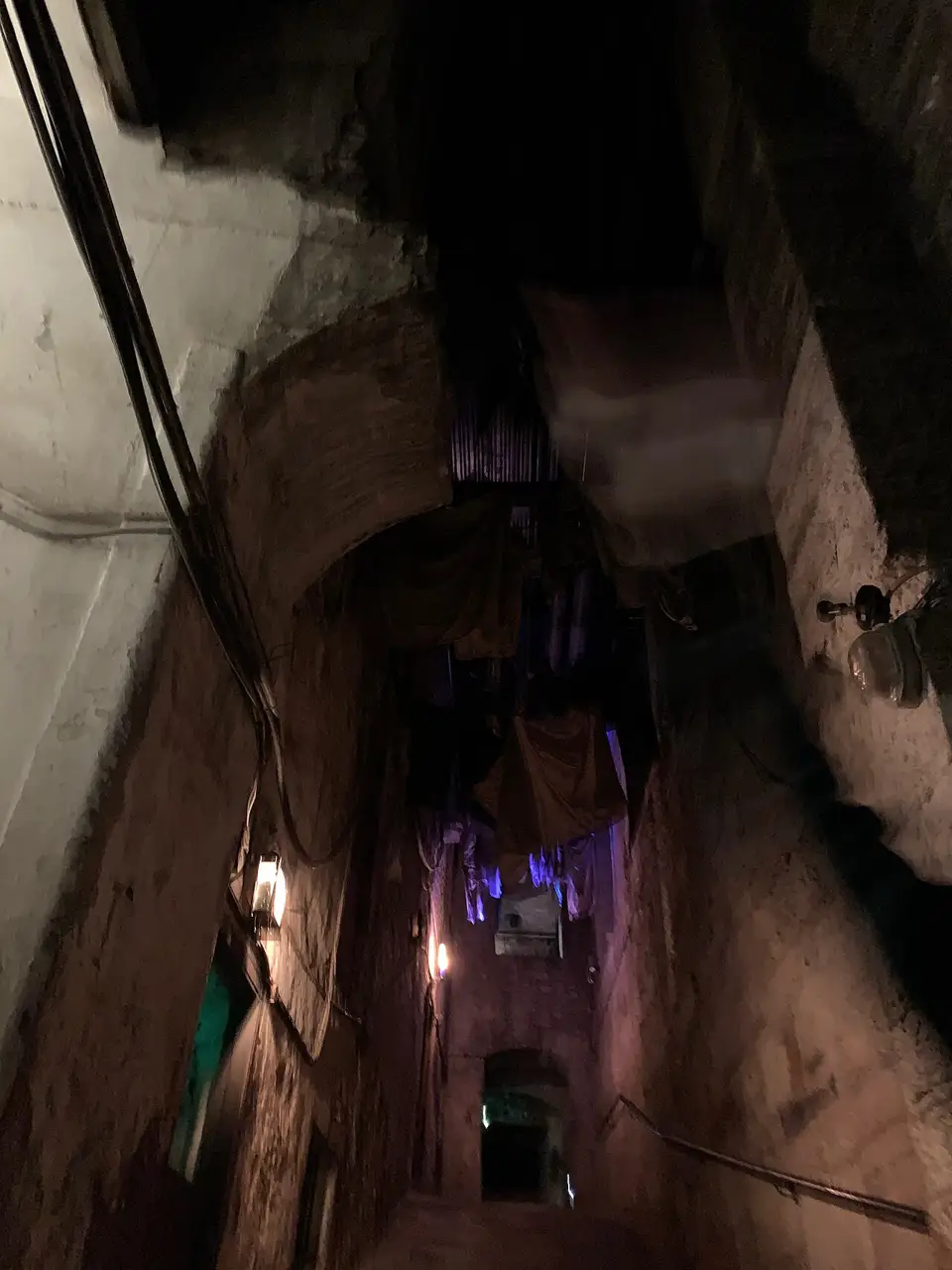
The Real Mary King's Close
A network of 17th-century alleys and houses buried beneath the Royal Exchange, built in 1753 on top of them. The guided visit walks through original underground rooms off the High Street and is the most direct way to understand how the city stacked itself up.
17th-century alleys and houses ended up under the Royal Exchange, built in 1753 on top of them, and the guided visit goes through original rooms beneath the High Street, where you can see the stacking.
Check access

Palace of Holyroodhouse
The monarch's official residence in Scotland, at the foot of the Royal Mile, with the ruins of the 1128 abbey in the garden. In the north tower apartments, Mary Queen of Scots witnessed the murder of her secretary David Rizzio, in March 1566. It closes when the royal family is in town, usually in late June or early July.
The monarch's official residence in Scotland holds one of the best-known scenes in Scottish history, the murder of David Rizzio in front of Mary Queen of Scots in 1566, and the ruins of the 1128 abbey in the garden. It costs about £20 and closes during the weeks the royal family is in town, in late June or early July, so it pays off mostly for anyone interested in the monarchy.
Check access
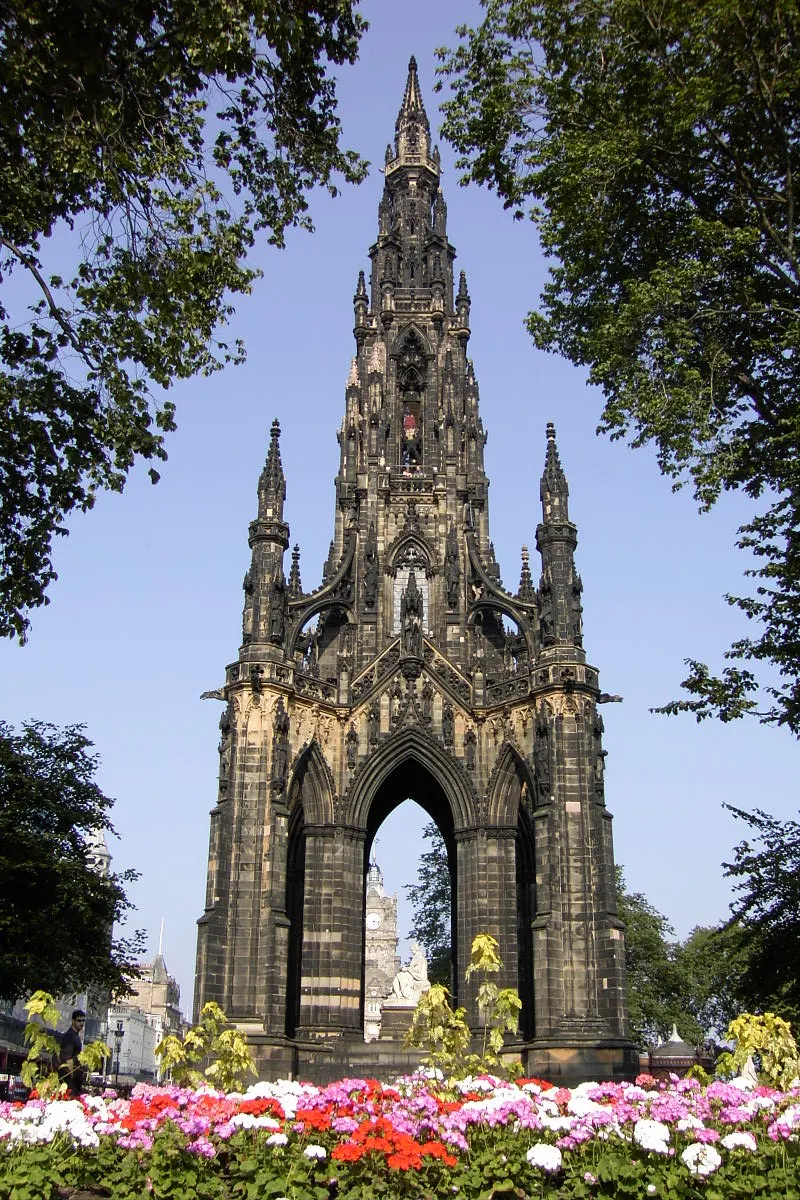
Walter Scott Monument
A 61.1 m Gothic tower on Princes Street, completed in 1844 to a design by George Meikle Kemp, a self-taught carpenter who won the competition and died before the opening. It's 287 tightly spiraling steps to the viewpoint, with a cheap ticket and timed slots.
It's 287 tightly spiraling steps inside 61.1 m of stone, with a timed slot, up to a viewpoint over Princes Street. The 1844 Gothic tower, designed by a self-taught carpenter who died before the opening, pays off more for the view of it from outside than the view from inside.
Check access
Nilo’s itinerary
Start with the basic programme and choose extensions for the time you have.
Plan my days in the app ↗Day 1 · From Edinburgh Castle down to the foot of the Royal Mile
Start at Edinburgh Castle with a timed ticket for 9:30am; see St Margaret's Chapel and the Honours of Scotland before the tour groups arrive.
Walk down the Royal Mile, ducking into two or three side closes; stop at St Giles to see the Thistle Chapel, from 1911.
At 1pm, stand on the High Street to hear the castle gun, fired on operating days except Sundays, Good Friday and Christmas Day; the time ball that drops at the same moment on Nelson Monument can only be seen from Calton Hill.
Have a scotch pie or cullen skink for lunch at a Grassmarket pub, then head to The Real Mary King's Close with a booked guided visit.
Finish at Holyroodhouse and the abbey ruins, at the foot of the street, and head back through Canongate at dusk.
Day 2 · New Town, museums, and the hill
Cross the Princes Street Gardens to the Scottish National Gallery, free, and set aside an hour for the Scottish art galleries.
Climb the 287 steps of the Walter Scott Monument, or at least take a close look at the 61.1 m tower, and walk along George Street to Robert Adam's Charlotte Square.
Have lunch in Stockbridge, 15 minutes on foot, and head down to the Water of Leith toward Dean Village and Telford's Dean Bridge.
Dedicate the afternoon to the National Museum of Scotland, on Chambers Street, ending on the top-floor terrace.
Climb Calton Hill at the end of the day (15 minutes) to see the unfinished National Monument and the city against the estuary.




If you stay longer
Day 3 · Arthur's Seat in the morning and Leith's port at night
Climb Arthur's Seat early via the Holyrood trail: 40 to 60 minutes to the 251 m summit, with a windbreaker and grippy shoes.
Come down through Holyrood Park and have the full Scottish breakfast, with tattie scone and lorne sausage, at a Southside café.
Spend the afternoon at the Royal Botanic Garden, founded in 1670, with free entry to the park. Check first which glasshouses are open, as they undergo restoration work.
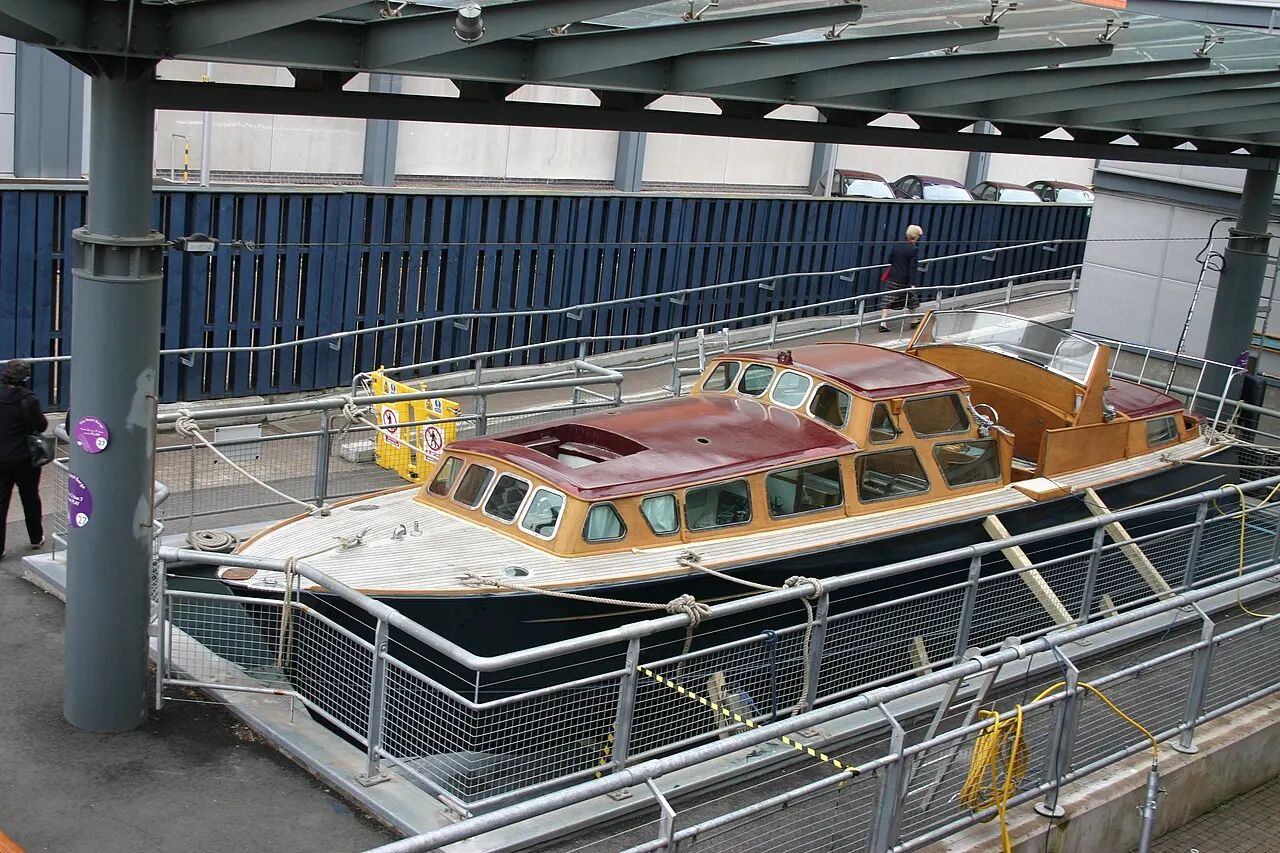
Take the tram or bus to Leith and visit the Royal Yacht Britannia, at Ocean Terminal, before the last entry time.
Have dinner at The Shore, by the canal, and close the day with chips with salt and sauce on the walk back.

Food
 AI illustration
Haggis, neeps and tatties
Sheep's stomach stuffed with sheep's offal, oats, onion and spices, served with mashed swede and potato. It's on restaurant and pub menus year-round and is the centerpiece of the Burns Supper on January 25. Almost every menu has a vegetarian version.
 AI illustration
Chips with salt and sauce
The trademark of Edinburgh's chip shops: brown sauce diluted with vinegar poured over the fries. In Glasgow they use salt and vinegar; here, the question “salt and sauce?” is practically rhetorical. It costs £4–6 and it's classic post-pub food.
 AI illustration
Cullen skink
A thick soup of smoked haddock, potato, onion, and milk, originally from Cullen, on the Moray coast. It appears as a starter in nearly every serious pub and is a full meal when served with bread.
 AI illustration
Scottish breakfast
Egg, bacon, beans, mushroom, and tomato, plus three local items: tattie scone (a flat potato cake), lorne sausage (square-cut sausage), and a fried slice of haggis or black pudding. Served until mid-afternoon, £9–14.
 AI illustration
Scotch pie and bridie
A firm hot-water pastry pie filled with minced mutton, made to be held in hand while standing. The raised rim doubles as a cup for beans or mash. The Forfar bridie is the half-moon variant, with beef and onion. Bakery and stadium fare, £2–4.
 AI illustration
Haggis pakora
An invention of Scotland's Indian and Pakistani restaurants: haggis balls battered in chickpea flour and fried, served with tamarind sauce. A direct example of what post-war immigration did to local cooking.
 AI illustration
Whisky and gin
Edinburgh doesn't distill much, but it's where you taste and buy: malt bars with 200 to 400 labels, a dram from £5–8, and the Johnnie Walker visitor center on Princes Street, opened in 2021. Local gin has become a recent industry, with distilleries open for visits in Leith and downtown.
 AI illustration
Sweets and Irn-Bru
Tablet (a crumbly milk-and-sugar sweet, harder than fudge), shortbread, empire biscuits and Tunnock's chocolate teacakes. To drink, there's Irn-Bru, the orange soda made by A.G. Barr since 1901 and sold on every corner.
Day trips

South Queensferry and the Forth Bridge
14 km west; train from Waverley to Dalmeny in 15–20 minutes, plus 10 on foot. The cantilever railway bridge, from 1890 and 2.5 km of total span, has been a World Heritage Site since 2015 and stands next to two other road bridges. Boats leave the pier for the island of Inchcolm, with a 12th-century abbey and a seal colony.

Stirling
60 km northwest; direct train in about 50 minutes. A royal castle on another volcanic rock, with the Great Hall restored in 1999, plus the Wallace Monument and the Bannockburn battlefield (1314) nearby. Doable in half a day, and you can continue on to Loch Lomond by car.
Rosslyn Chapel
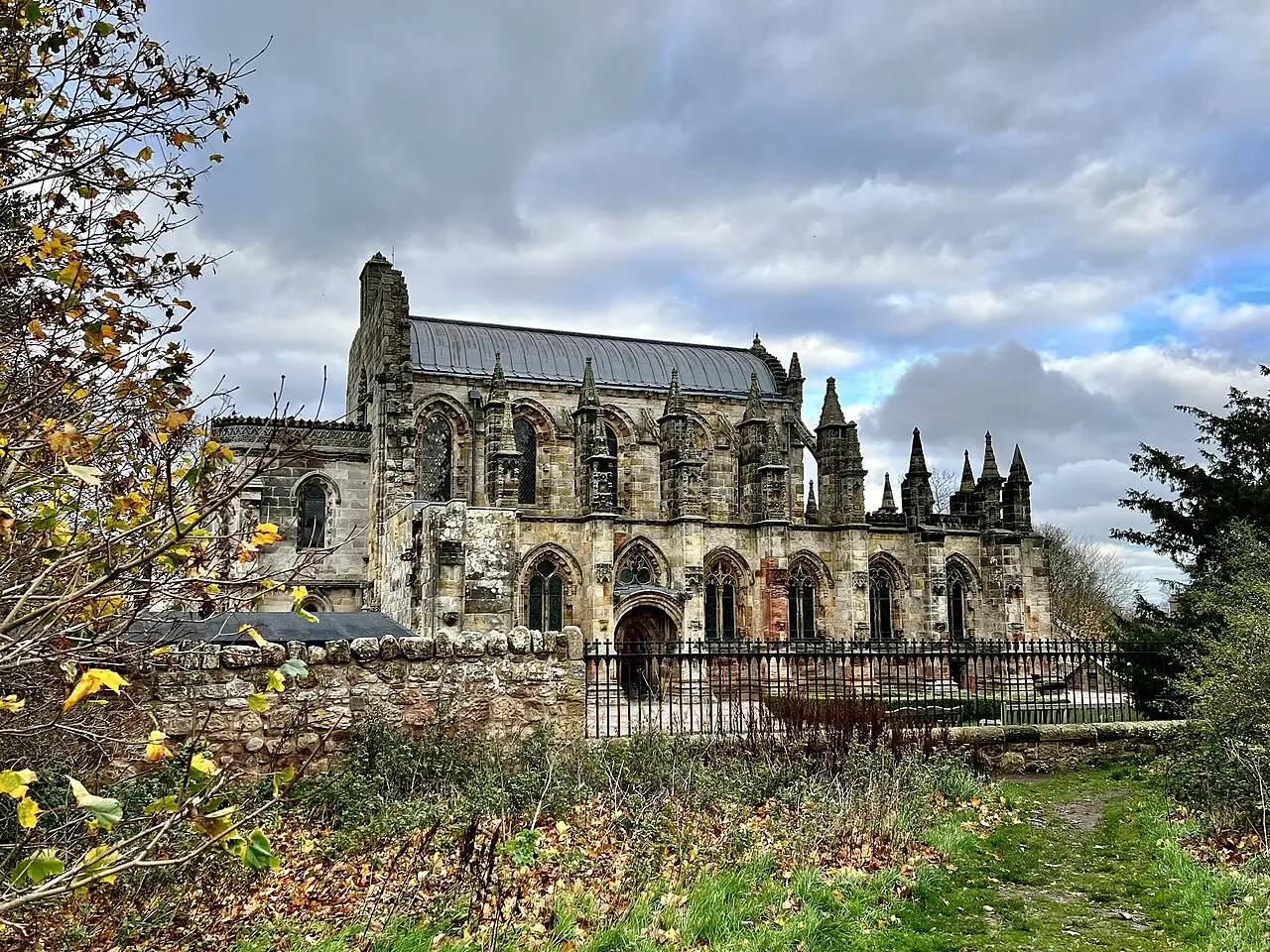
11 km south, in Roslin; bus 37 from the New Town takes about 45 minutes. A collegiate chapel begun in 1446, with the most densely carved stone interior in Scotland: the Apprentice Pillar and hundreds of carved heads. The Da Vinci Code made it famous, which means lines, so arrive at opening time. Next door, the Roslin Glen gorge makes for an hour-long walk.
Where to begin
From Edinburgh Castle down to the foot of the Royal Mile
Start at Edinburgh Castle with a timed ticket for 9:30am; see St Margaret's Chapel and the Honours of Scotland before the tour groups arrive.
New Town, museums, and the hill
Cross the Princes Street Gardens to the Scottish National Gallery, free, and set aside an hour for the Scottish art galleries.
Arthur's Seat in the morning and Leith's port at night
Climb Arthur's Seat early via the Holyrood trail: 40 to 60 minutes to the 251 m summit, with a windbreaker and grippy shoes.
Money
The currency is the pound sterling. Banknotes issued by Scottish banks (Bank of Scotland, Royal Bank of Scotland, Clydesdale) circulate normally here, but may be refused by merchants in England: spend them before leaving Scotland. Contactless cards are accepted for practically everything, including buses and markets; cash is optional. Approximate 2026 ranges: coffee £3.20–4.20; a pint of beer £5.50–7; a pub lunch £12–18; dinner at a mid-range restaurant £28–45 per person without drinks; a standard whisky dram £5–8; a hostel bed £30–50; a mid-range hotel £130–200 a night, rising to £300–450 in August. The national museums and galleries are free, which looks like an accounting error at first glance. The castle costs around £22 and Holyroodhouse about £20 (with a timed ticket). Tipping: 10% at a restaurant with table service, if there's no service charge on the bill; nothing at the pub bar. Since July 24, 2026, a 5% municipal visitor levy on the nightly rate has been in effect, charged before VAT and capped at the first five consecutive nights. Check whether your booking already includes it.
Getting there and around
Airport: 13 km west, three ways out
Edinburgh Airport (EDI) lies about 13 km west of the center and is Scotland's busiest. There are three ways out. The tram leaves from the terminal door and takes 30 to 35 minutes to St Andrew Square, in the center, then continues to Newhaven, with an airport ticket of around £8.50 (fare held in the 2026 review); the Airlink 100 bus covers the same route in about 30 minutes for about £5.50 and runs 24 hours. A taxi or ride-hailing app costs £25–35 and takes 20 to 40 minutes depending on traffic. By train, the main Waverley station sits at the bottom of the valley between the two towns, and Haymarket serves the west: Glasgow in about 50 minutes, London King's Cross in 4 hours 20 minutes to 4 hours 40 minutes with LNER, and the Caledonian Sleeper overnight train to London, with cabins.
Flat fare of £2.40 per ride, no distance charge
Within the city, Lothian Buses runs the bus network at a flat fare of £2.40 per adult trip since February 22, 2026, with no charge by distance. Pay by contactless card or with exact change in coins. The day ticket costs £6 and covers bus and tram within the urban area. The tram is a single line, from the airport to Newhaven, opened in 2014 and extended to the port in June 2023. There are night lines with a higher fare on weekends. Black cabs can be hailed on the street, and ride-hailing apps work normally. On foot, the center is about 2 km end to end, but it's steep, and the cobblestone paving (setts) gets slippery in the rain: wear shoes with grip. By bike, the climbs are tough, but there's a good network of old railways converted into cycle paths, along with the Water of Leith trail.
Safety
Edinburgh is a low-risk city for visitors, with little violent crime in the tourist areas and good lighting in the center. The real risk is pickpocketing and phone theft in crowds: the Royal Mile and Grassmarket in August, lines for shows, packed buses and the Hogmanay street party. At night, the Cowgate is the hub of the weekend bar crawl, and around 2am the street fills with noise and drunk people, though the risk of violence stays low. Common scams: resold fake tickets for the Tattoo and the Fringe (buy only through official channels), improvised unlicensed “ghost tours” and exchange bureaus on Princes Street with poor rates. The biggest physical risk is mundane: wet cobblestones, close stairways without handrails, 60 km/h winds on Calton Hill and fog on Arthur's Seat. In summer, gulls snatch food out of people's hands in Leith and Portobello, which is annoying and occasionally hurts: it's easy to lose half a scotch pie to one of them. Emergency: 999 or 112; for non-urgent matters, 101.
Etiquette tips
Scottish isn't English
Calling a Scot “English” is the most common and most avoidable social mistake. “British” is acceptable in a formal context; “Scottish” is correct day to day. “Scotch,” on the other hand, is an adjective for whisky and for a breaded hard-boiled egg, never for people.
At the pub, order and pay at the bar
There's no waiter coming to the table and no bill at the end: you go to the bar, order, pay right away, and carry your own glass. If you're in a group, the round rule applies. Each person buys a drink for everyone once, and whoever leaves before buying their round is noticed.
The Fringe flyerers on the Royal Mile
In August, the flyerers on the Royal Mile are part of the festival, because that's how the small shows sell tickets. Accept the flyer or decline with a clear “no thanks, cheers” and keep walking: stopping and staying silent traps you and the flyerer in a conversation neither of you wants.
Kilt: formal wear for weddings and Hogmanay
Kilts are worn to weddings, graduations, rugby matches, and Hogmanay, with a jacket and knee-high socks. It's not a costume or a tourist look, and the question of what's worn underneath is old and tired: skip it.
Chatting with strangers is normal
Strangers talk to you in line, on the bus, and at the bar, and they're not selling anything. Someone asking “You alright?” is just greeting you: answer “aye, yourself?”. Ignoring it comes off ruder here than in London.
Whisky without ceremony
Asking for a few drops of room-temperature water in a single malt is normal practice and offends no one. Ice in an expensive malt draws attention, and mixing soda into a rare bottle is the one thing a bartender might comment on.
Mistakes to avoid
Booking August lodging late
Booking lodging in August just a few weeks ahead. During the three weeks of the Fringe, hotel rates more than double and availability disappears. Those going for the festivals book six months or more ahead, and those not going should pick another month.
Arthur's Seat in smooth soles
Climbing Arthur's Seat in smooth-soled shoes or after rain. It's polished basalt, with strong wind at the top and stretches without handrails, and there are rescues every year. Radical Road, the path beneath Salisbury Crags, was closed because of rockfalls, and a partial reopening was announced for 2026: check the Historic Environment Scotland website to see whether it's open before planning your climb that way.
The Highlands in a day
Treating Edinburgh as a base for a one-day trip to the Highlands. Loch Ness is over 250 km away; the bus day trip takes 12 hours, leaving little time on the ground. For mountain scenery in a day, stay closer, at Stirling, Loch Lomond, or the Pentlands, 30 minutes from the center.
Arriving without an approved ETA
Arriving at the airport without an approved ETA. The UK's electronic travel authorization is mandatory for Brazilians, costs £20 since April 8, 2026, is valid for two years, and must be requested before boarding through the official UK government app: airlines will deny check-in without it.
Tattoo ticket left for August
Waiting until the last minute to buy the Royal Edinburgh Military Tattoo ticket. Nights on the castle esplanade sell out months ahead, so buy as soon as your dates are set, through official channels, and bring a rain jacket, because the show goes on even in the rain.
Useful phrases
Aye
Yes: used all the time, including in place of “yes”
Wee
Small; fits into nearly every sentence (“a wee bit”, “a wee dram”) and often just means affection
Ah dinnae ken
I don't know; “ken” is the verb to know in Scots (“d'ye ken?”, do you know?)
You alright?
A greeting equivalent to “how's it going?”. The expected answer is “aye, yourself?”, not a report
Cheers
Works as thanks, goodbye, and a toast, in that order of frequency
Slàinte mhath
Cheers, in Gaelic (pron. “SLAN-jeh va”), said when toasting with whisky
Districts
Old Town
The medieval ridge from the castle to Holyrood, with the Royal Mile, the vertical closes, the Grassmarket, and the Cowgate at the bottom of the gorge. It concentrates the monuments, the historic pubs, and, in August, nearly every Fringe venue. It's where you'll spend the most time and the fewest nights, because lodging is expensive and noisy.
New Town
The Georgian grid neighborhood, laid out in 1767 north of the gardens: Princes Street for shops, George Street for bars and restaurants, Queen Street and Charlotte Square for Robert Adam's architecture. The logical base for anyone who wants to sleep in the center without sleeping inside the festival.
Leith and The Shore
The former independent port, annexed in 1920, today the city's food hub, with award-winning restaurants along the Water of Leith quay and the Royal Yacht Britannia moored at Ocean Terminal. The tram line has reached Newhaven since 2023.
Stockbridge
A residential neighborhood northwest of the center, on the Water of Leith, with low-rise houses, secondhand shops, the Sunday market, and Circus Lane. It's 15 minutes on foot from the New Town and the natural gateway to the Royal Botanic Garden.
Southside, Newington, and Marchmont
The territory of the University of Edinburgh (founded 1583), with blocks of Victorian tenements, the Meadows park, and the National Museum of Scotland. Student rents, cheap cafés, and independent cinemas.
West End and Dean Village
The western tip of the New Town, with the Lothian Road theater block, the Episcopal Cathedral of St Mary, and, down in the valley, the 19th-century miller's village of Dean Village, next to Thomas Telford's Dean Bridge (1832).
Bruntsfield and Morningside
Bruntsfield and Morningside lie to the south and suit those who prefer leafy residential streets and three-story buildings. Their shopping avenues bring together bakeries, delis and used bookstores, in a middle-class setting that appears in Muriel Spark's satire about the teacher Jean Brodie.
Portobello
Edinburgh's beach, about 5 km east of the center, with a Victorian promenade, Turkish baths, and ice cream shops. Reachable by bus in 25–30 minutes; on the few warm days of the year, the whole city shows up there.
History
6th c. · Din Eidyn, the fort on the rock
The Brittonic poem Y Gododdin, set around the year 600, mentions the fortress of Din Eidyn atop the volcanic plug. It's the earliest known reference to the place.
638 · Northumbrian conquest
Angles from Northumbria take the fort and the name anglicizes to Edinburgh. For three centuries the rock sits on the shifting border between Brittonic, Anglian, and Scottish kingdoms.

around 1124–1128 · Royal burgh and Holyrood Abbey
David I grants the settlement royal burgh status and founds Holyrood Abbey in 1128. This sets the castle–abbey axis that becomes the Royal Mile.
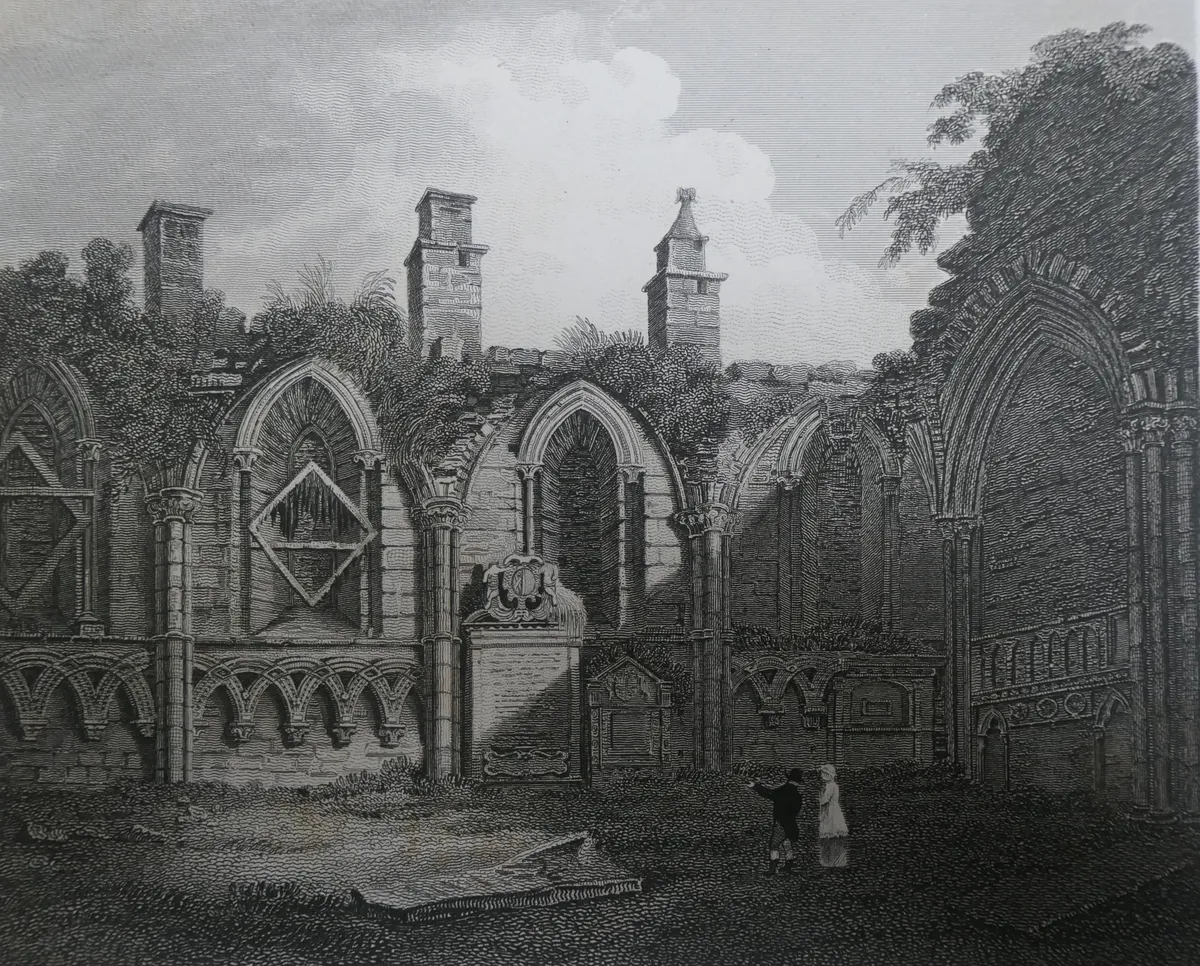
1437 · Capital of the Scottish kingdom
After James I is assassinated in Perth, the court settles in Edinburgh. Parliament, treasury, and courts follow the move.

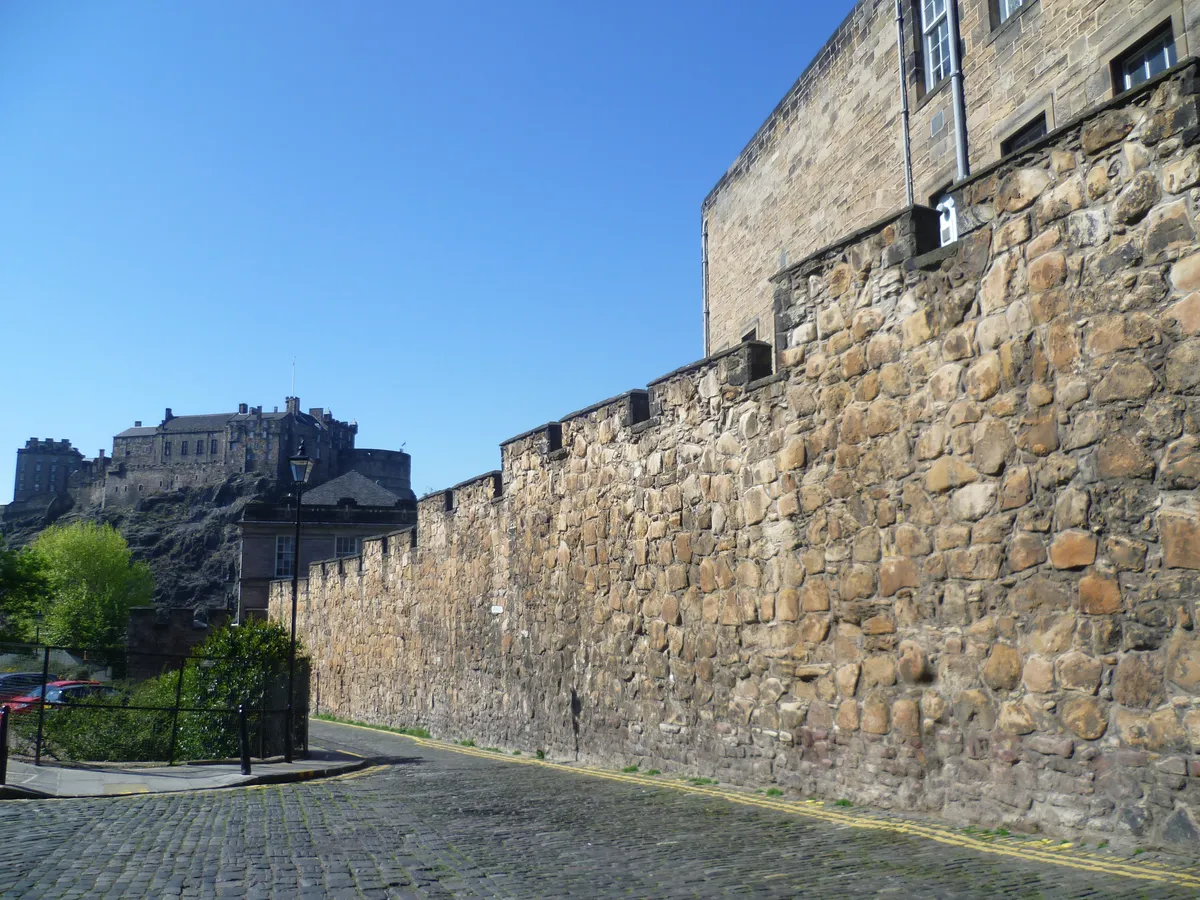
1513 · Flodden and the wall
Defeat to the English at Flodden kills James IV and thousands of Scots. The city hastily builds the Flodden Wall and, penned inside it, starts growing upward.
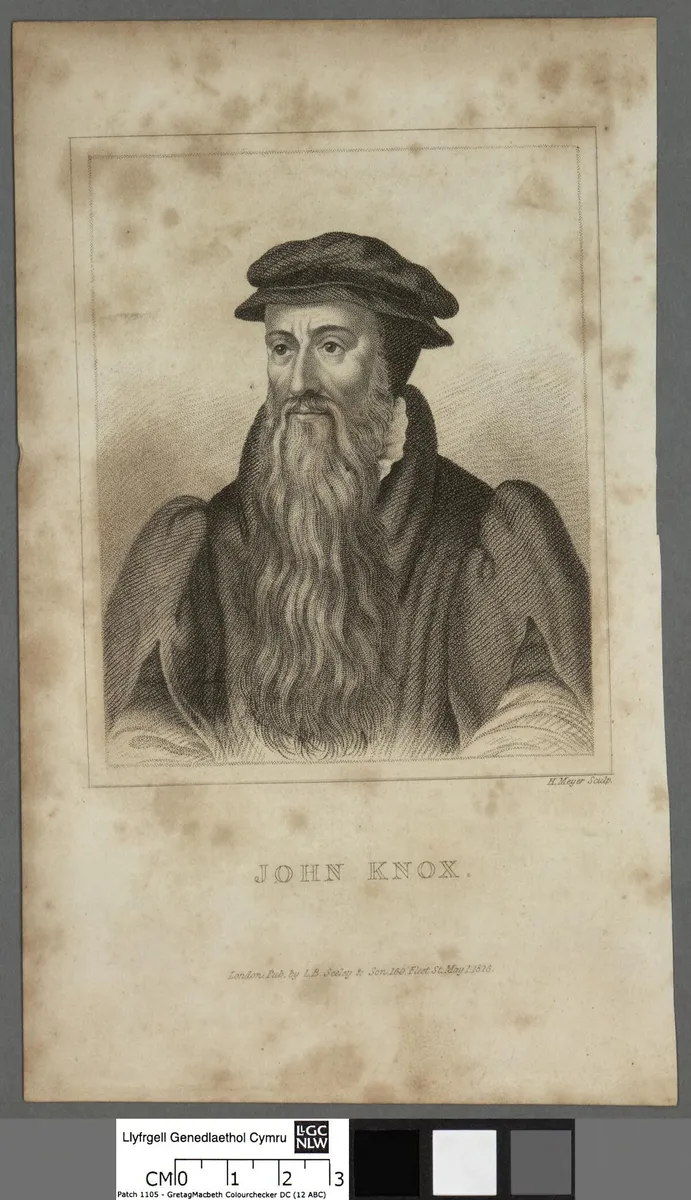
1560 · The Reformation and John Knox
Parliament breaks with Rome and John Knox preaches at St Giles. Images and altars leave the churches; the parish school network that underpins Scottish literacy is set up.
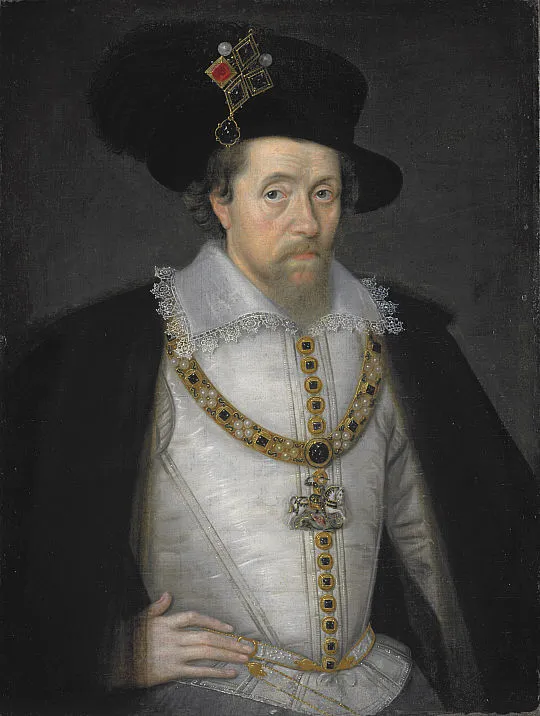
1603 · Union of the Crowns
James VI of Scotland inherits the English throne as James I and moves the court to London. Edinburgh loses the king but keeps its own law, church, and university.
1707 · Act of Union
The Scottish parliament votes its own dissolution and merges into Westminster's. The city goes 292 years without a legislature, with strong institutions and no government of its own.
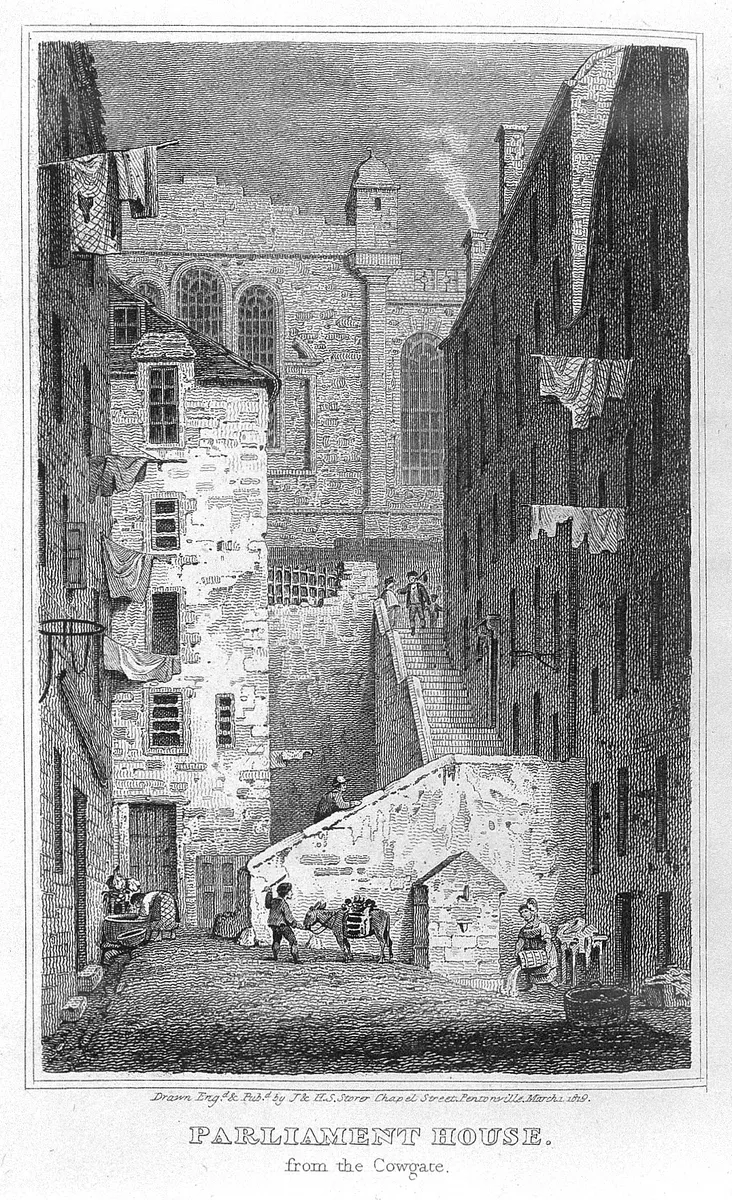
1750–1800 · The Scottish Enlightenment
David Hume, Adam Smith, Joseph Black, and James Hutton work a few blocks from each other. The Wealth of Nations comes out in 1776; modern geology is born from reading the rocks of Salisbury Crags.

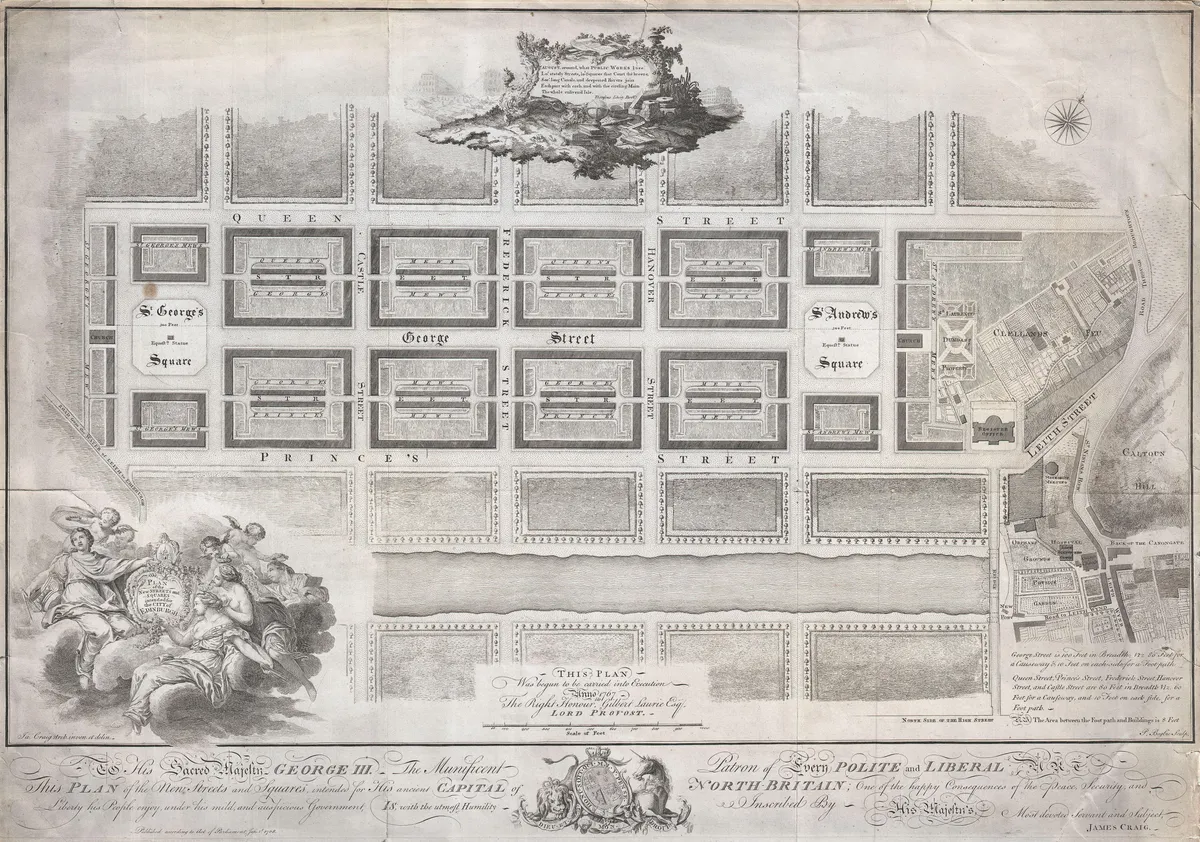
1767–1830 · The New Town
The grid street plan of the young James Craig, winner of the 1766 competition, opens the city to the north over the drained valley of the Nor Loch. Robert Adam's Charlotte Square dates from 1791.
1999–2004 · Parliament returns
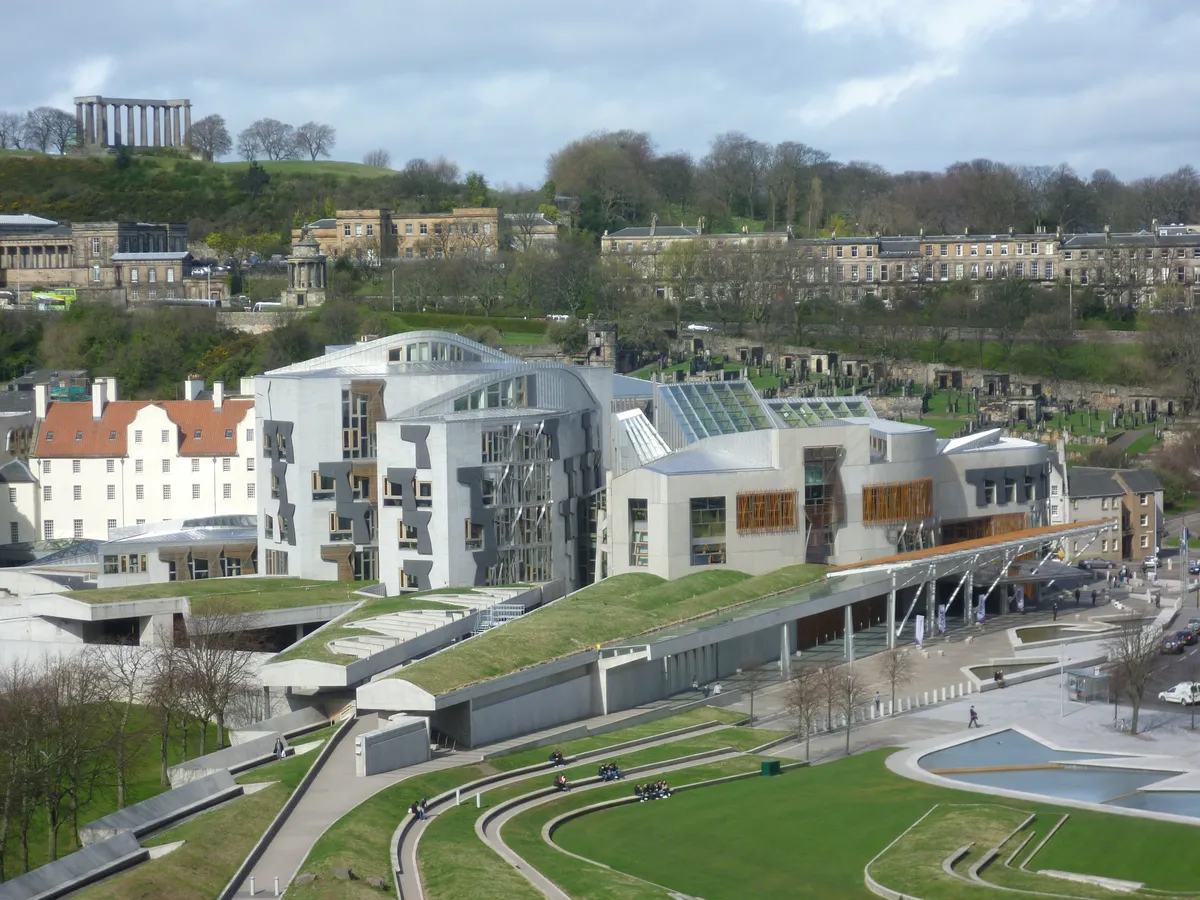
After the 1997 referendum, the Scottish Parliament meets again on May 12, 1999. Enric Miralles's building in Holyrood opens in 2004.
Complete history
Castle Rock and the founding, up to 1128
Edinburgh exists because of a rock. Castle Rock is the plug of a volcano extinct for about 340 million years; the glacier that came from the west scraped away the soft ground around it, hit the basalt, and left behind a ramp of debris sloping east. Geologists call the shape crag and tail. The whole Old Town is that ramp: a single 1.8 km spine street, from the castle to Holyrood Abbey, with hundreds of alleys (the closes) dropping off both sides like fish bones. The fortress of Din Eidyn appears in the poem Y Gododdin around the year 600, the Angles of Northumbria take it in 638, and it's David I who, around 1124, turns the settlement into a royal burgh and founds the abbey in 1128, fixing the two poles of the axis.
Capital in 1437, a wall after Flodden in 1513
Edinburgh became the capital in 1437, after the murder of James I in Perth, and less than a century later suffered its worst blow: the defeat at Flodden, in 1513, killed James IV and much of the nobility. The city then closed itself inside the Flodden Wall, a tight perimeter it would only break out of 250 years later. With no land to spread sideways, the solution was to stack: the tenements of the Royal Mile reached ten or twelve stories in stone, with rich and poor families in the same building, separated only by height. The Reformation of 1560 changed worship and created the network of parish schools. In 1603 James VI took the court to London and, in 1707, the parliament was dissolved into Westminster's. What remained is key to understanding the city: Scotland kept its own legal system, church and universities, and Edinburgh became a capital of lawyers, doctors, publishers and professors, not ministers.
The Enlightenment comes out of that pile of institutions
The Scottish Enlightenment grew out of this accumulation of institutions. Between 1750 and 1800, Hume, Adam Smith, the chemist Joseph Black and the geologist James Hutton frequented the same taverns within a radius of five hundred meters. The medical school drew students from all over Europe and, with them, a demand for cadavers that ended in the Burke and Hare murders of 1828. At the same time, the elite abandoned the vertical maze: the 1766 competition chose James Craig's grid street plan, the marshy Nor Loch was drained from 1759 and the New Town rose from 1767, geometric, well lit and expensive. The city came to have two bodies (the “Athens of the North” and “Auld Reekie,” the smoky old town), and that double identity still runs through local literature, from Strange Case of Dr Jekyll and Mr Hyde to contemporary crime novels.
The drained valley fills with rails
The 19th century fills the drained valley with rails: Waverley station opens in 1846 in the middle of the gap between the two cities, which is why Edinburgh has its central station in a landscaped pit. The Walter Scott Monument is completed in 1844. The port of Leith, an independent industrial town, is annexed in 1920 despite an opposing local plebiscite, and spends most of the 20th century in decline: the setting of Trainspotting. In 1947, two years after the war, the city invents the Edinburgh International Festival as a gesture of European cultural rebuilding; eight uninvited companies perform on the fringe of the official program and unwittingly create the Fringe. The Old and New Towns join the UNESCO list in 1995.
Parliament, finance, and festivals made today's city
Today's Edinburgh is the product of three forces. Parliament returned in 1999 and got its own building in 2004, giving the city back its role as a seat of government. Finance and asset management, inherited from 19th-century banks and insurers, remain the largest private employer. Tourism, finally, has grown into a public policy problem: millions of visitors a year in a city of 530,000 people, with licensing rules for short-term rentals in force since 2023 and a 5% visitor levy on lodging charged since July 24, 2026. The tram, opened in 2014 and extended to Newhaven in June 2023, was the capital's first major transportation project in a century. On the street, English is the everyday language, but Scots survives in daily vocabulary (wee, aye, ken, bairn). Gaelic appears on official signage and in the parliament's name, and the distinction between “Scottish” and “English” shapes much of everyday conversation.
The route from the castle to the abbey is a single 1.8 km street that changes its name four times: Castlehill, Lawnmarket, High Street and Canongate.
Hume and Adam Smith frequented the same taverns.
Geography and shape of the city
The seven hills and the two ridges
The city occupies a band of seven hills between the Pentland Hills, to the southwest, and the Firth of Forth, the estuary that separates it from the county of Fife to the north. The center is organized around two parallel ridges separated by a valley: on the southern ridge, Castle Rock (about 130 m above sea level) and the Royal Mile running east down to Holyrood; in the valley, drained from 1759, Princes Street Gardens and Waverley station; on the northern ridge, the Georgian grid of the New Town, with Princes Street, George Street and Queen Street crossed by regular side streets.
Slopes, urban bridges, and the port of Leith
Because the center is split into two ridges separated by a valley, almost every trip involves going up or down, and there are urban bridges (South Bridge, George IV Bridge) whose “ground floor” is the fourth story of the street below. East of the center, Holyrood Park holds Arthur's Seat, an extinct volcano 251 m tall, and the cliff face of the Salisbury Crags, inside the city limits. Leith, the port annexed in 1920, lies about 3 km to the north, at the mouth of the Water of Leith, a stream whose roughly 19 km trail crosses the city from Balerno to the estuary.
Maritime climate and the haar
The climate is temperate maritime and windy: mild summers, winters without extreme cold, rain spread across the year, and the haar, the cold fog that rolls in from the North Sea in spring and early summer.
Culture
The first City of Literature
Edinburgh was UNESCO's first City of Literature, in 2004, and the title is literal. Robert Louis Stevenson (1850) and Arthur Conan Doyle (1859) were born here: Doyle drew Sherlock Holmes from medicine professor Joseph Bell; Walter Scott invented the historical novel here; Muriel Spark wrote The Prime of Miss Jean Brodie (1961) here, Irvine Welsh wrote Trainspotting (1993) about the Leith of heroin and unemployment, and Ian Rankin has set his inspector Rebus series in real bars around the city since 1987. Writing remains an industry: Edinburgh hosts publishers, the National Library of Scotland, and a book festival that fills all of August.
From ceremonial bagpipes to the pub session
Musical life has two poles. The ceremonial bagpipes appear at the Tattoo and at weddings, and on the street only with the Royal Mile pipers; traditional music lives in informal pub sessions, with fiddle, accordion and bodhrán, usually with no stage and no fee. The city produced The Proclaimers, Idlewild, the electronic duo Boards of Canada and Young Fathers, winners of the Mercury Prize in 2014. In sports, rivalry shapes the calendar: Hibernian (founded in 1875, Easter Road stadium, in Leith) against Heart of Midlothian (1874, Tynecastle) in the Edinburgh derby, and rugby at Murrayfield, with 67,144 seats, on Six Nations weekends.
University, parliament and churches
Three institutions weigh on the city's daily life. The University of Edinburgh, founded in 1583, has tens of thousands of students and fills the Southside, and the Scottish Parliament, at Holyrood, opens its public gallery free of charge during sessions. The Presbyterian heritage still shows in the vocabulary, the schedules and the plain interiors of the Reformed churches, in contrast with St Mary's Episcopal Cathedral, in the West End, and with the Thistle Chapel of St Giles', from 1911, neo-Gothic and carved throughout.
The Scottish Parliament's public gallery is free during sessions and faces the Palace of Holyroodhouse, the monarch's residence.
Festivals and events

Edinburgh Festival Fringe
Three weeks in August. Born in 1947, when eight uninvited companies performed on the margins of the official festival, it became the largest arts festival in the world: over 3,000 shows and about 2.5 million tickets per edition. There's no curation: anyone who rents a venue gets on the program.

Edinburgh International Festival
August, alongside the Fringe. Created in 1947 as a gesture of post-war cultural rebuilding, it's the curated sibling: invited opera, orchestras, theater, and dance, in large venues like Usher Hall and the Festival Theatre.

Royal Edinburgh Military Tattoo
Every night in August, on the castle esplanade. A military parade with bagpipe bands and international guests, staged on the rock since 1950, with temporary grandstands. Tickets sell out months ahead, and the show goes on in the rain.

Hogmanay
December 30 to January 1. The Scottish New Year includes a torchlight procession, a ticketed street party in the center and fireworks over the castle. On January 1, the Loony Dook sends hundreds of people plunging into the icy waters of the Forth at South Queensferry.

Beltane Fire Festival
The night of April 30, on Calton Hill. A contemporary re-creation of the Celtic festival marking the start of summer, created in 1988, with a fire procession, drums and costumes; it's a ticketed event that draws thousands of spectators.
Books and films
Trainspotting: Irvine Welsh (1993) and Danny Boyle's film (1996)
Written in Leith dialect, it shows the Edinburgh the festivals don't sell: the deindustrialized port, unemployment, and the heroin epidemic of the 1980s. The essential counterpoint to the postcard city.
The Rebus series: Ian Rankin, starting with Knots and Crosses (1987)
Twenty-odd crime novels that use the city's real geography as method: Inspector John Rebus moves through actual neighborhoods, pubs, and police stations, and the series works as a portrait of 40 years of Scottish social change.
The Strange Case of Dr Jekyll and Mr Hyde: Robert Louis Stevenson (1886)
Set in London, but written by an Edinburgher drawing on his own city: the duality between the Old Town and the New Town, and the real figure of Deacon Brodie, a respectable cabinetmaker by day and a thief by night, hanged in 1788.
Frequently asked questions
Edinburgh: How do you get from the airport to downtown?
The tram leaves from the terminal door and takes 30 to 35 minutes to St Andrew Square, in the center, then continues to Newhaven, with an airport ticket of around £8.50 (fare held in the 2026 review); the Airlink 100 bus covers the same route in about 30 minutes for about £5.50 and runs 24 hours.
Edinburgh: Are Scottish banknotes valid in England?
Not always: banknotes issued by Scottish banks (Bank of Scotland, Royal Bank of Scotland, Clydesdale) circulate normally in Scotland, but merchants in England may refuse them, so spend them before leaving Scotland.
Edinburgh: What's the weather like, and how much does it rain?
July and August have average highs around 19°C, January sits near a 7°C high and a 1°C low, and rain is spread across the year, about 700 mm in total: less than its reputation suggests, but in short, frequent showers.
Edinburgh: Is it a safe city?
Edinburgh is a low-risk city for visitors, with violent crime rare in tourist areas and good lighting downtown.
Edinburgh: What is haggis, neeps and tatties?
Haggis is a sheep's stomach stuffed with offal, oats, onion, and spices, served with mashed swede and potato. It's a restaurant and pub dish year-round, and a vegetarian version is on nearly every menu.
Other cities in the country
United Kingdom ↗- Days
- 3–4
- When
- May–Sep
- Per person/day
- Average 150–220 GBPMid-range · per person/day
Cost scope
Per person per day: accommodation, meals, urban transport, visits and a small allowance for extras. Flights excluded; larger purchases vary. Editorial estimate, not a quote.