Ireland
Dublin
Pubs with live music, the Book of Kells and Joyce's Dublin
Days Start with the basic programme and choose extensions for the time you have.
How the guide reaches this number
With a third, cross to the north side of the river and take the DART to the coast. With a fourth, go to Wicklow or Newgrange. Don't expect big monuments, because almost everything here happens in small rooms and in conversation at the bar. With a single day, enter the Book of Kells at 9am and walk up to the Castle and the Chester Beatty, which is free. Then walk down through the Liberties to St. Patrick's Cathedral and finish with a pint at a Camden Street pub. Temple Bar disappoints: the cobblestones are pretty in the morning, but at night the street gets expensive and loud. The whole city weighs on your wallet, with three-star hotels at €160–250 in the middle of a housing crisis.
2–3
When May, June and September
How the guide reaches this number
The weather changes by the hour and is almost never extreme: 4–8 °C in winter, 15–20 °C in summer, and rain that is usually drizzle, rarely a downpour. May, June and September give the best balance of light, price and crowds: in June the sky is still light at 10:30pm, and in December it gets dark around 4:20pm. July and August are high season, with expensive hotels and lines at the main sights, but also festivals and matches at Croke Park. March brings St. Patrick's week: if you're not coming for the parade, avoid the week of the 17th, when lodging prices double. January isn't worth it: short days, damp wind, reduced hours at museums and sights and nothing on the calendar to make up for it. Bring a waterproof jacket with a hood in any season, because the wind makes umbrellas useless, and bring layers, because the same afternoon can bring sun and rain twice.
Per person/day Budget €80–110; mid-range €160–220; comfortable from €300 (approximate 2026 ranges)
How the guide reaches this number
Per person per day: accommodation, meals, urban transport, visits and a small allowance for extras. Flights excluded; larger purchases vary. Editorial estimate, not a quote.
 What Nilo thinks
Give Dublin two days: the first south of the river, from Trinity to the cathedrals, and the second to the Guinness brewery, Kilmainham Gaol and Phoenix Park. With a third, cross to the north side of the river and take the DART to the coast. With a fourth, go to Wicklow or Newgrange. Don't expect big monuments, because almost everything here happens in small rooms and in conversation at the bar. With a single day, enter the Book of Kells at 9am and walk up to the Castle and the Chester Beatty, which is free. Then walk down through the Liberties to St. Patrick's Cathedral and finish with a pint at a Camden Street pub. Temple Bar disappoints: the cobblestones are pretty in the morning, but at night the street gets expensive and loud. The whole city weighs on your wallet, with three-star hotels at €160–250 in the middle of a housing crisis.On a Dublin night, fiddle, flute, and bodhrán play in a circle in the corner of a Smithfield pub, with no stage and no fee, and that music by the bar is the best reason to come. By day, downtown can be crossed on foot in half an hour: the Book of Kells, illuminated around the year 800, is at Trinity College, and the prehistoric gold and the bog bodies are at the National Museum of Archaeology, free to enter. The red-brick Georgian squares date from the 18th century, and bullet marks from the 1916 Rising are still on the columns of the General Post Office. Try the coddle, a pale stew of sausage and bacon, the fish and chips from the shops opened by Italians, and the Tayto crisp sandwich. Half an hour away by DART is the Howth cliff trail. Come in May, June, or September, and give two days to downtown and a third to the coast.
Quick facts
- Population
- About 592,000 residents in the city proper; the region, including Meath, Kildare and Wicklow, tops 2 million people (2022, 2026 estimate)
- Founded
- Gaelic settlement of Áth Cliath; Viking longphort from c. 841
- Country and region
- Ireland: province of Leinster, County Dublin
- Language
- English day to day; Irish (Gaeilge) is the first official language and appears on every sign and street name
- Currency
- Euro (€)
- Time zone
- GMT, UTC+0 (IST, UTC+1, late March to late October)
- Best time to visit
- May, June and September
- Average daily cost
- Budget €80–110; mid-range €160–220; comfortable from €300 (approximate 2026 ranges)
When to go
May, June and September
January
2° to 8°C
62 mm of rain
February
2° to 9°C
52 mm of rain
March
3° to 10°C
51 mm of rain
April
4° to 12°C
55 mm of rain
July
11° to 20°C
61 mm of rain
August
11° to 19°C
73 mm of rain
October
7° to 14°C
78 mm of rain
November
4° to 10°C
83 mm of rain
December
3° to 8°C
72 mm of rain
How the year changes
The weather changes by the hour and is almost never extreme: 4–8 °C in winter, 15–20 °C in summer, and rain that is usually drizzle, rarely a downpour. May, June and September give the best balance of light, price and crowds: in June the sky is still light at 10:30pm, and in December it gets dark around 4:20pm. July and August are high season, with expensive hotels and lines at the main sights, but also festivals and matches at Croke Park. March brings St. Patrick's week: if you're not coming for the parade, avoid the week of the 17th, when lodging prices double. January isn't worth it: short days, damp wind, reduced hours at museums and sights and nothing on the calendar to make up for it. Bring a waterproof jacket with a hood in any season, because the wind makes umbrellas useless, and bring layers, because the same afternoon can bring sun and rain twice.
The same numbers as a table
| Month | Temperature °C | Rain mm |
|---|---|---|
| January | 2 to 8 | 62 |
| February | 2 to 9 | 52 |
| March | 3 to 10 | 51 |
| April | 4 to 12 | 55 |
| May · | 7 to 15 | 57 |
| June · | 9 to 18 | 64 |
| July | 11 to 20 | 61 |
| August | 11 to 19 | 73 |
| September · | 10 to 17 | 63 |
| October | 7 to 14 | 78 |
| November | 4 to 10 | 83 |
| December | 3 to 8 | 72 |
Nilo's tips
Outside Temple Bar, a pint costs about €2 less
In Temple Bar a pint costs €8–10, while on Camden Street or Aungier Street, about ten minutes' walk away, the same stout costs €6–7.50. If the night is about music, cross the river to Smithfield, where the session at the Cobblestone has no reservations and no stage. Arrive before 9pm to get a spot near the circle of musicians, in the corner of the room.
Buy the Leap before you need it
Without it, the bus fare box only takes coins and gives no change. Whatever you overpay turns into a receipt, redeemable only at the Dublin Bus office on O'Connell Street, during business hours. The TFI Leap card costs about €5 including the deposit and is sold at the airport and in convenience stores. With it, the 90-minute fare comes to €2 in the central zone and covers transfers made within that time, with a cap of €6–8 a day and €24 a week. Contactless cards don't yet work on every bus, so don't count on paying by card.
Kilmainham Gaol sells out weeks ahead
In summer, tickets sell out weeks ahead, and there's no last-minute line that solves it. The visit is guided only, costs about €8, and tickets go on sale online in batches. From the Guinness brewery to the prison, you can walk or take the red Luas line.
The Long Room has bare shelves
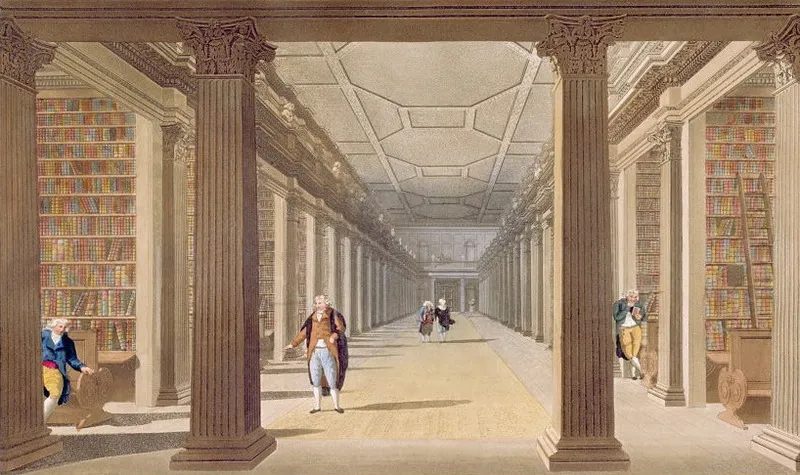
The conservation work has left books only in the first four bays. While it lasts, the Trinity visit is worth it mostly for the Book of Kells, shown two pages at a time. The ticket is timed and costs from about €21.50, and at 9am there's still no line or crowd. To see a real collection, go to the National Museum of Archaeology, on Kildare Street, which is free and holds the bog bodies, the Ardagh Chalice, and the Tara Brooch.
The DART covers an afternoon for €2 or €3
It's the cheapest trip out of the center, needs no booking at all, and fits between lunch and dinner. The coastal line reaches Howth in 25 to 35 minutes for about €2–3 with Leap. There, the cliff loop runs 6 km, with fish shops on the pier for the way back.
Culture Night, in September: closed buildings open for free
On a Friday in September, hundreds of museums, studios, embassies, and churches closed the rest of the year open for free until late. They're a few minutes' walk from each other, so come on that night if your dates are flexible. On the flip side, avoid St Patrick's if you're not coming for the parade: in the week of the 17th, hotels charge double and fill up months ahead.
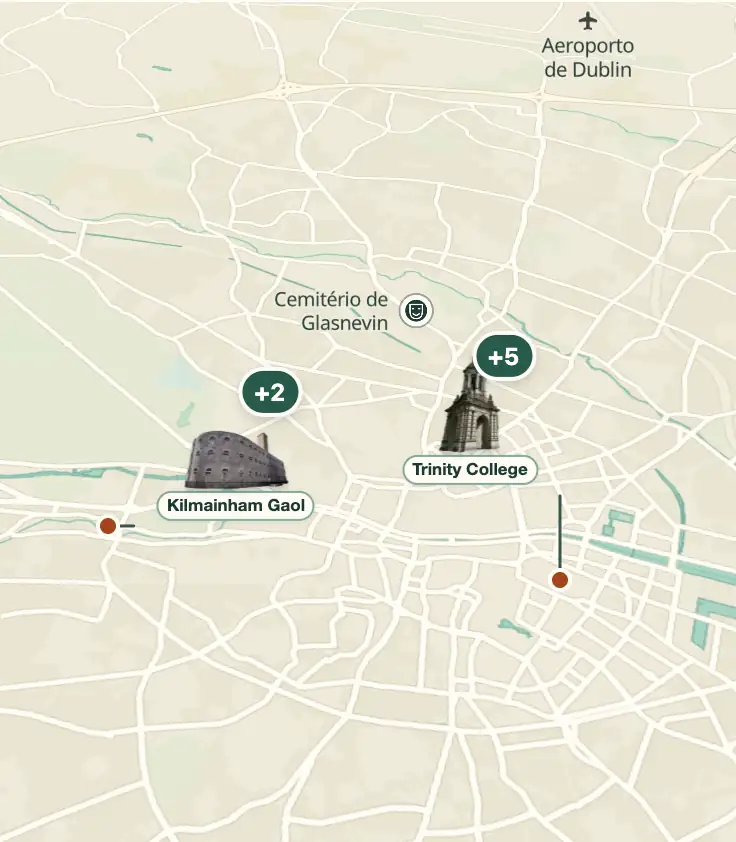
Explore the map
© OpenStreetMap · OpenFreeMap · © OpenMapTiles
Explore the map, read about the other places and plan your travel days in the app.
Open the appWhat to see
Dublin: The plain, the hills and the rivers
The Liffey, which rises in Wicklow and runs 132 km in an arc before emptying into the bay, cuts the city in half and created the social divide Dubliners still use as a reference: northside and southside, with the south historically wealthier. A block of cobblestone streets between Dame Street and the river, saved in the 1980s from becoming a bus terminal and turned into a cultural quarter.

Trinity College and the Book of Kells
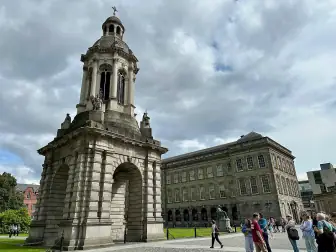
A college founded in 1592 in the heart of downtown, with stone quads and the Old Library (1712–1732), whose Long Room runs 65 m long. The Book of Kells, an illuminated vellum gospel book from around the year 800, is shown two pages at a time. Note: the Old Library's conservation project removed most of the roughly 200,000 volumes from the Long Room starting in 2023, and only the first four bays still hold books (about 20,000); the rest of the room has empty shelves and work underway (2026). Timed-entry ticket from about €21.50; book on the website.
With a timed slot, from about €21.50, the vellum Kells gospel book is shown two pages at a time. Since 2023, conservation work has removed most of the roughly 200,000 volumes from the Long Room: only the first four bays still hold books, about 20,000, and the rest of the room has empty shelves and work underway in 2026.
Check access

Kilmainham Gaol
A prison from 1796, decommissioned in 1924, where fourteen leaders of the 1916 Rising were executed by firing squad in the stonebreakers' yard in May of that year. The Victorian wing from 1861, with its oval gallery and skylight, appears in dozens of films. The visit is guided only, costs about €8, and tickets are bought online.
The guided tour costs about €8 and goes through the stonebreakers' yard where fourteen leaders of the 1916 Rising were shot in May, continues into the Victorian wing that appears in dozens of films, and tickets sell out weeks ahead in summer.
Check access

National Museum of Ireland: Archaeology
On Kildare Street, an 1890 building with a marble rotunda. It holds the largest collection of prehistoric gold in western Europe, the Tara Brooch and the Ardagh Chalice (8th c.), and four bog bodies preserved for two thousand years in peat, skin and nails intact. Free admission, as at every branch of the national museum.
Free admission opens the door to the largest collection of prehistoric gold in Western Europe and four bodies that the peat preserved with skin and nails intact.
Check access

Guinness Storehouse
A former seven-story fermentation plant inside the St James's Gate brewery, opened as a museum in 2000 and now the country's most visited attraction. Arthur Guinness signed a 9,000-year lease in 1759 for £45 a year. The document is displayed under the glass floor on the ground level. It ends at the Gravity Bar, with a 360° view. Admission around €26, price varies by time slot; buying online is cheaper.
The former fermentation plant became the country's most visited attraction, and the lease is under glass on the ground floor; a 9,000-year lease, signed in 1759; admission about €26.
Check access

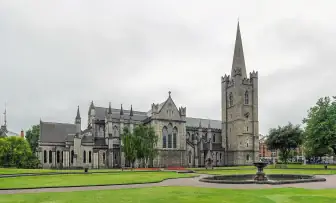
St Patrick's Cathedral
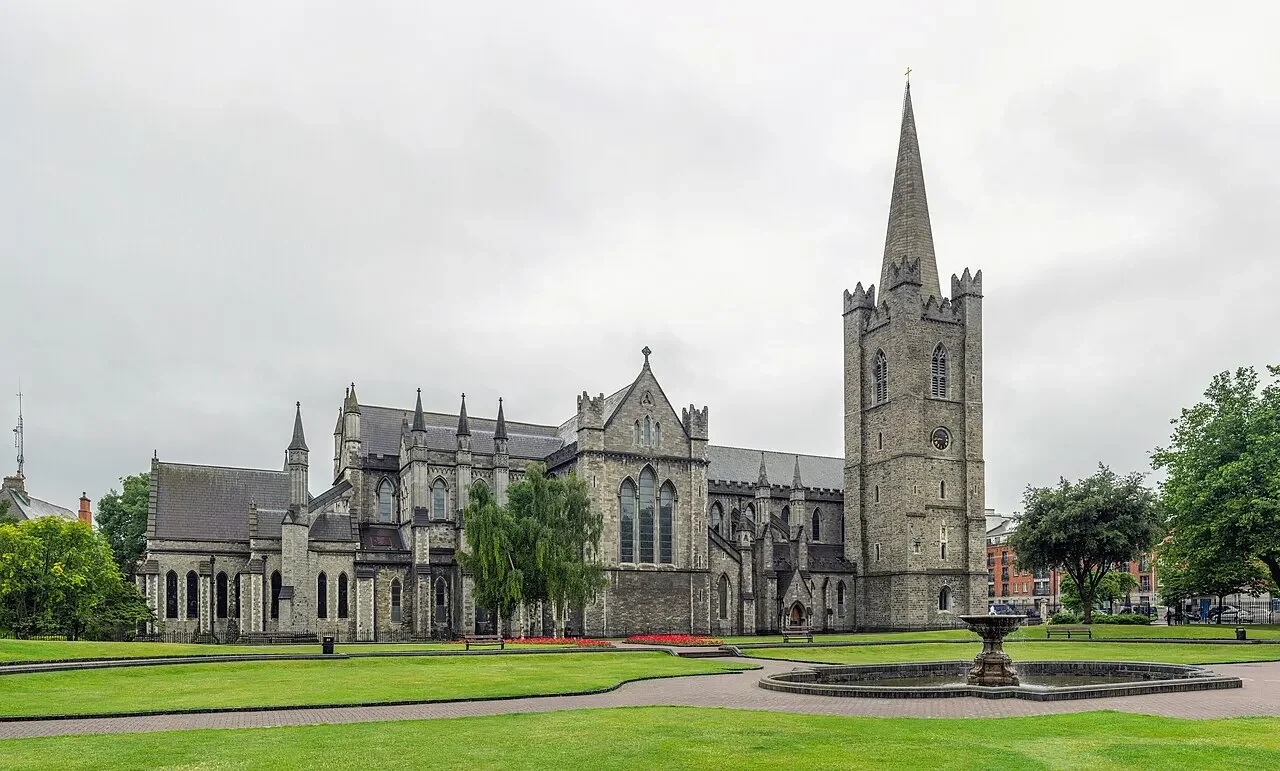
Built between 1220 and 1260 over a well where St Patrick is said to have baptized converts, it's the largest church in Ireland, with a 43 m spire. Jonathan Swift, author of “Gulliver's Travels”, was dean from 1713 to 1745 and is buried in the nave, under a Latin epitaph he wrote himself.
Built from 1220 to 1260 over a well, the cathedral is the largest church in Ireland, with a 43 m spire, and Swift, dean from 1713 to 1745, is buried in the nave beneath an epitaph he wrote himself.
Check access

Dublin Castle and the Chester Beatty Library
Seat of English power from 1204 to 1922, rebuilt after the 1684 fire; what remains is the medieval Record Tower and the 18th-century State Apartments. In the gardens is the Chester Beatty, a collection of Islamic, Chinese, and European manuscripts, papyri, and books that the copper magnate brought to Dublin in 1950 and bequeathed to the Irish state when he died, in 1968; admission is free. Check ahead: parts of the castle close for state events.
After the 1684 fire, what remained was the medieval tower of England's seat of power from 1204 to 1922, and in the gardens the collection of Islamic, Chinese, and European manuscripts has free admission.
Check access

GPO and O'Connell Street
The General Post Office of 1818, with an Ionic portico by Francis Johnston, was the headquarters of the 1916 Rising, and its columns still bear bullet marks. The avenue in front is 49 m wide, and the Spire, a 120 m stainless steel needle installed in 2003, rises where Nelson's Pillar stood until it was blown up in 1966. The GPO Witness History exhibition tells the story of Easter week inside the building itself.
The central Post Office of 1818 was the headquarters of the 1916 Rising, and the portico's columns still bear bullet marks. The GPO Witness History exhibition tells the story of Easter week inside the building itself, facing the Spire, the 120 m steel needle that replaced Nelson's column.
Check access

Phoenix Park
A walled park of 707 hectares created in 1662 as a royal deer park, twice the size of Central Park. Inside it stand Áras an Uachtaráin (the president's residence, from 1751), Dublin Zoo (1831, one of the oldest in the world), the 62 m Wellington Monument, and a herd of fallow deer that has grazed freely since the 17th century.
The old walled hunting ground fits twice over a famous New York park and still lets a herd of fallow deer roam between a residence, a zoo, and an obelisk; created in 1662, covering 707 hectares; a 62 m obelisk and a zoo from 1831.
Check access

Christ Church and Dublinia
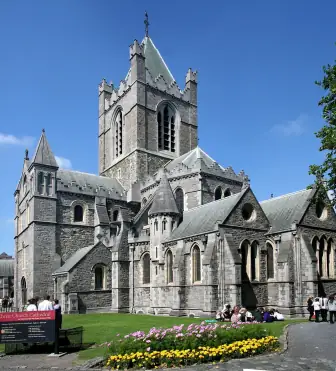
Founded around 1030 by the Norse king Sitric Silkenbeard and rebuilt in stone by the Normans from 1172. The 63 m crypt is the largest in the British Isles and holds a mummified cat and mouse found in the organ pipes in the 19th century. A covered walkway links the cathedral to Dublinia, a museum of Viking and medieval Dublin.
These are two cathedrals on the same stretch down the Liberties, and with little time, St Patrick's comes first, for being Ireland's largest church and holding Swift's tomb. What you take from Christ Church is the 63 m crypt and the mummified cat and mouse found inside the organ pipes in the 19th century: good for a story, but not enough to reorganize the afternoon.
Check access
Nilo’s itinerary
Start with the basic programme and choose extensions for the time you have.
Plan my days in the app ↗Day 1 · South of the river: the college, the museum and the medieval city
Start at 9am at Trinity College with a timed ticket for the Book of Kells and the Old Library; leave through the quad toward Grafton Street.
Walk up to St Stephen's Green (open since 1880) and head to the National Museum of Archaeology, on Kildare Street, for the bog bodies and the prehistoric gold: free admission, 90 minutes is enough.
Have a pub lunch around Dawson Street or South William Street, €14–20.
In the afternoon, visit Dublin Castle and the Chester Beatty Library, which is free, then pass by Christ Church and walk down through the Liberties to St. Patrick's Cathedral.
Have an early dinner and a pint at a pub outside Temple Bar, on Camden Street or Aungier Street.
Day 2 · Beer, prison and park
Enter the Guinness Storehouse with a timed ticket right at opening, when the Gravity Bar is still empty, and set aside two hours.
Walk or take the red Luas line to Kilmainham Gaol for the guided tour, bought weeks in advance.
Have lunch at the Royal Hospital Kilmainham, from 1684, which houses the Irish Museum of Modern Art (IMMA) and has formal gardens open to the public.
Enter Phoenix Park through the Islandbridge gate and walk to the Wellington Monument and the deer area; a Dublin Zoo option if you have kids.
In the evening, find a traditional music session in Smithfield or Stoneybatter and arrive before 9pm to get a seat.



If you stay longer
Day 3 · North of the river and the coast
Start the morning on O'Connell Street with the GPO Witness History exhibition, inside the 1818 General Post Office, whose columns still bear the bullet marks of 1916.
Pick one of two: 14 Henrietta Street, a Georgian house turned tenement that now tells the story of the families who lived there, or the EPIC emigration museum, in the docklands.
Have lunch in the docklands and take a close look at Calatrava's Samuel Beckett Bridge (2009) and the Jeanie Johnston replica ship.
Take the DART to Howth (about 30 min) and walk the easy stretch of the cliff trail, with fresh fish on the pier on the way back; an alternative to the south: Sandycove, the “Ulysses” tower, and the Forty Foot.
Get back in time for dinner in the city and finish at a neighborhood pub, where the pint gets cheaper and the conversation starts on its own.
Food
 AI illustration
Pint of stout
Guinness is poured in two stages: the bartender fills it three-quarters, lets it settle for about two minutes, and tops it off after; don't ask for a rush job. At an ordinary pub downtown, a pint costs about €6–7.50 (2026). Local alternatives from smaller breweries show up at nearly every decent pub.
 AI illustration
Coddle
A Dublin stew of sausage, bacon, onion and potato boiled in stock, without browning: hence the pale look that unsettles outsiders. It was a Thursday leftovers dish in 19th-century working-class homes and today appears on pub menus, sometimes with soda bread for dipping.
 AI illustration
Fish and chips from the chipper
Dublin's fried-fish shops were opened by Italian immigrants from the late 19th century on, and several century-old spots are still running. Order “one and one”, local slang for fish and chips inherited from the Italian “uno e uno”; salt, malt vinegar, and, if you want the Irish habit, curry sauce on top.
 AI illustration
Full Irish breakfast
Thick-cut bacon, sausage, egg, grilled tomato, beans, and the two puddings: black, with blood, and white, without. Served with soda bread or fried potato slices and strong tea with milk. It costs €12–18 and is served until mid-afternoon at most cafés.
 AI illustration
Soda bread and brown bread
Dough leavened with baking soda reacting to buttermilk instead of yeast, baked in an hour. A 19th-century invention on an island where not every home had a bakery oven. The dark wholemeal version comes alongside seafood chowder at any seaside pub.
 AI illustration
Seafood from the bay
Irish oysters, mussels, and the langoustine known as the Dublin Bay prawn, which almost every restaurant in Europe sells as scampi. Howth and Dún Laoghaire have stalls and restaurants right on the pier; the classic pairing is oysters with stout.
 AI illustration
Crisp sandwich
Two slices of white sandwich bread with butter and a bag of cheese-and-onion Tayto crisps in between. The brand launched the world's first flavored crisp in 1954, in Dublin, and the sandwich is a home and pub ritual, made on the spot without ceremony.
 AI illustration
Irish whiskey
Triple-distilled, lighter than Scotch, nearly extinct in the 20th century and revived from the 2010s on. In Dublin you can visit Jameson on Bow Street (production moved to Cork in 1975), Teeling in the Liberties, the city's first new distillery in 125 years, and Roe & Co next to the Guinness brewery.
Day trips
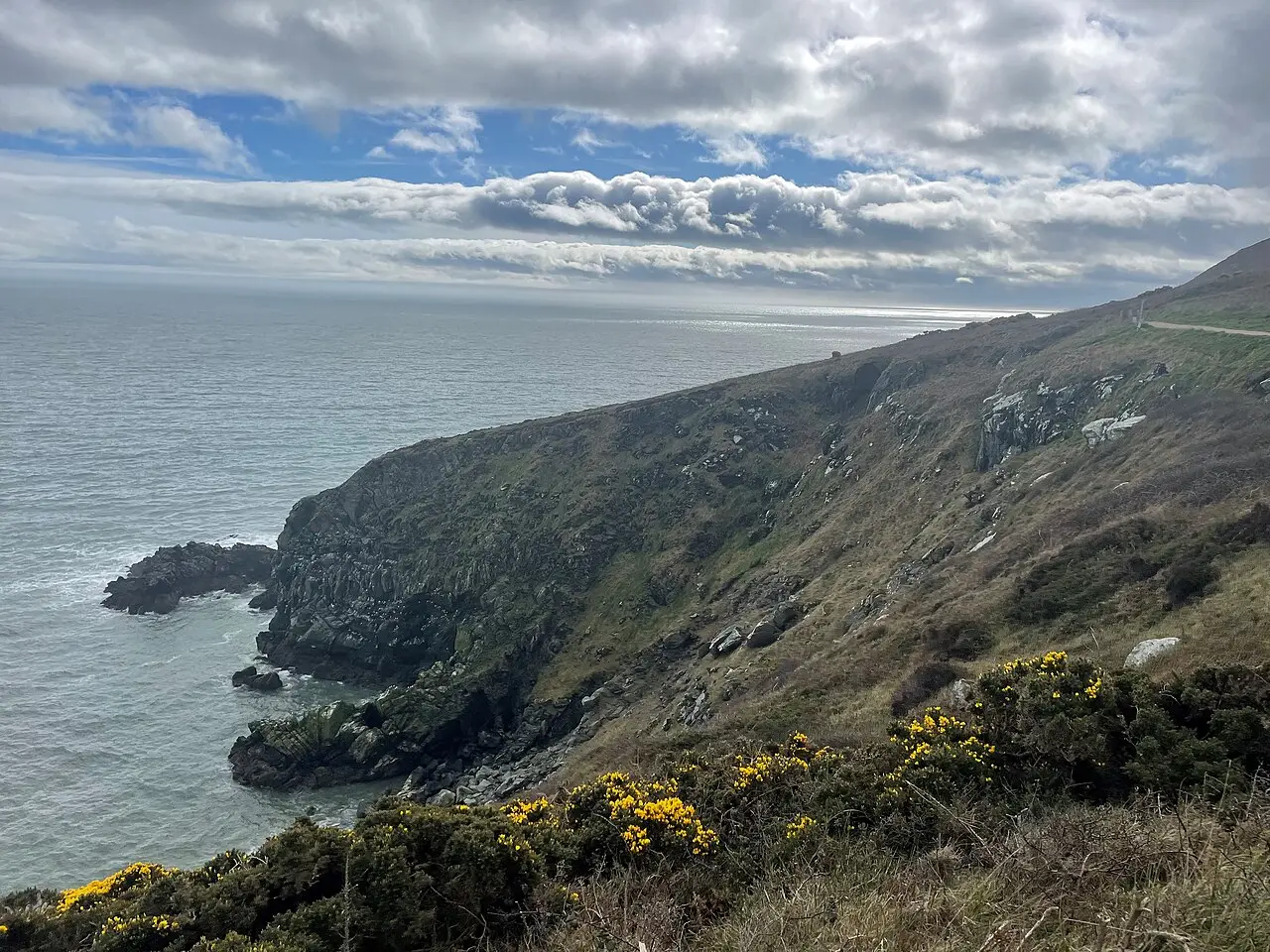
Howth, Dalkey and Dún Laoghaire (DART)
25 to 35 minutes from the center on the coastal line, about €2–3 with Leap. Howth sits at the foot of a headland with a fishing harbor; Dalkey and Killiney offer a bay view from the top of Killiney Hill; Dún Laoghaire has two Victorian piers and the Forty Foot sea pool in Sandycove.

Brú na Bóinne (Newgrange), Meath
About 50 km northwest, 1 hour by car or 1 hour 15 minutes on a tour from the center. A passage tomb from c. 3200 BC, older than Stonehenge and the pyramids, with a chamber aligned to the winter solstice sunrise. Access is by bus only from the visitor center in Donore; book ahead in summer.
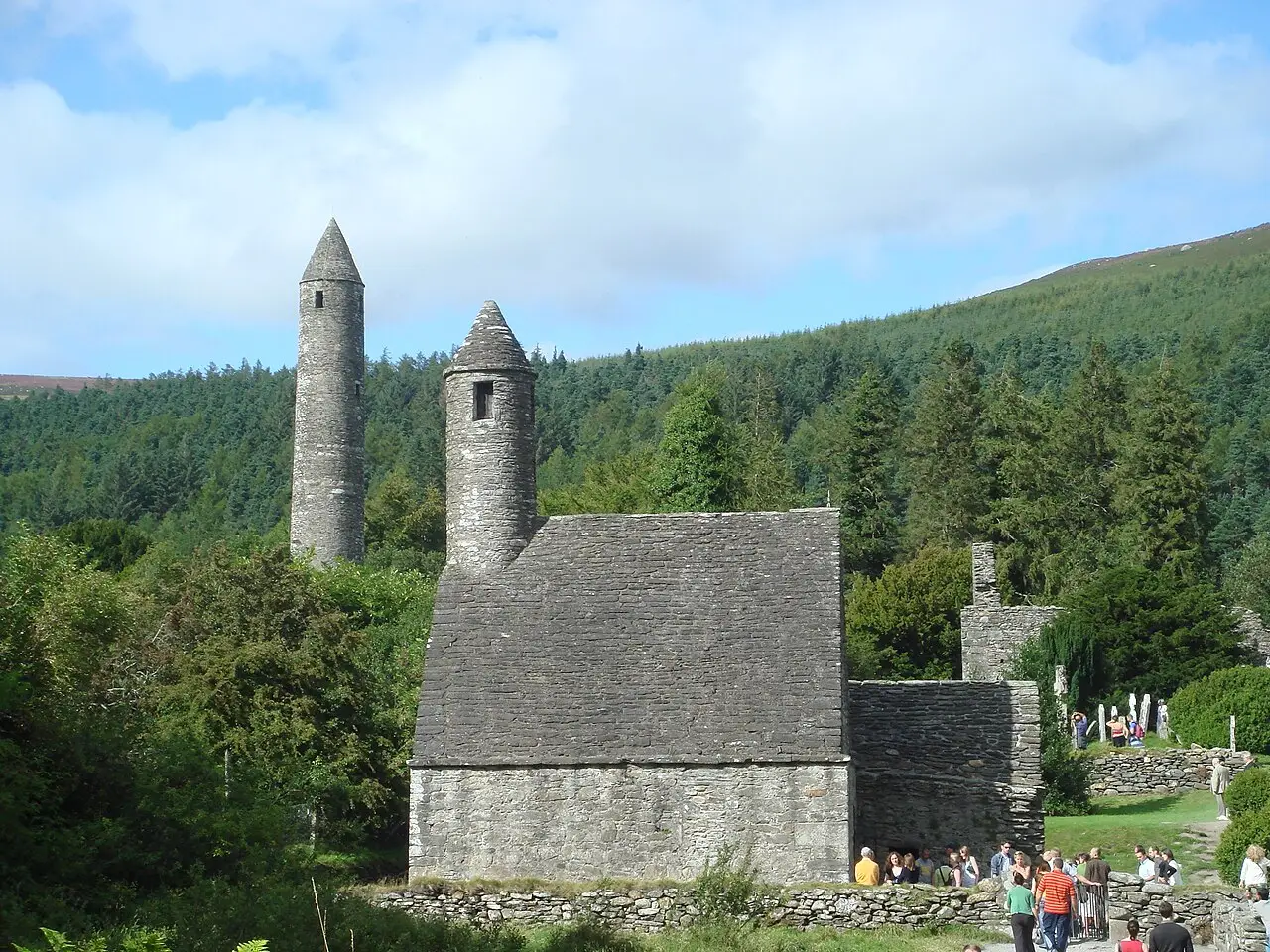
Glendalough and the Wicklow Mountains
50 km south, 1 hour 15 minutes by car or about 2 hours on the St Kevin's bus, which leaves from the center. A 6th-century monastery in a glacial valley with two lakes, with a 30 m round tower still standing; there are marked trails from 1 to 4 hours inside Wicklow Mountains National Park.
Where to begin
South of the river: the college, the museum and the medieval city
Start at 9am at Trinity College with a timed ticket for the Book of Kells and the Old Library; leave through the quad toward Grafton Street.
Beer, prison and park
Enter the Guinness Storehouse with a timed ticket right at opening, when the Gravity Bar is still empty, and set aside two hours.
North of the river and the coast
Start the morning on O'Connell Street with the GPO Witness History exhibition, inside the 1818 General Post Office, whose columns still bear the bullet marks of 1916.
Money
The currency is the euro, and Northern Ireland, two hours away by train, uses pounds sterling, so keep both if you'll cross the border. Approximate 2026 ranges: espresso or cappuccino €3.50–4.50; bakery sandwich €6–9; pub lunch €14–20; dinner at a mid-range restaurant €30–45 per person without drinks; a pint €6–7.50 at an ordinary pub and €8–10 in Temple Bar; hostel dorm bed €30–50; three-star hotel €160–250 a night, with spikes on rugby weekends, during big concerts and in St. Patrick's week. Contactless cards are accepted at almost every business, even for small amounts; the stubborn exception is the city bus, which wants exact coins or a Leap card. Tipping: 10% at restaurants with table service, if no charge is included; nothing at the pub bar, where you pay on the spot and keep the change; round up in taxis. Ireland charges no per-night tourist tax in 2026: Dublin City Council supports creating one, but it hasn't been approved. VAT refunds exist for non-EU residents on retail purchases, with a form at the store.
Getting there and around
Airport: 10 km north, still no train
Dublin Airport (DUB) lies 10 km north of the center, has two terminals, handles about 35 million passengers a year and, in 2026, still has no rail link, so you arrive by bus or taxi. The options are the Airlink Express 700 (about €8–9, 30 to 45 minutes to the center), the Dublin Express 782 and 784 buses (a similar range), the regular city routes 16 and 41 (about €2.60 in cash, slower, stopping everywhere) and taxis, €30 to €40 and 25 to 45 minutes depending on traffic. MetroLink, the underground line planned between the airport and Charlemont, received construction approval in 2025 and isn't expected to run before the 2030s. If you arrive at night, note that many low-cost flights land after midnight, when there are only taxis and a few night routes.
The Leap card solves everything
Inside the city, the TFI Leap card covers everything: buses, the two Luas tram lines (green line from Broombridge to Brides Glen, red line from Tallaght/Saggart to The Point), the DART commuter train, which runs along the coast from Howth and Malahide to Greystones, and the suburban trains. The center is small and flat: almost everything fits within a 30-minute walk, and it's worth walking more than necessary, just for the pleasure of it. There are Dublinbikes public bicycles (about 1,600 bikes, a three-day pass around €5, first 30 minutes free) and app-based scooters and e-bikes. Taxis are hailed on the street, at a rank, or through Free Now; renting a car only makes sense for leaving the city.
Safety
Dublin is a safe capital by European standards: violent crime against visitors is rare, but theft is persistent, and it has an address: pickpocketing and phone snatching on O'Connell Street, Henry Street and Grafton Street, on crowded buses and inside packed pubs, where a bag hung on a chair back or a phone left on the table disappears. Bike theft is endemic. Use a U-lock and don't leave a bike on the street overnight. At night there are drunken crowds at pub closing time, between 11:30pm and 2:30am, mainly around Temple Bar, and visible antisocial behavior and drug use in parts of the north inner city, especially around Talbot Street, Sean McDermott Street and the Liffey footbridges after dark. None of this usually involves foreigners, but avoid arguments and keep walking. Never leave anything visible inside a parked car, including at trailhead and beach parking lots. Emergency: 112 or 999, free from any phone. Take taxis only from an official taxi stand or through an app; a licensed driver has a yellow license displayed on the windshield, so check the windshield before you open the door.
Etiquette tips
Round at the pub: everyone buys in turn
In a pub group, one person buys everyone's drink and the turn rotates. Joining the round obliges you to buy yours when your turn comes; if you don't plan to drink that much, say up front that you'll buy your own and nobody minds.
Don't rush the pint
The bartender fills it partway, lets it settle, and tops it off after. Don't ask why it's taking so long, and don't grab the glass before they push it toward you. That wait is part of the process that guarantees a properly poured pint.
No tipping at the bar
Order and pay at the bar, because most pubs have no table service, and don't tip the barman. There's no visible line, but he knows exactly who got there first, and waving money or calling out loudly only delays your turn.
“How's it going?” is a greeting
The question about how you're doing, like “what's the story?”, doesn't ask for a report: answer with the same phrase, with “grand” or with “not too bad.” Know too that “grand” means acceptable, not great.
Ireland isn't the UK
The Republic has been an independent country since 1922, with its own currency and government, and Northern Ireland is a separate jurisdiction. Don't call Dublin a British city or treat the country as part of England: it's the mistake that bothers the Irish most.
Talk politics without lecturing
Questions about the Church, the North, housing and emigration are ordinary bar conversation, and people answer frankly. Listening is worth more than opining, and singing republican songs as a tourist goes down badly in any company.
Mistakes to avoid
Staying stuck in Temple Bar and overpaying for pints
Spending the whole night in Temple Bar, home to the city's most expensive pubs. Ten minutes' walk away, the neighborhood pubs on Camden Street pour the same Guinness from the same keg.
Not booking Kilmainham or the Book
Not booking ahead: Kilmainham Gaol, the Book of Kells, and the Guinness Storehouse sell by timed entry, and the online ticket is cheaper.
A €10 note on the bus
Boarding the bus without a Leap card or exact coins. The fare box takes only coins, no bills, and gives no change: whatever you overpay turns into a receipt, which can only be redeemed during business hours at the Dublin Bus office on O'Connell Street. Set aside the exact fare in coins or, better, buy a Leap card as soon as you arrive.
Going to Belfast without pounds sterling
Planning a day trip to Belfast without remembering that you pay in pound sterling there, and that, despite the open, uncontrolled border, it's a different country, with a different healthcare system and different mobile networks.
Renting a car to stay in Dublin
Renting a car to stay in the city: expensive parking, camera-enforced bus-only lanes, medieval one-way streets. Only rent for the day you head to Wicklow or west.
Useful phrases
Sláinte
Cheers: standard toast, said at the first sip (pronounced roughly “SLAWN-cha”)
Go raibh maith agat
Thank you, in Irish (roughly “guh rev mah AH-gut”)
Dia duit
Hello, literally “God be with you” (roughly “DEE-a gwitch”)
What's the story?
How's it going? An informal street greeting, not asking for a long answer
Grand
Fine, acceptable, sorted: doesn't mean great; “I'm grand” also turns down an offer
Craic
Good conversation, fun, what's going on; “any craic?” means “anything new?” (pronounced “crack”)
Districts
Temple Bar
A block of cobblestone streets between Dame Street and the river, saved in the 1980s from becoming a bus terminal and turned into a cultural quarter. It holds the Irish Film Institute, the Gallery of Photography, the Saturday food market at Meeting House Square, and the city's most expensive pubs.
The Liberties
Southwest of the center, an area that fell outside the medieval city's jurisdiction and became a neighborhood of weavers, tanneries and distilleries. Here you'll find the Guinness brewery at St James's Gate since 1759, the Teeling (2015) and Roe & Co (2019) distilleries, St Patrick's Cathedral, and Meath Street, one of the last working-class shopping streets in the center.
The Georgian core (Merrion, Fitzwilliam, Baggot Street)
Southeast of the center: three- and four-story red brick, colorful doors, private squares locked with a key. It holds Leinster House (the parliament), the National Gallery, the National Museum of Archaeology, law firms and doctors' offices; this is where you walk to see the 18th-century city still standing.
Stoneybatter and Smithfield
North of the Liffey, the old cattle market and Jameson's original distillery. Two-window Victorian cottages, new cafés, the Cobblestone pub with traditional music sessions almost every night, and Smithfield Square with its 1895 chimney lookout.
Portobello and Rathmines
Just south of the center, along the Grand Canal. A neighborhood of students, renters and international restaurants; in summer, the canal banks turn into an open-air bar. Rathmines has the green copper dome of St Mary's church and one of the country's biggest concentrations of rental apartments.
Docklands and Grand Canal Dock
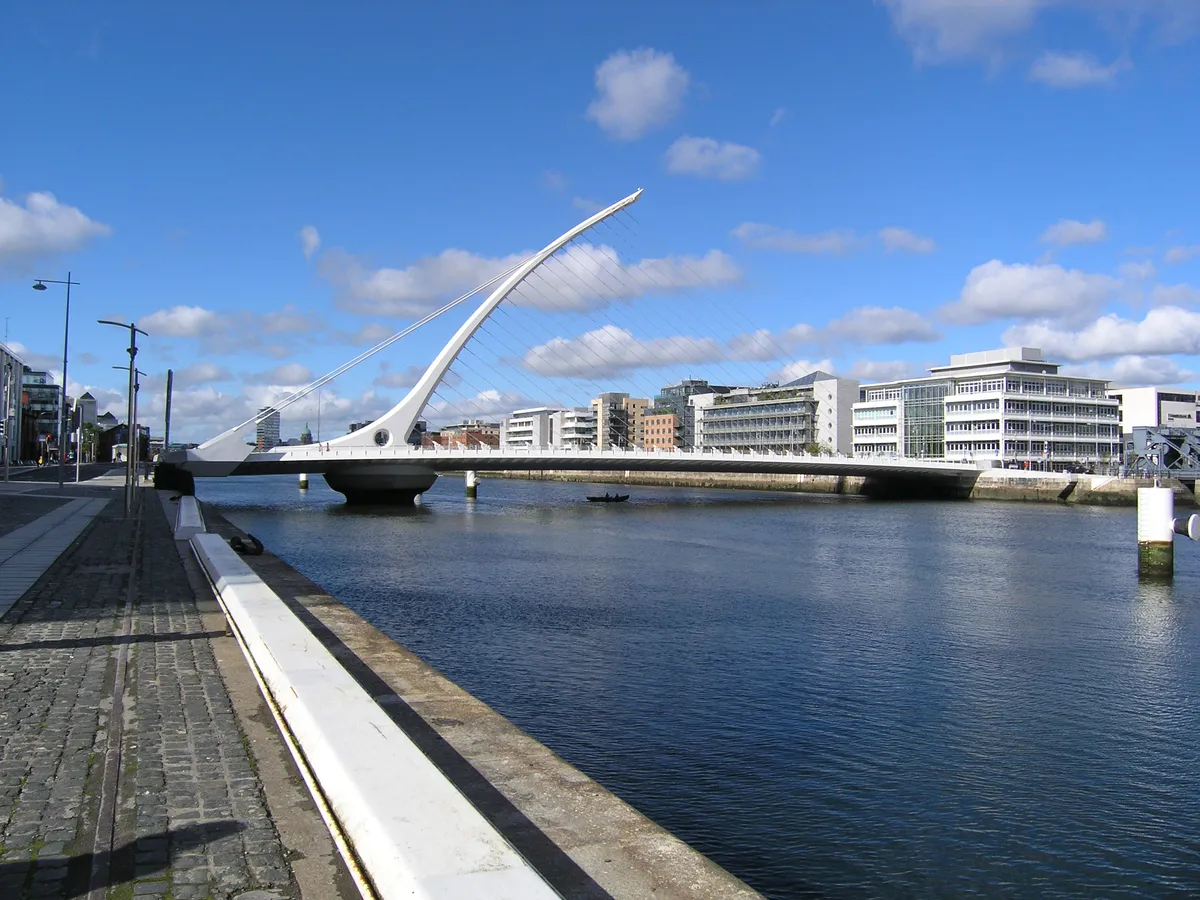
The old docks, redeveloped from 1987 onward and now known as Silicon Docks: offices of Google, Meta, TikTok and banks. Recent landmarks: Santiago Calatrava's Samuel Beckett Bridge (2009), shaped like a harp on its side, and Daniel Libeskind's Bord Gáis Theatre (2010).
Phibsborough and Drumcondra
Residential north side of brick terraced houses, crossed by the road to the airport. Home to Croke Park, the 82,300-seat stadium for Gaelic games, and the Bohemian FC's Dalymount Park; on All-Ireland match day, the whole neighborhood turns into a parking lot and barbecue.
Howth, Sandycove and Dún Laoghaire
Endpoints of the DART coastal line, one north of the bay and one south. Howth is a fishing harbor at the foot of a headland with a cliff trail; Dún Laoghaire has two Victorian piers for walking; Sandycove has the Martello tower where “Ulysses” opens and the Forty Foot, a sea pool where people swim year-round.
History
c. 841 · The Viking longphort
Norsemen set up a fortified ship camp where the River Poddle formed a dark pool, the dubh linn, next to the Liffey. A few hundred meters away the Gaelic settlement of Áth Cliath already existed, which gives the city its Irish name.

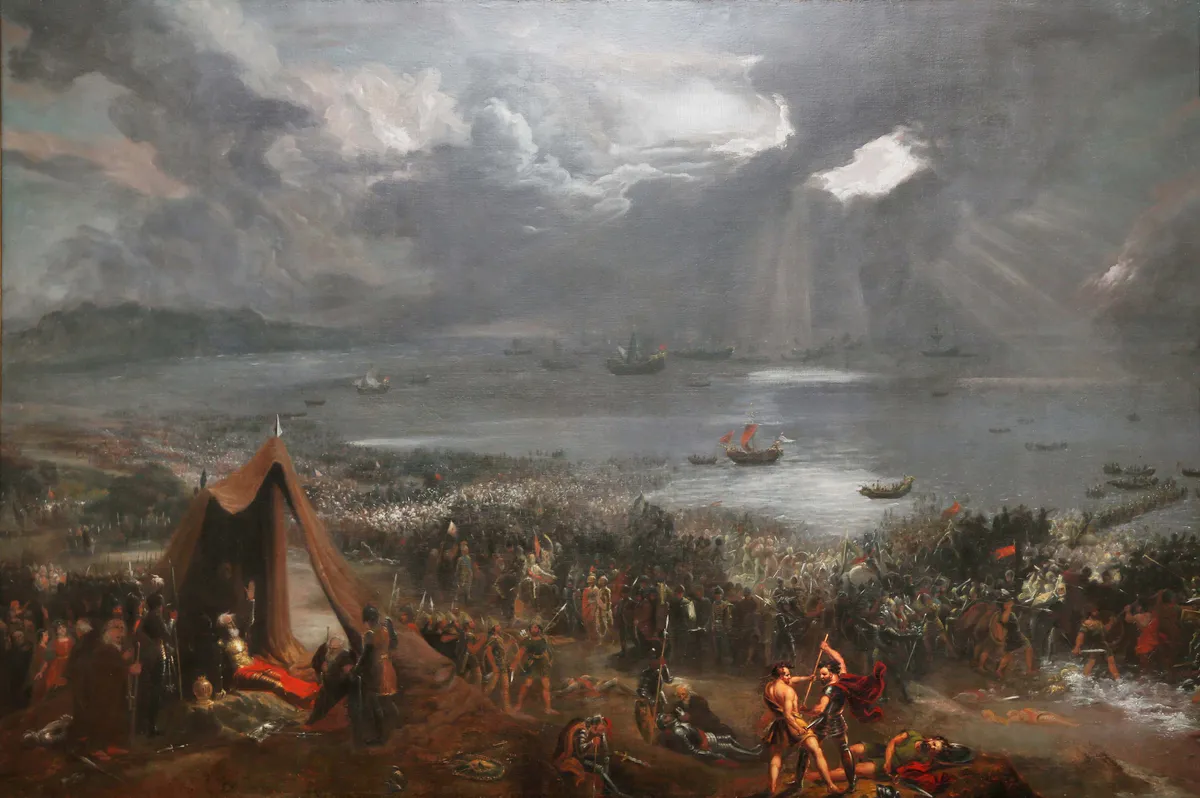
1014 · Battle of Clontarf
Brian Boru defeats the Norse of Dublin and their Leinster allies on Good Friday, north of the city, and dies in the battle. Dublin remains a Norse-Gaelic trading and port city.
1170–1204 · Normans and the castle
Richard de Clare, Strongbow, takes the city in 1170 and Henry II lands in 1171. In 1204 King John orders Dublin Castle built, seat of English power in Ireland for the next 700 years.
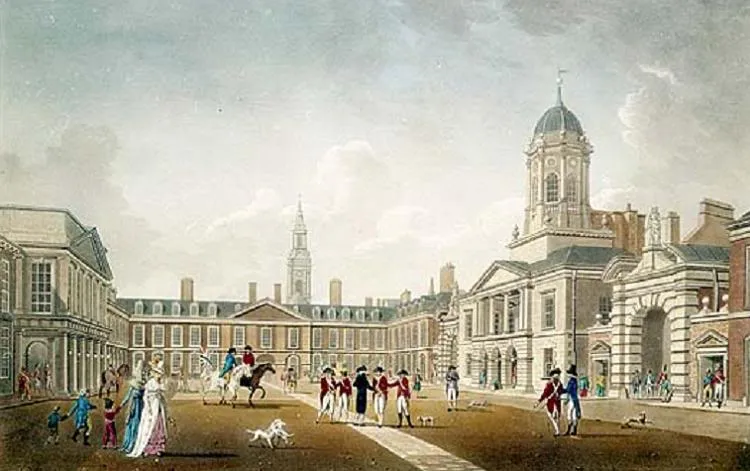
1592 · Trinity College
Elizabeth I grants a charter to the college, built outside the walls on the grounds of the dissolved priory of All Hallows. The institution trains the Protestant elite and builds up the library that today holds the Book of Kells.
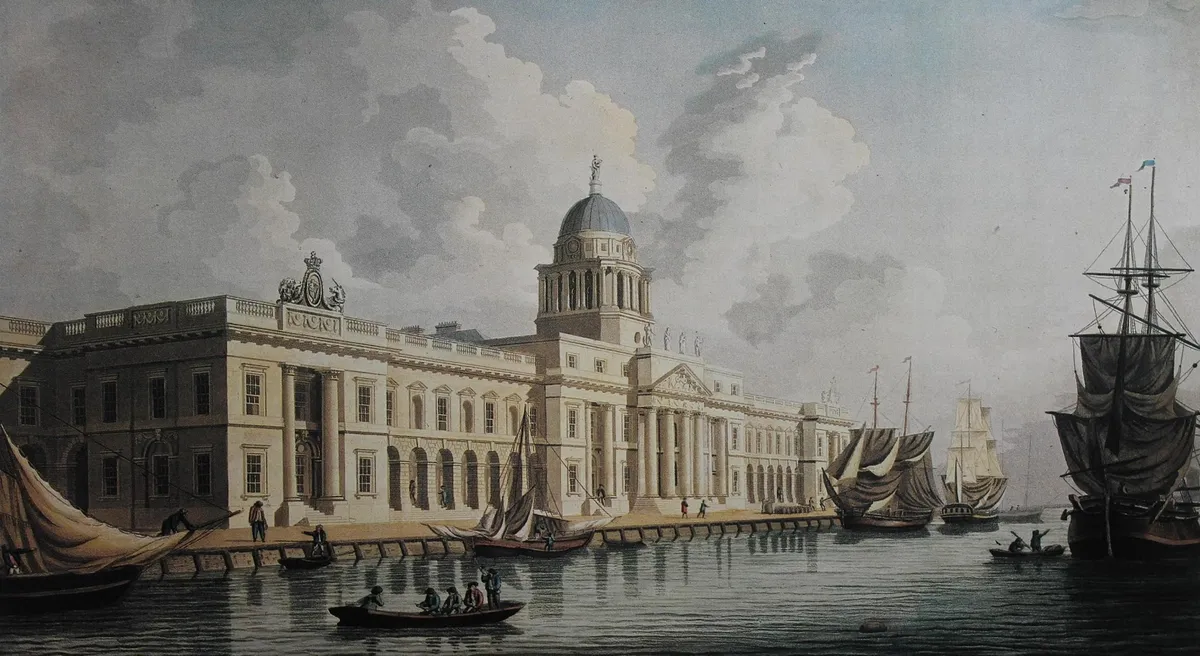
1757–1800 · Georgian Dublin
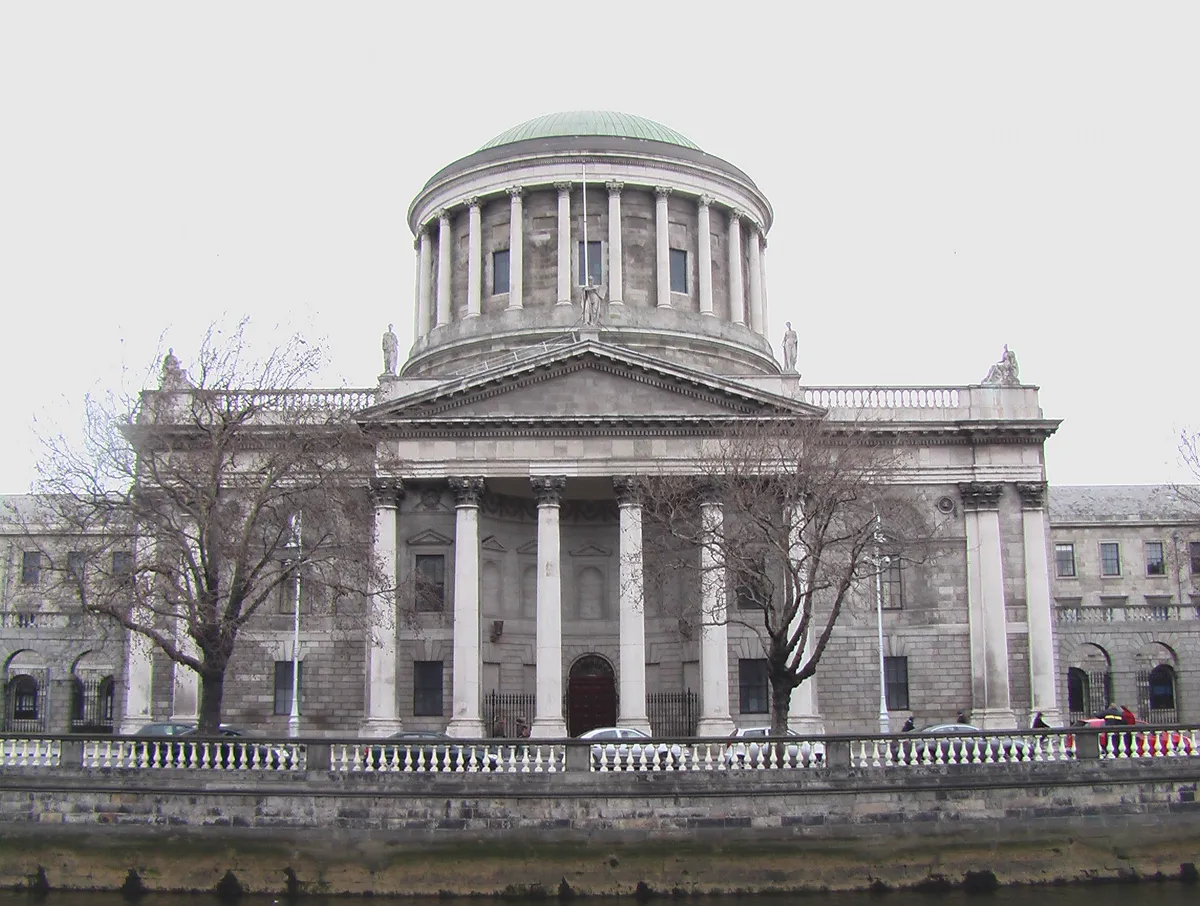
The Wide Streets Commission, created in 1757, cuts new avenues and organizes the city around squares: Merrion (1762), Fitzwilliam (1791). James Gandon designs the Custom House (1791) and the Four Courts (1802), and Dublin becomes the second city of the British Empire, with its own parliament at College Green.
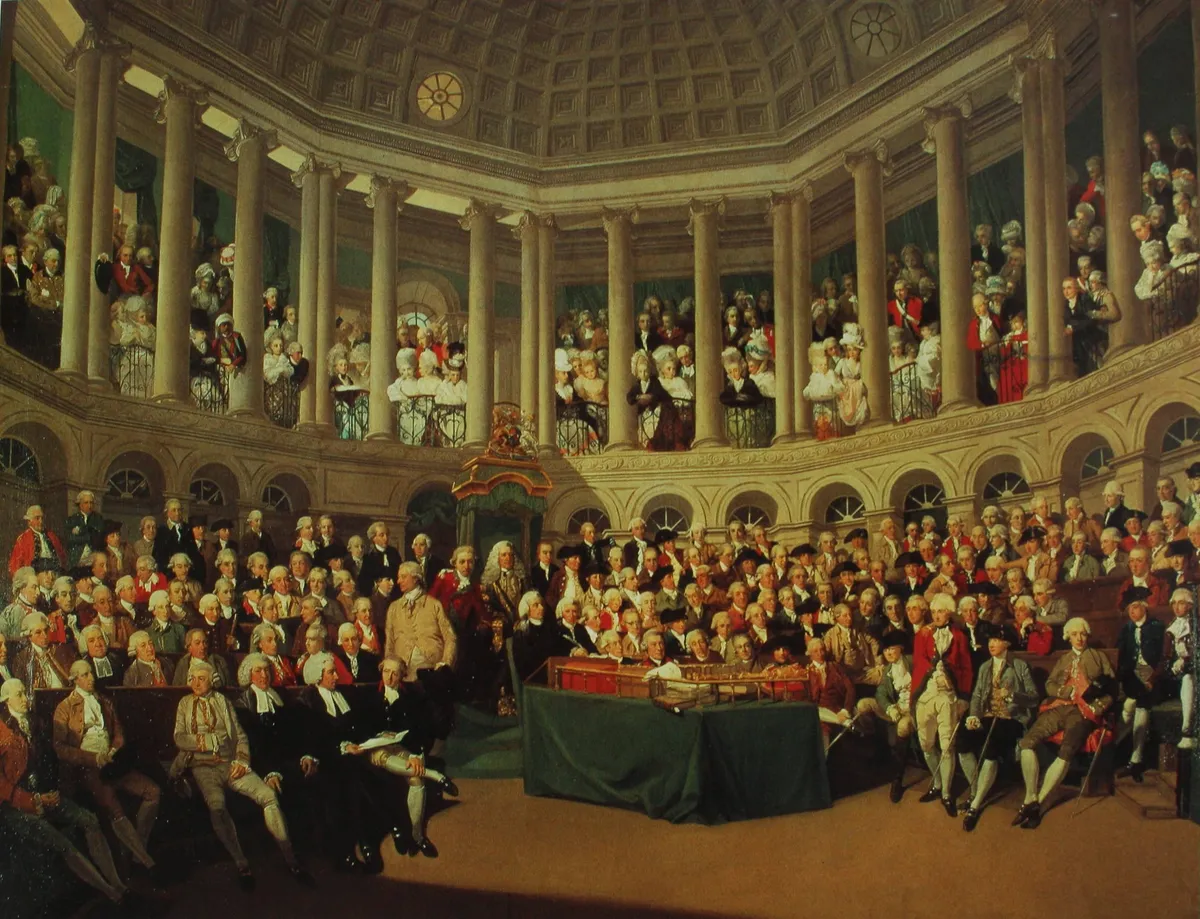
1801 · The Act of Union
The Irish parliament dissolves itself and power moves to London; the aristocracy empties out of the Georgian houses. Over the 19th century those houses become tenements: by 1911 more than 20,000 Dublin families lived in a single room.
1845–1852 · The Great Famine
The potato blight kills about a million people and pushes another million off the island. Rural refugees crowd into Dublin, and Ireland's population, 8.2 million in 1841, has never returned to that number.

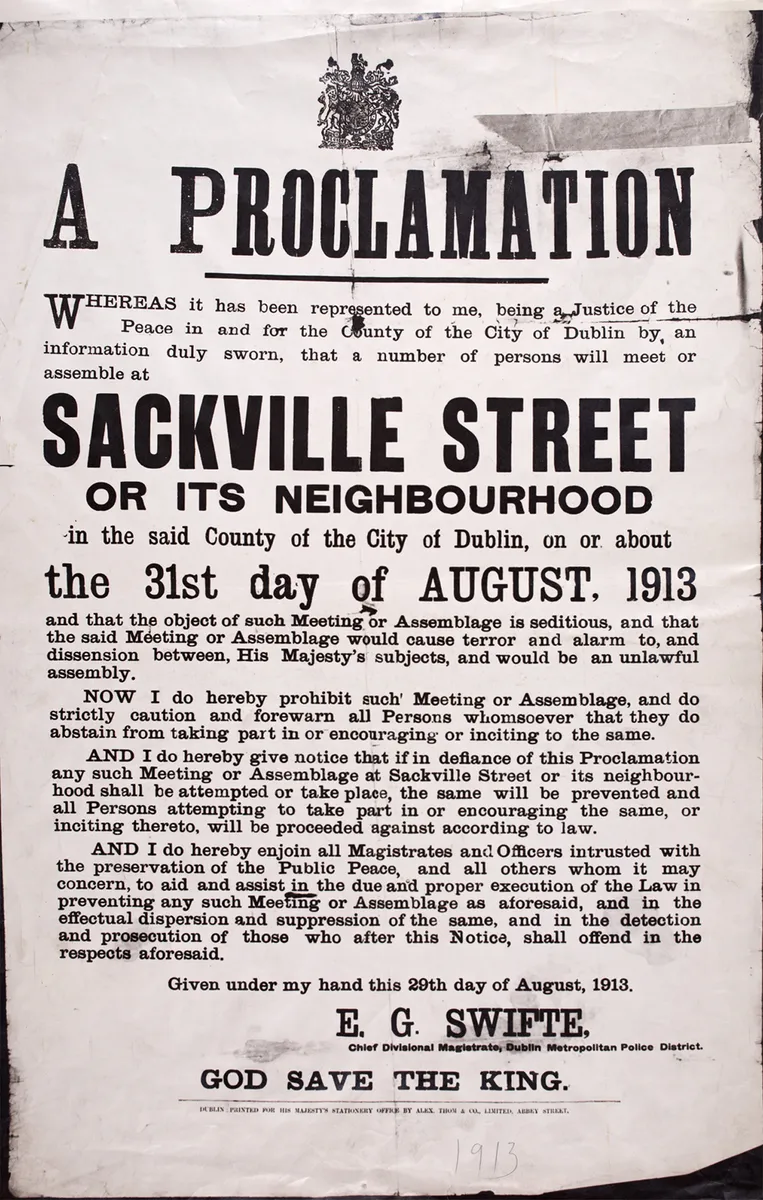
1913 · The Dublin Lockout
About 300 employers led by William Martin Murphy lock out 20,000 workers unionized by Jim Larkin, in an eight-month standoff. Out of it come Liberty Hall, as the workers' headquarters, and the Irish Citizen Army.
1916 · Easter Rising
About 1,200 rebels occupy the General Post Office on Sackville Street on Easter Monday, April 24, and Patrick Pearse reads the Proclamation of the Republic on its steps. British artillery destroys the center in six days; 485 people die, most of them civilians, and between May 3 and 12 fourteen leaders are executed in the yard at Kilmainham.

1919–1923 · Independence and civil war
During the War of Independence, British forces open fire on the crowd at Croke Park on Bloody Sunday, November 21, 1920, killing fourteen people. Dublin becomes capital of the Free State in 1922, and the civil war begins with the shelling of the Four Courts in June, which burns down the Public Record Office and seven centuries of documents.
1995–2026 · Celtic Tiger, crash and the docklands
A 12.5% corporate tax, European funds, and American companies produced the 1995 to 2007 boom, followed by the 2008 banking collapse and the €67.5 billion bailout in 2010. Google (2003), Meta (2008), LinkedIn, and TikTok concentrate offices in the docks, and the average rent in the city passed €2,000 a month (2025 to 2026).
Complete history
Founded by people who arrived by boat to raid
Dublin was founded by people who arrived by boat to raid and stayed to trade. The Viking camp of 841 took hold because the spot combined three advantages: a navigable river, a ford that was already a Gaelic crossing and a sheltered bay on the route between Scandinavia, England and the Irish Sea. For two centuries the city was a Norse-Gaelic trading post for slaves, silver and leather, with its own kings. In 1014, Brian Boru defeated the Dublin Norse and their Leinster allies at Clontarf, but the city wasn't destroyed and remained a Norse-Gaelic port until the Normans arrived.
The Normans take the city in 1170
The turning point was 1170. The Normans arrive at the invitation of a deposed king of Leinster, take the city and never leave. Dublin Castle, begun in 1204, turns the port into an administrative capital: from there the English governed the Pale, the strip around the city where English law actually applied, while the rest of the island stayed Gaelic. Trinity College, founded in 1592, and the reformed cathedrals complete the picture of a Protestant colonial city governing a Catholic majority, an arrangement that produced the riots, the penal laws and the revolts of the 17th and 18th centuries.
The 18th century: Georgian squares and red brick
The 18th century left the skeleton you see today. With its own parliament and a wealthy landowning class, Dublin gained squares, red brick, colorful doors with fanlights and public buildings by James Gandon facing the river. The Act of Union of 1801 ended all that overnight. Without a parliament, the elite left for London, and the Georgian mansions were carved up into tenements that would become the worst in Western Europe. The Great Famine of the 1840s poured people who had lost their land into the city, and by the early 20th century Georgian facades housed entire families in a single room. The 1913 Lockout broke out in those tenements, and this is the city Joyce describes in the fifteen stories of “Dubliners.”
The 1916 Rising and the 1922 civil war
Between 1916 and 1923 the city was shelled twice by two sides of the same dispute. The Easter Rising destroyed Sackville Street, today O'Connell Street; the civil war destroyed the Four Courts and the national archive. The republic that emerged was conservative, agrarian, Catholic and poor: until the 1980s, Dublin's main export was people, and the official answer to slum tenements was to push families out to peripheral estates like Ballymun, whose 1966 towers were demolished in the 2000s.
EU entry, low taxes, and the tech firms
Today's city came out of three decisions and one crisis. In 1973 Ireland joined the EEC and began receiving structural funds; low corporate tax drew pharmaceutical companies and, after 2000, the American platforms; and in 1987 the financial center was created in the docks, on abandoned port land. The crisis was the property bubble that burst in 2008, and its social cost still shapes local politics: rents above €2,000 a month, a chronic housing shortage, a young and foreign population (about one in five residents was born outside Ireland) and a center where glass offices in the docks sit a ten-minute walk from Georgian streets that were never restored.
The name Dublin comes from dubh linn, the dark pool the River Poddle formed next to the Liffey, where the Vikings anchored in 841.
Geography and shape of the city
The plain, the hills and the rivers
Dublin occupies a low plain between the bay and the hills: to the south, the Wicklow Mountains rise above 700 m less than 20 km from the center; to the north and west lies flat farmland. The Liffey, which rises in Wicklow and runs 132 km in an arc before emptying into the bay, cuts the city in half and created the social divide Dubliners still use as a reference: northside and southside, with the south historically wealthier. Smaller rivers like the Poddle run in culverts beneath the pavement.
The canals, the rings and the double grid
Two late-18th-century canals, the Grand (1779–1804) to the south and the Royal (1790–1817) to the north, ring the Georgian core with water and act as an informal boundary of the center; further out, the Circular Road and, much further, the M50 highway close successive rings. The layout is double: a medieval tangle around the cathedrals and the castle, and the regular grid of Georgian squares to the east and south, the result of the Wide Streets Commission.
The oceanic climate and the bay
The climate is oceanic and mild (4–8°C in winter, 15–20°C in summer, frost is rare and snow almost nonexistent) and Dublin sits on the dry side of the island: about 730 mm of rain a year, nearly half of what falls in Galway, spread over some 150 days of drizzle. The bay is shallow, with a big tidal range, and the Bull Wall built in the 1820s created, through sand buildup, North Bull Island, a UNESCO biosphere reserve since 1981.
The River Poddle, which gave the city its name, still runs in a culvert beneath the pavement of the center.
Culture
Four Nobels tied to the city
Dublin has been a UNESCO City of Literature since 2010 and has four Nobel laureates in literature tied to it: Yeats (1923), Shaw (1925), Beckett (1969) and Seamus Heaney (1995). The whole city appears in James Joyce's “Dubliners” (1914) and “Ulysses” (1922), a novel he set on a single day, June 16, 1904, claiming that if Dublin were destroyed it could be rebuilt from the book. The tradition continues: Roddy Doyle wrote about the northside suburbs in the 1980s and 1990s, and Anne Enright and Sally Rooney about today's middle class. Theater has two fixed addresses: the Abbey, founded by Yeats and Lady Gregory in 1904 as the national theater and the scene of riots over “The Playboy of the Western World” in 1907 and “The Plough and the Stars” in 1926, and the Gate, from 1928, where Orson Welles made his stage debut at sixteen.
From the pub to export rock
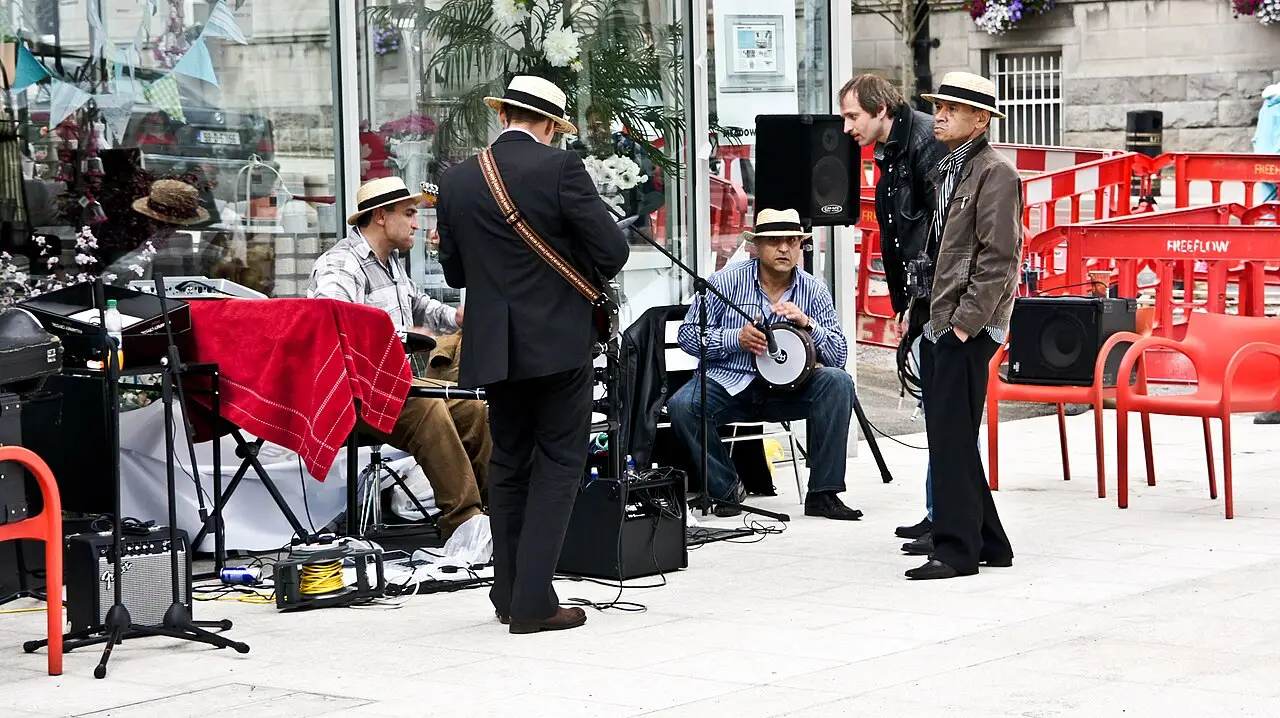
The music runs from the traditional session to rock made for export. In the pubs of Smithfield and Stoneybatter, a session is an informal circle of musicians with fiddle, flute, bodhrán and concertina playing by ear, with no stage, no fee and no requests from the audience. At the other end are the Dubliners and the Pogues, Thin Lizzy, U2 (formed in 1976 at a Dublin school), Sinéad O'Connor, Hozier and the recent generation of Fontaines D.C. and Lankum, who have gone back to singing about the city and the price of rent. Big shows happen at the 3Arena, in the docks, and in stadiums; Vicar Street and Whelan's cover the mid-size venues.
GAA: hurling and Gaelic football at Croke Park
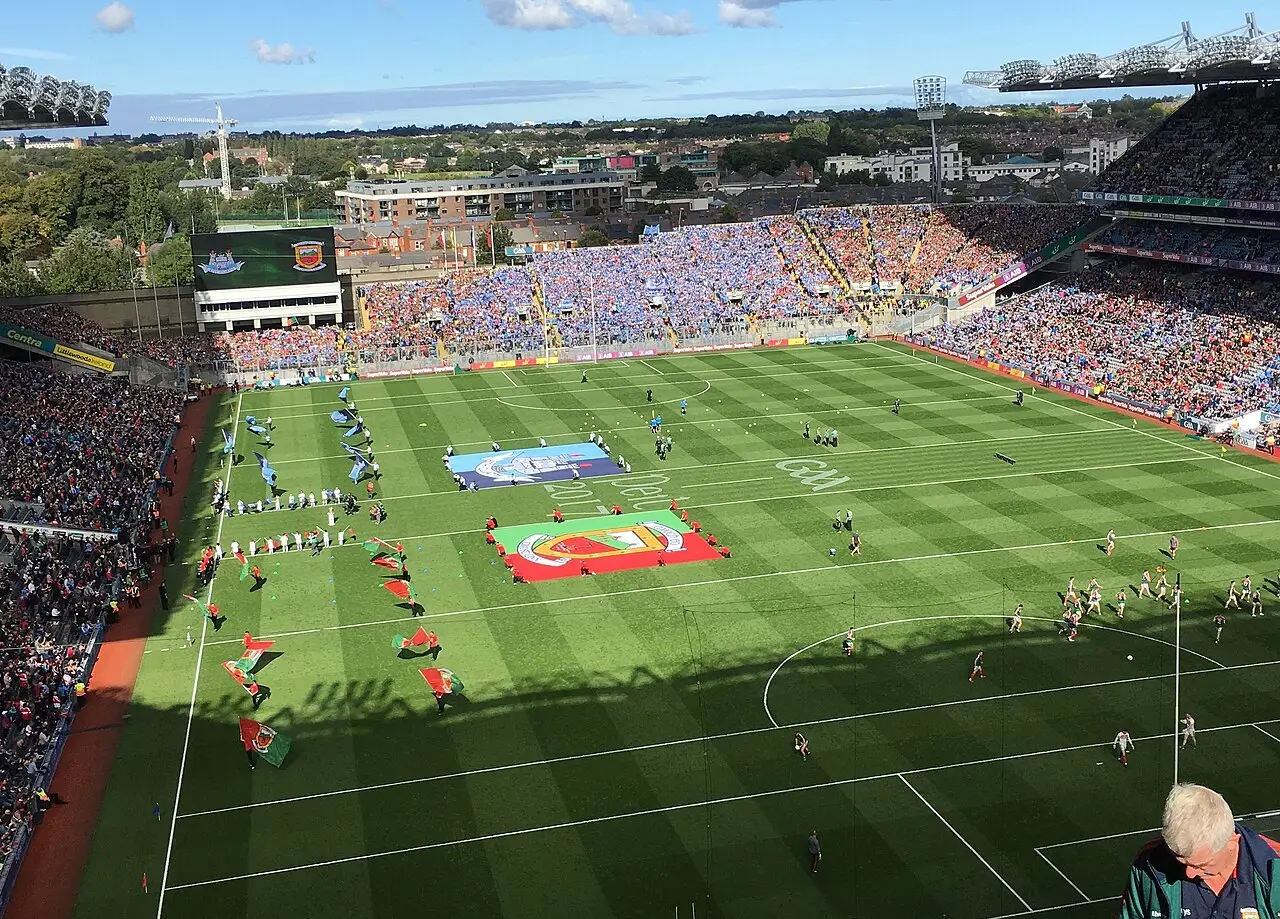
Sports are a topic of conversation with strangers. Croke Park, with 82,300 seats, hosts the All-Ireland hurling and Gaelic football finals between July and August: these are amateur sports, the players aren't paid and they represent the county where they were born. International rugby is played at Aviva Stadium (51,700 seats, opened in 2010 on the site of the old Lansdowne Road, the oldest international ground in the world). In soccer, the League of Ireland has four clubs in the city and small crowds. In the pubs, conversation with strangers also turns to the series of referendums that changed the country: divorce in 1995, same-sex marriage in 2015 with 62% voting yes and repeal of the abortion ban in 2018 with 66%. Mass attendance in Dublin has fallen below 20%, though the churches haven't left the skyline.
At the music session, there is no start time: the musicians keep arriving and the circle grows.
Festivals and events

St Patrick's Festival
March 17, with four to five days of events around the main parade, which sets off around midday from Parnell Square and crosses the center. Hotels double their prices and you need to book months ahead; the city gets hundreds of thousands of visitors.
Bloomsday
June 16, the day “Ulysses” takes place on. Public readings, people dressed in Edwardian style, breakfast with pork kidney, and a pilgrimage through the book's addresses, including the gorgonzola sandwich with a glass of burgundy at Davy Byrnes.
All-Ireland finals
Hurling in July and Gaelic football in late July or August, always at Croke Park. Tickets are nearly impossible to buy without a club connection, but the whole city watches from a pub, and the day works as an unofficial holiday.
 AI illustration
Culture Night / Oíche Chultúir
A Friday in September when hundreds of museums, studios, embassies, churches and workshops open for free late into the evening. It started in Dublin in 2006 and now happens across the whole country on the same day.
 AI illustration
Dublin Theatre Festival
Late September to mid-October since 1957, the oldest English-language theater festival in Europe. It shares the calendar with the Dublin Fringe, in September, which fills small venues and improvised spaces.
Books and films
“Dubliners”, James Joyce (1914)
Fifteen stories that walk the city street by street in the early 20th century, ending with “The Dead”. It's the fastest way to understand the social paralysis Joyce saw in Dublin, and to recognize addresses that are still there.
“The Commitments”, Roddy Doyle (1987) and Alan Parker's film (1991)
A soul band put together on a northside housing estate in the 1980s. It captures the unemployment, the humor and the speech of working-class Dublin that doesn't show up on the postcards of the Georgian center.
“Dogrel”, Fontaines D.C. (2019)
A debut album about rent, gentrification and closing pubs, with lyrics that name streets and buses. It's the sound of the city that came out of the 2008 crash and became a tech-office capital.
Frequently asked questions
Dublin: How do you get from the airport to downtown?
The options are the Airlink Express 700 (about €8 to 9, 30 to 45 minutes to the center), the Dublin Express 782 and 784 buses (a similar range), the regular city routes 16 and 41 (about €2.60 in cash, slower, stopping everywhere) and taxis, €30 to €40 and 25 to 45 minutes depending on traffic.
Dublin: What currency should you bring?
The currency is the euro, and Northern Ireland, two hours away by train, uses pounds sterling, so keep both if you'll cross the border.
Dublin: What's the weather like?
The weather changes by the hour and is almost never extreme: 4 to 8 °C in winter, 15 to 20 °C in summer, and rain that is usually drizzle, rarely a downpour.
Dublin: Is it a safe city?
Dublin is a safe capital by European standards, with violent crime against visitors rare, but theft persistent.
Dublin: How is Guinness poured?
Guinness is poured in two stages: the bartender fills it three-quarters, lets it settle for about two minutes, and tops it off after; don't ask for a rush job.


