Peru
Machu Picchu
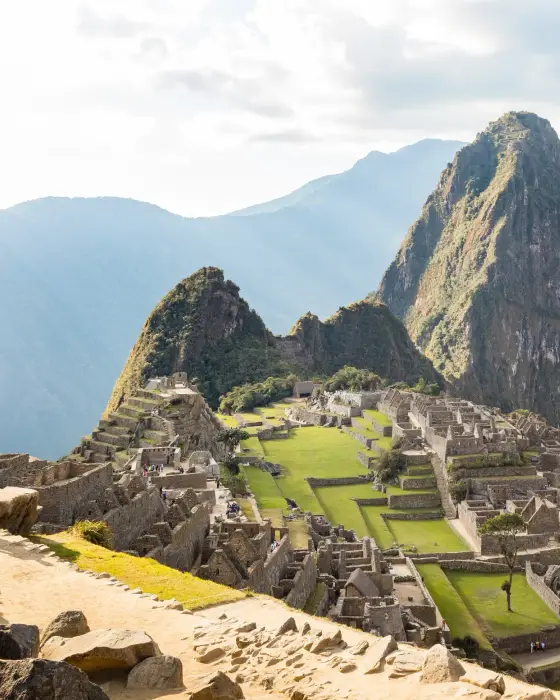
Inca stone city, terraces and Huayna Picchu
Days Start with the basic programme and choose extensions for the time you have.
How the guide reaches this number
I prefer sleeping in Machupicchu Pueblo to separate the train journey from the ascent, rather than fitting the entire Sacred Valley in before boarding. For terraces and the urban sector, compare routes 2-A and 2-B; for a panorama or mountain, choose the corresponding route, without adding places your ticket does not allow. Departure from the hotel needs to account for entry time, the queue and the journey to the gate. After the visit, leave room for rest and a meal before the station. A second day can hold the site museum or a mountain with its own ticket, provided the descent fits before your return; otherwise, add a night. The village serves as an arrival and departure base, with baggage and boarding to organize. Check check-out and bag storage with your accommodation, and leave a margin between the return to Cusco and your next connection, as rail services can change.
1–2
When April to October is the recommended window; November–March is rainy.
How the guide reaches this number
Check the forecast, route opening and ticket; a drier season guarantees neither sunshine nor access.
April to October is the recommended window; November–March is rainy. Check the forecast, route opening and ticket; a drier season guarantees neither sunshine nor access.
Per person/day Budget about S/ 170; mid-range about S/ 425; comfortable about S/ 1,100 per person, based on what travellers report to Budget Your Trip (checked October 2026).
How the guide reaches this number
Train, connections, route ticket and the bus up weigh on the visit day: get quotes for each for your dates and category.
Budget about S/ 170; mid-range about S/ 425; comfortable about S/ 1,100 per person, based on what travellers report to Budget Your Trip (checked October 2026). Train, connections, route ticket and the bus up weigh on the visit day: get quotes for each for your dates and category.
Per person per day: accommodation, meals, urban transport, visits and a small allowance for extras. Flights excluded; larger purchases vary. Editorial estimate, not a quote.
 What Nilo thinks
A visit to the llaqta can take a day, with arrival in the village the day before and the route determined by your entry ticket. I prefer sleeping in Machupicchu Pueblo to separate the train journey from the ascent, rather than fitting the entire Sacred Valley in before boarding. For terraces and the urban sector, compare routes 2-A and 2-B; for a panorama or mountain, choose the corresponding route, without adding places your ticket does not allow. Departure from the hotel needs to account for entry time, the queue and the journey to the gate. After the visit, leave room for rest and a meal before the station. A second day can hold the site museum or a mountain with its own ticket, provided the descent fits before your return; otherwise, add a night. The village serves as an arrival and departure base, with baggage and boarding to organize. Check check-out and bag storage with your accommodation, and leave a margin between the return to Cusco and your next connection, as rail services can change.From the train window, the Urubamba flows between rock walls to Machupicchu Pueblo, also called Aguas Calientes. The journey begins before that leg: check the station and connections included in your purchased service. From the village, the ascent leads to terraces and buildings between Waynapicchu and Machu Picchu Mountain. This place associated with Pachacútec’s family requires choosing what to visit before reaching the gate. Routes 2-A and 2-B combine the lower panoramic platform with the urban sector; 1-B follows the upper terraces. The Temple of the Sun viewpoint is an observation spot, with no promise of entry into the temple. To climb Waynapicchu or Machu Picchu Mountain, choose route 3-A or 1-A respectively, with its own ticket. I prefer to separate arrival by train from the visit and allow for a meal and rest after the descent. With another day, the site museum or a mountain can be alternatives, depending on tickets and opening; check hotel checkout, luggage storage and the return departure before deciding.
Quick facts
- Population
- INEI 2025 Census: 4,254 people enumerated in the Machupicchu district, which includes Machupicchu Pueblo and rural communities.
- Origins
- The Inca llaqta dates from the 15th century. Machupicchu Pueblo grew around the railway in the 20th century; the Machupicchu district was created in 1941.
- Country and region
- Peru: Cusco region, Urubamba province, Machupicchu district
- Language
- Spanish and Quechua (runasimi). Before booking a guide or tour, confirm the language in which the service will be provided.
- Currency
- Peruvian sol (PEN, S/); check the exchange rate and payment-method fees for your travel date.
- Time zone
- UTC−5, Peru time, no daylight saving
- When to go
- April to October is the recommended window; November–March is rainy. Check the forecast, route opening and ticket; a drier season guarantees neither sunshine nor access.
- Average daily cost
- Budget about S/ 170; mid-range about S/ 425; comfortable about S/ 1,100 per person, based on what travellers report to Budget Your Trip (checked October 2026). Train, connections, route ticket and the bus up weigh on the visit day: get quotes for each for your dates and category.
When to go
April to October is the recommended window; November–March is rainy. Check the forecast, route opening and ticket; a drier season guarantees neither sunshine nor access.
How the year changes
Machu Picchu has a humid climate, with a relatively drier winter. For choosing a month, April to October is the window recommended by SERNANP; November to March is the rainy season. This helps you prepare without guaranteeing clear skies, no rain or mountain visibility. The village, the llaqta and higher-altitude trails do not have identical conditions: check the forecast and notices for your chosen route close to the trip, and bring protection for rain and temperature changes.
The access calendar is a separate decision. The Inka Trail Network closes in February for conservation; in 2026, the announced closure ran from February 1 to 28. That notice concerns the trail network, not the closure of the entire llaqta. Choose the circuit and ticket route at tuboleto.cultura.pe and check the dates when that option operates. Seasonal routes and the visitor-capacity calendar are neither a weather forecast nor a promise of available tickets.
Disruptions can occur even in the drier period: in August 2026, heavy rain led to a temporary suspension of access to the Inka Trail Network. Consult Cultura Cusco and transport notices before setting out. I prefer to leave a buffer between the return and a flight or another commitment that is hard to change; the train departure, hotel checkout and luggage storage still matter when weather forces you to reconsider the day.
Nilo's tips
Arrange the ascent the day before
On arrival in the village, check where to buy and board the bus, the applicable fare and the document required. Arranging the transport ticket the day before may save a purchase before your visit, but does not reserve a place in the queue or guarantee the first departure. Keep the llaqta entry ticket, with its route and time, separately.
Time the ascent to your entry ticket
Work backward from the time printed on the ticket when planning your hotel departure, adding the wait and journey to the gate. If walking uphill, confirm the open route and assess the effort before the visit. Do not choose a time solely on a promise of clear skies: mist and rain can change the view at any point in the day.
Choose the route for what you want to visit
I would compare each route map before finalizing the trip. For the upper-terrace panorama without adding a mountain, look at 1-B; 1-A includes Machu Picchu Mountain, while routes 1-C and 1-D add Intipunku or the Inka Bridge in high season. To combine terraces and the urban sector, compare 2-A and 2-B. Places and effort vary with the route. Check route, date, entry time and availability at tuboleto.cultura.pe before arranging trains and accommodation. DDC in-person sales in Machupicchu Pueblo are limited and allow entry the following day; they do not guarantee your preferred route.
Small backpack and preparation before entry
Your backpack must meet the 40 x 35 x 20 cm limit. Arrange where to leave excess baggage beforehand and check the prohibited-equipment list, which includes umbrellas and photography supports. Walking poles are restricted: anyone needing a mobility aid should confirm the exception provided by the regulations. Allow time to eat and use the restroom before the gate, checking available services; do not count a stop at these facilities as visiting time inside the llaqta.
Arrange payments before arrival
Check which expenses require cash in soles and any ATM or card fees. Set aside that amount before the journey and avoid relying on a withdrawal between descending from the site and boarding the train.
Work backward from the return train
Calculate backward: train departure, boarding lead time, walk to the station, descent and queue. PeruRail asks passengers to reach the station 30 minutes before departure; check the requirement of the company on your ticket. Allow separately for lunch, baggage collection and check-out. Leaving before 1pm does not guarantee a short queue or a safe connection.
Explore the map

© OpenStreetMap · OpenFreeMap · © OpenMapTiles
Explore the map, read about the other places and plan your travel days in the app.
Open the appWhat to see
Machu Picchu: terraces and drainage
Terraces, retaining walls and fill transformed the hillside, where a large drain separates the agricultural and urban sectors. The supply channel fed the fountains; surface channels, wall outlets and drainage layers carried rainwater away from the buildings.

Guardian's House and Funerary Rock
The shelter with its restored thatched roof stands high in the agricultural sector, near the stone known as the Funerary Rock. From there, terraces and buildings appear in front of Waynapicchu. To choose this viewpoint, compare ticket maps: route 1-B follows the upper terraces, while routes 2-A and 2-B use the lower platform before the urban sector. The viewpoints differ; a panoramic view on Circuit 2 does not mean unrestricted access to the Guardian's House or the rock.
I would choose this panorama to understand how the terraces sit in front of Waynapicchu. Compare the upper terraces on route 1-B with the lower platform on routes 2-A and 2-B before buying: the viewpoints are not identical.
Check access
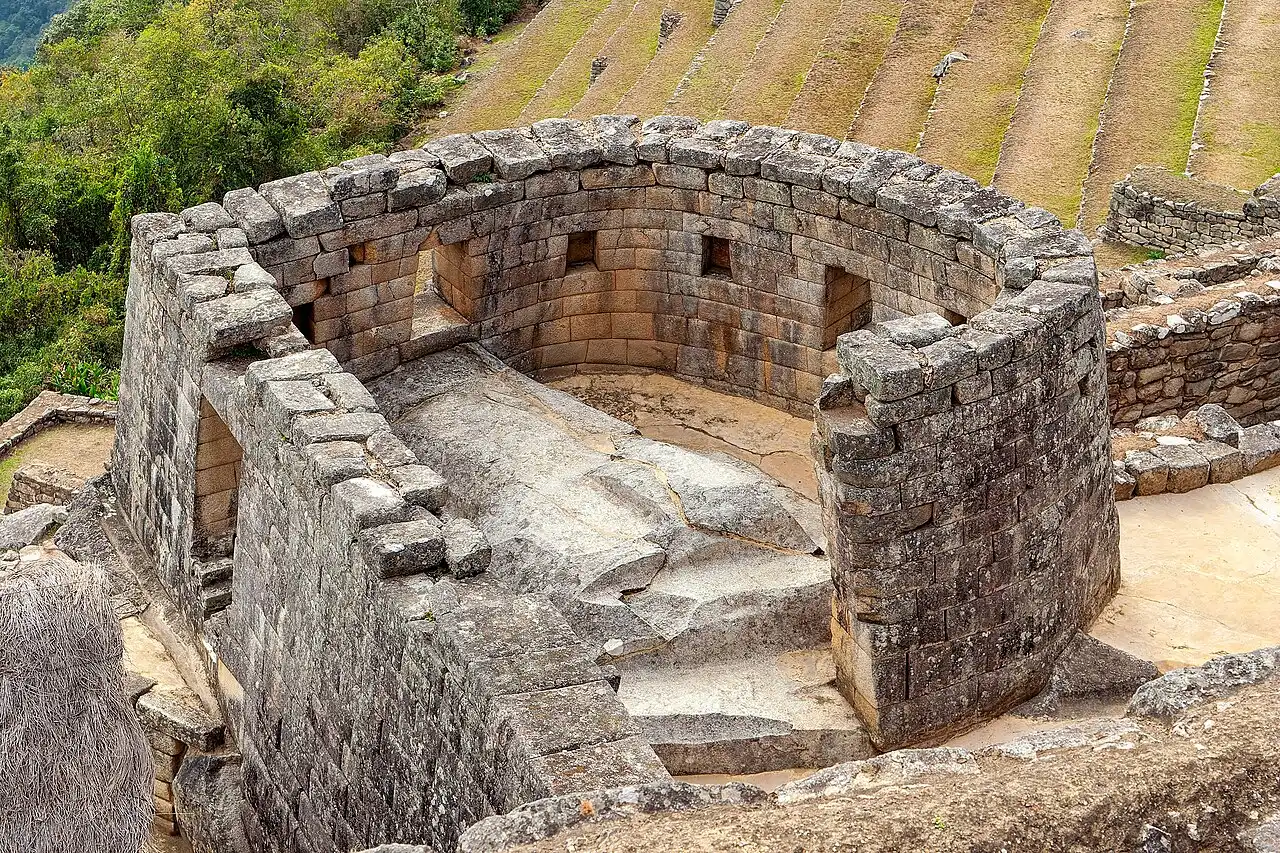
Temple of the Sun
The finely worked stone tower follows the curve of the rock on which it stands. Its windows and relationship with the sun have been studied; below is a cave worked into steps and niches, traditionally called the Royal Tomb, a name that does not prove a burial. On the maps for routes 2-A and 2-B, the designated stop is the Temple of the Sun viewpoint. Route 3-B passes through the lower sector, but none of these paths promises entry into the temple or cave. Observe from the authorized spaces on your chosen ticket.
It is worth observing how the curved stonework follows the rock. On routes 2-A and 2-B, plan to do so from the designated viewpoint without counting on entry into the temple or cave.
Check access
Intihuatana
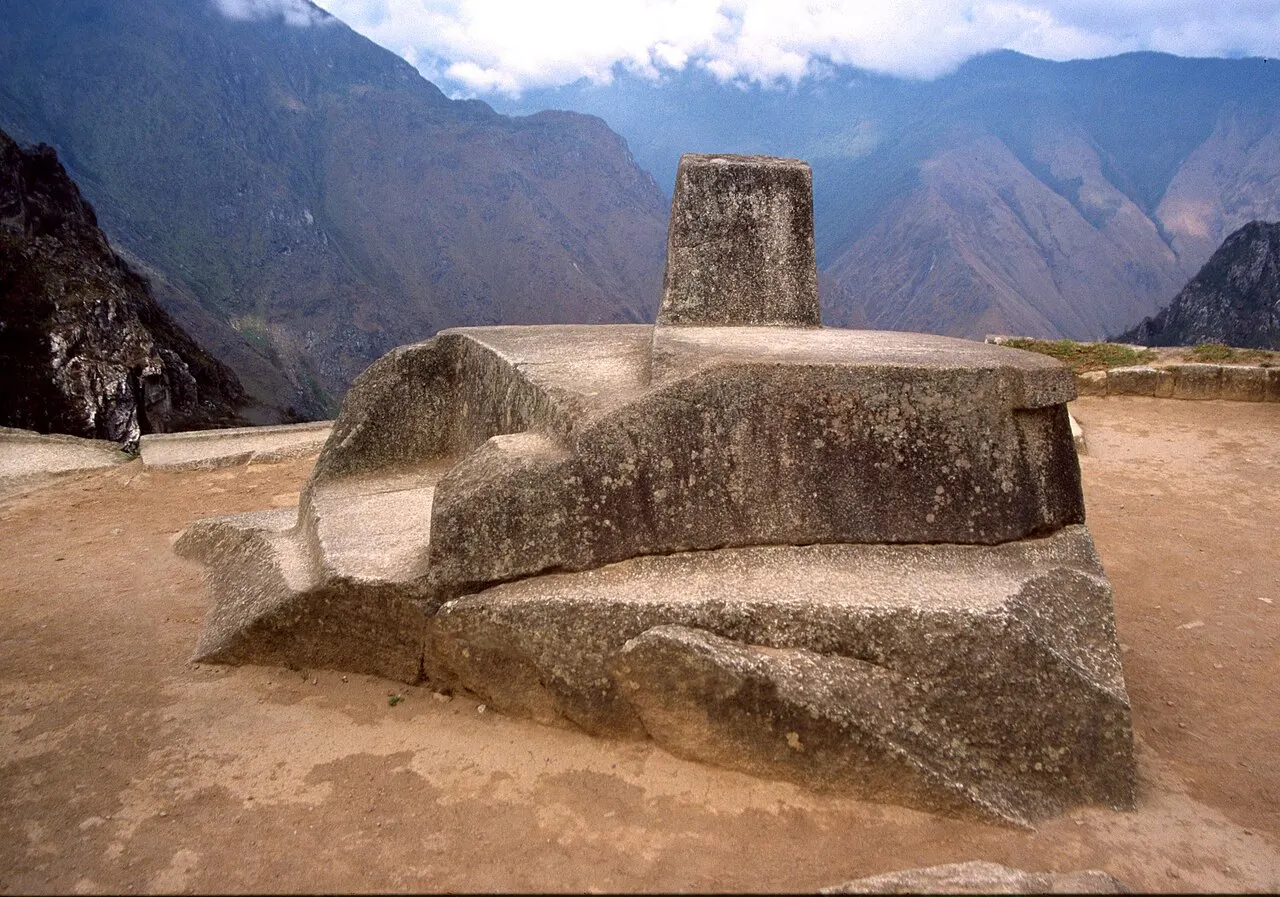
The carved granite stone stands on a terraced hill above the Temple Plaza. Its relationship with solar observation, calendars and mountain worship is subject to interpretation; the name does not settle its function. The maps for routes 2-A and 2-B mark the hill, but the visitor path does not climb to the monolith. Do not plan an up-close visit simply because it appears on the map: follow your purchased route and check any changes to access with site staff.
The hill helps you read the relationship between stone, terraces and sacred landscape. Routes 2-A and 2-B do not climb to the monolith; archaeological importance is not a promise of an up-close visit.
Check access

Temple of the Three Windows
Three large trapezoidal openings pierce a wall of carefully fitted granite blocks beside the Sacred Plaza, labeled Temple Plaza on visitor maps. The building lets you observe the stonework and the relationship between open spaces and the landscape. Routes 2-A and 2-B pass through the Temple Plaza; the panoramic terrace circuit and lower route 3-B do not follow this same sector. Choose a ticket for that itinerary rather than adding the temple as an unrestricted detour from another route.
I would include the Temple Plaza to observe the fitted blocks and openings of the Three Windows. Choose route 2-A or 2-B for this sector rather than treating it as a detour from any circuit.
Check access

Temple of the Condor
Sloping rocks and a stone carved with a head and neck compose the condor figure, within a group of cavities and niches. Ritual use is an archaeological interpretation, rather than a proven guard function. The route 3-B map takes the path through the Condor group; maps 2-A and 2-B also identify it, but their line follows a different part of the lower sector. Compare the path on your purchased route and follow authorized viewpoints without assuming entry into the cavities.
It is interesting for the figure formed from sloping rocks and carved stone. Route 3-B passes through the group; compare viewpoints on other routes without assuming access to the cavities.
Check access
Waynapicchu (Huayna Picchu)
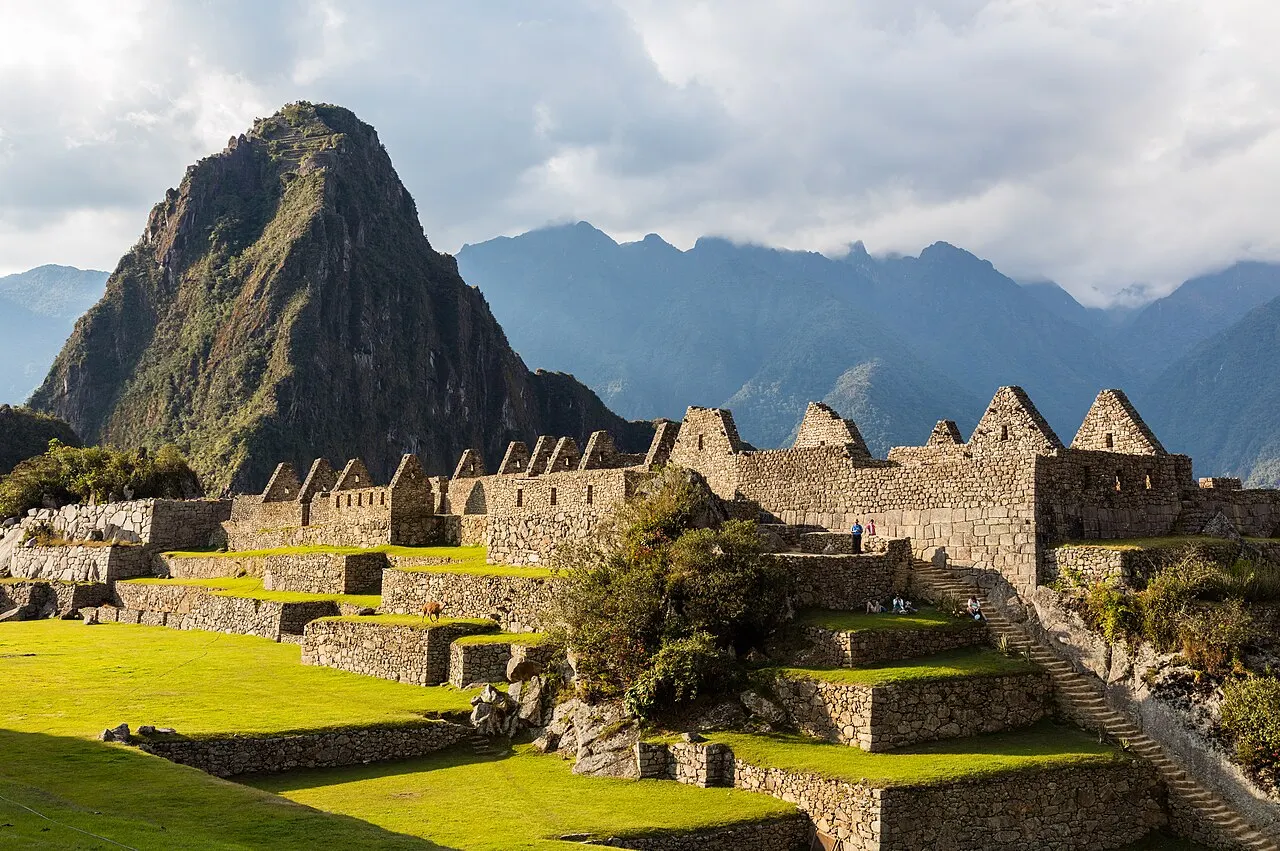
The mountain behind the llaqta is accessed via route 3-A, with its own entry ticket and time. It is a mountain walk requiring effort beyond the urban-sector visit; allow time to climb, descend and rest before returning to the village. Gran Caverna belongs to the distinct, seasonal route 3-C: do not add it to the Waynapicchu climb as though one ticket covered both. Check the route available for your date and access notices.
I would reserve this option for someone seeking a mountain walk who can fit ascent, descent and rest into the day. Route 3-A has its own ticket; Gran Caverna requires the distinct 3-C alternative.
Check access

Intipunku, the Sun Gate
The stone gateway stands on the Inka Trail arrival route. For a visit from the llaqta, the published itinerary is seasonal route 1-C, with its own ticket. It includes walking beyond the panoramic terraces; allow for the entire route and keep to authorized areas. A ticket for another route does not include this detour, and a one-hour round trip is not a guaranteed duration. Confirm availability for your date before buying.
The gateway is interesting for its relationship with the Inka Trail arrival route. To reach it from the llaqta, check seasonal route 1-C and allow for the outward and return walk rather than adding a detour to another ticket.
Check access
 AI illustration
Manuel Chávez Ballón Site Museum
Beside the former Puente Ruinas, the museum displays archaeological objects and explains cultural processes and research in the sanctuary. The botanical garden complements the visit if accessible. The Ministry of Culture lists daily hours of 9am–4pm; confirm opening for your date and allow for travel to and from the village.
Beside the former Puente Ruinas, the museum displays archaeological objects and explains cultural processes and research in the sanctuary. The botanical garden complements the visit if accessible. The Ministry of Culture lists daily hours of 9am–4pm; confirm opening for your date and allow for travel to and from the village.
Check access

Machu Picchu Mountain
Route 1-A combines panoramic terraces with the walk to Machu Picchu Mountain on a specific entry ticket. Ascent and descent require effort and time beyond a terrace visit; compare this plan with your train departure and allow for rest. There is no guaranteed time for clear skies or reaching the summit. Check the route entry time and local conditions; it replaces a visit on another circuit rather than being freely added to Circuit 2.
A good choice for combining terraces with a mountain walk if the effort and return fit your plan. Route 1-A is an alternative ticket itinerary, not an unrestricted addition to Circuit 2.
Check access
Nilo’s itinerary
Start with the basic programme and choose extensions for the time you have.
Plan my days in the app ↗Day 1 · The llaqta according to your ticket
Leave your accommodation with a margin for the journey and wait before entry. Confirm bus departures or the open walking route; the first departure is not automatically right for every entry ticket.
Present the entry ticket and the identity document matching the purchase at the scheduled time. Arrange the meeting and route with your hired guide beforehand.
If you bought 2-A or 2-B, follow the authorized terraces and urban-sector route and local instructions. A structure shown on the map is not an accessible stop with every ticket.
If you bought another route, take that visit instead of Circuit 2. Machu Picchu Mountain requires 1-A; Waynapicchu, 3-A; Gran Caverna is a distinct seasonal option, 3-C. Do not add a mountain to the llaqta ticket as though it were open access.
After descending, take a break to eat and rest. If returning by train today, prioritize boarding time, baggage and the return margin; leave optional visits for another occasion.

If you stay longer
Day 2 · Museum or another visit, with the return
If you have time before the train, choose the Manuel Chávez Ballón Site Museum beside the former Puente Ruinas. The Ministry of Culture lists daily hours of 9am–4pm; confirm opening for your date and allow for the journey both ways.
The botanical garden complements the museum if accessible and time allows. It is not a compulsory stage before returning to the village.
A mountain with its own ticket is an alternative to the museum, not an addition. Check the route, entry time, effort and descent before keeping a train on the same day.
Agree on check-out and baggage storage with your accommodation. Collect your bags early and allow for a meal and the walk to the station.
Board the booked train and use your arranged road transfer, if needed, to continue to Cusco. Arrival depends on those schedules and service conditions; do not book another commitment counting on arrival at 10pm.

Food
 AI illustration
Trout in Cusco cuisine
Fried trout is part of Cusco cuisine, accompanied by potatoes, corn and salad in different combinations. In Machupicchu Pueblo, check the preparation and sides on the menu before ordering, along with the price and service time. Plan the meal outside the llaqta and leave a buffer for boarding; an ingredient’s origin alone does not allow you to assess a kitchen’s storage or preparation.
 AI illustration
Cuy al horno
Roast guinea pig is a preparation from Cusco cuisine that may come with browned potatoes and salad; there are versions with pasta or stuffed rocoto. Ask how it is served, the portion size and the price before ordering. If making this meal a programme in Cusco or the valley, choose the restaurant and allow time for the journey and return; do not squeeze in the stop without a buffer before the train.
 AI illustration
Lomo saltado
Strips of beef stir-fried with onion, tomato and sillao, accompanied by French fries and rice. The wok and stir-frying bring Chinese influence together with ingredients from Peruvian cooking. Seasoning and sides vary: check the ingredients and portion size before ordering. Choose the meal according to the menu and your available time, keeping the journey to the station and boarding lead time separate from lunch.
 AI illustration
Chicharrón with mote
Pork fried in its own fat, served with sides that may include mote, cancha and salsa criolla of onion and chilli. It is a preparation from Cusco cuisine, notably in Saylla. To try it in the village, check the establishment’s version and hours; a regional description does not confirm every kitchen’s menu.
 AI illustration
Choclo con queso
Corn served with cheese: an Andean combination that can be a snack or starter, depending on the portion. Check the preparation, price and where to buy it for your schedule. Arrange the snack before your boarding lead time rather than relying on a platform vendor or treating the train wait as guaranteed free time.
 AI illustration
Chupe de camarones and caldo de gallina
Chupe de camarones, associated with Arequipa cuisine, is a shrimp broth with milk and cheese. Caldo de gallina is a poultry broth with sides that vary by recipe. To choose in the village, check ingredients, portion size and service hours. If your visit starts early, arrange breakfast with your accommodation the day before; after descending, allow time for a meal and rest before going to the station.
 AI illustration
Coca tea
An infusion of coca leaves, connected with Andean customs and also sold in teabags. It has cultural and culinary interest; check the product’s composition. Do not rely on it to prevent or treat altitude illness or replace gradual acclimatization or care when symptoms appear. To carry leaves, tea or derivatives on your return journey, first check the rules for that product with SUNAT and authorities in your destination and transit countries.
 AI illustration
Cusqueña beer and pisco sour
Cusqueña’s history begins with the brewery founded in Cusco in 1908; the brand offers varieties such as Dorada, Negra and Trigo. Pisco sour combines pisco, citrus, egg white, syrup and bitters. Check the ingredients, version and menu price before ordering. Avoid alcohol for the first two days after reaching high altitude and before strenuous walking; completing the descent does not automatically make a drink suitable.
Day trips
Hidroeléctrica and the Cocalmayo hot springs
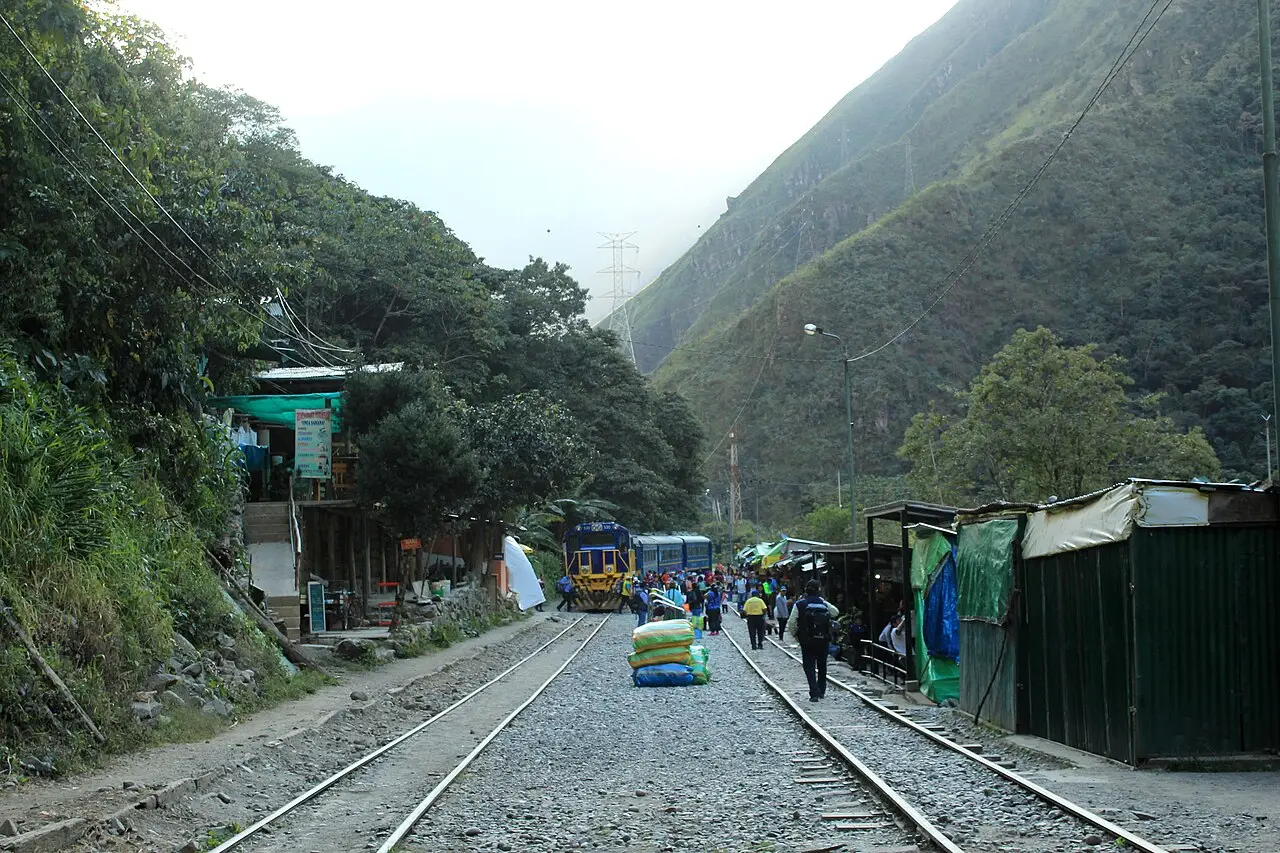
Cocalmayo is in Santa Teresa and requires a regional connection separate from the llaqta visit. Check the train or authorized walking route between the village and Hidroeléctrica, road transport to Santa Teresa and return services. Confirm the pools are open before leaving. Do not use railway tracks as a trail or count on this detour as a quick outing before your booked train.
Ollantaytambo
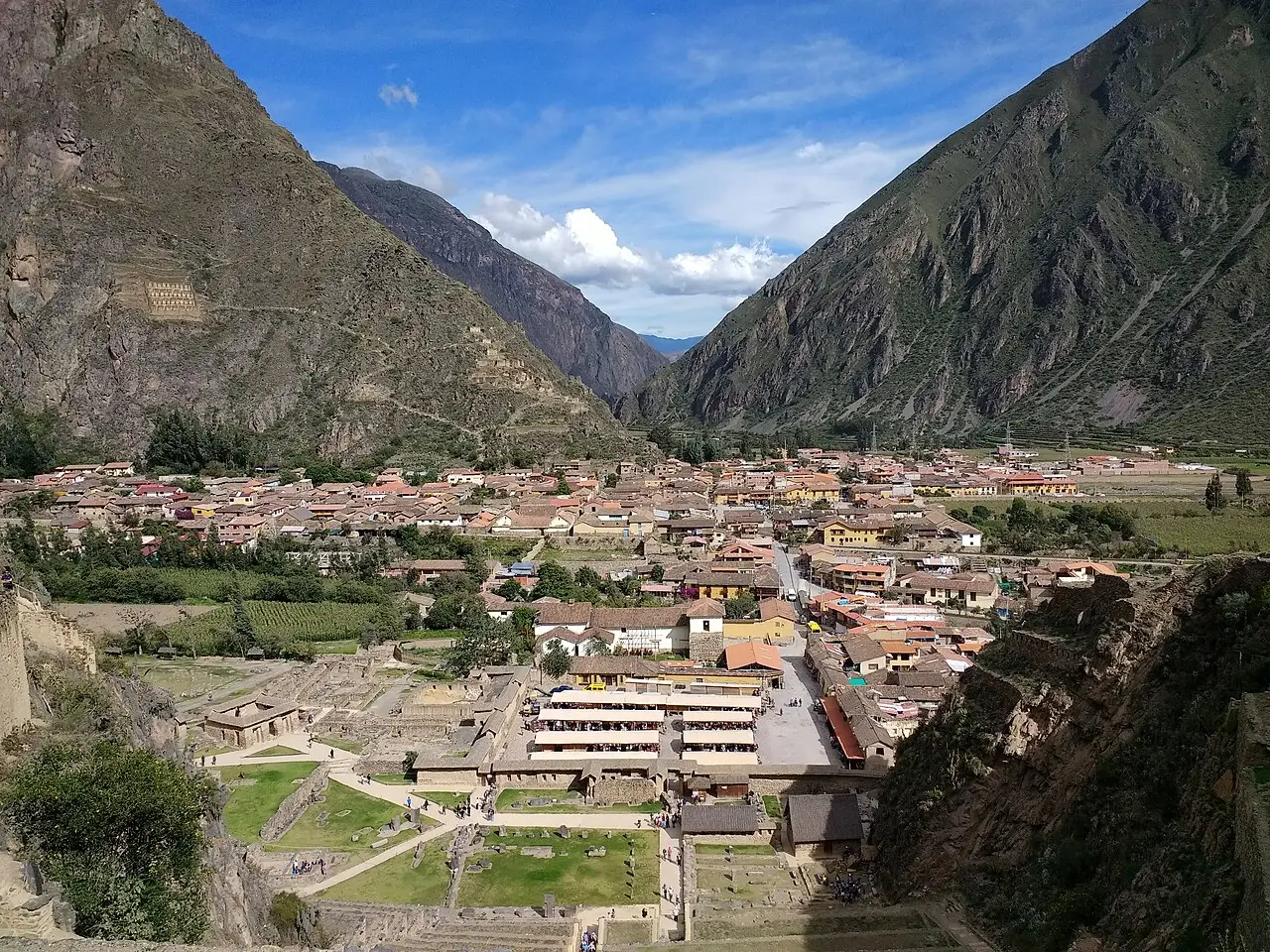
Ollantaytambo can be a stage before or after Machupicchu Pueblo, with its own time for the town and archaeological park. Terraces, stairways, channels and stone walls offer another way to observe building in the Sacred Valley. Check the arrival and next departure on your ticket; if the service includes a transfer to Cusco, a sightseeing stop is not automatically included. The park is part of the Cusco Tourist Ticket, on partial circuit III or the full ticket; compare validity and category with the visits you intend to make. This admission does not include transport or a guide. Allow time for baggage, a meal, rest and reaching the station. If the visit makes boarding tight, I would stay overnight in Ollantaytambo or save it for another day.

Cusco and Sacsayhuamán
Cusco works better as a stage with accommodation and days of its own, before or after Machu Picchu. Check where your rail or bimodal service ends and how to reach your accommodation; time between stations does not include traffic, waiting, luggage and check-in. In the centre, Qorikancha and the Santo Domingo convent show the layering of Inca and colonial buildings. Casa Concha holds Machu Picchu objects returned by Yale; check its opening and separate admission before planning a visit. Choose one of these visits for an arrival day, preserving a meal and rest according to your altitude adaptation. Sacsayhuamán, on the hillside above the city, can take another part of the schedule, with outward and return access arranged. The park belongs to partial circuit I or the full Cusco Tourist Ticket, which admits you to included sites without transport or a guide. Check validity; the Museo de Sitio Qorikancha listed on that ticket is a separate institution from the temple and convent.
Where to begin
Arrival and rest in the village
Arrange the transfer to the station shown on your ticket. If visiting the Sacred Valley beforehand, choose a stop that fits the confirmed journey, with a meal and margin for traffic; do not stack Chinchero, Moray and Ollantaytambo before the same train.
Money
The currency is the Peruvian sol (PEN, S/). Check the day’s exchange rate and the final amount charged by your bank or payment method; a fee quoted in dollars is not a fixed conversion for the whole trip. Separate the train, road connections, route ticket, transport up and down, accommodation, meals and any guide. Compare what each ticket or package includes to avoid counting the same service twice.
Entry prices vary with the route and documented category. The Ministry of Culture’s promotional table for 2026 covers Peruvians, foreign residents of Peru and Andean Community citizens: the general promotional rate is S/64 for routes 1-B, 2-A, 2-B and 3-B, and S/112 for routes 1-A and 3-A. The table contains other routes and categories; check the required document and the price for your chosen option at tuboleto.cultura.pe. The promotional rate is not the price applicable to every visitor.
There is also a SERNANP charge for tourist entry to the sanctuary, authorized from May 1, 2026. The promotional table for 2026 lists S/11 in the foreign adult category and S/5 in the national adult category, with separate rules for children and local residents. This charge does not apply to entry via the Inka Trail Network; that does not waive the other tickets and services for the journey. Check the applicable charge and whether it is already included in the quoted amount before paying.
Confirm payment methods, fees and access to cash withdrawals before leaving Cusco. Bring soles for expenses requiring cash and avoid relying on a withdrawal between descending from the site and boarding the train. Check any service included in the bill and arrange tips according to your choice and the service conditions.
Getting there and around
Arrange arrival around your train
To reach Machupicchu Pueblo by train, check the departure station and the legs included in your ticket. Services run from Ollantaytambo, with bimodal options from Cusco combining bus and train; stations and departures vary with the service booked. Arrange any road transfer not included, leaving time for traffic, a meal and boarding. PeruRail asks passengers to reach the station 30 minutes before departure, with their ticket and the identity document matching the purchase. Check the baggage allowance for your service too: a suitcase accepted on a flight may exceed the rail allowance. Fares and change conditions depend on the ticket; a missed connection does not guarantee rebooking. The route via Santa María and Santa Teresa to Hidroeléctrica involves several road legs, followed by a train or a walking route to confirm locally. Do not use railway tracks as a trail or treat this alternative as a short, guaranteed connection. The Inka Trails have their own entry arrangements and organization; confirm the authorized route, access conditions and current notices before booking the trek.
From the village to the site: entry, ascent and return
Machupicchu Pueblo is the base for the ascent to the site. Choose a bus or walking route according to your entry time, the effort you want to make and local conditions; confirm the boarding point, first departure or path opening before scheduling the ascent. The transport ticket does not replace the llaqta entry ticket. Buy the route and time at tuboleto.cultura.pe; the limited in-person sale in the village is for entry the following day and does not guarantee your preferred option. Follow only the route authorized by your ticket and bring the identity document used for the purchase. For the return, allow separately for the downhill queue, the journey, the walk to the station and the advance arrival required by the railway. Add a margin for delays and meals. If walking uphill or climbing a mountain makes the connection tight, change the plan before buying: do not count on the train waiting or automatic ticket changes.
Safety
Cusco sits at 3,400 m, and a rapid ascent from Lima can cause altitude illness. The llaqta is at 2,430 m and the village at 2,040 m. Allow time for gradual acclimatization and avoid strenuous exercise on arrival; one or two nights do not guarantee protection. If symptoms appear, do not continue ascending. Worsening despite rest calls for descent and medical assessment; breathlessness at rest, confusion or difficulty walking require urgent care. Discuss prevention and medication with a healthcare professional before traveling.
Mountain routes require assessing the ascent, descent and your comfort with heights before buying. Check the demands of your chosen route and allow time for breaks; a ticket does not make a trail suitable for everyone. In rain, poor visibility or an access restriction, follow staff instructions and do not leave the authorized path to reach a viewpoint.
Wear clothing and footwear suited to the route and use sun protection, a hat and insect repellent. Check the forecast UV index rather than relying on a fixed midday value. Keep documents, phone and money secure, especially at stations and in queues; do not leave your backpack unattended.
Rain, route damage and operational problems can interrupt access outside the rainy season too. Before setting out, check Cultura Cusco notices and those of your booked transport. Choose tickets and services through official channels and confirm change or refund conditions. Leave a buffer before a flight or another connection that is hard to change; an extra night or day reduces the squeeze but does not protect against every disruption.
Etiquette tips
Follow the authorized route on your ticket
Read the map for your purchased route and follow arrows, signs and site staff instructions. The itinerary is not open exploration: do not switch routes or add your own detour to reach another structure. Some sections have authorized outward and return paths; the 1-A map, for example, shows the ascent and return along the access to Machu Picchu Mountain. That planned return does not authorize walking against the direction of other sections.
Protect the stone and respect barriers
The rules prohibit climbing or leaning on walls and structures, touching, moving or removing stone elements, and lying down, running or jumping around the site. Do not cross ropes or barriers to approach a building. Observe from authorized spaces and follow local instructions. The Intihuatana hill appears on maps for 2-A and 2-B, but those route lines do not climb to the monolith; appearing on the drawing does not authorize approaching it.
Equipment and breaks before the gate
The llaqta rules prohibit entry with food and kitchenware, backpacks larger than 40 x 35 x 20 cm, umbrellas, tripods and extensions or supports for cameras and phones; drones are also prohibited. Check the full list before packing. Plan your meal and restroom visit before entry, allowing time for these services when scheduling the ascent. Confirm where to leave baggage that cannot enter, availability and the charge; do not rely on a locker or fixed price at the gate. Arrange water for the route and check container rules, without bringing prohibited equipment.
Walking poles are restricted
The rules prohibit walking poles as ordinary visitor equipment. The regulations provide an exception, with rubber tips, for older adults or people with evident physical disabilities. If you need this mobility aid, confirm the conditions with the administration before visiting; a rubber tip alone does not make a pole admissible.
Ask before photographing people
Ask permission before photographing or filming someone and respect a refusal. If posing is offered as a service, agree on the price beforehand; Andean dress or a llama’s presence does not mean consent or a fixed fee. Greet people and respect your hosts’ privacy.
Coca leaf: traditional use and travel
Chewing leaves and drinking coca tea are part of Andean practices, with meanings that vary between communities. Traditional use does not replace gradual acclimatization or care when altitude symptoms appear. Before carrying leaves, tea or other derivatives in your baggage, consult SUNAT and authorities in your destination and transit countries about that specific product. Sale in Peru does not prove permission to cross a border.
Mistakes to avoid
Lima and the llaqta on the same day
Flying from Lima into Cusco at 3,400 m and scheduling strenuous activity immediately afterward increases the risk of altitude illness. Plan a gradual ascent and time to adjust; sleeping in the Sacred Valley may help, but two nights do not guarantee protection or resolve persistent symptoms. If you feel unwell, stop ascending and seek medical advice.
Leaving ticket purchase until arrival
Buy ahead at tuboleto.cultura.pe to choose your date, route and time. A limited quota is sold in person at the Machupicchu Pueblo Cultural Center for entry the next day, subject to availability. Relying on that quota may mean waiting and missing your preferred route; there is no ticket office at the site entrance.
Buying without checking the circuit route
Circuit 1 groups panoramic routes; Circuit 2 combines terraces and the urban sector, including the Sun Temple lookout and the Temple Plaza. Huayna Picchu requires route 3-A; Machu Picchu Mountain requires 1-A. Check the exact route map before paying: a ticket does not cover every circuit or every structure marked on the map.
A mountain squeezed in before the train
A mountain ascent and descent can take up a large part of the visit, with the downhill queue, baggage and boarding still ahead. Combine it with a train on the same day only when ticket times and a margin for delays accommodate the plan. Otherwise, choose another day or a visit without a mountain.
An onward connection with no margin
Do not treat the scheduled arrival in Cusco as a guarantee for a flight or another commitment. Rail services can change because of weather, route conditions or operational problems. Consider a night or a day of margin according to your connection and ticket conditions; that interval reduces the squeeze, but does not guarantee protection against a prolonged interruption.
Useful phrases
¿Cuánto cuesta el pasaje?
How much does the ticket cost? Specify the journey and whether you want a one-way or return ticket; confirm the total price and payment method before buying.
Me siento mal. ¿Dónde puedo pedir ayuda médica?
I feel unwell. Where can I ask for medical help? The phrase communicates a need for help; it does not replace assessment or guarantee care at a hotel or pharmacy.
¿A qué hora sale el último bus?
What time does the last bus leave? Confirm the day’s final downhill departure and boarding point with the service before going up, allowing time for the queue and reaching the station.
Allillanchu?
How are you? in Cusco Quechua. One response is “Allillanmi”, I’m fine. If you want to try the greeting, ask the person to repeat it and listen before trying.
Añay
Thank you in Quechua. A word to acknowledge help received; ask the person to repeat it and listen to how they say it.
Llaqta
Community, village or city in Quechua, depending on context. On official ticket pages, “llaqta de Machupicchu” refers to the Inca site; Machupicchu Pueblo is the town with the station and hotels.
Districts
Agricultural sector
The terraces south of the urban sector were supported by retaining walls and filled with layers that helped rainwater infiltrate. They created cultivation surfaces and helped protect the slopes. To view the llaqta, compare the platforms and the path of your purchased route: 1-B follows the upper terrace; 2-A and 2-B include the lower platform. The views differ, and a panoramic route does not grant access to every space in the urban sector.
Main drain and Central Plaza
The main drain separates the agricultural and urban sectors. Elsewhere in the complex, the central plaza links the upper and lower areas of the built sector. Read the terraces, walls and passageways as parts of a design that modified the terrain and managed water. What you can walk through or observe depends on your ticket route; follow its path and authorized locations.
Sacred Plaza and ceremonial spaces
At the Sacred Plaza, the Temple of the Three Windows displays large trapezoidal openings and carefully fitted blocks. Elsewhere in the urban sector, the Temple of the Sun has a curved wall of fine stonework; Intihuatana stands on the terraced hill above the plaza. The llaqta brings together different building techniques, and a wall’s finish alone does not establish a room’s function. Routes 2-A and 2-B pass through the Temple Plaza and the Temple of the Sun viewpoint, but their paths do not climb to Intihuatana. Compare your ticket with the places you want to observe.
Mortars group
In the lower urban sector, this complex has walls with stones of varied shapes and mud mortar. In the room known as the Water Mirrors, two circular hollows were carved in stone; their relationship to the sun’s movement is a published interpretation, rather than a function established by the name. Compare these forms with the stonework of other rooms, without identifying workshops solely from the appearance of the walls. Visitor maps place the Water Mirrors and Temple of the Condor in the lower sector, but the paths differ. Observe the authorized spaces of your chosen route, without entering cavities or taking your own detours.
Plaza Manco Cápac
The plaza is a landmark in central Machupicchu Pueblo; the municipality lists its address at number 101. It can serve as a meeting point and a place for a pause, but check the hotel, station and bus boarding addresses separately. The town has slopes, passageways and crossings: walking time depends on the route, luggage and your pace. Allow a buffer to collect your bags and reach boarding, rather than relying on fifteen minutes for every destination.
Avenida Imperio de los Incas
The avenue has railway ticket offices and restaurants. A meal break fits better once you know where to board and when you must report: buying or collecting a ticket at a shop does not mean boarding there. Compare the menus and prices of your chosen establishment, rather than assuming the same offering along the entire street. Around the railway, use signed pedestrian paths and crossings; do not treat the tracks as a shortcut or a place to take photographs.
Calle Pachacútec and the hot springs
The route along Calle Pachacútec leads to the baths area beside the Aguas Calientes River. The pools use thermal water and can be an optional town visit if you have time and feel like it after the descent. Check opening, admission and conditions of use before heading uphill; allow time for the return walk and to collect your bags. Do not choose lodging in this area simply assuming it will be the cheapest: compare the price and access for the address and your dates.
Hidroeléctrica and Santa Teresa
Hidroeléctrica is a railway connection point west of the town; road access runs through Santa María and Santa Teresa. This alternative requires arranging each leg and the return, rather than adding a quick extension to the llaqta visit. Check train operation, your ticket and notices before travelling to the station. Do not plan a walk along the tracks: this is an active line, and the concessionaire warns of the risks of walking on or close to it. Leave a transport buffer and confirm the next connection.
History
15th century · An Inca estate in the mountains
The royal-estate interpretation associates Machu Picchu with Pachacútec’s lineage. The complex was built in the 15th century, but no demonstrated year marks the start of construction: dating human remains indicates occupation around 1420, rather than a founding date. Terraces, walls and drainage transformed the slope to accommodate the buildings.
15th–16th centuries · Who maintained the llaqta
The court visited the estate seasonally; a community of retainers and their families stayed to maintain it. Researchers associate them with yanacona and former aclla, people resettled to serve the elite. A DNA study of 34 individuals, published in 2023, found ancestries associated with the Andes, the coast and Amazonia: this diversity alone does not identify each person’s birthplace.
16th century · The end of regular residence
The llaqta ceased to function as a regular residence in the 16th century. The timing and reasons for this change cannot be reduced to an emperor’s capture or the fall of Vilcabamba. Abandonment did not make it unknown: local people continued to visit and occasionally inhabit the place.
1902 · An inscription before Bingham
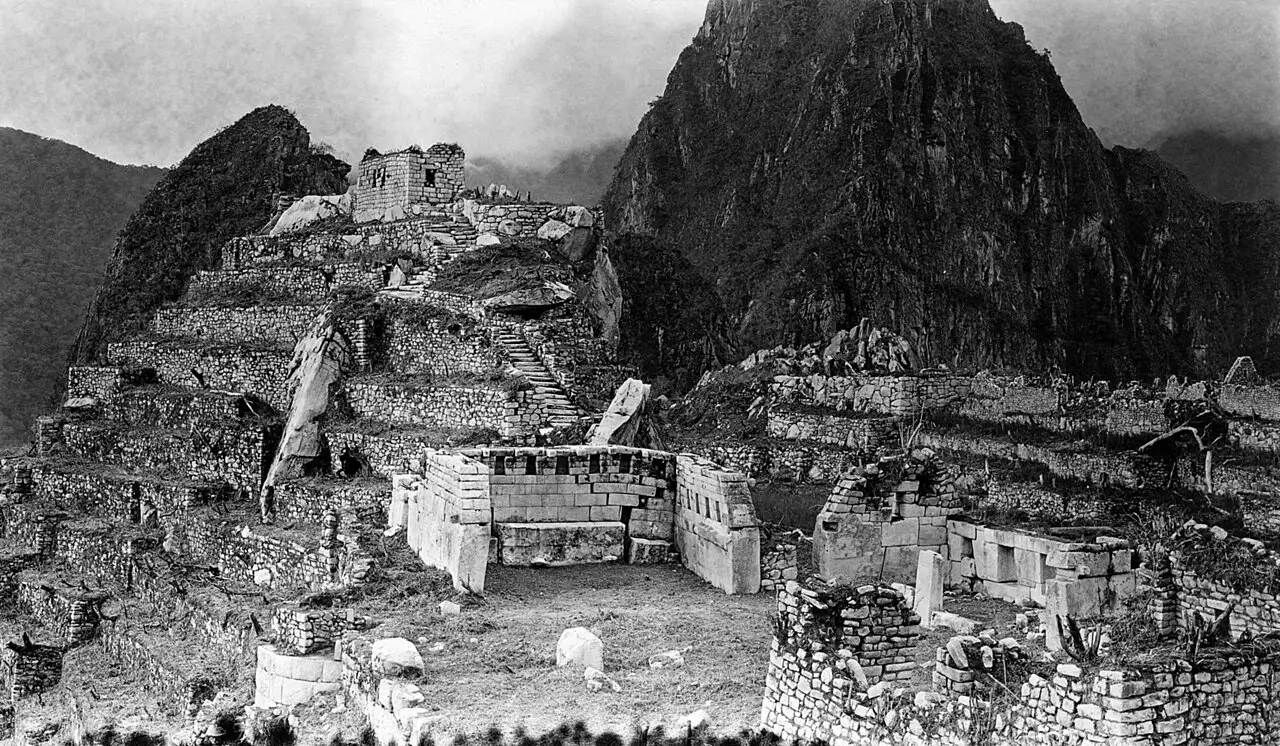
Agustín Lizárraga left his name and the year 1902 in charcoal at the Temple of the Three Windows. The inscription appears in photographs Bingham took in 1911. These records and accounts of farmers using the terraces show that the site was already known locally.
1911 · Bingham arrives on July 24
On July 24, Yale historian Hiram Bingham climbed up with Melchor Arteaga and Sergeant Fabián Carrasco. Residents welcomed him near the terraces, and a local boy showed him further ruins. The subsequent documentation and international publicity were not the first knowledge of the place.
1912–1915 · Excavations and the removal of materials
Expeditions associated with Yale and National Geographic documented and excavated the site; ceramic, stone and metal materials and human remains were taken to New Haven. The 2010 agreement between Peru and Yale led to return shipments in 2011–2012. The collection is curated at Casa Concha in Cusco, rather than at the llaqta.
1928–1941 · Railway and town
The municipal history records the railway reaching the Maquinachayoq camp in 1928, with railway workers settling around it. The town grew in connection with this activity; the district of Machupicchu, with the town as its capital, was created in 1941.
1948 · The road to the llaqta
The Hiram Bingham road opened on October 28, 1948, linking Puente Ruinas to the monument and allowing motor transport to the entrance. The road was extended in subsequent decades. Walking uphill remains another access option.
1983 · Cultural and natural World Heritage
UNESCO inscribed the Historic Sanctuary of Machu Picchu in 1983 for cultural and natural values. The recognition brings together Inca architecture and its landscape of mountains and diverse habitats; conserving the whole also requires care for the surroundings and the impacts of visitation.

2000–2010 · Damage and access risks
On September 8, 2000, a crane used to film a commercial damaged the Intihuatana. In 2001, the Peruvian government cancelled the concession for a cable car between Aguas Calientes and the llaqta. In January 2010, rain and landslides blocked the railway and stranded visitors; helicopter rescues took place. UNESCO’s initial assessment did not report direct damage to the llaqta.

2007–2026 · Circuits and visiting rules
The publicity of the New Seven Wonders in 2007 was followed by changes in how visits were organized. Two entry shifts were announced in 2017, and three circuits with ten routes came into effect in June 2024. For 2026, regulations allow up to 4,500 visitors per day in the regular season and up to 5,600 on the high-season dates specified for that year; this limit does not establish ticket availability.
Complete history
Pachacútec, the community and the terrain
The royal-estate interpretation links Machu Picchu to Pachacútec’s panaca, the lineage that managed his estate. Palace life, religious activities and production belonged to this complex; calling it only a holiday home leaves out the people who maintained it. The elite made seasonal visits, while retainers and families stayed under a system of resettlement and service to the nobility.
The chronology also calls for care. Dating human remains points to occupation around 1420, but supplies neither a founding day nor the start of each building project. The builders modified the slope with terraces, retaining walls and fill. Beneath the visible surfaces, draining layers and channels carried rainwater away; a supply channel brought water to the fountains. Engineering was part of building the llaqta, rather than merely adapting to its setting.
Abandonment and local knowledge in the 16th century
The end of regular residence at Machu Picchu belongs to the century of the Spanish conquest, but has no single demonstrated cause. Dating burials estimates a period of occupation; it does not determine the last day of use of the entire complex. The official account places abandonment in the second half of the 16th century and records later visits and occasional occupation by local farmers. These concern different uses of the place, rather than a continuous calendar of residents.
Colonial documents also help explain why “lost city” is a misleading description. Picho refers to a region containing several named places; the document of 1568 alone does not prove that the entire llaqta was still inhabited or paying tribute. Local knowledge and later occupation should not disappear from the story when foreign visitors’ accounts begin.
Local knowledge, expeditions and the collection’s return
Bingham did not arrive at a place unknown to everyone. On July 24, 1911, Melchor Arteaga and Sergeant Fabián Carrasco accompanied him uphill. Farmers lived near the terraces, and a local boy showed him further ruins. Photographs from that visit record Agustín Lizárraga’s charcoal inscription, bearing the year 1902, at the Temple of the Three Windows. Bingham also mentioned Lizárraga in Inca Land, published in 1922; saying he erased him from the account does not match that book.
The expeditions conducted surveys and excavations, particularly in 1912, and took archaeological materials and human remains to Yale. The restitution dispute ended in an agreement in 2010; shipments to Peru followed in March and December 2011 and November 2012. The collection is curated at the Machu Picchu Museum at Casa Concha in Cusco. Counts of objects, fragments and lots depend on the inventory method and should not be confused with the number of pieces on display.
International publicity also established names and interpretations that are still being studied. In 2022, Donato Amado Gonzales and Brian Bauer used maps, Bingham’s notes and colonial documents to propose that the city’s name was Picchu or, more likely, Huayna Picchu. This is a research hypothesis, rather than proof that Bingham invented the mountains’ names.
The town, access and worldwide fame
Machupicchu Pueblo has a history of its own below the llaqta. The railway reached the Maquinachayoq camp in 1928, and workers settled around it. In 1941, the law created the district of Machupicchu and designated the existing town as its capital. The Hiram Bingham road, opened on October 28, 1948, made it possible to carry visitors in vehicles from Puente Ruinas to the monument entrance. That changed access; it did not make the service town, the uphill journey and the archaeological site the same place.
The international image of the place also took shape through books and institutions. After visiting the site in 1943, Pablo Neruda wrote “Alturas de Macchu Picchu” in 1945; the poem is included in “Canto General”, published in 1950. UNESCO listing followed in 1983, and selection among the New Seven Wonders in 2007 widened its publicity. These recognitions mean different things: heritage inscription concerns values and conservation, while the vote is a distinction based on popularity.
The access that makes the trip possible also concentrates pressure in the valley. I would plan the train, the ascent and the archaeological circuit as separate stages, checking what each booking includes and allowing time between them. Fame does not replace that preparation, and a ticket for one stage does not by itself guarantee admission to another.
Regulated visits and access disputes
Visits have been organized in stages. In 2017, the Ministry of Culture announced the introduction of two entry shifts from July. In 2019, a pilot scheme limited access times to the Temples of the Sun and the Condor and the Intihuatana pyramid. Reopening after the pandemic closure took place on November 1, 2020. Since June 1, 2024, visits have been organized into three circuits and ten routes; that reform was not the origin of every earlier itinerary.
For 2026, the authorized capacity is up to 4,500 visitors per day in the regular season. A maximum of 5,600 was specified for January 1, April 2–5, June 19–November 2 and December 30–31, 2026. Places are distributed by route and entry time, and some routes operate only in high season. Authorized capacity is not the number of tickets available; check the date, route and entry time before organizing the rest of the trip.
Online tickets are sold at tuboleto.cultura.pe. The ticket is issued in the visitor’s name, and admission depends on a confirmed ticket for the corresponding route, date and entry time. The in-person channel in Machupicchu Pueblo has a limited allocation for visits on the day after purchase; arriving at the ticket office does not guarantee the route you want. I would confirm admission before committing to an ascent and return with tight intervals.
Access disputes have also concerned different matters. In January 2024, the Defensoría del Pueblo recorded railway blockades during protests against the new ticket-selling system; the discussion concerned outsourcing the platform. In September 2025, SERNANP addressed the authorization and operation of transport on the Hiram Bingham road. These episodes show that conservation, ticket sales and transport have their own management arrangements. For a dated trip, check operations with those responsible for each stage as well as keeping your tickets.
Bingham’s 1911 photograph records Lizárraga’s charcoal inscription, bearing the year 1902, at the Temple of the Three Windows. Inca Land, published in 1922, also mentions him. Local knowledge, documentation and international publicity are different parts of this history.
Geography and shape of the city
Between the mountains and the valley
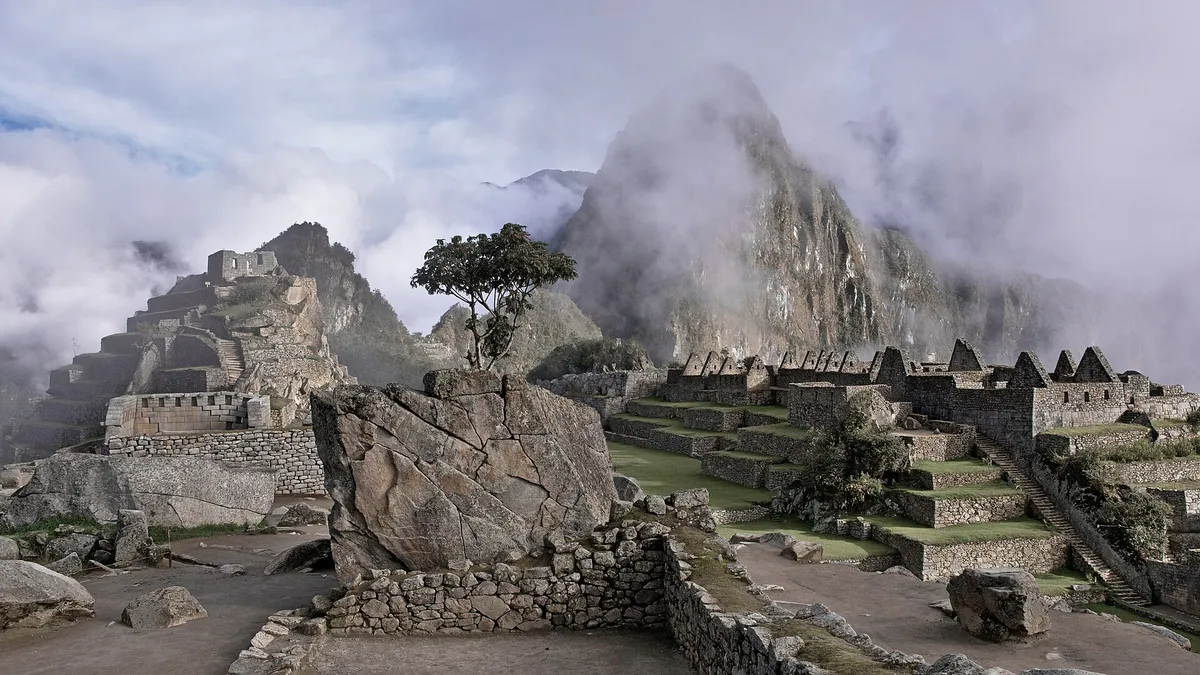
The llaqta stands on a ridge between Huayna Picchu and Machu Picchu Mountain, on the eastern slopes of the Andes, above a bend in the Urubamba. UNESCO places the site at about 2,430 m. That is not the altitude of the station in Machupicchu Pueblo or of the summits; visiting the buildings does not automatically include climbing the mountains.
The sanctuary includes humid mountain forests and high-altitude habitats. Orchids, hummingbirds and spectacled bears are part of its biodiversity, but their presence in the protected area does not guarantee sightings during a visit. Follow authorized routes, protect the plants and keep your distance from animals.
The Inca plan, water supply and drainage
The terrain required construction: terraces, retaining walls and fill created surfaces for buildings and crops. The agricultural sector lies to the south; a large drain separates it from the urban sector, where a plaza links upper and lower areas. Stonework varies between buildings: the Temple of the Sun has finely worked blocks, while other walls use less worked stones and mud mortar. A 749 m spring-fed channel supplied sixteen successive fountains for domestic use. Wright and Valencia’s study found no branches from this channel to irrigate the agricultural terraces, which received rainwater. Runoff had a separate system: layers of stones, gravel and sandy material beneath terraces and plazas, surface channels and wall outlets. The researchers identified 129 of these drainage outlets in the urban area.
The town at the river confluence
Machupicchu Pueblo lies at the confluence of the Urubamba, also called Vilcanota, with the Aguas Calientes and Alcamayo rivers, between steep slopes. The railway follows the valley and is central to access to the town. When choosing accommodation, check the address and the routes to the station and bus boarding point, accounting for hills and baggage. Use pedestrian paths and authorized crossings; the tracks are not a shortcut for getting around or taking photos.
Look for wall drainage outlets and the finish of stones that your route allows you to see. They reveal engineering and construction; supplying the fountains and draining rainwater served different purposes.
Culture
The apus, the sacred mountains around the site
The mountains help you read Machu Picchu beyond its buildings. Studies of Andean religious life relate the apus, sacred mountains, to water, fertility and the site’s landscape; Salkantay and Wakay Willka, also called Verónica, feature in these interpretations. The rock’s shape is incorporated into the Temple of the Sun’s architecture, and the Intihuatana stone stands on a hill above the Temple Plaza. Solar observation, calendars and mountain worship are interpretations debated by researchers, rather than a single function settled by a stone’s name. Observe those relationships from the authorized route without assuming a ticket allows you to approach every structure. Archaeological interpretation does not replace the voices of present-day communities or make their customs a uniform practice to enact on a visit.
Photographs, poetry and the place’s names
The image of Machu Picchu has also been shaped by photographs and books. Martín Chambi’s archive records his 1928 visit and the publication of the photographs in the press in 1929. Pablo Neruda visited the site in 1943 and wrote “Alturas de Macchu Picchu” in 1945; the poem became part of “Canto General” in 1950. These works offer different ways of looking at the architecture and landscape.
The place’s names are also a subject of research. Donato Amado Gonzales and Brian Bauer examined Bingham’s notes, maps and colonial documents and proposed that the city was called Picchu or, more likely, Huayna Picchu. The hypothesis helps explain the history of records preceding Bingham’s international publicity for the ruins in 1911.
In Cusco, the Machu Picchu Museum at Casa Concha exhibits archaeological materials returned by Yale and finds from the house itself. It is a visit that can broaden the trip’s context. It is in another city and needs its own time in the itinerary; do not confuse it with the Manuel Chávez Ballón Site Museum near Machupicchu Pueblo.
The work behind the visit
Arriving in Machupicchu Pueblo and visiting the site depend on guides, accommodation and restaurant teams, traders and transport workers. When hiring a guide or agency, check their registration in MINCETUR’s service-provider directory, updated by regional tourism authorities, and agree on the language, authorized route, meeting point and what the price includes. If you choose a trek with porters, ask the agency how it organizes loads, rest, meals and protection for the team. These workers take part in a journey that needs time for meals, breaks and unexpected delays; an admission time does not remove those needs. Treat the town as a place where people live too: ask permission before photographing someone and respect their working time and privacy.
Coca leaves also feature in Andean offerings, such as the k’intu, with meanings linked to the earth and mountains. Listen to those who maintain the practice explain it; it is not one uniform gesture to reproduce on your own during a visit.
Festivals and events
Inti Raymi in Cusco: June 24
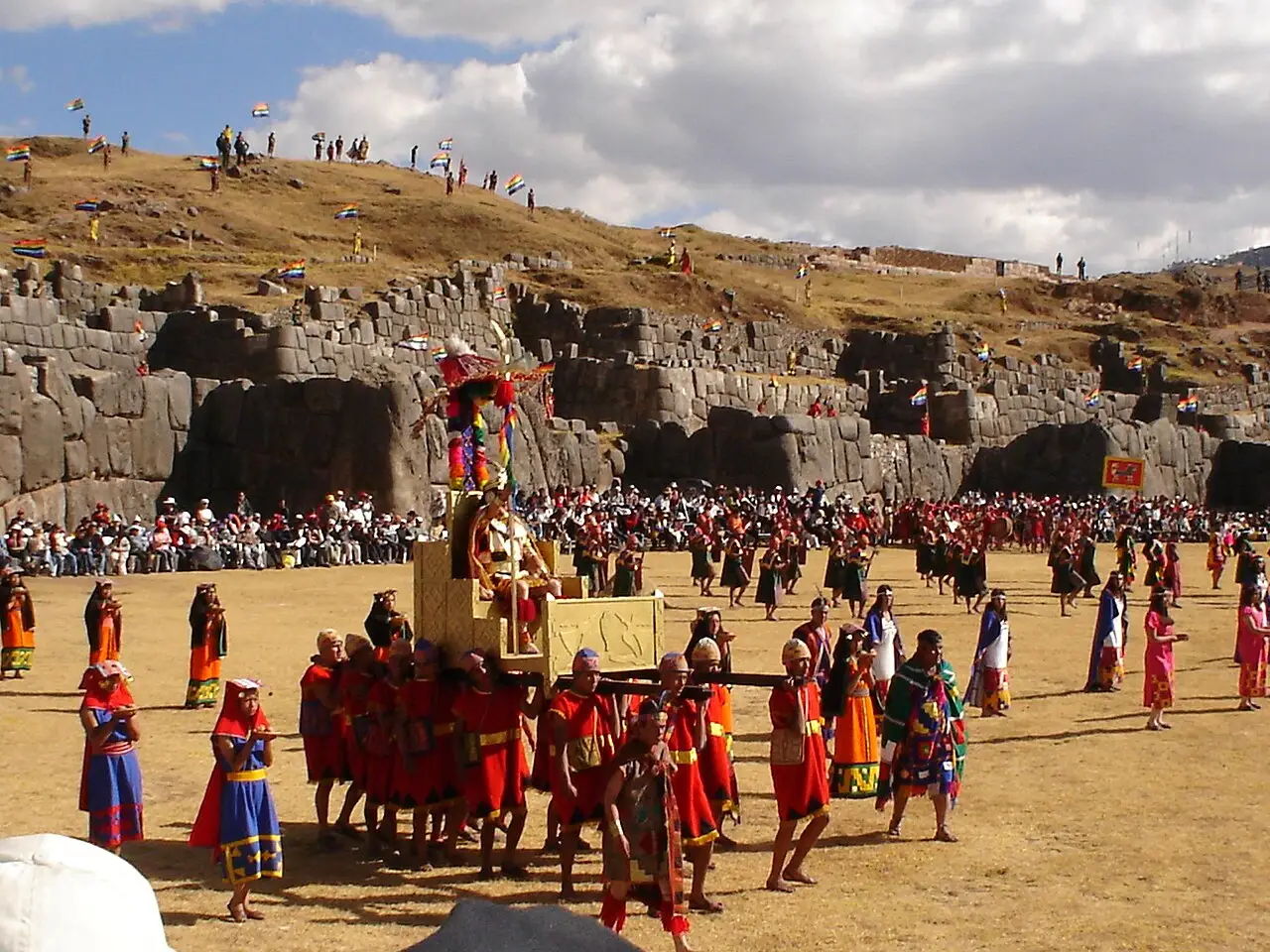
The staging of the Festival of the Sun takes place at Qorikancha, Plaza de Armas and Saqsaywaman in Cusco. The three venues form a programme of their own: check times, viewing sectors and entry conditions for that edition with EMUFEC. Choose what to attend and allow time for travel, a meal and rest. Plan Cusco on another day, with connections to Machupicchu Pueblo separate from the festival.
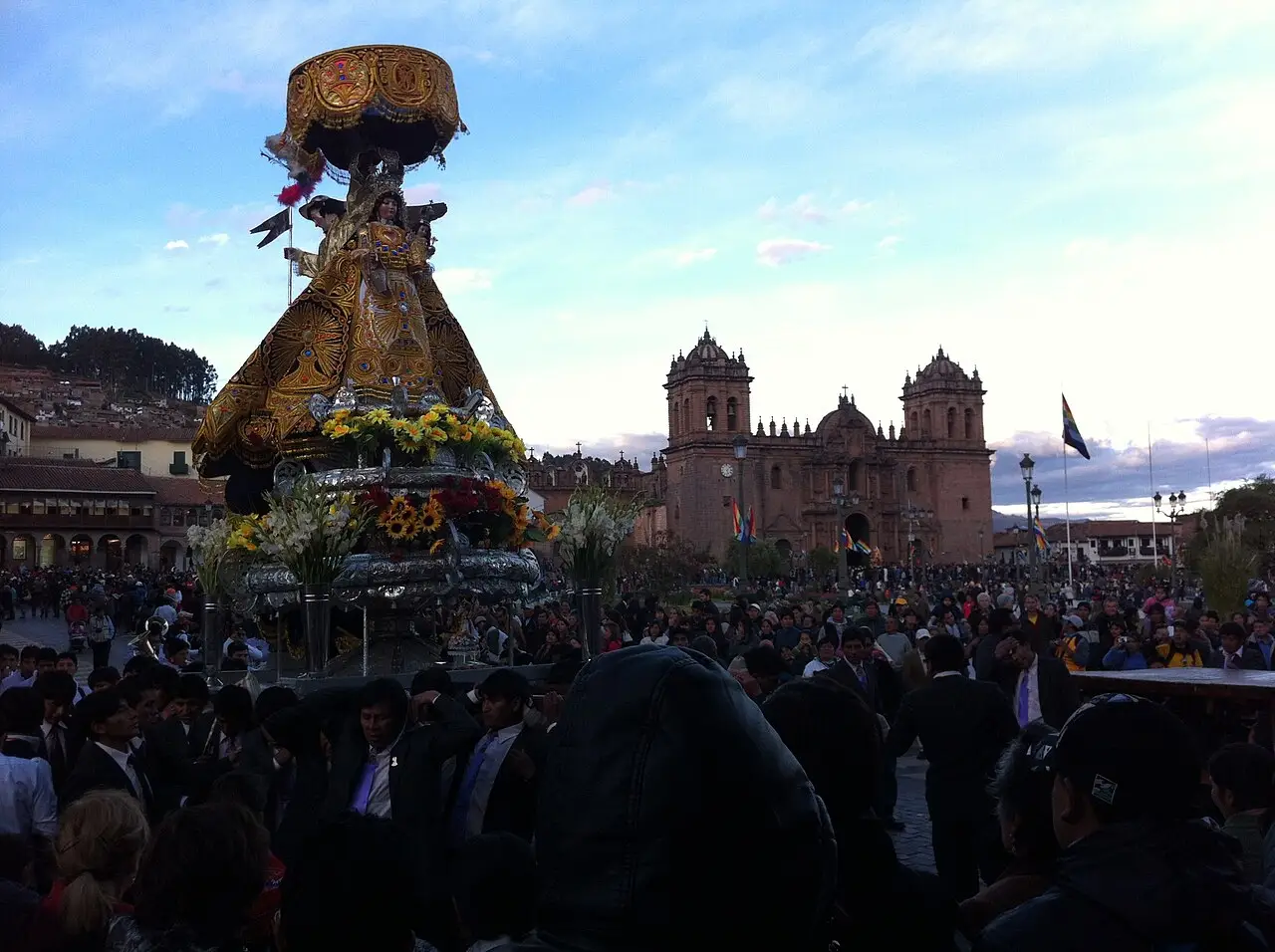
Corpus Christi in Cusco: edition calendar
The official 2026 programme scheduled the entry procession for June 3, the Plaza de Armas procession for June 4 and the octave for June 11. The chiriuchu food festival was scheduled for June 3 and 4 at Plaza San Francisco. For another year, check dates with the Archdiocese of Cusco and EMUFEC. Choose activities and venues, allowing a meal and a buffer for getting around; the Cusco programme does not replace your Machu Picchu visit day.
 AI illustration
Historic Sanctuary of Machu Picchu Day: July 7
The date marks the selection of Machu Picchu among the New Seven Wonders, announced on July 7, 2007. To attend a celebration in Machupicchu Pueblo, check the municipal programme for that edition and the activity venues. Arrange participation around your ticket time and route, the ascent and the return train. Check places for your chosen option before buying the other services; the anniversary does not guarantee admission or establish a universal sell-out deadline.
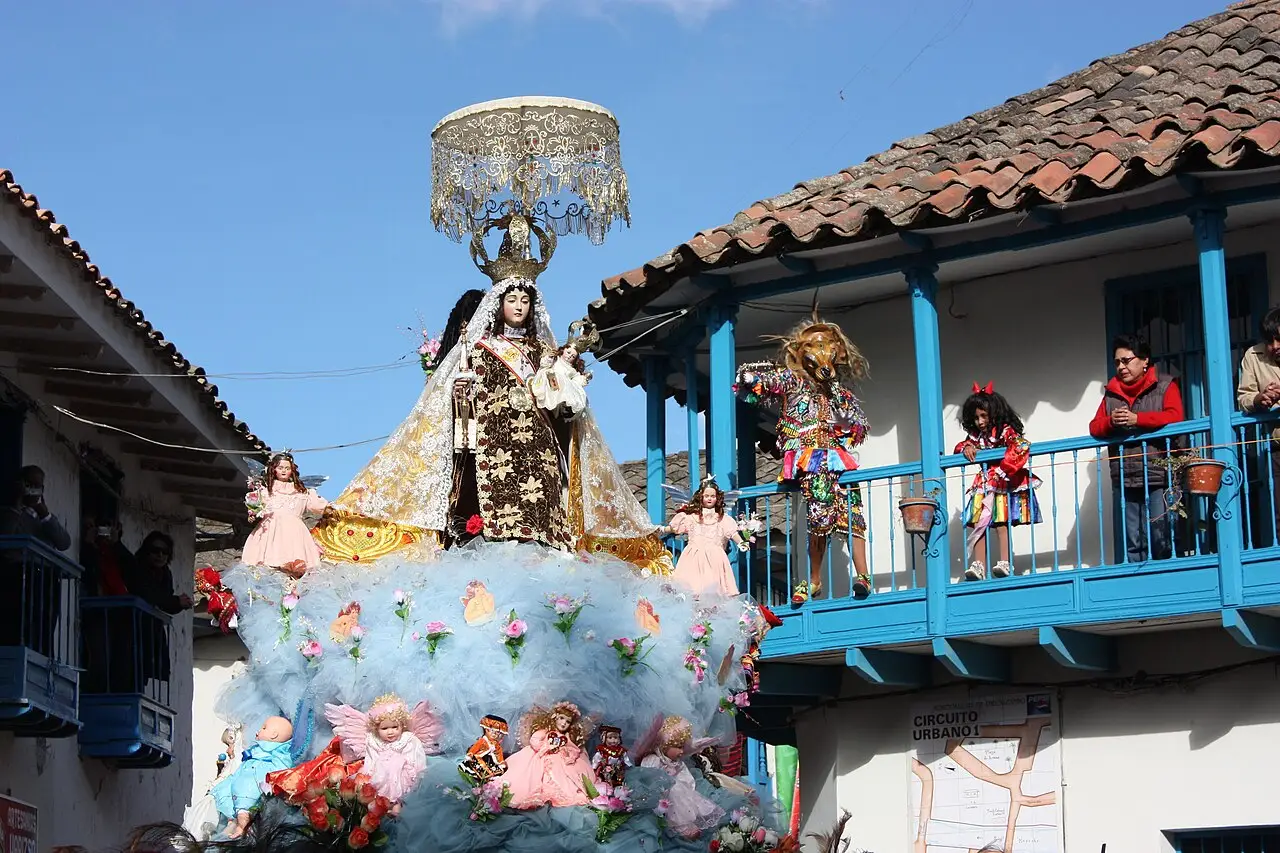
Virgen del Carmen in Paucartambo: July
The Paucartambo celebration brings together processions and dance troupes, including Qhapac negro and Saqra. The official tourism inventory describes celebrations from July 15 to 18 and a closing act on July 19; check the edition’s programme before travelling. Paucartambo requires its own journey from Cusco. Arrange transport, accommodation if needed and the return, keeping rest between this programme and Machu Picchu. Choose which days to attend without relying on a fixed road travel time or last-minute accommodation.
Books and films
“Alturas de Macchu Picchu,” Pablo Neruda (first magazine publication, 1946)
A twelve-part sequence, written in 1945 after his 1943 visit and initially published in magazines in 1946. It forms part of “Canto General,” published in 1950. I would read it before or after the trip to consider the relationship between landscape and American history, accompanying observation of the place with a work of poetry.
“The Last Days of the Incas,” Kim MacQuarrie (2007)
A historical account of the Spanish conquest, Inca resistance at Vilcabamba and research that distinguished that capital from Machu Picchu. First published in English in 2007, the book also follows Bingham and debates about identifying the sites. I would use it to broaden the context of a journey between Cusco and Machu Picchu, paying attention to the differences between conquest, research and international publicity. For the later history of materials returned by Yale, a visit to Casa Concha in Cusco offers another point of contact.
“The Motorcycle Diaries,” Walter Salles (2004)
Walter Salles’ feature adapts the diary of Ernesto Guevara and Alberto Granado’s 1952 journey through South America. The Machu Picchu sequence was filmed at the site itself, decades after the journey being depicted. I would watch it to consider how encounters and landscapes change travellers’ perspectives. The scenes are a cinematic portrayal of that journey; to plan today’s visit, return to the route map and ticket conditions.
Frequently asked questions
Machu Picchu: can you arrive from Lima and visit the ruins the same day?
I do not recommend this combination: a flight, transfer, train, ascent and timed entry leave little margin for delays and rest. Arrange arrival in the village before the visit day, according to the services booked. Sleeping there the previous night simplifies logistics, but does not guarantee altitude acclimatization.
Machu Picchu: how do you get to Machupicchu Pueblo, or Aguas Calientes, the village at the foot of the ruins?
Check the station and the train legs for Machupicchu Pueblo. There are departures from Ollantaytambo and bimodal services from Cusco combining bus and train. The Hidroeléctrica alternative requires other journeys via Santa María and Santa Teresa; it is not direct road access to the village.
Machu Picchu: how do you get to Hidroeléctrica and the Cocalmayo hot springs?
For this alternative, arrange the village–Hidroeléctrica leg separately from the road connection to Santa Teresa, where the Cocalmayo hot springs are. Check outward and return services and the pools’ opening before leaving. Do not walk on railway tracks or add this detour before your booked train without confirmed time.
Machu Picchu: when is the dry season, and when does it rain?
Winter is relatively drier, and SERNANP recommends April to October for a visit; November to March is the rainy season. Rain and disruptions can also occur during the drier period. Check the forecast, access notices and ticket route for your dates. The February closure of the Inka Trail Network does not mean the entire llaqta is closed.
Machu Picchu: what is trout like in Cusco cuisine?
Fried trout is part of Cusco cuisine, accompanied by potatoes, corn and salad in different combinations. In Machupicchu Pueblo, check the preparation and sides on the menu before ordering, along with the price and service time. Plan the meal outside the llaqta and leave a buffer for boarding; an ingredient’s origin alone does not allow you to assess a kitchen’s storage or preparation.
Other cities in the country
Peru ↗- Days
- 2–3
- When
- Jan–Apr
- Per person/day
- Average 350–550 S/Mid-range · per person/day
Cost scope
Per person per day: accommodation, meals, urban transport, visits and a small allowance for extras. Flights excluded; larger purchases vary. Editorial estimate, not a quote.
- Days
- 4–5
- When
- Apr–May · Sep–Oct
- Per person/day
- Average 350–600 S/Mid-range · per person/day
Cost scope
Per person per day: accommodation, meals, urban transport, visits and a small allowance for extras. Flights excluded; larger purchases vary. Editorial estimate, not a quote.
- Days
- 2–3
- When
- May–Oct
- Per person/day
- Explore costsGuide estimate
Cost scope
Per person per day: accommodation, meals, urban transport, visits and a small allowance for extras. Flights excluded; larger purchases vary. Editorial estimate, not a quote.
- Days
- 2–3
- When
- Apr–Nov
- Per person/day
- Average 209 PENMid-range · per person/day
Cost scope
Per person per day: accommodation, meals, urban transport, visits and a small allowance for extras. Flights excluded; larger purchases vary. Editorial estimate, not a quote.
- Days
- 2–3
- When
- Jan–Apr · Dec
- Per person/day
- Average 294 PENMid-range · per person/day
Cost scope
Per person per day: accommodation, meals, urban transport, visits and a small allowance for extras. Flights excluded; larger purchases vary. Editorial estimate, not a quote.