Indonesia
Yogyakarta
Yogyakarta, the sultan's palace and the temples of Borobudur and Prambanan
Days I would stay three full days in Yogyakarta: the first for the kraton, Taman Sari and Malioboro; the second to climb Borobudur in the morning and stop by Mendut and Pawon; and the third for Prambanan, Plaosan and Ratu Boko, ending with the Ramayana ballet if it falls on a Tuesday, Thursday or Saturday.
How the guide reaches this number
With a fourth day, I would head out early for the slopes of Merapi and Kaliurang and spend the afternoon in Kotagede. You can combine the two great temples in a single day, as many tours do, but then the Borobudur climb turns into a rush and Prambanan lands in the hottest hours, and the city, which deserves a day of its own, gets none.
3–4
Start with the basic programme and choose extensions for the time you have.
When June to September; these are the driest months, with less than 100 mm of rain a month, while January is the wettest, with an average of 392 mm.
How the guide reaches this number
The mid-year school holidays bring the biggest crowds.
June to September; these are the driest months, with less than 100 mm of rain a month, while January is the wettest, with an average of 392 mm. The mid-year school holidays bring the biggest crowds.
Per person/day Budget around IDR419,000; mid-range around IDR1,060,000; comfortable around IDR2,790,000 per person per day, based on spending reported by travelers to Budget Your Trip (checked October 2026).
How the guide reaches this number
Indicative figures, excluding travel to the destination.
Budget around IDR419,000; mid-range around IDR1,060,000; comfortable around IDR2,790,000 per person per day, based on spending reported by travelers to Budget Your Trip (checked October 2026). Indicative figures, excluding travel to the destination.
Per person per day: accommodation, meals, urban transport, visits and a small allowance for extras. Flights excluded; larger purchases vary. Editorial estimate, not a quote.
Salta · among the cheapestZermatt · among the priciest
Cheaper than 92% of them. The tick marks the median. Compared by the middle of each city’s daily range, converted at the 24 Sept 2026 exchange rate.
 What Nilo thinks
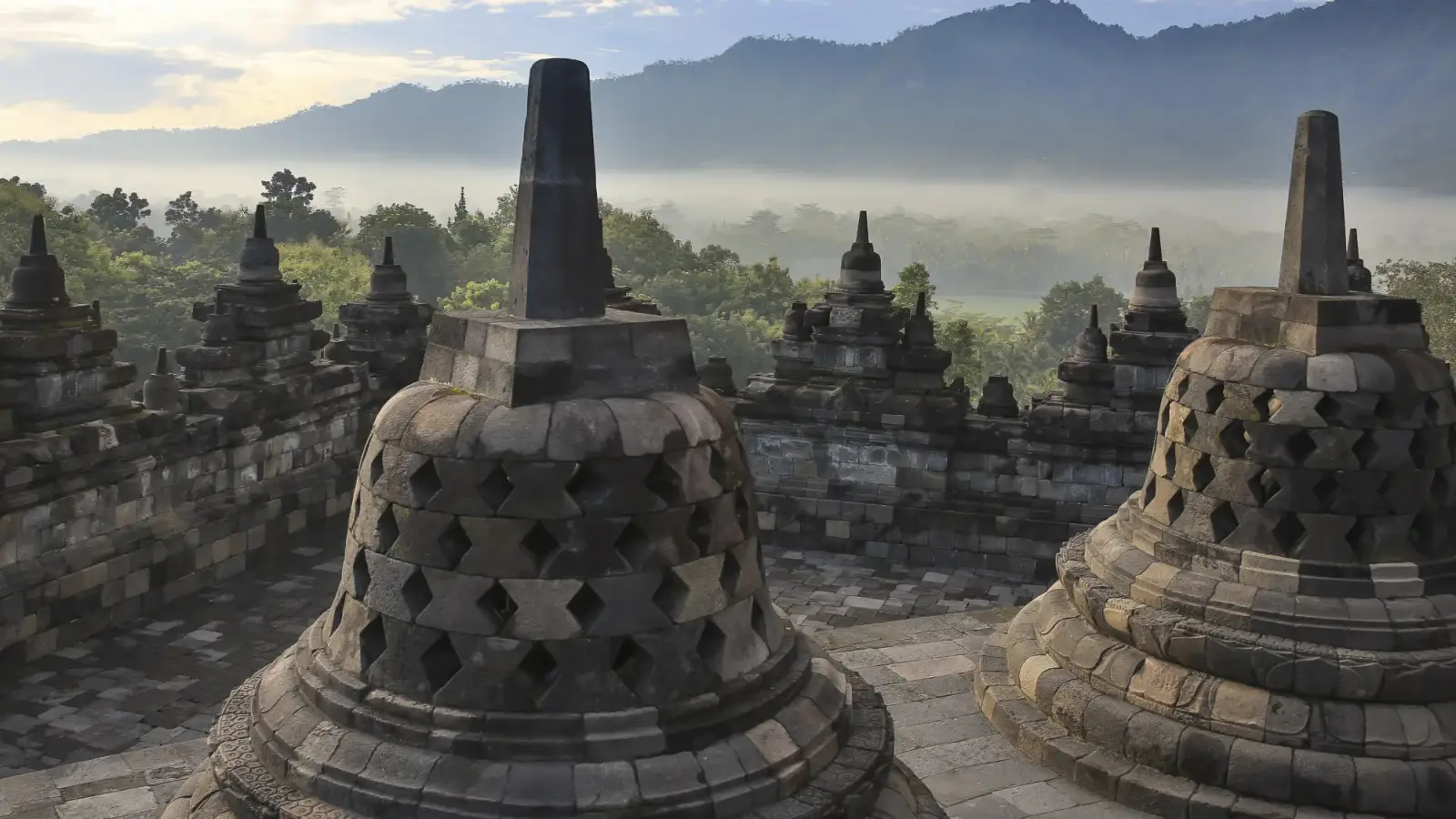
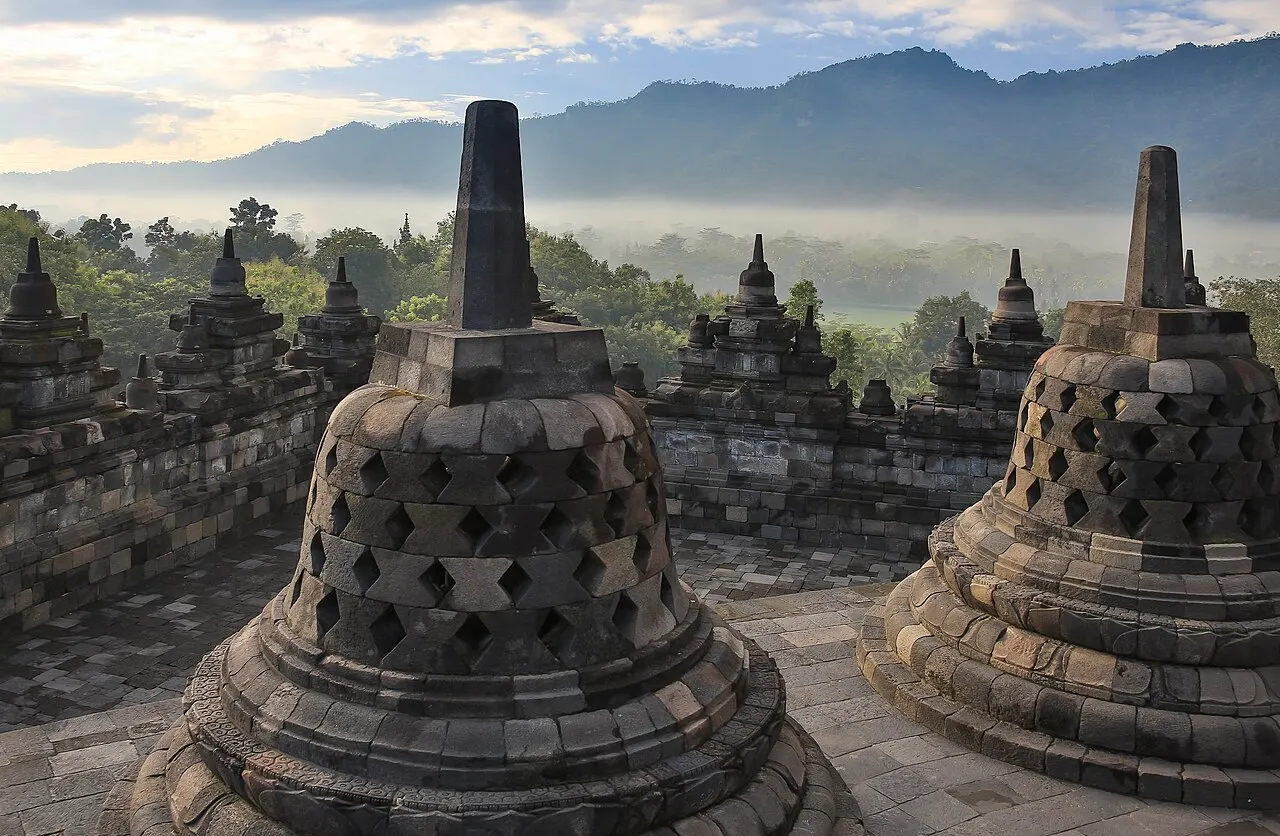
I would recommend Yogyakarta to anyone who likes living court culture, hand-made crafts and a table that leans sweet. The palace is still a home and a court: the sultan's servants still prepare the royal tea at the Patehan and look after the horses of the carriages, and the same sultan who presides over the Garebeg ceremonies is the governor of the province. It was in the Kauman neighborhood, right beside the north square, that Muhammadiyah was born, and I would give the streets around the kraton as much attention as Borobudur and Prambanan, because that is where you see the court and the mosque sharing the same block. At the table, I would go after the brongkos, meat with beans darkened by keluak nut, and the kipo of Kotagede, a green tapioca dumpling with coconut. When buying batik, I would choose the hand-painted piece and pass on the printed one.Yogyakarta was laid out along a line. To the north stands Merapi, Indonesia's most active volcano; to the south, the Indian Ocean at Parangtritis; and between the two, in 1756, the first sultan set his palace on an axis that local tradition ties to the guardian spirits of the mountain and the sea. Today, the roughly 6 km between the Tugu obelisk and Panggung Krapyak are a World Heritage Site, and along the way fit Malioboro with its stalls, the kraton pavilions where the sultan still lives and the baths of Taman Sari, surrounded by a neighborhood of batik painters. Off that line, the plain holds the reason so many people come to Java: Borobudur, with 72 perforated stupas around the dome, and the towers of Prambanan, where the Ramayana is carved on the balustrades and danced on the stage next door.
Quick facts
- Population
- 375,699 inhabitants in the official BPS (Badan Pusat Statistik, Indonesia's statistics agency) estimate for mid-2023, in the municipality (kota) of Yogyakarta, which covers 32.82 km². The metropolitan region, which includes parts of Sleman, Bantul, Klaten, Kulon Progo and Magelang, had 4,010,436 inhabitants in the 2010 census.
- Founded
- October 7, 1756, when Sultan Hamengkubuwono I moved into the new palace. The city came out of the Treaty of Giyanti, of February 13, 1755, which divided the Sultanate of Mataram.
- Country and region
- Indonesia, Special Region of Yogyakarta (Daerah Istimewa Yogyakarta), island of Java
- Language
- Indonesian (official); Javanese is the language of daily life and of the palace's ceremonies
- Currency
- Indonesian rupiah (IDR, written Rp)
- Time zone
- WIB, UTC+7, no daylight saving time
- Best time to go
- June to September; these are the driest months, with less than 100 mm of rain a month, while January is the wettest, with an average of 392 mm. The mid-year school holidays bring the biggest crowds.
- Average cost per day
- Budget around IDR419,000; mid-range around IDR1,060,000; comfortable around IDR2,790,000 per person per day, based on spending reported by travelers to Budget Your Trip (checked October 2026). Indicative figures, excluding travel to the destination.
When to go
June to September; these are the driest months, with less than 100 mm of rain a month, while January is the wettest, with an average of 392 mm. The mid-year school holidays bring the biggest crowds.
January
12 h 31 min of daylight
National holidays
Jan 1 – 3, 2027 · long weekend · Tahun Baru Masehi
Jan 1, 2028 · Tahun Baru Masehi
Source: Nager.Date. Holiday dates shift; check close to your trip.
February
12 h 21 min of daylight
March
12 h 09 min of daylight
National holidays
Mar 26 – 28, 2027 · long weekend · Wafat Isa Almasih, Paskah
Source: Nager.Date. Holiday dates shift; check close to your trip.
April
11 h 56 min of daylight
National holidays
Apr 14 – 16, 2028 · long weekend · Wafat Isa Almasih, Paskah
Source: Nager.Date. Holiday dates shift; check close to your trip.
May
11 h 46 min of daylight
National holidays
May 1, 2027 · Hari Buruh Internasional
May 6 – 9, 2027 · long weekend · Kenaikan Isa Almasih
Source: Nager.Date. Holiday dates shift; check close to your trip.
June
Best time11 h 40 min of daylight
National holidays
May 29 – Jun 1, 2027 · long weekend · Hari Lahir Pancasila
Source: Nager.Date. Holiday dates shift; check close to your trip.
August
Best time11 h 52 min of daylight
National holidays
Aug 14 – 17, 2027 · long weekend · Hari Ulang Tahun Kemerdekaan Republik Indonesia
Source: Nager.Date. Holiday dates shift; check close to your trip.
October
12 h 16 min of daylight
November
12 h 28 min of daylight
December
12 h 34 min of daylight
National holidays
Dec 25 – 27, 2026 · long weekend · Hari Raya Natal
Dec 25, 2027 · Hari Raya Natal
Source: Nager.Date. Holiday dates shift; check close to your trip.
High, shoulder and low season
High · June to August, plus Lebaran and the year-end holidays
The dry season coincides with the Indonesian school holidays. Malioboro, the kraton and the temples fill up, and traffic toward Malioboro jams. During the Lebaran holidays, whose date changes every year, the Borobudur operator forecasts thousands of visitors a day.
Shoulder · April, May, September and October
Transition months. September is still dry and comes after the school holidays; April, May and October can bring rain, and the Ramayana ballet uses the open-air stage only in the dry months.
Low · November to March
The rainy season, peaking in January. The temples and the kraton operate normally and there are fewer people, but rain can shorten the visit to Borobudur and cancel tours on Merapi; the Ramayana ballet moves to the covered Trimurti stage.
How the year changes
Yogyakarta has a tropical monsoon climate, with annual averages between 26 °C and 27 °C, and what changes through the year is the rain. From June to September, the driest months have less than 100 mm a month, and that is when the Ramayana ballet uses the open-air stage at Prambanan. The rainy season runs from November to March, peaking in January, when an average of 392 mm falls; the temples stay open, but rain can shorten the visit and disrupt tours on Merapi. April, May and October are transition months. Crowds follow the Indonesian calendar: the mid-year school holidays and the Lebaran holidays, the end of Ramadan, whose date changes every year, fill Malioboro and the temples and clog traffic. For Lebaran 2026, the Borobudur operator forecast between 7,000 and 8,500 visitors a day.
Nilo's tips
Kraton only in the morning and never on Mondays
The part of the palace open to the public runs Tuesday to Sunday, 8:30 a.m. to 2:30 p.m. I would arrive at opening, to catch the Srimanganti performance from 9 a.m. to 11 a.m., and pick the day by the program: Thursday for shadow theater, Saturday for dance drama. Afterward, Taman Sari is open every day until 3 p.m.
Buy the Borobudur climb ahead of time
The structure ticket has a daily quota and is sold on the operator's official website. I would buy it the day before, for one of the first sessions, and choose the courtyard-only ticket only if the climb sold out.
Prambanan on a ballet day
The Ramayana ballet is staged on Tuesdays, Thursdays and Saturdays. I would build the Prambanan and Ratu Boko day around one of those dates, to end the evening on the stage beside the temples.
Airport train instead of the road
From YIA, I would take the express train to Tugu station, which takes about 35 minutes and drops you at the start of Malioboro. Schedules and fares changed in July 2026: check the Access by KAI app.
Explore the map
Explore the map, read about the other places and plan your travel days in the app.
Open the appWhat to see
Leave for last, if time allows: Masjid Gedhe Kauman · Alun-alun Kidul · Tugu Yogyakarta
Keraton Ngayogyakarta Hadiningrat
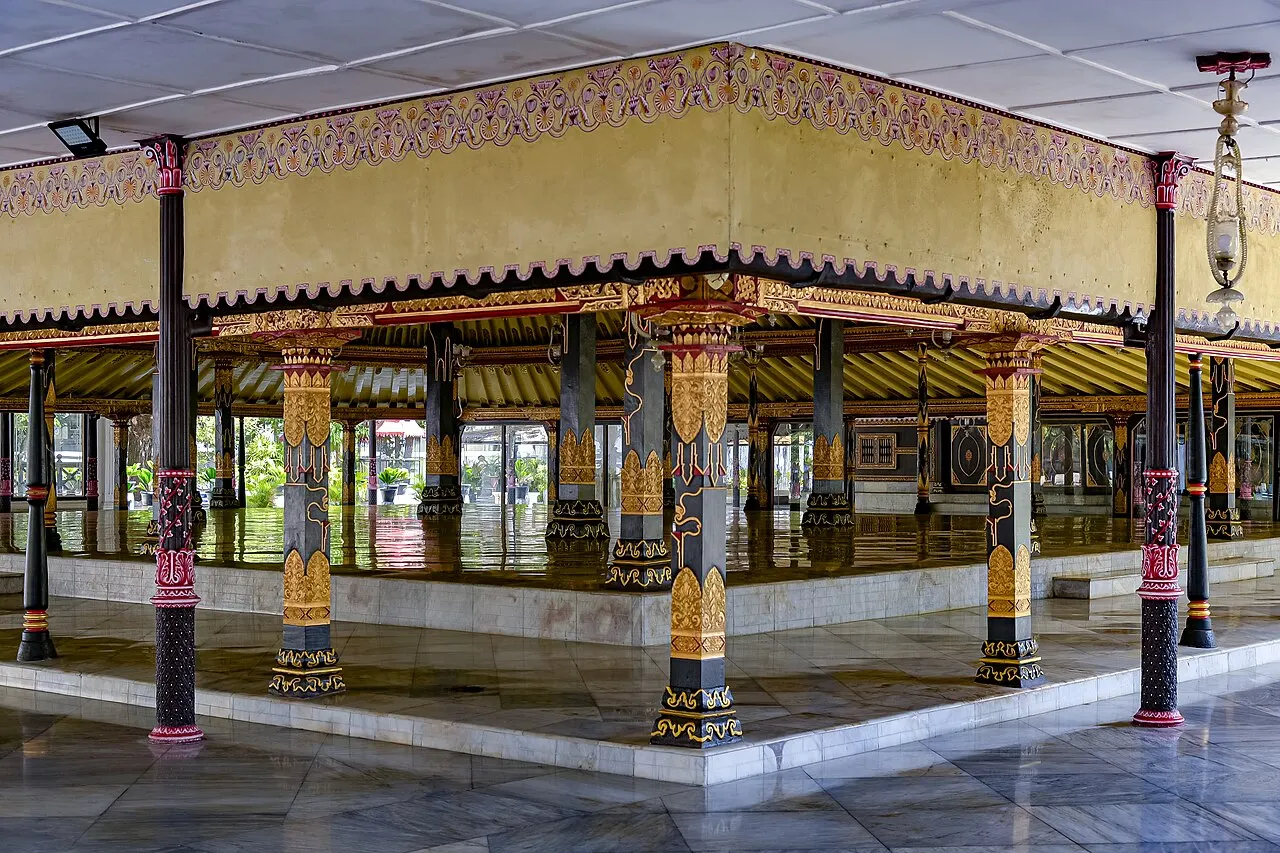
The sultan's palace is still the residence of the royal family and the center of the court's ceremonies, and only one part, the unit called Kedhaton, is open to visitors, Tuesday to Sunday, 8:30 a.m. to 2:30 p.m. (closed Mondays). Open teak pavilions and exhibition rooms show court objects, the life cycle according to Javanese tradition and a painting room with works by Raden Saleh. At the Patehan, palace servants still prepare the sultan's tea. From Tuesday to Sunday, 9 a.m. to 11 a.m., arts groups from the province perform in the Srimanganti pavilion, with a different program each day: on Tuesday, uyon-uyon (gamelan music) and classical dance; on Wednesday, wayang golek menak, the wooden puppet theater; on Thursday, wayang kulit, the shadow theater; on Friday, macapat, sung Javanese poetry; on Saturday, an excerpt of wayang wong, the dance drama; and on Sunday, gladhen beksan, an open rehearsal of the court dance. The museum of the royal carriages, the Wahanarata, is next door, on Rotowijayan street, and is open Tuesday to Sunday, 9 a.m. to 3 p.m., with a program featuring the court's horses on Saturdays. Entry requires clothing with sleeves, no shorts or skirts, and hats are not worn in the museum area. Guides are available in Indonesian, English and Spanish.
Check access
Taman Sari
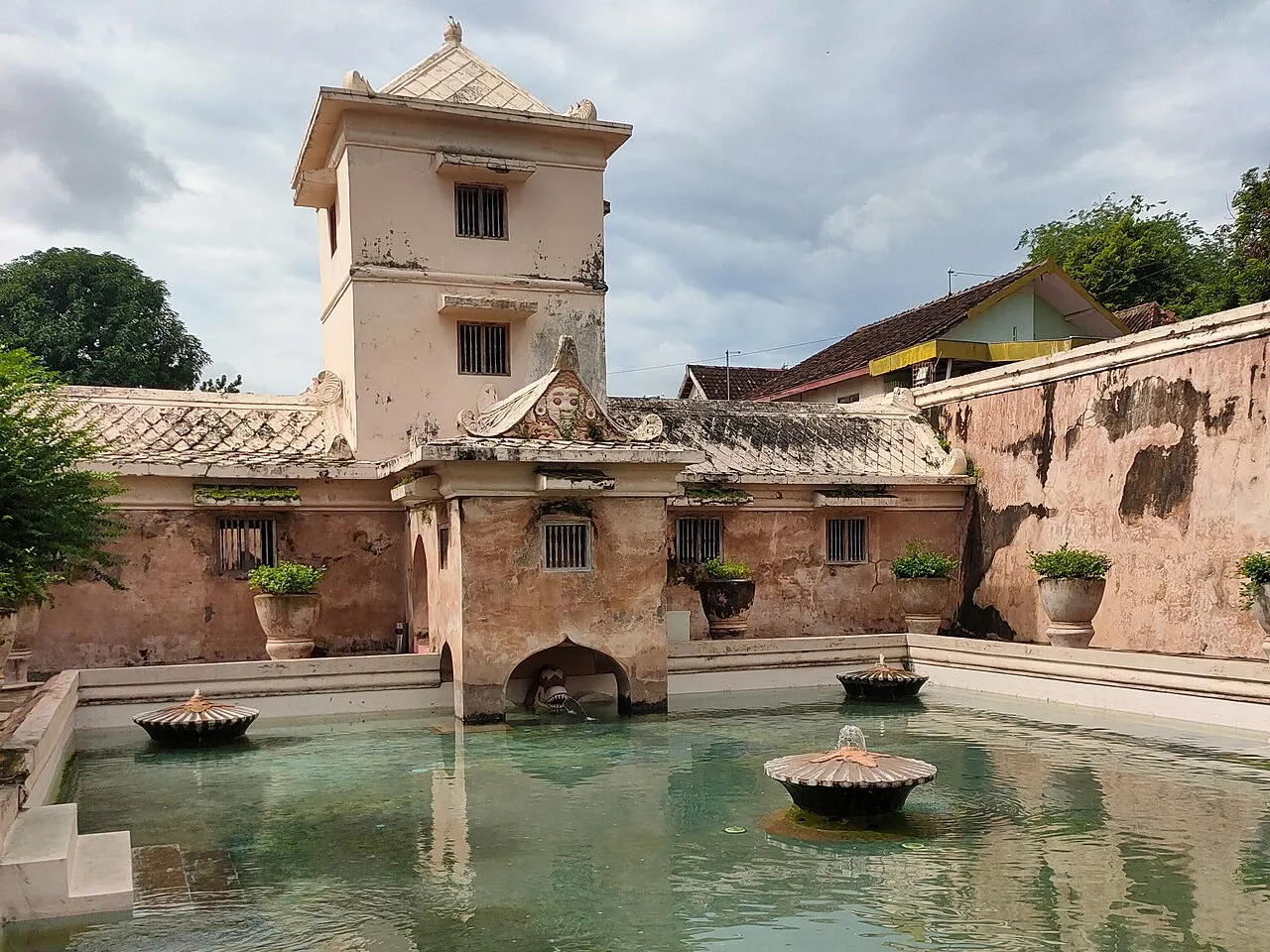
The water garden built by Hamengkubuwono I between 1758 and 1765, a few minutes' walk from the kraton. Umbul Binangun preserves the royal family's three bathing pools, with mushroom-shaped fountains; farther on, a tunnel leads to Sumur Gumuling, a two-story round mosque with stairways that cross in the center. The 1867 earthquake drained the pools, and the complex was occupied by the houses of Kampung Taman, a neighborhood known for batik and traditional painting. Open every day, 9 a.m. to 3 p.m.
Check access
Candi Borobudur
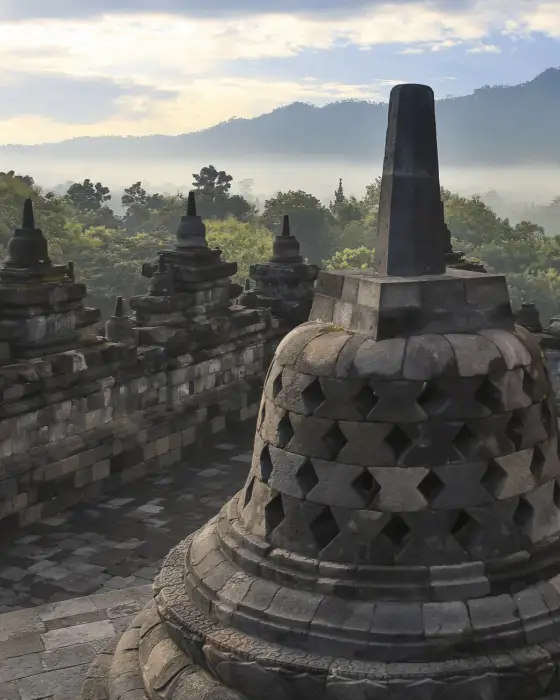
The largest Buddhist monument in Java, built by the Sailendra dynasty between the 8th and 9th centuries, about 40 km northwest of the city, in Magelang. It has nine stacked platforms, six square and three circular, with 2,672 relief panels and, originally, 504 Buddha statues; 72 of them sit inside perforated stupas around the central dome. The operator sells two tickets: the courtyard ticket (Temple Ground), which does not allow climbing, and the structure ticket (Temple Structure), with the climb accompanied by a guide, the protective upanat sandals and a daily visitor quota, reported as 1,200 people. The east and north stairways have been covered by wooden structures since 2014 to reduce wear. Buy the climb in advance on the official website.
Check access
Candi Prambanan
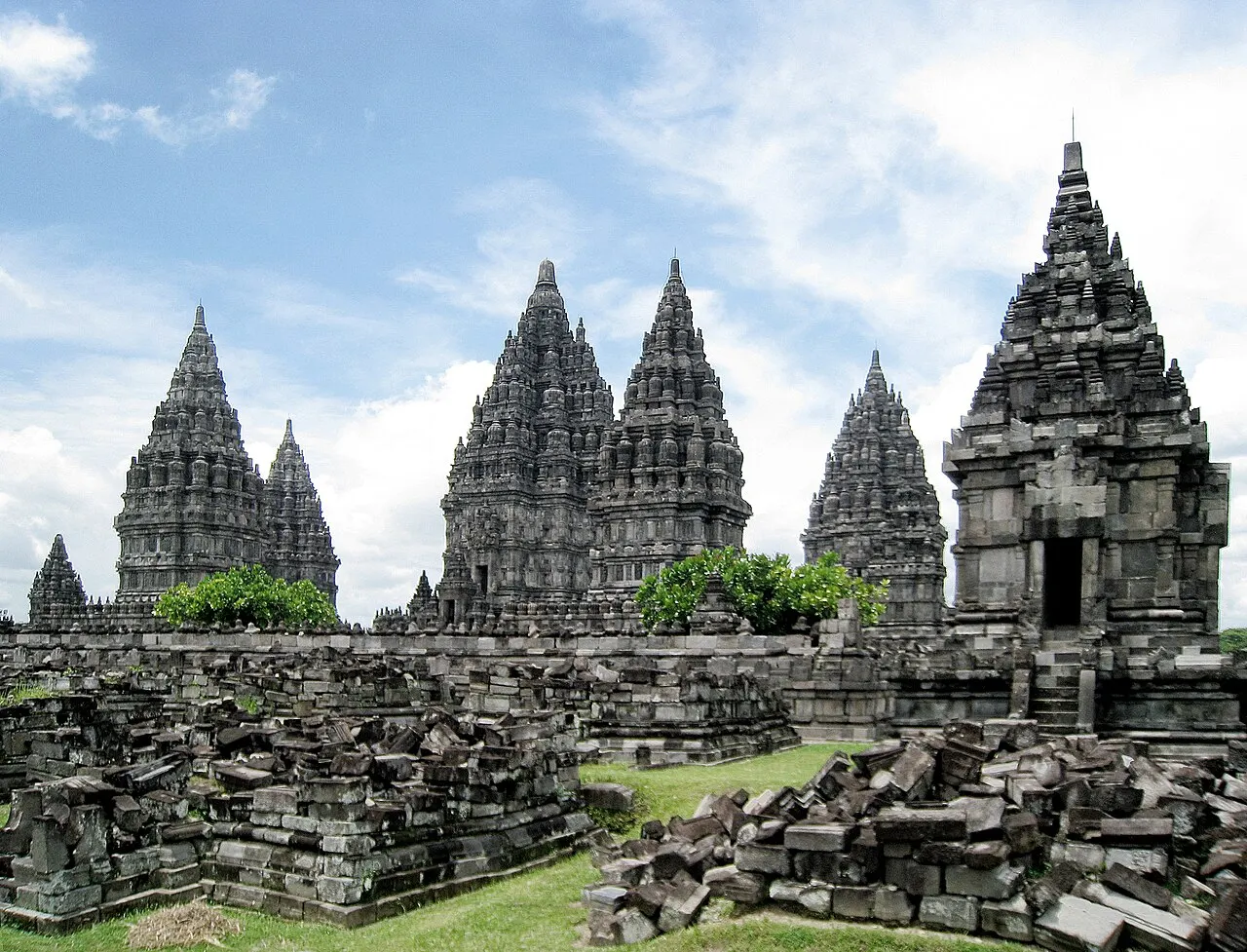
The largest Hindu complex in Java, about 17 km northeast of the city, on the border with Central Java. The three main temples are dedicated to Shiva, Vishnu and Brahma; the Shiva temple, consecrated in 856, is 47 meters tall and has balustrades with the Ramayana carved in relief. The complex once had 240 structures, and the 2006 earthquake displaced many stones. To the north lies Candi Sewu, a Buddhist complex older than the Hindu temple. The ticket has different rates for Indonesian and foreign visitors, sold on the official website.
Check access
Jalan Malioboro
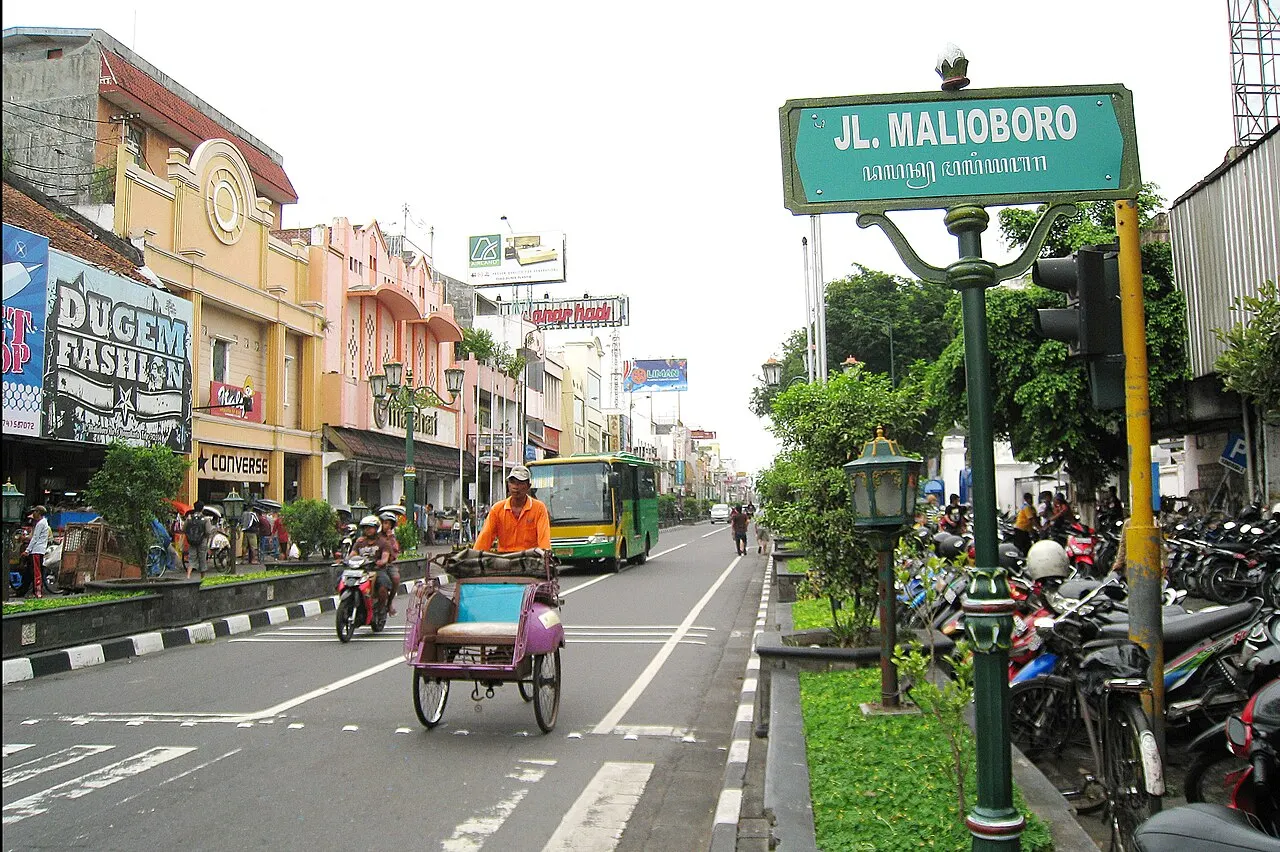
Yogyakarta's shopping avenue runs for about 2 km from Tugu station to the palace's north square, with hundreds of shops and stalls selling batik, crafts and clothing, along a stretch partly reserved for pedestrians and with no motorbike parking. At night, stalls set up lesehan, a meal served on mats on the sidewalk. It is the most pleasant stretch of the city for walking, and also the most crowded during the Indonesian school holidays.
Check access
Pasar Beringharjo
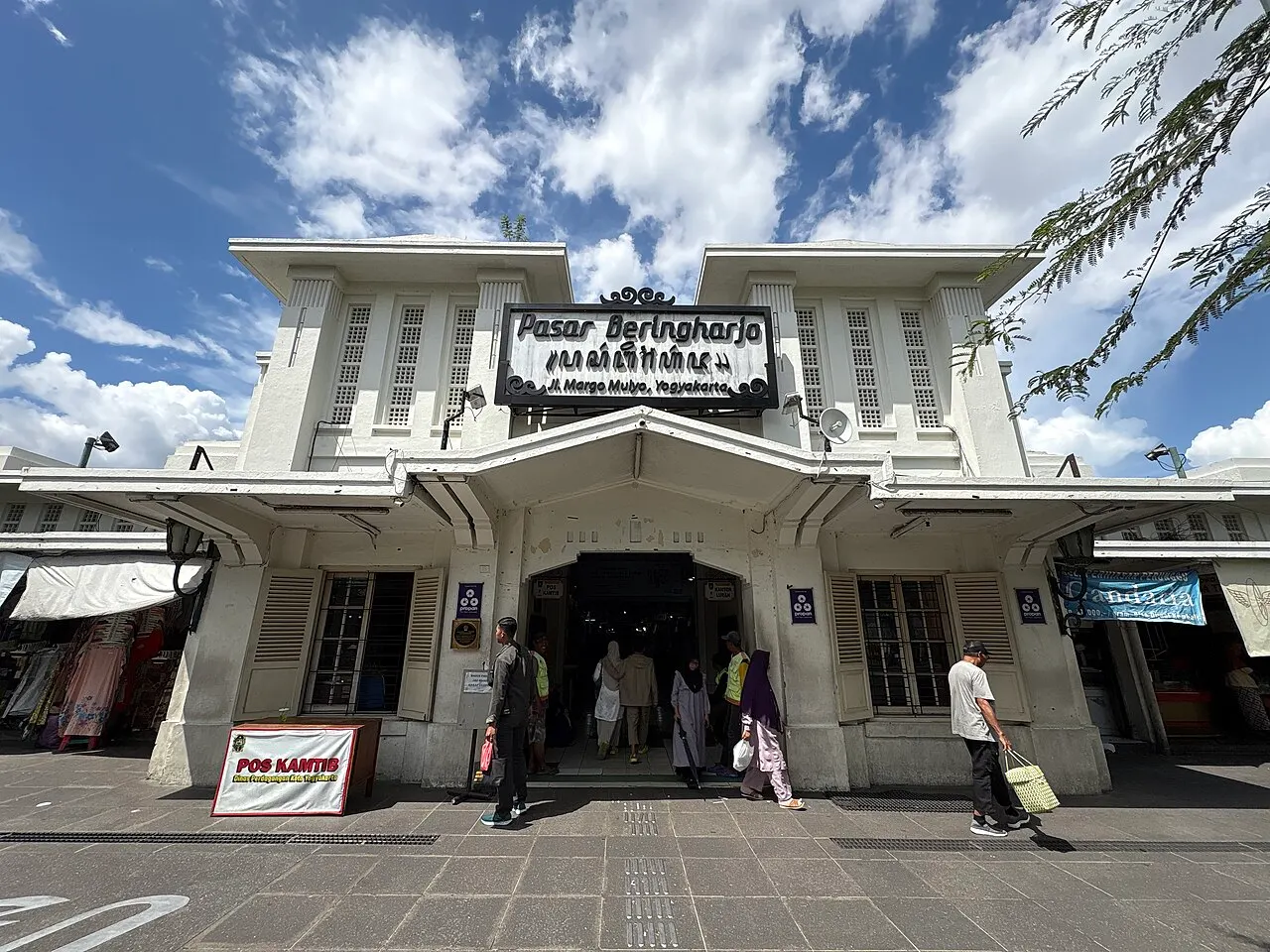
The city's largest traditional market, at the southern end of Malioboro, north of Fort Vredeburg. It sells everything from vegetables and spices to batik and crafts, in tight aisles where bargaining is the rule.
Check access
Museum Sonobudoyo
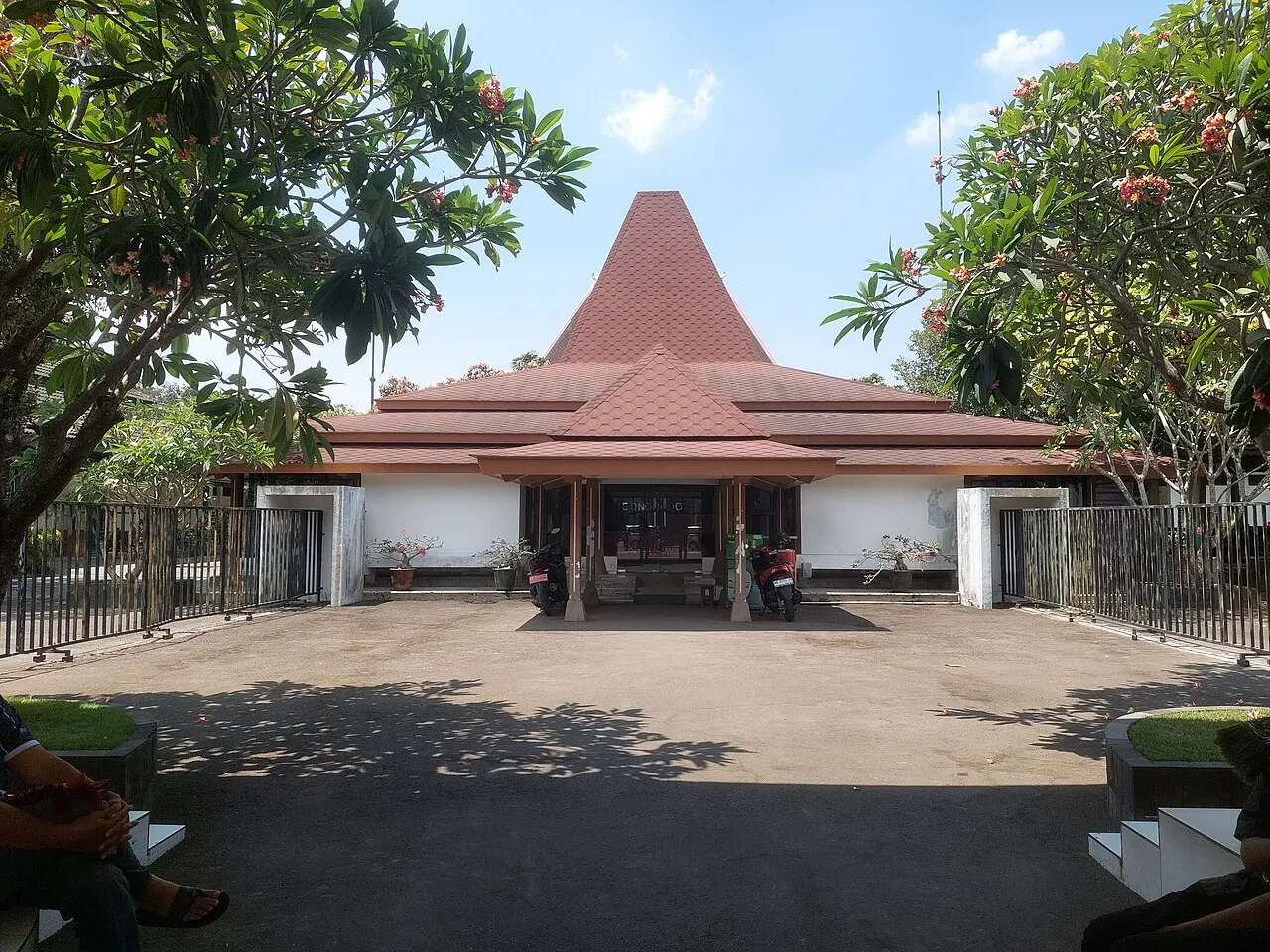
Opened in 1935 from the collection of the Java Instituut, next to the kraton's north square, it holds the most complete collection of Javanese objects after the National Museum in Jakarta: wayang puppets, masks, keris daggers, textiles, ceramics and 8th-century bronzes. The museum also schedules evening shadow theater performances with gamelan; check the schedule on site.
Check access
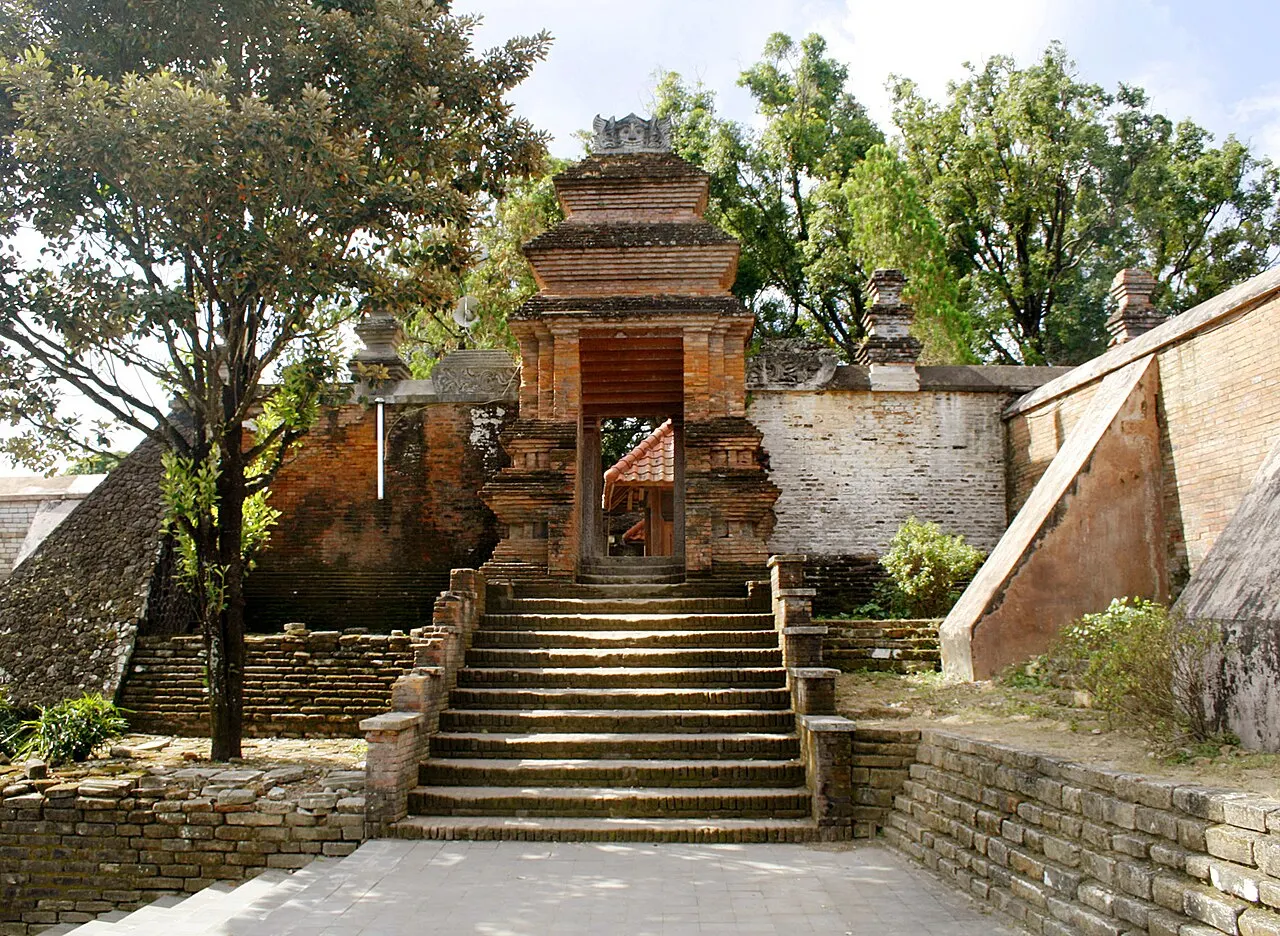
Kotagede
First capital of the Sultanate of Mataram, between 1587 and 1613, today a neighborhood in the southeast of the city. The great mosque, associated with the founding of the kingdom, and the royal cemetery to its west, where the tomb of Panembahan Senopati lies, preserve early Javanese architecture. The narrow streets have houses of former batik merchants and the silver workshops that made the neighborhood famous; the filigree arrived around 1950, with artisans from Kendari, in Sulawesi.
Check access
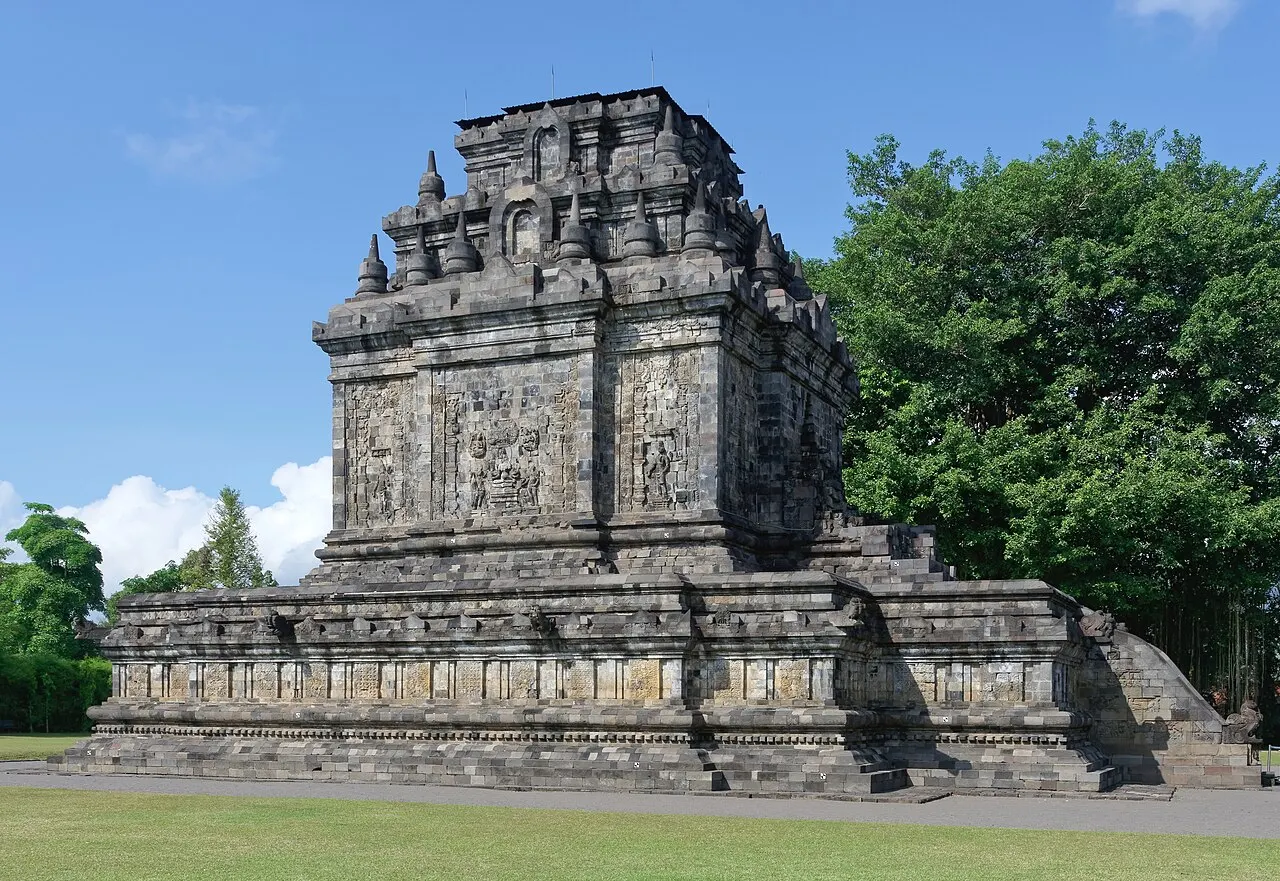
Candi Mendut
A Buddhist temple east of Borobudur, aligned with it and with the small Candi Pawon on a straight east-west line, as the archaeologist Theodoor van Erp showed. On the full moon of Waisak, in May or June, the Buddhist procession leaves Mendut, passes Pawon and ends at Borobudur. Visiting the two is quick and completes the morning at the monument.
Check access
More places in the guide
Candi Plaosan
A 9th-century Buddhist complex about 1 km northeast of Prambanan, among rice fields, attributed to Pramodhawardhani, of the Sailendra dynasty. Divided into Plaosan Lor and Plaosan Kidul, separated by a road, it is much quieter than its famous neighbor.
Situs Ratu Boko
Ruins on a plateau at 196 meters of elevation, about 3 km south of Prambanan, with gates, bathing pools, walls and a dry moat. Unlike the region's temples, it seems to have been a fortified palace, and the pavilion at the highest point looks out over Prambanan with Merapi in the background.
Sendratari Ramayana Prambanan
The Ramayana ballet, staged beside Prambanan on Tuesdays, Thursdays and Saturdays, tells in dance and gamelan the story of Rama and Sita that the reliefs of the Shiva temple show in stone. In the dry season, the performance is on the open-air stage; the rest of the year, on the covered Trimurti stage. Check the schedule and buy the ticket on the operator's website.
Gunung Merapi
Indonesia's most active volcano, with regular eruptions recorded since 1548, dominates the horizon north of the city. On October 19, 2026, MAGMA, the official volcano monitoring system, kept Merapi at level III (Siaga), which rules out climbing to the summit. The lower slopes are visited on jeep tours through the areas hit by the 2010 eruption, from Kaliurang and the villages of Sleman, as long as they stay outside the danger zone set by the authorities.
Museum Ullen Sentalu
A museum in Kaliurang, on the southern slope of Merapi, devoted to the culture and life of the Javanese courts, with galleries blended into gardens and sculptures. It pairs well with a morning on the volcano.
Museum Affandi
The museum of the painter Affandi occupies the land where he lived and worked, on the west bank of the Gajah Wong River, at 167 Laksda Adisucipto avenue, east of the center and on the way to Prambanan. The building, designed by Affandi himself with a roof that recalls a banana leaf, was finished in 1962, and the museum opened on December 15, 1973. There are three galleries: paintings, sculptures, sketches and the artist's personal objects; landscape sketches and the career archive; and a space for temporary exhibitions. The ticket can be exchanged for a drink at the museum's café. Check the hours on the official website before going.
Museum Benteng Vredeburg
The Dutch fort at the southern end of Malioboro, facing the presidential palace Gedung Agung, is presented by Indonesia's official tourism portal as the city's oldest colonial legacy. Today it is the museum of the national struggle, with more than 7,000 pieces that tell the country's history from Diponegoro to the New Order, and green spaces open to the public. It reopened in 2024 after a renovation, with hours extended into the evening; check the current hours before going. It fits the late afternoon of the walk along Malioboro.
Masjid Gedhe Kauman
The palace's great mosque, west of the north square, where the sultan holds his religious rites and ceremonies. The surrounding neighborhood, Kauman, is the birthplace of Muhammadiyah, founded there in 1912.
Alun-alun Kidul
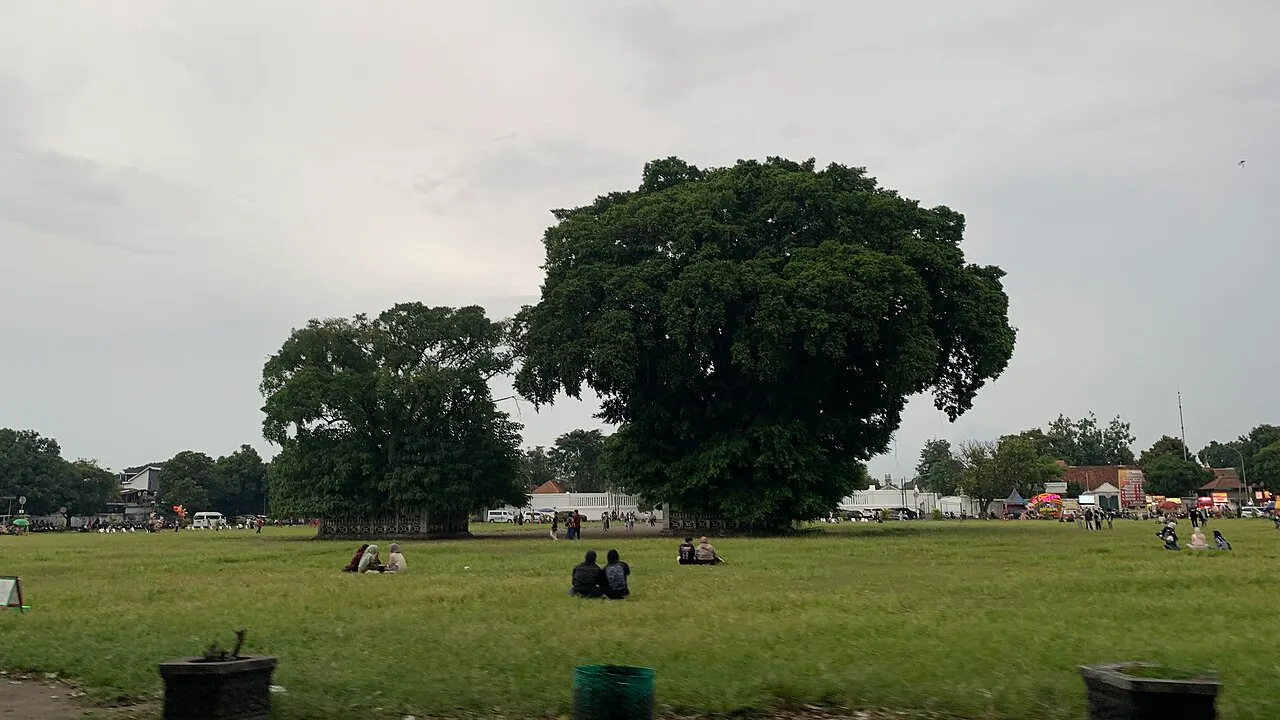
The square south of the kraton, with two old banyan trees in the center. At night, locals and visitors try the masangin: walking blindfolded through the space between the two trees, which almost no one manages in a straight line.
Tugu Yogyakarta
The white obelisk that marks the northern end of the cosmological axis, at a busy intersection a few minutes from Tugu station. The original monument, called Tugu Golong Gilig, gave way to the current form, known as Tugu Pal Putih. It is a quick stop on the way to Malioboro, and the intersection has heavy traffic: cross at the crosswalk.
Nilo’s itinerary
Start with the basic programme and choose extensions for the time you have.
Plan my days in the app ↗Day 1 · The kraton, Taman Sari and Malioboro
This is the day to start with, Tuesday to Sunday: on Mondays, the kraton, Srimanganti and the Wahanarata close. If the trip begins on a Monday, do Borobudur or Prambanan that day and leave the city for the next.
Arrive at the kraton at 8:30 a.m., when the Kedhaton unit opens, in clothing with sleeves and trousers. Walk through the pavilions and exhibition rooms and watch the Srimanganti performance, 9 a.m. to 11 a.m.; if you want shadow theater, schedule this day for a Thursday.
On the way out, stop by the Wahanarata carriage museum, on Rotowijayan street, next to the palace.
Walk west to Taman Sari (open 9 a.m. to 3 p.m.): the Umbul Binangun pools, the tunnel to Sumur Gumuling and the batik studios of Kampung Taman.
Have gudeg for lunch at a warung east of the north square, in the Wijilan area; by becak or app, the ride is short.
In the afternoon, visit the Museum Sonobudoyo, on the north square, and the Kauman mosque, across the square.
In the late afternoon, enter Fort Vredeburg, at the southern end of Malioboro, and then head north through Beringharjo market and along the avenue to Tugu.
In the evening, eat at an angkringan north of Tugu station and order a kopi joss.
Day 2 · Borobudur, Mendut and Pawon
The day before, buy the Borobudur structure ticket on the official website for one of the first sessions; on normal days, the climbs start at 8:30 a.m.
Leave the city early by car with a driver or app, or take the Damri tourist bus on KH Ahmad Dahlan street; it is about 40 km.
Climb the monument with the guide and the upanat sandals, platform by platform, up to the perforated stupas at the top.
On the way out, visit Candi Pawon and Candi Mendut, to the east, aligned with Borobudur.
Have lunch near Borobudur or return to Yogyakarta to eat and rest.
In the evening, go to Alun-alun Kidul to try the masangin between the two banyan trees.
Day 3 · Prambanan, Plaosan and Ratu Boko
Arrive at Prambanan early, by app or on Trans Jogja line 1A, and walk through the Shiva, Vishnu and Brahma temples and the Ramayana reliefs.
Continue to Candi Sewu, the Buddhist complex north of the Hindu temples.
Go to Candi Plaosan, about 1 km northeast, among the rice fields.
Have lunch and rest during the hottest hours.
In the late afternoon, climb to the Ratu Boko plateau, about 3 km south of Prambanan, to see the ruins and the view of Merapi; check the closing time when you buy the ticket.
If it is a Tuesday, Thursday or Saturday, watch the Ramayana ballet next to Prambanan before returning to the city.
If you stay longer
Day 4 · Slopes of Merapi and Kaliurang
Day trip
North of the city, in Sleman, the village of Kaliurang is the closest to the volcano on its southern slope. Leaving Yogyakarta early, by car or app, you can take a jeep tour through the areas hit by the 2010 eruption and visit the Ullen Sentalu museum, and still be back in time to spend the afternoon in Kotagede. With Merapi at level III, tours stay outside the danger zone, and the itinerary may change with BPPTKG notices; confirm with the operator the day before.
Food
Gudeg
Yogyakarta's signature dish: young green jackfruit cooked for hours with palm sugar and coconut milk, seasoned with garlic, shallot, candlenut and teak leaves, which give it its reddish-brown color. It comes with rice, chicken, boiled egg, tofu or tempeh and sambal goreng krecek, a spicy stew of crispy cow skin. The flavor is sweet, and the dish is served from breakfast until the small hours.
Sate klathak
A goat skewer seasoned basically with salt, whose name comes from the crackle of the skewers over the embers. Attributed to Mbah Ambyah, of Pleret, in the 1940s, it is concentrated in the warungs (simple restaurants) of the Pleret district, in Bantul, south of the city. Many of these warungs also serve goat stews.
Bakpia
A thin-crusted pastry filled with sweet mung bean paste, sold in small boxes as a souvenir. The best-known version, bakpia Pathuk, is named for the street where the factories and shops are concentrated.
Angkringan and kopi joss
An angkringan is a night-time street-food cart that sells sego kucing, small portions of rice wrapped with a side, as well as skewers and fried snacks. North of Tugu station, the specialty is kopi joss, strong Javanese coffee served with a piece of glowing charcoal dropped into the glass.
Brongkos
A stew of meat and beans darkened by keluak nut, with a sweetish, earthy flavor.
Oseng mercon
A very spicy stir-fry of beef and offal, for those who tolerate plenty of chili.
Kipo
A green tapioca dumpling filled with sweetened grated coconut, a specialty of Kotagede.
Jadah tempe
A sandwich of rice cake with sweetened tempeh, sold in Kaliurang, on the slope of Merapi.
Where to eat
- Wijilan, east of the kraton's north square
The street known for its gudeg restaurants, which serve sweet jackfruit with chicken, egg and spicy krecek. It is the obvious choice for lunch on palace day, and the dish also comes packed in bamboo boxes or clay pots to take away.
- North of Tugu station
The night angkringans, with sego kucing, skewers and kopi joss with glowing charcoal. It is the cheapest meal in the city and a good place to see Yogyakarta awake late.
- Malioboro at night
The lesehan stalls set up on the sidewalks, with meals served on mats: rice, vegetables, grilled meats, satay and gudeg. It is more about the experience than the price; ask the price before ordering.
- Pleret, in Bantul
The sate klathak warungs, goat skewers with salt, south of the city. Worth the trip by car or app for anyone who likes simple barbecue and wants to eat the dish in the region where it was born.
- Pathuk street
The bakpia factories and shops, where you buy the pastry still fresh, in small boxes, to take home as a souvenir.
- Kotagede
Kipo, the green tapioca dumpling with coconut, sold in the silver neighborhood. It goes well with a morning in the workshops and the market.
· 2026-10-19
Day trips
Slopes of Merapi and Kaliurang
North of the city, in Sleman, the village of Kaliurang is the closest to the volcano on its southern slope. Leaving Yogyakarta early, by car or app, you can take a jeep tour through the areas hit by the 2010 eruption and visit the Ullen Sentalu museum, and still be back in time to spend the afternoon in Kotagede. With Merapi at level III, tours stay outside the danger zone, and the itinerary may change with BPPTKG notices; confirm with the operator the day before.
Parangtritis
A black-sand beach on the south coast, in Bantul, linked by local tradition to the sea queen Nyai Roro Kidul and to the southern end of the city's axis. The sea has dangerous currents and is not for swimming. Go during the day, by car or app, and avoid returning by motorbike at night.
Gua Jomblang
A vertical cave in the limestone hills of Gunungkidul, east of the city. The descent is guided and accepts beginners; book with a local operator, confirm with them the depth, the equipment and the schedule, and leave early.
Surakarta (Solo)
The neighboring royal city, born of the same 1755 division, has the palace of the Pakubuwono kings and the Pura Mangkunegaran. The KRL commuter train links Tugu station to Solo Balapan, and the whole trip fits in a day.
Where to begin
The kraton, Taman Sari and Malioboro
This is the day to start with, Tuesday to Sunday: on Mondays, the kraton, Srimanganti and the Wahanarata close. If the trip begins on a Monday, do Borobudur or Prambanan that day and leave the city for the next.
Borobudur, Mendut and Pawon
The day before, buy the Borobudur structure ticket on the official website for one of the first sessions; on normal days, the climbs start at 8:30 a.m.
Prambanan, Plaosan and Ratu Boko
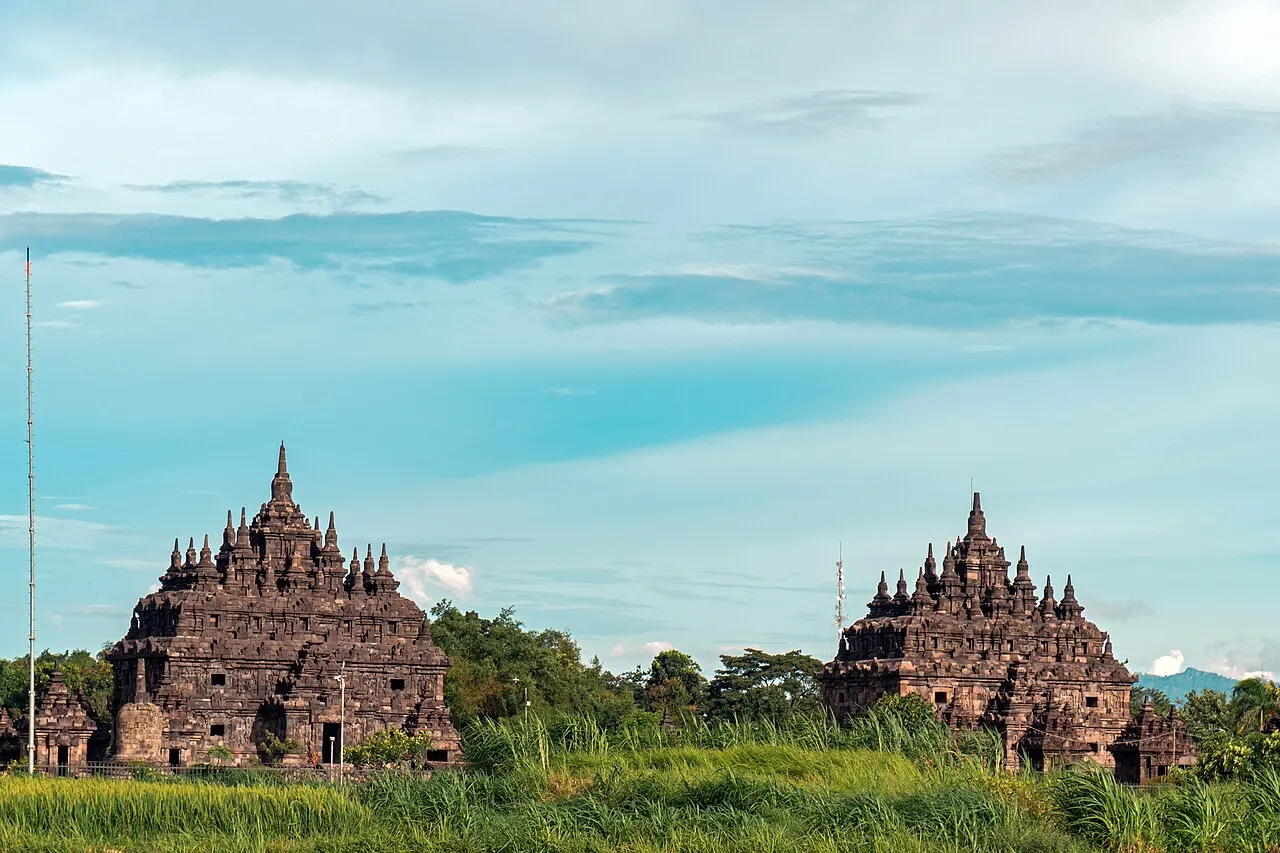
Arrive at Prambanan early, by app or on Trans Jogja line 1A, and walk through the Shiva, Vishnu and Brahma temples and the Ramayana reliefs.
Money
The currency is the Indonesian rupiah (IDR, written Rp). Cards are accepted at hotels, malls and better-equipped restaurants, but warungs, Malioboro stalls, becaks, andong and parking lots run on cash, and small bills avoid problems with change. Many businesses accept payment by QR code under the national QRIS standard, which requires an Indonesian digital wallet; it is also how Trans Jogja passes are paid in the app. The main tickets have different rates for Indonesians and foreigners: at Borobudur and Prambanan, the operator's official website separates the two audiences and, at Borobudur, the courtyard ticket from the structure ticket. Because prices change, check the amount at the time of purchase, on the official websites of the temples and the kraton. In batik shops and markets, the price is negotiated.
Getting there and around
The international airport is YIA (Yogyakarta International Airport), in Kulon Progo, west of the city; all jet flights use this airport, and the old Adisutjipto airport (JOG), to the east, was left with a few domestic flights. Visa rules depend on nationality, and Indonesian immigration uses the All Indonesia digital arrival declaration, filled out before landing: check the official portal (allindonesia.imigrasi.go.id) and the visa site (evisa.imigrasi.go.id) for what applies to your passport. From the airport, the most practical way to reach the center is the KAI-operated train that links YIA to Yogyakarta (Tugu) station, next to Malioboro; the express service, with no stop at Wates, takes about 35 minutes. Schedules and fares were adjusted on July 1, 2026: check the Access by KAI app and buy ahead, because the trains fill up. There are also Damri buses between the airport and the city.
Yogyakarta lies on Java's main railway. Tugu station receives the executive trains and Lempuyangan station the economy ones; from Jakarta it is at least seven hours. The KRL commuter train links Yogyakarta to Solo (Surakarta), with a stop at Maguwo, next to Adisutjipto airport.
In the city, Trans Jogja buses run from 5:30 a.m. to 9:30 p.m. on lines that go from Pakem, in the north, to Palbapang, in the south, and from Godean, in the west, to the Prambanan stop, in the east. They have no dedicated lane and stop only at their own shelters; time-based passes are sold in the Trans Jogja app and paid with a digital wallet through the QRIS system. The Gojek, Grab and Maxim apps offer cars and motorbikes and are usually the simplest way to get around, although few drivers speak English. Becaks, pedal-powered tricycles, and andong, horse-drawn carts, serve short trips: agree on the price beforehand, including whether it is one way only.
On foot, the city is only pleasant along Malioboro and in the alleys of Taman Sari; elsewhere, sidewalks are narrow or nonexistent and traffic is heavy. Borobudur is about 40 km away: many people hire a car with a driver or use an app to reach the first climbing session, and there is a Damri tourist bus (Shuttle Damri Wisata) that leaves from KH Ahmad Dahlan street, near Bank Indonesia; confirm the schedule the day before. For Prambanan, about 17 km away, Trans Jogja line 1A and the apps reach the entrance.
Safety
Yogyakarta is a calm city for visitors, and the most common problems are small. There are pickpockets on buses and on Malioboro when it is crowded, and batik-related scams, in which someone approaches the tourist in English near the kraton or Malioboro and leads them to a shop that pays a commission. The biggest everyday risk is traffic: crossing the street takes attention, and the sidewalks are uneven and poorly lit at night. Merapi is at alert level III (Siaga) according to MAGMA, checked on October 19, 2026; follow only the authorized routes on the slopes and watch the notices from BPPTKG, the agency that monitors the volcano. The region is seismic, as the 2006 earthquake showed. On the south coast, do not go into the sea at Parangtritis because of the currents, and avoid riding a motorbike at night between the city and the beach, where there have been robberies. Dengue occurs in Java: use repellent, especially in the rainy season.
Before you go
- Plug
- types C and F
- Voltage
- 127/230 V
- Driving side
- on the left
- Emergency
- General 112
- Country code
- +62
- Official language
- Indonesian
- Currency
- rupiah (IDR)
Source: Wikidata (CC0), checked September 2026.
Etiquette tips
Appropriate clothing at the kraton
The palace visit requires sober clothing with sleeves, no shorts or skirts, and hats are not worn inside the museum. Visitors also may not enter wearing the awisan batik patterns, reserved for the royal family, or dressed in kebaya or beskap, the court's traditional garments.
Upanat sandals at Borobudur
Those who climb the monument receive the protective upanat sandals, which are part of the stone preservation rules, and walk with a guide.
Agree on the price first
Becaks, andong and stand-based ojek (motorbike taxis without an app) charge by agreement. Settle the amount, and whether it includes the return or waiting time, before boarding; in the apps, the price appears on screen.
Respecting the belief about the southern sea
At Parangtritis, many locals avoid wearing green on the beach, out of respect for the legend of Queen Nyai Roro Kidul. It is not a rule imposed on visitors, but it is worth knowing the belief before commenting on it.
Mistakes to avoid
Scheduling the kraton visit for a Monday or for the afternoon. The unit open to the public closes on Mondays and, on other days, shuts at 2:30 p.m.
Buying the Borobudur courtyard ticket thinking it includes the climb. Only the structure ticket (Temple Structure) gives access to the monument, and the climb has a daily quota.
Arriving at Malioboro and accepting the pitch from people who approach tourists to take them to a supposed government batik gallery. The outing ends at a shop that pays the companion a commission.
Going into the sea at Parangtritis. The rip currents are strong and have killed many swimmers.
Planning a climb to the summit of Merapi. With the volcano at alert level III, visits are limited to tours on the lower slopes, outside the danger zone.
Booking a flight to Adisutjipto airport thinking it is the main one. Jet and international flights use YIA, in Kulon Progo, about 35 minutes by express train from the center.
Useful phrases
Matur nuwun
Thank you (Javanese)
Terima kasih
Thank you (Indonesian)
Nuwun sewu
Excuse me (Javanese), when passing someone or asking for something
Sugeng enjing
Good morning (Javanese)
Berapa harganya?
How much is it?
Kiri
Stop here, when asking to get off a bus or another vehicle
Tidak pedas
Not spicy
Where to stay
- Malioboro and Sosrowijayan · Anyone arriving by train or from the airport who wants to walk to Malioboro, the market and the food stalls, on a budget or mid-range.: Tugu station, the end of the airport train line, sits at the start of Malioboro, and the alleys of Sosrowijayan hold the cheapest lodgings. The drawback is noise and bustle, especially during the Indonesian school holidays, when traffic jams around the avenue.
- Prawirotaman · Anyone who prefers guesthouses, cafés and a calmer pace, and doesn't mind using an app for almost every trip.: The neighborhood, south of the kraton, gathers guesthouses and restaurants popular with foreign travelers and is relatively close to the palace and Taman Sari. It is far from the train station, and the walk to Malioboro is not pleasant.
- Kraton (Jeron Beteng) · Anyone who wants to start the day at the palace and Taman Sari on foot and sleep in a residential neighborhood.: The streets around the palace are the quietest in the center and put the kraton, Taman Sari and Alun-alun Kidul a few minutes' walk away. Lodging is more limited, and the narrow alleys make arriving by car difficult.
- Around Borobudur · Anyone who wants to catch the first climbing session without the pre-dawn road and accepts spending a night outside Yogyakarta.: Sleeping near the monument avoids the road of about 40 km before the visit. On the other hand, food and services at night are limited, and changing lodgings costs half a day.
· 2026-10-19
Districts
Kraton (Jeron Beteng)
The walled city around the palace, with the two alun-alun squares, Taman Sari, the Kauman mosque and narrow residential streets where families tied to the court still live. It is the neighborhood to visit on foot in the morning, and a quiet base for anyone who wants to wake up near the kraton.
Malioboro and Sosrowijayan
The commercial avenue of about 2 km between Tugu station and the palace's north square, partly closed to cars, with batik shops, Beringharjo market and food stalls at night. The alleys of Sosrowijayan, by the station, concentrate budget lodgings.
Prawirotaman
A neighborhood south of the kraton with guesthouses, cafés and galleries, quieter than Malioboro and popular with foreign travelers. It is far from the train station, and getting around depends on ride-hailing apps or taxis.
Kotagede
First capital of the Sultanate of Mataram, in the southeast of the city, with the great mosque, the royal cemetery, merchants' houses and the silver workshops that made the neighborhood famous.
Kotabaru
Former residential neighborhood of Dutch officials, northeast of Malioboro, with colonial houses, a Catholic church and the Kridosono stadium. It appeals to anyone who likes early 20th-century architecture.
Kaliurang
A mountain village in Sleman, the closest to Merapi on its southern slope, with the Ullen Sentalu museum and the starting point for jeep tours through the areas hit by eruptions.
History
732 · The Canggal inscription and the kingdom of Mataram
An inscription found in a Hindu temple in central Java records the kingdom of Medang, in the land called Mataram, founded by King Sanjaya. For about three centuries, the valley of the Progo River, on the slopes of Merapi, was the center of a Hindu-Buddhist culture that built the region's great temples.
8th–9th c. · Borobudur
The Buddhist Sailendra dynasty raises Borobudur, with nine platforms, 2,672 relief panels and, originally, 504 Buddha statues. Specialists date the construction between the end of the 8th century and the first third of the 9th.
856 · The consecration of the Shiva temple at Prambanan
The Shivagrha inscription records the inauguration, on November 12, 856, of the Shiva temple, the 47-meter central tower of the Prambanan complex, which once had 240 structures.
c. 929 · Power leaves central Java
King Mpu Sindok moves the seat of the kingdom to eastern Java. The cause is debated by historians; an eruption of Merapi and the rivalry with the kingdom of Srivijaya, in Sumatra, are among the hypotheses.
1587–1613 · Kotagede, capital of the Sultanate of Mataram
The settlement that Panembahan Senopati turned into a capital, today a neighborhood in the southeast of the city, holds the mosque and royal cemetery of the new Islamic sultanate of Mataram, which later moved its court to Karta, Plered and Kartasura.
1755–1756 · Giyanti and the birth of Yogyakarta
After a civil war in Mataram, the Treaty of Giyanti, signed on February 13, 1755 with the Dutch East India Company, creates the Sultanate of Yogyakarta. Prince Mangkubumi takes the throne as Hamengkubuwono I and moves into the palace on October 7, 1756.
1758–1765 · Taman Sari
Hamengkubuwono I orders the construction of the Taman Sari water garden, with bathing pools, an artificial lake and rest pavilions for the royal family.
1812 · Raffles takes the kraton
On June 20, 1812, during the brief British rule over Java, a force of 1,200 men commanded by Stamford Raffles takes the palace in a single day; it is looted and set on fire.
1867 · The earthquake that empties Taman Sari
An earthquake brings down structures at Taman Sari and drains its pools. The complex stops being used by the court and, over time, is occupied by homes.
1912 · Muhammadiyah in Kauman
Ahmad Dahlan founds Muhammadiyah, one of the largest Islamic organizations in Indonesia, in the Kauman neighborhood, next to the palace's great mosque; it still keeps its headquarters in Yogyakarta today.
1946–1949 · Capital of the Republic
With Jakarta occupied by the Dutch, Yogyakarta is the capital of the young Republic of Indonesia from 1946 until the Dutch invasion of December 1948. The General Offensive of March 1, 1949 and pressure from the UN lead to the Dutch withdrawal on June 29, 1949. In March 1950, a law creates the Special Region of Yogyakarta, the province that has the sultan as governor.
1991 · Borobudur and Prambanan on the UNESCO list
The two temple complexes are inscribed as World Heritage Sites, after the major restoration of Borobudur carried out by the Indonesian government with UNESCO between 1975 and 1982.
2006 · The Bantul earthquake
On May 27, 2006, at 5:53 a.m., a magnitude 6.4 earthquake with its epicenter in Bantul, south of the city, kills more than 5,700 people and damages the Prambanan complex, which stays closed for a few weeks.
2010 · The great eruption of Merapi
The eruption that begins on October 26, 2010 leaves 386 dead and leads to the evacuation of more than 350,000 people from the volcano's slopes.
2023 · The cosmological axis on the UNESCO list
On September 18, 2023, the 45th session of the World Heritage Committee inscribes the Cosmological Axis of Yogyakarta and its historic landmarks, the line of about 6 km that runs from Tugu to Panggung Krapyak through the kraton.
Complete history
The plain where Yogyakarta now stands was the center of Java long before the city existed. Between the 8th and 10th centuries, the kingdoms known as Mataram, Hindu and Buddhist, raised hundreds of stone temples on the slopes of Merapi, from Borobudur to Prambanan. Around 929 the court moved to the east of the island, and the temples spent centuries among vegetation and volcanic ash, until they were studied and restored in the 19th and 20th centuries.
The name Mataram returned in the late 16th century with an Islamic sultanate whose first capital was Kotagede, today a neighborhood in the southeast of the city. In the 18th century, a war of succession between King Pakubuwono II, an ally of the Dutch East India Company, and his brother, Prince Mangkubumi, ended with the Treaty of Giyanti in 1755. The kingdom was split in two: Surakarta, to the east, and Yogyakarta, where Mangkubumi took the throne as Hamengkubuwono I. The city's name comes from Ayodhya, the capital of the hero Rama in the epic Ramayana, and the sultan laid out the new capital around the palace, aligned between the volcano to the north and the Indian Ocean to the south.
The court lived through British rule, which looted the kraton in 1812, and Dutch colonial rule, which left Fort Vredeburg to the north of the palace, the bank buildings and the central post office near the palace, and the residential neighborhood of Kotabaru. In the 20th century, Yogyakarta also became a city of schools: Muhammadiyah was born in Kauman in 1912, and Gadjah Mada University, the largest in the country, draws students from all over Indonesia.
The act that defines its current status came in 1945. Right after the proclamation of independence, Sultan Hamengkubuwono IX declared his support for the Republic, and from 1946 to 1948 the city was the capital of the new country, while Jakarta was occupied by the Dutch. In recognition, a 1950 law created the Special Region of Yogyakarta, the province that brings together the city and the four neighboring regencies and in which the sultan is also the governor. That is why the palace remains a royal residence and a place of ceremonies, and not just a museum.
The most recent decades have been marked by geology. The earthquake of May 27, 2006 killed more than 5,700 people in the region, mostly in Bantul, and the 2010 eruption of Merapi left 386 dead. Since 2023, the axis that links Tugu to Panggung Krapyak, with the kraton in the middle, has been a World Heritage Site, and tourism, which already lived off the temples, has begun to look at the old city too.
Geography and shape of the city
Yogyakarta sits on a sloping plain that descends from the slopes of Merapi, in the north, to the Indian Ocean coast, in the south. The municipality is small, at 32.82 km², and is surrounded by the four regencies of the province: Sleman climbs toward the volcano to the north, Bantul descends to the sea at Parangtritis, the limestone hills of Gunungkidul lie to the east and the lowlands of Kulon Progo, where the international airport is, lie to the west. The old city is organized around the kraton, which has an open square to the north (Alun-alun Utara) and another to the south (Alun-alun Kidul), and grows in every direction from it. The modern commercial center is north of the palace, along Malioboro, with buildings from the Dutch colonial period; the walled neighborhood around the kraton, called Jeron Beteng, is residential and dense, and keeps stretches of the old walls. The north-south line that runs from Tugu to Panggung Krapyak, passing through the palace, is the axis protected by UNESCO, and local tradition extends it to the summit of Merapi and to the sea. The climate is tropical monsoon: annual averages stay between 26 °C and 27 °C, the dry season runs from June to September and the rainy season peaks in January.
Culture
Yogyakarta's cultural life still takes the palace as its reference. The kraton holds gamelan sets, Java's orchestra of metallophones and gongs, and from Tuesday to Sunday it hosts groups from across the province in the Srimanganti pavilion, each day with a different art: gamelan music and dance, wooden puppet theater, shadow theater, sung poetry, dance drama and the open rehearsal of the court dance. Wayang kulit, shadow theater with cut-leather puppets narrated by a master, the dalang, and accompanied by gamelan, appears in museums, on stages and at weddings. Traditional performances are long and narrated in Javanese, and many visitors watch only part of one.
Batik is both a craft and a form of dress. Certain patterns, called awisan, are reserved for the royal family and should not be worn by visitors at the palace. The city has a batik museum and galleries where you can watch artists working with wax; in the Kampung Taman neighborhood, inside the ruins of Taman Sari, there are batik and traditional painting studios. When buying, the difference is on the back: hand-made batik has vivid color on both sides of the cloth, and printed batik on one side only. Kotagede is the reference for silver, with jewelry and filigree made in family workshops.
Yogyakarta is also a city of students. Gadjah Mada University, the largest in the country, and dozens of other colleges sustain a contemporary art scene with independent galleries and ARTJOG, the annual art fair whose 2026 edition ran from June 19 to August 30 at the Jogja National Museum. On Sunday mornings, the university boulevard fills with people running, practicing martial arts and eating at the stalls.
Religion organizes the calendar. Most of the population is Muslim, with a sizable Christian minority, and the city has mosques, churches and old Chinese temples. The Garebeg ceremonies, in which palace servants carry large cone-shaped offerings to the squares, follow the Javanese calendar, and many residents still regard the axis between Merapi and the sea as sacred, tied to the guardian spirits of the volcano and to the queen of the southern sea, Nyai Roro Kidul.
Festivals and events
Sekaten and Garebeg Maulud
In the Javanese month of Mulud, whose date shifts on the Gregorian calendar, the palace celebrates the birth of the Prophet Muhammad. A popular fair takes over the north square before the ceremony, and at the Garebeg the court brings large cone-shaped food offerings to the squares, contested by the public at the end of the procession.
Garebeg Syawal and Garebeg Besar
The court's other two offering processions, at the end of Ramadan and at the feast of the sacrifice. The dates follow the Islamic and Javanese calendars and change every year.
Waisak
On the full moon of May or June, Buddhists celebrate the birth, enlightenment and death of the Buddha with a procession that leaves Candi Mendut, passes Candi Pawon and ends at Borobudur. The exact date is announced each year.
ARTJOG
An annual contemporary art fair at the Jogja National Museum, held in the middle of the year. The 2026 edition ran from June 19 to August 30.
City anniversary
On October 7, the city commemorates the date on which Hamengkubuwono I moved into the palace, in 1756.
Books and films
The Power of Prophecy, by Peter Carey (KITLV Press, 2007)
A biography of Prince Diponegoro, son of a sultan of Yogyakarta who led the Java War against the Dutch. It explains the court, Javanese society and the collapse of the old order in the early 19th century.
Islam in Java, by Mark R. Woodward (University of Arizona Press, 1989)
An anthropological study of religion in the Sultanate of Yogyakarta, useful for understanding why the palace, the mosque and the Garebeg ceremonies work together.
Frequently asked questions
Yogyakarta: how do you get from the airport to the center?
The international airport is YIA (Yogyakarta International Airport), in Kulon Progo, west of the city; all jet flights use this airport, and the old Adisutjipto airport (JOG), to the east, was left with a few domestic flights. From the airport, the most practical way to reach the center is the KAI-operated train that links YIA to Yogyakarta (Tugu) station, next to Malioboro; the express service, with no stop at Wates, takes about 35 minutes. Schedules and fares were adjusted on July 1, 2026: check the Access by KAI app and buy ahead, because the trains fill up. There are also Damri buses between the airport and the city.
Yogyakarta: do I need a visa to enter Indonesia?
Visa rules depend on nationality, and Indonesian immigration uses the All Indonesia digital arrival declaration, filled out before landing: check the official portal (allindonesia.imigrasi.go.id) and the visa site (evisa.imigrasi.go.id) for what applies to your passport.
Yogyakarta: when is the kraton open, and what should you wear?
The sultan's palace is still the residence of the royal family and the center of the court's ceremonies, and only one part, the unit called Kedhaton, is open to visitors, Tuesday to Sunday, 8:30 a.m. to 2:30 p.m. (closed Mondays). The palace visit requires sober clothing with sleeves, no shorts or skirts, and hats are not worn inside the museum. Visitors also may not enter wearing the awisan batik patterns, reserved for the royal family, or dressed in kebaya or beskap, the court's traditional garments.
Yogyakarta: how do you visit Borobudur and climb the monument?
The operator sells two tickets: the courtyard ticket (Temple Ground), which does not allow climbing, and the structure ticket (Temple Structure), with the climb accompanied by a guide, the protective upanat sandals and a daily visitor quota, reported as 1,200 people. Buy the climb in advance on the official website. Borobudur is about 40 km away: many people hire a car with a driver or use an app to reach the first climbing session, and there is a Damri tourist bus (Shuttle Damri Wisata) that leaves from KH Ahmad Dahlan street, near Bank Indonesia; confirm the schedule the day before.
Yogyakarta: how many days should you stay?
I would stay three full days in Yogyakarta: the first for the kraton, Taman Sari and Malioboro; the second to climb Borobudur in the morning and stop by Mendut and Pawon; and the third for Prambanan, Plaosan and Ratu Boko, ending with the Ramayana ballet if it falls on a Tuesday, Thursday or Saturday. With a fourth day, I would head out early for the slopes of Merapi and Kaliurang and spend the afternoon in Kotagede. You can combine the two great temples in a single day, as many tours do, but then the Borobudur climb turns into a rush and Prambanan lands in the hottest hours, and the city, which deserves a day of its own, gets none.
Yogyakarta: when is the best time to go?
Yogyakarta has a tropical monsoon climate, with annual averages between 26 °C and 27 °C, and what changes through the year is the rain. From June to September, the driest months have less than 100 mm a month, and that is when the Ramayana ballet uses the open-air stage at Prambanan. The rainy season runs from November to March, peaking in January, when an average of 392 mm falls; the temples stay open, but rain can shorten the visit and disrupt tours on Merapi. April, May and October are transition months. Crowds follow the Indonesian calendar: the mid-year school holidays and the Lebaran holidays, the end of Ramadan, whose date changes every year, fill Malioboro and the temples and clog traffic. For Lebaran 2026, the Borobudur operator forecast between 7,000 and 8,500 visitors a day.
Yogyakarta: when is the Ramayana ballet at Prambanan?
The Ramayana ballet, staged beside Prambanan on Tuesdays, Thursdays and Saturdays, tells in dance and gamelan the story of Rama and Sita that the reliefs of the Shiva temple show in stone. In the dry season, the performance is on the open-air stage; the rest of the year, on the covered Trimurti stage. Check the schedule and buy the ticket on the operator's website.
Yogyakarta: can you visit Merapi volcano?
North of the city, in Sleman, the village of Kaliurang is the closest to the volcano on its southern slope. Leaving Yogyakarta early, by car or app, you can take a jeep tour through the areas hit by the 2010 eruption and visit the Ullen Sentalu museum, and still be back in time to spend the afternoon in Kotagede. With Merapi at level III, tours stay outside the danger zone, and the itinerary may change with BPPTKG notices; confirm with the operator the day before.
Yogyakarta: can you pay by card, or is cash better?
Cards are accepted at hotels, malls and better-equipped restaurants, but warungs, Malioboro stalls, becaks, andong and parking lots run on cash, and small bills avoid problems with change. Many businesses accept payment by QR code under the national QRIS standard, which requires an Indonesian digital wallet; it is also how Trans Jogja passes are paid in the app. The main tickets have different rates for Indonesians and foreigners: at Borobudur and Prambanan, the operator's official website separates the two audiences and, at Borobudur, the courtyard ticket from the structure ticket. Because prices change, check the amount at the time of purchase, on the official websites of the temples and the kraton.
Yogyakarta: is it safe?
Yogyakarta is a calm city for visitors, and the most common problems are small. There are pickpockets on buses and on Malioboro when it is crowded, and batik-related scams, in which someone approaches the tourist in English near the kraton or Malioboro and leads them to a shop that pays a commission. The biggest everyday risk is traffic: crossing the street takes attention, and the sidewalks are uneven and poorly lit at night. Merapi is at alert level III (Siaga) according to MAGMA, checked on October 19, 2026; follow only the authorized routes on the slopes and watch the notices from BPPTKG, the agency that monitors the volcano. The region is seismic, as the 2006 earthquake showed. On the south coast, do not go into the sea at Parangtritis because of the currents, and avoid riding a motorbike at night between the city and the beach, where there have been robberies. Dengue occurs in Java: use repellent, especially in the rainy season.
Other cities in the country
Indonesia ↗- Days
- 1–2
- When
- Jun–Sep
- Per person/day
- Average 800,000–1,500,000 IDRMid-range · per person/day
Cost scope
Per person per day: accommodation, meals, urban transport, visits and a small allowance for extras. Flights excluded; larger purchases vary. Editorial estimate, not a quote.
- Days
- 3–4
- When
- Apr–May · Sep–Oct
- Per person/day
- Average 600,000–1,800,000 RpMid-range · per person/day
Cost scope
Per person per day: accommodation, meals, urban transport, visits and a small allowance for extras. Flights excluded; larger purchases vary. Editorial estimate, not a quote.
- Days
- 4–5
- When
- May–Sep
- Per person/day
- Average 986,000 IDRMid-range · per person/day
Cost scope
Per person per day: accommodation, meals, urban transport, visits and a small allowance for extras. Flights excluded; larger purchases vary. Editorial estimate, not a quote.