Thailand
Koh Samui
Koh Samui: Chaweng and Lamai beaches, seaside temples and the islands of Ang Thong
Days I'd stay four days on Koh Samui.
How the guide reaches this number
The first for the north of the island, with the Big Buddha and Wat Plai Laem in the morning, beach in the afternoon and the evening in Bophut; the second for the south loop by road, from the Lamai rocks to the fishing village of Hua Thanon, the Na Muang waterfalls and the Laem Sor chedi; the third for the boat to Ang Thong marine park; and the fourth for Koh Tao and Koh Nang Yuan, if you like snorkeling, or for Koh Phangan. Three days cover the two road days and Ang Thong, which is the trip I wouldn't leave out; with less than that, the island becomes just beach and hotel.
3–4
Start with the basic programme and choose extensions for the time you have.
When February to April; it is the driest period according to the 1991 to 2020 normals (64 mm in February).
How the guide reaches this number
From May to September it rains 100 to 134 mm a month, and October to December is the wettest period, with 445 mm in November, when Ang Thong park is closed. Late December and January are the months when hotels are fullest, even with rain.
February to April; it is the driest period according to the 1991 to 2020 normals (64 mm in February). From May to September it rains 100 to 134 mm a month, and October to December is the wettest period, with 445 mm in November, when Ang Thong park is closed. Late December and January are the months when hotels are fullest, even with rain.
Per person/day Budget around THB1,020; mid-range around THB2,510; comfortable around THB5,900 per person per day, based on spending reported by travelers to Budget Your Trip (checked October 2026).
How the guide reaches this number
Indicative figures, excluding travel to the destination.
Budget around THB1,020; mid-range around THB2,510; comfortable around THB5,900 per person per day, based on spending reported by travelers to Budget Your Trip (checked October 2026). Indicative figures, excluding travel to the destination.
Per person per day: accommodation, meals, urban transport, visits and a small allowance for extras. Flights excluded; larger purchases vary. Editorial estimate, not a quote.
Salta · among the cheapestZermatt · among the priciest
Cheaper than 82% of them. The tick marks the median. Compared by the middle of each city’s daily range, converted at the 24 Sept 2026 exchange rate.
 What Nilo thinks
I'd recommend Koh Samui to people who like an island with a life of its own behind the resorts, well-seasoned southern cooking and temples that still receive worshippers. The table says the most about the place: khao yam, rice with fermented fish sauce, toasted coconut and greens, and sato stir-fried with shrimp paste, a strong-smelling bean, show a cuisine with more salt, sourness and chili than sweetness. The legacy of the Hainan traders appears in the shrines to Kuan U and the images of Guanyin, and coconut is still in the cup and in the oil sold everywhere. I'd skip the shows with tigers, monkeys, crocodiles and snakes, because they use trained wild animals for photos, and the island has more to show in its orchards and reefs.Koh Samui is an island you understand by road: 51 km of asphalt circle a forested hill, and each stretch of coast has its own rhythm. The east belongs to long white-sand beaches, with hotels, bars and people from all over the world; the north to shallow bays, seaside dinner streets and boats leaving for the neighboring islands; the west to the old port and the sunset. In the south and the interior, the island from before the airport lives on, made of coconut groves, orchards, fishing villages and roadside temples that residents visit every day.
Quick facts
- Population
- 68,698 registered residents in the municipality of Ko Samui, which covers the island and 18 islets, as of March 5, 2021, according to the municipality. The municipality estimates that the floating population, of workers without local registration and visitors, reaches about three times that number.
- Founded
- No founding date. Two Dong Son-type bronze drums found in 1977 at Wat Khiri Wongkaram, in Taling Ngam, point to human presence more than 2,000 years ago. Local administration began as a sanitary district in 1956 and became a city-level municipality (thesaban nakhon) in 2012.
- Country and region
- Thailand, Surat Thani province, in the south of the country; the island forms the district (amphoe) of Ko Samui, in the Gulf of Thailand.
- Language
- Thai. On the island people speak Southern Thai, with Samui variants of their own.
- Currency
- Thai baht (THB).
- Time zone
- Asia/Bangkok: UTC+7 year-round, no daylight saving time.
- Best time to go
- February to April; it is the driest period according to the 1991 to 2020 normals (64 mm in February). From May to September it rains 100 to 134 mm a month, and October to December is the wettest period, with 445 mm in November, when Ang Thong park is closed. Late December and January are the months when hotels are fullest, even with rain.
- Average daily cost
- Budget around THB1,020; mid-range around THB2,510; comfortable around THB5,900 per person per day, based on spending reported by travelers to Budget Your Trip (checked October 2026). Indicative figures, excluding travel to the destination.
When to go
February to April; it is the driest period according to the 1991 to 2020 normals (64 mm in February). From May to September it rains 100 to 134 mm a month, and October to December is the wettest period, with 445 mm in November, when Ang Thong park is closed. Late December and January are the months when hotels are fullest, even with rain.
January
24° to 29°C
127 mm of rain
11 h 38 min of daylight
National holidays
Jan 1, 2027 · New Year's Day
Jan 9, 2027 · National Children's Day
Jan 1, 2028 · New Year's Day
Jan 3, 2028 · New Year's Day (in lieu)
Jan 8, 2028 · National Children's Day
Source: python-holidays. Holiday dates shift; check close to your trip.
February
25° to 29°C
64 mm of rain
Best time11 h 50 min of daylight
National holidays
Feb 21, 2027 · Makha Bucha
Feb 22, 2027 · Makha Bucha (in lieu)
Feb 10, 2028 · Makha Bucha
Source: python-holidays. Holiday dates shift; check close to your trip.
April
26° to 32°C
83 mm of rain
Best time12 h 20 min of daylight
National holidays
Apr 6, 2027 · Chakri Memorial Day
Apr 13, 2027 · Songkran Festival
Apr 14, 2027 · Songkran Festival
Apr 15, 2027 · Songkran Festival
Apr 6, 2028 · Chakri Memorial Day
Apr 13, 2028 · Songkran Festival
Apr 14, 2028 · Songkran Festival
Apr 15, 2028 · Songkran Festival
Apr 17, 2028 · Songkran Festival (in lieu)
Source: python-holidays. Holiday dates shift; check close to your trip.
May
26° to 33°C
132 mm of rain
12 h 34 min of daylight
National holidays
May 1, 2027 · National Labor Day
May 3, 2027 · National Labor Day (in lieu)
May 4, 2027 · Coronation Day
May 20, 2027 · Visakha Bucha
Source: python-holidays. Holiday dates shift; check close to your trip.
June
25° to 33°C
134 mm of rain
12 h 40 min of daylight
National holidays
Jun 3, 2027 · HM Queen Suthida's Birthday
Source: python-holidays. Holiday dates shift; check close to your trip.
July
25° to 32°C
117 mm of rain
12 h 37 min of daylight
National holidays
Jul 18, 2027 · Asarnha Bucha
Jul 19, 2027 · Buddhist Lent Day
Jul 20, 2027 · Asarnha Bucha (in lieu)
Jul 28, 2027 · HM King Maha Vajiralongkorn's Birthday
Source: python-holidays. Holiday dates shift; check close to your trip.
August
25° to 32°C
102 mm of rain
12 h 26 min of daylight
National holidays
Aug 12, 2027 · HM Queen Sirikit The Queen Mother's Birthday; National Mother's Day
Source: python-holidays. Holiday dates shift; check close to your trip.
September
25° to 32°C
118 mm of rain
12 h 11 min of daylight
October
24° to 31°C
295 mm of rain
11 h 55 min of daylight
National holidays
Oct 23, 2026 · HM King Chulalongkorn Memorial Day
Oct 13, 2027 · HM King Bhumibol Adulyadej Memorial Day
Oct 23, 2027 · HM King Chulalongkorn Memorial Day
Oct 25, 2027 · HM King Chulalongkorn Memorial Day (in lieu)
Source: python-holidays. Holiday dates shift; check close to your trip.
November
24° to 30°C
445 mm of rain
11 h 41 min of daylight
December
24° to 29°C
263 mm of rain
11 h 34 min of daylight
National holidays
Dec 5, 2026 · HM King Bhumibol Adulyadej the Great's Birthday; National Day; National Father's Day
Dec 7, 2026 · HM King Bhumibol Adulyadej the Great's Birthday (in lieu); National Day (in lieu); National Father's Day (in lieu)
Dec 10, 2026 · Constitution Day
Dec 31, 2026 · New Year's Eve
Dec 5, 2027 · HM King Bhumibol Adulyadej the Great's Birthday; National Day; National Father's Day
Dec 6, 2027 · HM King Bhumibol Adulyadej the Great's Birthday (in lieu); National Day (in lieu); National Father's Day (in lieu)
Dec 10, 2027 · Constitution Day
Dec 31, 2027 · New Year's Eve
Source: python-holidays. Holiday dates shift; check close to your trip.
High, shoulder and low season
High · January to April, July, August and the year-end holidays
In late December and January hotels are fullest because of the year-end holidays, even though the rain only drops in February. From February to April comes the driest period, with 64 mm in February and 83 mm in April. July and August are vacation months and times of high demand on the Gulf islands. In these periods, book lodging and boats in advance.
Shoulder · May, June and September
It rains 100 to 134 mm a month, with ten to eleven rainy days, and demand is lower than in the holiday months. Ang Thong park is open, and the boats depend on the sea on the day.
Low · October to mid-December
The rainiest period: 295 mm in October and 445 mm in November. Ang Thong park is closed for part of this period, and rough seas can suspend boats to Koh Phangan and Koh Tao. For those who only want beach and pool, there are still sunny days between the rains.
How the year changes
Samui has a rainy calendar different from much of Thailand. According to the 1991 to 2020 normals from the island's weather station, the driest period runs from February to April: February has 64 mm of rain and about four rainy days, and April has 83 mm. From May to September, while much of the country is in monsoon, Samui gets 100 to 134 mm a month, with ten to eleven rainy days a month. The rainiest season is October to December: October has 295 mm, November 445 mm and December 263 mm, and Ang Thong marine park closes every year during the monsoon (see the day trip). The average temperature stays between 27 and 29 °C all year, with average highs of 29 to 33 °C, the highest in May and June. January is a transition month, with 127 mm. Crowds and rain do not go together: the turn of the year is the peak of demand, and January was the busiest month in 2025, according to the consultancy C9 Hotelworks; on the Gulf islands, July and August are also months of high demand.
The same numbers as a table
| Month | Temperature °C | Rain mm |
|---|---|---|
| January | 24 to 29 | 127 |
| February · | 25 to 29 | 64 |
| March · | 25 to 30 | 116 |
| April · | 26 to 32 | 83 |
| May | 26 to 33 | 132 |
| June | 25 to 33 | 134 |
| July | 25 to 32 | 117 |
| August | 25 to 32 | 102 |
| September | 25 to 32 | 118 |
| October | 24 to 31 | 295 |
| November | 24 to 30 | 445 |
| December | 24 to 29 | 263 |
Nilo's tips
Choose your base for the trip, not for the most famous beach
I'd sleep in Chaweng only if nightlife is part of the plan. For dinner on foot and a quiet night, Bophut; for children and for the boats to Koh Phangan and Koh Tao, Mae Nam; for the programs in the south, Lamai.
Ang Thong with the sea on your side
I'd book the Ang Thong trip for the first calm-sea day of the trip, leaving the road days for later, because the boat depends on the weather and the park closes in the rainy season.
A car instead of a motorbike for the south loop
For the day of waterfalls and temples in the south, I'd rent a car or hire a driver for the day: the roads to Na Muang and the interior are steep, and anyone without motorbike experience takes a needless risk.
Carry temple clothes in your bag
A scarf or a light shirt and pants or a skirt to the knee take care of the stops at Wat Phra Yai, Wat Khunaram and Laem Sor without going back to the hotel.
Explore the map
Explore the map, read about the other places and plan your travel days in the app.
Open the appWhat to see
Leave for last, if time allows: Wat Sila Ngu · Nathon · Wat Lamai · Secret Buddha Garden · Khao Hua Jook Pagoda · Hin Lad Waterfall
Wat Phra Yai (Big Buddha)
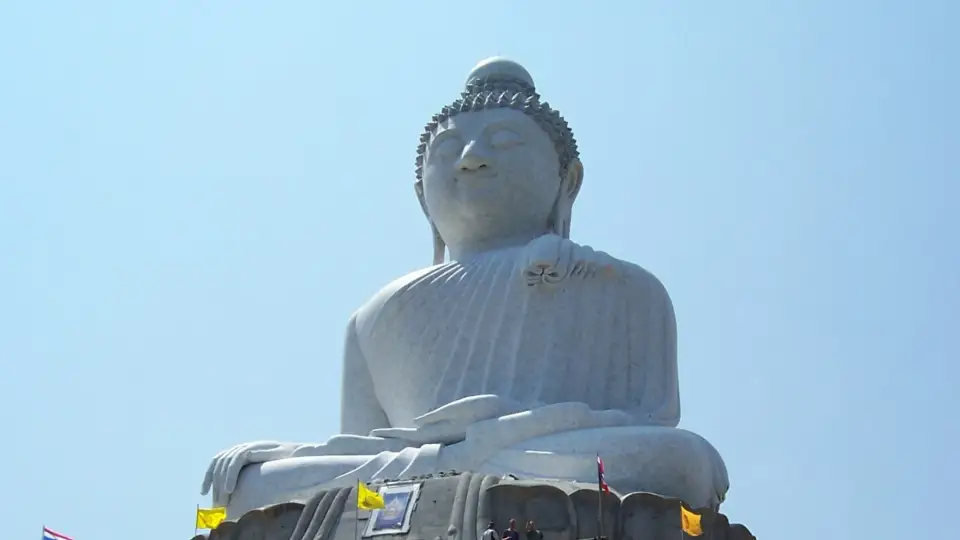
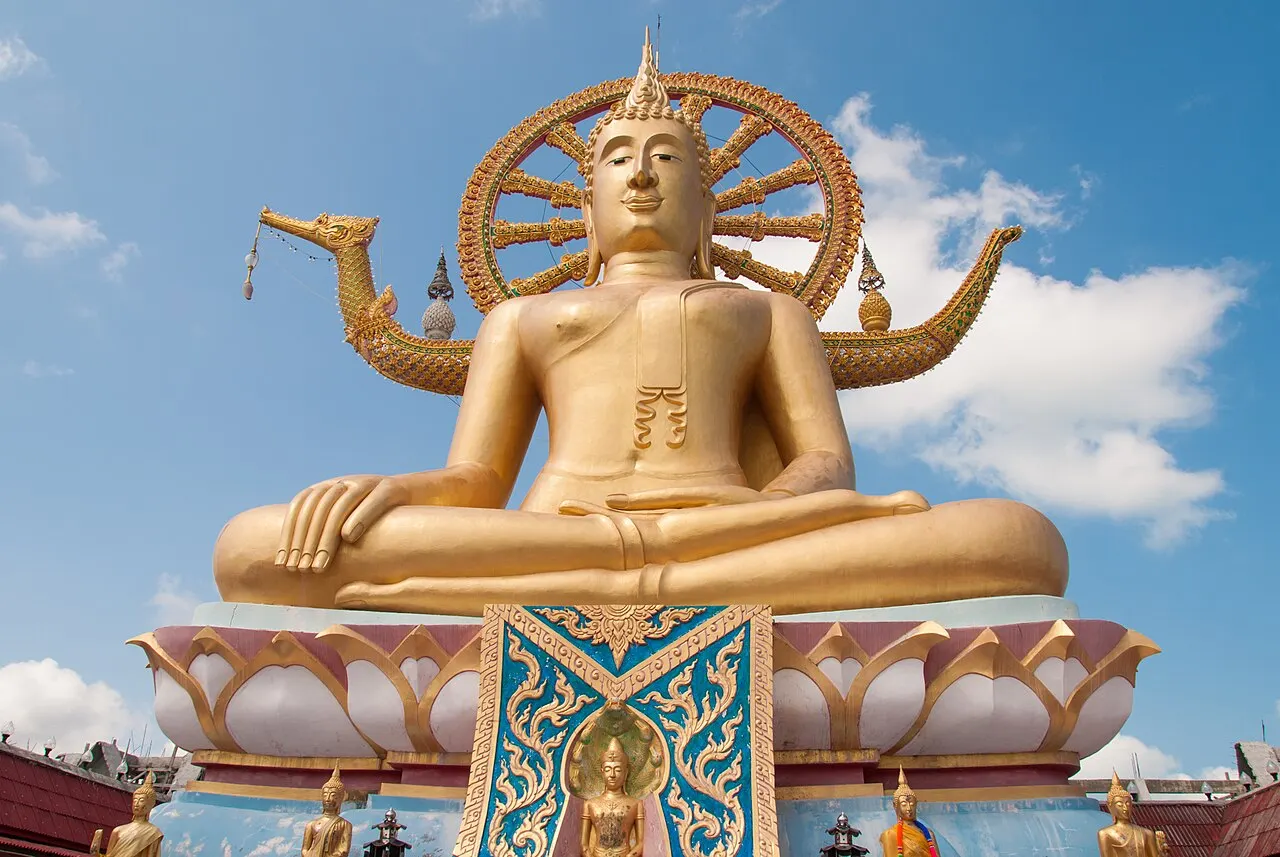
The temple occupies Koh Faan, a small islet off the northeast coast that residents joined to Samui with a stone causeway after wooden bridges that lasted two or three years. The 12-meter golden Buddha statue, built in 1972, is the island's best-known image. A staircase leads to the statue's terrace, from which you can see the sea as far as Koh Phangan, and there are a few souvenir shops around it. It is open from 6 a.m. to 6 p.m., according to the Tourism Authority of Thailand (TAT) office. It is a place of worship: shoulders and knees covered, and shoes off where signs ask.
Check access
Fisherman's Village
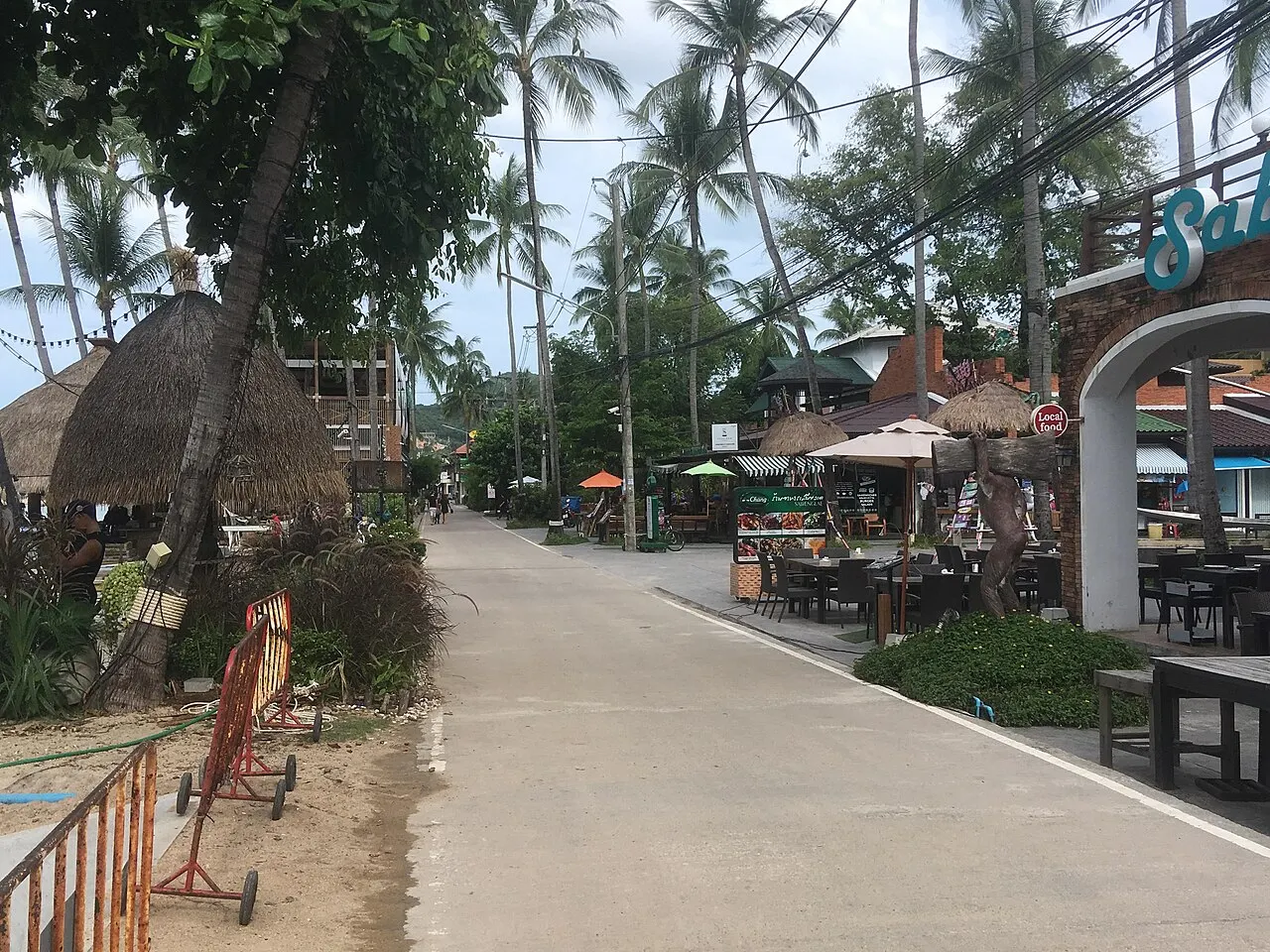
Bophut's old fishing village has become a narrow street of wooden houses by the beach, with seafood restaurants, clothing and souvenir shops and bars. On Fridays, from late afternoon, the street closes for the Bophut Walking Street, the busiest food and crafts market in the north of the island. On other days shops and restaurants operate as usual, and late afternoon is the best time to stroll there.
Check access
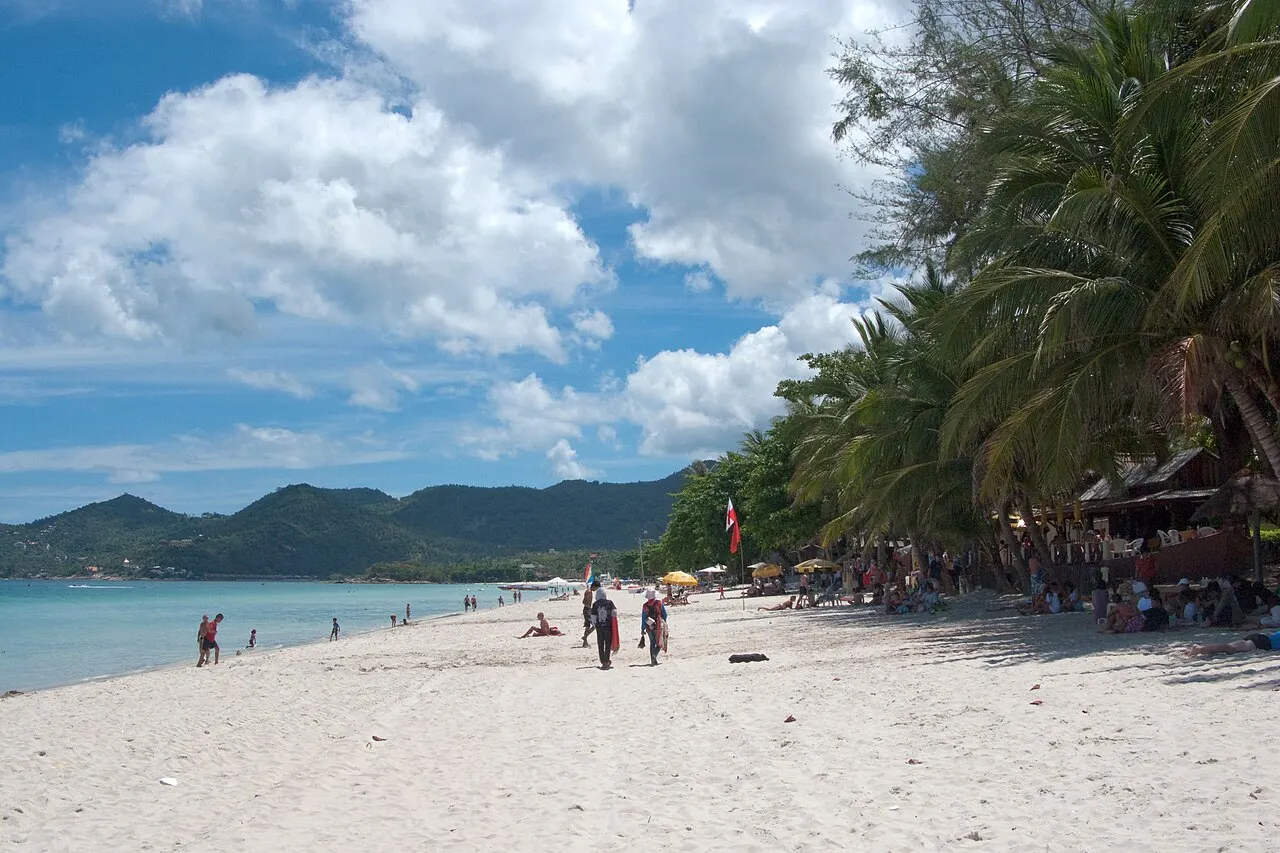
Chaweng Beach
Samui's longest beach has about 6 km of white sand and coconut palms, in four stretches: North, Central, South and Chaweng Noi. It faces east and gets the sunrise head-on. Behind it runs the street of hotels, restaurants, shopping centers and bars that makes Chaweng the center of the island's nightlife. Around the rocks at the ends there are snorkeling spots.
Check access
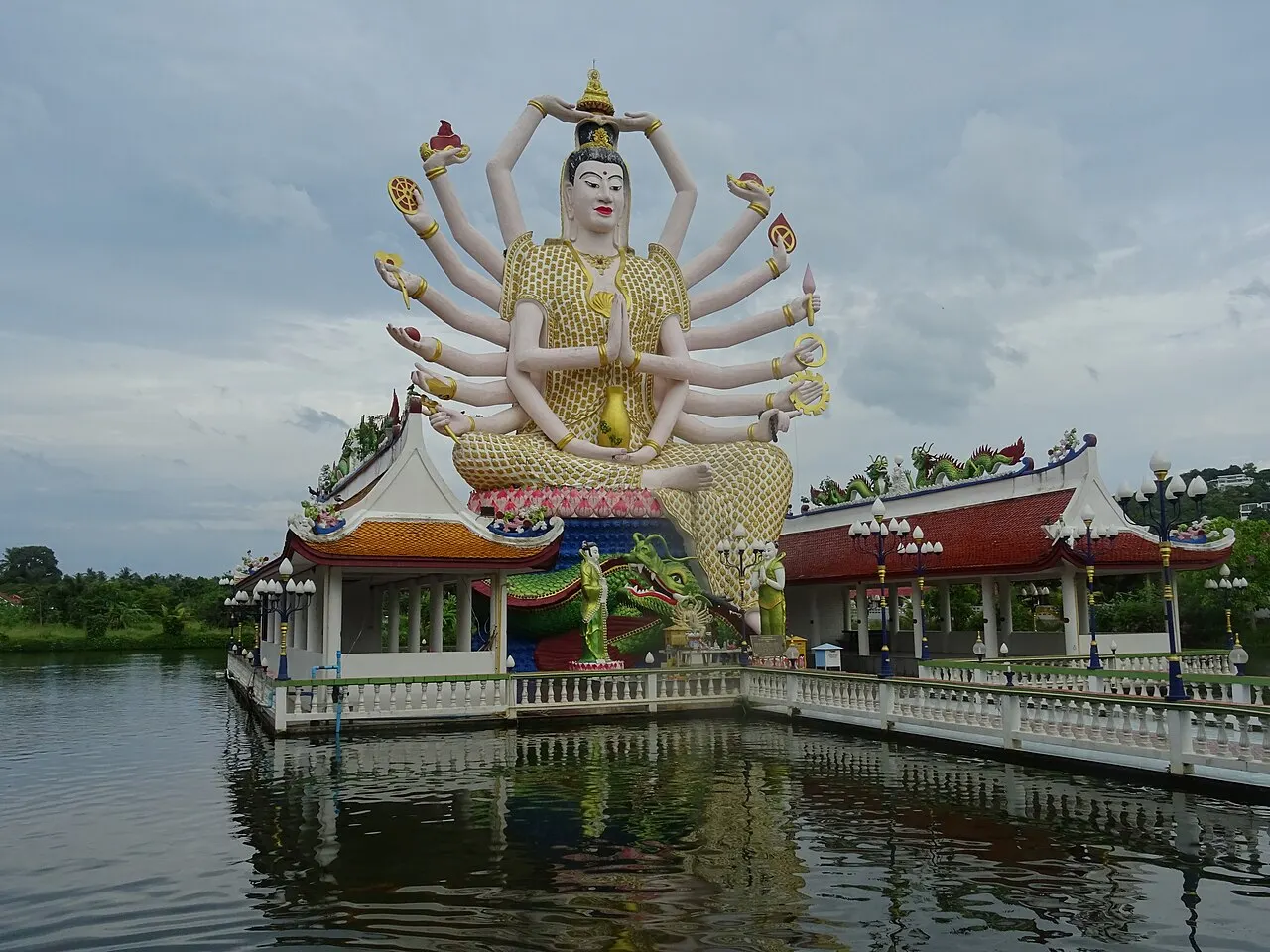
Wat Plai Laem
Founded in 1880 on the northern tip of the island, on Route 4171, between the Big Buddha and Choeng Mon, the temple became known for the modern statues over the lake: a white, many-armed Guanyin, reached by stones and a marble bridge, and a Sangkajai, the pot-bellied monk whom Chinese worshippers visit to ask for abundance. There is also a Buddha footprint and ponds where visitors feed fish. Admission is free.
Check access
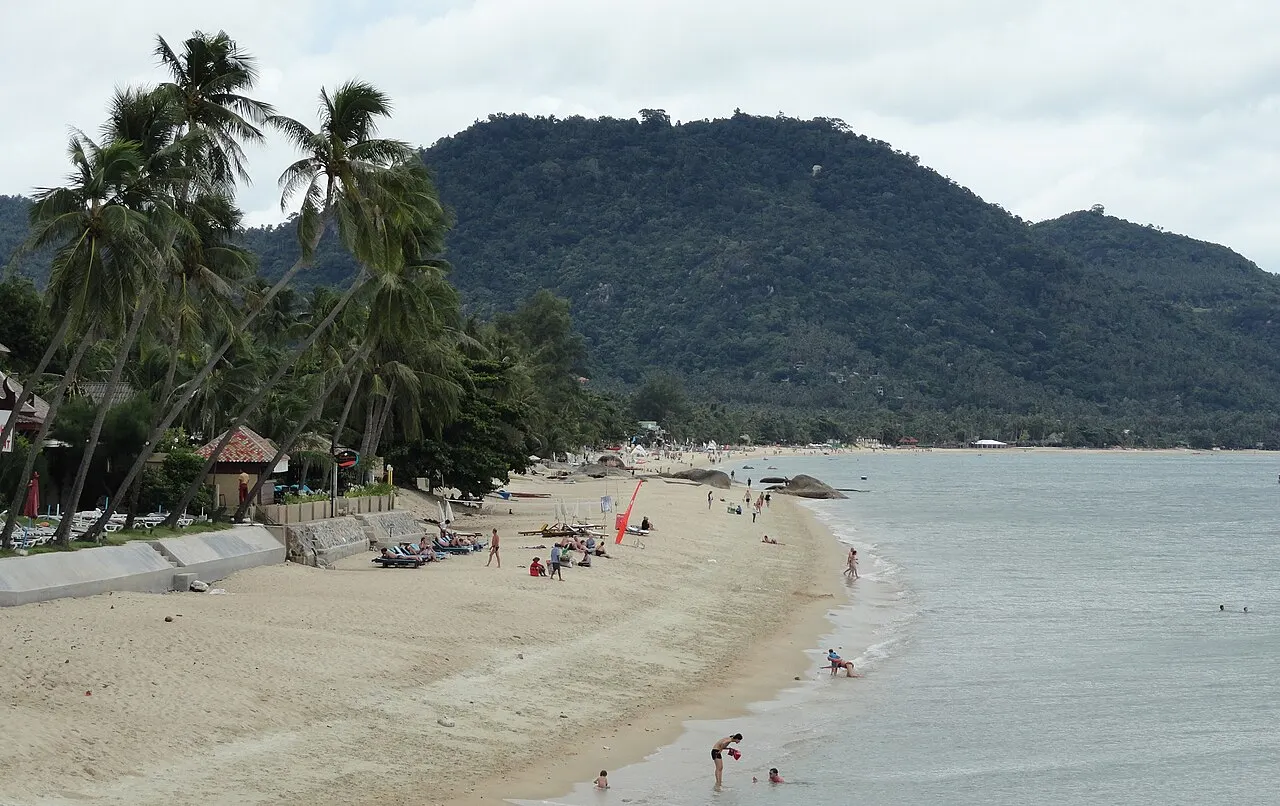
Lamai Beach
South of Chaweng, Lamai has about 4 km of sand in a curve of coconut palms, calmer than its neighbor, with bars, restaurants and hotels at all prices. In some stretches the water gets deep quickly and the waves are strong, so it pays to watch the sea before going in. On Sundays, the Lamai Walking Street takes over the streets near the beach from late afternoon.
Check access
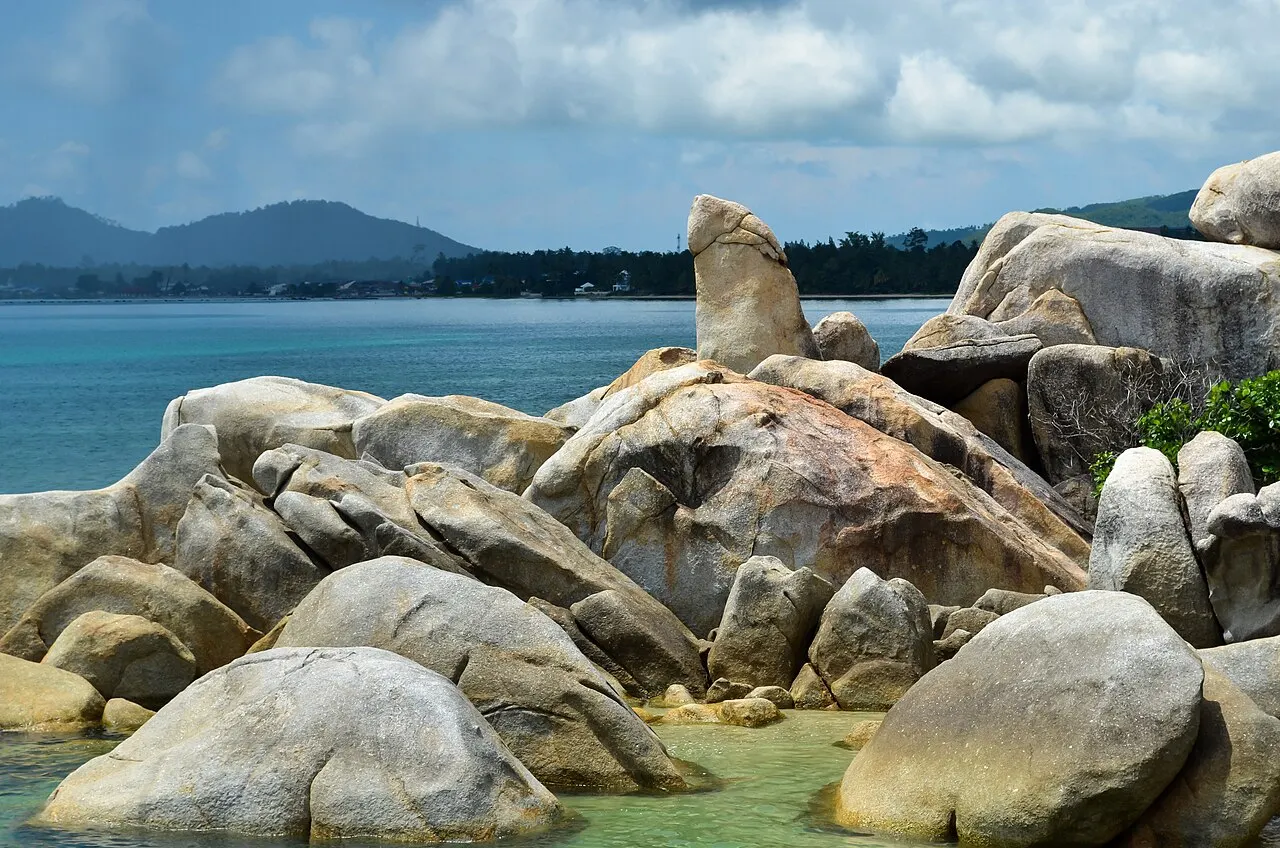
Hin Ta Hin Yai
At the southern end of Lamai, sea and wind have carved two formations into the granite that resemble male and female genitalia, known as the Grandfather and Grandmother rocks. Local legend tells of an elderly couple shipwrecked there on the way to a marriage proposal. Admission is free, and the path passes several souvenir stalls. The view of the sea from the rocks is what makes the visit worth more than a photo.
Check access
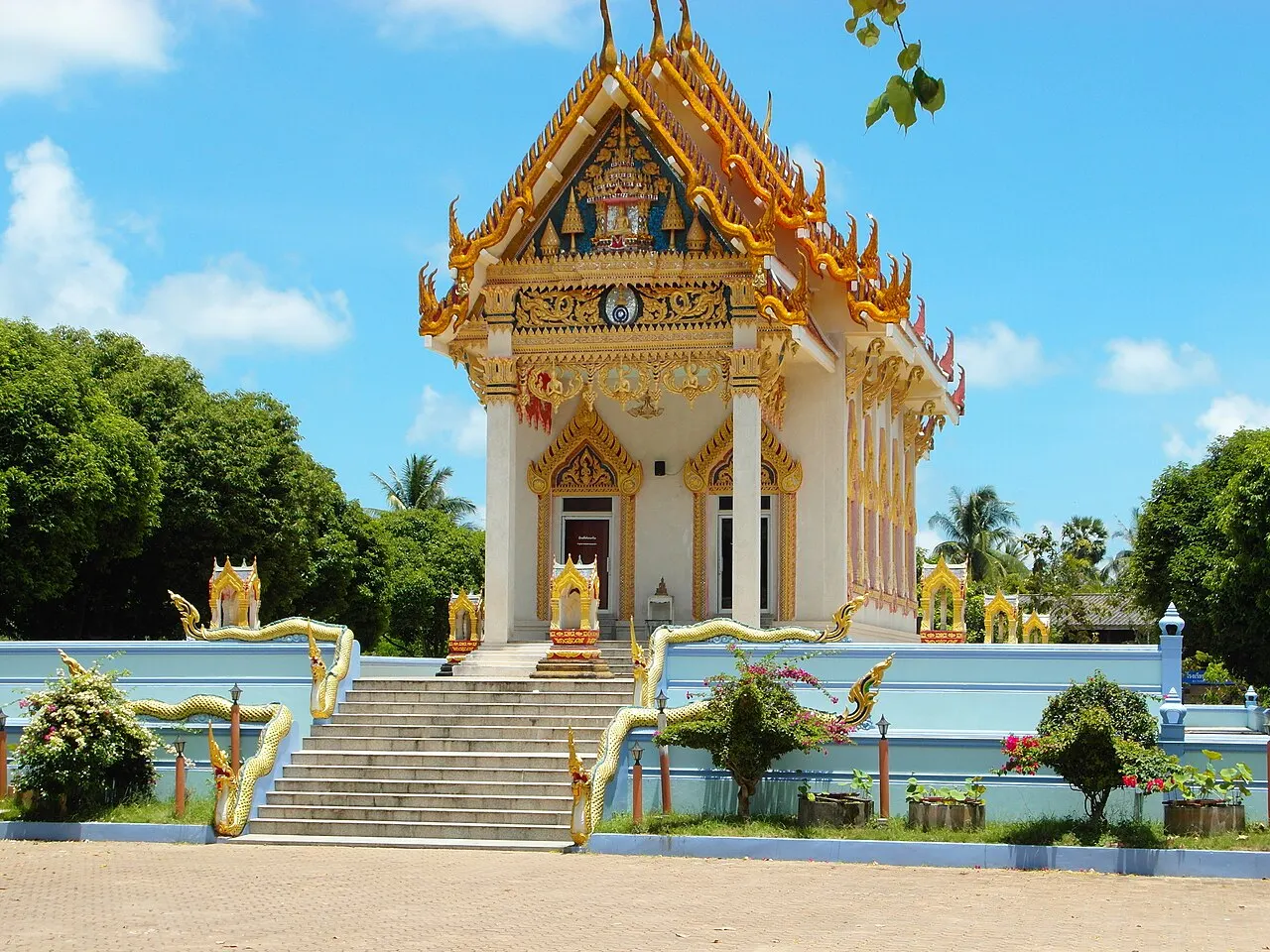
Wat Khunaram
Near kilometer 13 of Route 4169, next to the Na Muang waterfalls, this temple displays in a glass case the body of Luang Pho Daeng, a revered monk who died on May 6, 1973, at age 79, seated in meditation. According to the story told at the temple, he had announced his own death. Locals leave flowers and incense in front of the case; it is a place of worship, so dress appropriately and keep quiet.
Check access
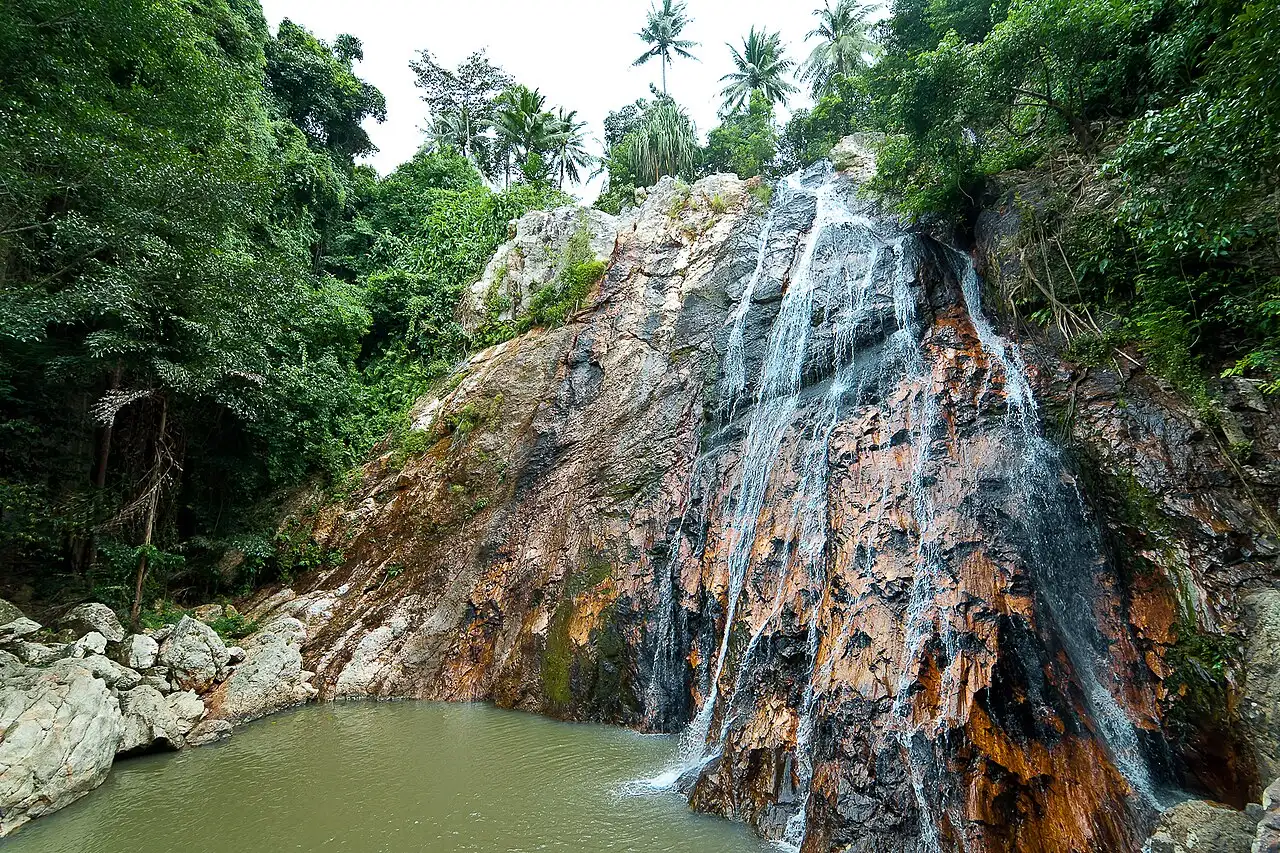
Na Muang Waterfall
Two falls at the foot of the central massif, in the south of the island. The first, 30 to 40 meters high, has a paved road to its edge, a wide pool for swimming and a rest area with restaurants; the rocks on the bottom call for care. The entrance to the second, about 80 meters high, is 500 meters further along Route 4169, and from there it is about a 30-minute walk to the fall. In the rainy season the water volume is greater.
Check access
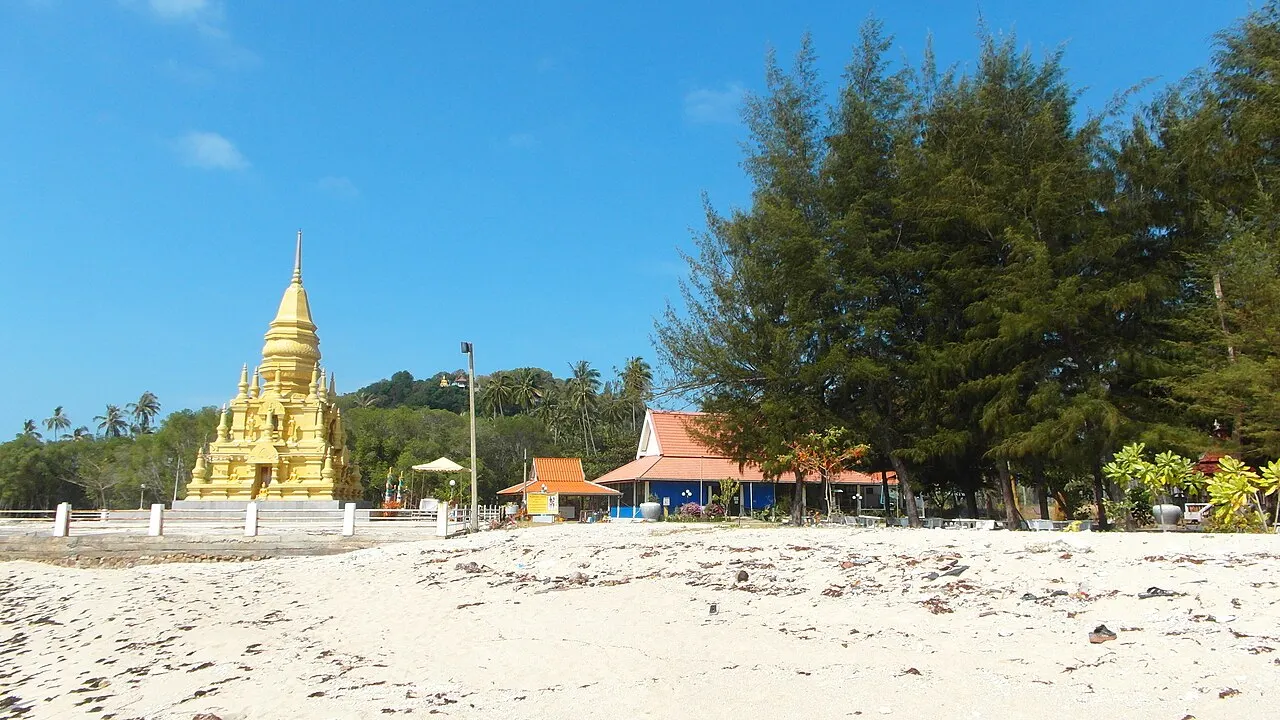
Laem Sor Pagoda
On the island's southwest point, between Taling Ngam and Na Mueang, the chedi covered in yellow tiles stands on rocks by the sea and holds relics of the Buddha. It was built by Luang Pho Daeng of Wat Laem Sor, a monk born on the island in 1891 who died in 1976, who is not the same Luang Pho Daeng displayed at Wat Khunaram. It is open at all times, and early-morning light on the yellow and the sea is the most sought after for photos. From the airport it is about 50 minutes by car.
Check access
More places in the guide
Hua Thanon
A Muslim fishing village between Lamai and Na Thian, organized around the Nurul Ihsan mosque. At the end of the street, colorful boats nose onto the beach and fish dries on mats. The fishermen go out around 10 p.m. and return between 4 and 8 a.m.; the catch goes to the Hua Thanon market, and what is left is salted and dried. It is a residential community: visit discreetly and in clothing that covers shoulders and knees.
Lad Koh Viewpoint
A viewpoint over the coastal rocks between Chaweng and Lamai, with a walkway that descends close to the water and a pavilion for sitting and looking at the sea. It is a stop of a few minutes on the way between the two beaches.
Wat Sila Ngu
Also called Wat Ratchathammaram, it stands beside Route 4169, about 1 km from Hin Ta Hin Yai, near Hua Thanon. The golden seaside chedi, which locals call Phra That Hin Ngu, received relics on June 12, 1935, and is the center of an annual festival commemorating the visit of King Bhumibol and Queen Sirikit in 1962. It is open from sunrise to sunset and fits easily into the southern route.
Nathon
The island's oldest community and its main port, on the west coast. The Don Sak ferries from the mainland arrive here, and so do the district offices, the market and a street of local shops. It is not a beach destination, but it shows everyday Samui and is the sunset coast.
Wat Lamai
Inside Lamai's temple, a two-story wooden house has housed a folk museum since 1986, created with the support of the National Office of Culture. It gathers lanterns, ceramics, bird cages, brass utensils and the tools of coconut farming, the island's oldest activity, plus a Dong Son-style bronze drum.
Secret Buddha Garden
Also called the Magic Garden, it is a private sculpture garden high on Khao Pom, the island's tallest hill. The farmer Nim Thongsuk began building it in 1976, at age 77, and kept going until he died: there are statues of the Buddha, angels, musicians, animals and his parents, among streams and boulders. The access road leaves Route 4169 right opposite Wat Khunaram; it is steep in places and not suitable for anyone with little motorbike experience. Admission is charged.
Khao Hua Jook Pagoda
On top of the hill of Wat Sawang Arom, near Chaweng, the Si Sukhot Khiri chedi holds a Buddha footprint and relics. From there you can see the airport, the Chaweng lagoon and the beach. Admission is 20 baht per person, according to the municipality.
Hin Lad Waterfall
A stepped waterfall formed by the Lipa Yai stream, near Nathon, off Route 4172. The first pool is next to the entrance; the prettiest stretch, with stone slabs and three pools, is about 2 km up the trail. The trail crosses private land and has little signage, and the municipality recommends going with a guide. It is open from 7 a.m. to 6 p.m., with a 10 baht parking fee.
Nilo’s itinerary
Start with the basic programme and choose extensions for the time you have.
Plan my days in the app ↗Day 1 · The north: Big Buddha, Wat Plai Laem and the evening in Bophut
Start early at Wat Phra Yai, which opens at 6 a.m.: climb to the Big Buddha's terrace before the heat, with shoulders and knees covered.
Continue along Route 4171 to Wat Plai Laem, a few minutes away, to see the Guanyin and the Sangkajai over the lake and feed the fish.
Late in the morning, climb to the Khao Hua Jook chedi, near Chaweng (20 baht), to see the airport, the lagoon and the beach from above.
Spend the afternoon at the beach: Choeng Mon, if you want calm water and few people, or Chaweng, if you want facilities and bars.
In the late afternoon, go to Bophut and walk through Fisherman's Village; if it is Friday, the street closes for the street market from 5 p.m., and dinner can be at the seafood stalls.
Day 2 · The south loop: rocks, fishing village, temples and a waterfall
Leave Chaweng around 6:30 a.m. on Route 4169 heading south and stop for a few minutes at the Lad Koh viewpoint.
Pass the Hin Ta Hin Yai rocks, at the southern end of Lamai, and Wat Sila Ngu, about 1 km from there.
Reach Hua Thanon before 8 a.m., when the last fishing boats are still coming onto the beach; walk discreetly around the mosque and the market.
Continue to Wat Khunaram, near kilometer 13, and then to the Na Muang waterfalls: the pool of the first for a swim and, if you want to see the second, about a 30-minute walk from its entrance, 500 m further along Route 4169.
Have lunch on the southwest coast and continue to the Laem Sor chedi, by the sea.
Head up the west coast and watch the sunset at Taling Ngam or Lipa Noi; then return to your base through Nathon. If it is Sunday, swap dinner for the Lamai street market, which starts in the late afternoon.
Day 3 · Mu Ko Ang Thong National Park
Day trip
An archipelago of 42 limestone islands about 30 km west of Samui, protected since 1980 and a Ramsar site since 2002. It can only be reached with licensed operators, on a day trip: according to the TAT, the speedboat takes about 45 minutes to Koh Wua Ta Lap, and the total trip ranges from 1 hour 30 minutes to 2 hours 30 minutes depending on the boat and the sea. On Koh Wua Ta Lap are the park headquarters and the steep trail of about 500 meters, with support ropes, that takes 25 to 30 minutes to the viewpoint over the islands; on Koh Mae Ko, a viewpoint shows Thale Nai, a saltwater lake ringed by cliffs, and Koh Sam Sao is the kayaking spot. Admission is 300 baht for adult foreigners (May 2026), and the park closes every year during the monsoon, generally from November 1 to December 15, with the date set each year by the Department of National Parks depending on the weather. Check the year's notice and whether the fee is included in the tour price.
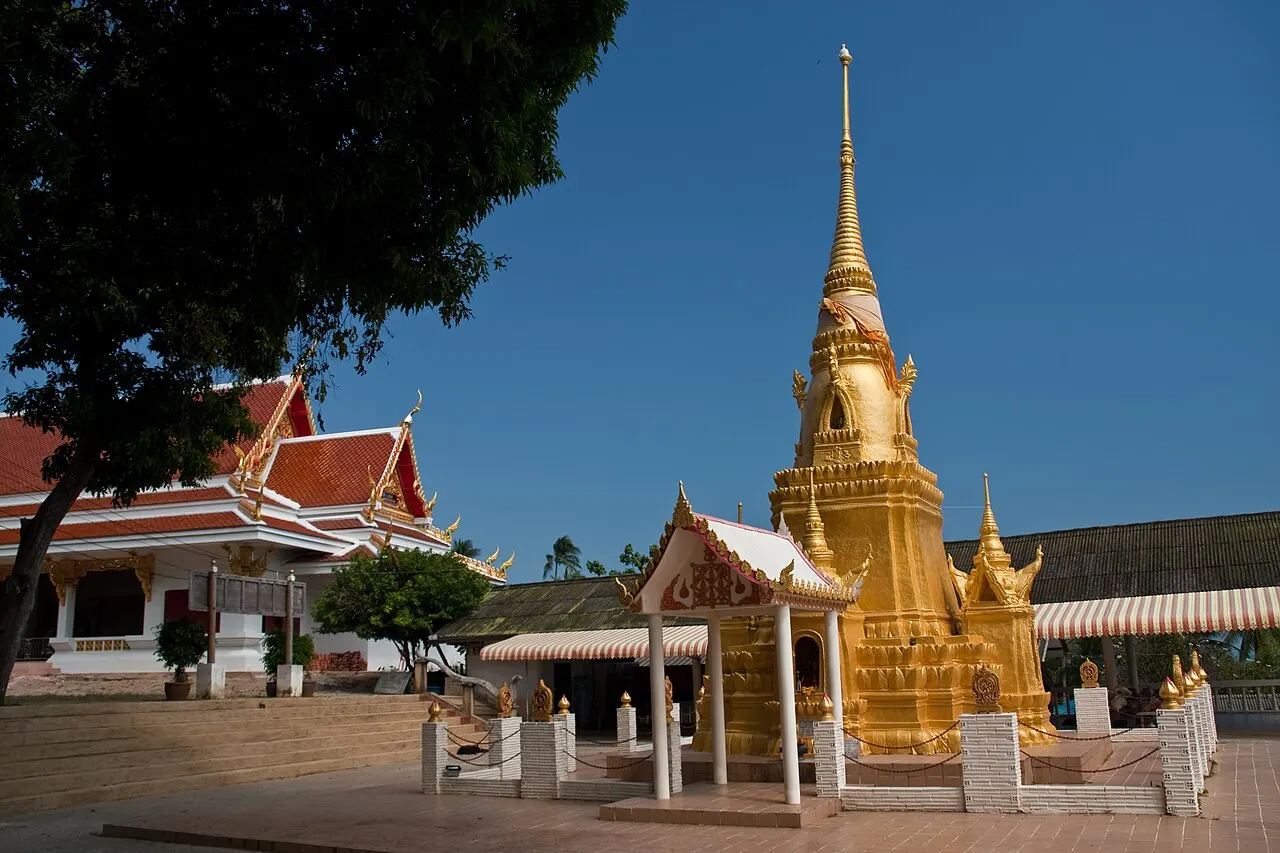
If you stay longer
Day 4 · Koh Tao and Koh Nang Yuan
Day trip
Koh Tao, the northernmost of the three islands, is one of the diving and snorkeling centers of the Gulf of Thailand, with more than 130 species of hard coral recorded and good diving almost all year, except in November. Lomprayah catamarans link Samui to Koh Tao, with a stop at Koh Phangan; the time depends on the route, so check the schedule for the day. About 500 m off the west coast of Koh Tao lies Koh Nang Yuan, three islets joined by white sandbars, with reefs reachable from the beach. One-day snorkeling tours from Samui combine the two islands; those who want to dive at an unhurried pace usually sleep on Koh Tao.
Food
Coconut
The island's economy lived off coconut for more than a century, ever since the Hainan immigrants planted the groves. Green coconut, opened on the spot and drunk cold, is sold all over the island, and the flesh, milk and oil of the coconut appear in savory dishes and sweets.
Southern cooking
Food from southern Thailand is the spiciest in the country: plenty of heat, sourness and salt, almost no sugar, and a basket of raw greens to soothe the mouth. Fish and seafood dominate, and the influence of traders from India and Muslim culture shows in the spices.
Island dishes
Samui has recipes of its own, tied to the sea and the coconut: yam rad ley, a raw fish salad with fermented shrimp paste; spicy coconut salads with shellfish or shrimp; and wai khua, reef squid cooked in coconut milk.
Gaeng massaman
A curry fragrant with dried spices, which the Tourism Authority of Thailand cites as an example of Muslim influence on southern cooking.
Khanom jeen
Thin rice noodles served with a fish curry sauce, one of the most common dishes in southern cooking.
Khao yam
Rice mixed with nam budu, a fermented fish sauce, dried chili and shredded greens, bean sprouts, toasted coconut and dried shrimp. It is a typical southern dish and changes from home to home.
Phat sato
Stir-fried sato, a strong-flavored bean much loved in the south, with shrimp and kapi, the fermented shrimp paste.
Tom yam kung
A sour and spicy shrimp soup, found in seafood restaurants by the beach.
Island fruit
The orchards of the interior, such as those in Ban Lipa Yai, produce rambutan, durian, mangosteen and langsat, a small fruit with yellow skin and translucent flesh.
Where to eat
- Bophut and Fisherman's Village
Grilled seafood and beachfront restaurants in the old fishing village, plus the food stalls of the Friday night market. It is the place for an unhurried dinner, with a walk afterward.
- Sabienglae Restaurant · Lamai, south end
A seafood restaurant by the beach, with southern Thai dishes and tom yam kung, open every day from 10 a.m. to 10 p.m. according to the TAT. The tables on the sand make the most of late afternoon.
Source · 2026-10-19
- Lamai and Bophut street markets
At Lamai's Sunday market, the TAT cites som tam (green papaya salad), pad thai, skewers and barbecue alongside food from other countries; at Bophut's Friday market, seafood predominates. It is the most varied and cheapest meal for trying several things.
- Krua Chumpao · Southwest coast, near Laem Sor
A restaurant serving home-style southern Thai food, with tables facing the sunset, open every day from 10 a.m. to 10 p.m. according to the municipality. It suits lunch on the day of the south loop.
Source · 2026-10-19
- Hua Thanon
The Hua Thanon market receives the fish from boats returning at dawn, and the surplus is salted and dried right there. It is worth a visit to see the catch and buy dried fish, early in the morning.
- Roadside stalls and Ban Lipa Yai
Green coconut opened on the spot all over the island and, in harvest season, rambutan, mangosteen, durian and langsat from the orchards of the interior, such as those in Ban Lipa Yai.
· 2026-10-19
Day trips
Mu Ko Ang Thong National Park
An archipelago of 42 limestone islands about 30 km west of Samui, protected since 1980 and a Ramsar site since 2002. It can only be reached with licensed operators, on a day trip: according to the TAT, the speedboat takes about 45 minutes to Koh Wua Ta Lap, and the total trip ranges from 1 hour 30 minutes to 2 hours 30 minutes depending on the boat and the sea. On Koh Wua Ta Lap are the park headquarters and the steep trail of about 500 meters, with support ropes, that takes 25 to 30 minutes to the viewpoint over the islands; on Koh Mae Ko, a viewpoint shows Thale Nai, a saltwater lake ringed by cliffs, and Koh Sam Sao is the kayaking spot. Admission is 300 baht for adult foreigners (May 2026), and the park closes every year during the monsoon, generally from November 1 to December 15, with the date set each year by the Department of National Parks depending on the weather. Check the year's notice and whether the fee is included in the tour price.
Koh Phangan
The neighboring island to the north, whose main town is Thong Sala, can be reached by fast boat from the piers in the north of Samui, such as the Big Buddha, Bang Rak and Pralarn in Mae Nam, or from Nathon; Lomprayah lists 45 to 90 minutes each way on its routes, depending on the stops. It is known for the Full Moon Party at Haad Rin, the beach party on the night of the full moon, and has calmer beaches and trails in the north and west. As a day trip, check the last boat back before setting out.
Koh Tao and Koh Nang Yuan
Koh Tao, the northernmost of the three islands, is one of the diving and snorkeling centers of the Gulf of Thailand, with more than 130 species of hard coral recorded and good diving almost all year, except in November. Lomprayah catamarans link Samui to Koh Tao, with a stop at Koh Phangan; the time depends on the route, so check the schedule for the day. About 500 m off the west coast of Koh Tao lies Koh Nang Yuan, three islets joined by white sandbars, with reefs reachable from the beach. One-day snorkeling tours from Samui combine the two islands; those who want to dive at an unhurried pace usually sleep on Koh Tao.
Where to begin
The north: Big Buddha, Wat Plai Laem and the evening in Bophut
Start early at Wat Phra Yai, which opens at 6 a.m.: climb to the Big Buddha's terrace before the heat, with shoulders and knees covered.
The south loop: rocks, fishing village, temples and a waterfall
Leave Chaweng around 6:30 a.m. on Route 4169 heading south and stop for a few minutes at the Lad Koh viewpoint.
Money
The currency is the Thai baht (THB). Street markets, songthaews, fruit stalls and temples want cash, in small notes. Prices as of October 2026: admission to Mu Ko Ang Thong National Park is 300 baht for adult foreigners and 150 for children aged 3 to 14 (a May 2026 figure, according to the Thai National Parks guide), and is usually charged separately from the boat trip; the Khao Hua Jook viewpoint charges 20 baht and the parking at Hin Lad waterfall 10 baht, according to the municipality; Wat Plai Laem does not charge admission, according to the TAT. In simple restaurants, check the menu with prices before ordering, and for taxis and motorbike taxis agree the fare before setting off.
Getting there and around
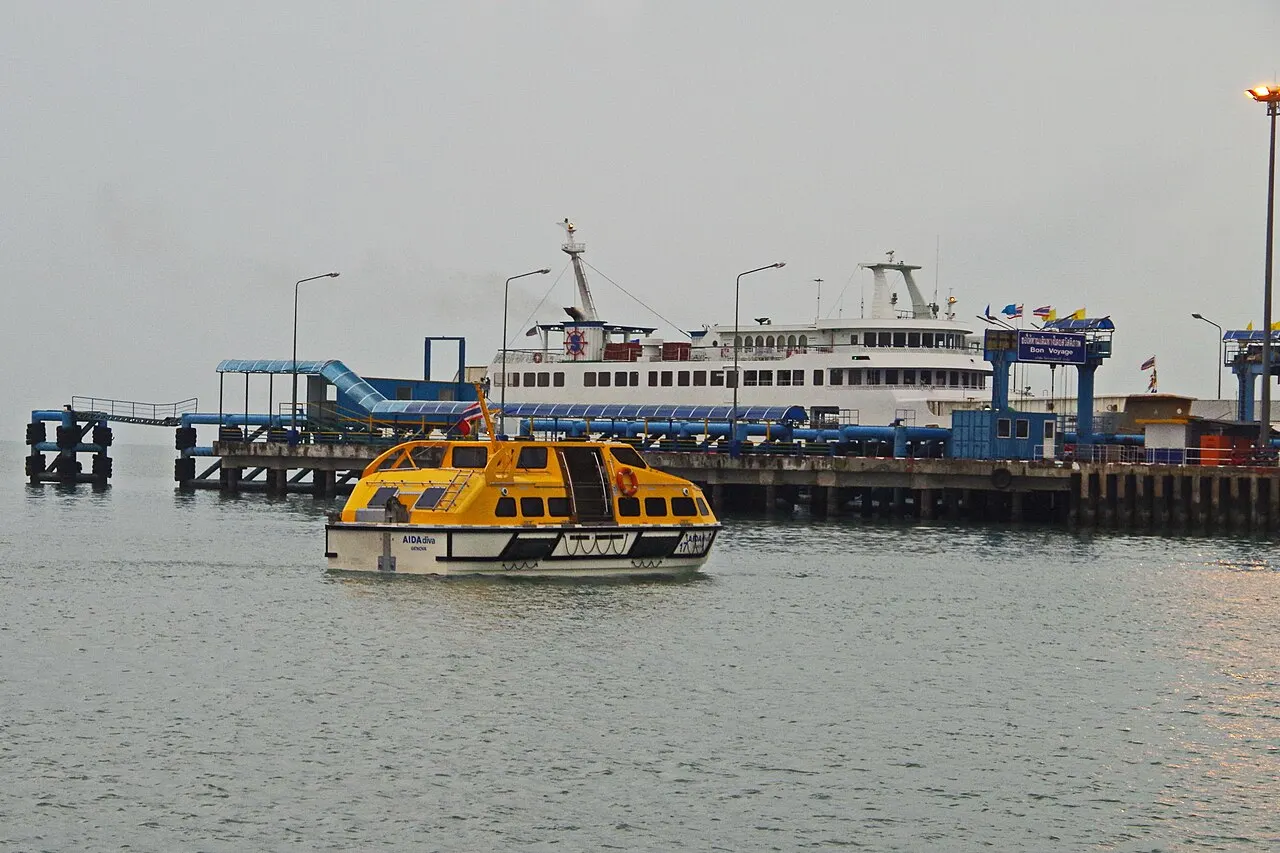
Samui International Airport (USM) is in the Bo Phut subdistrict, north of Chaweng. It is private, was built by Bangkok Airways and has open-air terminals roofed with palm leaves. Bangkok Airways connects the island to Bangkok (Suvarnabhumi and Don Mueang), Phuket, Krabi, Chiang Mai and a few international destinations, such as Singapore, Kuala Lumpur and Hong Kong; check the year's routes on the airline's website. In the arrivals hall there are fixed-price shuttle minibuses charged per person, taxis and hotel transfers; to Chaweng it is about 20 minutes by minibus.
The cheaper alternative is to fly to Surat Thani (URT) on the mainland and continue by bus and ferry. Ferries leave from the Don Sak pier: Seatran and Songserm arrive at Nathon, and Raja Ferry, which also carries cars, arrives at Lipa Noi. Operators such as Seatran sell a combined bus and ferry ticket from Surat Thani airport. Lomprayah links Chumphon, Koh Tao and Koh Phangan to Samui by catamaran, arriving at Nathon or at the Pralarn pier in Mae Nam.
On the island, the 51 km ring road links everything. Songthaews, pickup trucks with two benches in the bed, run fixed routes with a per-person fare during the day; after 6 p.m. they work like taxis, with a price agreed beforehand. Taxis rarely turn on the meter: agree the fare before getting in. Grab works on the island, with a fixed price in the app.
Renting a motorbike is common and cheap, but it is the riskiest way to get around: the roads have potholes, insurance on a rented bike often covers little and many rental shops ask for your passport as a deposit. A rental car, including from the international chains, is safer for the loop around the island and for the steep roads of the interior. For Ang Thong, Koh Phangan and Koh Tao, boats leave from several piers: Nathon, Pralarn in Mae Nam, Bophut, Bang Rak and the Big Buddha pier.
Safety
Samui is a calm destination for most visitors, and the most concrete risks come from traffic and the sea. The motorbike is the most cited risk: wear a helmet, do not drive after drinking and have travel insurance that covers motorbikes. In Lamai there are stretches of deep water and strong waves; watch the sea before going in. There are also box jellyfish in the Gulf: of the seven deaths from this animal recorded in Thailand between 1999 and 2015, six were on Koh Samui and Koh Phangan. Respect the beach warnings, prefer to swim where there is a station with vinegar and, in case of a sting, pour vinegar on the skin and seek medical care. At the waterfalls, the rocks are slippery and there have been serious accidents. At night, in the bar areas of Chaweng, Lamai and Bophut, agree the price of the ride back before getting into a taxi or motorbike taxi, and avoid deserted beaches. On bus and ferry trips from the mainland, do not leave valuables in luggage stored in the hold. Dengue has caused outbreaks on the island: use repellent. Tap water is not potable. The Tourist Police can be reached at 1155, and there is a public hospital in Nathon and private hospitals in the Chaweng and Bophut area.
Before you go
- Plug
- types A, B, C and F
- Voltage
- 220 V
- Driving side
- on the left
- Emergency
- Police 191 · Fire 199 · Ambulance 1669
- Country code
- +66
- Official language
- Thai
- Currency
- baht (THB)
Source: Wikidata (CC0), checked September 2026.
Etiquette tips
Temple dress
At Wat Phra Yai, Wat Khunaram and the other temples, cover your shoulders and knees and take off your shoes when entering the buildings. The same care applies near the Hua Thanon mosque.
Monks
Monks are treated with great respect. Women should not touch a monk or hand him something directly: place the object in front of him or ask a man to pass it. Do not sit or stand in a position higher than a monk.
Shrine offerings
The bottles of red drink, the fruit and the sweets at spirit shrines are offerings. Do not drink, take or touch them.
The royal family
Any gesture that looks disrespectful to the royal family can be a crime under the lèse-majesté law, even stepping on a coin bearing the king's portrait to stop it from rolling.
Head and feet
The head is considered sacred: do not touch anyone's head. It is also rude to rest your feet on a table.
Keep your voice down
Raising your voice, losing your temper or swearing in public is seen as rude. A complaint made calmly gets more done, and no one needs to lose face.
Mistakes to avoid
Booking Ang Thong at the end of the year without checking the park's notice: it closes every year during the monsoon, and in rough seas boats may not sail even outside that period.
Renting a motorbike without a motorcycle license and an International Driving Permit, without a helmet and without reading the contract. Without the permit, insurance may not be valid in an accident; the roads have potholes and steep climbs; and leaving your passport as a deposit gives the rental shop the power to charge you for old scratches. Photograph the bike before you leave.
Getting into a taxi without agreeing on the price. The island's taxi drivers rarely use the meter, and the fare asked at beach stands and piers is usually higher than elsewhere.
Climbing on wet rocks at waterfalls for photos. Na Muang and other falls have recorded serious falls and visitor deaths; stay in the swimming areas and on the trails.
Choosing a beach by the photo alone. Chaweng is noisy at night, Bophut has murky water in some months and in Lamai there are stretches of deep water and strong waves; decide by the base that fits the trip.
Drinking tap water. The island's piped water is not potable; use bottled water, including for brushing your teeth, unless the hotel says otherwise.
Swimming without paying attention to jellyfish warnings. Box jellyfish exist in the Gulf and have killed swimmers on Koh Samui and Koh Phangan; where there is a sign or a bottle of vinegar on the beach, it means the risk has been recorded there.
Useful phrases
สวัสดีครับ / ค่ะ (sa-wat-dii khrap / kha)
Hello; men end with khrap, women with kha
ขอบคุณครับ / ค่ะ (khop khun khrap / kha)
Thank you (said by a man or a woman)
เท่าไหร่ (thao-rai)
How much is it?
ไม่เผ็ด (mai phet)
Not spicy
เผ็ดนิดหน่อย (phet nit noi)
Just a little spicy
ไม่เป็นไร (mai pen rai)
No problem, it's all right
ห้องน้ำอยู่ที่ไหน (hong naam yuu thii nai)
Where is the bathroom?
มะพร้าว (ma-phrao)
Coconut
เช็คบิล (chek bin)
The check, please
Where to stay
- Chaweng · People who want nightlife, restaurants, shopping and everything within walking distance, and those arriving and leaving by plane.: It has the largest supply of hotels at every price and is close to the airport, about 20 minutes by minibus. The beach is long and faces the sunrise. In return, it is the busiest and noisiest area at night, and to reach the south of the island or the piers in the north you depend on a car, motorbike or taxi.
- Lamai · People who want a big beach and nightlife on a smaller scale, and who will be near the programs in the south of the island.: It is on the way to Hin Ta Hin Yai, Hua Thanon, Wat Khunaram and Na Muang, and has the street market on Sundays. The far north end of the beach is calmer. The drawback is the sea: in some stretches the water gets deep quickly and the waves are strong, and the airport and the northern piers are farther away.
- Bophut and Fisherman's Village · Couples and people who prefer a good dinner and an evening stroll on foot without Chaweng's bustle.: The fishermen's street has restaurants and the Friday market, the airport is close and boats for diving and for the neighboring islands leave from the north coast. The beach in front is better for walking than for swimming, with murky water in some months.
- Mae Nam · Families with small children, long stays and people planning day trips to Koh Phangan and Koh Tao.: The beach is calm with shallow water, and the Pralarn pier in Mae Nam is the departure point for Lomprayah catamarans to the northern islands. It is far from the nightlife and from the programs in the south, and there are fewer restaurants within walking distance than in Bophut.
- Choeng Mon and Bang Rak · Families and people who want a small, quiet bay near the airport and the Big Buddha.: Choeng Mon is a calm cove about 10 minutes from Chaweng, and boats to Koh Phangan leave from the Big Buddha pier. There are fewer food and entertainment options on foot, and the offering is more resorts.
- Nathon and the west coast (Lipa Noi, Taling Ngam) · People arriving by ferry who want sunsets, local life and more affordable lodging.: Nathon is the port for the mainland ferries and has simple lodging, and Lipa Noi and Taling Ngam have calm beaches facing Ang Thong. The eastern beaches, the nightlife and the airport are on the other side of the island, about half a loop of the ring road away.
· 2026-10-19
Districts
Chaweng
The longest and most developed beach on the island, about 6 km divided into North Chaweng, Central Chaweng, South Chaweng and Chaweng Noi. It holds most of the hotels, restaurants, shopping, bars and nightclubs. The sun rises out of the sea in front. It is the choice for those who want nightlife and everything within walking distance; anyone looking for quiet should stay elsewhere.
Lamai
The island's second beach, south of Chaweng, with about 4 km of sand in a curve lined with coconut palms. It has bars and nightlife, on a smaller scale, and a street market on Sundays. The far north end is quieter, and the south has the rocks of Hin Ta Hin Yai. In some stretches the water gets deep quickly and the sea has strong waves.
Bophut and Fisherman's Village
On the north coast, the old fishing village has become a street of wooden houses with restaurants, shops and bars facing the sea, and on Friday evenings the street closes for the market. Bophut beach has murkier water in some months and is better for strolling than for swimming. Diving boats leave from the pier in the area, and the airport is close.
Mae Nam
A long, calm beach on the north coast with shallow water, popular with families and with people staying longer. At the Pralarn pier in Mae Nam are the headquarters and departure point of Lomprayah catamarans to Koh Phangan and Koh Tao. It is far from Chaweng's nightlife.
Bang Rak, Plai Laem and Choeng Mon
The northeast tip brings together the Big Buddha, on the islet of Koh Faan, Wat Plai Laem and the small bay of Choeng Mon, quiet and popular with families. Boats to Koh Phangan leave from the Big Buddha pier. It is a few minutes from the airport and from Chaweng.
Nathon and the west coast
Nathon is the island's oldest community, with the port for the Don Sak ferries, government offices, a market and street shops. To the south are the calm beaches of Lipa Noi and Taling Ngam bay, facing the sunset and the islands of Ang Thong. It is the coast with the least tourist infrastructure and the most local life.
South coast (Hua Thanon to Laem Sor)
Between Lamai and the southwest point lie the Muslim fishing village of Hua Thanon, Wat Khunaram and the Na Muang waterfalls at the foot of the hills, the Laem Sor chedi by the sea and small coves such as Bang Kao and Thong Krut. It is the part of the island to cover by car or motorbike in one road day.
History
More than 2,000 years ago · Bronze drums
Two Dong Son-type bronze drums, originating in northern Vietnam, found in 1977 in Taling Ngam, show that seafarers were already passing through or settling on the island. One has an engraved long boat with feathered figures.
6th century (oral tradition) · Fishermen from the peninsula
According to local tradition, the first settlers were fishermen from the Malay Peninsula; traders from southern China used the island as a shelter and a stopover.
1687 · Pulo Cornam on the maps
The island appears on Chinese maps under the name Pulo Cornam, and 18th-century European navigators record it as Poolo Carnom.
19th century · Hainan immigrants and the coconut
Chinese traders from Hainan settle near the beaches and open coconut and cotton plantations, shipped to the mainland on cargo boats. Coconut sustains the island's economy for more than a century.
1880 · Wat Plai Laem
Founding of the temple in the north of the island, now known for the statues over the lake.
1935 · Relics at Wat Sila Ngu
On June 12, relics of the Buddha are placed in the golden seaside chedi near Hua Thanon.
1956 · First local administration
Creation of the Ko Samui sanitary district; in 1970, Koh Phangan and Koh Tao become a separate district.
Early 1970s · The first backpackers
The island still had no roads, and crossing it could take a day's walk through the jungle. The first travelers arrive on the boats that carried coconuts to the mainland.
1972 · The Big Buddha
Construction of the 12-meter golden statue at Wat Phra Yai, on the islet of Koh Faan.
1973 · Luang Pho Daeng
On May 6, at age 79, the monk whose body is displayed in a meditation posture at Wat Khunaram dies.
1980 · Mu Ko Ang Thong National Park
On November 12, the archipelago of 42 islands west of Samui becomes a national marine park; since 2002 it has also been a Ramsar site.
1989 · The airport
In April the airport built by Bangkok Airways opens in the north of the island, and mass tourism picks up speed in the 1990s.
2012 · City status
The municipality of Ko Samui becomes a city-level municipality (thesaban nakhon), with the whole island under a single administration.
2025 · Samui on television
The third season of the series The White Lotus, filmed on the island, airs and puts Samui in front of a new audience.
Complete history
For most of its history, Koh Samui was an island of seafarers and farmers. The bronze drums found in 1977 in Taling Ngam, made in northern Vietnam, suggest that more than two thousand years ago people who knew the sea well were already stopping here, perhaps to shelter from the monsoons or to find fresh water. Oral tradition speaks of fishermen from the Malay Peninsula around the 6th century, and the municipality notes that many place names in the area, such as Lipa Noi and Lipa Yai, seem to come from Malay.
From the 19th century, traders from Hainan, in southern China, settled near the beaches and turned the lowlands into coconut groves. Residents of Thai origin lived mostly inland; those of Chinese origin stayed along the coast, from where coconuts went to the mainland. That mix still shows today in the Chinese shrines, such as the one to Kuan U in Hua Thanon, and in the statues of Chinese deities that sit alongside Thai Buddhism in temples like Wat Plai Laem. In the south of the island, the community of Muslim fishermen in Hua Thanon completes the picture.
Until the early 1970s there was no road on the island, and getting from one coast to the other could take a whole day's walk through the jungle. The first backpackers hitched rides on coconut boats and found few bungalows. The turning point came in the following decade, with national tourism development plans and above all with the airport opened in 1989 by Bangkok Airways. Chaweng was the first beach transformed by resorts, and growth spread to the rest of the coast.
Tourism brought money and also big changes to the environment and to island life, with tensions between rich and poor residents. A local height limit for buildings kept towers off the beachfront, but it made development spread out. Today the whole island is a single city-level municipality, since 2012, and it received 2.7 million visitors in 2018. Alongside the beaches, the seaside temples, the waterfalls of the interior and the Ang Thong marine park, protected since 1980, show the Samui that existed before tourism.
Geography and shape of the city
Koh Samui is the largest island of the Chumphon archipelago, on the western side of the Gulf of Thailand. It is about 25 km long and covers 227 km² of island alone, according to the municipality. The center is a forested granite massif, with Khao Pom (635 m) at the highest point, and the slopes descend to a flat strip of coconut groves and orchards, where almost all settlement lies. A 51 km ring road links that strip. The east coast concentrates the long beaches, Chaweng and Lamai, open to the sunrise; the north coast, from Mae Nam through Bophut to Bang Rak, has shallow bays and the piers where boats leave for Koh Phangan and Koh Tao, visible on the horizon. Nathon, in the west, is the port for the mainland ferries and the sunset side, and the south has small coves, fishing villages and granite boulders. To the west, about 30 km away, lie the 42 limestone islands of Ang Thong marine park. The climate is tropical monsoon, with an average temperature between 27 and 29 °C all year; unlike much of Thailand, Samui has its rainiest period between October and December. As elsewhere in the Gulf of Thailand, for most of the year there is a single high tide and a single low tide each day: in mid-year the tide is usually low during the day, and at the end of the year it is high. On the shallow beaches the strip of sand changes a lot between the two.
Culture
Theravada Buddhism organizes the island's calendar, but it coexists with the Chinese heritage of the Hainan immigrants, visible in the shrines to Kuan U and in the statues of Chinese deities in temples such as Wat Plai Laem, and with the Muslim community of Hua Thanon, around the Nurul Ihsan mosque. The island's revered monks, such as Luang Pho Daeng of Wat Khunaram, still receive flowers and offerings decades after their death.
On the street, the most visible cultural life is the night markets of food and crafts: Bophut's on Fridays, Lamai's on Sundays, and Chaweng's. In homes and shops there are spirit shrines with offerings of food and red drinks, which are for the spirits, not for visitors.
Some traditions are the island's own. Buffalo fighting, which the municipality presents as a sport that exists in southern Thailand only in Samui, pits two decorated animals against each other on dates such as New Year and Songkran, after monks sprinkle holy water. At Loy Khro, small boats of bamboo and coconut carry hair, nails and offerings out to sea to ward off bad luck. The island also has a small LGBTQ+ scene, with its first pride parade in 2018.
Muay Thai also has a place on the island, where the fighter Buakaw Banchamek created a training center, Buakaw Village. Annual events include the Samui Regatta, an international regatta held since 2002, and races and triathlons that bring in athletes from elsewhere.
Festivals and events
Chak Phra (Lak Phra)
At the end of Buddhist Lent, on the first day of the waning moon of the 11th lunar month, right after the Ok Phansa full moon (usually in October), each temple decorates a palanquin with an image of the Buddha and the faithful pull it in procession over land and sea.
Songkran
The Thai New Year, April 13 to 15, is celebrated with water thrown in the streets and visits to temples; it is also one of the dates when buffalo fights usually take place.
Loy Khro
A coastal ritual of the south in which small boats of bamboo and coconut, holding hair, nails and offerings, are set out to sea to carry away bad luck. The date follows the lunar calendar; confirm with the municipality.
Gin Khao Ho
A festival in which residents bring home-cooked food to share on the beach or at the temple; the municipality promotes it as a free beach buffet at the island's tourism festival.
Wat Sila Ngu festival
An annual celebration in honor of the relics in the chedi of Wat Sila Ngu, commemorating the visit of King Bhumibol and Queen Sirikit on April 24, 1962.
Samui Regatta
An annual international sailing regatta, held since 2002, with crews from several countries in Asia and Oceania.
Books and films
The White Lotus, season 3 (2025)
An HBO series filmed on Koh Samui. It helps you recognize the landscape of the island's luxury resorts, which is only one face of Samui.
The Beach, by Alex Garland (1996)
The novel about backpackers searching for a hidden beach is set on the islands of the gulf: Koh Phangan appears in the story, and Ang Thong park became associated with it. It helps explain the imagery that drew travelers to the region.
Thai Tourism: Hill Tribes, Islands and Open-Ended Prostitution, by Erik Cohen (1996)
A study by the sociologist Erik Cohen on tourism in Thailand, which also covers the islands and is cited among the references on Samui's tourism growth from the end of the 1970s.
Frequently asked questions
Koh Samui: how do I get to the island?
Samui International Airport (USM) is in the Bo Phut subdistrict, north of Chaweng. It is private, was built by Bangkok Airways and has open-air terminals roofed with palm leaves. Bangkok Airways connects the island to Bangkok (Suvarnabhumi and Don Mueang), Phuket, Krabi, Chiang Mai and a few international destinations, such as Singapore, Kuala Lumpur and Hong Kong; check the year's routes on the airline's website. In the arrivals hall there are fixed-price shuttle minibuses charged per person, taxis and hotel transfers; to Chaweng it is about 20 minutes by minibus. The cheaper alternative is to fly to Surat Thani (URT) on the mainland and continue by bus and ferry. Ferries leave from the Don Sak pier: Seatran and Songserm arrive at Nathon, and Raja Ferry, which also carries cars, arrives at Lipa Noi. Operators such as Seatran sell a combined bus and ferry ticket from Surat Thani airport. Lomprayah links Chumphon, Koh Tao and Koh Phangan to Samui by catamaran, arriving at Nathon or at the Pralarn pier in Mae Nam.
Koh Samui: how many days should I stay?
I'd stay four days on Koh Samui. The first for the north of the island, with the Big Buddha and Wat Plai Laem in the morning, beach in the afternoon and the evening in Bophut; the second for the south loop by road, from the Lamai rocks to the fishing village of Hua Thanon, the Na Muang waterfalls and the Laem Sor chedi; the third for the boat to Ang Thong marine park; and the fourth for Koh Tao and Koh Nang Yuan, if you like snorkeling, or for Koh Phangan. Three days cover the two road days and Ang Thong, which is the trip I wouldn't leave out; with less than that, the island becomes just beach and hotel.
Koh Samui: which beach should I stay on?
I'd sleep in Chaweng only if nightlife is part of the plan. For dinner on foot and a quiet night, Bophut; for children and for the boats to Koh Phangan and Koh Tao, Mae Nam; for the programs in the south, Lamai.
Koh Samui: when is the best time to go?
February to April; it is the driest period according to the 1991 to 2020 normals (64 mm in February). From May to September it rains 100 to 134 mm a month, and October to December is the wettest period, with 445 mm in November, when Ang Thong park is closed. Late December and January are the months when hotels are fullest, even with rain.
Koh Samui: what is the trip to Ang Thong marine park like?
An archipelago of 42 limestone islands about 30 km west of Samui, protected since 1980 and a Ramsar site since 2002. It can only be reached with licensed operators, on a day trip: according to the TAT, the speedboat takes about 45 minutes to Koh Wua Ta Lap, and the total trip ranges from 1 hour 30 minutes to 2 hours 30 minutes depending on the boat and the sea. On Koh Wua Ta Lap are the park headquarters and the steep trail of about 500 meters, with support ropes, that takes 25 to 30 minutes to the viewpoint over the islands; on Koh Mae Ko, a viewpoint shows Thale Nai, a saltwater lake ringed by cliffs, and Koh Sam Sao is the kayaking spot. Admission is 300 baht for adult foreigners (May 2026), and the park closes every year during the monsoon, generally from November 1 to December 15, with the date set each year by the Department of National Parks depending on the weather. Check the year's notice and whether the fee is included in the tour price.
Koh Samui: how do I get to Koh Phangan and Koh Tao?
Koh Phangan, the neighboring island to the north, whose main town is Thong Sala, can be reached by fast boat from the piers in the north of Samui, such as the Big Buddha, Bang Rak and Pralarn in Mae Nam, or from Nathon; Lomprayah lists 45 to 90 minutes each way on its routes, depending on the stops. As a day trip, check the last boat back before setting out. Koh Tao, the northernmost of the three islands, is one of the diving and snorkeling centers of the Gulf of Thailand, with good diving almost all year, except in November. Lomprayah catamarans link Samui to Koh Tao, with a stop at Koh Phangan; the time depends on the route, so check the schedule for the day. One-day snorkeling tours from Samui combine Koh Tao and Koh Nang Yuan; those who want to dive at an unhurried pace usually sleep on Koh Tao.
Koh Samui: how do I get around the island?
On the island, the 51 km ring road links everything. Songthaews, pickup trucks with two benches in the bed, run fixed routes with a per-person fare during the day; after 18:00 they work like taxis, with a price agreed beforehand. Taxis rarely turn on the meter: agree the fare before getting in. Grab works on the island, with a fixed price in the app. Renting a motorbike is common and cheap, but it is the riskiest way to get around: the roads have potholes, insurance on a rented bike often covers little and many rental shops ask for your passport as a deposit. Without a motorcycle license or an International Driving Permit, don't rent one: without the permit, insurance may not be valid in an accident. A rental car, including from the international chains, is safer for the loop around the island and for the steep roads of the interior.
Koh Samui: do I need cash?
The currency is the Thai baht (THB). Street markets, songthaews, fruit stalls and temples want cash, in small notes. Prices as of October 2026: admission to Mu Ko Ang Thong National Park is 300 baht for adult foreigners and 150 for children aged 3 to 14 (a May 2026 figure, according to the Thai National Parks guide), and is usually charged separately from the boat trip; the Khao Hua Jook viewpoint charges 20 baht and the parking at Hin Lad waterfall 10 baht, according to the municipality; Wat Plai Laem does not charge admission, according to the TAT. In simple restaurants, check the menu with prices before ordering, and for taxis and motorbike taxis agree the fare before setting off.
Koh Samui: is it a safe destination?
Samui is a calm destination for most visitors, and the most concrete risks come from traffic and the sea. The motorbike is the most cited risk: wear a helmet, do not drive after drinking and have travel insurance that covers motorbikes. In Lamai there are stretches of deep water and strong waves; watch the sea before going in. There are also box jellyfish in the Gulf: of the seven deaths from this animal recorded in Thailand between 1999 and 2015, six were on Koh Samui and Koh Phangan. Respect the beach warnings, prefer to swim where there is a station with vinegar and, in case of a sting, pour vinegar on the skin and seek medical care. At the waterfalls, the rocks are slippery and there have been serious accidents. At night, in the bar areas of Chaweng, Lamai and Bophut, agree the price of the ride back before getting into a taxi or motorbike taxi, and avoid deserted beaches. On bus and ferry trips from the mainland, do not leave valuables in luggage stored in the hold. Dengue has caused outbreaks on the island: use repellent. Tap water is not potable. The Tourist Police can be reached at 1155, and there is a public hospital in Nathon and private hospitals in the Chaweng and Bophut area.
Other cities in the country
Thailand ↗- Days
- 3–4
- When
- Jan–Feb · Nov–Dec
- Per person/day
- Average 2,500–4,500 THBMid-range · per person/day
Cost scope
Per person per day: accommodation, meals, urban transport, visits and a small allowance for extras. Flights excluded; larger purchases vary. Editorial estimate, not a quote.
- Days
- 2–3
- When
- Jan · Nov–Dec
- Per person/day
- Average 2,000–3,500 THBMid-range · per person/day
Cost scope
Per person per day: accommodation, meals, urban transport, visits and a small allowance for extras. Flights excluded; larger purchases vary. Editorial estimate, not a quote.
- Days
- 3–4
- When
- Jan–Mar · Dec
- Per person/day
- Average 4,420 THBMid-range · per person/day
Cost scope
Per person per day: accommodation, meals, urban transport, visits and a small allowance for extras. Flights excluded; larger purchases vary. Editorial estimate, not a quote.
- Days
- 3–5
- When
- Jan–Mar · Dec
- Per person/day
- Average 2,350 THBMid-range · per person/day
Cost scope
Per person per day: accommodation, meals, urban transport, visits and a small allowance for extras. Flights excluded; larger purchases vary. Editorial estimate, not a quote.