China
Badaling
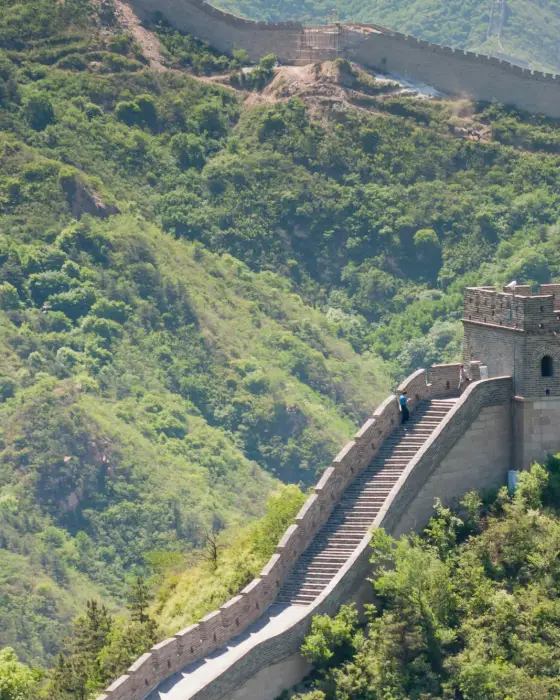
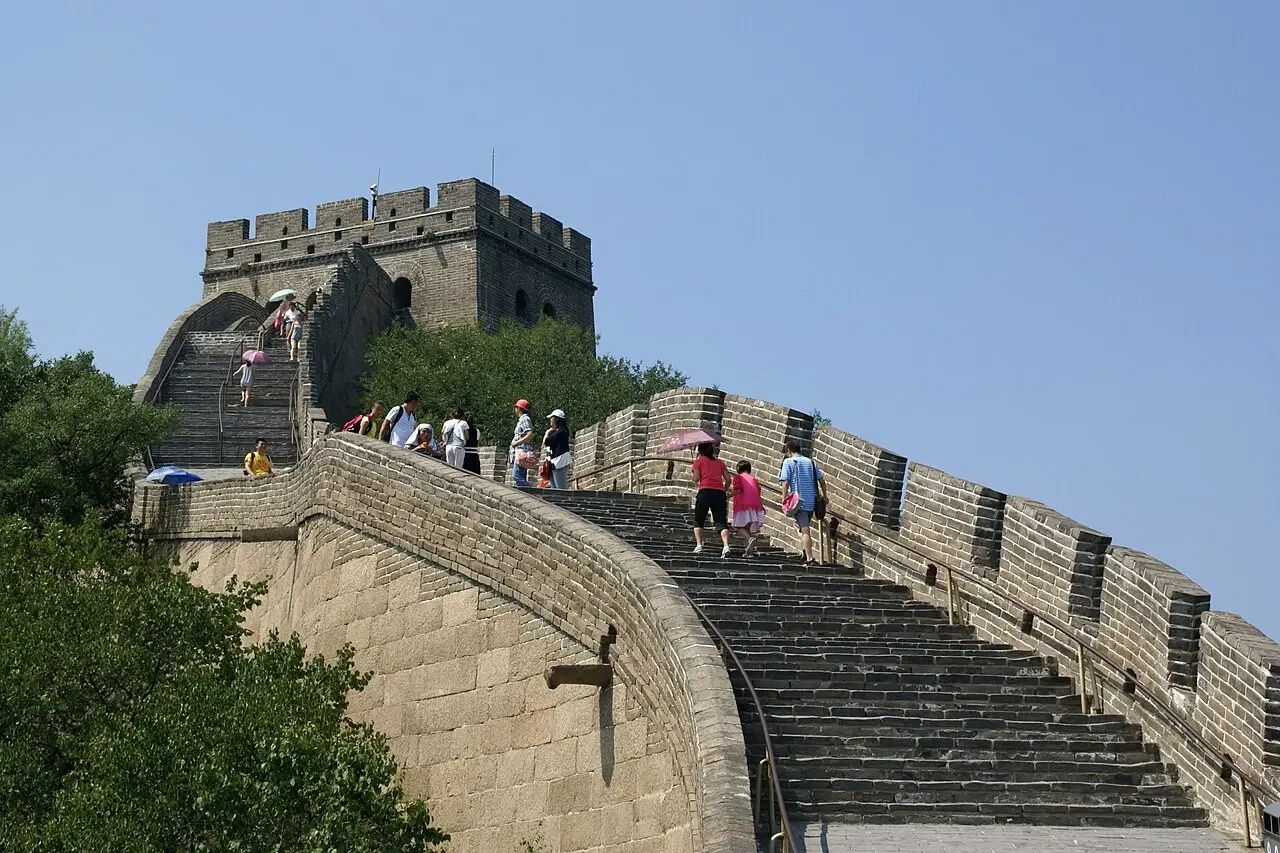
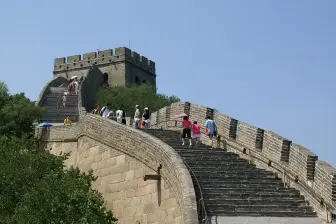
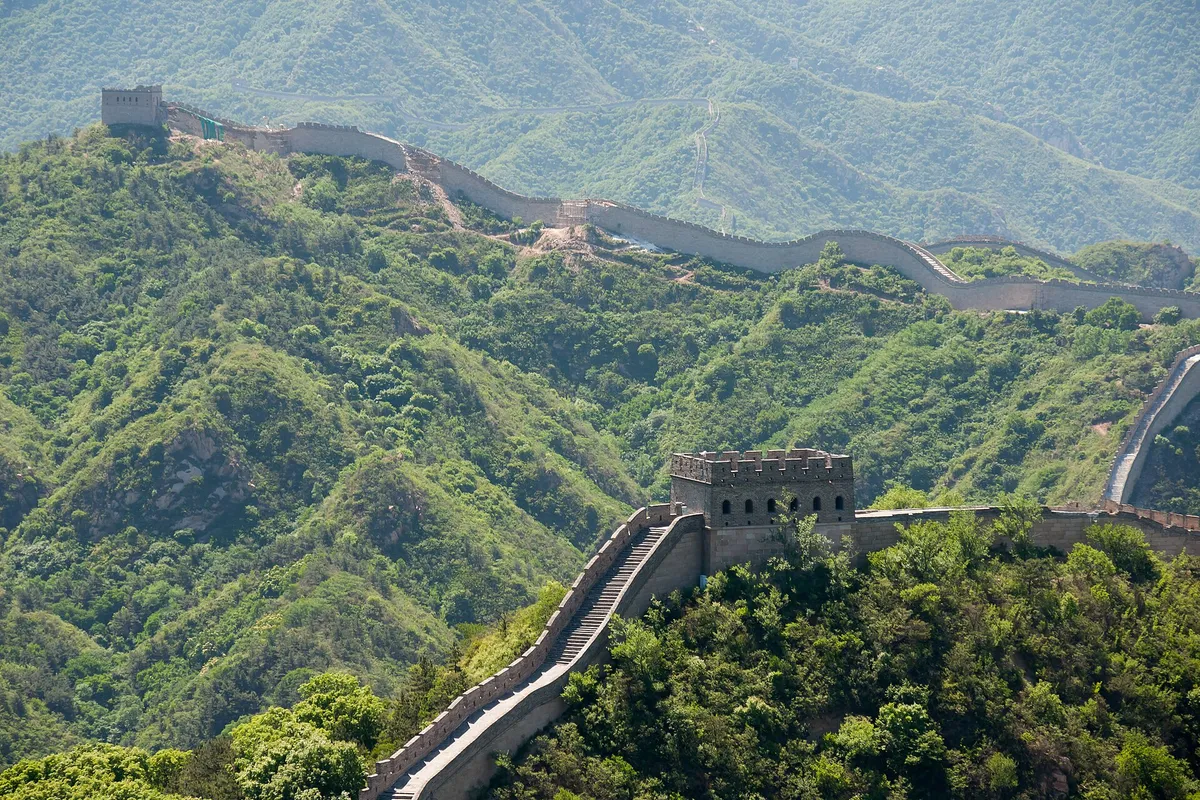
A restored stretch of the Great Wall near Beijing
Days Start with the basic programme and choose extensions for the time you have.
How the guide reaches this number
Enter at opening time, climb to Beibalou, lunch in a village courtyard for ¥40–80 and take the southern branch in the afternoon. With a second day, visit the unrestored Remnant Great Wall, Zhan Tianyou's railway zigzag at Qinglongqiao and Hongyeling lookout, where you can see the entire wall from outside. Badaling isn't for those seeking empty ruins. There is a ticket office, a cable car and a daily limit of 65,000 people, and much of what you walk on was rebuilt between the 1950s and 1980s. With only half a morning, enter at opening time and head straight to North Tower 8, skipping the line at the stele with Mao's verse, the longest on site. The noisy shops at the base disappoint, and the Great Wall Museum has been closed for renovation since 2023, with reopening expected in late 2026 or early 2027.
1–2
When Mid-September to late October; April and May as a second window
How the guide reaches this number
From mid-September to the end of October is the best window, with 15–25°C and clear skies after the summer rains, and the leaves change color in the second half of October. April and May come second, with the same temperature range, but in April the strong wind and northwest dust that mark March are still blowing. Summer, from June to August, brings 28–33°C in Beijing and 3 to 5°C less at the pass, and almost all the year's rain falls in July and August, over a few days and hard; after these downpours the air gets cleaner. Winter, from November to March, swings between −10 and 3°C, with a cutting wind through the corridor, ice on the steps, the lowest crowds of the year, and excellent visibility, and calls for hard-soled shoes. Avoid Golden Week, October 1 to 7, and the central days of the Spring Festival. If you can only go on a holiday, be at the gate the moment it opens.
Per person/day Day trip from Beijing: ¥100–250 (about R$75–190) with train, admission, and lunch
How the guide reaches this number
Per person per day: accommodation, meals, urban transport, visits and a small allowance for extras. Flights excluded; larger purchases vary. Editorial estimate, not a quote.
 What Nilo thinks
Give Badaling a full day. Enter at opening time, climb to Beibalou, lunch in a village courtyard for ¥40–80 and take the southern branch in the afternoon. With a second day, visit the unrestored Remnant Great Wall, Zhan Tianyou's railway zigzag at Qinglongqiao and Hongyeling lookout, where you can see the entire wall from outside. Badaling isn't for those seeking empty ruins. There is a ticket office, a cable car and a daily limit of 65,000 people, and much of what you walk on was rebuilt between the 1950s and 1980s. With only half a morning, enter at opening time and head straight to North Tower 8, skipping the line at the stele with Mao's verse, the longest on site. The noisy shops at the base disappoint, and the Great Wall Museum has been closed for renovation since 2023, with reopening expected in late 2026 or early 2027.At Badaling, the Great Wall climbs the ridge of the Jundu range over 3.74 km of restored brick and granite, and on both sides the original wall continues in ruins until it drops out of sight. This stretch was built in 1504 and 1505 to close off the Guangou gorge, the shortest route between the steppe and the Beijing plain, and in 1957 it was the first section of the Wall opened to visitors. The north branch climbs in uneven steps up to Beibalou, the tower at 1,015 m, and the south branch has seven towers, gentler ramps, and far fewer people. After the walk, have lunch at a village courtyard restaurant, where mutton arrives at the table in a copper pot. Come between mid-September and the end of October, avoiding Golden Week, and set aside a full day, plus one more if you want the unrestored Wild Wall.
Quick facts
- Population
- about 10,000 in Badaling village (2020 census); about 350,000 in Yanqing district; about 21.8 million in Beijing municipality
- Founding
- Brick-and-granite wall completed in 1505 (Ming); opened to visitors in 1957
- Country and region
- China: Badaling village, Yanqing District, Beijing Municipality
- Language
- Standard Mandarin (pǔtōnghuà), with a Beijing accent; English only at ticket counters and signage
- Currency
- Yuan renminbi (CNY, ¥): about ¥7.1 per US$1 and about ¥1.3 per R$1 in 2026, approximate
- Time zone
- UTC+8 year-round; China uses a single time zone and does not observe daylight saving time
- Best time to visit
- Mid-September to late October; April and May as a second window
- Average daily cost
- Day trip from Beijing: ¥100–250 (about R$75–190) with train, admission, and lunch
When to go
Mid-September to late October; April and May as a second window
January
-11° to -1°C
1 mm of rain
February
-8° to 4°C
3 mm of rain
March
-2° to 11°C
7 mm of rain
April
6° to 20°C
17 mm of rain
May
12° to 26°C
35 mm of rain
June
17° to 30°C
65 mm of rain
July
20° to 31°C
90 mm of rain
August
18° to 29°C
72 mm of rain
November
-3° to 8°C
8 mm of rain
December
-9° to 1°C
2 mm of rain
How the year changes
From mid-September to the end of October is the best window, with 15–25°C and clear skies after the summer rains, and the leaves change color in the second half of October. April and May come second, with the same temperature range, but in April the strong wind and northwest dust that mark March are still blowing. Summer, from June to August, brings 28–33°C in Beijing and 3 to 5°C less at the pass, and almost all the year's rain falls in July and August, over a few days and hard; after these downpours the air gets cleaner. Winter, from November to March, swings between −10 and 3°C, with a cutting wind through the corridor, ice on the steps, the lowest crowds of the year, and excellent visibility, and calls for hard-soled shoes. Avoid Golden Week, October 1 to 7, and the central days of the Spring Festival. If you can only go on a holiday, be at the gate the moment it opens.
The same numbers as a table
| Month | Temperature °C | Rain mm |
|---|---|---|
| January | -11 to -1 | 1 |
| February | -8 to 4 | 3 |
| March | -2 to 11 | 7 |
| April | 6 to 20 | 17 |
| May | 12 to 26 | 35 |
| June | 17 to 30 | 65 |
| July | 20 to 31 | 90 |
| August | 18 to 29 | 72 |
| September · | 12 to 25 | 53 |
| October · | 5 to 17 | 20 |
| November | -3 to 8 | 8 |
| December | -9 to 1 | 2 |
Nilo's tips
Train from Qinghe: 25 minutes, versus up to 2 hours by bus
Bus 877 from Deshengmen costs ¥12, but takes 1 hour 20 minutes to 2 hours and, on weekends, gets stuck on the G6 expressway. Take the first train at Qinghe to Badaling Changcheng, for ¥16–31 in second class, and buy it the day before through the railway app, because the morning seats sell out. Add 15 minutes on arrival to climb the roughly 102m of escalators to the surface.
At 10am, when the northern branch fills up, go south
Around ten, tour buses dump people onto the north branch, and almost nobody turns toward the south branch. It has seven towers and more even steps; climb up to South Tower 4, from where you can see the whole north branch, the photo nobody gets while standing inside it. Between April 30 and October 7, the south branch reopens at night, from 6:30pm to 10pm, with a separate, pricier ticket.
Bring your passport: a phone photo won't pass the turnstile
The entrance gate checks the original document used for the named booking, a rule in force since 2019. A photo on your phone won't do. Book before leaving Beijing, through the park website or official WeChat mini-program. Check the spelling of your name and every digit of your passport number: a mismatch can prevent entry after an 80 km journey.
Water costs ¥2 before the entrance; bring small change for stalls
Inside the complex, a bottle of water costs ¥5 to ¥10, and outside the gate, ¥2, so buy it before you go in. Carry small bills, because the stalls almost never have change for ¥100, and link Alipay or WeChat Pay to your card before you leave, since many have no card reader.
Wear firm soles: ankles get twisted on the way down
Choose sneakers with firm, grippy soles for the granite steps, polished by decades of use. Protect your knees and ankles on the descent, especially in winter: on ice, sprains are the leading cause of local accidents. Pack a windbreaker. The draft through the gorge keeps the pass 3 to 5 °C cooler than Beijing, even when the city is warm.
Avoid Golden Week, October 1 to 7
During Golden Week, October 1 to 7, the quota of 65,000 visitors runs out before noon, and the stairs become a stalled line. If you can't avoid the holiday, the only time that works is opening, at 6:30am in summer and 7:30am in winter. The opposite happens on the first two or three days of the Spring Festival, among the emptiest of the year, when it's cold, the wind blows through the corridor and visibility is excellent.
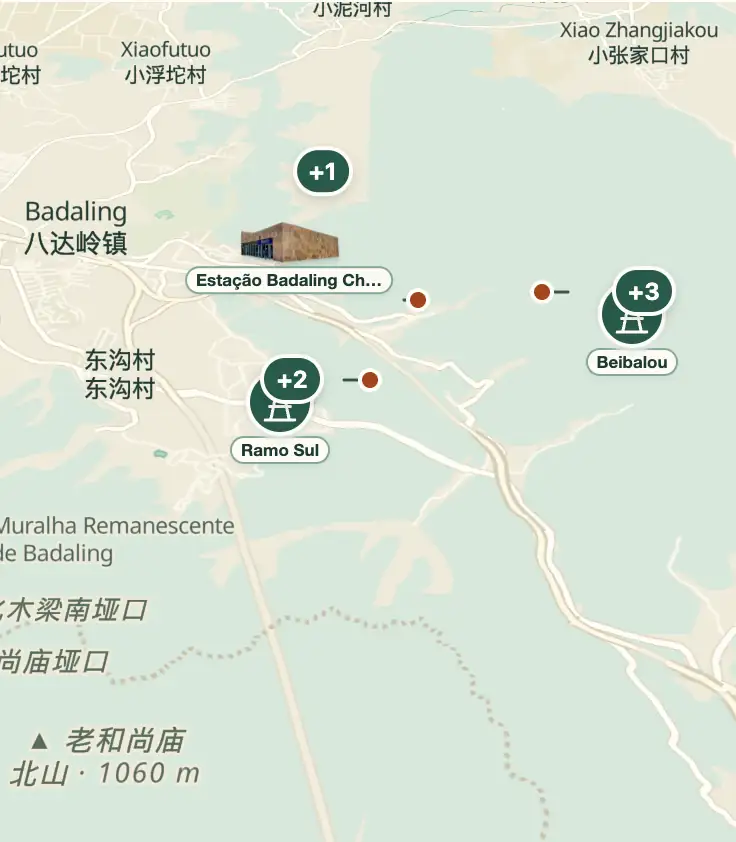
Explore the map
© OpenStreetMap · OpenFreeMap · © OpenMapTiles
Explore the map, read about the other places and plan your travel days in the app.
Open the appWhat to see
Badaling: The gorge and the ridges
The restored wall is 3.74km long with 19 towers (12 on the north branch, steeper, and 7 on the south branch, with gentler ramps), a fraction of the original 12km and 43 towers; the rest continues in ruins across the range.
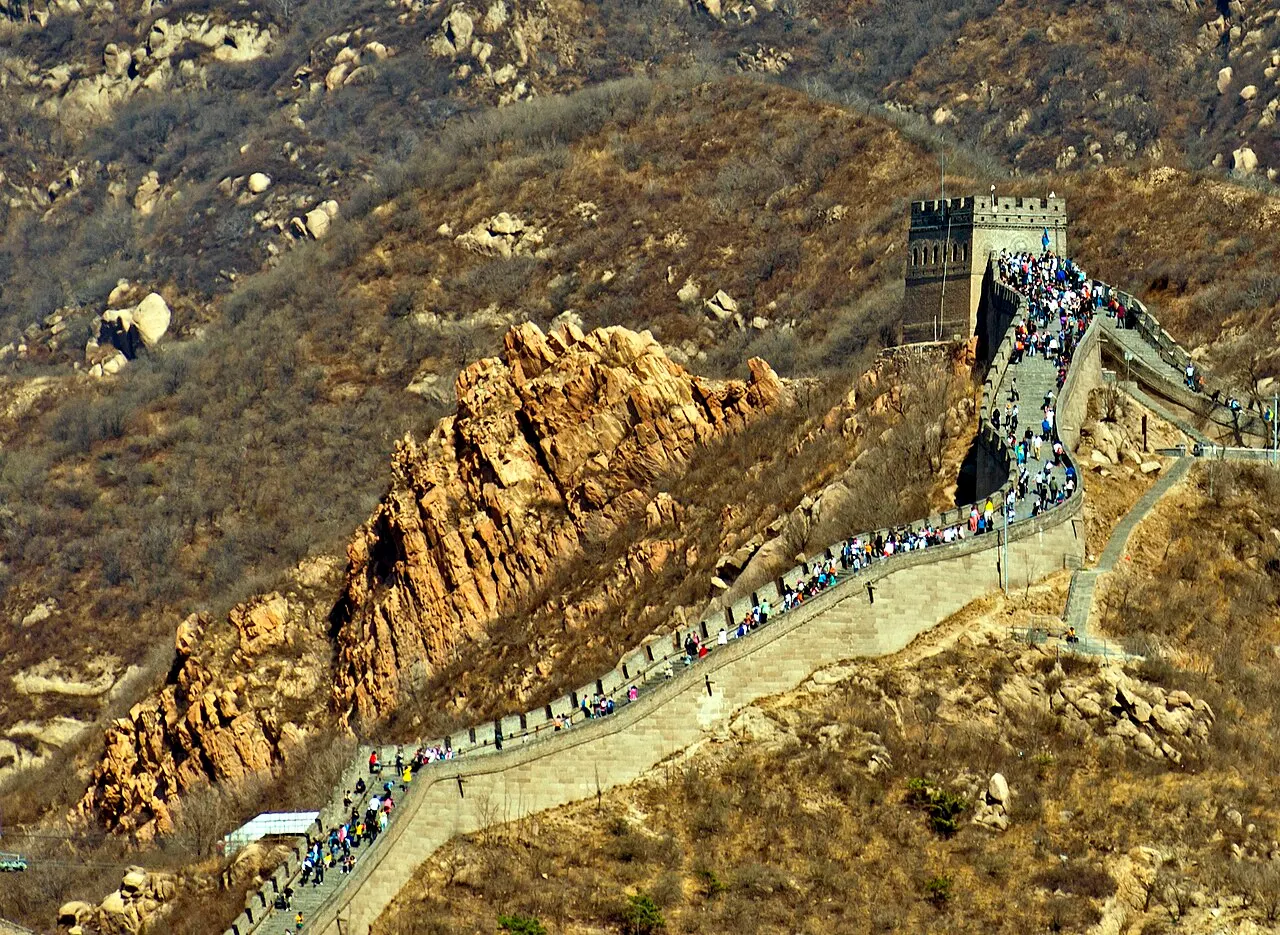
Beibalou: North Tower 8
The highest point of the section, at 1,015 m, about 1 km of stairs from the north gate. It takes 40 to 60 minutes of steady climbing, and from there you see the wall follow the ridge in both directions until it's out of sight.
It's the reason to climb the whole north branch: from there you see the wall continue along the ridge in both directions, and there's no equivalent lookout on the other side. Leave the gate at opening time, because the climb takes 40 to 60 minutes and the corridor jams up before ten.
Check access
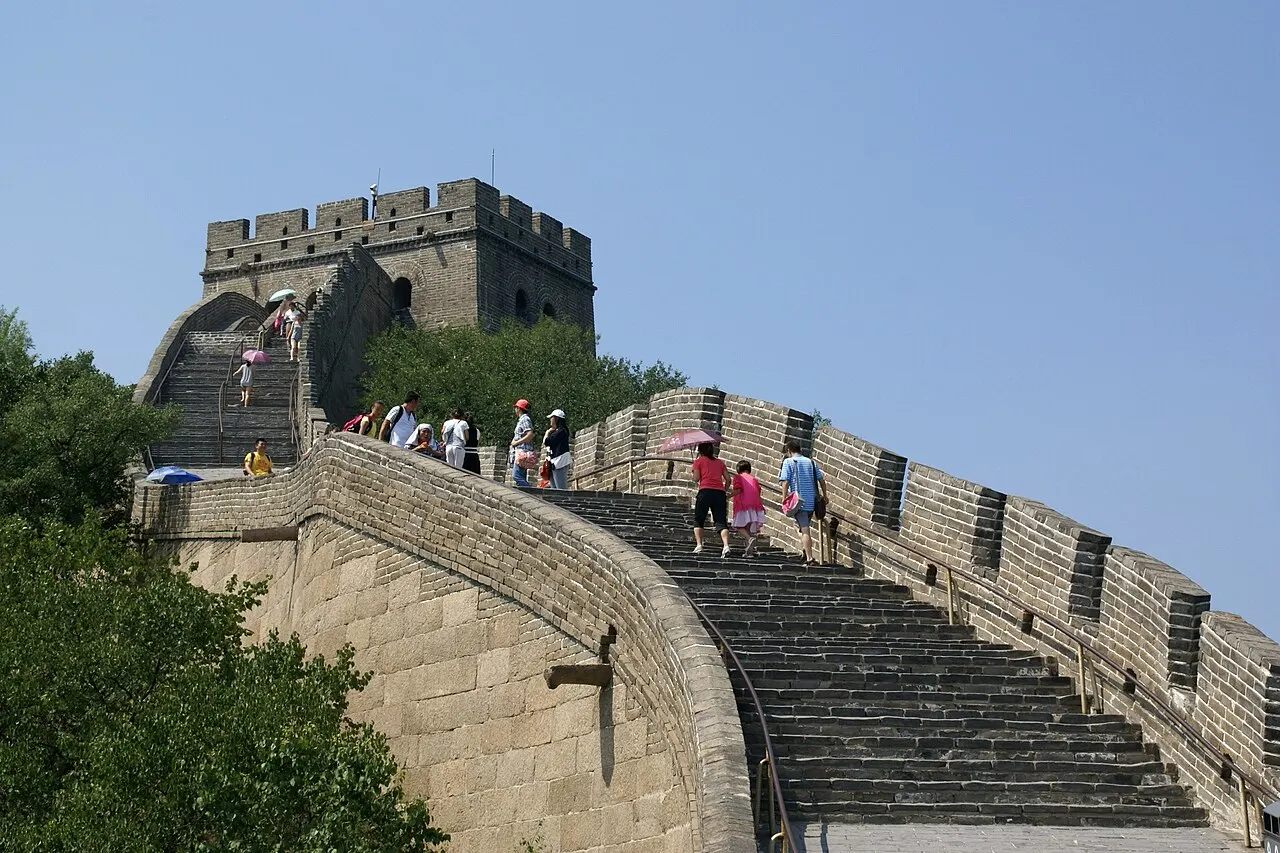
South Branch and South Tower 4
Seven towers on gentler grades, with a fraction of the north side's crowds. Good for seeing the wall's line without being inside it.
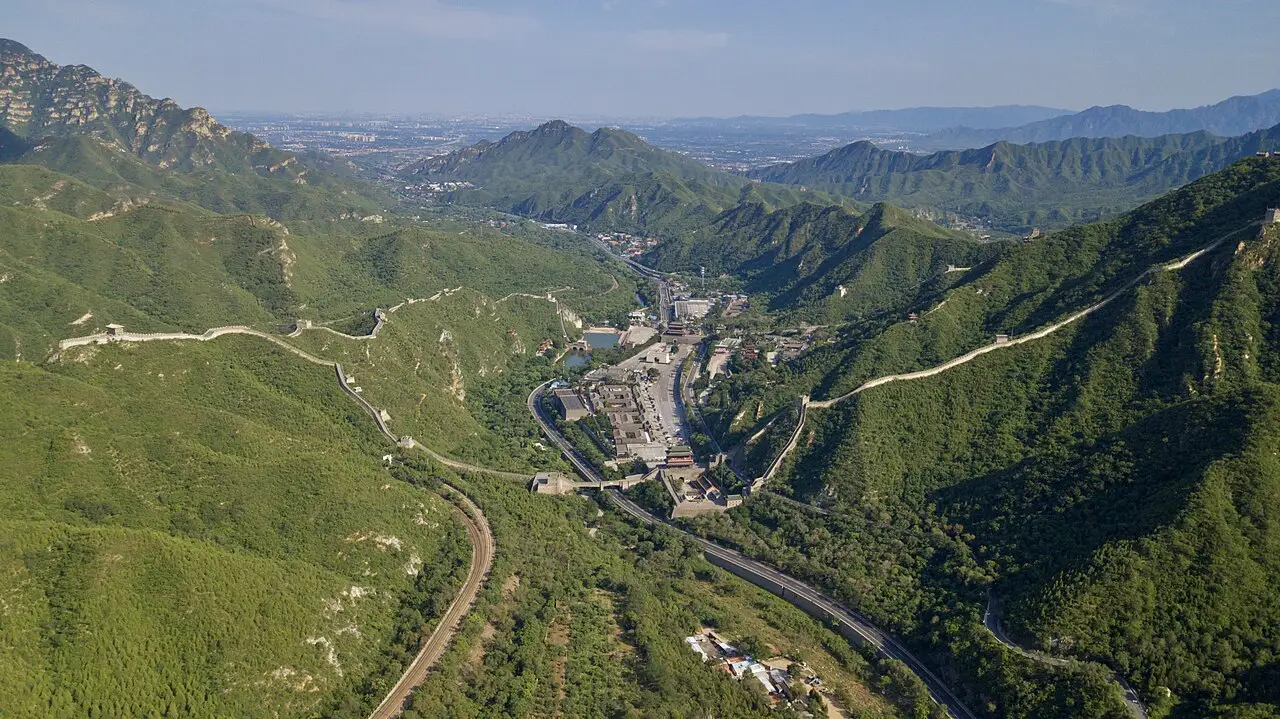
Badaling sits at the north throat of the Guangou corridor, a roughly 20km cleft in the Jundu range, the southern end of the Yan range, which links the Beijing plain (about 50m altitude) to the Yanqing basin (about 500 to 600m).
Check access
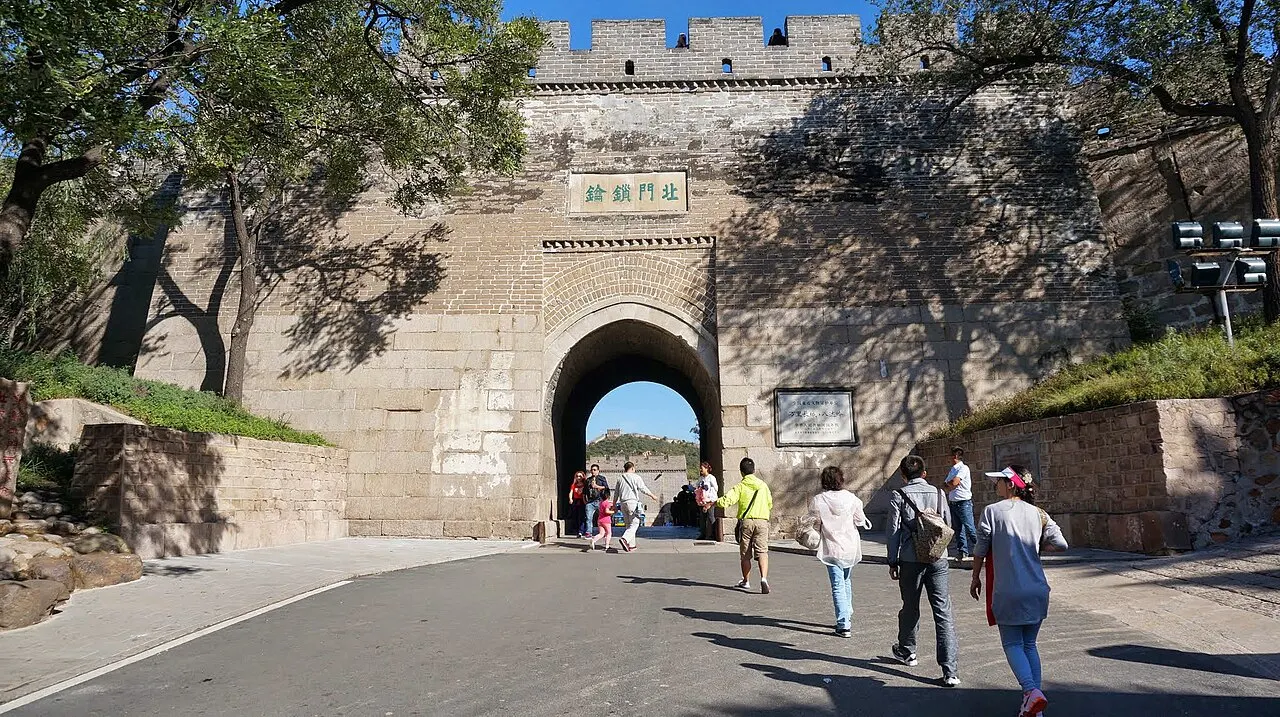
“Juyong Waizhen” Gate
The east gate, with the stone plaque dated 1505 identifying the post as an outer outpost of Juyongguan. The west gate, “Beimen Suoyue” (“the key to the north gate”), dates from 1582 and stands a few meters away.
The 1505 plaque marks the eastern outpost, an outer defense of Juyongguan, and Beimen Suoyue, the key to the north entrance, dates from 1582 and is nearby.
Check access
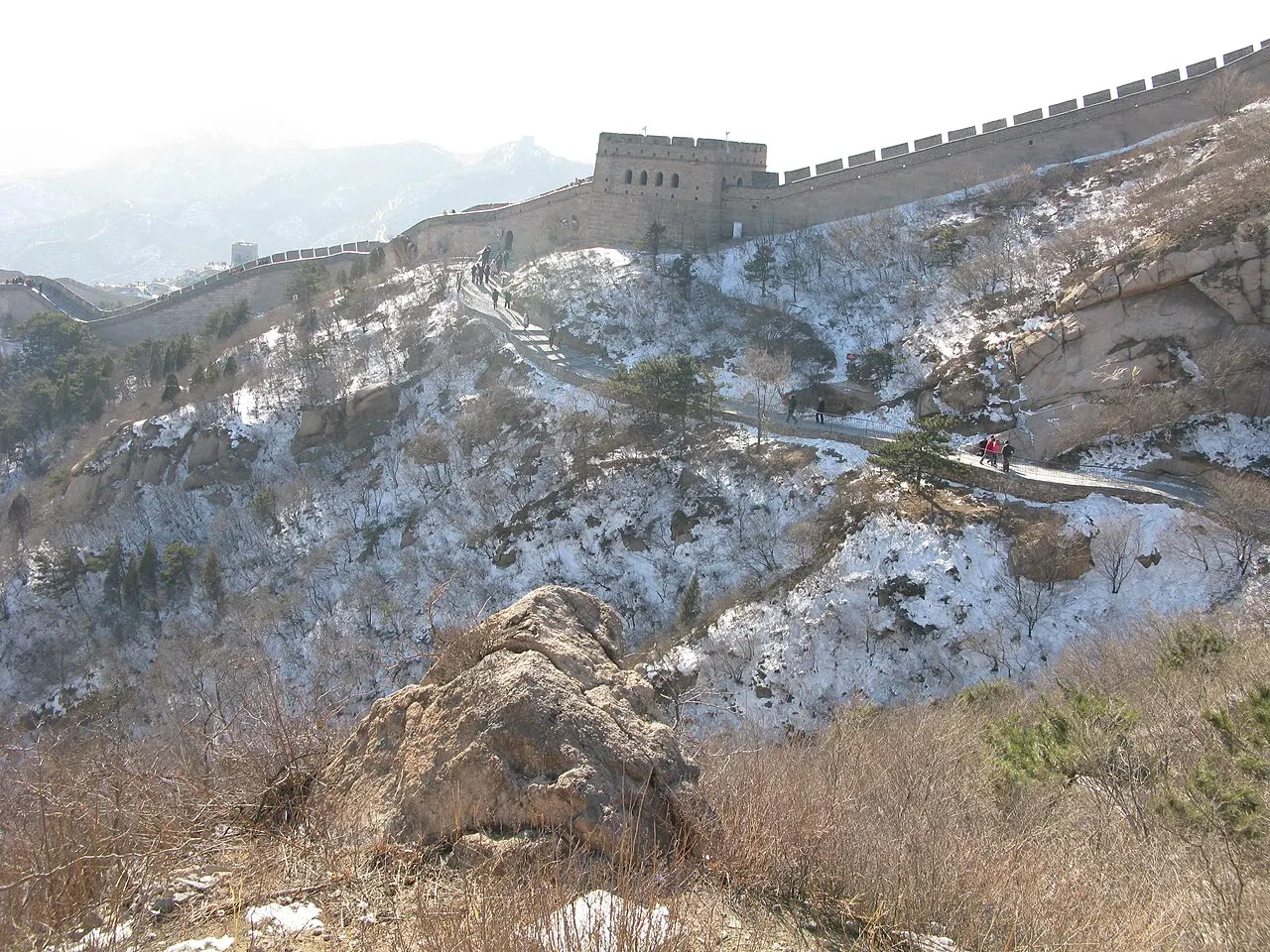
Badaling Remnant Great Wall
An unrestored stretch a few kilometers to the south, with towers in ruin, original brick exposed, and its own admission. It shows the difference between the 1505 wall and the wall rebuilt in the 1950s-80s.
The admission is separate and the stretch hasn't been restored: ruined towers and 1505 brick, a few kilometers south of the wall rebuilt in the 1950s-80s.
Check access
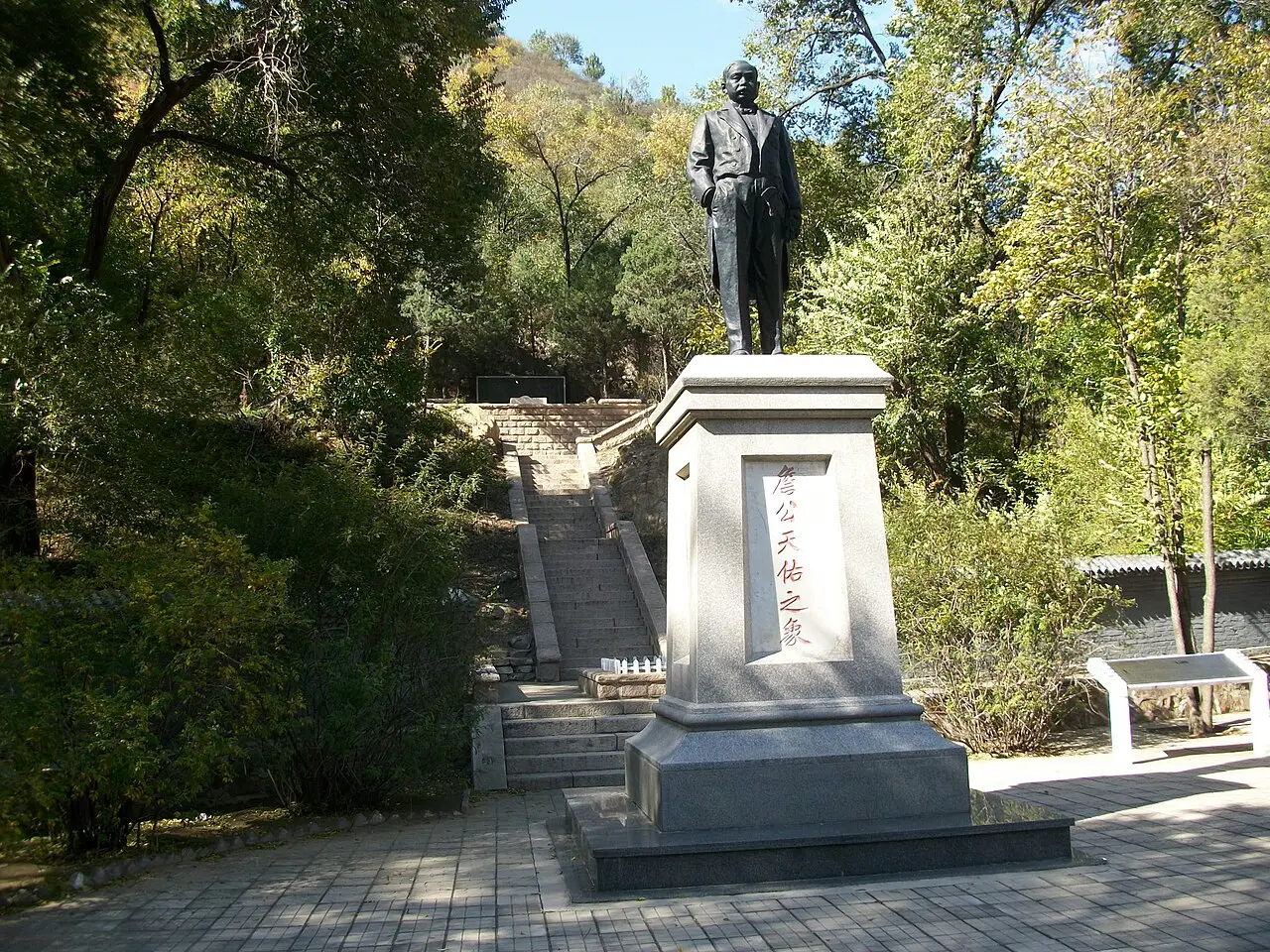
Zhan Tianyou Memorial, in Qinglongqiao
Statue, tomb and small museum of the engineer of the 1909 railway, next to the station with the “V”-shaped switchback that solves the gradient. It's the section's piece of modern engineering, next to the old one.
A statue and a museum recall the engineer of the 1909 line, and the V-shaped zigzag that overcomes the grade sits right next to the station.
Check access
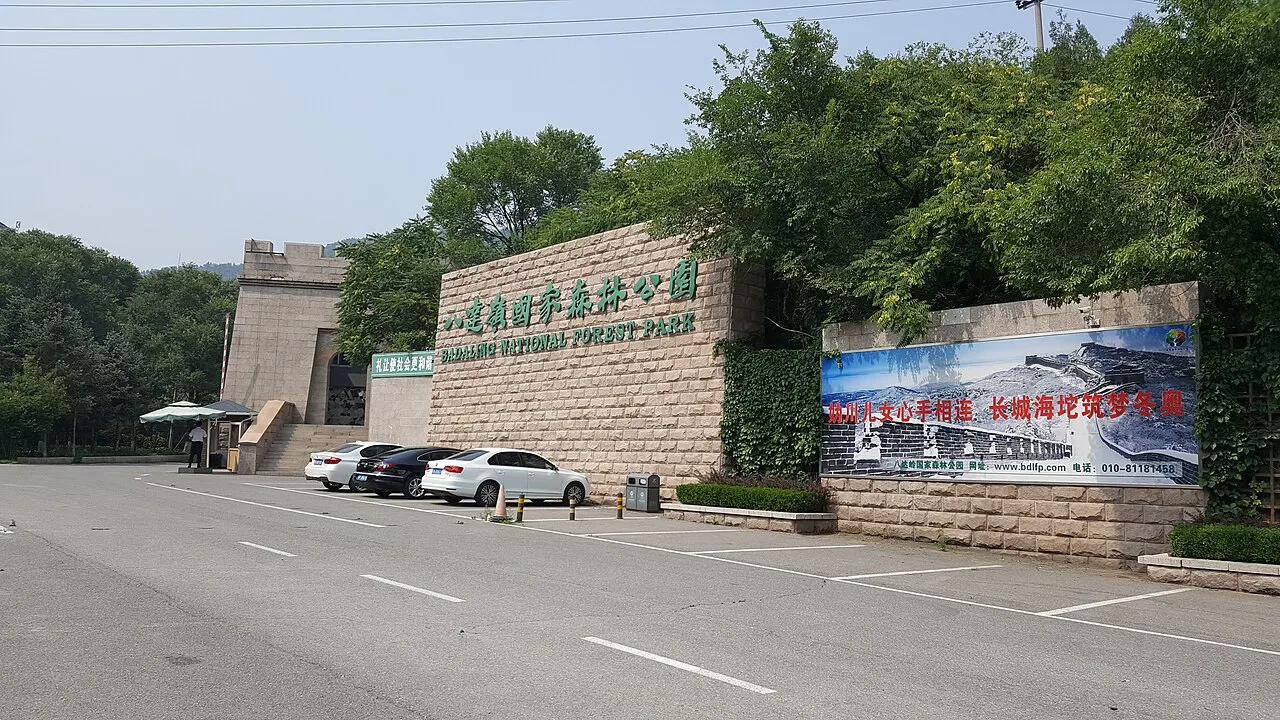
Badaling National Forest Park
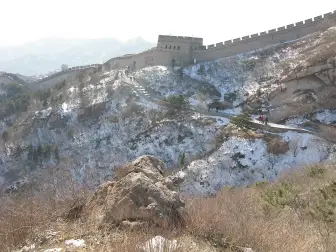
An adjoining reserve with the Hongyeling overlook, the only spot from which you can photograph the wall from outside it. Separate admission; red leaves in the second half of October.
From Hongyeling, the only spot that lets you photograph the wall from outside, the forest has its own admission fee, and the red leaves arrive in the second half of October.
Check access
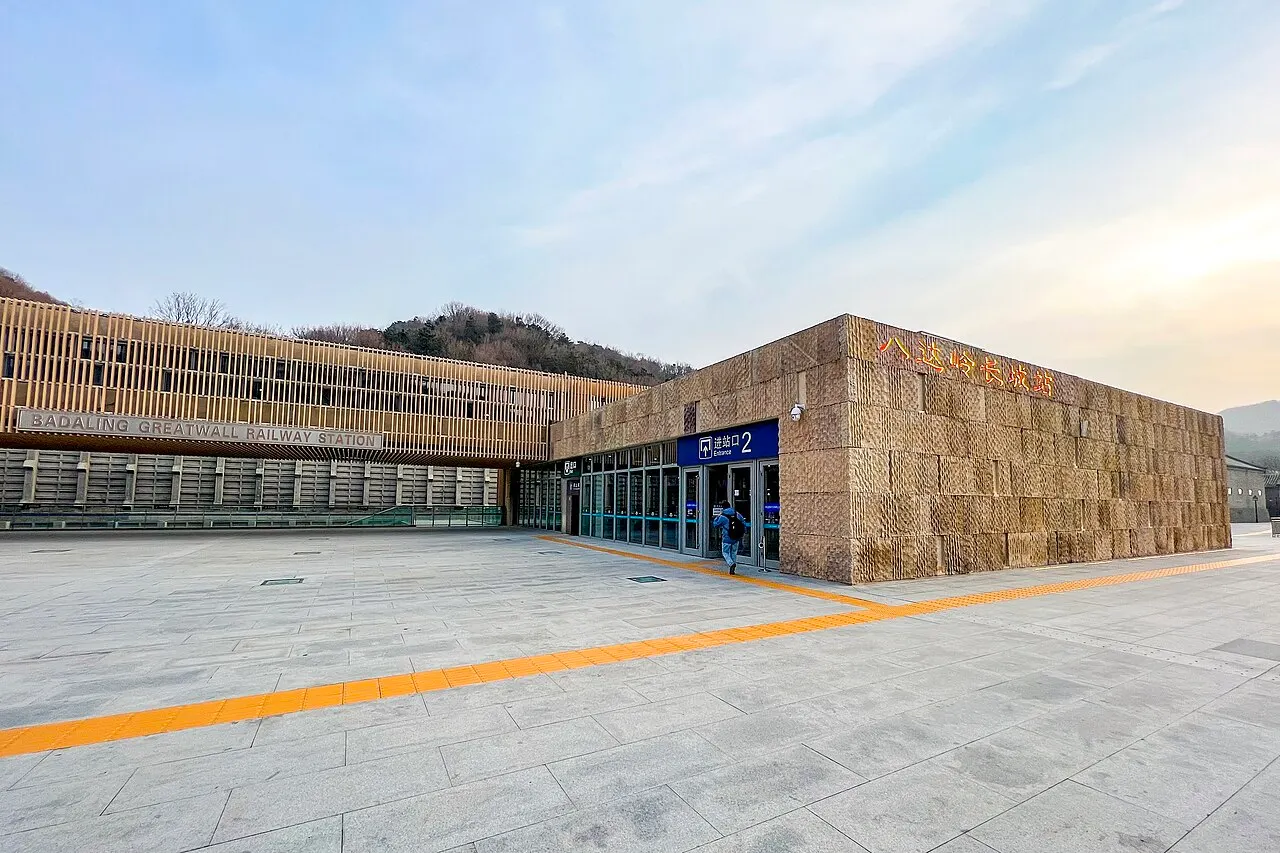
Badaling Changcheng Station
A high-speed station driven about 102 m into the mountain, opened on December 30, 2019. The escalator ride up to the surface takes several minutes and is, on its own, worth seeing.
The high-speed rail stop was built about 102m into the mountain and opened on December 30, 2019, and the escalators up to the surface take several minutes and are worth the trip on their own.
Check access
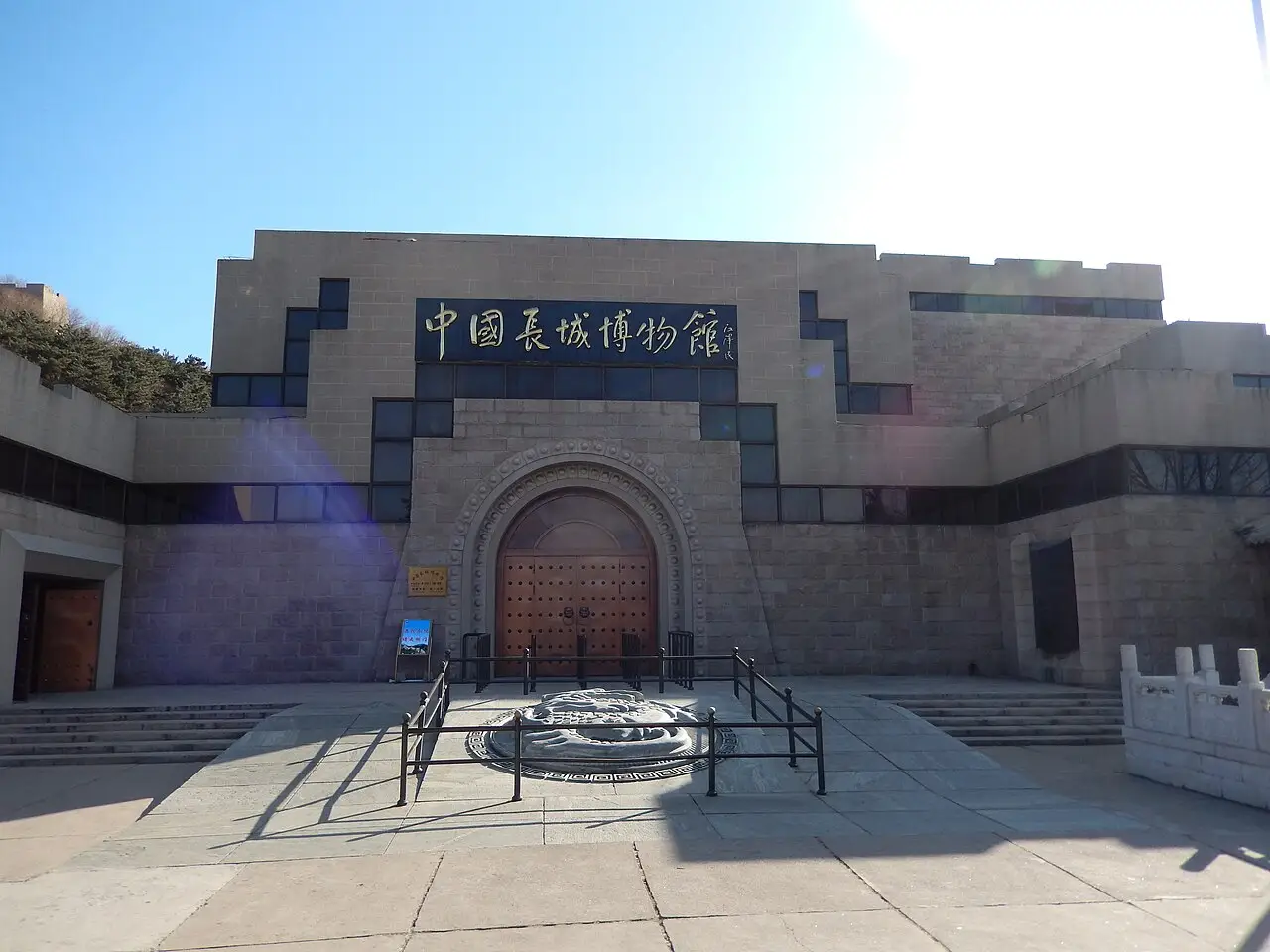
China Great Wall Museum
An institution within the complex itself, devoted to the wall's construction, garrison life, and cartography. It has been closed for renovation since 2023, with reopening planned for late 2026 or early 2027; confirm it has reopened before counting on it in your itinerary.
It has been closed for renovation since 2023, with reopening planned for late 2026 or early 2027. Confirm it has reopened before booking a time slot, so you don't walk up to a closed door.
Check access
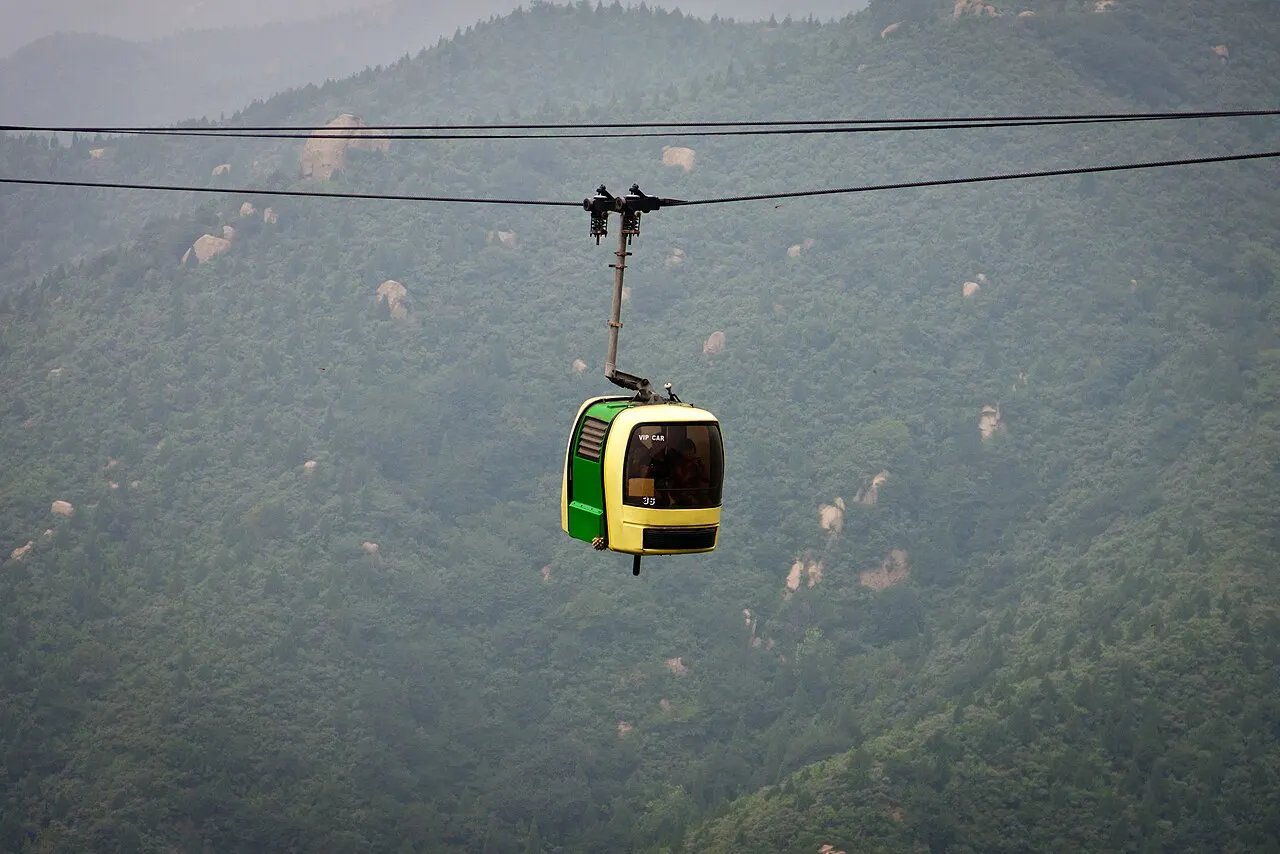
Cable car and toboggan
The cable car goes up near North Tower 7, and the toboggan, an open rail cart, goes up to North Tower 4 and comes down through a metal chute. Both shorten part of the climb, but neither does away with the stairs that come after.
It saves the first half of the climb and spares your knees on the way down, but the arrival point is still hundreds of steps from Beibalou. The toboggan is a ten-minute ride that goes down through a metal chute.
Check access
Nilo’s itinerary
Start with the basic programme and choose extensions for the time you have.
Plan my days in the app ↗Day 1 · The northern branch, as soon as the gate opens
Choose the earliest available train from Qinghe to Badaling Changcheng and check its arrival time before booking entry. Allow another 15 minutes to climb the roughly 102 m from the station to the surface.
The gate opens at 6:30am in summer and 7:30am in winter; the train may arrive later. Once inside, follow the northern branch on foot to North Tower 8, Beibalou, at 1,015 m: 40 to 60 minutes of continuous stairs.
On the way back, check out the gate inscriptions (“Juyong Waizhen”, from 1505, and “Beimen Suoyue”, from 1582) and the stele with Mao's verse.
Have lunch at a courtyard restaurant in the village (¥40–80) and do the southern branch in the afternoon, once tour buses have already packed the north.
If you're there between May and early October, consider coming back at 6:30pm for the illuminated night session on the southern branch.
If you stay longer
Day 2 · The unrestored wall, the 1909 railway and the Hongyeling viewpoint
Start at the Badaling Remnant Great Wall, with its own admission: ruined towers, exposed Ming brick, and almost nobody.
Continue to Qinglongqiao and the Zhan Tianyou memorial, beside the railway zigzag that overcomes the mountain grade.
In the afternoon, climb to the Hongyeling overlook, in Badaling National Forest Park, the only spot from which you can photograph the wall from outside it.
Finish in Yanqing, the district town, which has a market, a pharmacy, and ATMs that accept international cards, something Badaling practically doesn't have. If you sleep at a guesthouse there (¥250 to ¥500), the next morning's breakfast is huoshao, the flatbread sold on the streets only in the morning.
Food
 AI illustration
Yanqing huoshao
A flatbread baked in a wall oven, toasted outside and hollow inside, split open and filled with meat or egg. Sold in the mornings on Yanqing's streets, ¥3–8.
 AI illustration
Liugou tofu banquet
A specialty of Liugou village, about 20 km away: tofu simmered in a pot over hot coals with pork belly and pickled cabbage, served alongside dozens of small dishes. ¥50–90 per person; reserve ahead on weekends.
 AI illustration
Youmian kaolaolao
Steamed rolls of naked-oat flour, served with mutton broth or a tomato-and-garlic sauce. Northern mountain food, deliberately heavy against the cold.
 AI illustration
Courtyard mutton
At the village's family restaurants, mutton comes whole-roasted on special occasions or thinly sliced for the copper hot pot (shuàn yángròu), with sesame sauce. It's the region's winter dish.
 AI illustration
Tanghulu
Skewered hawthorn berries dipped in hardened sugar, sold at the wall's entrances. ¥10–15; the sugar cracks in the cold, which is when it's at its best.
 AI illustration
Stall corn and sweet potato
Boiled corn on the cob and sweet potato roasted in a drum, sold all the way up. ¥5–15, and it's the only hot food available between the gate and North Tower 8.
 AI illustration
Yanqing guoguang apple
A small, tart, firm apple picked in October in the district's orchards, sold by the box along the roadside. The region also grows grapes and vegetables for the Beijing market.
 AI illustration
Zhajiangmian and jiaozi
The Beijing basics, noodles with fermented soybean paste and boiled dumplings, at the parking-lot restaurants. Check the price before ordering: the same bowl costs double inside the complex.
Day trips
Juyongguan
About 20 km south through the gorge, 25–35 minutes by car. A complete ring fortress at the bottom of the valley, with the 1345 Cloud Platform and its inscriptions in six scripts.
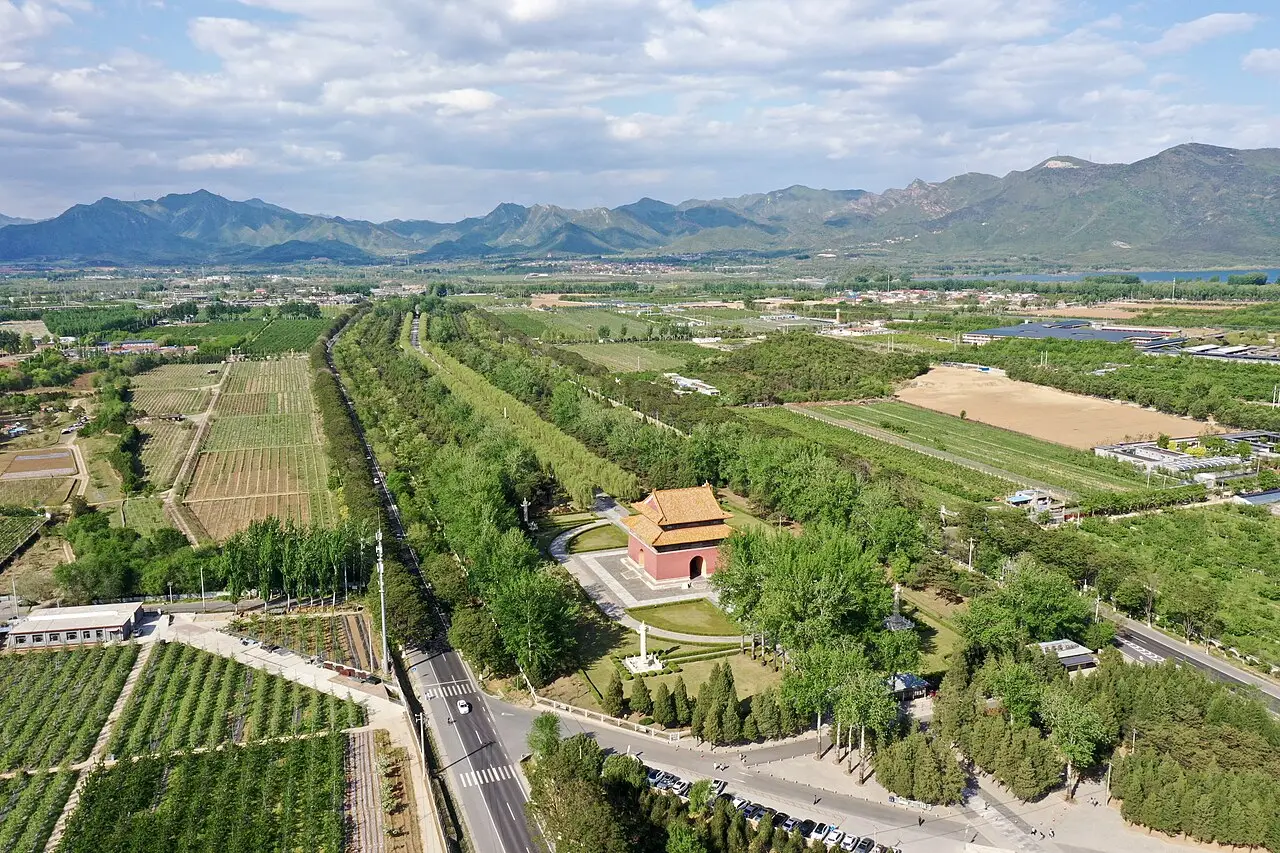
Ming Tombs (Shisanling)
About 30 km to the south, 40–50 minutes by car or by bus to Changping. These are thirteen imperial mausoleums from the 15th to 17th centuries: visit Dingling, excavated in 1956–1958, and the Sacred Way.
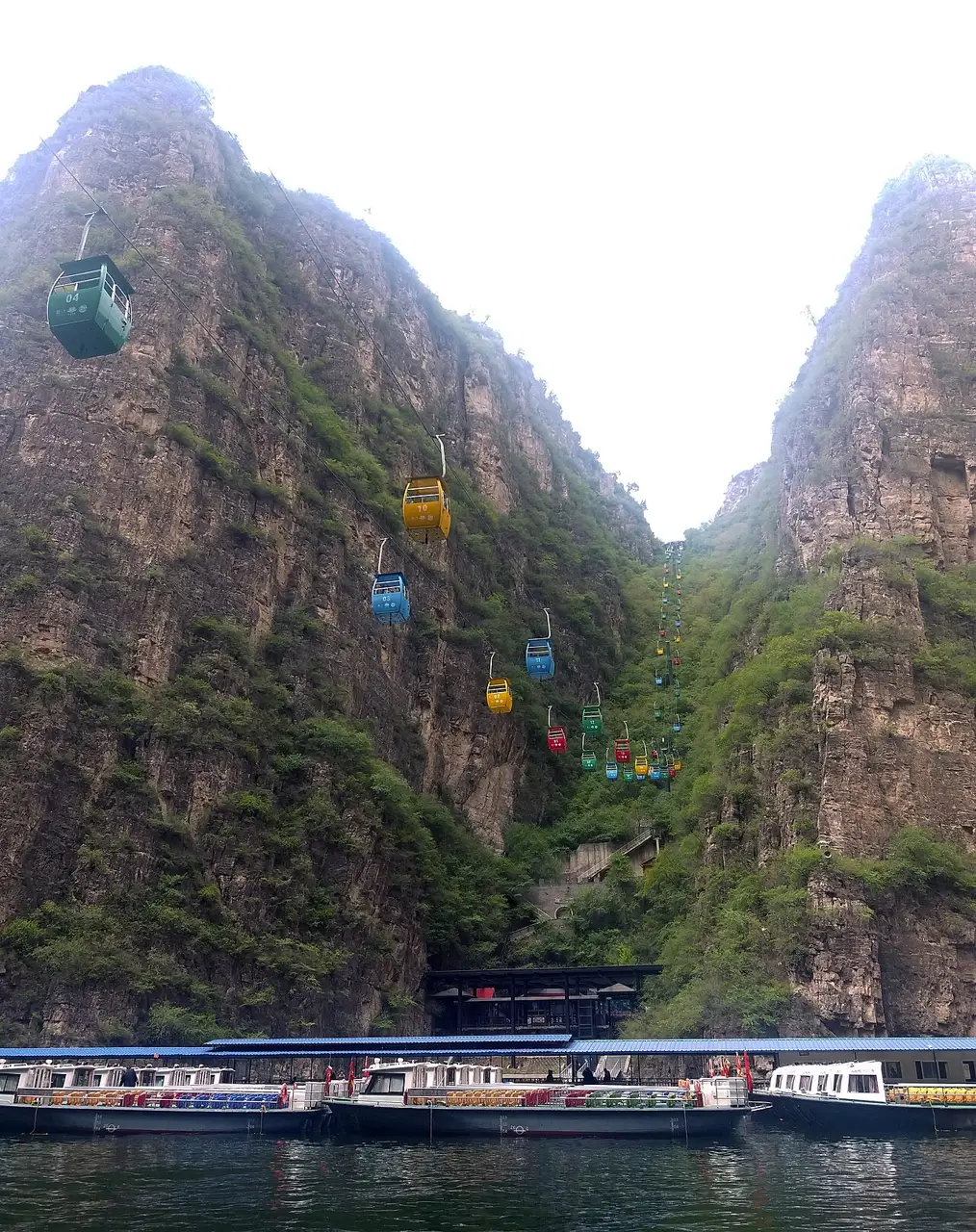
Longqingxia and Guyaju
35–45 km to the northeast, about an hour. A dammed gorge with boat rides in summer and ice lanterns in winter, plus the hundreds of chambers carved into the rock at Guyaju, of uncertain date.
Where to begin
The northern branch, as soon as the gate opens
Choose the earliest available train from Qinghe to Badaling Changcheng and check its arrival time before booking entry. Allow another 15 minutes to climb the roughly 102 m from the station to the surface.
The unrestored wall, the 1909 railway and the Hongyeling viewpoint
Start at the Badaling Remnant Great Wall, with its own admission: ruined towers, exposed Ming brick, and almost nobody.
Money
The currency is the renminbi yuan (CNY, ¥), at about ¥7.1 per dollar and ¥1.3 per real in 2026. Almost every business charges by QR code. Since 2023, Alipay and WeChat Pay have accepted foreign cards, so install them and link your card before you leave, because many stalls have no card reader. Cash is accepted by law, but vendors at the wall rarely have change for a ¥100 bill, and ATMs that take international cards exist in Yanqing and Beijing, practically never at Badaling. Admission costs ¥35–40, the round-trip cable car about ¥140, the train ¥16–31 and bus 877 ¥6–12. Water costs ¥5–10 on the way up and ¥2 outside the complex, and boiled corn ¥10. Lunch in a village courtyard runs ¥40–80 per person, and dinner in Beijing ¥30–100. A night at a guesthouse in Yanqing costs ¥250 to ¥500, and at a mid-range hotel in Beijing, ¥400 to ¥900. There's no tipping in restaurants or taxis, and insisting usually causes embarrassment. To enter China, Brazilians don't need a visa for stays of up to 30 days, under the measure valid until December 31, 2026.
Getting there and around
From Beijing, by bullet train to the Great Wall station
You arrive in Beijing at Capital Airport (PEK) or Daxing (PKX) and continue by train. The standard route is the Beijing–Zhangjiakou high-speed line, which leaves from Qinghe (or, on some departures, Beijing North) for the station next to the wall, with departures every 30–60 minutes, tickets of ¥16–31 and a trip of about 25 minutes. Book ahead, because morning demand is high, and allow an extra 15 minutes after you get off, since the platform is deep underground and the only way out is via long escalators. The cheap alternative is bus 877, from Deshengmen, for ¥12, or about ¥6 paying with a transit card or app; the trip takes 1 hour 20 minutes to 2 hours and, on weekends, gets caught in traffic on the G6 expressway. The old S2 suburban line, the scenic 1909 railroad, has been suspended since late 2025 for long-term works.
Free shuttle between parking, station, and gate
On site, free shuttle buses run between the parking lots, the station, and the gates, from 6:30am to 5pm. Wall admission costs ¥40 in high season (April 1 to October 31) and ¥35 in low season, with entry from 6:30am to 4:30pm in summer and 7:30am to 4pm in winter, and under-18s and over-60s don't pay. Reservations go through the park's official channel, on WeChat or the website, with name and ID number, and the daily cap of 65,000 is controlled by a crowd-level signal. The cable car goes up near North Tower 7, and the toboggan, to North Tower 4, each for about ¥100–140 round trip, and neither does away with the stairs. A taxi or ride-hailing app to the gate from Beijing costs ¥300–500 one way only; in the parking lot, turn down unlicensed cars that approach tourists. Inside the complex everything is on foot, and going down the worn steps is more slippery than going up.
Safety
Badaling is safe in terms of crime; the real risks are physical and commercial. The wall has steps of irregular height, handrails that come and go and steep stretches, and most incidents are falls on the way down, heatstroke in July and August or mild hypothermia in winter, when the wind at the pass drops the wind chill well below zero. Bring water, sunscreen and a windbreaker even on a hot day in the city, because the top is always colder and windier. On national holidays crowds compress at the bottlenecks between towers, and if the stairs come to a halt, wait instead of forcing your way through. The common scams are tours sold on the street that swap Badaling for a lesser stretch with shopping stops, unlicensed cars that charge ¥400 or more to go back to Beijing and inflated prices for water and souvenirs inside the complex. There's no area to avoid because of crime, and at night, outside the illuminated visiting season, the village simply shuts down. At Badaling Wildlife World, stay inside the vehicle with the windows closed in the big-cat area, a rule strictly enforced since the fatal accident of 2016.
Etiquette tips
Bring your physical passport
Your physical passport is checked at the turnstile, one by one, and the line stalls behind anyone digging for it at the bottom of a backpack. Put it in an outside pocket before you reach the gate.
Don't write on the stone
Carving a name or date into the bricks is an offense, with a fine and inclusion on a list barring you from returning to the site. Every season brings press-reported cases.
Keep right and don't stop mid-stairway
The steep stretches are narrow, and traffic flows both ways. To take a photo, step off into a tower's alcove.
No fire between November and May
This is Beijing's official forest-fire prevention period: no smoking, lighting any flame, or setting off fireworks in the mountain area.
Don't fly a drone
Airspace around Beijing and the site is controlled, and an unauthorized flight is confiscated on the spot by park security.
Haggle at the outdoor stalls, not inside the complex
At the stalls outside the gate, bargaining is expected and the first price is usually double. Inside the complex, prices are fixed, and pushing gets you nowhere.
Mistakes to avoid
The 65,000 quota fills up early
The quota of 65,000 fills early, and the northern branch's staircase gets congested. Arrive at opening time to climb to Beibalou almost alone.
“Badaling” and “Badaling Changcheng” differ
“Badaling” is the surface station of the old S2 line, now suspended. It's “Badaling Changcheng”, deeper in the range, that serves the gate.
Thinking the cable car spares you the stairs
The cable car drops you near North Tower 7, and the toboggan at North Tower 4. Either way, hundreds of irregular steps remain, some more than 30 cm high.
It's the descent that hurts the knee
Wearing smooth-soled sneakers is the mistake: the polished granite gets treacherous, especially going down. In winter, with ice, the risk of a twisted ankle is even higher.
The scam takes you to Shuiguan claiming it's Badaling
The classic scam takes the group to Shuiguan or Juyongguan claiming it's Badaling. It includes mandatory stops at jade and tea shops.
Useful phrases
你好 (nǐ hǎo, “ni rrão”)
Hello
长城怎么走?(Chángchéng zěnme zǒu, “tchang-tchêng dzâme dzôu”)
How do I get to the Wall?
多少钱?(duōshao qián, “duô-shao tchién”)
How much does it cost?
北八楼在哪儿?(Běibālóu zài nǎr, “bêi-bá-lôu dzai nar”)
Where is North Tower 8?
谢谢 (xièxie, “siê-siê”)
Thank you
不到长城非好汉 (bú dào Chángchéng fēi hǎohàn, “bu dao tchang-tchêng fêi rrão-han”)
“Whoever doesn't reach the Wall is no hero”: Mao's 1935 verse, engraved on the stele and on the medals
Districts
North Branch
The 12 towers that climb to the right as you enter through the main gate, passing Beibalou (North Tower 8, 1,015 m), the highest point, up to North Tower 12. This is where the steepest ramps, the cable car, and 90% of the people are.
South Branch
Seven towers in the opposite direction, with more even steps and a fraction of the crowd. From the top, the view opens onto the Guangou valley, without the crush of people from the other side.
Entrance Plaza and Parking
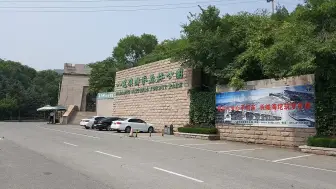
The services hub at the base: ticket counters, restrooms, free shuttle buses, corn-on-the-cob stalls, and the stands that engrave medals. Everything here costs more than it does 500 m further on.
Badaling Village
The village of about 10,000 people strung along the highway, with family guesthouses, grocery stores, and courtyard restaurants (nongjiayuan). Outside visiting hours, the street empties completely.
Qinglongqiao
The 1909 station 3 km away, with the railway zigzag, the statue, and the tomb of Zhan Tianyou. It's the part of the complex almost nobody seeks out, and the only one where you see early-20th-century civil engineering.
Guangou and Shuiguan
The corridor between Badaling and Juyongguan, with the Shuiguan wall section and post ruins along the valley. It's where many cut-rate tours stop and claim it's Badaling.
Kangzhuang and Dongsanpu
The expressway exit and a belt of hotels, gas stations and warehouses 8–12 km away. A cheap base for anyone staying nearby to enter as soon as the gate opens.
Yanqing Center
The district seat, 20 km to the northeast: markets, hospital, bus station, real-food restaurants, and the park that was the 2019 Horticultural Expo. It's where you solve any practical problem.
History
6th century · First barrier at the gorge
Around 555 the Northern Qi dynasty raises a wall line from Shanxi to the sea, running through the Guangou corridor below Badaling. Traces of the rammed-earth wall survive beneath the Ming structure.
1211–1215 · The Mongols force the pass
Genghis Khan's troops cross the Juyong corridor toward Zhongdu, the Jin dynasty's Beijing, captured in 1215. The episode fixes the gorge as the weak point north of the capital.
1368–1421 · The Ming take over the pass
After expelling the Yuan, the Ming rebuild the Juyongguan garrison. With the capital's move from Nanjing to Beijing in 1421, defending the gorge becomes a matter of state.
1505 · The brick wall at Badaling
In the 18th year of the Hongzhi reign, the outer granite-and-brick rampart is completed, about 12 km with 43 towers. The east gate bears the inscription “Juyong Waizhen”; the west gate, “Beimen Suoyue”, dates from 1582.
1644 · The wall loses its purpose
In April, Li Zicheng's peasant army passes through the corridor and takes Beijing; months later the Qing enter from the east and absorb the steppe. With no border left to defend, the wall goes two centuries without maintenance.
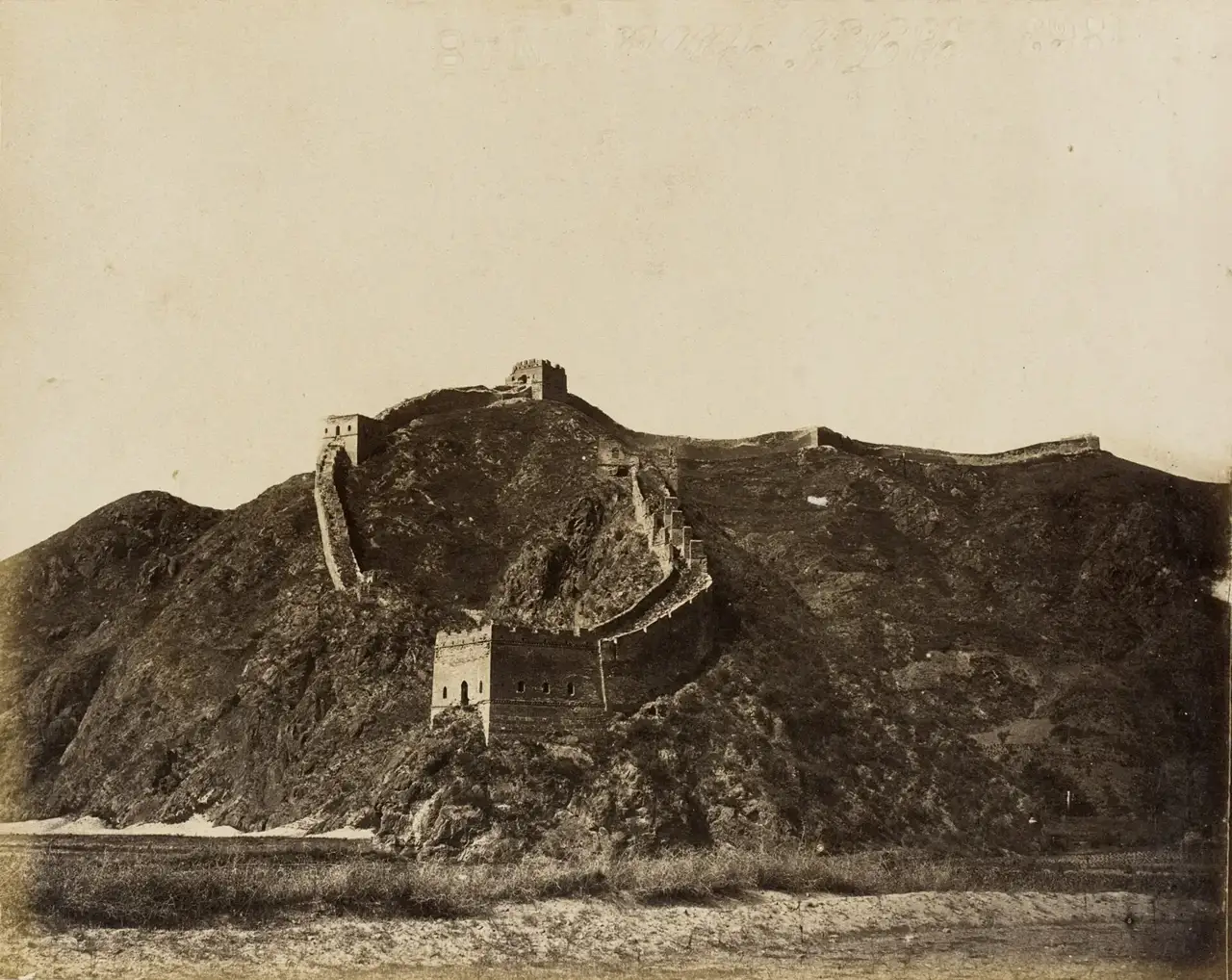
1900 · The court's flight
As the Eight-Nation Alliance enters Beijing, Empress Dowager Cixi leaves the capital for Xi'an, crossing Badaling. Foreign photographers record the section, and the wall begins to circulate as an image.
1909 · Zhan Tianyou's railway
The Beijing–Zhangjiakou line opens, the first major railway designed and built by Chinese engineers, under Zhan Tianyou. The Qinglongqiao zigzag and the Badaling tunnel overcome the mountain grade.
1952–1957 · Restoration and opening
In an initiative backed by Guo Moruo, the government restores the pass's north and south sections. In 1957 Badaling becomes the first stretch of the Great Wall opened to organized visits.
1972 · Nixon climbs the north section
On February 24, 1972, Richard and Pat Nixon visit Badaling during the trip that reopens China–US relations. Margaret Thatcher, Ronald Reagan, and Gorbachev follow the same route the following decade.
1984–1987 · Campaign and World Heritage status
The “Love China, Restore Our Great Wall” campaign, launched in 1984, funds restoration work through public donations. In 1987 Unesco inscribes the Great Wall on the World Heritage list, and Badaling becomes the showcase stretch.
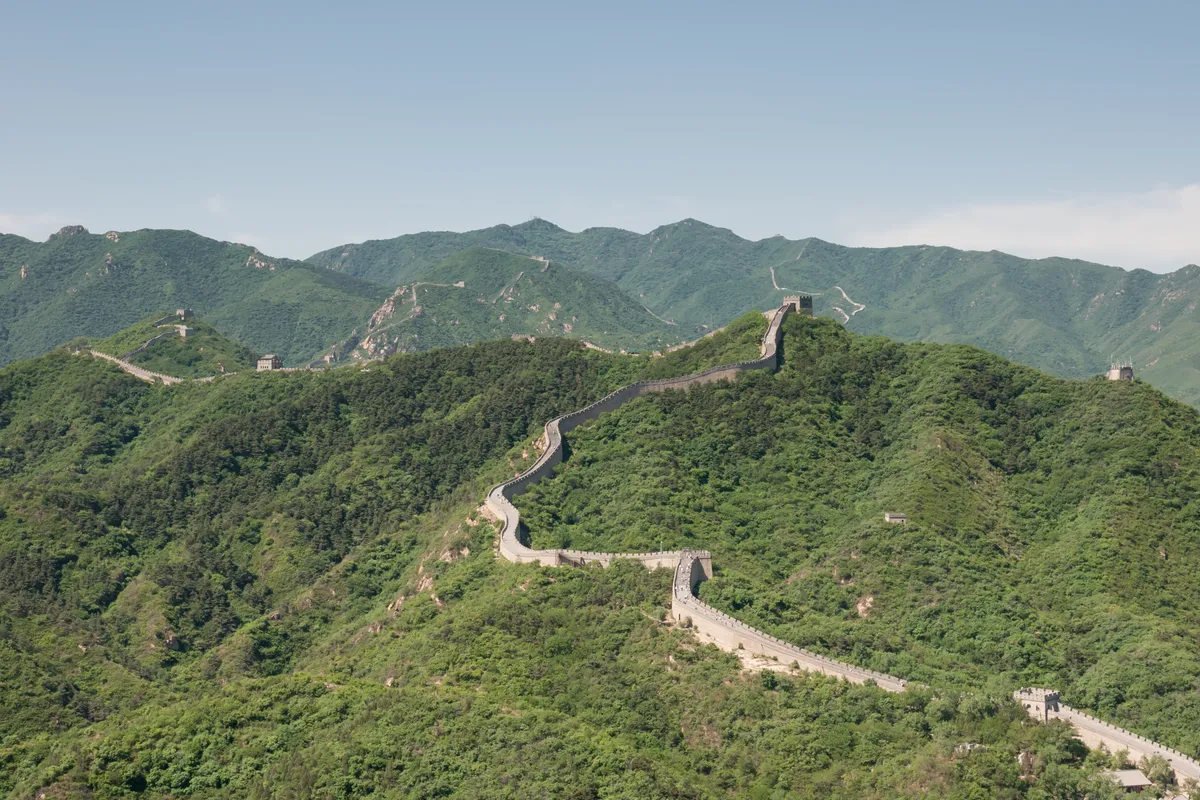
2019–2026 · Daily quota and bullet train
On June 1, 2019, the 65,000-visitor daily cap takes effect, with named tickets. On December 30 of that year, Badaling Changcheng station opens, about 102 m below ground, on the Beijing–Zhangjiakou high-speed line.
Complete history
The Guangou gorge: a fold in the terrain
Badaling exists because of a fold in the terrain. The Guangou gorge cuts through the Jundu range for about 20 km and is the shortest route between the steppe, the Yanqing basin, and the plain where Beijing sits. Whoever controls the gorge controls access to the capital, and that was understood early: around 555 the Northern Qi were already raising rammed-earth walls in the area. Between 1211 and 1215 Mongol troops used the same corridor to reach Zhongdu, the city the Jin had made their capital on the site of what would become Beijing.
The brick wall you see today dates from after 1421
The brick wall visited today is a late answer to that problem. When Emperor Yongle moved the capital from Nanjing to Beijing, in 1421, the pass stopped being a distant frontier and became a domestic defense, 80 km from the palace. The Juyongguan fortress was reinforced and, in 1505, the outer rampart was completed at Badaling: about 12 km of granite and brick with 43 towers, a wall about 7.8 m high and 6 m wide at the top, built to let five horses pass side by side. The east gate bears 居庸外镇, “outpost of Juyong”; the west one, engraved in 1582, reads 北门锁钥, “the key to the north gate.” None of it worked as intended: in April 1644 Li Zicheng's peasant army crossed the corridor and took Beijing, and months later the Qing entered from the east, annexed the steppe, and turned the wall into a fortification with no enemy.
Abandonment and rediscovery, from photography to the 1909 railroad
Two centuries of neglect followed. The wall returns to the scene for two reasons, both external. The first is photography: after 1860, and especially with Cixi's flight through Badaling in 1900, European and American travelers fix the image of the wall snaking across the range as a symbol of the whole country. The second is the railway. In 1909 the Beijing-Zhangjiakou line opens, designed by Zhan Tianyou, with the Qinglongqiao zigzag and the Badaling tunnel solving the climb. It was the first major Chinese railway without foreign engineering, and it's the one that puts the pass a few hours from the capital, creating the first weekend visitors.
The turn into an attraction dates from the 1950s
Its conversion into a national attraction dates from the 1950s. The stretch was restored from 1952 and opened in 1957, the first on the entire line, and in the following decades Badaling hosted practically every head of state visiting Beijing, which fixed the idea that the Great Wall is that 3.74 km stretch of steps. In 1984 the “Love China, restore our Great Wall” campaign raised donations for the work, and in 1987 came the Unesco listing. From the late 1980s on, the stretch has drawn several million visitors a year, around 9 to 10 million before 2020, with all the commerce that implies: a cable car, a toboggan, engraved-medal stalls and an entire village living off parking and lunch.
A quota of 65,000 visitors a day, since 2019
The present is an attempt to manage that volume. Since June 1, 2019, a quota of 65,000 people a day has applied, with tickets issued in your name and a capacity traffic light. On December 30, 2019, Badaling Changcheng station opened on the Beijing–Zhangjiakou high-speed line, dug about 102 m inside the mountain, which cut the trip from Beijing to around 25 minutes. The 2022 Winter Games brought the alpine and sliding events to Xiaohaituo, in the same Yanqing District, and left new roads and hotels. Since 2019, the Great Wall National Cultural Park program has been reorganizing the surroundings, with museum and access works that still close parts of the complex.
Geography and shape of the city
The gorge and the ridges
Badaling sits in the northern gorge of the Guangou corridor, a roughly 20 km cleft in the Jundu range, the southern end of the Yan Mountains, linking the Beijing plain (about 50 m elevation) to the Yanqing basin (about 500–600 m). The village sits at 652 m; the wall climbs the ridges up to 1,015 m at North Tower 8, the Beibalou, the highest point of the stretch.
The restored wall and the strip of services
The restored wall is 3.74 km long with 19 towers (12 on the steeper northern branch and 7 on the southern branch, with gentler ramps), a fraction of the original 12 km and 43 towers; the rest runs on in ruins across the mountains. What's been built around it is a linear sequence of parking lots, gates, a service plaza and restaurant streets squeezed between the G6 Beijing–Lhasa expressway, the 1909 railroad and the high-speed tunnel.
An air funnel between basins
The climate is continental monsoon, but the pass is consistently 3 to 5 °C colder than central Beijing and much windier, because it works as an air funnel between the two basins.
In 1900, fleeing the foreign troops that had entered Beijing, Empress Dowager Cixi escaped west by way of Badaling.
Between the village, at 652 m, and the Beibalou, at 1,015 m, the wall covers the climb in about 1 km of continuous stairs.
Culture
The wall in China's national anthem, written in 1935
Badaling works as a national symbol as much as a place. The wall appears in the lyrics of the Chinese national anthem, “March of the Volunteers,” written by Tian Han in 1935, which speaks of building “a new Great Wall” with flesh and blood, and in a line by Mao from the same year, now carved on a stele at the foot of the northern branch. The visit follows a script taught by school, television and diplomacy: climb, photograph the quote, buy the medal with your name engraved and go back down.
Brass engraving, wedding photo shoots, and school trips
Its status as a national symbol has created a small trade at the foot of the wall. Stalls engrave brass on the spot, couples do wedding photo shoots on the battlements, schools bring whole classes in uniform, and the shops at the base live off water, corn, hats and fridge magnets. The scholarly counterpoint is three kilometers away: Zhan Tianyou, engineer of the 1909 railroad, is a textbook figure, and his statue at Qinglongqiao gets school visits for the same reason as the wall, to prove a national capability.
Yanqing added a sporting layer
Yanqing district added a recent sporting layer. The 2008 Games road cycling race finished on circuits by the wall, in the Juyongguan area, and the 2022 Winter Games put alpine skiing and the sledding tracks at Xiaohaituo, 25 km to the north, leaving behind cable cars, roads, and hotels that now serve year-round mountain tourism. In the off-season, local cultural life is rural and seasonal: temple fairs at Lunar New Year, ice lanterns in January, apple harvest in October.
Carved on a stele at the foot of the northern branch, Mao's 1935 line about those who reach the Great Wall became a school catchphrase and gave rise to the medals engraved with your name.
Festivals and events
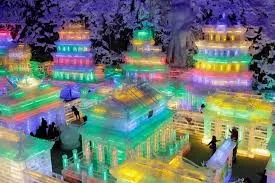
Longqingxia Ice Lantern Festival
In 2026, the festival was announced for January 15 to early March, at Longqing Gorge, 35–45 km to the northeast. Large-scale illuminated ice sculptures; the festival has been held since the 1980s. Check the dates of the edition you intend to visit.
 AI illustration
Wall at Night
The 2026 season was announced for April 30 to October 6, between North Tower 4 and South Tower 4. Entry was from 6:30pm to 9pm; illumination from 7:20pm to 10pm, subject to each day’s programme. The night ticket is separate from the daytime ticket. Check the edition and hours before booking.
 AI illustration
Red Leaf Season
The second half of October, in Badaling National Forest Park, as the mountains change colour. Hongyeling offers a view of the wall from outside, but check whether that trail is open: the park’s June 2026 reopening announcement kept the route closed.
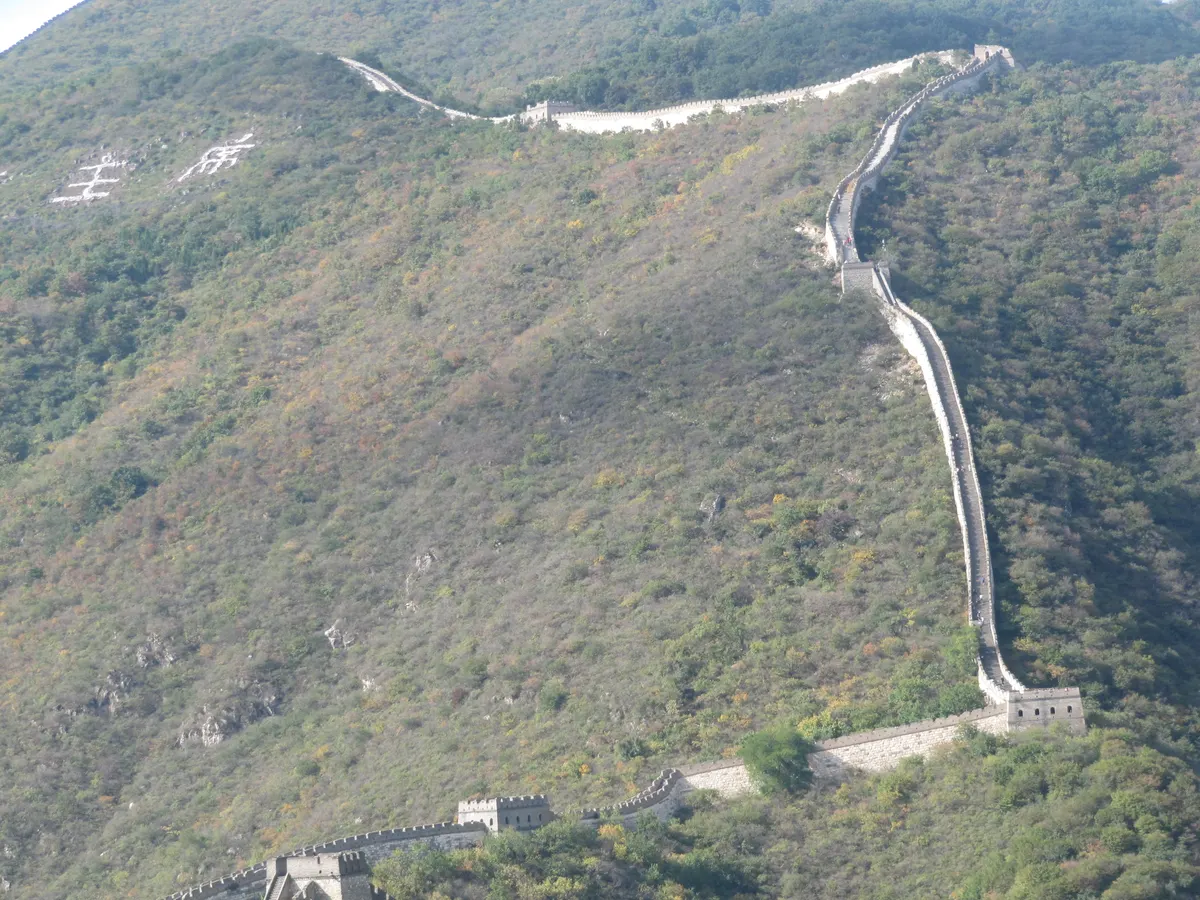
October Golden Week
The 2026 national holiday was scheduled for October 1 to 7. If you can, choose another week to visit Badaling: demand is high and admission is controlled. Book ahead; do not count on getting a ticket on arrival.
 AI illustration
Spring Festival
Lunar New Year, in January or February; in 2026 it fell on February 17. Yanqing holds temple fairs, and the pass turns cold and windy. Check the programme for the edition you intend to visit.
Books and films
“The Great Wall: China Against the World, 1000 BC-AD 2000”, by Julia Lovell (2006)
Explains why successive dynasties built walls and why they nearly always failed. It's an antidote to the idea of a single, eternal wall.
“The Great Wall of China: From History to Myth”, by Arthur Waldron (1990)
Demonstrates that the image of one continuous, millennia-old wall is a modern construction, largely European. It's the book that reorganizes what you see at Badaling.
“The Great Wall Revisited”, by William Lindesay (2008)
Rephotography of the Ming wall: the same towers in images from 1870 to 2000. It shows how much of Badaling is 20th-century reconstruction.
Frequently asked questions
Badaling: how do you get there by bullet train from Beijing?
The standard route is the Beijing–Zhangjiakou high-speed line, which leaves from Qinghe (or, for some schedules, Beijing North) for the station next to the wall, with departures every 30 to 60 minutes, a ¥16 to 31 ticket, and about 25 minutes of travel.
Badaling: what's the currency and how much is it worth?
The currency is the yuan renminbi (CNY, ¥), at about ¥7.1 to the dollar and ¥1.3 to the real in 2026.
Badaling: what's the best time to go?
From mid-September to the end of October is the best window, with 15 to 25°C and clear skies after the summer rains, and the leaves change color in the second half of October.
Badaling: do I need to bring my physical passport?
The physical passport is checked at the turnstile, one by one, and the line stalls behind anyone digging for the document at the bottom of their bag.
Badaling: what is Yanqing huoshao?
Flatbread baked in a wall oven, toasted outside and hollow inside, split open and filled with meat or egg. Sold in the morning on the streets of Yanqing, ¥3 to 8.
Other cities in the country
China ↗- Days
- 4
- When
- Sep–Oct
- Per person/day
- Average 40–70 USDMid-range · per person/day
Cost scope
Per person per day: accommodation, meals, urban transport, visits and a small allowance for extras. Flights excluded; larger purchases vary. Editorial estimate, not a quote.
- Days
- 3
- When
- Sep–Nov
- Per person/day
- Average 450–900 CNYMid-range · per person/day
Cost scope
Per person per day: accommodation, meals, urban transport, visits and a small allowance for extras. Flights excluded; larger purchases vary. Editorial estimate, not a quote.