Japan
Sapporo
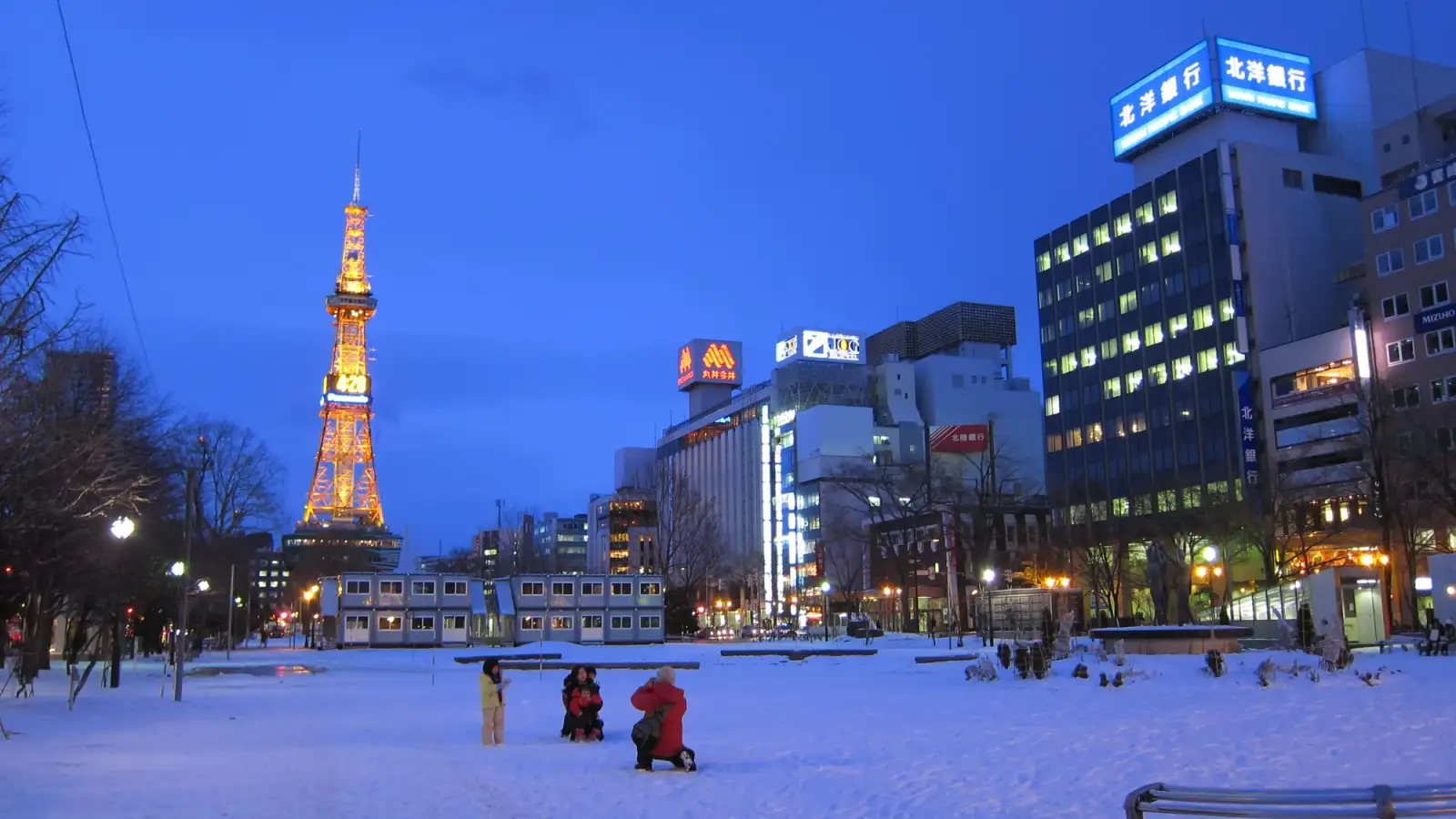
Sapporo: snow in February, a cool summer and mountains at the edge of the city
Days I'd stay two days in Sapporo and add a third for Otaru.
How the guide reaches this number
The first day covers the center on foot, from the fish market to the brick government building, and ends in the east, at the Beer Museum. The second goes west: the shrine at the foot of Maruyama, the Okurayama jump and, in the late afternoon, Mount Moiwa, which gives the best view of the city. The third day belongs to the canal and warehouses of Otaru, half an hour away by train. With a fourth day, I'd change pace with Jozankei and its hot spring baths, or with Moerenuma Park and the Historical Village, for anyone who wants more architecture and colonization history. In February, I'd arrive during the Snow Festival and leave the evenings for the lit sculptures of Odori and Susukino. With only one day, I'd do the center and go up Moiwa at dusk.
2–3
Start with the basic programme and choose extensions for the time you have.
When February, during Snow Festival week, and June to September; from December to March there is snow and ice on the sidewalks.
How the guide reaches this number
Winter runs from December to March, with frequent snow: in the 1991–2020 normals, the average high is below zero in January (−0.4 °C) and snowfall accumulated over the winter totals about 479 cm. It is the season of the Snow Festival, in early February, and of the ski areas; sidewalks get slippery, and the sun sets early. In April and May the snow melts, cherry trees bloom between late April and early May and lilacs appear in May; the Moiwa ropeway closes for a few weeks in spring for maintenance, and the dates are posted on its website. Summer is cool by Japanese standards, with an average high of 26.4 °C in August, and is the season of open-air beer gardens and, outside the city, of the Furano lavender in July. September and October bring the autumn festival in Odori and the autumn colors in Jozankei. November is the passage into winter, with the first snows and the year-end lights.
Per person/day Budget around JPY8,720; mid-range around JPY19,600; comfortable around JPY35,700 per person per day, based on spending reported by travelers to Budget Your Trip (checked October 2026).
How the guide reaches this number
Indicative figures, excluding travel to the destination.
Budget around JPY8,720; mid-range around JPY19,600; comfortable around JPY35,700 per person per day, based on spending reported by travelers to Budget Your Trip (checked October 2026). Indicative figures, excluding travel to the destination.
Per person per day: accommodation, meals, urban transport, visits and a small allowance for extras. Flights excluded; larger purchases vary. Editorial estimate, not a quote.
Salta · among the cheapestZermatt · among the priciest
Right in the middle of them. The tick marks the median. Compared by the middle of each city’s daily range, converted at the 24 Sept 2026 exchange rate.
 What Nilo thinks
I'd recommend Sapporo to people who like eating around a table with friends, beer with a history and architecture that tells how a place was invented. The wood and brick buildings of the center, like the former Hōheikan hotel, painted blue and white in Nakajima Park, show the moment when Japan called in American advisers to colonize the island, and the lilac brought by an American educator in 1889 became the city's tree. At the table, I'd go from jingisukan on the domed griddle, with the bib some places offer, to a bowl of soup curry with the spiciness of your choice, and I'd save the hairy crab for a special dinner, because it is expensive. To end the night in Susukino, some cafés serve ice cream parfait into the early morning, and that is how I'd finish. The Shiroi Koibito cookie factory I'd leave for people traveling with children.Sapporo was drawn on paper in 1869, on a plain that until then was Ainu land, and it still reads like a map: gridded streets, blocks numbered from a long park that cuts through the center from east to west. It is in this park, Odori, that the city shows itself in every season. In February it becomes a gallery of snow sculptures more than 15 meters tall; in summer, with an average high of 26.4 °C in August, it fills with flower beds and outdoor tables. To the west, the plain ends in mountains: one has a ropeway to the summit, from where the whole grid fits in a single glance, and on another the ski jump of the 1972 Winter Games is still in use. To the south, within the same municipality, lies the hot spring town of Jozankei; to the west, by the sea, the port of Otaru, which was once more important than the capital.
Quick facts
- Population
- 1,959,505 inhabitants in the municipality of Sapporo (ten wards, 1,121.26 km²), city estimate for October 1, 2026.
- Founded
- 1869, when the Meiji government set up the headquarters of the Hokkaido Colonization Commission (Kaitakushi) here. Before that, the plain was Ainu territory, with a few trading posts of the Matsumae domain.
- Country and region
- Japan, capital of Hokkaido Prefecture, in Ishikari Subprefecture.
- Language
- Japanese. In the center, addresses follow the grid: Kita (north) or Minami (south) counted from Odori Park, Nishi (west) or Higashi (east) from the Sosei River.
- Currency
- Japanese yen (JPY).
- Time zone
- Asia/Tokyo, UTC+9 all year, with no daylight saving time.
- Best time to go
- February, during Snow Festival week, and June to September; from December to March there is snow and ice on the sidewalks.
- Average cost per day
- Budget around JPY8,720; mid-range around JPY19,600; comfortable around JPY35,700 per person per day, based on spending reported by travelers to Budget Your Trip (checked October 2026). Indicative figures, excluding travel to the destination.
What’s new
Recent changes that affect the plan, with date and source.
When to go
February, during Snow Festival week, and June to September; from December to March there is snow and ice on the sidewalks.
January
-6° to 0°C
108 mm of rain
9 h 22 min of daylight
National holidays
Jan 1 – 3, 2027 · long weekend · New Year's Day
Jan 9 – 11, 2027 · long weekend · Coming of Age Day
Jan 1, 2028 · New Year's Day
Jan 8 – 10, 2028 · long weekend · Coming of Age Day
Source: Nager.Date. Holiday dates shift; check close to your trip.
February
-6° to 0°C
92 mm of rain
Best time10 h 34 min of daylight
National holidays
Feb 11 – 14, 2027 · long weekend · Foundation Day
Feb 20 – 23, 2027 · long weekend · The Emperor's Birthday
Feb 11 – 13, 2028 · long weekend · Foundation Day
Feb 23, 2028 · The Emperor's Birthday
Source: Nager.Date. Holiday dates shift; check close to your trip.
March
-2° to 5°C
78 mm of rain
11 h 55 min of daylight
National holidays
Mar 21, 2027 · Vernal Equinox Day
Mar 18 – 20, 2028 · long weekend · Vernal Equinox Day
Source: Nager.Date. Holiday dates shift; check close to your trip.
April
3° to 12°C
55 mm of rain
13 h 25 min of daylight
National holidays
Apr 29 – May 5, 2027 · long weekend · Shōwa Day
Source: Nager.Date. Holiday dates shift; check close to your trip.
May
9° to 18°C
56 mm of rain
14 h 40 min of daylight
National holidays
Apr 29 – May 5, 2027 · long weekend · Constitution Memorial Day, Greenery Day, Children's Day
Source: Nager.Date. Holiday dates shift; check close to your trip.
July
18° to 25°C
91 mm of rain
Best time15 h 03 min of daylight
National holidays
Jul 17 – 19, 2027 · long weekend · Marine Day
Source: Nager.Date. Holiday dates shift; check close to your trip.
August
19° to 26°C
127 mm of rain
Best time13 h 57 min of daylight
National holidays
Aug 11, 2027 · Mountain Day
Source: Nager.Date. Holiday dates shift; check close to your trip.
September
15° to 23°C
142 mm of rain
Best time12 h 31 min of daylight
National holidays
Sep 18 – 20, 2027 · long weekend · Respect for the Aged Day
Sep 23 – 26, 2027 · long weekend · Autumnal Equinox Day
Source: Nager.Date. Holiday dates shift; check close to your trip.
October
8° to 16°C
110 mm of rain
11 h 04 min of daylight
National holidays
Oct 9 – 11, 2027 · long weekend · Sports Day
Source: Nager.Date. Holiday dates shift; check close to your trip.
November
2° to 9°C
114 mm of rain
9 h 44 min of daylight
National holidays
Oct 31 – Nov 3, 2026 · long weekend · Culture Day
Nov 21 – 23, 2026 · long weekend · Labour Thanksgiving Day
Nov 3, 2027 · Culture Day
Nov 20 – 23, 2027 · long weekend · Labour Thanksgiving Day
Source: Nager.Date. Holiday dates shift; check close to your trip.
December
-4° to 2°C
115 mm of rain
9 h 01 min of daylight
High, shoulder and low season
High · February, July and August
February is the month of the Snow Festival, in the first half of the month, which concentrates visitors in Odori and Susukino; book lodging in advance. July and August are the cool summer, with beer gardens in Odori and, in July, the Furano lavender.
Shoulder · December, January, June, September and October
December and January bring snow, skiing and the year-end lights, with short days and icy sidewalks. June has the Yosakoi Sōran and the Hokkaido Jingu festival; September and October, the autumn festival and the colors of the leaves in Jozankei.
Low · March, April, May and November
Transition months. In March there is still snow and ice on the sidewalks; in April and May the snow melts, and the Moiwa ropeway closes for a few weeks in spring for maintenance: check the dates beforehand. May has cherry trees and lilacs; November, the first snows.
How the year changes
Winter runs from December to March, with frequent snow: in the 1991–2020 normals, the average high is below zero in January (−0.4 °C) and snowfall accumulated over the winter totals about 479 cm. It is the season of the Snow Festival, in early February, and of the ski areas; sidewalks get slippery, and the sun sets early. In April and May the snow melts, cherry trees bloom between late April and early May and lilacs appear in May; the Moiwa ropeway closes for a few weeks in spring for maintenance, and the dates are posted on its website. Summer is cool by Japanese standards, with an average high of 26.4 °C in August, and is the season of open-air beer gardens and, outside the city, of the Furano lavender in July. September and October bring the autumn festival in Odori and the autumn colors in Jozankei. November is the passage into winter, with the first snows and the year-end lights.
The same numbers as a table
| Month | Temperature °C | Rain mm |
|---|---|---|
| January | -6 to 0 | 108 |
| February · | -6 to 0 | 92 |
| March | -2 to 5 | 78 |
| April | 3 to 12 | 55 |
| May | 9 to 18 | 56 |
| June · | 13 to 22 | 60 |
| July · | 18 to 25 | 91 |
| August · | 19 to 26 | 127 |
| September · | 15 to 23 | 142 |
| October | 8 to 16 | 110 |
| November | 2 to 9 | 114 |
| December | -4 to 2 | 115 |
Nilo's tips
Snow Festival
I'd book the hotel as soon as the festival announces the dates for the edition: it takes place in early February, at the Odori, Susukino and Tsudome sites. The snow sculptures of Odori and the ice ones of Susukino look best at night, lit up, and the Tsudome is the site for anyone bringing children.
Ropeway in spring
The ropeway, the funicular and the road up Mount Moiwa close for a few weeks in spring for maintenance. If the trip falls in that period, I'd check the dates on the ropeway's website and swap Moiwa for the TV Tower lookout.
Underground passages
On a day of snow or rain, I'd use the corridors beneath the city between Sapporo Station, Odori and Susukino. They link much of the first-day circuit without an icy sidewalk.
Trails and bears
Before hiking up Maruyama or Moiwa, I'd check the city's bear sightings map. In 2026 there were records near Maruyama and Miyanomori.
Summit camera
I'd look at the live camera on Mount Moiwa before leaving the hotel. With fog or low cloud, the view disappears, and it is better to switch days.
Explore the map
Explore the map, read about the other places and plan your travel days in the app.
Open the appWhat to see
Leave for last, if time allows: Sapporo TV Tower · Hokkaido University · Shiroi Koibito Park · Atama Daibutsu · Hitsujigaoka Observation Hill
Odori Park
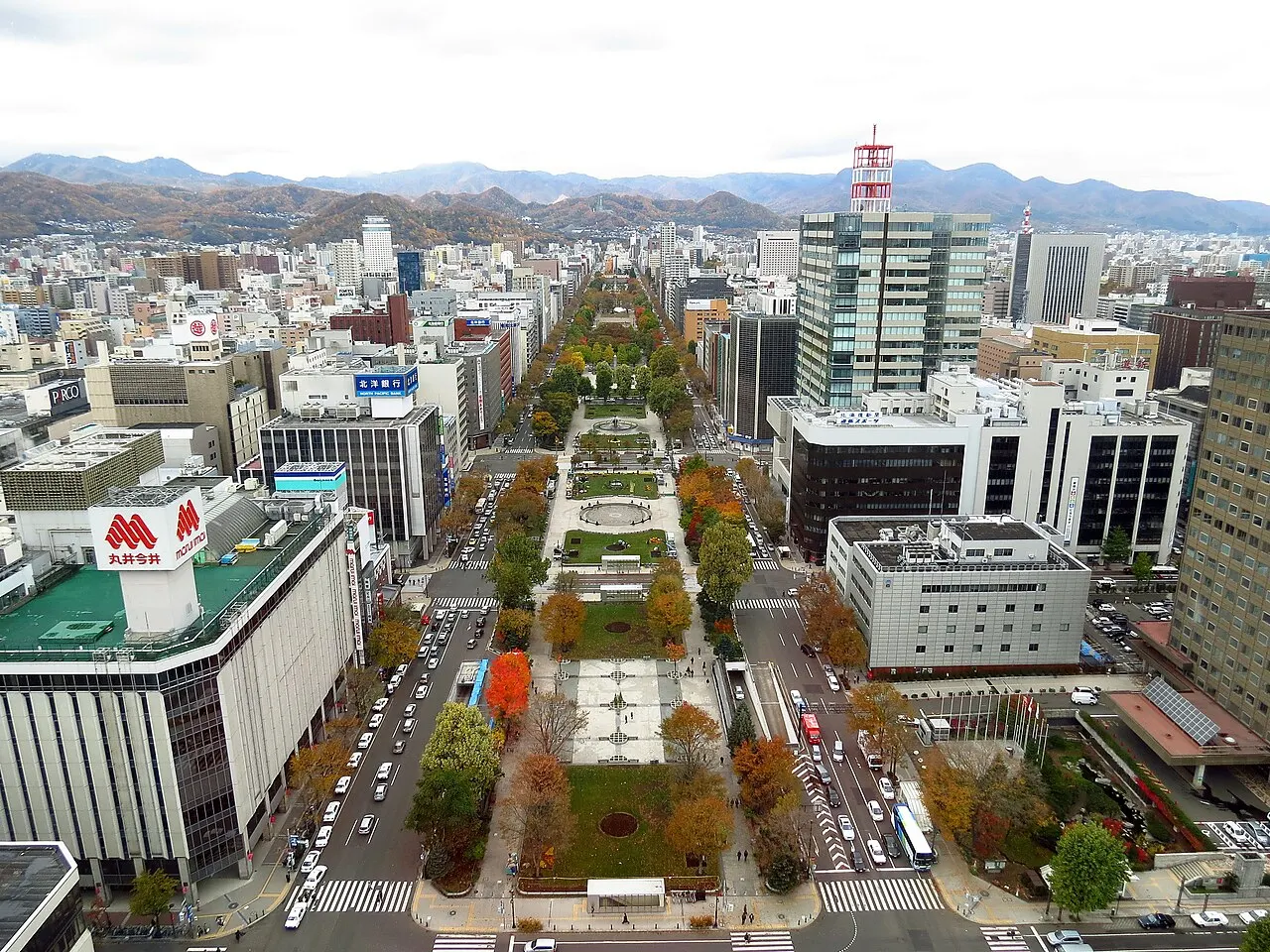
The axis of the city is a green strip of about 1.5 km that crosses 12 blocks of the center, from east to west. In summer it has flower beds, fountains and open-air beer gardens; in February it is the main site of the Snow Festival, with snow sculptures taller than 15 meters; in winter it also hosts markets and lights. Outside event dates, it is worth a stroll and serves as a reference for finding your way: everything in the center is measured from it.
Check access
Next edition: 4 – 11 February 2027 (checked Oct 2026) source
Former Hokkaido Government Office Building
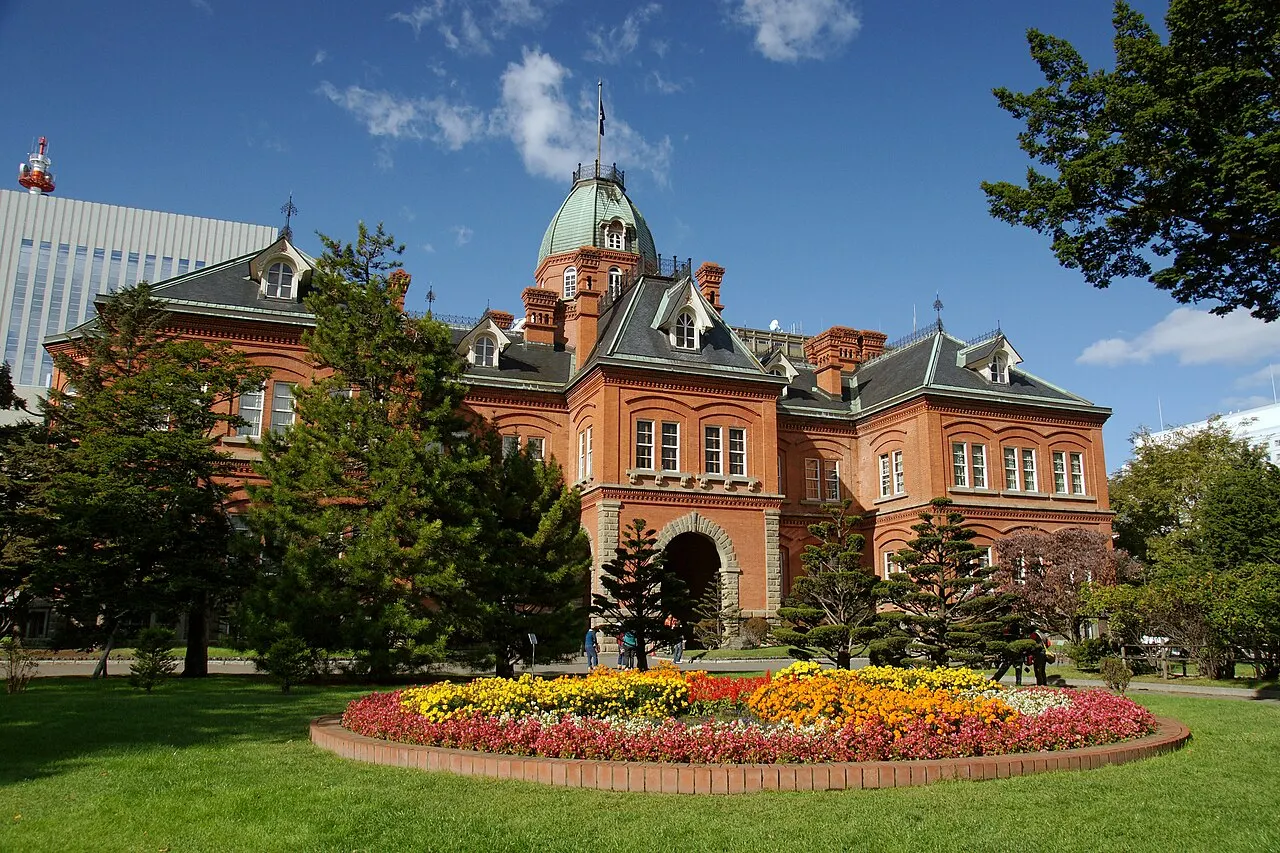
The red brick building from 1888, known as Akarenga, was the seat of the island's government and reopened in July 2025, after renovation, as an exhibition space about Hokkaido. It is open from 8:45 a.m. to 9 p.m. (last entry 8:30 p.m.); admission to the exhibition rooms is ¥300 for adults, and climbing the octagonal tower is a separate ¥1,200 option. The ground floor, with a shop and restaurant, is free to enter, and the surrounding garden has about a thousand trees. It closes on some days of the year, such as December 29 to January 3; check the calendar on the website.
Check access
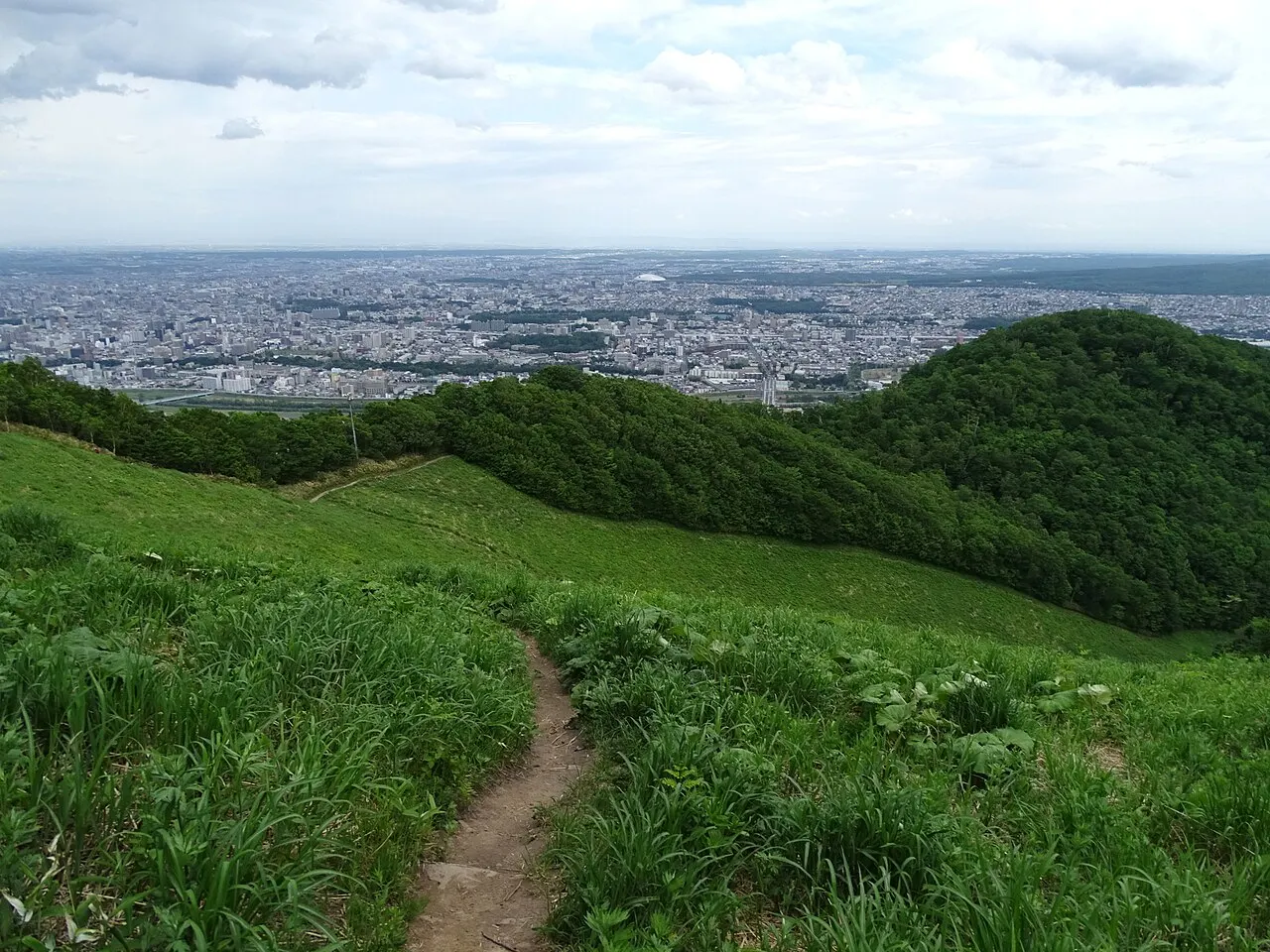
Mount Moiwa
The 531-meter mountain, southwest of the center, has the city's most complete lookout. You go up by ropeway to the intermediate station and then by a small funicular to the summit; the round trip on both costs ¥2,100 for adults. It runs from 10:30 a.m. to 10 p.m. from April to November and from 11 a.m. to 10 p.m. from December to March, with the last ascent at 9:30 p.m. It closes on December 31 and January 1, and for a few weeks a year in spring for maintenance: during that period the ropeway, the funicular, the summit shop and the scenic road are all shut. Check the dates on the website before going. To get there, get off the streetcar at the Ropeway-Iriguchi stop; a free bus runs to the base station every 15 minutes (on weekdays only from 5:17 p.m.), or walk about 500 meters. It is quite cold at the summit when the lights come on.
Check access
Mount Moiwa ropeway, mini cable car, summit shop and scenic road closed for annual maintenance: 29 March – 28 April 2027 (checked Oct 2026) source
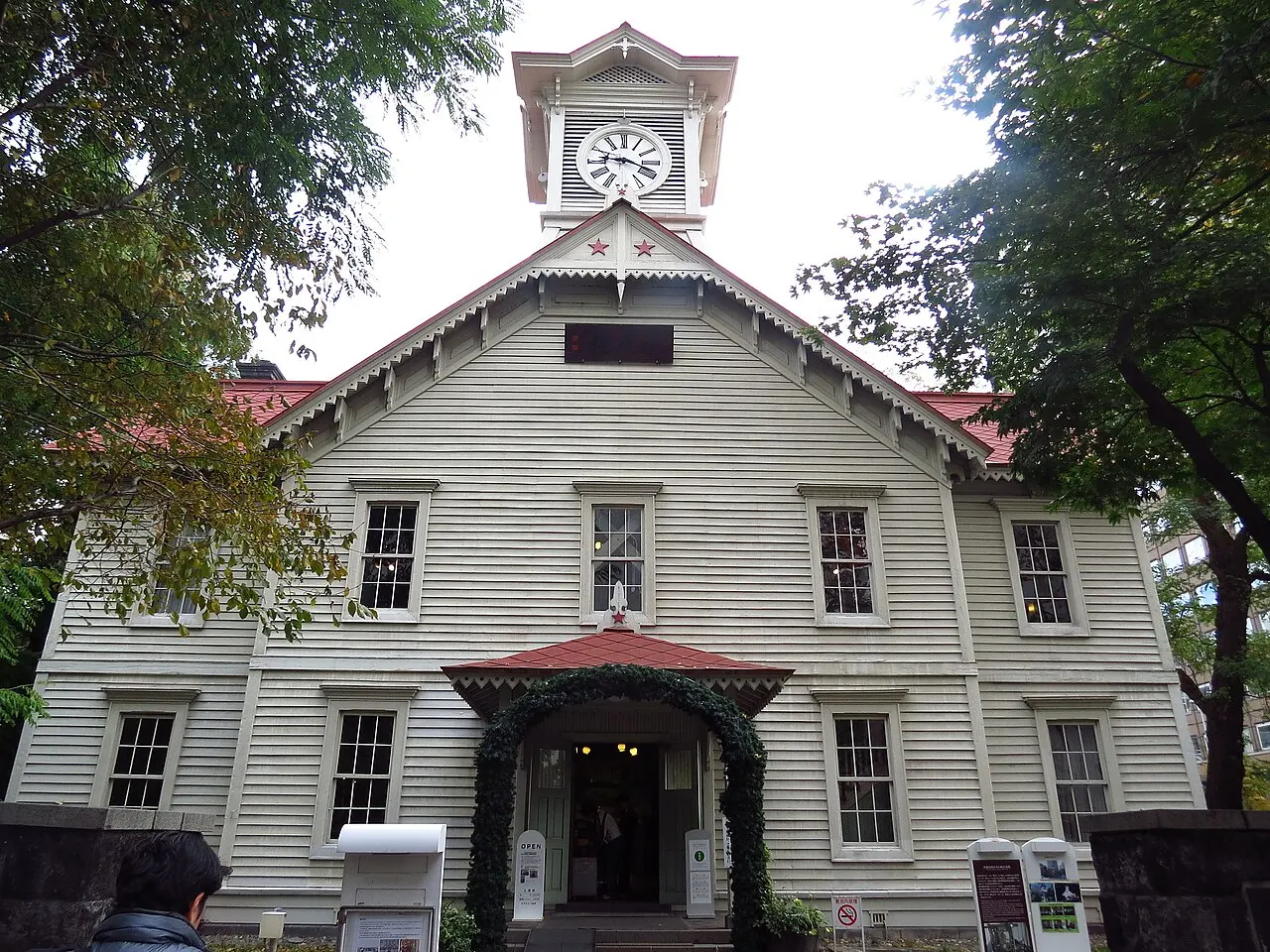
Sapporo Clock Tower
The wooden building from 1878 was the drill hall of the Sapporo Agricultural College, and the clock was installed in 1881. It is an Important Cultural Property of Japan. Inside, the first floor tells the story of the college and the second shows the clock mechanism, of American manufacture. It is open from 8:45 a.m. to 5:10 p.m. (entry until 5 p.m.), closed January 1 to 3, and admission is ¥350 for adults. It is small and sits between tall buildings; the visit takes little time.
Check access
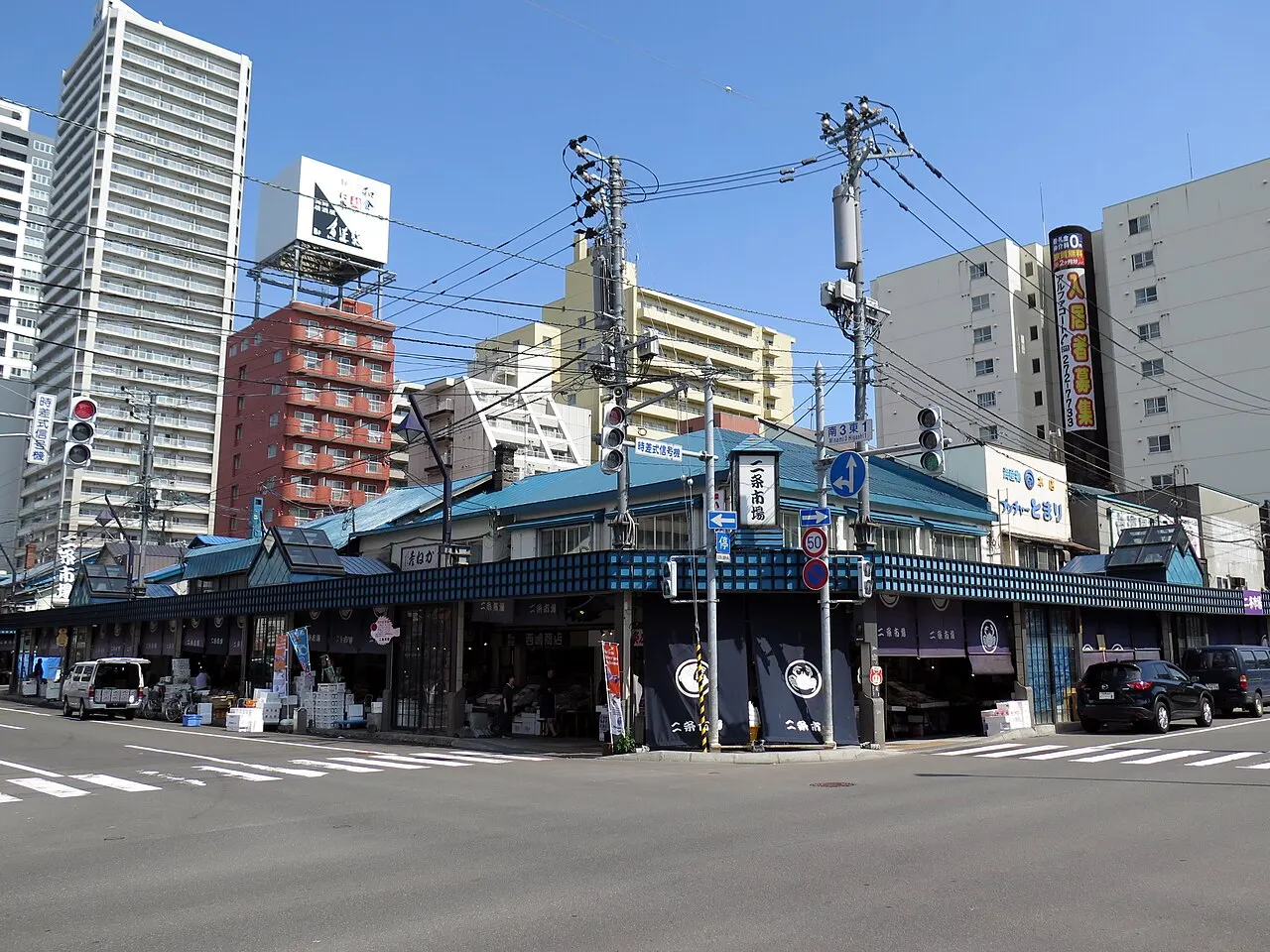
Nijo Market
The fish and seafood market at Minami 3 Higashi 1, with more than 125 years of history, is known for seafood donburi at breakfast. The stalls sell fish, crab and other seafood, and small restaurants serve the bowls. The market association states that it does not sell seafood by phone and asks people to beware of suspicious calls made in its name.
Check access
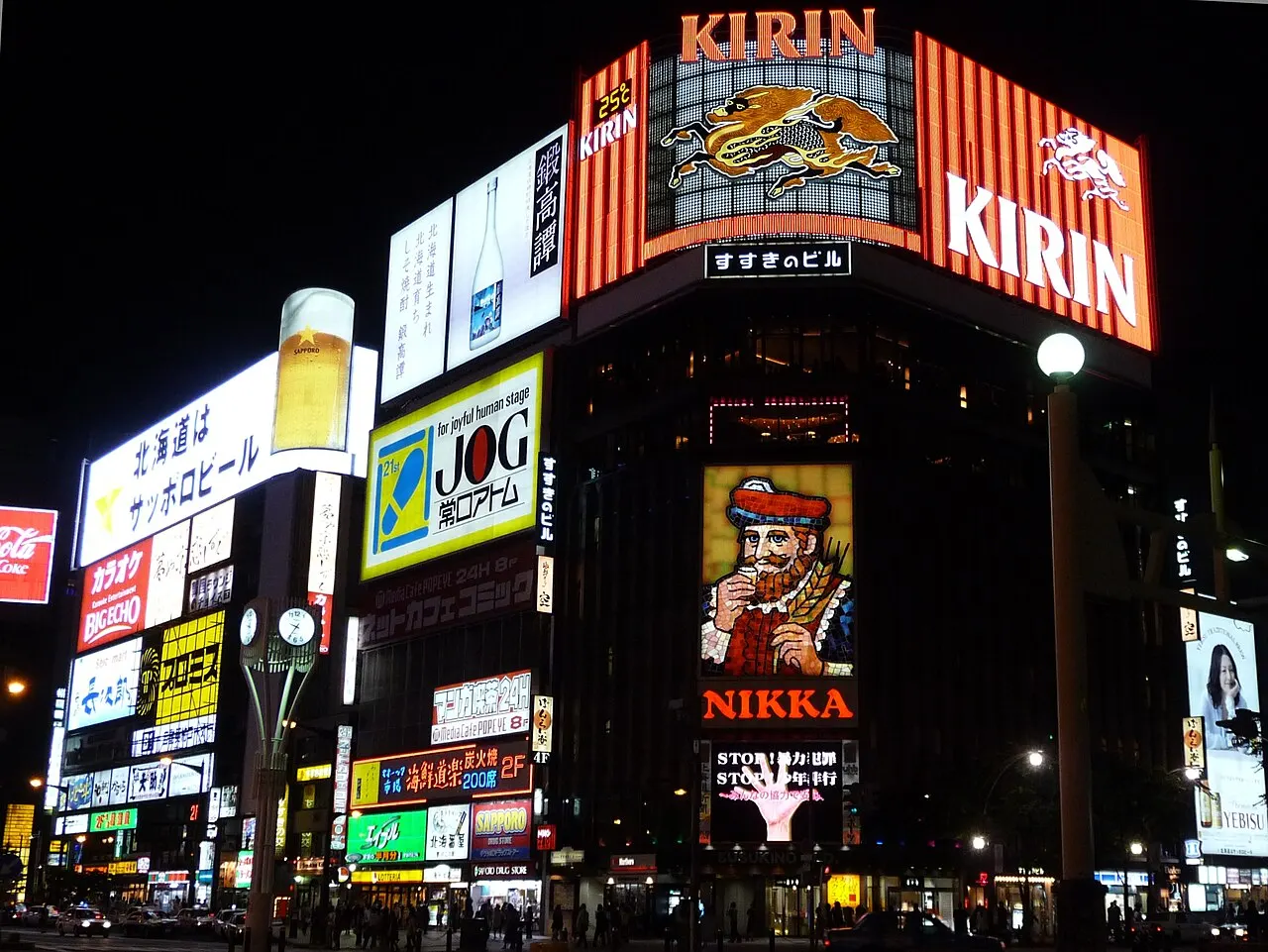
Susukino
The nightlife district south of Odori is the main place to go out at night. Ganso Ramen Yokocho, an alley of small ramen shops that turned 75 in 2026, is here, as are many bars and parfait cafés that stay open into the early morning. During the Snow Festival, the district is the site of the ice sculptures.
Check access
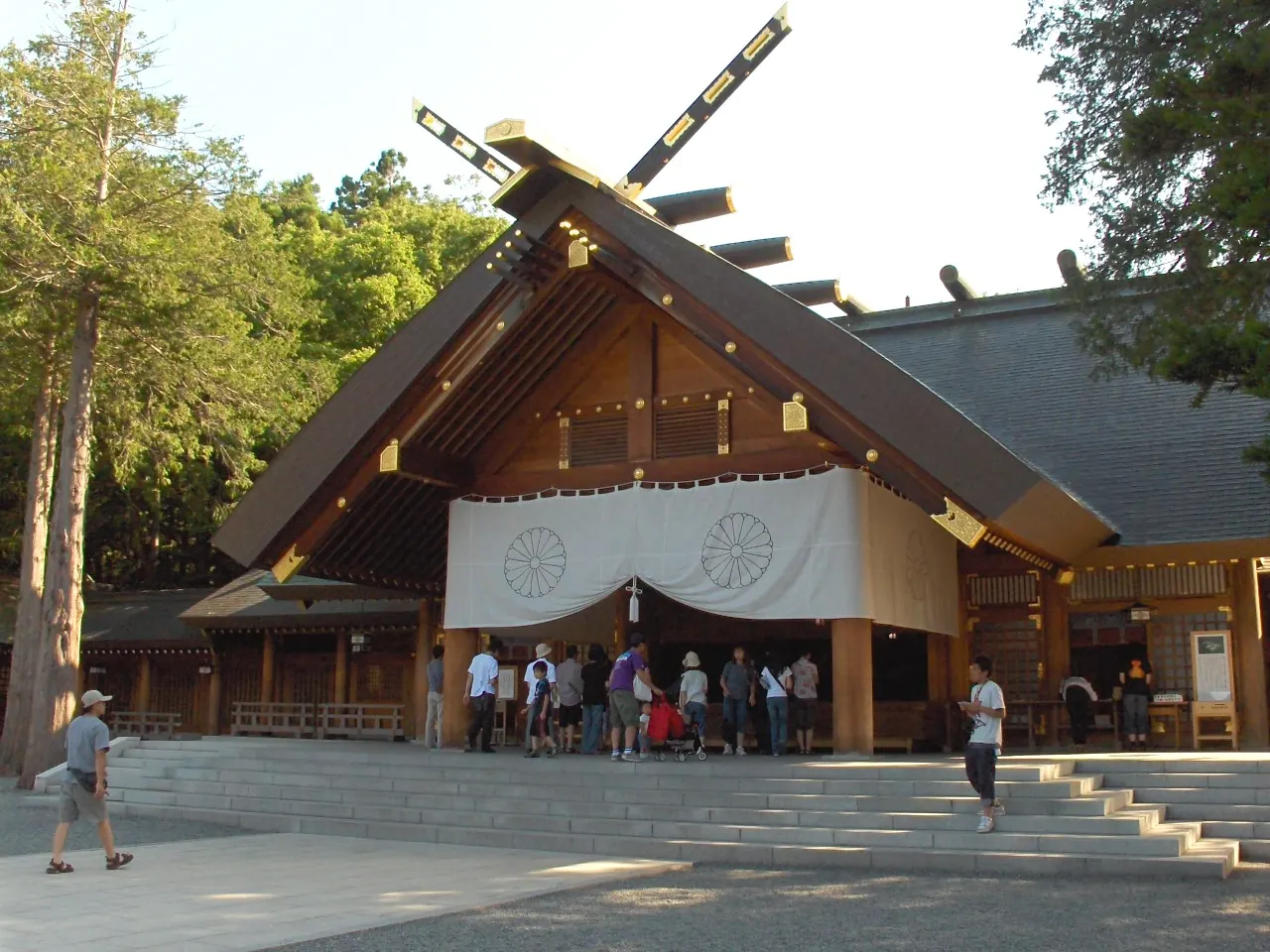
Hokkaido Jingu
The island's main Shinto shrine was founded in 1869 and occupies the forest at the foot of Mount Maruyama. It enshrines the three deities associated with the colonization of Hokkaido and, since 1964, Emperor Meiji. It is surrounded by more than a thousand cherry trees, which bloom in spring. The annual festival, the Sapporo Matsuri, runs from June 14 to 16. You reach it on foot from Maruyama-Kōen Station, crossing Maruyama Park.
Check access
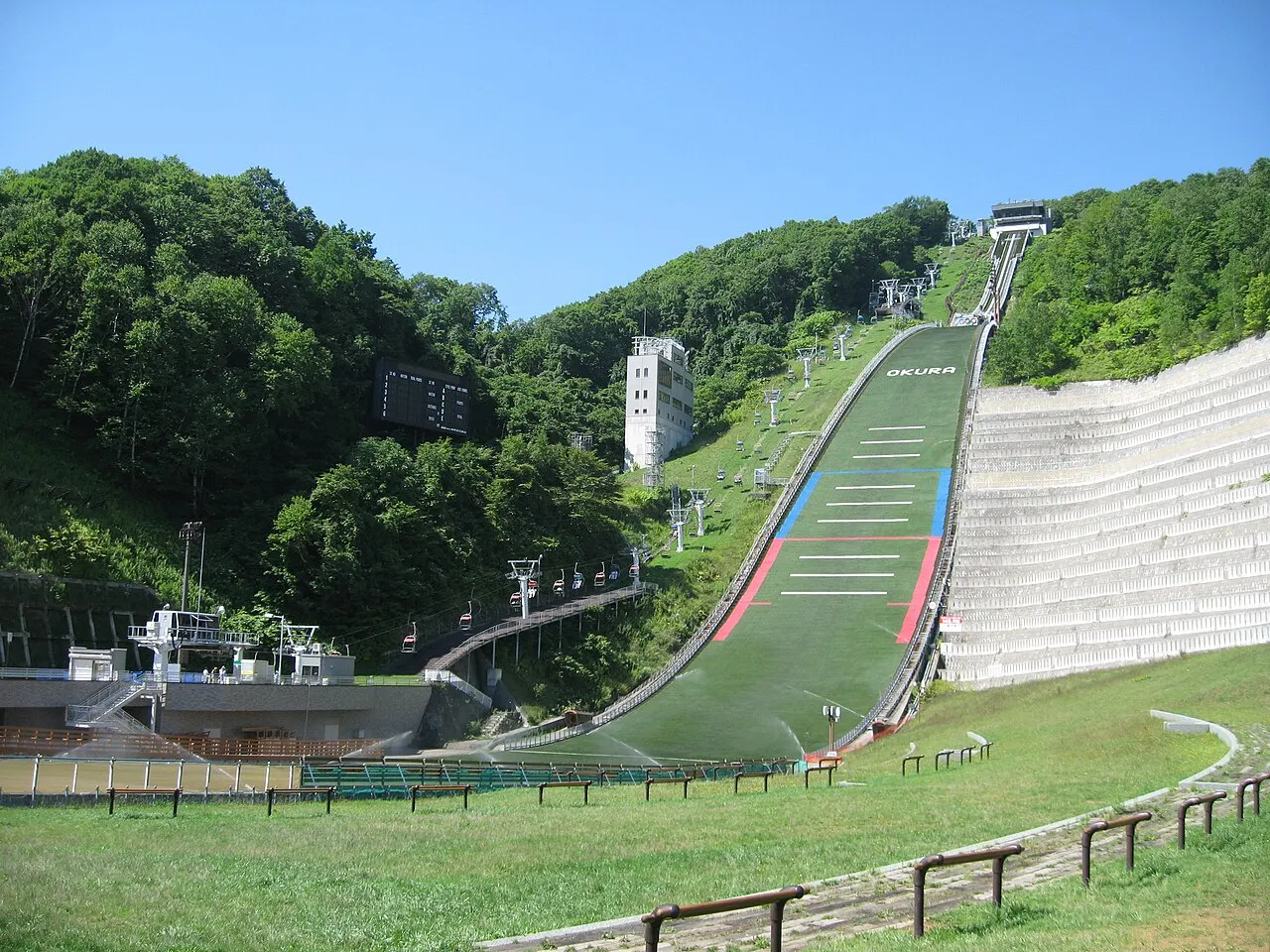
Okurayama Ski Jump Stadium
The jump used at the 1972 Winter Games still hosts competitions. A chairlift goes up to the lookout at the top of the jump, with a view of the gridded center; at the foot is the Sapporo Olympic Museum. The chairlift runs from 8:30 a.m. to 6 p.m. from April 22 to October 31 and from 9 a.m. to 5 p.m. from November 1 to April 5, and stops on competition days, official training days or in bad weather; from April 6 to 21 there is no published schedule. Ticket sales end 30 minutes before closing. From the Maruyama bus terminal (platform 4), the JR Hokkaido Bus Kuramaru bus takes about 15 minutes for ¥240; it does not run from December 31 to January 3.
Check access
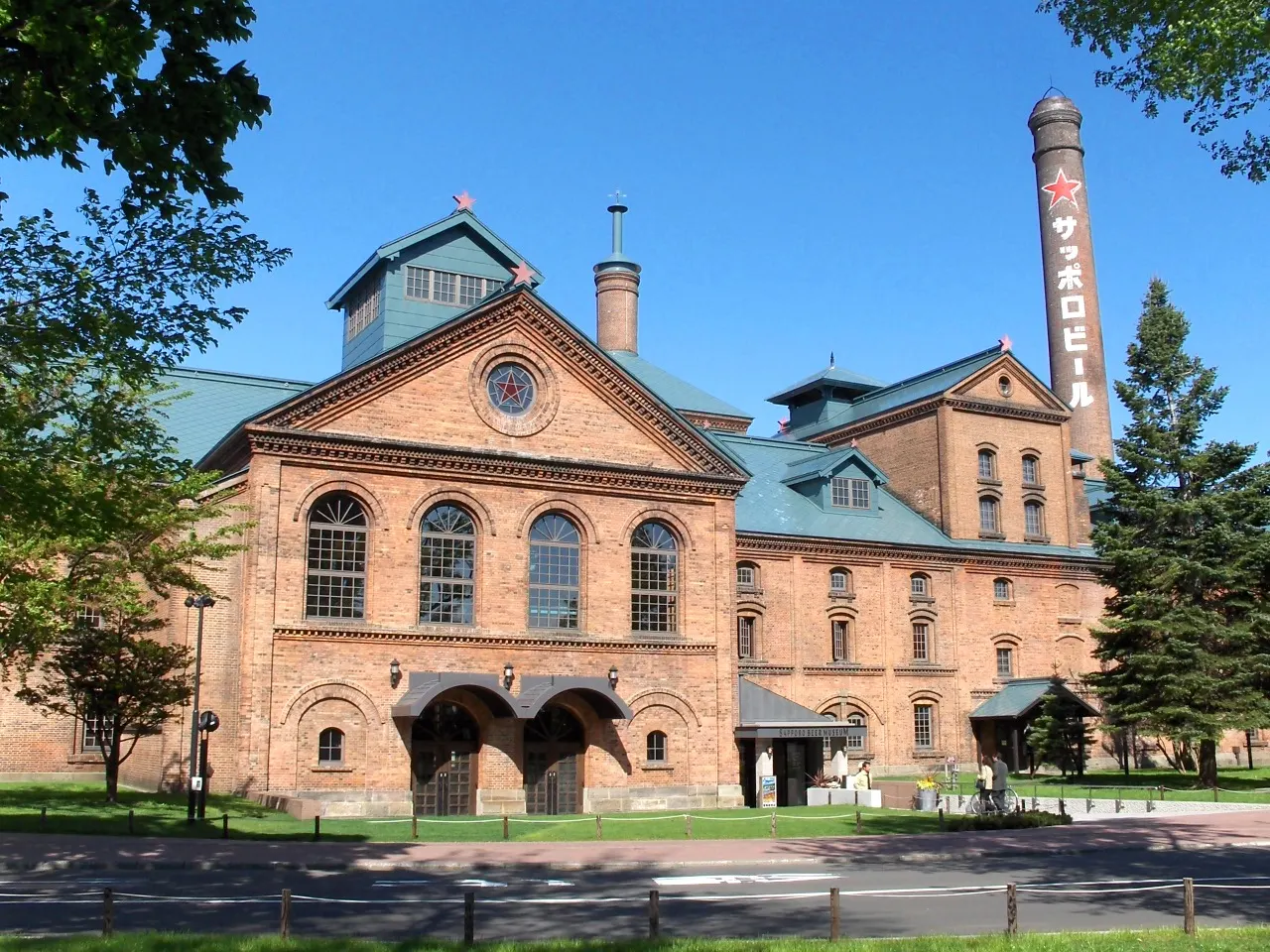
Sapporo Beer Museum
The museum occupies a Meiji-era brick building, designated a Hokkaido heritage site, and tells the story of Sapporo Beer from the colonization, in 1876. It reopened on July 1, 2026, after renovation, and admission is now charged: ¥1,000 for adults, ¥500 from junior high school (chūgakkō) up to age 19 and free through elementary school, with a discount for Hokkaido residents. It is open from 11 a.m. to 6 p.m., with last entry at 5:30 p.m.; the self-guided visit takes 15 to 40 minutes and has an audio guide in English, Korean and Chinese. The guided tour with two tastings lasts about 55 minutes, costs ¥2,000, requires a reservation, is in Japanese only and does not run on Mondays. There is no beer production on site. Next door, the Sapporo Beer Garden serves jingisukan and draft beer in brick halls. It is east of the center, at Kita 7 Higashi 9, near JR Naebo Station.
Check access
More places in the guide
Moerenuma Park
A former landfill in the northeast of the city became a 188-hectare park designed by the sculptor Isamu Noguchi and fully opened in 2005. It has a glass pyramid, an artificial mountain with a view of the city, fountains and more than 1,600 cherry trees, which bloom between late April and early May. In winter it offers snowshoeing and cross-country skiing. Entry to the park is free. It is far from the center: take the Toho subway line to Kanjo-dori-Higashi and then a bus.
Historical Village of Hokkaido
An open-air museum in Atsubetsu, east of the city, with houses, shops and other buildings from the colonization period gathered as a village. Admission is ¥1,000 for adults; students through the end of chūgakkō (the Japanese school stage that ends at around age 15) and people over 65 do not pay, and the combined ticket with the neighboring Hokkaido Museum, which covers the island's natural history and that of the Ainu, is ¥1,400. It is open from 9 a.m. to 5 p.m. from May to September and from 9 a.m. to 4:30 p.m. from October to April, closed on Mondays in that period (open on Mondays during the Snow Festival) and from December 29 to January 3. From the Shin-Sapporo bus terminal, JR Hokkaido Bus takes about 20 minutes.
Sapporo TV Tower
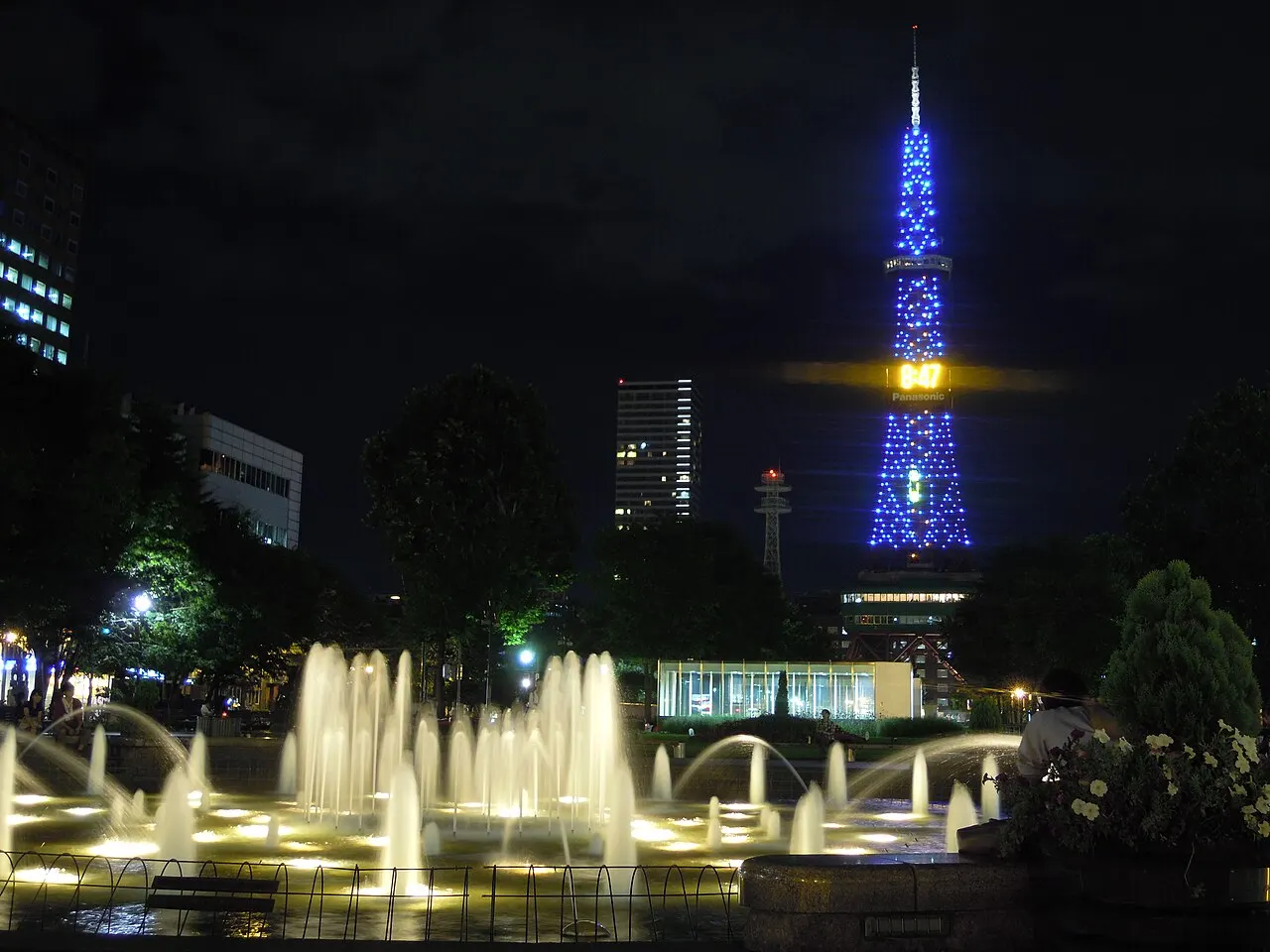
The metal tower at the east end of Odori Park has an observation deck open from 9 a.m. to 10 p.m., with last entry at 9:50 p.m.; tickets are sold on the third floor. The view frames the whole park in a straight line, which helps you understand the city grid. Since Mount Moiwa offers a wider view, going up here is optional.
Hokkaido University
The campus north of Sapporo Station grew out of the Agricultural College founded in 1876, with strong American influence, and preserves historic buildings on a spacious campus. Nearby, the university's Botanical Garden has a greenhouse and a small museum with objects from the Meiji period. It is a calm walk for anyone staying near the station.
Shiroi Koibito Park
The factory of Shiroi Koibito cookies, with white chocolate between two layers of biscuit, welcomes visitors with a shop, cafés and a route showing the production; check the website for which areas are paid. The tone is that of a brand theme park. It is in Miyanosawa, in Nishi ward, near Miyanosawa Station, the western end of the Tozai subway line.
Atama Daibutsu
At the Makomanai Takino Cemetery, about an hour from the center, a 13.5-meter Buddha statue stands inside a stone enclosure, surrounded by 150,000 lavender plants that bloom in July. It is in an active cemetery, and calls for the discretion of a place of worship.
Hitsujigaoka Observation Hill
A hill in Toyohira, south of the center, with the full-length statue of William S. Clark facing the city, sheep grazing just behind and a view of the countryside with Sapporo in the distance. It also has the Snow Festival Museum, a jingisukan restaurant and, in winter, a snow play area. It is open from 9 a.m. to 5 p.m. from October to May (last entry 4:45 p.m.) and from 9 a.m. to 6 p.m. from June to September (last entry 5:45 p.m.); admission is ¥1,000 for adults and ¥500 for children in elementary school and chūgakkō. From Sapporo Station, the Toho subway line takes about 14 minutes to Fukuzumi, and from there the Fuku 84 bus (platform 4) takes about 10 minutes for ¥240.
Nilo’s itinerary
Start with the basic programme and choose extensions for the time you have.
Plan my days in the app ↗Day 1 · The gridded center, from the market to the brewery
Start early at Nijo Market (Minami 3 Higashi 1), with a seafood donburi for breakfast.
Walk about three blocks north to the TV Tower, at the east end of Odori Park. Go up to the observation deck (opens at 9 a.m.) only if the sky is clear and you don't plan to go up Mount Moiwa the next day.
A few blocks north, visit the Clock Tower (opens at 8:45 a.m., ¥350). Half an hour is enough for the hall and the clock mechanism.
Return to Odori Park and walk it westward. In February, this is the stretch of the Snow Festival sculptures; in summer, of flowers and open-air beer gardens.
Have soup curry for lunch in the center, between Odori and the station.
After lunch, head to the former Hokkaido Government Office Building (Kita 3 Nishi 6), with the exhibitions about the island (¥300) and, if you like, the octagonal tower (¥1,200). Allow about an hour and be out by 4 p.m.
Take a taxi or a JR train to Naebo Station for the Sapporo Beer Museum (Kita 7 Higashi 9), which has last entry at 5:30 p.m. (¥1,000; the self-guided visit takes 15 to 40 minutes). Afterward, have jingisukan for dinner at the Sapporo Beer Garden next door; reserve a table in advance.
Return to the center by taxi or by JR train from Naebo.
Day 2 · The shrine, the Olympic jump and the evening on Moiwa
From Sapporo Station, take the Namboku subway line to Odori and transfer to the Tozai line to Maruyama-Kōen (¥250 in total); if you are at Odori or Susukino, take the Tozai directly. Cross Maruyama Park to Hokkaido Jingu and allow an hour.
Go back to the Maruyama bus terminal, next to the station, and take the Kuramaru bus from platform 4 to the Okurayama ski jump stadium (about 15 minutes, ¥240). Ride the chairlift to the lookout and visit the Olympic Museum. Check beforehand that it isn't a competition or official training day, when the chairlift doesn't run; ticket sales end 30 minutes before closing.
Take the bus back to Maruyama, have lunch in the neighborhood and rest at the hotel in the early afternoon.
In the late afternoon, take the streetcar in Susukino to the Ropeway-Iriguchi stop. Continue on the free bus to the ropeway base station (on weekdays it starts at 5:17 p.m.) or walk about 500 meters. Go up Mount Moiwa before sunset and stay until the city lights come on. The last ascent is at 9:30 p.m. If the ropeway is in its spring maintenance closure, the alternative is the TV Tower lookout.
Come down, ride the streetcar back to Susukino and have miso ramen for dinner at Ganso Ramen Yokocho.
If you stay longer
Day 3 · Otaru
Day trip
The former commercial port of Hokkaido lies to the west, by the sea; the JR Airport rapid train takes 32 minutes from Sapporo Station on the fastest service, and there is also the Otaru express bus of Hokkaido Chuo Bus. The canal, finished in 1923, is 1,140 meters long; on the renovated stretch, a promenade with 63 gas lamps runs alongside the stone warehouses with timber frames, lit up at dusk. The Sakaimachi shopping street is near the canal. The city celebrates the seafood of the season, such as mantis shrimp (shako) in spring and autumn, and sea urchin, herring and scallops in June. In February, the Otaru Yuki Akari no Michi festival lights the city with candles. A full day is enough, returning in the evening.
Food
Miso ramen
Sapporo is considered the birthplace of ramen with miso broth, rich and hot, good for winter. Ganso Ramen Yokocho, in Susukino, has gathered small ramen shops in an alley for 75 years.
Soup curry
Thin curry served like a soup, in a bowl with large pieces of chicken or other meats and whole vegetables. Some places let you choose the spiciness on a long scale. Even in the vegetable versions, the broth may be made with pork bone: ask if you have a dietary restriction.
Jingisukan
Barbecue of mutton or lamb on a domed griddle, named after Genghis Khan. A typical Hokkaido dish, eaten in a group and with beer; at the Sapporo Beer Garden, for example, bibs are provided, because the fat splatters.
Seafood donburi
A bowl of rice topped with raw fish, salmon roe, sea urchin or crab. It is the breakfast at Nijo Market and other markets in the city.
Kegani
Hokkaido hairy crab. It is expensive and appears in the city's seafood restaurants.
Late-night parfait
An ice cream dessert served in a tall glass, ordered to end the night. In Susukino there are cafés that serve parfait until 4 a.m.
Shiroi Koibito
A thin cookie with a layer of white chocolate, individually wrapped. It is sold only in Hokkaido and is the most common travel gift (omiyage) on the island.
Sapporo beer
The brand was born at the colonization commission's brewery in 1876. In summer, Odori Park gains open-air beer gardens.
Where to eat
- Ganso Ramen Yokocho · Susukino
Miso ramen in an alley of small shops side by side, open for 75 years. Good for a quick, hot meal after Moiwa. Choose the shop by the line and the menu at the door, without blocking the entrance of its neighbors.
Source · 2026-10-19
- Sapporo Beer Garden · Higashi ward, next to the Beer Museum
Jingisukan, the mutton barbecue on a griddle, with draft beer, in Meiji-era brick halls designated a Hokkaido heritage site. Suited to groups and to anyone who wants to combine dinner with the museum visit; reserve.
Source · 2026-10-19
- Nijo Market · Minami 3 Higashi 1
Seafood donburi for breakfast, in the small shops among the fish and seafood stalls.
Source · 2026-10-19
- Center and Susukino
Soup curry, with chicken or vegetables and spiciness of your choice. There are places throughout the center; check whether the broth contains meat if you don't eat it.
- Susukino
Late-night parfait at cafés that stay open into the early morning, to end the evening.
· 2026-10-19
Day trips
Otaru
The former commercial port of Hokkaido lies to the west, by the sea; the JR Airport rapid train takes 32 minutes from Sapporo Station on the fastest service, and there is also the Otaru express bus of Hokkaido Chuo Bus. The canal, finished in 1923, is 1,140 meters long; on the renovated stretch, a promenade with 63 gas lamps runs alongside the stone warehouses with timber frames, lit up at dusk. The Sakaimachi shopping street is near the canal. The city celebrates the seafood of the season, such as mantis shrimp (shako) in spring and autumn, and sea urchin, herring and scallops in June. In February, the Otaru Yuki Akari no Michi festival lights the city with candles. A full day is enough, returning in the evening.
Jozankei
The hot spring town lies within the municipality of Sapporo, to the south, in the Toyohira River valley. Jotetsu buses take about an hour from Sapporo Station on the Kappa Liner; check schedules and fares with the operator or the Jozankei tourism association. The salty, hot water (60 °C to 80 °C) wells up from 56 springs on the banks and in the bed of the river, and there are more than 20 hotels with thermal baths. Statues of kappa, a creature of water folklore, are scattered through the valley, and Jozan Gensen Park has a foot bath. In autumn, the leaves change color around the Hōheikyō Dam. It works as a rest day or as a night at a hot spring inn.
Niseko
Hokkaido's best-known ski region lies to the southwest, about two hours by train from Sapporo Station, and brings together four linked areas: Grand Hirafu, Hanazono, Niseko Village and Annupuri. It is not a day trip: it makes sense with an overnight stay, in snow season, as an extension of the trip.
Furano
In central Hokkaido, Furano is known for its summer flower fields; Farm Tomita, one of the oldest lavender fields in Japan, has all four varieties in bloom in July. Because of the distance, it is best to stay overnight in the area and check the JR Hokkaido schedules before planning the trip.
Where to begin
The gridded center, from the market to the brewery
Start early at Nijo Market (Minami 3 Higashi 1), with a seafood donburi for breakfast.
The shrine, the Olympic jump and the evening on Moiwa
From Sapporo Station, take the Namboku subway line to Odori and transfer to the Tozai line to Maruyama-Kōen (¥250 in total); if you are at Odori or Susukino, take the Tozai directly. Cross Maruyama Park to Hokkaido Jingu and allow an hour.
Money
The currency is the yen (JPY). Cards and contactless payments are accepted at many tourist sites, such as the former government building and the Moiwa ropeway, but at market stalls and small shops, confirm first whether they take cards. Tipping is not customary, and some bills already include a service charge. Since April 1, 2026, all lodging in Sapporo charges, per person per night, the municipal tax plus the Hokkaido prefectural one: ¥300 in total when the nightly rate is under ¥20,000, ¥400 between ¥20,000 and ¥50,000, and ¥1,000 from ¥50,000; participants in school trips and their chaperones are exempt. Some reference prices, checked in October 2026, for adults: Clock Tower ¥350; former government building ¥300 (octagonal tower another ¥1,200); Moiwa ropeway and funicular, round trip, ¥2,100; Beer Museum ¥1,000; Historical Village of Hokkaido ¥1,000; Kuramaru bus to Okurayama ¥240.
Getting there and around
Most flights arrive at New Chitose Airport (CTS), southeast of the city. The JR Hokkaido Airport train takes 33 to 43 minutes to Sapporo Station, depending on the type of train: from 9 a.m. to 4 p.m. there are six an hour, one Special Rapid (33 minutes on the fastest), three Rapid (37 minutes) and two Semi-Rapid (43 minutes); car 4 has reserved seats, paid separately. Some trains continue straight through to Otaru. Regional flights within Hokkaido also use the small Okadama Airport, north of the center.
From Tokyo by land, the trip takes about 7.5 hours: the Hokkaido Shinkansen bullet train to Shin-Hakodate-Hokuto (about 4 hours) and the Hokuto express train to Sapporo (about 3.5 hours). For most visitors, flying is more practical.
The subway has three lines that cross at Odori Station: Namboku (north-south), Tozai (east-west, beneath the park) and Toho, curving from northeast to southeast. Sapporo Station is served by the Namboku and the Toho; for the Tozai, transfer at Odori. The fare varies with distance; from Sapporo Station to Maruyama-Kōen, for example, it is ¥250 for adults. The streetcar runs through the southwest of the center from Susukino and passes the Mount Moiwa ropeway stop.
For trains, subway, streetcar and buses, the JR Hokkaido Kitaca card and cards from other regions of Japan, such as Suica, PASMO and ICOCA, work; on JR trains, IC cards are not valid beyond Otaru. The city's SAPICA card is not valid on JR trains.
The center is flat and easy to cover on foot, thanks to the address grid. In winter, the underground passages connect Sapporo Station to Odori and Susukino and avoid much of the ice on the sidewalks. Driving in the center is not worth it: parking is difficult and public transport reaches the main sights.
Safety
Sapporo is a safe city for visitors, and the most common risks come from the weather. In winter, falls on ice are the most frequent problem: wear footwear with good grip and take short steps, and prefer the underground passages in the center. On cold nights, bring warm clothing for lookouts such as Moiwa. Japan has seismic activity: the city keeps a page with shelters and emergency contacts, and it is worth knowing where your hotel's emergency exit is. In the forests west of the city there are brown bears: in 2026, the city recorded sightings and tracks near Maruyama and Miyanomori. Before hiking on Maruyama, Moiwa or other hills, check the city's bear sightings map and follow the warnings at the entrance. Susukino is the main nightlife area and is also an adult-bar zone; people who go to dine and drink at ordinary bars get around without problems.
Before you go
- Plug
- types A and B
- Voltage
- 100 V
- Driving side
- on the left
- Emergency
- Fire 119 · Police 110the source does not list the ambulance number: check it before you go
- Country code
- +81
- Official language
- Japanese
- Currency
- yen (JPY)
Source: Wikidata (CC0), checked September 2026.
Etiquette tips
Tipping
Tipping is not customary. Service is already in the price, and some bills include a service charge.
Queuing at Ramen Yokocho
The shops in the alley sit right next to one another. The management asks that people waiting for a specific shop not block the entrances of its neighbors.
Mistakes to avoid
Buying the SAPICA card thinking it works everywhere. It does not work on JR trains, including the train to the airport and to Otaru; Kitaca, or a Suica brought from another region, works for trains, subway, streetcar and buses in the city and for the train to Otaru.
Going to Shin Ramen Yokocho thinking it is the historic alley. Ganso Ramen Yokocho, the original, states that it has no connection with it.
Expecting to see the factory running at the Beer Museum. The museum has no production equipment; Sapporo's Hokkaido brewery is in another city, Eniwa.
Walking in winter in smooth-soled shoes. The city recommends footwear with grip and extra care on the ground.
Planning the trip up Okurayama without looking at the competition calendar. On competition days and official training days, the chairlift to the lookout does not run.
Useful phrases
こんにちは (konnichiwa)
Hello, good afternoon
ありがとうございます (arigatō gozaimasu)
Thank you very much
すみません (sumimasen)
Excuse me; sorry
これをください (kore o kudasai)
I'd like this one, please
お会計お願いします (okaikei onegaishimasu)
The check, please
味噌ラーメンひとつ (miso rāmen hitotsu)
One miso ramen
札幌駅はどこですか (Sapporo-eki wa doko desu ka)
Where is Sapporo Station?
寒いですね (samui desu ne)
It's cold, isn't it?
Where to stay
- Sapporo Station · People who arrive and leave by train, plan day trips to Otaru and Jozankei or travel with large luggage.: The airport train and the Otaru trains leave from here, and the bus terminal is next door. The historic center is a few blocks away and the underground passages lead to Odori. The drawback is being farther from the restaurants and bars of Susukino, which open late.
- Odori · People visiting for the Snow Festival or who want the middle ground between station and nightlife.: The three subway lines cross here, and on foot you can reach the station, the Clock Tower and Susukino. During festival week, the park is taken over by the sculptures and the crowds; book early.
- Susukino · People who want to dine late, go out at night and have the streetcar to Moiwa at the door.: It concentrates restaurants, ramen and bars, and the streetcar leaves from the district for the foot of Mount Moiwa. The drawback is the nighttime activity and noise, and the presence of adult bars on some streets; pick a hotel on a quieter street.
- Nakajima Kōen · People who prefer to sleep in a quiet area, near a park, without giving up the subway.: It is one subway stop south of Susukino, on the Namboku line, next to Nakajima Park. The drawback is depending on the subway to get to the train station and the day trips.
· 2026-10-19
Districts
Sapporo Station (Kita)
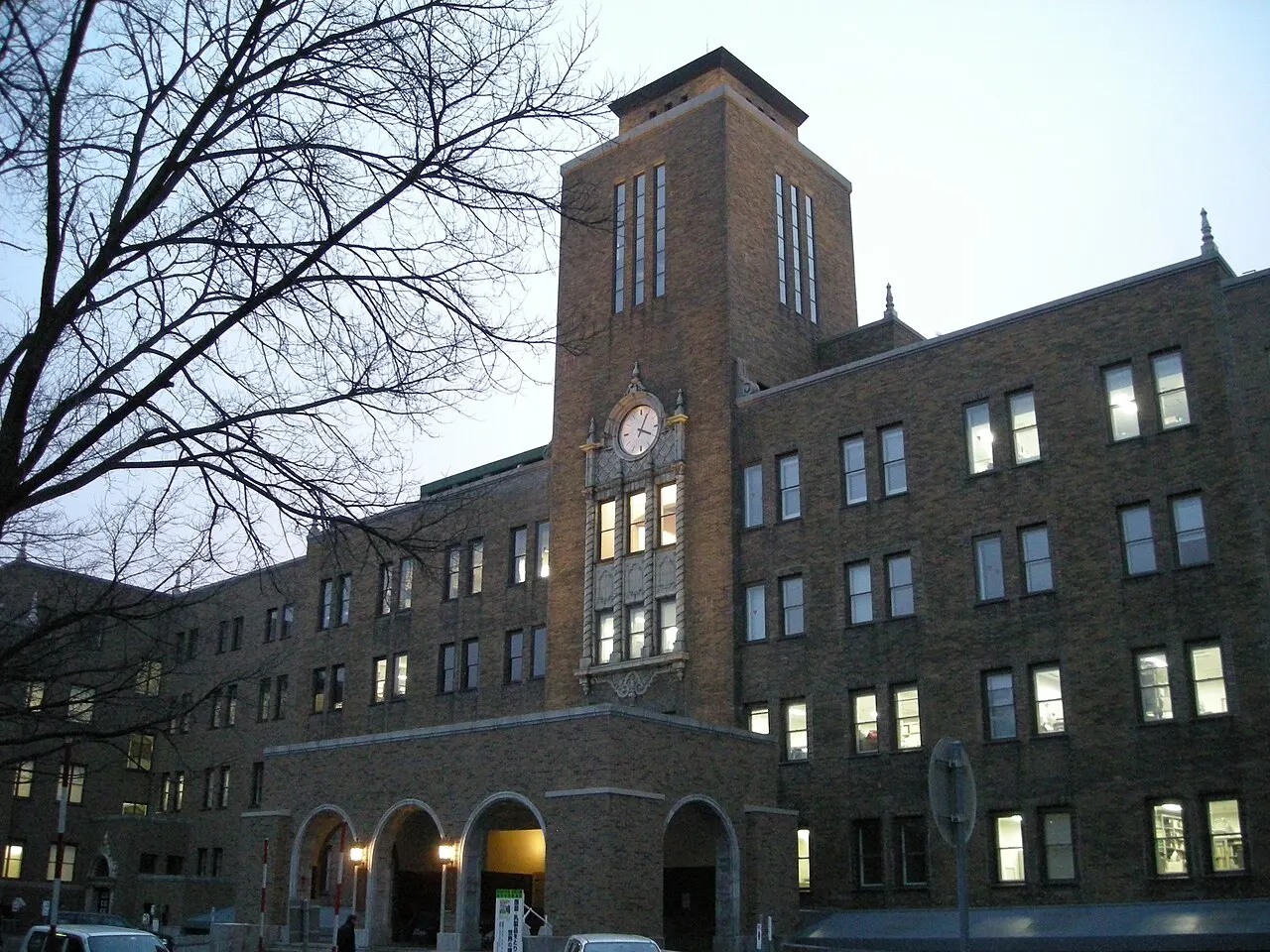
The area around the central train station concentrates shops, hotels and the bus terminal. Trains to New Chitose Airport and to Otaru leave from here. North of the station begins the Hokkaido University campus; to the south, a few blocks away, are the former government building and the Clock Tower.
Odori
The strip of Odori Park is the center of public life: it is where the Snow Festival is set up in February, along with the open-air beer gardens in summer and the winter markets. The three subway lines cross at Odori Station, which makes the district the easiest point to reach in any direction.
Susukino and Tanukikoji
South of Odori, Susukino is the largest nightlife district in Japan north of Tokyo, with bars, restaurants, ramen shops and parfait cafés that stay open into the early morning. It is also an area of adult bars. Between Odori and Susukino runs Tanukikoji, the city's oldest shopping arcade.
Maruyama
West of the center, on the Tozai line (Maruyama-Kōen Station), the Maruyama district brings together the park of the same name, the Hokkaido Jingu shrine and the Mount Maruyama trail. Next to Maruyama-Kōen Station is the terminal where the bus to the Okurayama ski jump departs.
Nakajima Kōen
South of Susukino, Nakajima Park has a pond, old trees, the Hassō-an tea house, the Sapporo Concert Hall and the Hōheikan, a former Western-style hotel from 1880. It is one subway stop south of Susukino, on the Namboku line, and is calmer for anyone who wants to sleep away from the nightlife.
History
Before 1869 · The Ainu plain
The Ishikari plain was the territory of the Ainu people. The name Sapporo comes from the Ainu sat poro pet, translated as great dry river, a reference to the Toyohira River.
1866 · A canal and the first settlers
At the end of the Edo period, work began on digging a canal in the area, and a few settlers put down roots around it, forming the village that preceded the city.
1869 · The colonization headquarters
The Meiji government set up the headquarters of the Hokkaido Colonization Commission in Sapporo. The city was laid out on a grid, with Odori Park as its axis, based on the models of Kyoto and Heijō-kyō.
1871 · American advisers
Kuroda Kiyotaka, vice-president of the commission, asked the United States for help, and Horace Capron began advising on the colonization. The American influence is still visible in the architecture of the center.
1876 · Agricultural college and brewery
The Sapporo Agricultural College opened, with William S. Clark as founding vice-principal, along with the colonization commission's brewery, the origin of Sapporo Beer.
1878 · The college drill hall
The agricultural college inaugurated the wooden building now known as the Clock Tower; the clock was installed in 1881.
1888 · The brick government building
The former Hokkaido Government Office Building, in red brick, was completed and gives the center one of its best-known images.
1950 · First Snow Festival
The first Snow Festival took place. The event grew until it occupied three sites in the city, with Odori Park as the main one.
1970 · One million inhabitants
After the war, Sapporo took over from Otaru as the commercial center of Hokkaido and passed one million inhabitants in 1970.
1971–1972 · Subway and Winter Games
The subway opened in 1971. From February 3 to 13, 1972, the city hosted the first Winter Olympics held in Asia; the Okurayama and Miyanomori ski jumps are still in use.
2025 · The red brick reopened
The former Hokkaido Government Office Building reopened to the public on July 25, 2025, after renovation.
Complete history
Sapporo is a planned city, and you notice it on the very first block. Until the mid-19th century, the Ishikari plain was Ainu land, and the city's own name comes from an Ainu expression linked to the Toyohira River. In 1869, the Meiji government decided to settle Hokkaido systematically and set up the Colonization Commission's headquarters here. The city was laid out on a grid, based on the models of Kyoto and the ancient capital Heijō-kyō, and grew around a wide strip down the middle, today's Odori Park.
To develop the island, the commission hired American specialists. Horace Capron, a former U.S. Commissioner of Agriculture, began advising the project in the early 1870s, and William S. Clark helped found the Sapporo Agricultural College in 1876. That period left wood and brick buildings that look out of place in a Japanese city: the college drill hall, now the Clock Tower; the blue-and-white Hōheikan hotel; and the former Hokkaido Government Office Building, from 1888. In the same year as the college, the commission's brewery began operating, the origin of the brand that carries the city's name.
For decades, Sapporo was above all an administrative capital; Hokkaido's commerce and banks were in Otaru, the neighboring port. After World War II, companies and government offices concentrated in Sapporo, and the city grew by taking in people from all over the island until it passed one million inhabitants in 1970. The Snow Festival, created in 1950, and the 1972 Winter Olympics, the first in Asia, gave the city the winter image it keeps today. The subway, opened in 1971, still organizes life in the center.
Today Sapporo is the largest city in Hokkaido and the fifth most populous in Japan. The story of the Ainu and of the colonization is told at the Hokkaido Museum, east of the center, and the former government building reopened in 2025 as an exhibition space about the island.
Geography and shape of the city
Sapporo occupies the southwestern edge of the Ishikari plain, on the alluvial fan of the Toyohira River, a tributary of the Ishikari. The center is flat and laid out on a grid: Odori Park runs east to west and divides the city into north and south, and the Sosei River, which passes beneath the avenue in front of the station, separates east from west. That is why addresses state a position, like Kita 3 Nishi 6. To the west and south, the plain ends in mountains: Mount Maruyama, 225 meters high, next to the Hokkaido Jingu shrine; Mount Moiwa, 531 meters high with a ropeway; and farther out Mount Teine, with a ski area. The municipality is much larger than the urban area: at 1,121 km², it includes valleys and forests to the south, where the hot spring town of Jozankei lies on the banks of the Toyohira. The climate has four well-marked seasons. In the Japan Meteorological Agency's 1991–2020 normals, the average high in January is −0.4 °C and in August 26.4 °C, and snowfall accumulated over the winter totals about 479 cm. Between Sapporo Station, Odori and Susukino, underground passages let you cross the center without stepping on snow.
Culture
Sapporo's culture follows the climate calendar. In February, the Snow Festival fills Odori Park with snow sculptures, Susukino with ice sculptures and the Tsudome, the Sapporo Community Dome, with snow play; many of the sculptures are built by members of the Self-Defense Forces. In May, the lilacs of Odori Park get their own festival: the flower arrived in the city in 1889 with an American educator, Sarah Clara Smith, and became the symbolic tree. In June, the Yosakoi Sōran festival puts hundreds of dance groups on the streets between Odori and Susukino, with music based on the traditional song Sōran Bushi. July and August have the open-air beer gardens of Odori, and September, the autumn festival.
The American heritage of the 19th century is part of the local identity. Buildings such as the Clock Tower and the Hōheikan recall that period, and William S. Clark, first vice-principal of the agricultural college, appears in several statues, such as the one at the Hitsujigaoka lookout. The parting phrase he is said to have told the students when leaving Sapporo, Boys, be ambitious, became a motto known across Japan and is written on many public buildings in Hokkaido. The Ainu past is more discreet in the center; the Hokkaido Museum, to the east, is the place to understand Ainu culture and the colonization of the island.
Winter sport is also a legacy of the 1972 Games: the Okurayama and Miyanomori jumps still host competitions, and the city has six ski areas less than an hour from the center, among them Teine, used in the Games.
In literature, Sapporo appears in two novels by Haruki Murakami, A Wild Sheep Chase and Dance Dance Dance, linked by the fictional Dolphin Hotel. In film, The Idiot, by Akira Kurosawa (1951), transposes Dostoevsky to postwar Hokkaido and was the first feature to show the Snow Festival.
Festivals and events
Sapporo Snow Festival
Held in early February, for about a week, at three sites: Odori Park, with the large snow sculptures; Susukino, with ice sculptures; and the Tsudome, with slides and snow play. The official website publishes the dates for each edition, teaches how to walk on ice and updates the program for each site gradually.
Lilac Festival
In May, in Odori Park, with lilacs in bloom, wine and live music.
Yosakoi Sōran
In June, dance groups perform on the streets and stages between Odori and Susukino, in their own costumes and with music based on the traditional song Sōran Bushi.
Sapporo Matsuri
The annual festival of the Hokkaido Jingu shrine runs from June 14 to 16; the 15th is a half-day local holiday in public schools.
Sapporo Summer Festival
In July and August, open-air beer gardens in Odori Park and street parties in Susukino and Tanukikoji.
Sapporo Autumn Festival
In September, in Odori Park.
Sapporo White Illumination and Christmas Market
At the end of the year, lights in Odori Park and a Christmas market inspired by German ones.
Books and films
A Wild Sheep Chase, by Haruki Murakami (1982)
The narrator travels to Sapporo and the Hokkaido countryside in search of a mysterious sheep; the city appears as the gateway to the island.
Dance Dance Dance, by Haruki Murakami (1988)
Sequel to A Wild Sheep Chase: the narrator returns to Hokkaido and stays in Sapporo at the fictional Dolphin Hotel.
The Idiot, by Akira Kurosawa (1951)
An adaptation of Dostoevsky set in postwar Hokkaido. It was the first feature to show the Snow Festival, created the year before.
Frequently asked questions
Sapporo: how do I get from the airport to the center?
Most flights arrive at New Chitose Airport (CTS), southeast of the city. The JR Hokkaido Airport train takes 33 to 43 minutes to Sapporo Station, depending on the type of train: from 09:00 to 16:00 there are six an hour, one Special Rapid (33 minutes on the fastest), three Rapid (37 minutes) and two Semi-Rapid (43 minutes); car 4 has reserved seats, paid separately. Some trains continue straight through to Otaru. Regional flights within Hokkaido also use the small Okadama Airport, north of the center.
Sapporo: how many days should I stay?
I'd stay two days in Sapporo and add a third for Otaru. The first day covers the center on foot, from the fish market to the brick government building, and ends in the east, at the Beer Museum. The second goes west: the shrine at the foot of Maruyama, the Okurayama jump and, in the late afternoon, Mount Moiwa, which gives the best view of the city. The third day belongs to the canal and warehouses of Otaru, half an hour away by train. With a fourth day, I'd change pace with Jozankei and its hot spring baths, or with Moerenuma Park and the Historical Village, for anyone who wants more architecture and colonization history. In February, I'd arrive during the Snow Festival and leave the evenings for the lit sculptures of Odori and Susukino. With only one day, I'd do the center and go up Moiwa at dusk.
Sapporo: what is the best time, the festival winter or the summer?
February, during Snow Festival week, and June to September. Winter runs from December to March, with frequent snow: in the 1991–2020 normals, the average high is below zero in January (−0.4 °C) and snowfall accumulated over the winter totals about 479 cm. It is the season of the Snow Festival, in early February, and of the ski areas; sidewalks get slippery, and the sun sets early. Summer is cool by Japanese standards, with an average high of 26.4 °C in August, and is the season of open-air beer gardens and, outside the city, of the Furano lavender in July.
Sapporo: when is the Snow Festival?
It is held in early February, for about a week, at three sites: Odori Park, with the large snow sculptures; Susukino, with ice sculptures; and the Tsudome, with slides and snow play. The official website publishes the dates for each edition, teaches how to walk on ice and updates the program for each site gradually. Book the hotel as soon as the festival announces the dates for the edition. The snow sculptures of Odori and the ice ones of Susukino look best at night, lit up, and the Tsudome is the site for anyone bringing children.
Sapporo: which transit card should I use?
For trains, subway, streetcar and buses, the JR Hokkaido Kitaca card and cards from other regions of Japan, such as Suica, PASMO and ICOCA, work; on JR trains, IC cards are not valid beyond Otaru. The city's SAPICA card is not valid on JR trains, including the train to the airport and to Otaru.
Sapporo: how do I pay, and is there a lodging tax?
The currency is the yen (JPY). Cards and contactless payments are accepted at many tourist sites, such as the former government building and the Moiwa ropeway, but at market stalls and small shops, confirm first whether they take cards. Tipping is not customary, and some bills already include a service charge. Since April 1, 2026, all lodging in Sapporo charges, per person per night, the municipal tax plus the Hokkaido prefectural one: ¥300 in total when the nightly rate is under ¥20,000, ¥400 between ¥20,000 and ¥50,000, and ¥1,000 from ¥50,000; participants in school trips and their chaperones are exempt.
Sapporo: how do I get up Mount Moiwa?
The 531-meter mountain, southwest of the center, has the city's most complete lookout. You go up by ropeway to the intermediate station and then by a small funicular to the summit; the round trip on both costs ¥2,100 for adults. It runs from 10:30 to 22:00 from April to November and from 11:00 to 22:00 from December to March, with the last ascent at 21:30. It closes on December 31 and January 1, and for a few weeks a year in spring for maintenance: during that period the ropeway, the funicular, the summit shop and the scenic road are all shut. Check the dates on the website before going. To get there, get off the streetcar at the Ropeway-Iriguchi stop; a free bus runs to the base station every 15 minutes (on weekdays only from 17:17), or walk about 500 meters. It is quite cold at the summit when the lights come on. With fog or low cloud the view disappears: look at the live summit camera before leaving the hotel.
Sapporo: how do I do the day trip to Otaru?
The former commercial port of Hokkaido lies to the west, by the sea; the JR Airport rapid train takes 32 minutes from Sapporo Station on the fastest service, and there is also the Otaru express bus of Hokkaido Chuo Bus. The canal, finished in 1923, is 1,140 meters long; on the renovated stretch, a promenade with 63 gas lamps runs alongside the stone warehouses with timber frames, lit up at dusk. The Sakaimachi shopping street is near the canal. The city celebrates the seafood of the season, such as mantis shrimp (shako) in spring and autumn, and sea urchin, herring and scallops in June. In February, the Otaru Yuki Akari no Michi festival lights the city with candles. A full day is enough, returning in the evening.
Sapporo: is it a safe city?
Sapporo is a safe city for visitors, and the most common risks come from the weather. In winter, falls on ice are the most frequent problem: wear footwear with good grip and take short steps, and prefer the underground passages in the center. On cold nights, bring warm clothing for lookouts such as Moiwa. Japan has seismic activity: the city keeps a page with shelters and emergency contacts, and it is worth knowing where your hotel's emergency exit is. In the forests west of the city there are brown bears: in 2026, the city recorded sightings and tracks near Maruyama and Miyanomori. Before hiking on Maruyama, Moiwa or other hills, check the city's bear sightings map and follow the warnings at the entrance. Susukino is the main nightlife area and is also an adult-bar zone; people who go to dine and drink at ordinary bars get around without problems.
Other cities in the country
Japan ↗- Days
- 3–5
- When
- Mar–Apr · Oct–Dec
- Per person/day
- Average 20,000–30,000 JPYMid-range · per person/day
Cost scope
Per person per day: accommodation, meals, urban transport, visits and a small allowance for extras. Flights excluded; larger purchases vary. The figures are the guide’s estimate.
- Days
- 3–4
- When
- Spring and autumn
- Per person/day
- Average 15,000–20,000 JPYMid-range · per person/day
Cost scope
Per person per day: accommodation, meals, urban transport, visits and a small allowance for extras. Flights excluded; larger purchases vary. Editorial estimate, not a quote.
- Days
- 2–3
- When
- Mar–Apr · Oct–Nov
- Per person/day
- Average 9,000–15,000 JPYMid-range · per person/day
Cost scope
Per person per day: accommodation, meals, urban transport, visits and a small allowance for extras. Flights excluded; larger purchases vary. Editorial estimate, not a quote.
- Days
- 2–3
- When
- Mar–Apr · Oct–Nov
- Per person/day
- Average 18,000–28,000 JPYMid-range · per person/day
Cost scope
Per person per day: accommodation, meals, urban transport, visits and a small allowance for extras. Flights excluded; larger purchases vary. Editorial estimate, not a quote.
- Days
- 4–5
- When
- Apr · Oct–Nov
- Per person/day
- Average 18,500 JPYMid-range · per person/day
Cost scope
Per person per day: accommodation, meals, urban transport, visits and a small allowance for extras. Flights excluded; larger purchases vary. Editorial estimate, not a quote.