Chile
Valparaíso
Colorful hills, century-old ascensores, port and Neruda
Days Start with the basic programme and choose extensions for the time you have.
How the guide reaches this number
Anyone looking for a beach, a quiet boardwalk, or a flat historic center won't find any of that here and ends up in Viña, Reñaca, or Concón. With just one day, start at Plaza Sotomayor, ride up El Peral, and spend the morning at the Palacio Baburizza, which is a museum and doesn't depend on the view. Go down to the Plan to have a chorrillana for lunch on Condell street. After noon, once the summer camanchaca has lifted, ride up the Ascensor Reina Victoria and cross Cerro Alegre and Cerro Concepción on foot along the Gervasoni and Atkinson walkways. What disappoints is the gap between the tourist hills and the rest: tourism fits on three or four hills, and the rest of the city is steep, poor, and stays out of the photos.
1–2
When November to March: dry summer, afternoons of 18–24 °C and mornings under camanchaca fog until midday
How the guide reaches this number
The climate is coastal Mediterranean, moderated by the cold Humboldt Current: highs rarely go above 26 °C and lows rarely drop below 6 °C, so the same jacket works almost all year. Summer runs from December to March, with highs of 18–24 °C, clear afternoon skies and almost no rain, but mornings often start under the camanchaca, the coastal fog that only lifts around midday. Bring a jacket even in January. Winter, from June to August, stays between 8 and 17 °C and brings almost all the annual precipitation, around 350–450 mm, in fronts lasting two or three days. The stairways get slippery and some ascensores stop running. High season is January and February, when Chileans and Argentines fill the whole coast, plus the last week of December, when the New Year's Eve fireworks on the 31st sell out every room. November, March and the first half of April offer the best balance, with stable weather and no lines in the city. July is the rainiest, the darkest and the month most likely to find an ascensor closed.
Per person/day about 35–50 US$ on a budget; about 80–130 US$ with hotel and full meals
How the guide reaches this number
Per person per day: accommodation, meals, urban transport, visits and a small allowance for extras. Flights excluded; larger purchases vary. Editorial estimate, not a quote.
 What Nilo thinks
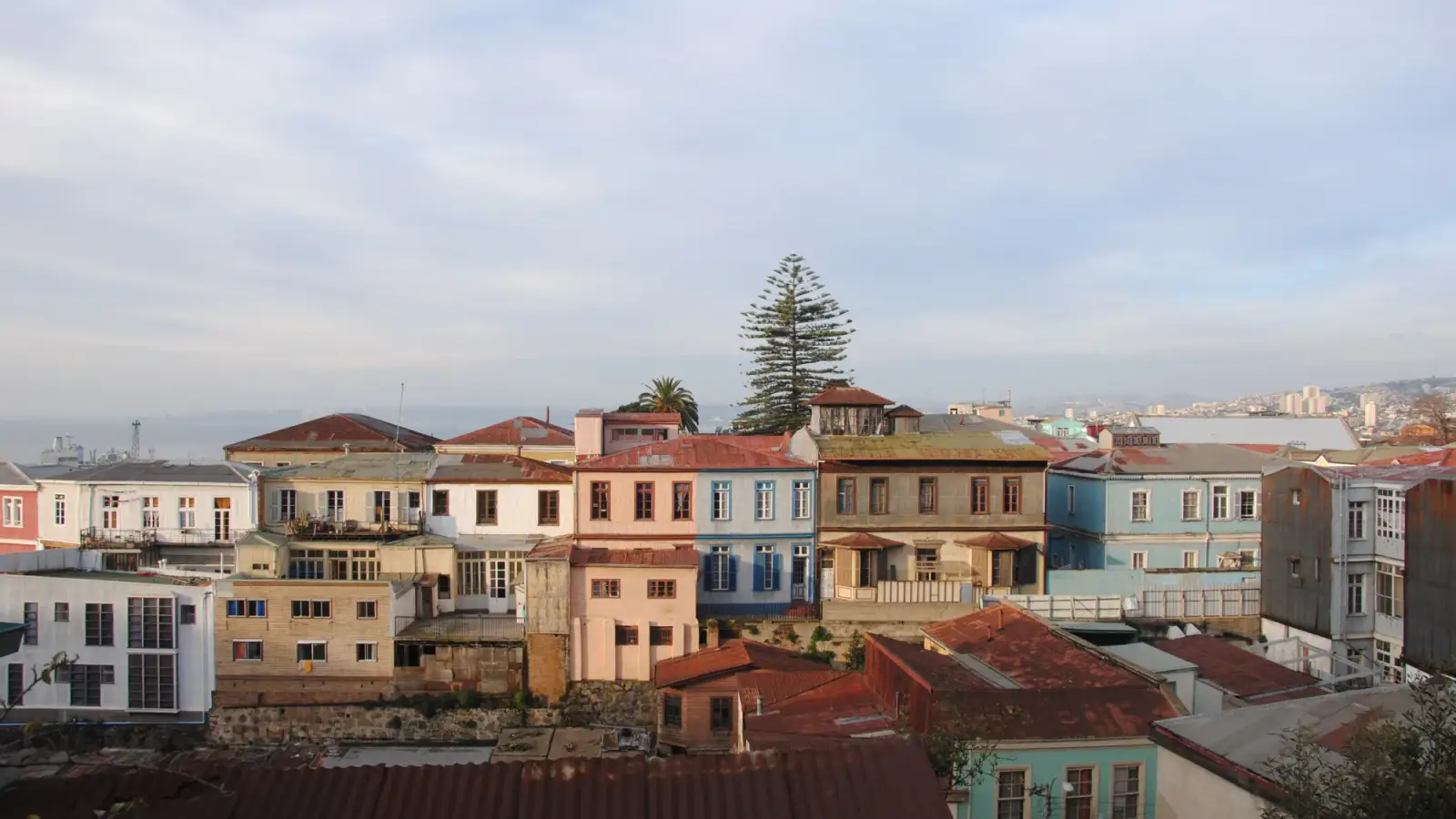
The hills and ascensores of the heritage circuit fit into one day; a second, if you have it, is for the working port, the Cerro Bellavista murals, and La Sebastiana, Neruda's house. Anyone looking for a beach, a quiet boardwalk, or a flat historic center won't find any of that here and ends up in Viña, Reñaca, or Concón. With just one day, start at Plaza Sotomayor, ride up El Peral, and spend the morning at the Palacio Baburizza, which is a museum and doesn't depend on the view. Go down to the Plan to have a chorrillana for lunch on Condell street. After noon, once the summer camanchaca has lifted, ride up the Ascensor Reina Victoria and cross Cerro Alegre and Cerro Concepción on foot along the Gervasoni and Atkinson walkways. What disappoints is the gap between the tourist hills and the rest: tourism fits on three or four hills, and the rest of the city is steep, poor, and stays out of the photos.In Valparaíso, painted zinc-sheet houses cover the hills above the bay, and the people who live in them still ride the ascensores, the wooden funiculars that charge a few coins for the trip. Up top, many streets are stone stairways, and the paseos of Cerro Alegre and Cerro Concepción look out over the port's cranes. The city grew rich as a stopover on the Cape Horn route, lost that role with the Panama Canal, in 1914, and what remained of its housing became a World Heritage Site in 2003. On Cerro Bellavista, the Museo a Cielo Abierto holds the origin of Chilean muralism, and on Cerro Florida stands La Sebastiana, Pablo Neruda's house. To eat, share a chorrillana, the platter of fries, beef, and egg created on Condell street. Come between November and March, with dry afternoons of 18 to 24°C, and allow one day for the hills, or two if you want the port and Neruda at an easy pace.
Quick facts
- Population
- about 300,000 in the commune and about 950,000 in Greater Valparaíso, which includes Viña del Mar, Quilpué, Villa Alemana and Concón (INE projections)
- Founded
- Indigenous cove of Quintil occupied by the Spanish in 1536; official port of Santiago in 1544; city status in 1791
- Country and region
- Chile, Valparaíso Region; legislative capital, with the National Congress based there since 1990
- Language
- Spanish, Chilean variant: aspirated /s/ at the end of a syllable, fast speech and its own vocabulary
- Currency
- Chilean peso (CLP); about 950–1,000 CLP per dollar in 2026
- Time zone
- UTC−4, with daylight saving UTC−3 between early September and early April
- Best time to visit
- November to March: dry summer, afternoons of 18–24 °C and mornings under camanchaca fog until midday
- Average daily cost
- about 35–50 US$ on a budget; about 80–130 US$ with hotel and full meals
When to go
November to March: dry summer, afternoons of 18–24 °C and mornings under camanchaca fog until midday
April
10° to 20°C
20 mm of rain
May
9° to 17°C
96 mm of rain
June
8° to 16°C
162 mm of rain
July
7° to 15°C
89 mm of rain
August
7° to 16°C
89 mm of rain
September
8° to 17°C
38 mm of rain
October
9° to 19°C
16 mm of rain
How the year changes
The climate is coastal Mediterranean, moderated by the cold Humboldt Current: highs rarely go above 26 °C and lows rarely drop below 6 °C, so the same jacket works almost all year. Summer runs from December to March, with highs of 18–24 °C, clear afternoon skies and almost no rain, but mornings often start under the camanchaca, the coastal fog that only lifts around midday. Bring a jacket even in January. Winter, from June to August, stays between 8 and 17 °C and brings almost all the annual precipitation, around 350–450 mm, in fronts lasting two or three days. The stairways get slippery and some ascensores stop running. High season is January and February, when Chileans and Argentines fill the whole coast, plus the last week of December, when the New Year's Eve fireworks on the 31st sell out every room. November, March and the first half of April offer the best balance, with stable weather and no lines in the city. July is the rainiest, the darkest and the month most likely to find an ascensor closed.
The same numbers as a table
| Month | Temperature °C | Rain mm |
|---|---|---|
| January · | 12 to 23 | 1 |
| February · | 12 to 23 | 1 |
| March · | 12 to 22 | 4 |
| April | 10 to 20 | 20 |
| May | 9 to 17 | 96 |
| June | 8 to 16 | 162 |
| July | 7 to 15 | 89 |
| August | 7 to 16 | 89 |
| September | 8 to 17 | 38 |
| October | 9 to 19 | 16 |
| November · | 10 to 21 | 5 |
| December · | 11 to 22 | 4 |
Nilo's tips
Go up by El Peral and Reina Victoria, and confirm on the day which ones are running
Both ascensores save you the stairs, which take half an hour to climb, and either one might be closed on a given day. For the morning at the Palacio Baburizza, go up by El Peral, at Plaza Sotomayor; for the afternoon on Cerro Alegre, by Reina Victoria, at Plaza Aníbal Pinto. If either one is out of service, take a colectivo instead of facing the stairs.
The Metroval card costs 2,700 CLP and comes with no balance
The first top-up of the Metroval card is mandatory at the ticket window, because the turnstile doesn't accept cash. The Merval fare is by zone and time of day: about 670 CLP at off-peak hours versus about 1,700 CLP at peak, from 7am to 9am and 6pm to 8pm on weekdays. Take the 15-minute stretch to Viña del Mar between 9am and 6pm and the same trip comes out much cheaper.
A chorrillana serves two to four people
Ordering one per person is the classic newcomer's mistake, and the dish costs 14,000–22,000 CLP. Get the timing right too: the big lunch runs from 1pm to 3:30pm, and dinner only fills up after 9pm.
In summer, save the lookouts for after noon
On summer mornings, the lookouts usually show only the low camanchaca cloud, and the bay appears after noon. Use the morning for a museum, like the Palacio Baburizza or the Museo Naval y Marítimo, in the former Naval School from 1893, and go up to the paseos in the afternoon. Save the Paseo 21 de Mayo, on Cerro Artillería, for late afternoon and go by colectivo, because the Ascensor Artillería, from 1893, was still under restoration in 2026.
Make one large withdrawal and carry cash
ATMs charge foreign cards a flat fee per withdrawal, often 3,500–7,000 CLP, so three small withdrawals cost a meal. Cards work for almost everything in El Plan and the tourist hills. But the funicular, the micro (500–800 CLP paid to the driver), a caleta cocinería, and street markets are cash only. The bill comes printed with a “suggested tip” of 10%: it's optional and can be removed, and in a taxi or colectivo no tip is expected.
Fish at midday at Caleta Portales
The cocinerías next to the fish stalls cook from 12pm to 4pm, and payment is in cash. Take the Merval to Portales station. The menu has hake, reineta, or conger eel fried whole, machas a la parmesana by the half dozen, and paila marina bubbling in a clay pot. If your morning starts early, the Mercado Cardonal before 10am still has its fish and vegetable stalls full and sopaipillas at the counter.
Explore the map

© OpenStreetMap · OpenFreeMap · © OpenMapTiles
Explore the map, read about the other places and plan your travel days in the app.
Open the appWhat to see
Valparaíso: The bay and the amphitheater
The city sits at 33° south latitude, on the Pacific coast, on a bay open to the north and sheltered from the south wind by Punta Angeles. The flat strip between the sea and the first hill, with the port, customs, the banks on Prat and Cochrane streets, and the shops of Condell and Esmeralda.

Ascensor El Peral and Paseo Yugoslavo
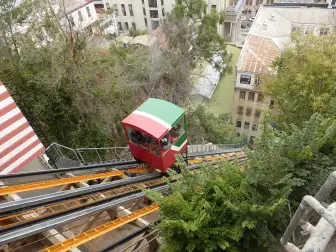
A 1902 funicular that departs from a gateway beside Plaza Sotomayor and reaches the Paseo Yugoslavo, a lookout suspended over the port. The lookout was built by Croatian businessman Pascual Baburizza in the early 20th century.
The 1902 ascensor sits next to Plaza Sotomayor and reaches the Paseo Yugoslavo, a suspended lookout that Pascual Baburizza had built in the early years of the 20th century; it leaves from a gateway.
Check access
Palacio Baburizza
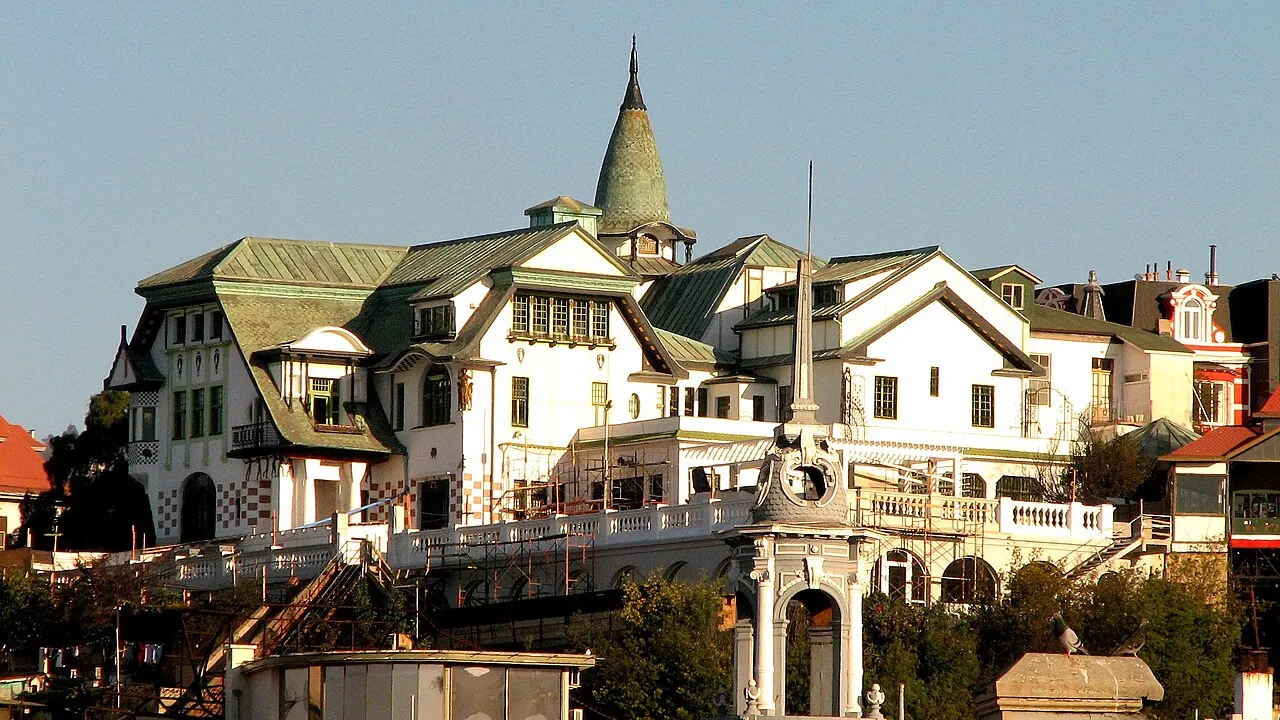
An Art Nouveau mansion from 1916, designed by Italian architects Barison and Schiavon, today the Museo de Bellas Artes de Valparaíso. It holds the collection of European and Chilean painting that Baburizza gathered with saltpeter money.
In 1916, Italian architects Barison and Schiavon designed the building that became the Museo de Bellas Artes and that holds the collection Baburizza amassed with nitrate money.
Check access

Paseo Gervasoni and Paseo Atkinson
Two view-point streets on Cerro Concepción, over wooden houses clad in corrugated zinc. The sheeting came as ballast in English ships. On Gervasoni stands the Casa Mirador de Lukas, dedicated to cartoonist Renzo Pecchenino.
A pair of view walkways on Cerro Concepción run above plank houses clad in corrugated zinc, sheet metal that arrived as ballast on English ships, and on Gervasoni stands the Casa de Lukas, about the cartoonist Pecchenino.
Check access
Ascensor Reina Victoria
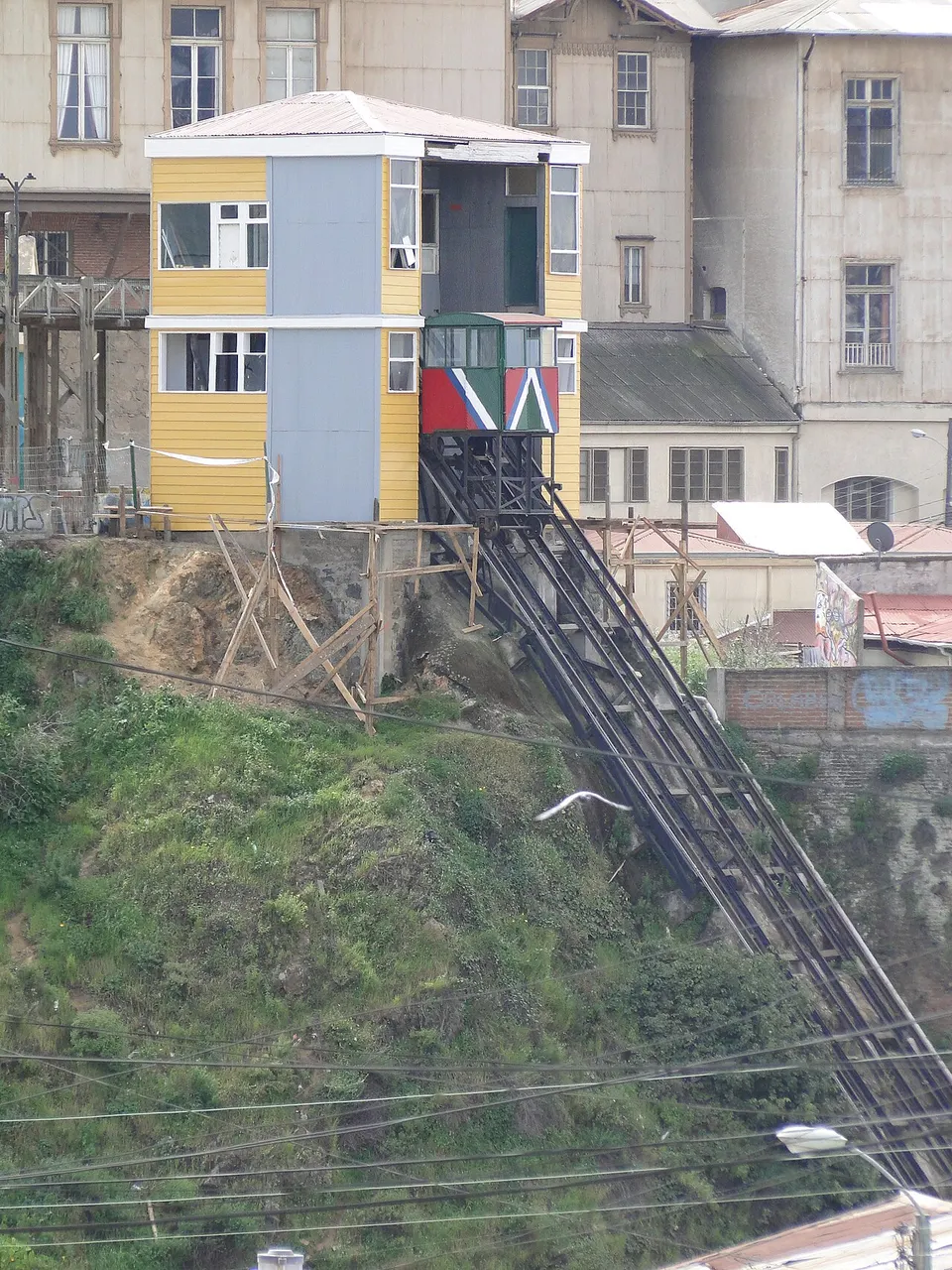
A 1902 funicular that climbs from the end of Elías street, at Plaza Aníbal Pinto, to Cerro Alegre, with a 40-meter run and original wooden cars. It's the most photographed in the city because the exit leads straight into a painted alley.
The 1902 funicular is the most photographed in the city, because its exit opens onto a painted alley.
Check access
La Sebastiana
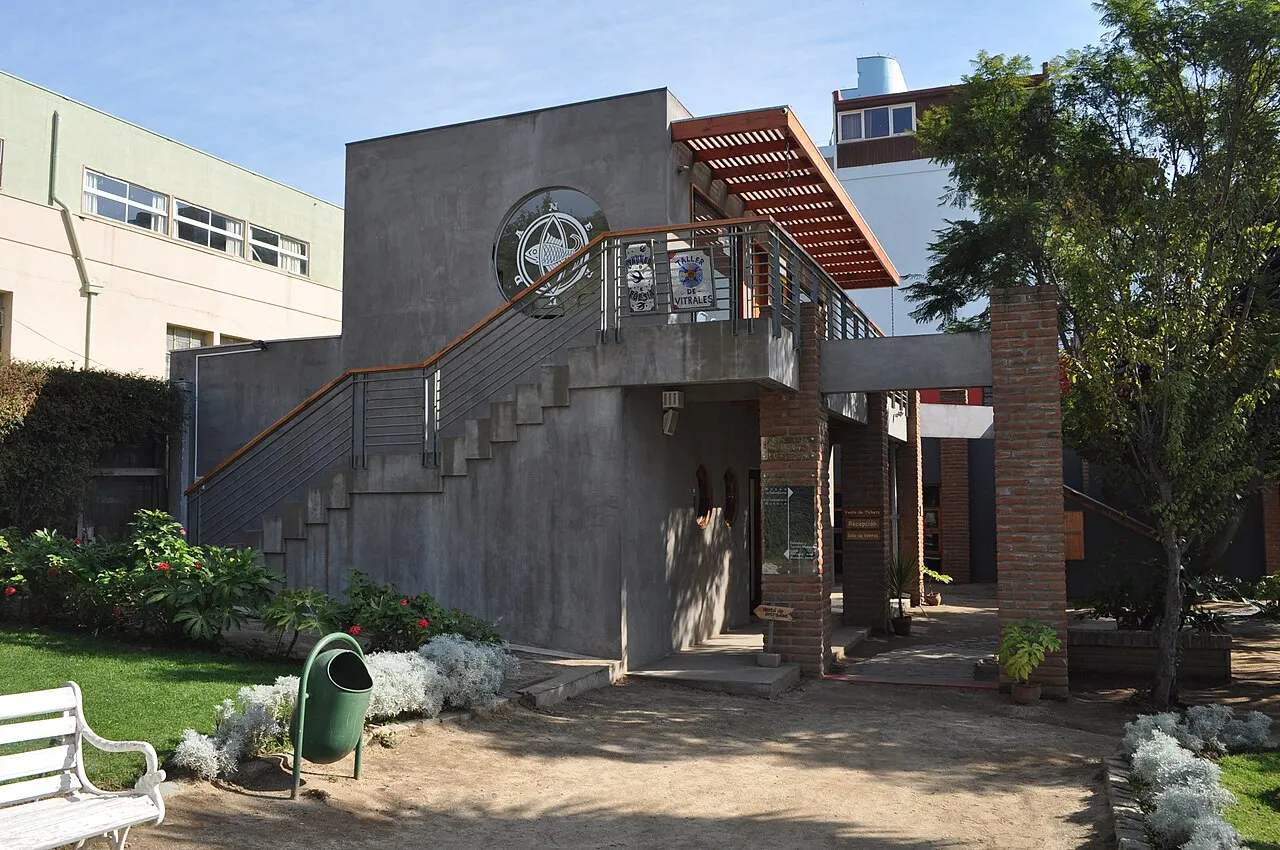
The house Pablo Neruda bought in 1959 and lived in from 1961, on Cerro Florida, with five narrow floors, a carousel horse in the living room and a lookout over the bay. It has worked as a museum since 1992 and is where he watched the fireworks on December 31.
Neruda bought the house in 1959 and lived from 1961 on Cerro Florida, across five narrow floors, with a carousel horse in the living room, and watched the December 31 fireworks from there; the museum has been running since 1992.
Check access

Museo a Cielo Abierto
A set of twenty murals on Cerro Bellavista, inaugurated in 1992, with works by Roberto Matta, Nemesio Antúnez, José Balmes and Mario Toral painted on the walls of the hill. The idea dates from 1969, when students from the Universidad Católica, led by professor Francisco Méndez, began painting the neighborhood's walls, and it's the documented origin of the city's mural tradition.
The city's mural tradition dates back to 1969.
Check access
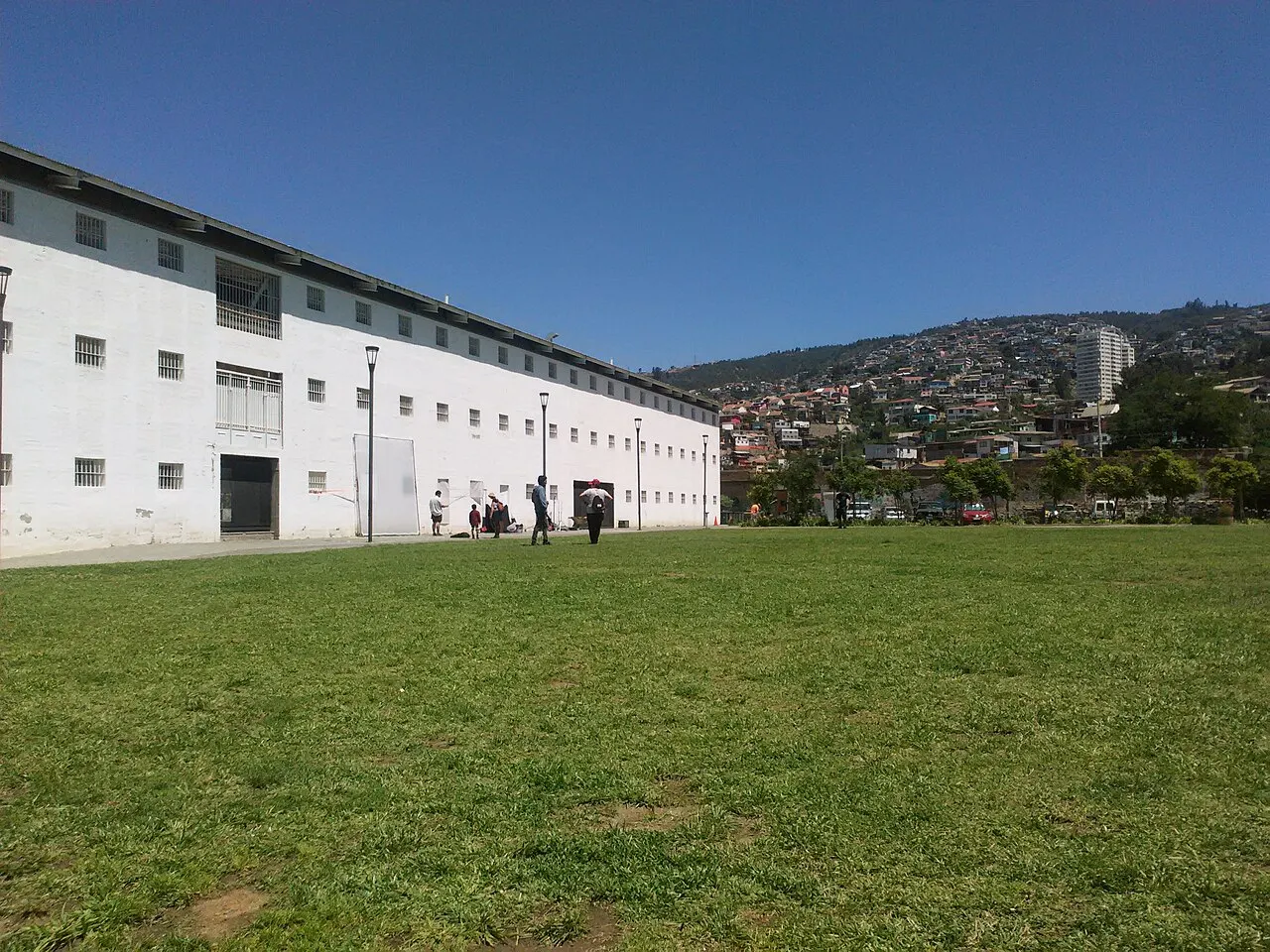
Parque Cultural de Valparaíso
The former public prison of Cerro Cárcel, used as a political jail during the dictatorship, was converted into a cultural center opened in 2011, keeping the wall, the cell gallery and the 1807 gunpowder magazine. It hosts dance, theater and circus programming, with free entry to the open areas.
The jail on Cerro Cárcel served as a political prison during the dictatorship, became a cultural center in 2011, and kept the wall, the cell gallery, and the 1807 gunpowder magazine, with free admission to the open areas; the program includes dance, theater, and circus.
Check access
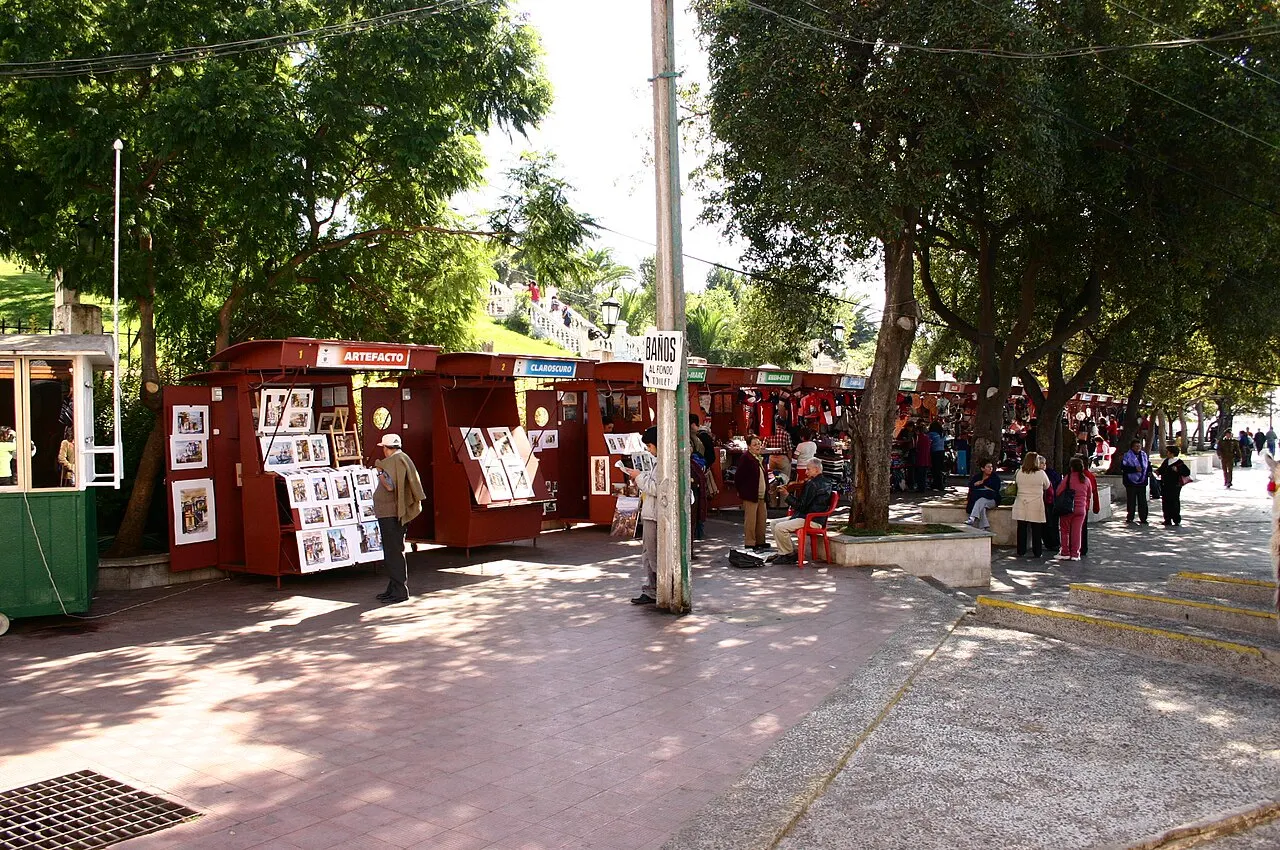
Paseo 21 de Mayo and Museo Naval y Marítimo
A lookout on Cerro Artillería with a head-on view of the port and the cranes, beside the naval museum housed in the former Naval School, from 1893. Check the funicular before going up.
On Cerro Artillería the lookout gives a head-on view of the port and its cranes, the naval museum occupies the old 1893 officers' school, and it's worth checking the ascensor before going up.
Check access
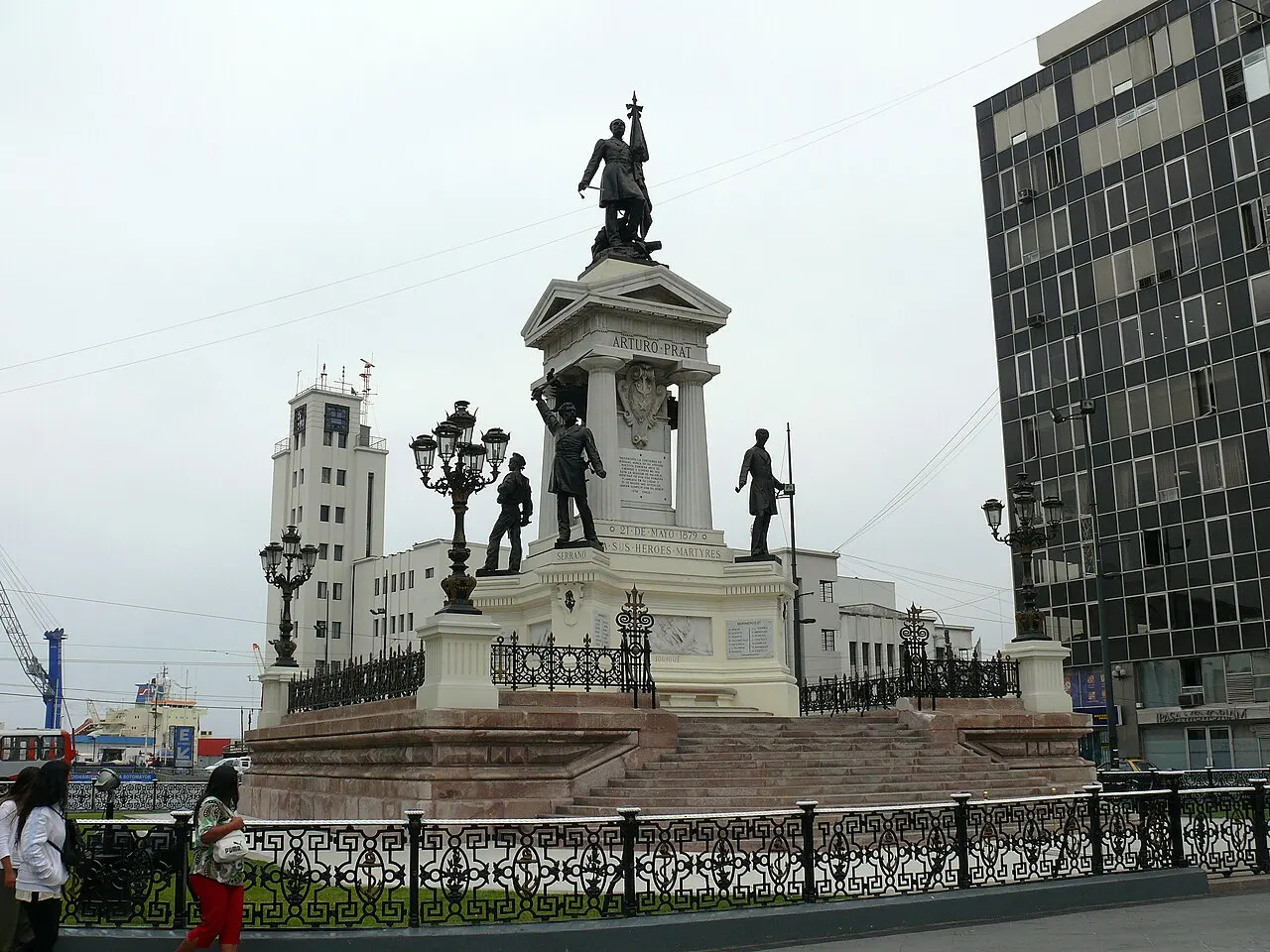
Plaza Sotomayor
The port's civic square, with the Monumento a los Héroes de Iquique, from 1886, which holds the remains of Arturo Prat, and the former Palacio de la Intendencia, today the Navy's Commander in Chief headquarters. Remains of the colonial dock were excavated beneath it.
Ten minutes of plaza, and it's the point where the two Valparaísos meet: the working port on one side, the hills on the other. This is where El Peral leaves from.
Check access
Nilo’s itinerary
Start with the basic programme and choose extensions for the time you have.
Plan my days in the app ↗Day 1 · The hills of the heritage circuit
Start at Plaza Sotomayor: the Monumento a los Héroes de Iquique (1886), the facade of the Navy's Commander in Chief headquarters and the remains of the colonial dock under the square.
Climb by the Ascensor El Peral (1902) to the Paseo Yugoslavo and spend the morning at the Palacio Baburizza, from 1916, today the Museo de Bellas Artes, while the camanchaca still covers the bay.
Go back down by El Peral and have a chorrillana to share for lunch on Condell or Esmeralda street, down in the Plan.
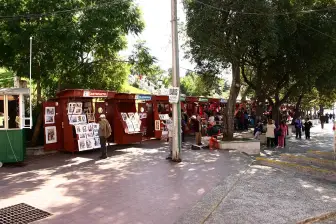
After noon, once the fog has lifted, go up by the Ascensor Reina Victoria and walk through Cerro Alegre and Cerro Concepción along the Gervasoni and Atkinson walkways, passing the 1897 Lutheran Church and the Casa Mirador de Lukas.
End in the late afternoon at the Paseo 21 de Mayo, on Cerro Artillería.


If you stay longer
Day 2 · Working port, murals and Neruda
Have coffee with sopaipillas at the Mercado Cardonal, early.
Walk through Barrio Puerto by day: Plaza Echaurren (1877), Iglesia La Matriz (a building from 1842, the fifth on the same site since 1559) and the facades on Calle Serrano.
Take the 30-to-45-minute boat ride from Muelle Prat to see the cranes, the cargo ships and the sea lions on the breakwater.
Climb to Cerro Bellavista and walk through the Museo a Cielo Abierto.
Close the day at La Sebastiana, Neruda's house on Cerro Florida, and go down for a seafood dinner on Cerro Concepción.


Food
 AI illustration
Chorrillana
A platter of french fries covered in shredded or strip-cut beef, sautéed onion and fried eggs, served to share between two and four people. It was created in Valparaíso, at the J. Cruz Malbrán house on Condell street, and it's the dish that defines the city.
 AI illustration
Caldillo de congrio
A conger eel stew in an onion, tomato, potato and white wine broth, with a drizzle of cream at the end. It became known through Neruda's “Oda al caldillo de congrio” and it's a lunch dish, not a dinner one.
 AI illustration
Machas a la parmesana
Pink razor clams opened in the shell, covered with cheese and white wine and baked. Served by the half dozen or dozen, as a starter, in any cove-side cocinería.
 AI illustration
Empanada de camarón queso
A fried empanada filled with shrimp and melted cheese, sold from street kiosks and in cocinerías. The baked seafood version, with choritos and machas, appears more often in restaurants.
 AI illustration
Paila marina and chupe de jaiba
The paila is a mixed-seafood soup served boiling in a clay pot, with a local reputation for curing hangovers. The chupe is a creamy crab-meat gratin with bread and milk, baked in an individual dish.
 AI illustration
Fried fish at the caleta
Hake, reineta or conger eel fried whole with Chilean tomato and onion salad: the specialty of the cove cocinerías, in Portales and El Membrillo.
 AI illustration
Terremoto and borgoña
The terremoto mixes pipeño, young white wine, with pineapple ice cream and grenadine, served in a large glass; the second round is called a réplica. The borgoña is red wine with chopped strawberry and sugar, more common in summer.
 AI illustration
Once with sopaipillas
Once is the late-afternoon meal, between 6pm and 8pm, with tea, pan amasado, cheese, avocado and manjar. On rainy days the street fills with sopaipillas, fried pumpkin discs, eaten with pebre or mustard.
Day trips
Viña del Mar and Concón
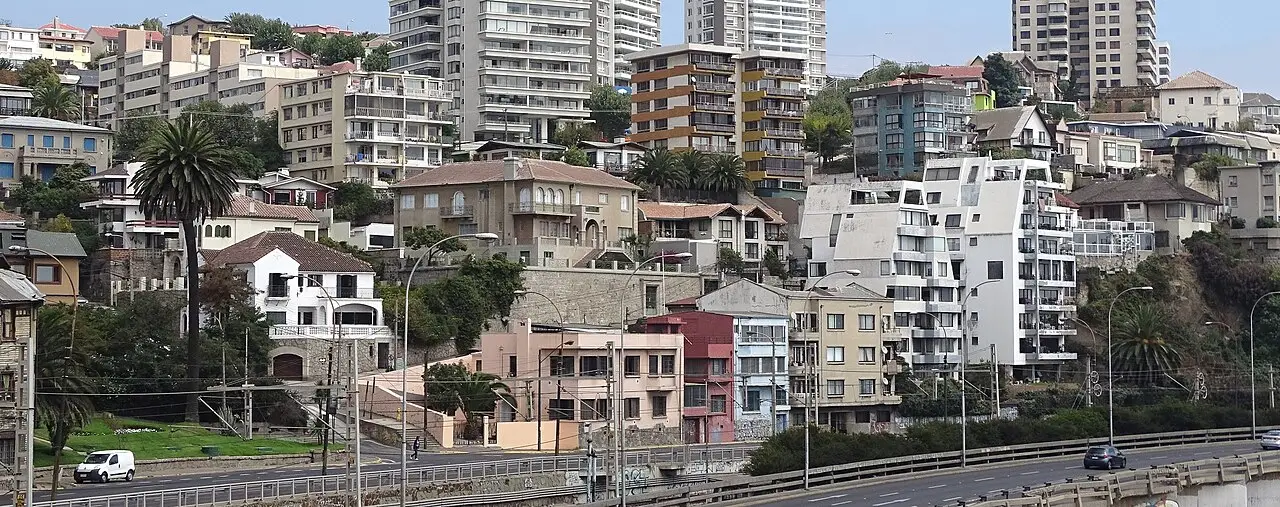
9 km east, 15 minutes by Merval to the Viña del Mar station. The Reloj de Flores, the authentic Easter Island moai in the Museo Fonck, and the Palacio Vergara; from Viña, another 12 km north by micro to the Concón dunes and the seafood coves.
Isla Negra
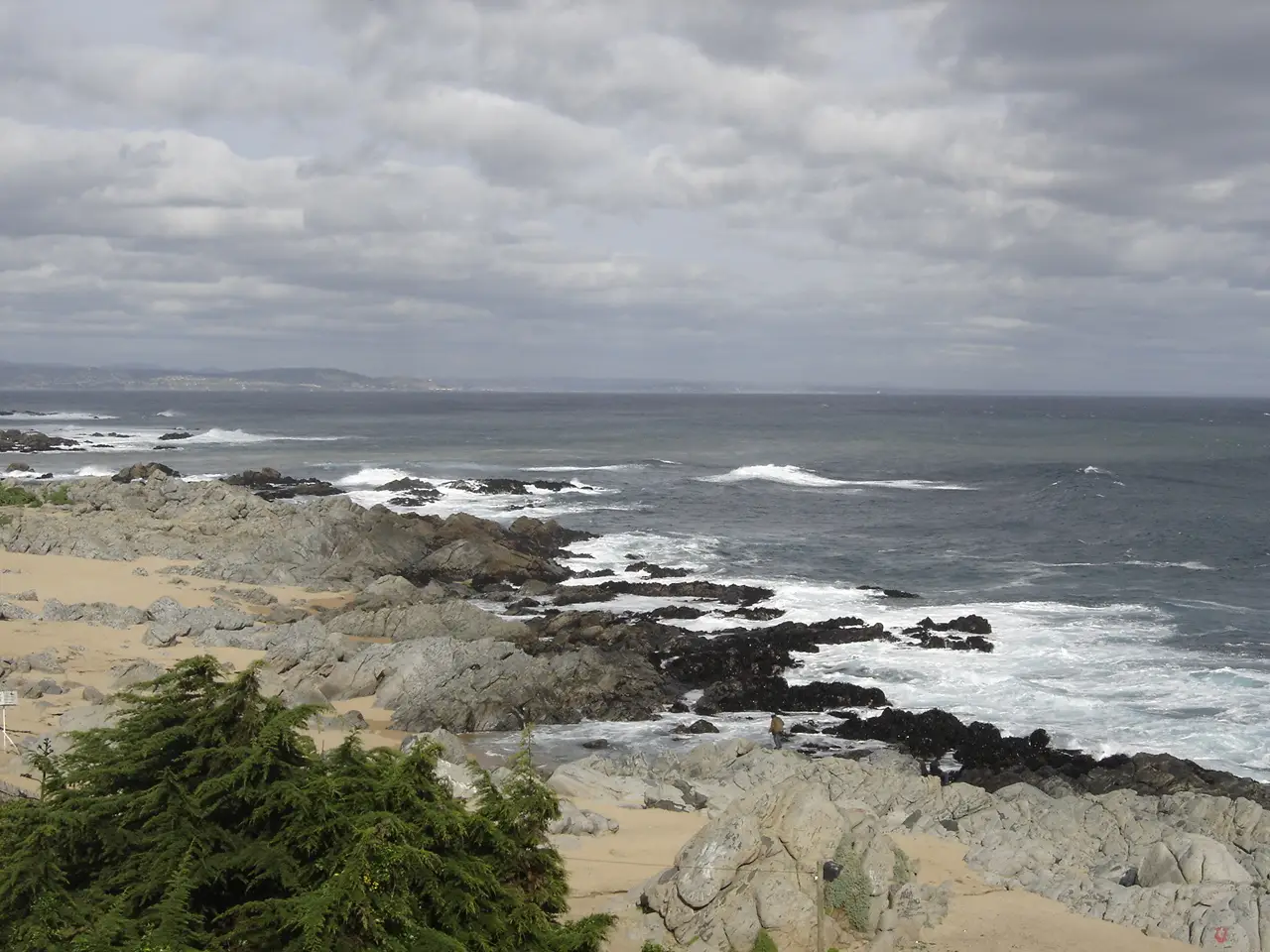
Neruda's third house, bought in 1939, is about 80 km south via routes F-90 and 66, 1 hour 30 minutes by car or by bus via Algarrobo. It holds figureheads, bottles and shells, and the grave of the poet and Matilde Urrutia, facing the Pacific.
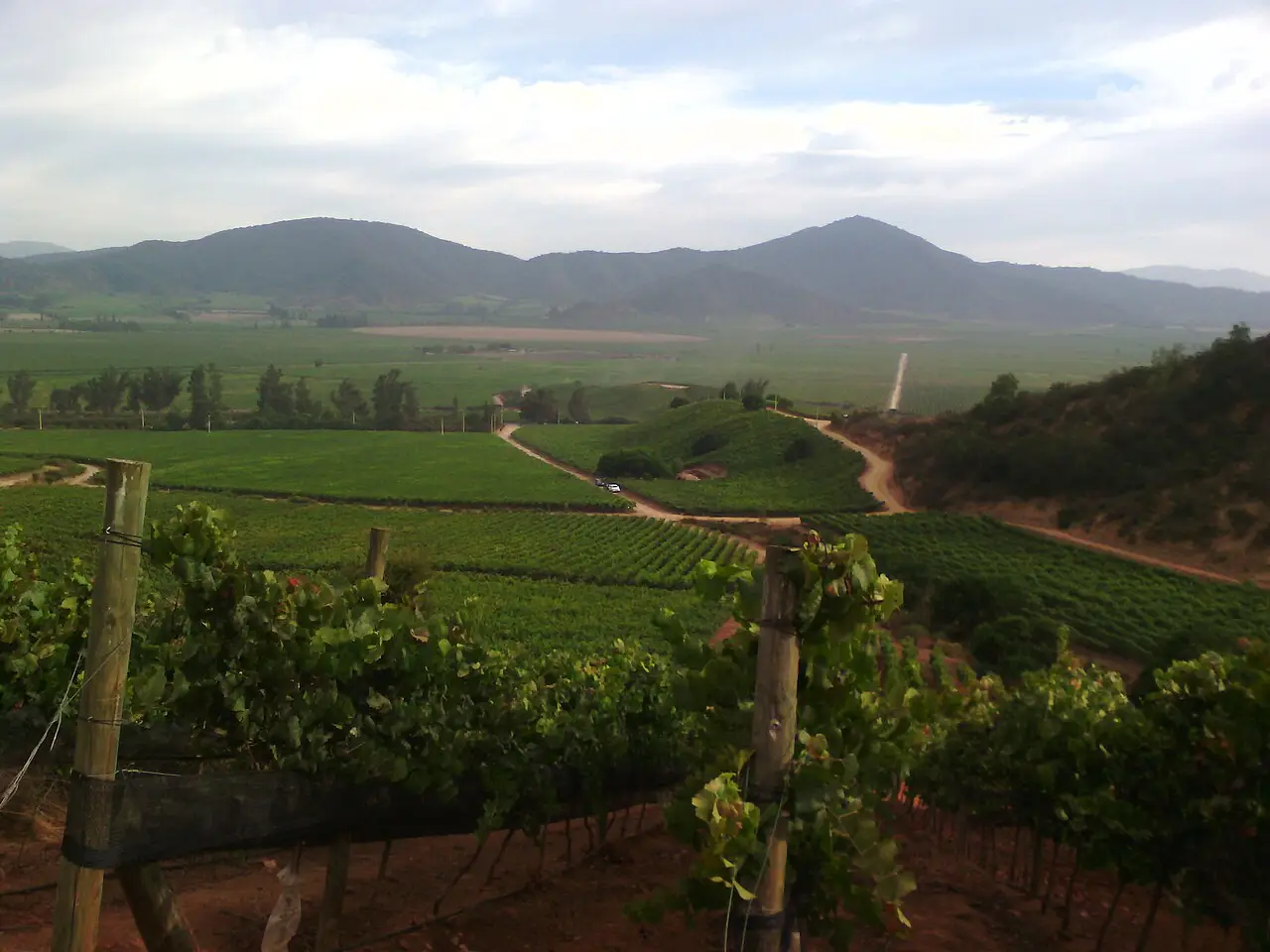
Valle de Casablanca
35 km southeast via Ruta 68, 40 minutes by car. Cool-climate vineyards specializing in sauvignon blanc, chardonnay and pinot noir; most wineries require a prior booking for tastings and don't take walk-ins.
Where to begin
The hills of the heritage circuit
Start at Plaza Sotomayor: the Monumento a los Héroes de Iquique (1886), the facade of the Navy's Commander in Chief headquarters and the remains of the colonial dock under the square.
Working port, murals and Neruda
Have coffee with sopaipillas at the Mercado Cardonal, early.
Almendral, cemeteries and the caleta
Start at the National Congress, in El Almendral, and walk along Avenida Pedro Montt to Plaza O'Higgins and its antiques fair.
Money
The currency is the Chilean peso (CLP), with bills from 1,000 to 20,000. In 2026 the dollar trades around 950–1,000 CLP and the Brazilian real around 170–180 CLP (check on the day). 2026 ranges: espresso coffee 2,000–3,500; menú del día in the Plan, with starter, main and juice, 6,000–9,000; chorrillana for two to four 14,000–22,000; seafood dinner per person 12,000–22,000; craft beer 3,500–5,000; hostel bed 12,000–20,000; boutique hotel in Cerro Alegre 70,000–140,000 a night. Debit and credit cards are accepted almost everywhere in the Plan and the tourist hills, but carry cash for funiculars, micros, cove cocinerías and markets. Foreign-card withdrawals charge a high flat fee per operation: it's worth withdrawing once instead of several small amounts. The standard 10% tip usually comes printed on the bill and can be declined without issue. In a taxi or colectivo, no tip is expected.
Getting there and around
The reference airport is 120 km away
The reference airport is Arturo Merino Benítez (SCL), in Santiago, about 120 km away. Direct buses from companies like Turbus and Pullman connect the airport and the Alameda and Pajaritos terminals to Valparaíso in 1 hour 40 minutes to 2 hours, with a fare around 8,000–14,000 CLP in 2026. Arrival is at the Terminal Rodoviario, at Avenida Pedro Montt 2800, next to Congress. The urban train Metro Valparaíso, the Merval, is the regional backbone: a line of about 43 km between Puerto station and Limache, with twenty stations, connecting Valparaíso, Viña del Mar, Quilpué and Villa Alemana above and below ground. The same trip has two prices, which nobody warns you about: the fare changes by zone and time, more expensive during rush hour. The Metroval card is prepaid and requires a top-up before boarding; the turnstiles don't take cash.
Urban transport: micros, colectivos, and trolleybuses
Within the city, transport goes by three names that are easy to confuse in the first few days: micros (city buses), colectivos (shared taxis with a route number on the sign, which climb the hills and stop on request) and trolleybuses, in service since 1952, with 1940s Pullman-Standard cars declared a historic monument in 2003. A micro fare runs 500–800 CLP in 2026 and is paid in cash to the driver. Of the fifteen ascensores that remain, about seven were running in 2026 (Barón, Concepción, Cordillera, El Peral, Reina Victoria, San Agustín and Lecheros), with Artillería and Polanco under restoration. A ride costs a few hundred pesos, paid in cash at the ticket booth, and hours usually run from 7am or 10am until early evening. Uber and Cabify work well and are the sensible option at night; taxis are black with a yellow roof and have meters. Cycling isn't practical because of the slopes, and walking calls for closed shoes with grippy soles: the ground is stone and stairs, and the fog makes it slick, so anyone who doesn't change shoes first ends up slipping. Check on the day which ascensores are open, because the list changes with maintenance and the city budget.
Safety
In Valparaíso the common risk is theft: keep your phone put away and your backpack in front. What goes missing is phones, cameras and backpacks, at crowded spots such as Muelle Prat, Plaza Sotomayor, the exits of the ascensores and the stairways of Cerro Alegre. Barrio Puerto and Plaza Echaurren are fine during the day and change character after 8pm, when the lighting fades and the bars open. At night, cross the area by app or colectivo rather than on foot. The upper hills above Avenida Alemania (Las Cañas, Rocuant, La Cruz, Placeres) are residential, of no tourist interest, and shouldn't be explored on your own at night. During protests, frequent on Avenida Pedro Montt and in Plaza Sotomayor on political dates, move away as soon as the water cannon truck appears. Street dogs are numerous, generally harmless, but they roam the hills in packs: don't run and don't feed them. Write down the numbers before you need them: 133 Carabineros, 131 ambulance, 132 fire department, a volunteer corps founded in 1851, the oldest in the country.
Etiquette tips
Don't call Valparaíso “Viña”
They're two neighboring cities with opposite identities: Viña del Mar is planned, coastal and for summer vacations; Valparaíso is a port city and vertical. Locals are called porteños, and the mix-up sounds like carelessness.
Ask before photographing a house or a person on the hills
The murals and the colorful facades belong to inhabited homes. A “¿puedo?” settles it; courtyards, private stairways and terraces require an invitation.
Greet on the way in and on the way out
Say “buenas” or “buenos días” when entering a small shop, cocinería, funicular or colectivo, and “gracias” when getting off. Total silence reads as ill will.
Ask for the bill; it won't come on its own
No one brings the bill before you ask, because that would be pushing the customer out. Say “¿me cobra, por favor?” and wait; payment is usually made at the table, with a card machine.
In the colectivo, announce you're getting off in advance
The colectivo follows a fixed route but stops wherever the passenger asks. Say “en la esquina, por favor” a block ahead, and pass the money forward if you're in the back seat.
Meals: a big lunch, then late dinner or just once
Lunch runs from 1pm to 3:30pm and is when the fish dishes and the menú del día come out. In the evening, many people just have once, between 6pm and 8pm; dinner restaurants tend to fill only after 9pm.
Mistakes to avoid
Assuming all fifteen ascensores work
Assuming all fifteen ascensores are open. In 2026 about seven were operating and the list changes with maintenance. Confirm on the day before planning a climb by funicular, and have a backup plan on foot or by colectivo.
Coming for a day from Santiago and staying in the Plan
Coming only for a day from Santiago and staying in the Plan. The city worth the climb is seventy meters up; without climbing at least two hills, you've seen a shopping district with a port next to it.
Wearing smooth soles or heels on the stairways
Wearing smooth-soled shoes or heels. The ground is uneven stone, concrete stairs and funicular rail, and the morning camanchaca leaves everything slick until midday.
The sea stays between 14 and 16°C year-round
Counting on the beach. With the water between 14 and 16°C in any month, Valparaíso's sea isn't for swimming; the beaches are in Viña, Reñaca, and Concón, and even there, the swim is short.
Phone in hand in the Barrio Puerto
Walking with your phone in hand in the Barrio Puerto or on the stairways after dark. Snatch theft is the most common incident in the city, and it disappears when there's nothing visible in your hand.
Useful phrases
¿Cachái?
Get it? A Chilean filler word at the end of almost every explanation; just answer “sí.”
Al tiro
Right away, immediately. It works for the waiter, for the colectivo and for the funicular schedule.
¿Dónde tomo la micro para el puerto?
Where do I catch the bus to the port? “micro” is what the urban bus is called here.
Una luca, dos lucas
A thousand pesos, two thousand pesos. That's how a price is said on the street, at the market and in the colectivo.
¿Me cobra, por favor?
The bill, please. Asked that way, at the table, without raising a hand.
Soy porteño
I'm from Valparaíso. The demonym distinguishes locals from people from Viña del Mar.
Districts
El Plan
The flat strip between the sea and the first hill, with the port, customs, the banks on Prat and Cochrane streets, and the shops of Condell and Esmeralda. It's commerce and work by day, nearly deserted after hours.

Barrio Puerto
The oldest core, around Plaza Echaurren and Iglesia La Matriz, with port warehouses, old bars and the highest concentration of 19th-century architecture. Very good by day, with a different atmosphere after 8pm.
Cerro Alegre and Cerro Concepción
The two hills the British and German merchants settled from 1840, today the heritage circuit: view-point walkways, boutique hotels, restaurants and the city's highest density of murals. Also where prices double.
Cerro Bellavista and Cerro Florida
A middle-class residential neighborhood, with the Museo a Cielo Abierto and La Sebastiana, Pablo Neruda's house. More lived-in and less scenic than the neighboring hills.
El Almendral
The flat neighborhood to the east, rebuilt after the 1906 earthquake, with the National Congress, Plaza O'Higgins, universities and the antiques fair; it's also where those arriving by bus land.
Cerro Cárcel and Cerro Panteón
The hill above Plaza Aníbal Pinto with the Parque Cultural de Valparaíso, in the former prison, and the city's three historic cemeteries. A neighborhood of students, studios and houses overlooking the Plan.
Playa Ancha
The large hill to the west, with the campus of the University of Playa Ancha, the Santiago Wanderers stadium and the Paseo Wheelwright. Residential, windy and almost tourist-free.
Cerro Barón and Cerro Polanco
To the east, linked to the Plan by the Ascensor Barón (1906) and the Ascensor Polanco (1915). Neighborhoods of port and railway workers, with the Iglesia San Francisco up top, a visual landmark for those arriving by ship.
History
1536 · The Quintil cove
Juan de Saavedra reaches the bay aboard the ship Santiaguillo to supply Diego de Almagro's expedition. He finds a Chango village called Quintil and names the place Valparaíso, after a village near Cuenca, Spain.
1544–1559 · Port of Santiago
Pedro de Valdivia designates the bay as the capital's natural port in 1544. In 1559 the first Iglesia La Matriz rises by the shore, the landmark from which the settlement grows with no plan or formal founding act.
17th–18th c. · Corsairs, earthquakes and city status
The port is sacked by Francis Drake in 1578 and by Richard Hawkins in 1594, and leveled by the earthquakes of 1730 and 1751. In 1791 governor Ambrosio O'Higgins grants city status and the first cabildo.
1811–1830 · Free trade and independence
The 1811 free trade decree and independence, consolidated in 1818, open the port to foreign flags. British, German and American trading houses set up, and in 1827 El Mercurio de Valparaíso is born, the oldest Spanish-language daily still in circulation.
1848–1880 · The Cape Horn boom
The California gold rush, from 1848, makes Valparaíso the mandatory stop between the Atlantic and the Pacific. Then come Chile's first volunteer fire brigade (1851), the railway to Santiago (1863) and the country's first stock exchange.
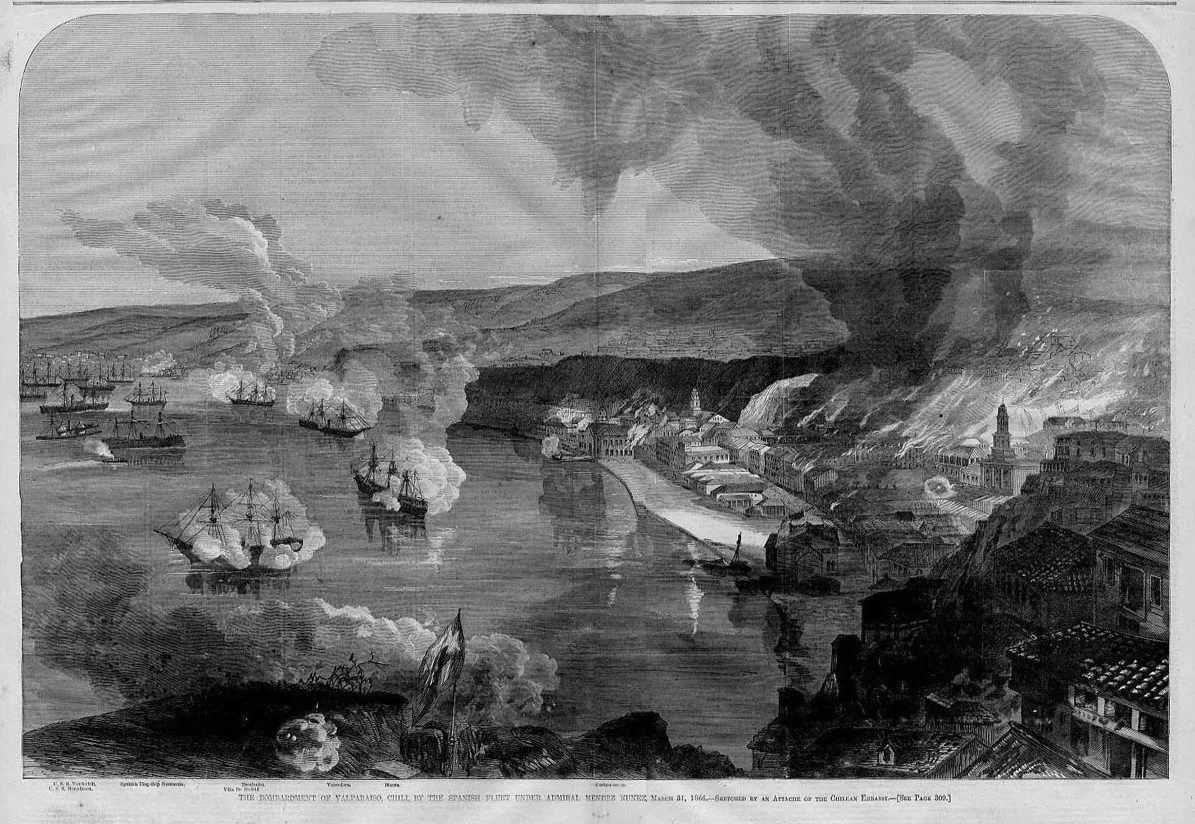
1866 · The Spanish bombardment
On March 31, 1866, during the war against Spain, Admiral Méndez Núñez's squadron spends about three hours bombarding a city with no coastal defenses. The customs warehouses and much of the Plan's trade are destroyed.
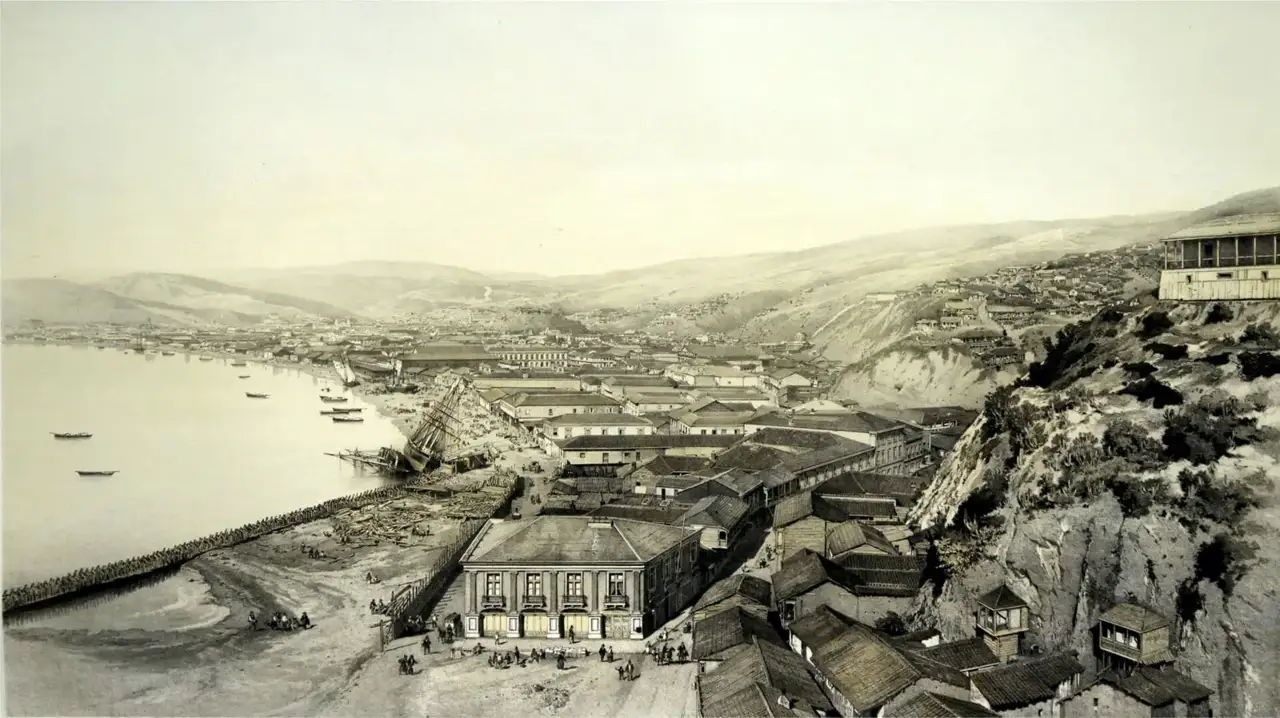
1883–1915 · The age of the funiculars
The Ascensor Concepción enters service in 1883 and solves the problem of linking the Plan to the hills. Some thirty funiculars follow over the next decades, including the Polanco (1915), a vertical elevator inside a tunnel dug into the hill.
1906 · The great earthquake
On August 16, 1906, an earthquake estimated at magnitude 8.2 kills about three thousand people and destroys the El Almendral neighborhood. The rebuilding introduces reinforced concrete and redesigns Avenida Pedro Montt.
1914 · The Panama Canal
The canal's opening, in August 1914, takes the Cape Horn route out of use. The port loses its role as a stopover, capital migrates to Santiago, and an economic decline of several decades begins.
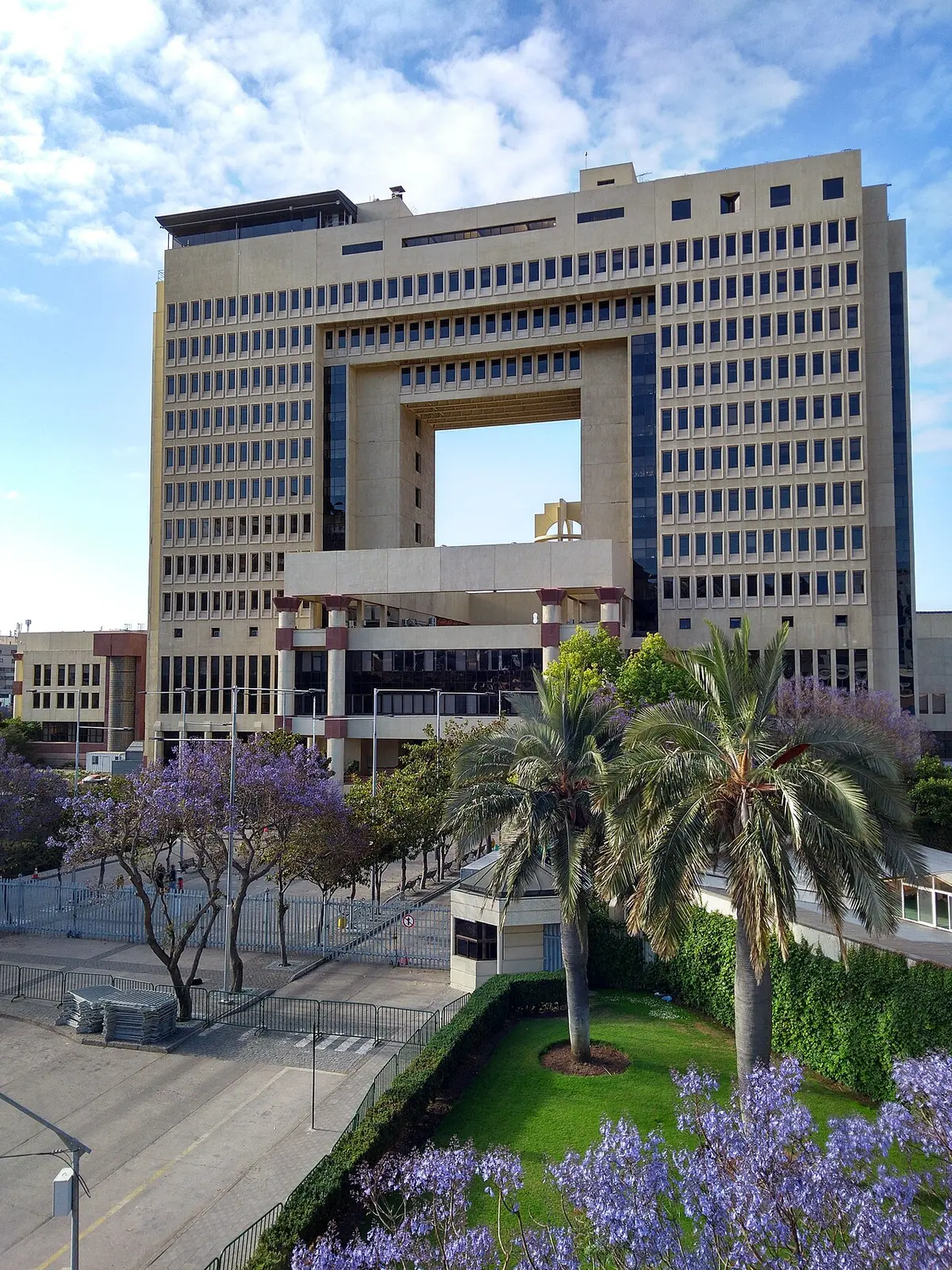
1990 · Congress moves to Valparaíso
The new National Congress building, raised in El Almendral between 1988 and 1990, holds its first session on March 11, 1990, at the end of the dictatorship. Valparaíso becomes the country's legislative capital.
2003–2014 · Unesco and the hillside fire
In July 2003 the historic area enters the World Heritage list, which pushes the city toward tourism and restoration. On April 12, 2014, a fire in the upper hills destroys about 2,900 houses and leaves 15 dead, exposing the gap between the postcard hills and the ones above.
 AI illustration
Complete history
From anchorage to the port of Santiago, since 1536
Valparaíso never had a founding act. When Juan de Saavedra anchored in the bay in 1536, there was a Chango cove there called Quintil; eight years later, Pedro de Valdivia designated the place as Santiago's port, and for two and a half centuries the city was just an anchorage with a church, a warehouse and houses at the water's edge. There was no colonial grid or Plaza de Armas, because there was no flat land to lay anything out: the hill begins a few meters from the water. That absence of a plan still explains the city's shape today, a tangle of ravines settled from the bottom up, where stairways and named streets cross with no right-angle logic.
British banks and German houses reach the port
The 1811 free trade decree and the 1818 independence changed everything. Valparaíso became the gateway for foreign capital in the South Pacific: British banks and trading houses, German print shops and schools, Italian mutual aid societies, and after 1880, Croatian immigrants from Dalmatia who settled in the Barrio Puerto and took over the maritime trade. The California gold rush, from 1848, multiplied traffic through Cape Horn and made the port the mandatory stop between the two oceans. From this period come El Mercurio de Valparaíso (1827), the volunteer fire brigade (1851), the railway to Santiago (1863), the country's first stock exchange, and the dissidents' cemetery (1825), opened because Protestants could not be buried in Catholic ground.
The rich city was vertical and expensive
English and German merchants lived on Cerro Alegre and Cerro Concepción, away from the noise and smell of the port. The Spanish bombardment of 1866 destroyed the customs house, but trade recovered, and the city of the 1870s was rich, vertical and expensive. The problem of climbing seventy meters every day was solved by engineering: the Ascensor Concepción, from 1883, launched a network that would reach about thirty funiculars, powered first by steam and later by electricity. The ascensores were never a tourist attraction; they were public transport for workers and homemakers, which is why they still cost a few coins today and have no automated ticketing. The earthquake of August 16, 1906, killed about three thousand people and wiped out the El Almendral district.
The opening of the Panama Canal, in 1914
With the opening of the Panama Canal in 1914, the Cape Horn route stopped making commercial sense, and Valparaíso lost, in a few years, the economic reason for its existence. The 20th century was long and lean: financial capital migrated to Santiago, the port's bourgeoisie left or grew poorer, the zinc and wood houses on the hills were divided into tenements, and the city gained a reputation for decay. The transfer of the National Congress, on March 11, 1990, was a political decision for decentralization that gave Valparaíso back a state role, though it left daily life dependent on officials who return to Santiago on weekends.
In 2003, Unesco listing turned Cerro Alegre and Concepción into tourist hills
The present is a dispute between two Valparaísos. The Unesco listing, in July 2003, turned Cerro Alegre and Cerro Concepción into a circuit of boutique hotels, restaurants and murals, with property prices that pushed out longtime residents; at the same time, the upper hills above Avenida Alemania still lack regular piped water in parts, with difficult access for fire trucks. The fire of April 12, 2014, which consumed about 2,900 houses and killed 15 people on the hills of La Cruz, El Litre, Las Cañas and Rocuant, made that fracture impossible to ignore. The current economy rests on the container port, higher education (which drives much of the city's life) and a tourism still concentrated on three or four hills.
Geography and shape of the city
The bay and the amphitheater
The city sits at 33° south latitude, on the Pacific coast, on a bay open to the north and sheltered from the south wind by Punta Angeles. The relief is an amphitheater: a coastal range of 300 to 400 meters descends into hills separated by deep ravines down to a coastal plain a few hundred meters wide, much of it land reclaimed from the sea in 19th-century landfills. This is El Plan, home to the port, commerce, banks and Congress.
The hills, the stairs and the funiculars
Everything that didn't fit on the Plan climbed the hills, and settlement followed the ravines from the bottom up, with no prior layout, producing more than forty named hills, streets that follow the contour lines and public stairways that work as official streets, with signs and names. Avenida Alemania runs halfway up the slope as a ring road and, in practice, separates the restored hills from the upper hills. The ascensores were born from this geometry: climbing on foot takes between 150 and 250 steps.
The camanchaca and the earthquakes
The climate is coastal Mediterranean, moderated by the cold Humboldt current, which keeps the sea between 14 and 16 °C year-round and produces the camanchaca, the dense fog that covers the hills on summer mornings. The city sits on a highly seismic subduction zone and was rebuilt after 1730, 1751, 1822 and 1906.
The Ascensor Polanco, from 1915, doesn't climb the slope like the others: it's a vertical elevator inside a tunnel dug into the hill.
Culture
Muralism was born on Cerro Bellavista in 1969
Valparaíso is the city of Chilean muralism, and the tradition has a date: in 1969, students from the Universidad Católica de Valparaíso, with professor Francisco Méndez, began painting walls on Cerro Bellavista, and that idea led to the Museo a Cielo Abierto, inaugurated in 1992. From the 2000s on the practice spread, and the city began tolerating the painting of private facades with the owner's permission, which produced the density of works on Cerro Alegre, Cerro Concepción and Polanco. Names such as Inti Castro, Charquipunk and La Robot de Madera went from here to paint murals in other cities. Not every wall is an authorized work and not every resident likes the result: ask before photographing interiors or people.
Literature revolves around the port
The city's literature revolves around the port. Pablo Neruda wrote about the bay and the conger eel while living at La Sebastiana; Manuel Rojas opened “Hijo de ladrón” (1951) at the Valparaíso jail; Salvador Reyes and Joaquín Edwards Bello built the mythology of the sailor and the brothel of Barrio Puerto. In music, “La Joya del Pacífico,” a Peruvian waltz adapted in the 1940s and recorded by Lucho Barrios, works as an unofficial anthem, and Osvaldo “Gitano” Rodríguez made the port material for song in the 1960s. The Bar Cinzano, on Plaza Aníbal Pinto, has operated since 1896 and keeps up nights of live tango and bolero. It's the place where this layer of the city is still audible.
Student life fuels bars and theaters
Daily life is driven by four universities: the Pontificia Universidad Católica de Valparaíso (1928), the Técnica Federico Santa María (1931, built with the legacy of banker Federico Santa María), the Universidad de Valparaíso and the Universidad de Playa Ancha. The result is a large student population that keeps bars, theater halls and a live-music scene going between Avenida Errázuriz, Subida Ecuador and Cerro Alegre, busiest from Thursday to Saturday. In soccer, Santiago Wanderers, founded on August 15, 1892, is Chile's oldest professional club despite the name, and plays at the Estadio Elías Figueroa Brander, in Playa Ancha, rebuilt in 2014.
In February or March, Valparaíso Cerro Abajo sends mountain bikers down the hills over stairways, rooftops and alleys, in about three minutes each, and the streets on the course close on race weekend.
The newspaper El Mercurio de Valparaíso has been published since 1827 and is the oldest Spanish-language daily still in print.
Festivals and events
Año Nuevo en el Mar
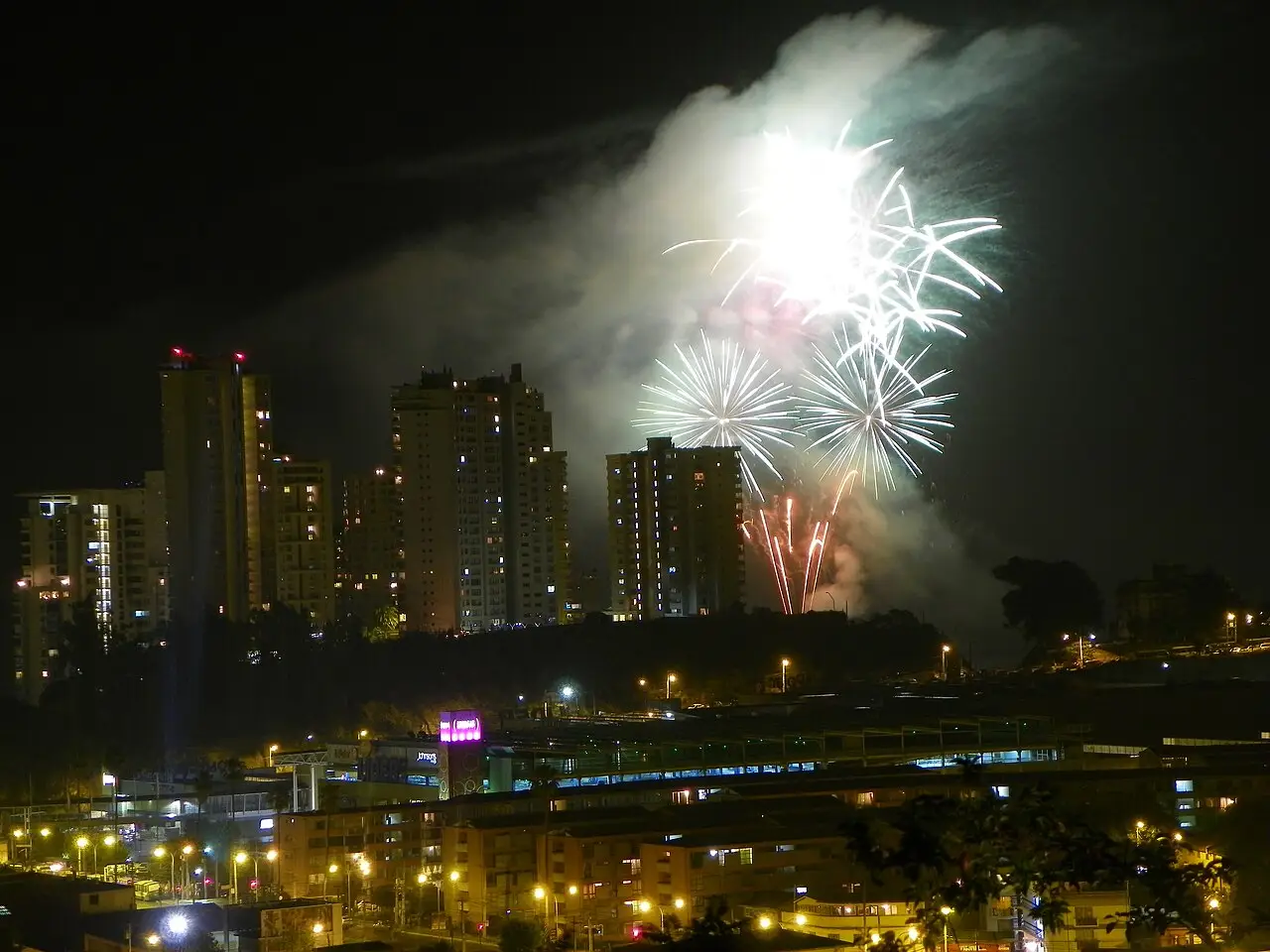
December 31. About 15 to 20 minutes of fireworks fired from barges along the bay of Valparaíso and Viña del Mar, watched by hundreds of thousands of people from the hills. It's the most expensive night of the year, and whoever doesn't book early is left without a bed.

Carnavales Culturales and Mil Tambores
First weekend of October. A self-organized parade of drums, comparsas, and drum troupes climbs from Barrio Puerto to the hills, with free shows and a strong student presence.
 AI illustration
Día de los Patrimonios
Last weekend of May. Buildings normally closed open for free (National Congress, Navy headquarters, private houses on the hills, funiculars under restoration) with long lines and volunteer-guided visits.
 AI illustration
Fiesta de San Pedro
June 29. Fishermen from the Portales, El Membrillo and Sudamericana coves carry the image of Saint Peter in a maritime procession, with decorated boats blessing the fishing season.

Valparaíso Cerro Abajo
February or March, variable date. A downhill mountain bike race crossing stairways, rooftops and alleys of the hills in about three minutes per competitor; streets along the route are closed for the race weekend.
Books and films
…A Valparaíso (Joris Ivens, 1963)
A 27-minute documentary with text by Chris Marker, filmed with the University of Chile's Film School. It shows the city as a machine of stairs, funiculars and cargo, and switches from black and white to color at the exact moment it addresses the port's violence.
Valparaíso mi amor (Aldo Francia, 1969)
A founding film of the Chilean New Cinema, shot in the upper hills with non-professional actors. It follows four siblings after their father's imprisonment and shows the city the heritage circuit doesn't reach.
Hijo de ladrón (Manuel Rojas, 1951)
A novel that opens with the narrator walking out of the Valparaíso jail and rebuilds, in fragmented memory, the working-class and migrant port of the early 20th century. It's the most precise literary portrait of the city before tourism.
Frequently asked questions
Valparaíso: How many ascensores are running?
Of the fifteen ascensores that remain, about seven were operating in 2026, and the list changes with maintenance: confirm on the day before planning a climb, and have a backup plan on foot or by colectivo.
Valparaíso: How do you get there from the Santiago airport?
Direct buses from companies like Turbus and Pullman connect the airport and the Alameda and Pajaritos terminals to Valparaíso in 1 hour 40 minutes to 2 hours, with a fare around 8,000 to 14,000 CLP in 2026.
Valparaíso: What's the climate like throughout the year?
The climate is coastal Mediterranean, moderated by the cold Humboldt Current: highs rarely go above 26°C and lows rarely drop below 6°C, so the same jacket works almost all year. Summer, from December to March, is dry with clear afternoon skies, but mornings often start under the camanchaca, the coastal fog that only lifts around midday; winter, from June to August, stays between 8 and 17°C and concentrates almost all the year's rain.
Valparaíso: What sets the city apart from Viña del Mar?
They're two neighboring cities with opposite identities: Viña del Mar is planned, coastal and for summer vacations; Valparaíso is a port city and vertical.
Valparaíso: What's the most common risk for visitors?
In Valparaíso the common risk is theft: keep your phone put away and wear your backpack in front.
Other cities in the country
Chile ↗- Days
- 2–3
- When
- Mar–May · Sep–Nov
- Per person/day
- Average 110,000 CLPMid-range · per person/day
Cost scope
Per person per day: accommodation, meals, urban transport, visits and a small allowance for extras. Flights excluded; larger purchases vary. Editorial estimate, not a quote.
- Days
- 4–5
- When
- Apr–May · Sep–Nov
- Per person/day
- Average 66,200 CLPMid-range · per person/day
Cost scope
Per person per day: accommodation, meals, urban transport, visits and a small allowance for extras. Flights excluded; larger purchases vary. Editorial estimate, not a quote.
- Days
- 6–7
- When
- Jan–Mar · Nov–Dec
- Per person/day
- Average 99,900 CLPMid-range · per person/day
Cost scope
Per person per day: accommodation, meals, urban transport, visits and a small allowance for extras. Flights excluded; larger purchases vary. Editorial estimate, not a quote.
- Days
- 4
- When
- Jan–Apr · Oct–Dec
- Per person/day
- Average 93,600 CLPMid-range · per person/day
Cost scope
Per person per day: accommodation, meals, urban transport, visits and a small allowance for extras. Flights excluded; larger purchases vary. Editorial estimate, not a quote.
- Days
- 3
- When
- Jan–Apr · Oct–Dec
- Per person/day
- Average 121,000 CLPMid-range · per person/day
Cost scope
Per person per day: accommodation, meals, urban transport, visits and a small allowance for extras. Flights excluded; larger purchases vary. Editorial estimate, not a quote.


Itineraries through here
 Argentina, Uruguay and Chile in 10 daysTango, rambla and the AndesBuenos Aires · Montevideo · Santiago · Valparaíso8–12 days4 cities
 Santiago and Valparaíso in 5 daysSantiago and the hills of ValparaísoSantiago · Valparaíso3–5 days2 cities
 Chile in 10 daysTatio geysers and the funiculars of ValparaísoSan Pedro de Atacama · Valparaíso · Santiago7–10 days3 cities