Argentina
Salta
Colonial churches, the Inca mummies museum, and the base for the Quebrada de Humahuaca and the Valles Calchaquíes
Days Start with the basic programme and choose extensions for the time you have.
How the guide reaches this number
The first day belongs to the city: the Plaza 9 de Julio with the cathedral and the Cabildo, the tower of San Francisco, the MAAM, which is closed on Mondays, and the San Bernardo cable car in the late afternoon, with dinner at a peña on Calle Balcarce. From the second to the fourth, I'd do the Valles Calchaquíes circuit: the Cuesta del Obispo and Los Cardones to Cachi, where you sleep; Route 40 through the Quebrada de Las Flechas to Cafayate, where you sleep again; and the return to Salta through the Quebrada de las Conchas. The fifth and sixth are for the Quebrada de Humahuaca: Purmamarca and the Salinas Grandes with a night in Purmamarca, and the next day Tilcara, Humahuaca, and Hornocal, returning to Salta. With a seventh day, I'd do the Tren a las Nubes to the La Polvorilla viaduct. With only three days, I'd keep the city, Cafayate in one day through the Quebrada de las Conchas, and Purmamarca in one day, knowing that the Salinas and Hornocal are left out. Between December and March, I'd keep a spare day, because rain sometimes cuts the roads.
6–7
When April to November; it is the dry season, with average highs between 19.8 °C and 27.6 °C in the city.
How the guide reaches this number
From December to March it rains heavily (197 mm in January), and the rain sometimes cuts the roads to Cafayate and Cachi
April to November; it is the dry season, with average highs between 19.8 °C and 27.6 °C in the city. From December to March it rains heavily (197 mm in January), and the rain sometimes cuts the roads to Cafayate and Cachi
Per person/day Budget about 28,900 ARS; mid-range about 66,100 ARS; comfortable about 126,000 ARS per person, based on spending reported by travelers to Budget Your Trip (checked October 2026).
How the guide reaches this number
Per person per day: accommodation, meals, urban transport, visits and a small allowance for extras. Flights excluded; larger purchases vary. Editorial estimate, not a quote.
 What Nilo thinks
Stay six days, with Salta as the base and two trips with overnights. The first day belongs to the city: the Plaza 9 de Julio with the cathedral and the Cabildo, the tower of San Francisco, the MAAM, which is closed on Mondays, and the San Bernardo cable car in the late afternoon, with dinner at a peña on Calle Balcarce. From the second to the fourth, I'd do the Valles Calchaquíes circuit: the Cuesta del Obispo and Los Cardones to Cachi, where you sleep; Route 40 through the Quebrada de Las Flechas to Cafayate, where you sleep again; and the return to Salta through the Quebrada de las Conchas. The fifth and sixth are for the Quebrada de Humahuaca: Purmamarca and the Salinas Grandes with a night in Purmamarca, and the next day Tilcara, Humahuaca, and Hornocal, returning to Salta. With a seventh day, I'd do the Tren a las Nubes to the La Polvorilla viaduct. With only three days, I'd keep the city, Cafayate in one day through the Quebrada de las Conchas, and Purmamarca in one day, knowing that the Salinas and Hornocal are left out. Between December and March, I'd keep a spare day, because rain sometimes cuts the roads.In 1999, an expedition found near the summit of Llullaillaco, at about 6,700 m, three children left there by the Inca state around 1500, and today one of them, in turn, lies in a climate-controlled case facing the Plaza 9 de Julio. It is a good summary of Salta: a colonial city of painted churches and arcades, at 1,187 m, that only makes full sense when you look at the mountains around it. To the west, the Cuesta del Obispo climbs above 3,300 m and drops into the Valles Calchaquíes, where Cachi has adobe houses at the foot of a snow-capped peak and Cafayate grows torrontés in high-altitude vineyards. To the north, in the province of Jujuy, the Quebrada de Humahuaca brings together the Cerro de los Siete Colores, the pucará of Tilcara, and the colored bands of Hornocal. At night, back in the city, the peñas of Calle Balcarce serve empanada salteña, with hand-cut beef, to live zamba.
Quick facts
- Population
- 627,704 in the Capital Department, which includes the city of Salta and Villa San Lorenzo, and 1,441,351 in the province (INDEC 2022 census, final data)
- Founded
- April 16, 1582, by Hernando de Lerma, under the name San Felipe y Santiago de Lerma en el valle de Salta
- Country and region
- Argentina, Northwest (NOA); capital of Salta Province, at 1,187 m, in the Lerma Valley
- Language
- Argentine Spanish, with the «vos» form of address; place names and dishes of Quechua origin, such as locro and humita
- Currency
- Argentine peso (ARS), written with «$»
- Time zone
- UTC−3 year-round; Argentina does not observe daylight saving time
- Best time to visit
- April to November; it is the dry season, with average highs between 19.8 °C and 27.6 °C in the city. From December to March it rains heavily (197 mm in January), and the rain sometimes cuts the roads to Cafayate and Cachi
- Average daily cost
- Budget about 28,900 ARS; mid-range about 66,100 ARS; comfortable about 126,000 ARS per person, based on spending reported by travelers to Budget Your Trip (checked October 2026).
When to go
April to November; it is the dry season, with average highs between 19.8 °C and 27.6 °C in the city. From December to March it rains heavily (197 mm in January), and the rain sometimes cuts the roads to Cafayate and Cachi
How the year changes

What changes over the year is the rain. April to November is the dry season: in July it barely rains (less than 3 mm), average highs stay near 20 °C, and lows fall to about 3 °C in the city. It is the best window for the mountain roads, and the Quebrada de Humahuaca has its best season in the dry winter. July coincides with Argentina's winter holidays, when the cable car is packed. September has the Milagro festival, between the 6th and the 15th, with the city full of pilgrims. December to March is the rainy summer: January has 197 mm of rain and highs of 27.7 °C, and rain sometimes cuts the road to Cafayate and the dirt roads; it is also the summer holiday season and the time of the Serenata a Cafayate, in February.
Nilo's tips
Leave Monday for the road
The MAAM and the Pucará de Tilcara close on Mondays. I'd plan the trip so Monday is spent in the car, between Cachi and Cafayate, for example.
Sleep in the Quebrada
From Salta to Humahuaca it is about 244 km, and the Salinas Grandes lie in the other direction, 66 km from Purmamarca. I'd sleep a night in Purmamarca: you can see the Cerro de los Siete Colores in the morning and reach the salt flat between 11 a.m. and 3 p.m., without rushing.
Go up San Bernardo in the late afternoon
The cable car runs until 8 or 8:30 p.m., and from the top you can see the Lerma Valley. I'd ride up by cable car and come down by the 1,021-step staircase, which spares your breath on the harder direction.
Choose between the Tren a las Nubes and the road
The excursion takes a full day, from the 6:15 a.m. check-in until night, and costs ARS 252,000 for foreigners on the full package. For anyone doing Purmamarca and the Salinas, which also go above 4,000 m, I'd save the train for a longer trip, unless the viaduct and the railway are a real interest.
Have a SAETA card or small change
The buses, including the 8A airport line, only accept the SAETA card. Without it, I'd take a transfer or taxi from the airport and buy the card downtown.
Explore the map
Explore the map, read about the other places and plan your travel days in the app.
Open the appWhat to see
Salta: The Lerma Valley and the mountains
Alberdi, Florida, and Caseros streets have pedestrian stretches and shops. It concentrates hotels, tour agencies, and restaurants, and it is walkable.
Museo de Arqueología de Alta Montaña
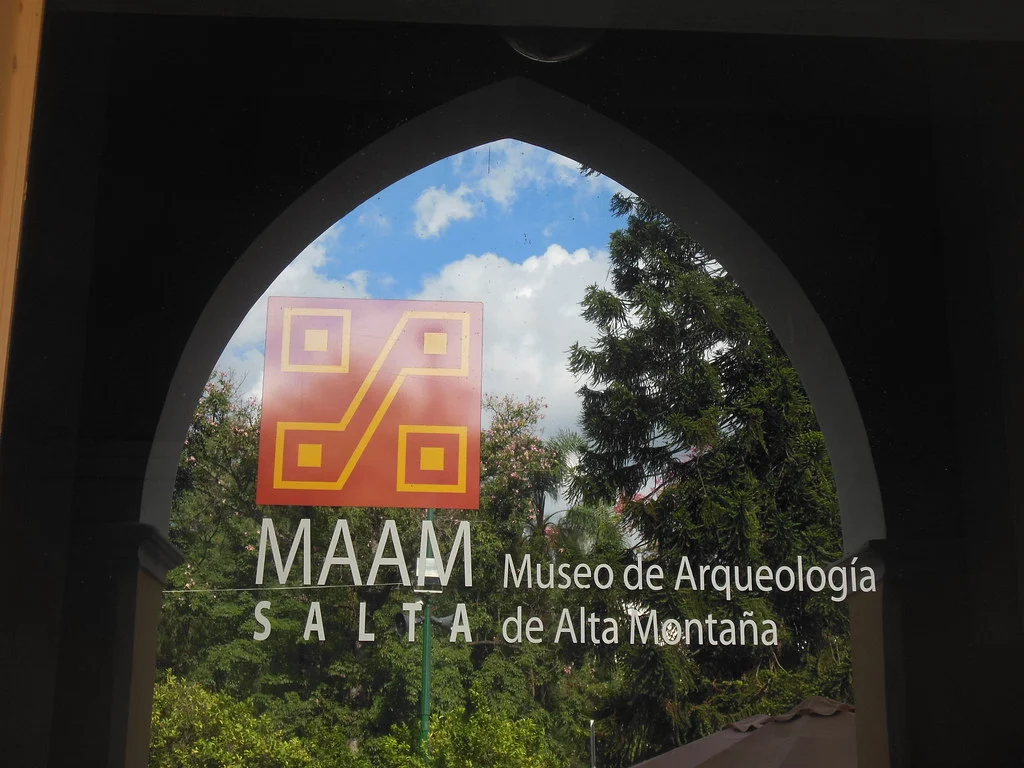
The MAAM, at Bartolomé Mitre 77, facing the Plaza 9 de Julio, holds the Niños del Llullaillaco: three Inca children sacrificed around 1500 and found on March 16, 1999, at about 6,700 m, near the summit of the Llullaillaco volcano, along with the clothing, figurines, and objects that accompanied them. For conservation reasons, only one of the three is on display at a time, in a climate-controlled case; in October 2026 it was the Niña del Rayo. It is open Tuesday to Sunday, 11 a.m. to 7 p.m., with last admission at 6:30 p.m., and closed on Mondays. Tickets have different prices for salteños, Argentines, and foreigners and are bought on the vamos.gob.ar platform, which the museum itself points to.
Displays one of the Niños del Llullaillaco, the Inca children found at about 6,700 m in 1999, and explains the Incas’ relationship with the mountains crossed during the rest of the trip. Closed Mondays.
Check access
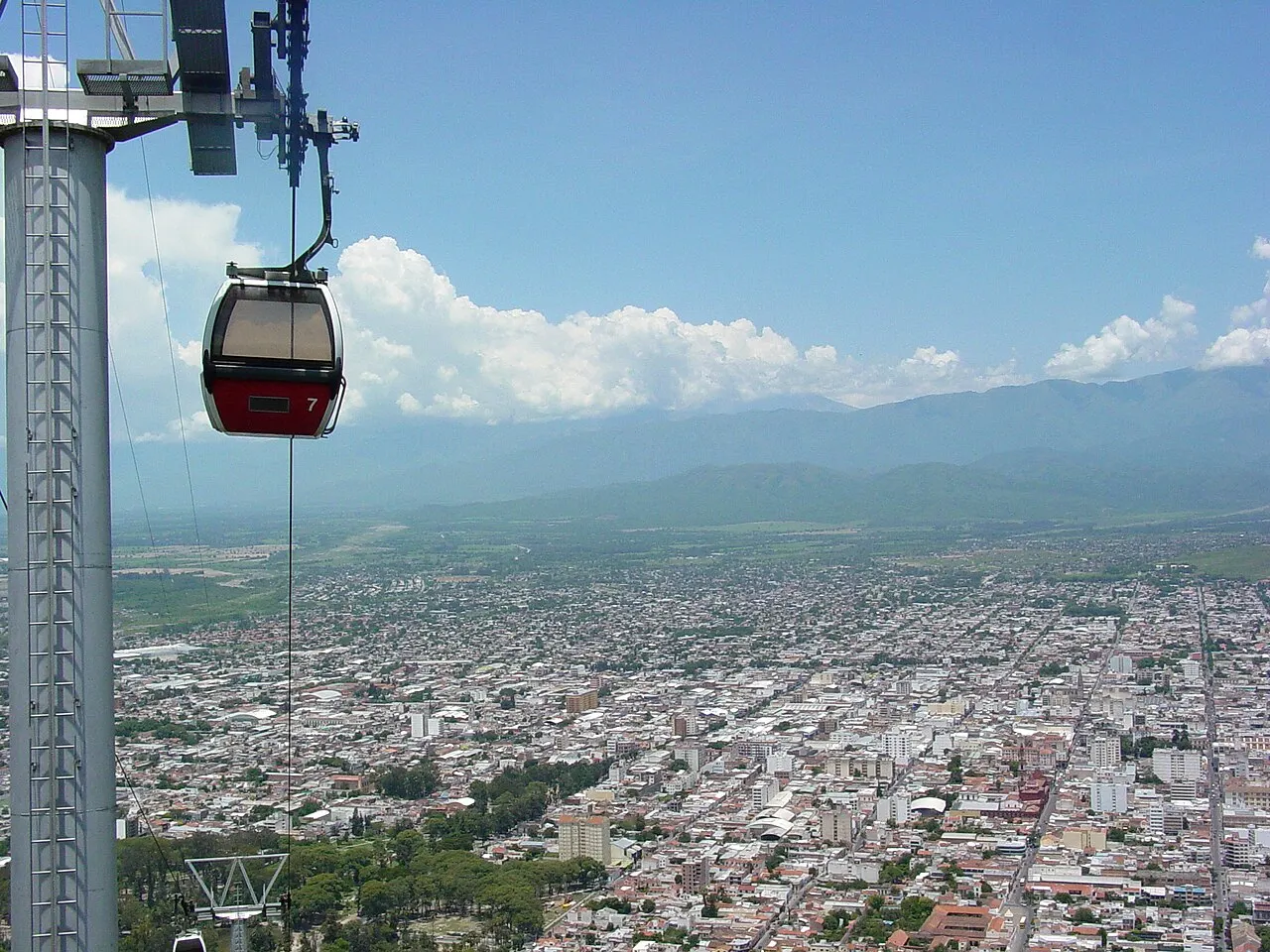
Cerro San Bernardo
The hill east of the center, with its summit at 1,471.92 m, about 285 m above the city. The cable car leaves from the Parque San Martín, at the intersection of San Martín and Hipólito Yrigoyen avenues, and climbs 1,046 m of cable in about 8 minutes; it runs every day except May 1, from 8:30 a.m. until 8 or 8:30 p.m. In July 2026 the fare was ARS 30,000 for foreigners, ARS 25,000 for Argentines, and ARS 12,000 for Salta residents, and the new section to the Cerro Ala Delta, opened in December 2024, cost another ARS 8,000. At the top there is a viewpoint, an artificial waterfall, and a crafts fair. Those who prefer to walk up take the 1,021-step staircase that starts behind the Güemes monument, with 14 small chapels of the Stations of the Cross along the way. In 2025, the two sections carried 437,825 people, a record for the service.
Offers views over Salta and the Lerma Valley, a few minutes from the center by cable car or via the staircase of 1,021 steps. The cable car runs every day except May 1.
Check access

Quebrada de las Conchas
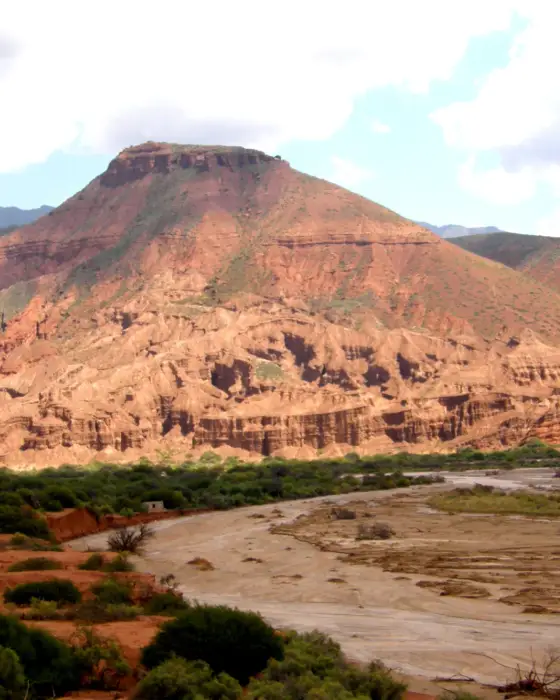
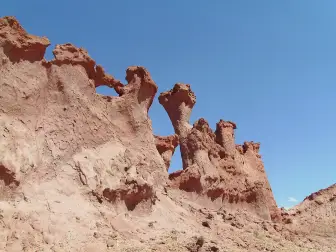
A 25,784-hectare nature reserve crossed by National Route 68 between Salta and Cafayate, about 90 km from the city. The reddish rock walls form the Garganta del Diablo, a crevice you enter on foot, and the Anfiteatro, of reddish sedimentary rock, as well as formations such as El Fraile, El Sapo, and Los Castillos, all by the roadside.
The Garganta del Diablo and Anfiteatro sit beside RN 68 between Salta and Cafayate, making this the most accessible stretch of scenery from the city.
Check access

Cerro de los Siete Colores
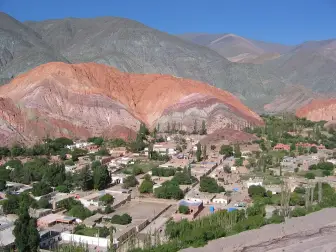
The mountain of rock layers in different colors, pink, white, green, red, and yellow, on the edge of Purmamarca, in Jujuy, about 180 km from Salta. It can be seen from the viewpoints around the village and up close along the Paseo de los Colorados, the path that circles the hill behind it. The best time to see it is at sunrise.
Purmamarca’s striped mountain is the emblem of the World Heritage Quebrada de Humahuaca; seeing it at dawn justifies sleeping in the village.
Check access

Catedral Basílica de Salta
On the Plaza 9 de Julio, built between 1858 and 1882 after the 1844 earthquake damaged the earlier church, with a facade of Corinthian columns and towers designed by the architect Noé Macchi. It is the shrine of the Señor y la Virgen del Milagro, the images that arrived in 1592 and are carried in procession every September 15, and it holds the Panteón de las Glorias del Norte, where the remains of Martín Miguel de Güemes lie. National Historic Monument.
Sanctuary of the Milagro images and Güemes’ tomb, right on the square; understanding the cathedral means understanding Salta’s calendar, and the visit fits into half an hour.
Check access
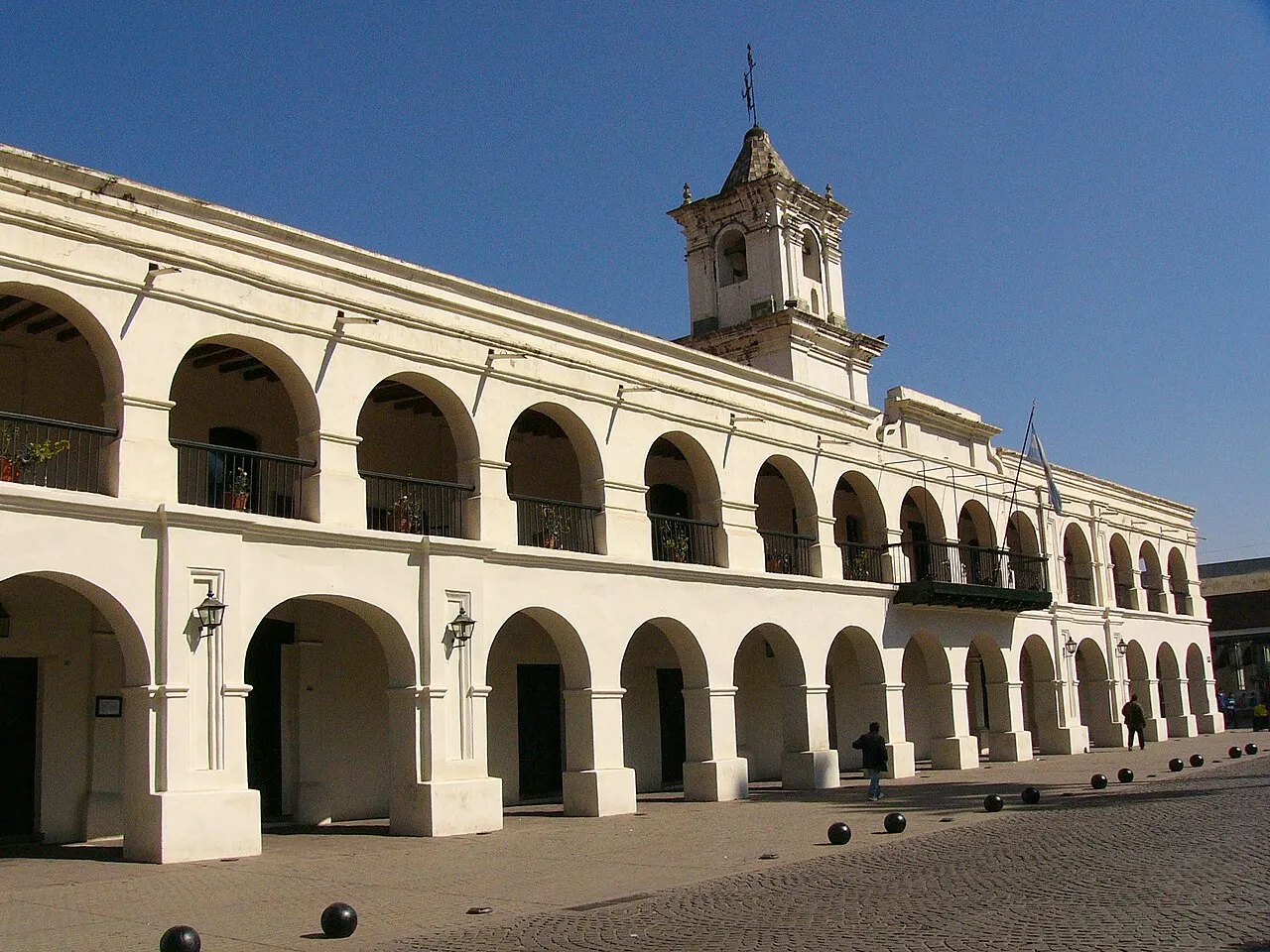
Cabildo de Salta
The two-story arcaded building on the Plaza 9 de Julio, begun around 1780 and declared a National Historic Monument in 1937. The Museo Histórico del Norte occupies the ground floor, and the Museo Colonial y de Bellas Artes the upper floor.
The arcades begun around 1780 line one side of the square, and the Museo Histórico del Norte occupies the ground floor. A quick visit between the cathedral and the MAAM.
Check access

Basílica y Convento de San Francisco
The Franciscan church at the corner of Caseros and Córdoba streets, near the square, with a facade of terracotta and ivory ornaments and a 54 m bell tower, built from 1877. The present church was reopened in 1870 after a series of fires in the 18th century. There Manuel Belgrano attended, on March 13, 1813, the Mass for the dead of both sides of the Battle of Salta, and there Güemes's mother is buried. National Historic Monument since 1941.
The 54 m tower and terracotta-and-ivory facade are the city’s most familiar image, a short walk from the square.
Check access
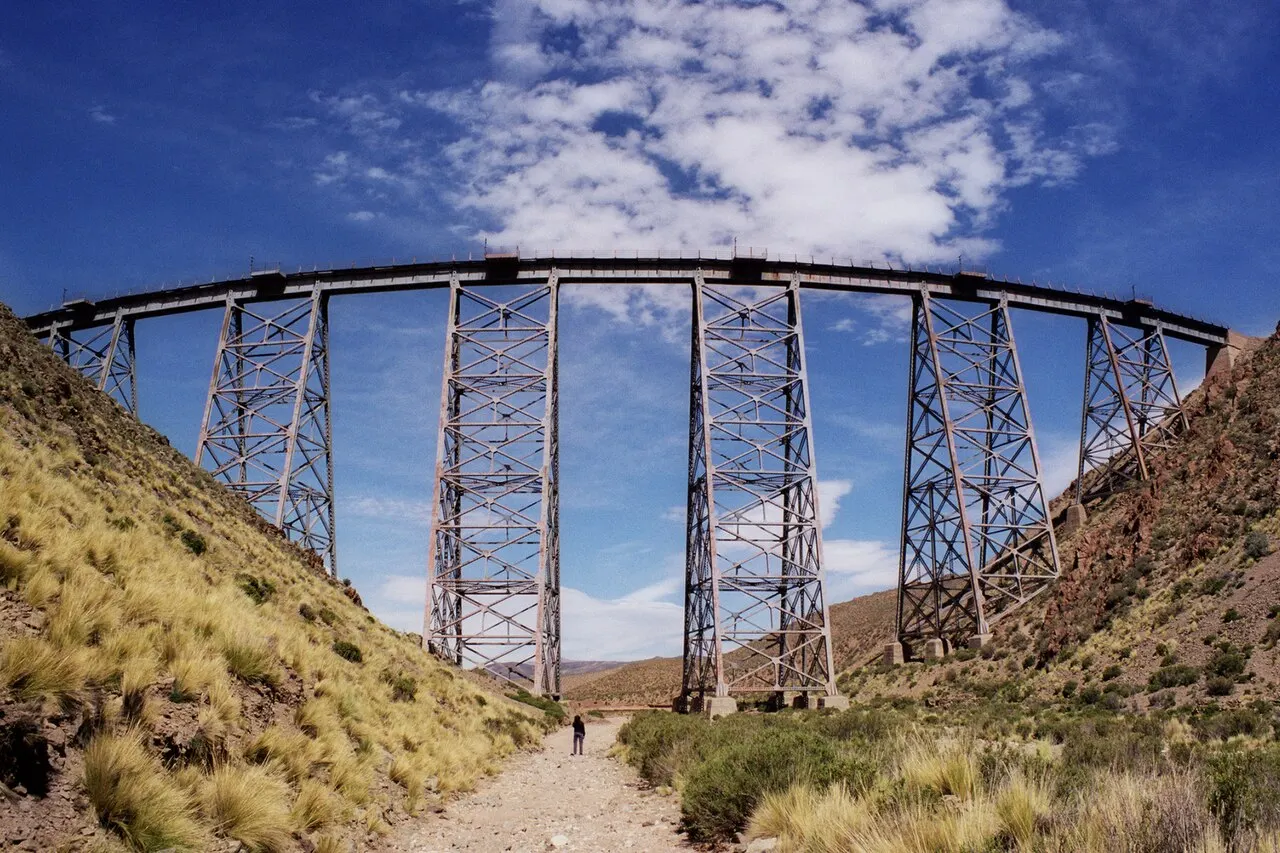
Viaducto La Polvorilla
A 223.5 m steel viaduct, up to 63 m high over a puna ravine, at about 4,200 m of altitude, near San Antonio de los Cobres. Completed in 1932 and inaugurated in 1939, it is the destination of the Tren a las Nubes. On the full excursion, check-in is at 6:15 a.m. at the Plazoleta Antofagasta, in front of the Salta train station, the bus climbs the Quebrada del Toro with stops, and the train leaves San Antonio de los Cobres at noon, reaches the viaduct at 1 p.m., and returns; the bus gets back to Salta in the early evening. From October to December 2026, the bus, train, and bus package cost ARS 252,000 for foreigners and ARS 227,000 for residents of Argentina. The operator warns that the excursion may be canceled due to bad weather.
The viaduct at about 4,200 m is an engineering feat, but the Tren a las Nubes excursion takes a full day and is expensive; worthwhile for railway enthusiasts or anyone with a day to spare.
Check access
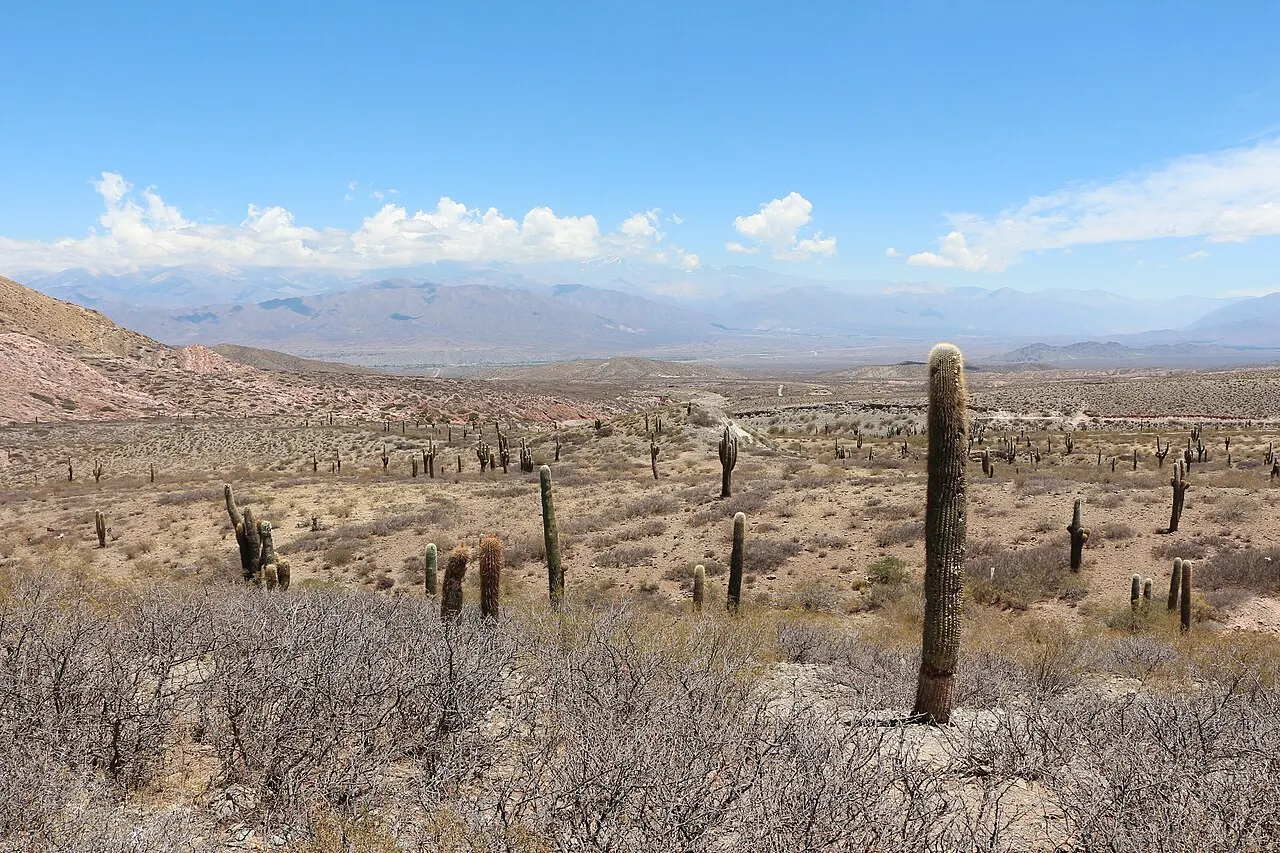
Parque Nacional Los Cardones
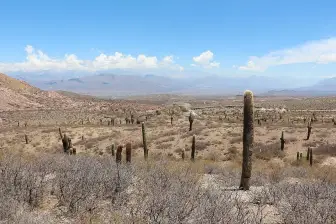
A 64,117-hectare park created in 1996 about 100 km from Salta, between 2,600 m and over 5,000 m, where a great many cardones, the region's columnar cacti, grow. It is reached by Provincial Route 33, after climbing the Cuesta del Obispo, about 20 km of switchbacks, to the Piedra del Molino, at over 3,300 m. Inside the park, the same road runs straight for kilometers, the Recta del Tin-Tin, on the way to Cachi. There are trails, but little visitor infrastructure.
The climb up the Cuesta del Obispo and the straight road through the cardones are on the way to Cachi; the park is seen from the road and on short walks, with little infrastructure for more.
Check access
Nilo’s itinerary
Start with the basic programme and choose extensions for the time you have.
Plan my days in the app ↗Day 1 · The colonial center and San Bernardo
Start at 9 a.m. on the Plaza 9 de Julio: go into the Catedral Basílica, shrine of the Señor y la Virgen del Milagro, and see the Panteón de las Glorias del Norte, with Güemes's remains.
Cross the square to the Cabildo and enter the Museo Histórico del Norte, on the ground floor, if it is open; the hours are not published in the sources consulted, so check the day before.
Walk to the corner of Caseros and Córdoba to see the facade and the 54 m tower of San Francisco.
Have lunch with empanadas and tamales in the center.
After lunch, go into the MAAM, at Mitre 77, open Tuesday to Sunday from 11 a.m. to 7 p.m.; allow an hour and a half and buy the ticket on vamos.gob.ar.
Late in the afternoon, walk to the Parque San Martín and ride the cable car up Cerro San Bernardo; come down by the 1,021-step staircase, which starts behind the Güemes monument, or by cable car if you prefer.
Have dinner at a peña on Calle Balcarce and go back by taxi or ride-hailing app.
Day 2 · Cuesta del Obispo, Los Cardones, and Cachi
Leave Salta at 8 a.m. on Provincial Route 33, by car or tour, with your overnight bag for Cachi.
Pass through Chicoana and climb the Cuesta del Obispo, about 20 km of switchbacks, to the Piedra del Molino viewpoint, at over 3,300 m.
Cross the Parque Nacional Los Cardones along the Recta del Tin-Tin and stop for a short walk among the cardones.
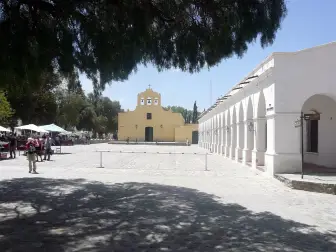
Reach Cachi, about 155 km from Salta, for lunch; in the afternoon, visit the church on the square and the Museo Arqueológico Pío Pablo Díaz.
Sleep in Cachi.
Day 3 · Route 40 from Cachi to Cafayate
Leave Cachi at 8 a.m. on National Route 40 heading south: it is 156 km and almost 4 hours on the road without stops, so set aside the whole day.
Pass through Seclantás and Molinos and, after Angastaco, cross the Quebrada de Las Flechas, with its pointed rock walls up to 20 m high.
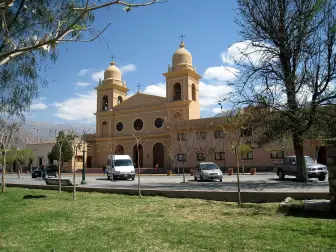
Reach Cafayate in the middle of the afternoon and take a torrontés tasting visit at a winery in town.
Sleep in Cafayate.
Day 4 · Cafayate and the Quebrada de las Conchas
In the morning, visit the Museo de la Vid y el Vino and a second winery, or stroll around Cafayate's square.
After lunch, take National Route 68 toward Salta and stop at the Quebrada de las Conchas: the Anfiteatro and the Garganta del Diablo are by the roadside.
Reach Salta in the evening: it is about 189 km and a little over 3 hours without stops. Sleep in Salta.
Day 5 · Purmamarca and the Salinas Grandes
Leave Salta at 7 a.m. with your luggage on National Route 9 toward Jujuy; Purmamarca is about 183 km away, about 2 hours 30 minutes.
See the Cerro de los Siete Colores from the village viewpoints and walk part of the Paseo de los Colorados.
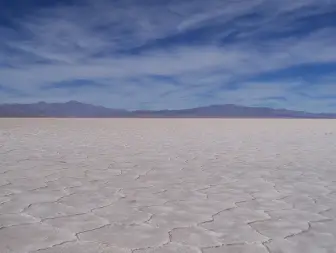
Fill up in Purmamarca and climb National Route 52 over the Cuesta de Lipán, up to 4,170 m, to reach the Salinas Grandes, 66 km away, between 11 a.m. and 3 p.m., when the sun is high.
Pay the vehicle access fee and hire the community guide at the entrance post to walk to the piletones; bring sunglasses, sunscreen, and a jacket.
Return to Purmamarca late in the afternoon and sleep there.
Day 6 · Tilcara, Humahuaca, and Hornocal
At daybreak, see the Cerro de los Siete Colores from one of Purmamarca's viewpoints, the best time for it.
Leave Purmamarca at 8:30 a.m. for Tilcara, about 25 km away, and enter the Pucará de Tilcara when it opens, at 9 a.m.; it closes on Mondays and in the rain.
Continue to Humahuaca, about 44 km away, and climb Provincial Route 73, a winding dirt road, to the Serranía de Hornocal viewpoint: it is about 25 km and an hour's climb. Pay the admission to the community at the booth. Between December and March, in the rain, ask in Humahuaca whether the road is passable.
Come down and have lunch in Humahuaca.
Return to Salta on National Route 9: from Humahuaca it is about 244 km and 3 hours 20 minutes without stops. Leave by 3 p.m. so you do not drive long in the dark, and sleep in Salta.




If you stay longer
Day 7 · Tren a las Nubes and San Antonio de los Cobres
Day trip
A full-day excursion: check-in is at 6:15 a.m. at the Plazoleta Antofagasta, in front of the train station, and the bus climbs the Quebrada del Toro with stops and a breakfast at El Alfarcito, and the train leaves San Antonio de los Cobres, about 165 km from Salta, at noon, for the La Polvorilla viaduct, at about 4,200 m. The return passes through Santa Rosa de Tastil at 5:40 p.m. and reaches Salta at night. From October to December 2026: ARS 252,000 for foreigners and ARS 227,000 for residents of Argentina, or ARS 194,500 and 161,500 on the «solo tren» fare, the train leg only. Reservations at trenalasnubes.com.ar.
Food
Empanada salteña
Small, filled with lean hand-cut beef, potato, scallion, hard-boiled egg, and pepper, seasoned with the valley's pepper and baked in a clay oven or fried. It is Salta's dish; since 2003 the city has celebrated Empanada Salteña Day on April 4. In April 2026, an empanada cost around ARS 1,600 in the center.
Tamal
Cornmeal dough with beef, pork, or jerky, onion sautéed in fat, and ají, wrapped in corn husk and boiled. It is eaten with empanadas in the peñas and the markets; the husk is not eaten.
Humita en chala
A paste of grated fresh corn with cheese, basil, squash, and onion, wrapped in corn husk and boiled. It is less seasoned than the tamal and has no meat, and comes in a savory and a sweet version.
Locro
A stew of squash, beans, and corn cooked for hours, with chorizo, bacon, and meat, served with a spoonful of fat melted with pepper on top. It appears on regional menus and is the dish of national holidays.
Quesillo con miel de caña
Fresh cheese from the Valles Calchaquíes, made in long, thin slabs by stretching the curd, served for dessert with cane honey or with cayote preserve and walnuts.
Torrontés
An aromatic white grape, the emblematic variety of Salta's high-altitude vineyards, especially in Cafayate. It is ordered by the glass in the city's restaurants and in the valley's wineries.
Where to eat
- Centro · $
Empanadas salteñas, tamales, and humitas at the regional restaurants around the square; in April 2026 a dozen empanadas cost about ARS 20,000 in the center.
- Mercadito on Calle Esteco · $
Empanadas cheaper than in the center: in April 2026, a dozen with ground beef started at ARS 12,000 and one with hand-cut beef was over ARS 17,000.
- Balcarce · $$
Peñas with a regional menu, empanadas, locro, tamales, and wine, and live folk music at night.
- Cafayate · $$
Winery and square restaurants, with torrontés by the glass and regional cooking.
$: empanadas at the counter; about ARS 1,600 each in the center, or a dozen from ARS 12,000 at the mercadito on Calle Esteco (April 2026) · $$: a full regional meal at a peña or restaurant in the center; no dated measurement is published, check the menu · $$$: winery or boutique hotel restaurant; prices vary by place and were not measured in this research · 2026-10-16
Day trips
Valles Calchaquíes: Cachi and Cafayate
Cachi is about 155 km to the west on Provincial Route 33, almost 3 hours, after the Cuesta del Obispo and the Parque Nacional Los Cardones; Cafayate is about 189 km to the south on National Route 68 and the Quebrada de las Conchas, a little over 3 hours. Between the two, National Route 40 passes through Molinos, Angastaco, and the Quebrada de Las Flechas in 156 km. The full circuit takes three days, sleeping in Cachi and in Cafayate.
Quebrada de Humahuaca and Salinas Grandes
Purmamarca is about 183 km to the north, about 2 hours 30 minutes by car; Tilcara is 25 km beyond it and Humahuaca about 244 km from Salta. The Salinas Grandes are 66 km from Purmamarca on National Route 52, at about 3,450 m. One-day tours leave before dawn and return at night; with a night in Purmamarca or Tilcara, the trip fits in two days.
Tren a las Nubes and San Antonio de los Cobres
A full-day excursion: check-in is at 6:15 a.m. at the Plazoleta Antofagasta, in front of the train station, and the bus climbs the Quebrada del Toro with stops and a breakfast at El Alfarcito, and the train leaves San Antonio de los Cobres, about 165 km from Salta, at noon, for the La Polvorilla viaduct, at about 4,200 m. The return passes through Santa Rosa de Tastil at 5:40 p.m. and reaches Salta at night. From October to December 2026: ARS 252,000 for foreigners and ARS 227,000 for residents of Argentina, or ARS 194,500 and 161,500 on the «solo tren» fare, the train leg only. Reservations at trenalasnubes.com.ar.
Cafayate in one day
About 189 km on National Route 68, a little over 3 hours without stops, through the Quebrada de las Conchas. In a single day there is room for the Garganta del Diablo, the Anfiteatro, a winery, and lunch in Cafayate; you return at night.
Villa San Lorenzo
About 10 km from the center, at 1,450 m, in the yungas, with frequent SAETA buses. Good for half an afternoon of walking along the San Lorenzo ravine and dinner outside the center.
Where to begin
The colonial center and San Bernardo
Start at 9 a.m. on the Plaza 9 de Julio: go into the Catedral Basílica, shrine of the Señor y la Virgen del Milagro, and see the Panteón de las Glorias del Norte, with Güemes's remains.
Cuesta del Obispo, Los Cardones, and Cachi
Leave Salta at 8 a.m. on Provincial Route 33, by car or tour, with your overnight bag for Cachi.
Route 40 from Cachi to Cafayate

Leave Cachi at 8 a.m. on National Route 40 heading south: it is 156 km and almost 4 hours on the road without stops, so set aside the whole day.
Cafayate and the Quebrada de las Conchas
In the morning, visit the Museo de la Vid y el Vino and a second winery, or stroll around Cafayate's square.
Purmamarca and the Salinas Grandes
Leave Salta at 7 a.m. with your luggage on National Route 9 toward Jujuy; Purmamarca is about 183 km away, about 2 hours 30 minutes.
Tilcara, Humahuaca, and Hornocal

At daybreak, see the Cerro de los Siete Colores from one of Purmamarca's viewpoints, the best time for it.
Money
The currency is the Argentine peso (ARS), written with the same «$» as the dollar. Prices change fast, so treat the amounts below as dated references. In April 2026, an empanada salteña cost around ARS 1,600 in the center, and a dozen about ARS 20,000; at the little market on Calle Esteco, a dozen with ground beef started at ARS 12,000. The bus fare has been ARS 1,450 since April 2026. In July 2026, the San Bernardo cable car cost ARS 30,000 for foreigners and ARS 25,000 for Argentines, and from October to December 2026 the full Tren a las Nubes costs ARS 252,000 for foreigners. In October 2026, a night in a three-star hotel in Salta ran from ARS 39,441 to 121,951, and four- and five-star and boutique hotels started at ARS 150,726. Several admissions have different prices for Salta residents, Argentines, and foreigners, such as the MAAM, the cable car, and the Pucará de Tilcara. Bring cash for the small towns, the communities of the Salinas Grandes and Hornocal, and the crafts fairs.
Getting there and around

From the airport and the bus terminal
Martín Miguel de Güemes International Airport (SLA) is southwest of the city, about 13 km from the Plaza 9 de Julio by road, by OpenStreetMap's route calculation. There are flights to Buenos Aires and other Argentine cities and a few international routes. SAETA line 8A links the airport to the center in about 35 minutes and only accepts the SAETA card, which, according to a travel guide consulted in October 2026, is not sold at the airport. The same guide gave about ARS 10,000 per person for the shared transfer and about ARS 15,000 for a taxi or ride-hailing app. The bus terminal is about 3 km from the square by street, with buses to almost the entire country and to Bolivia, Chile, and Paraguay.
City buses
SAETA, the provincial company, runs the buses of the city and the metropolitan area, including to Villa San Lorenzo. Since April 8, 2026, the fare has been ARS 1,450, and a transfer pays half (ARS 725). Payment is with the SAETA card. The center can be covered on foot.
To Cachi, Cafayate, and the Quebrada de Humahuaca
The regions are reached by rental car, with a driver, or on a tour leaving from the center. By OpenStreetMap's route calculation, without stops: Cafayate is about 189 km away, a little over 3 hours; Cachi 155 km, almost 3 hours; Purmamarca 183 km, about 2 hours 30 minutes; and Humahuaca 244 km, about 3 hours 20 minutes. The stretch of National Route 40 between Cachi and Cafayate, 156 km, takes almost 4 hours without stops. In the rainy season, from December to March, rain sometimes cuts the road to Cafayate: check the state of the routes before setting out.
Safety

The most common problem for visitors to Salta is theft. In the nightlife zone of Calle Balcarce, in 2026 there were reports of phone and wallet thefts inside crowded clubs and fights in the street in the early hours: keep your phone put away and go back by taxi or ride-hailing app. In the mountains, the risk is altitude and weather: the Salinas Grandes are at about 3,450 m, the Cuesta de Lipán reaches 4,170 m, and the La Polvorilla viaduct is at about 4,200 m, reached within a few hours from the city's 1,187 m; go up slowly, drink water, and use sunscreen and sunglasses, because the sun is strong and the wind is cold. On the roads, avoid driving at night on mountain stretches and check the routes in the rainy season. Salta and Jujuy are a seismic zone; in case of a tremor, follow the hotel's instructions. In an emergency, the police answer at 911 or 101 and the ambulance at 107.
Etiquette tips
At the Milagro procession, make room
On September 15, the procession leaves the cathedral with the images and thousands of the faithful, many after days of walking. Watch from the sidewalk, without crossing the procession, and avoid scheduling visits to the square that afternoon.
At the Salinas and Hornocal, pay the community
Local communities manage access to the piletones of the Salinas Grandes, with a mandatory guide, and to the Hornocal viewpoint, with admission charged at the booth. Payment is part of the visit, not an optional tip.
Ask before photographing people
In the villages of the Quebrada and the Valles Calchaquíes, market vendors and residents are not part of the scenery. Ask before pointing the camera, especially at children.
Greet before asking
In shops, taxis, and at counters, begin with «buen día» or «buenas tardes» before asking the price or the way.
Mistakes to avoid
Doing the Quebrada de Humahuaca and the Salinas in a single day from Salta
Humahuaca is about 244 km and the Salinas Grandes about 249 km from the city, in different directions from Purmamarca. On a round trip, most of the day is spent inside the car. A night in Purmamarca or Tilcara splits the trip in two.
Arriving at the MAAM or the Pucará on a Monday
The MAAM and the Pucará de Tilcara close on Mondays. Build the itinerary so that the city day and the Quebrada day do not fall on that day.
Going up to the puna too fast
Going from the city's 1,187 m to the 4,170 m of the Cuesta de Lipán or the roughly 4,200 m of La Polvorilla in a few hours. Go slowly, drink water, and bring a warm layer, because it is cold and windy even on a sunny day.
Ignoring the summer rain
Planning dirt roads and long mountain stretches between December and March with no margin. Rain sometimes cuts the route to Cafayate and the ripio roads; leave a spare day.
Counting on a credit card everywhere
Arriving at the Salinas, Hornocal, or the village fairs without cash. Confirm beforehand whether they accept cards and bring pesos in cash for the communities' fees and small purchases.
Useful phrases
Buen día
Good morning. The standard greeting in Argentina, used until noon
Una docena de empanadas, por favor
A dozen empanadas, please
¿Tenés tarjeta SAETA?
Do you have a SAETA card? Useful for asking for help at the bus stop, with the Argentine «vos»
¿Cómo está la ruta a Cafayate?
How is the road to Cafayate? A question to ask in the rainy season
¿Está en pesos o en dólares?
Is it in pesos or in dollars?
Una copa de torrontés
A glass of torrontés
Where to stay
- Centro · First trip, and anyone without a car · $$: The square, the MAAM, the churches, and the tour agencies are a few blocks away, and the tours to the Quebrada and the valleys pick up passengers in the center. There is everything from hostels to boutique hotels.
- Balcarce · Anyone who wants peñas and nights out on foot · $$: It is close to the peñas and to the station in front of which the Tren a las Nubes excursion bus leaves. In exchange, there is noise and activity into the early hours on weekends.
- Villa San Lorenzo · Anyone traveling by car who prefers quiet and greenery · $$$: A tree-lined village about 10 km from the center, with hotels, cabins, and mansions. It requires a bus, car, or taxi to get to the center and to catch the tours.
- Cachi and Cafayate · Anyone doing the Valles Calchaquíes circuit · $$: Sleeping in Cachi and in Cafayate cuts the hours on the road in the circuit and leaves the afternoon free in the villages and wineries.
- Purmamarca and Tilcara · Anyone going to the Quebrada de Humahuaca and the Salinas · $$: A night in the Quebrada avoids about 500 km in a single day and lets you see the Cerro de los Siete Colores in the morning light.
$: hostels and simple lodgings in the center; no price measured in this research · $$: three-star hotel in Salta, ARS 39,441 to 121,951 a night (October 2026) · $$$: four- or five-star or boutique hotel, from ARS 150,726 a night (October 2026) · 2026-10-16
Districts
Centro
The colonial grid around the Plaza 9 de Julio, with the cathedral, the Cabildo, the MAAM, San Francisco, and the pedestrian streets Alberdi and Florida. It concentrates hotels, tour agencies, and restaurants, and it is walkable.
Balcarce
The stretch of Calle Balcarce between the Estación Central train station and Avenida Entre Ríos, north of the center. At night it is the zone of peñas, bars, and clubs; on Saturday, Sunday, and holiday mornings, it becomes a crafts fair. The Tren a las Nubes excursion bus leaves from in front of the station.
Paseo Güemes and Parque San Martín
East of the center, at the foot of Cerro San Bernardo: the Güemes monument, the start of the 1,021-step staircase to the top and, a little to the south, the Parque San Martín, with the cable car's base station.
Villa San Lorenzo
A former summer resort village about 10 km from the center, at 1,450 m, in the yungas, the humid mountain forest. It has 19th-century mansions, hotels, cabins, and restaurants, and frequent buses to the city.
Valles Calchaquíes
The high valleys west and south of the city, followed by National Route 40. To the north, Cachi, a village of adobe houses at the foot of the Nevado de Cachi; in the middle, Molinos, Angastaco, and the Quebrada de Las Flechas; to the south, Cafayate, a town of torrontés vineyards, about 190 km from Salta through the Quebrada de las Conchas.
Quebrada de Humahuaca (Jujuy)
A 155 km valley in the neighboring province of Jujuy, to the north, a World Heritage Site since 2003. Purmamarca, with the Cerro de los Siete Colores, is about 180 km from Salta; Tilcara and Humahuaca come next, going up the Río Grande. There is lodging in all three villages.
History
c. 1500 · The capacocha of Llullaillaco
Three children are taken by the Inca state to the summit of the Llullaillaco volcano, on today's border with Chile, and left there as an offering in a ritual called capacocha. Dating places the deaths between 1462 and 1507.
1582 · Founded by Hernando de Lerma
On April 16, Governor Hernando de Lerma founds San Felipe y Santiago de Lerma en el valle de Salta, on the route between Upper Peru and the Río de la Plata. The founding charter already sets aside the lot where San Francisco stands today.
1592 · The images of the Milagro
The crucified Christ and the Virgin that would become the Señor y la Virgen del Milagro arrive in Salta. According to tradition, the crates were sighted floating in the Pacific, near the port of Callao, on June 19, 1592.
1692 · The earthquake of September 13
A tremor ruins the neighboring town of Esteco and damages Salta. The devotion to the two images tied to that tremor gives rise to the Milagro festival, still celebrated every September.
1783 · Capital of an intendancy
Salta becomes the capital of the Intendancy of Salta del Tucumán, within the Viceroyalty of the Río de la Plata, created in 1776. Around 1780, construction of the present Cabildo begins.
1813 · The Battle of Salta
On February 20, Manuel Belgrano's army defeats the royalists on the outskirts of the city. The bronze of the battle's cannons was cast into the Campana de la Patria.
1814–1821 · Güemes and the Gaucho War
Martín Miguel de Güemes, born in Salta in 1785, governs the province and commands the gaucho militias that hold back the royalist invasions from Upper Peru. He dies on June 17, 1821, wounded in an ambush; the date is now a national holiday.
1858–1882 · The new cathedral
After the 1844 earthquake leaves the old church in poor condition, the new cathedral begins to be built in 1858 and the complex is finished in 1882. It houses the images of the Milagro and the Panteón de las Glorias del Norte, with Güemes's remains.
1890s · The train and the immigrants
After decades of economic decline following the war of Independence, the arrival of the railway and of Spanish, Syrian, and Lebanese immigrants revives the city's economy.
1932–1939 · The La Polvorilla viaduct
On the line that climbs from Salta toward Chile, the 223.5 m steel viaduct is completed in 1932, at about 4,200 m of altitude, and inaugurated on November 7, 1939. It is the end point of the Tren a las Nubes excursion.
1948 · Los Chalchaleros
On June 16, the quartet Los Chalchaleros debuts at the Teatro Alberdi in Salta. In the following decades, Salta's folk music reaches the whole country with them, with the composer Cuchi Leguizamón and with the poet Manuel J. Castilla.
1999–2007 · The Niños del Llullaillaco
On March 16, 1999, the team of Johan Reinhard and Constanza Ceruti finds the three children at about 6,700 m of altitude. The Museo de Arqueología de Alta Montaña opens in 2004 on the Plaza 9 de Julio, and since 2007 the children have been kept there.
2003 · Quebrada de Humahuaca, World Heritage Site
UNESCO inscribes the Quebrada de Humahuaca, a 155 km valley in Jujuy, north of Salta, as a Cultural World Heritage Site.
Complete history
A city on the road to Upper Peru
Salta was born as a stopover. In 1582, Hernando de Lerma founded it in the Lerma Valley, halfway between the mines of Upper Peru, in present-day Bolivia, and the Río de la Plata, and the founding charter already set aside the lot for San Francisco, a few blocks from the central square, where the cathedral stands. Around 1780 work began on the arcaded Cabildo that still closes one side of the square, and in 1783 Salta became the capital of the Intendancy of Salta del Tucumán.
The Milagro and the earthquakes
The city's religious life revolves around two images that arrived in 1592, a crucified Christ and a Virgin. On September 13, 1692, an earthquake ruined neighboring Esteco and shook Salta, and the devotion to the two images, tied to that tremor, gave rise to the festival of the Señor y la Virgen del Milagro. It remains Salta's largest celebration: the novena begins on September 6, the main procession leaves on the afternoon of September 15, and in 2026 more than 200 pilgrimages, many on foot, reached the city. The present cathedral, built between 1858 and 1882 after the 1844 earthquake damaged the previous one, is also the shrine of the two images.
Belgrano, Güemes, and the war in the north
In the War of Independence, Salta was on the front line against the royalist armies coming down from Upper Peru. On February 20, 1813, Manuel Belgrano won the Battle of Salta on the outskirts of the city. Between 1814 and 1821, Martín Miguel de Güemes, a salteño, governed the province and commanded the gaucho militias in a guerrilla war that stopped successive invasions. He died on June 17, 1821, and the city still organizes its calendar around him: the monument at the foot of Cerro San Bernardo, the Panteón de las Glorias del Norte in the cathedral, where his remains lie, and the vigil on the night of June 16.
Decline, train, and folklore
The war left Salta in ruins, and the city spent much of the 19th century in decline. Recovery came in the 1890s, with the railway and the arrival of Spanish, Syrian, and Lebanese immigrants. In the 20th century, the line that climbs toward Chile crossed the puna over the La Polvorilla viaduct, completed in 1932, and Salta became a center of folk music: Los Chalchaleros debuted at the Teatro Alberdi in 1948, and the composer Cuchi Leguizamón and the poet Manuel J. Castilla renewed the zamba.
The children of the volcano and tourism today
On March 16, 1999, an expedition led by Johan Reinhard and Constanza Ceruti found, near the summit of Llullaillaco, the bodies of three children sacrificed by the Inca state around 1500: La Doncella, about 13 years old, La Niña del Rayo, about 6, and El Niño, 4 or 5. The province created the Museo de Arqueología de Alta Montaña, opened in 2004 on the Plaza 9 de Julio, where they are preserved in climate-controlled cases and displayed one at a time. In 2003, UNESCO declared the Quebrada de Humahuaca, in Jujuy, a World Heritage Site, and Salta established itself as the gateway to northwestern Argentina.
Geography and shape of the city
The Lerma Valley and the mountains
Salta occupies the Lerma Valley, at 1,187 m, among the ranges of the eastern Andean cordillera. East of the center, Cerro San Bernardo rises to 1,471.92 m, about 285 m above the city. Reaching the regions that justify the trip means crossing mountains: to the west, Provincial Route 33 climbs the Cuesta del Obispo to over 3,300 m and descends to the Valles Calchaquíes, where Cachi and Cafayate lie; to the north, National Route 9 leads to Jujuy and the Quebrada de Humahuaca; and the Quebrada del Toro, which the Tren a las Nubes excursion climbs by bus, leads to the puna.
The city on a grid
The center is an almost perfect grid of blocks around the Plaza 9 de Julio, with the cathedral, the Cabildo, and the MAAM on the sides of the square. The only curved street is Avenida Belgrano, laid out over the bed of an old watercourse. Alberdi, Florida, and Caseros streets have pedestrian stretches and shops. North of the center, Calle Balcarce, near the old train station, concentrates peñas, bars, and clubs; to the east, the Paseo Güemes and the monument to the general mark the foot of San Bernardo, and the Parque San Martín holds the cable car's base station.
A dry-winter, rainy-summer climate
The climate is temperate, with a dry winter and a rainy summer (Köppen Cwb). At the airport station, 1991 to 2020 normals, January has an average high of 27.7 °C, a low of 16.8 °C, and 197 mm of rain; July has a high of 19.9 °C, a low of 2.9 °C, and less than 3 mm. Most of the year's 738 mm of rain falls between November and March. In the regions visited from the city, altitude changes everything: the Salinas Grandes sit at about 3,450 m.
Cerro San Bernardo rises about 285 m above the city, and the staircase to the top has 1,021 steps.
Culture
Folklore and peñas
Salta is one of the capitals of Argentine folk music. Los Chalchaleros, formed in the city, debuted at the Teatro Alberdi on June 16, 1948; the composer Gustavo «Cuchi» Leguizamón, born in Salta in 1917, and the poet Manuel J. Castilla, born in Cerrillos, renewed the zamba and wrote songs together such as the Zamba Argamonte. That tradition continues in the peñas, restaurants with live music, concentrated on Calle Balcarce, and in festivals such as the Serenata a Cafayate, in February.
Faith and civic calendar
The year is organized around two dates. In September, the festival of the Señor y la Virgen del Milagro brings together pilgrims from the whole province, who arrive on foot, for the novena that begins on the 6th and the procession on the afternoon of September 15, closed with the renewal of the Pacto de Fidelidad. In June, the city remembers Güemes with the Guardia bajo las Estrellas, the gaucho vigil on the night of June 16 at the general's monument, at the foot of San Bernardo.
Cinema and literature
The filmmaker Lucrecia Martel was born in Salta in 1966 and shot her first feature there, La ciénaga, from 2001, whose city is a fictional version of Salta; in 2022, the film was voted the best in the history of Argentine cinema in a poll by the Museo del Cine de Buenos Aires. Manuel J. Castilla, author of books such as Coplas de Salta, is the province's reference poet.
The empanada salteña combines hand-cut beef, potato and paprika; recipes vary according to how it is prepared.
Festivals and events
Señor y Virgen del Milagro, September 6 to 15
Salta's largest religious festival: novena starting September 6, vigil at the cathedral on the night of the 14th, and the main procession on the afternoon of September 15, leaving from the cathedral; in 2026, the thanksgiving Mass of September 19 closed the festival. In 2026, more than 200 pilgrimages arrived, many on foot. Hotels and downtown streets fill up on those days.
Guardia bajo las Estrellas, night of June 16
A gaucho vigil at the Güemes monument, at the foot of Cerro San Bernardo, that opens the tributes to the general on the eve of June 17, the anniversary of his death and a national holiday.
Serenata a Cafayate, February
A folk festival created in 1974 and held in mid-February at the Bodega Encantada, in the center of Cafayate, with three nights of shows. In 2026, the general-admission tickets sold online for Saturday sold out.
Carnival, February or March
Comparsas and murgas parade through the neighborhoods, such as Villa Cristina, and chicha, a fermented corn drink, appears at the carnival's burial and unburial parties.
Fiesta Nacional del Tamal, July
A festival of the regional dish in Chicoana, in the Lerma Valley, on the way to the Cuesta del Obispo.
Books and films
La ciénaga (2001), Lucrecia Martel
The first feature by the Salta-born director is set in a fictional version of the city and on a farm about 90 km from it, during the summer of two related families, one of them in decline. In 2022 it was voted the best Argentine film of all time in a poll by the Museo del Cine de Buenos Aires.
Zamba Argamonte, Cuchi Leguizamón and Manuel J. Castilla
One of the zambas the Salta composer wrote with the poet from Cerrillos. Leguizamón set many of Castilla's lyrics to music, and these zambas are part of Salta's folk repertoire.
Los Chalchaleros
The quartet formed in Salta, which debuted at the Teatro Alberdi in 1948 and disbanded in 2002, is one of Argentina's best-known folk groups. Listening to their records before the trip tunes the ear for a night at a peña.
Frequently asked questions
Salta: how do you get from the airport to downtown?
SAETA's line 8A links the airport to downtown in about 35 minutes and only takes the SAETA card, which, according to an October 2026 travel guide, is not sold at the airport. The same guide gave about ARS 10,000 per person for the shared transfer and ARS 15,000 for a taxi.
Salta: how many days should I stay?
Stay six days, with two trips with overnights: the Valles Calchaquíes, sleeping in Cachi and Cafayate, and the Quebrada de Humahuaca, with a night in Purmamarca. Between December and March, I'd keep a spare day, because rain sometimes cuts the roads.
Salta: can you do the Quebrada de Humahuaca and the Salinas Grandes in a single day?
Humahuaca and the Salinas Grandes are about 244 km and 249 km from the city, in different directions from Purmamarca, and on a day trip most of the day is spent in the car. A night in Purmamarca or Tilcara splits the trip in two.
Salta: how does the Tren a las Nubes work?
The trip takes a whole day, from check-in at 6:15 a.m. until night, and the train runs from San Antonio de los Cobres to the La Polvorilla viaduct, at about 4,200 m. From October to December 2026, the full package costs ARS 252,000 for foreigners. For the full package, check-in is at Plazoleta Antofagasta in Salta; a bus takes you up to San Antonio de los Cobres to board the train. The “solo tren” fare covers only the railway section.
Salta: how do you deal with the altitude of the puna?
The Salinas Grandes, at about 3,450 m, and the La Polvorilla viaduct, at about 4,200 m, are reached in a few hours from the city's 1,187 m. Go up slowly, drink water and wear sunscreen and sunglasses, because the sun is strong and the wind is cold.
Other cities in the country
Argentina ↗- Days
- 3–4
- When
- Mar–May · Sep–Nov
- Per person/day
- Average 90–140 USDMid-range · per person/day
Cost scope
Per person per day: accommodation, meals, urban transport, visits and a small allowance for extras. Flights excluded; larger purchases vary. Editorial estimate, not a quote.
- Days
- 3
- When
- Jan–Mar · Dec
- Per person/day
- Average 90–160 USDMid-range · per person/day
Cost scope
Per person per day: accommodation, meals, urban transport, visits and a small allowance for extras. Flights excluded; larger purchases vary. Editorial estimate, not a quote.
- Days
- 4
- When
- Mar–Apr · Nov
- Per person/day
- Average 70–100 USDMid-range · per person/day
Cost scope
Per person per day: accommodation, meals, urban transport, visits and a small allowance for extras. Flights excluded; larger purchases vary. Editorial estimate, not a quote.
- Days
- 4–5
- When
- Mar–May · Oct–Nov
- Per person/day
- Average 83,200 ARSMid-range · per person/day
Cost scope
Per person per day: accommodation, meals, urban transport, visits and a small allowance for extras. Flights excluded; larger purchases vary. Editorial estimate, not a quote.
- Days
- 4–5
- When
- Jan–Apr · Oct–Dec
- Per person/day
- Average 86,300 ARSMid-range · per person/day
Cost scope
Per person per day: accommodation, meals, urban transport, visits and a small allowance for extras. Flights excluded; larger purchases vary. Editorial estimate, not a quote.
- Days
- 3
- When
- Jan–Apr · Oct–Dec
- Per person/day
- Average 95,400 ARSMid-range · per person/day
Cost scope
Per person per day: accommodation, meals, urban transport, visits and a small allowance for extras. Flights excluded; larger purchases vary. Editorial estimate, not a quote.