Argentina
El Calafate
The Perito Moreno from the walkways, the cruise to the Spegazzini, and the trails of El Chaltén
Days Start with the basic programme and choose extensions for the time you have.
How the guide reaches this number
The first two are in El Calafate: one full day at the Perito Moreno, on the walkways, and another on the cruise to the Upsala and the Spegazzini, leaving from Punta Bandera. On the third, take the morning bus to El Chaltén and do the short viewpoints in the afternoon; on the fourth, in steady weather, climb to the Laguna de los Tres, 10 km and about 4 h each way. The fifth is for the Laguna Torre or the Viedma Glacier boat, and for the trip back. Those with three days must choose: the glacier and the cruise from El Calafate, or the glacier and two nights in El Chaltén. I would not do El Chaltén as a day trip for the lagoons, because 440 km of road and 20 km of trail don't fit in the same day. In winter, from May to August, the glacier closes earlier, the cruise to the Spegazzini thins out, and the trails get snow; I would come between October and April.
4–5
When October to April; the Perito Moreno sector runs on season hours from September 1, and the cruise to the Upsala and Spegazzini runs every day.
How the guide reaches this number
In January, the average high reaches 19.1 °C. Check trail conditions and snow in El Chaltén at the Visitor Center. From May to August the glacier sector closes earlier, July’s average high is 5.2 °C and the cruise runs every other day
October to April; the Perito Moreno sector runs on season hours from September 1, and the cruise to the Upsala and Spegazzini runs every day. In January, the average high reaches 19.1 °C. Check trail conditions and snow in El Chaltén at the Visitor Center. From May to August the glacier sector closes earlier, July’s average high is 5.2 °C and the cruise runs every other day
Per person/day Budget about ARS 37,400; mid-range about ARS 86,300; comfortable about ARS 171,000 per person, based on what travelers report spending to Budget Your Trip (consulted in October 2026).
How the guide reaches this number
Per person per day: accommodation, meals, urban transport, visits and a small allowance for extras. Flights excluded; larger purchases vary. Editorial estimate, not a quote.
 What Nilo thinks
Stay four days, five if you can. The first two are in El Calafate: one full day at the Perito Moreno, on the walkways, and another on the cruise to the Upsala and the Spegazzini, leaving from Punta Bandera. On the third, take the morning bus to El Chaltén and do the short viewpoints in the afternoon; on the fourth, in steady weather, climb to the Laguna de los Tres, 10 km and about 4 h each way. The fifth is for the Laguna Torre or the Viedma Glacier boat, and for the trip back. Those with three days must choose: the glacier and the cruise from El Calafate, or the glacier and two nights in El Chaltén. I would not do El Chaltén as a day trip for the lagoons, because 440 km of road and 20 km of trail don't fit in the same day. In winter, from May to August, the glacier closes earlier, the cruise to the Spegazzini thins out, and the trails get snow; I would come between October and April.From the Perito Moreno walkways you see head-on a wall of ice about 70 m high and about 5 km wide, which advances about 2 m a day and drops blocks into the Canal de los Témpanos. That is why people come to El Calafate, a town of 22,844 on the shore of Lago Argentino, born as a stop for wool carts and remade by tourism after the 2000 airport. From here leave the boats that enter the arms of the lake to the Upsala, full of icebergs, and the Spegazzini, with a higher front than the Moreno's. 220 km away, the village of El Chaltén opens the Fitz Roy trails. Between one tour and the next, the town serves Patagonian lamb roasted on a cross and sweets made from the calafate fruit, the shrub that gave it its name.
Quick facts
- Population
- 22,844 residents in the town, INDEC national census of 2022 (it was 16,655 in 2010)
- Founded
- December 7, 1927, by decree of the Argentine government; before that, a supply stop for the wool carts of the estancias
- Country and region
- Argentina, Santa Cruz province, southern Patagonia; seat of the Lago Argentino department, at about 199 m above sea level, about 320 km northwest of Río Gallegos
- Language
- Argentine Spanish, with “vos” as the informal “you”
- Currency
- Argentine peso (ARS, written $); the reference rate on September 24, 2026 was about ARS 1,517 per dollar
- Time zone
- UTC−3 year-round; Argentina does not observe daylight saving time
- Best time to go
- October to April; the Perito Moreno sector runs on season hours from September 1, and the cruise to the Upsala and Spegazzini runs every day. In January, the average high reaches 19.1 °C. Check trail conditions and snow in El Chaltén at the Visitor Center. From May to August the glacier sector closes earlier, July’s average high is 5.2 °C and the cruise runs every other day
- Average daily cost
- Budget about ARS 37,400; mid-range about ARS 86,300; comfortable about ARS 171,000 per person, based on what travelers report spending to Budget Your Trip (consulted in October 2026).
When to go
October to April; the Perito Moreno sector runs on season hours from September 1, and the cruise to the Upsala and Spegazzini runs every day. In January, the average high reaches 19.1 °C. Check trail conditions and snow in El Chaltén at the Visitor Center. From May to August the glacier sector closes earlier, July’s average high is 5.2 °C and the cruise runs every other day
How the year changes
The best time runs from October to April. Since September 1 the Perito Moreno sector has operated on season hours (entry from 8 a.m. to 6 p.m.), the Todo Glaciares cruise runs every day from September to April, and trail conditions in El Chaltén must be checked at the Visitor Center. In January, the airport station's average (1991–2020) runs from a low of 7.2 °C to a high of 19.1 °C, and the days are long. October has an average high of 13.5 °C and April 12.9 °C; in early autumn, from the end of March, the lenga and ñire turn red in the park's forests. From May to August, July's average high drops to 5.2 °C and the low to −4.4 °C, the glacier sector opens from 9 a.m. to 4 p.m., the cruise to the Upsala and the Spegazzini runs every other day, and the El Chaltén trails get harder with snow and mud. It rains little, about 161 mm a year, but the weather changes fast and strong wind is common on the steppe and on the trails: bring a windproof, waterproof layer in any month. In El Chaltén, the park warns that the weather in the village differs from the weather on the mountain.
Nilo's tips
Buy the park ticket online and use the second-day discount
The Los Glaciares entry comes with no tour and is bought at ventaweb.apn.gob.ar, with the ID you will show at the gate. Since June 2026, the day pass costs ARS 50,000 at the general rate, and the second day, within 72 hours of the first entry, is half price. The official table lists Los Glaciares and the El Chaltén gate on separate lines and does not say whether a pass is valid in both sectors, so I would count on one ticket for each. On the five-day itinerary, I would buy the day pass for the glacier and use the discount the next day, on the cruise (ARS 75,000 at the general rate); in El Chaltén, I would do the same for the Laguna de los Tres and the Laguna Torre. In both cases, the 3-day Flexipass (ARS 100,000) costs more.
Do the Senda Inferior and save time for the steps
Of the six paths, the Inferior (1,100 m, about 2 h) is the one that gets closest to the front, and the most demanding. I would do it right after the Central, while the legs are still fresh, because every step down is a step up. Those with reduced mobility can use the upper parking lot and the 565 m Senda Accesible.
Choose between the boat and the ice by what you want to see
The minitrekking puts you on top of the Perito Moreno with crampons, has an age limit, and takes the whole day. The Todo Glaciares cruise shows other glaciers, the Upsala and the Spegazzini, which can't be seen from the road. With only one day beyond the walkways, I would pick the cruise, because the walkways already show the Perito Moreno up close.
In El Chaltén, start at the Visitor Center
The Ceferino Fonzo Visitor Center gives the mountain forecast, which differs from the village's, and the trail conditions. I would save the Laguna de los Tres for the day of steadiest weather and use the other days for the Laguna Torre or the Mirador de los Cóndores.
Bring the windbreaker even in sunshine
Strong wind is common on the steppe, and the park brochure advises caution with wind on the final stretch of the Laguna de los Tres. A hat, gloves, and sunglasses go in the pack in any month.
Explore the map
Explore the map, read about the other places and plan your travel days in the app.
Open the appWhat to see
El Calafate: The shore of Lago Argentino
In a few kilometers the landscape changes three times. It is where tours are bought and where the transfers to the glacier and to Punta Bandera depart.
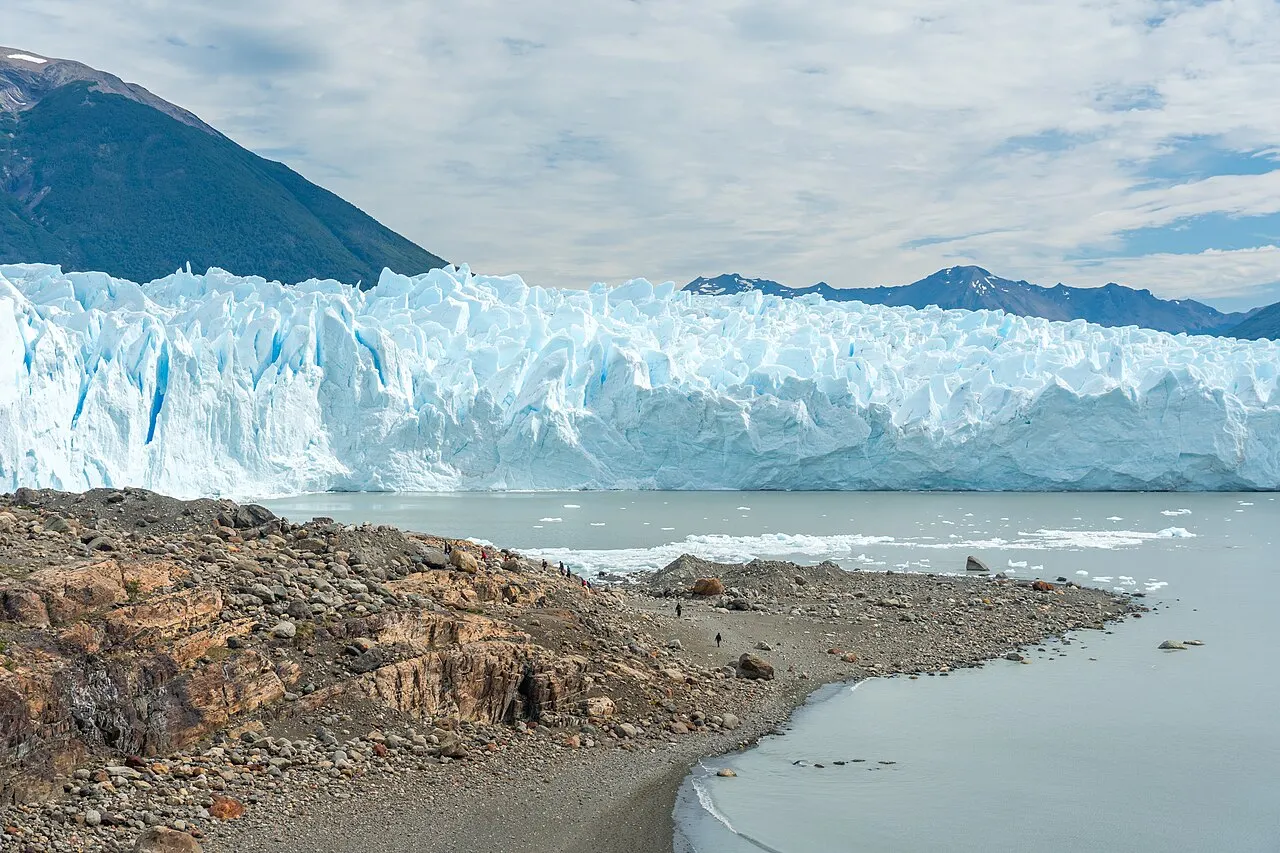
Perito Moreno Glacier
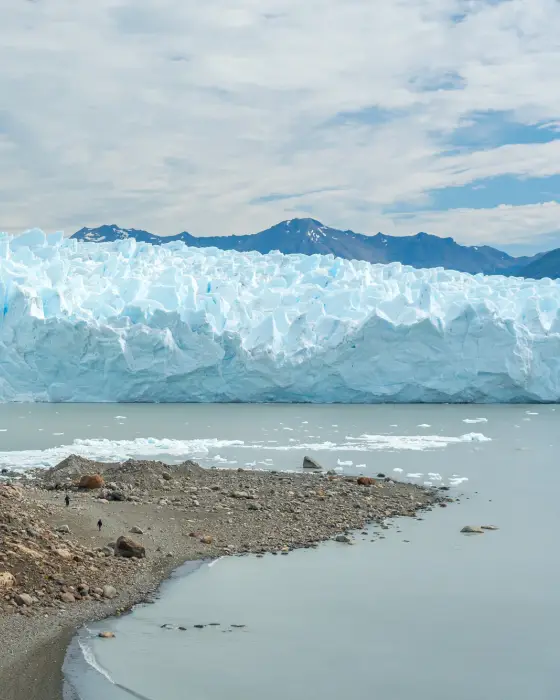
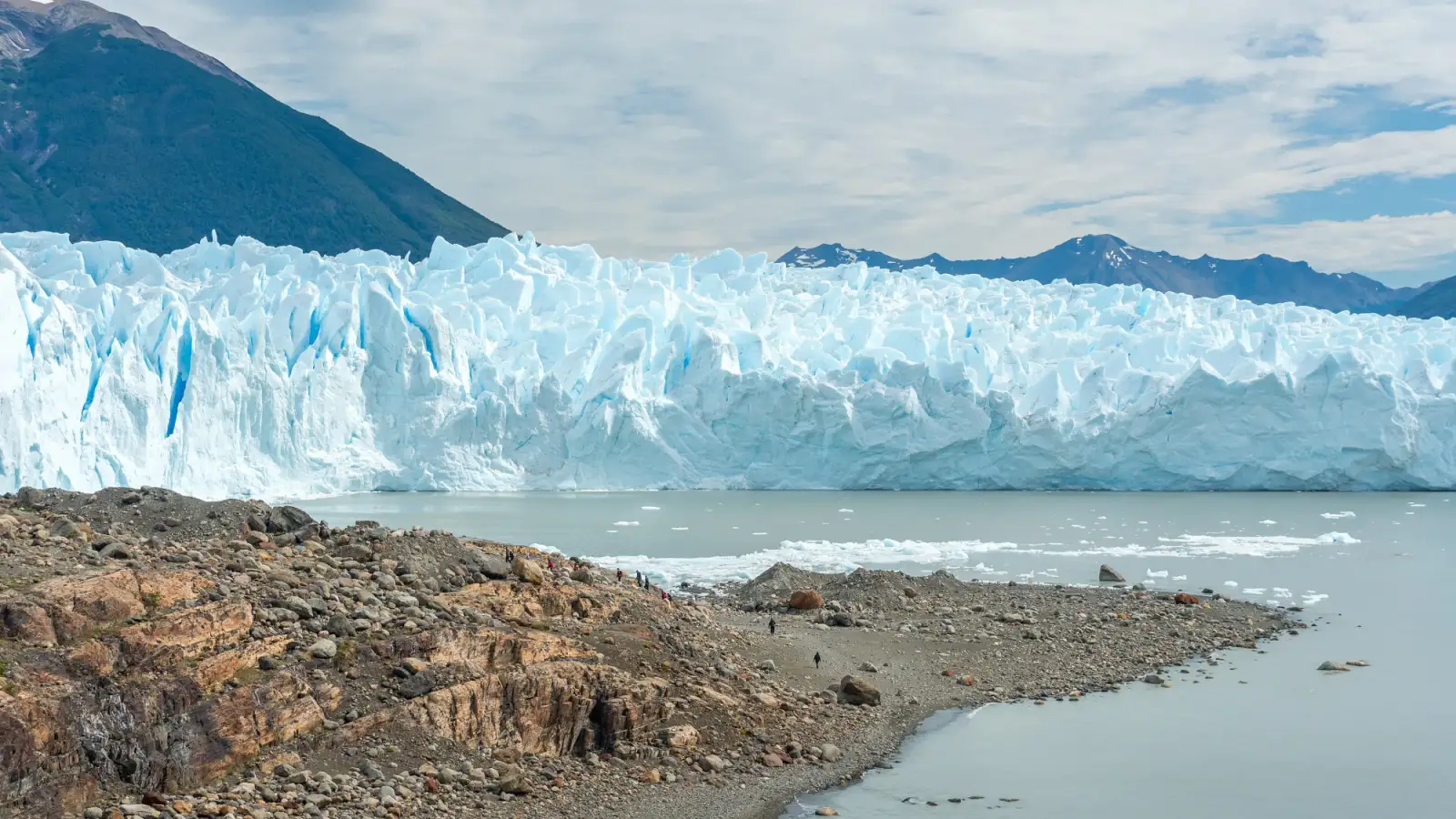
With 254 km² and a front about 70 m above the water, the Perito Moreno is seen head-on from the walkways, a set of six paths at different levels on the Magallanes Peninsula, 80 km west of town. The Senda Central (600 m, about 1 h) and the Senda Accesible (565 m, about 30 min) suit those with little stamina; the Senda Inferior (1,100 m, about 2 h, the most demanding) descends to the balcony closest to the front, and the Senda de la Costa (1,117 m, about 1.5 h) follows the Canal de los Témpanos. Ice falls are frequent and throw splinters dozens of meters, so going past the railings is forbidden. The rupture of the Brazo Rico ice dam happens from time to time and has no predictable date. The park ticket is paid separately, and the sector has hours: 8 a.m. to 6 p.m. from September to April, 9 a.m. to 4 p.m. from May to August.
The reason for the trip: a front about 70 m high, seen from walkways a few meters from the Canal de los Témpanos, with frequent ice falls; buy the park ticket beforehand at ventaweb.apn.gob.ar.
Check access
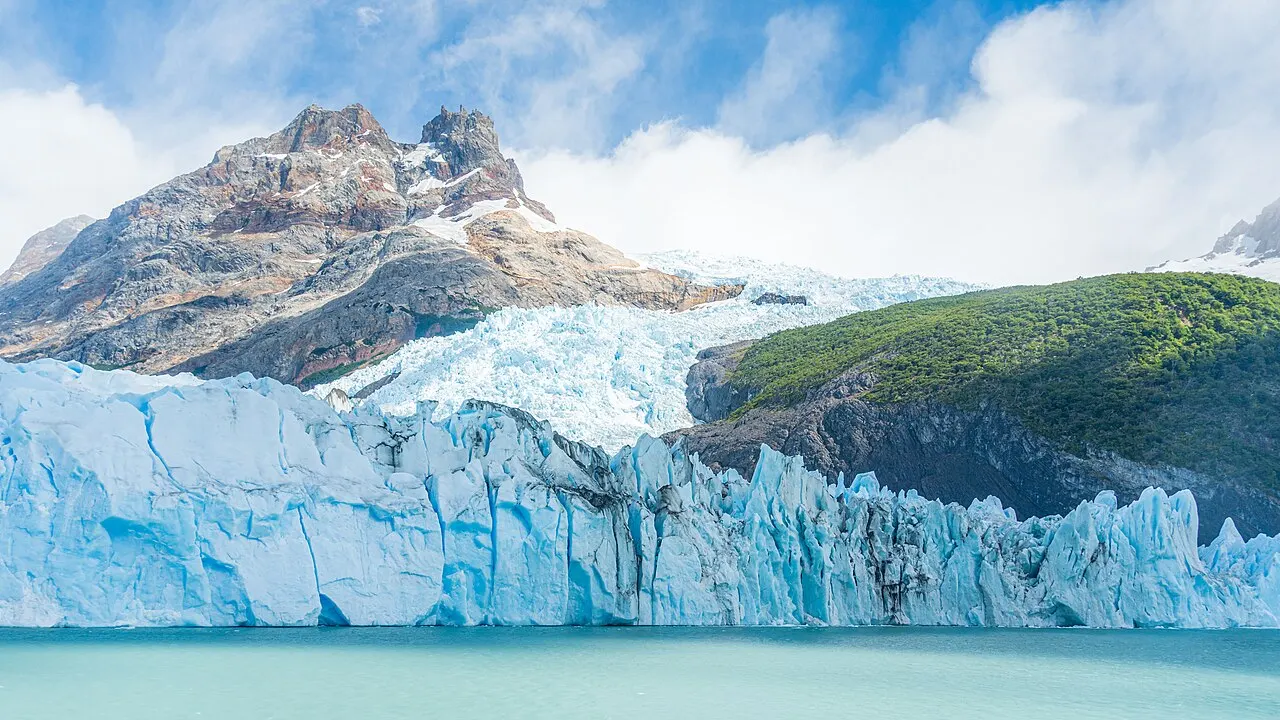
Spegazzini Glacier
The glacier with the tallest front in the park, up to 135 m, descends from the Southern Patagonian Ice Field to the Brazo Spegazzini of Lago Argentino. It can only be reached by boat from Puerto Punta Bandera, 47 km west of town, on the full-day cruise that also passes the Upsala; on the Todo Glaciares tour, from Solo Patagonia, there is a landing at the refuge and the Spegazzini walkways.
Its front, up to 135 m, is the park's highest and can only be reached by boat from Punta Bandera, on the full-day cruise that also passes Upsala; the tour and park admission are paid separately.
Check access
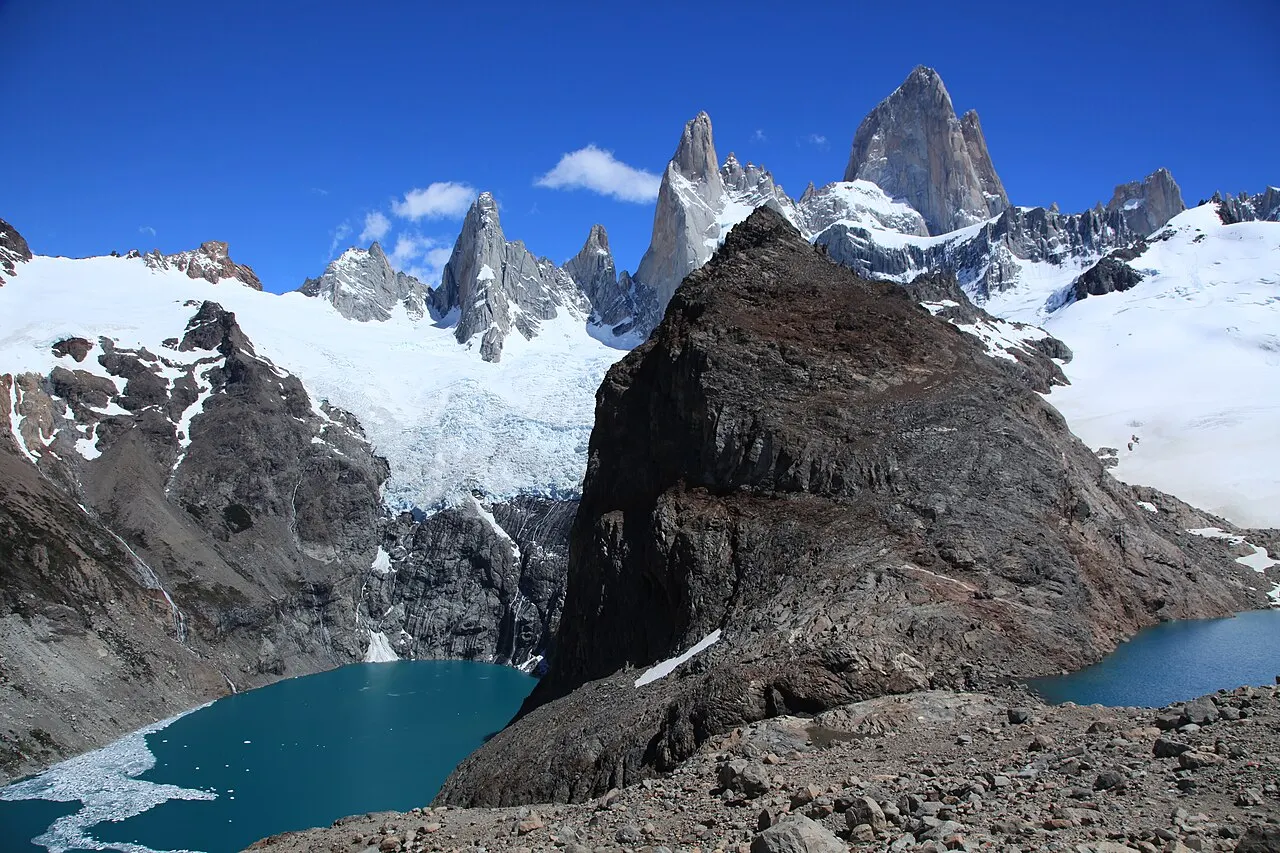
Laguna de los Tres
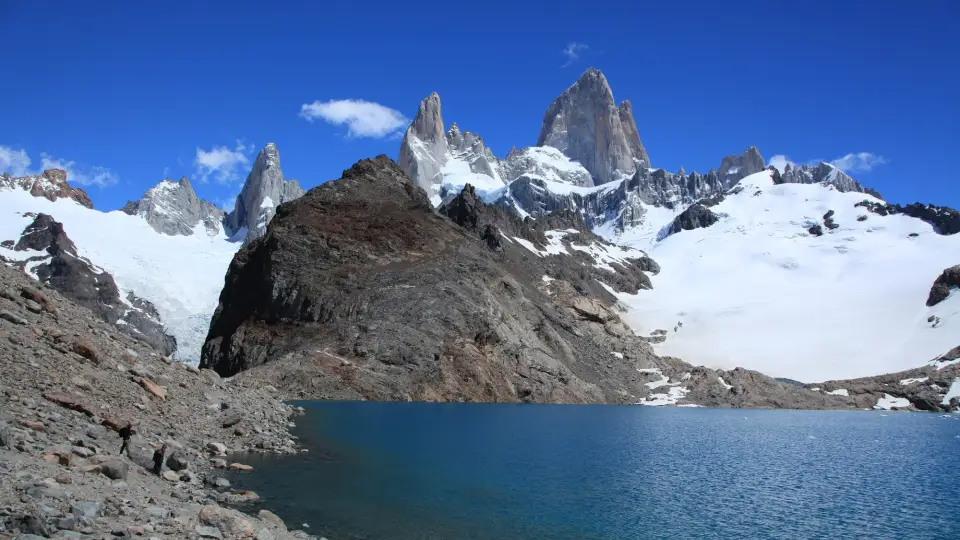
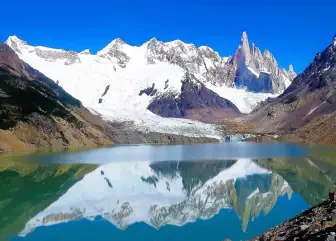
The glacial lagoon at the foot of Fitz Roy is the end of El Chaltén's best-known trail: 10 km and about 4 h one way, with 750 m of elevation gain, and the last stretch is very steep. The park brochure advises caution in rain and wind, and there is no cell signal on the trails. It is the closest view of Fitz Roy without climbing.
The closest view of Fitz Roy without climbing takes 10 km and about five hours one way, with 750 m of elevation gain and a very steep final stretch; it is the reason to spend two nights in El Chaltén.
Check access
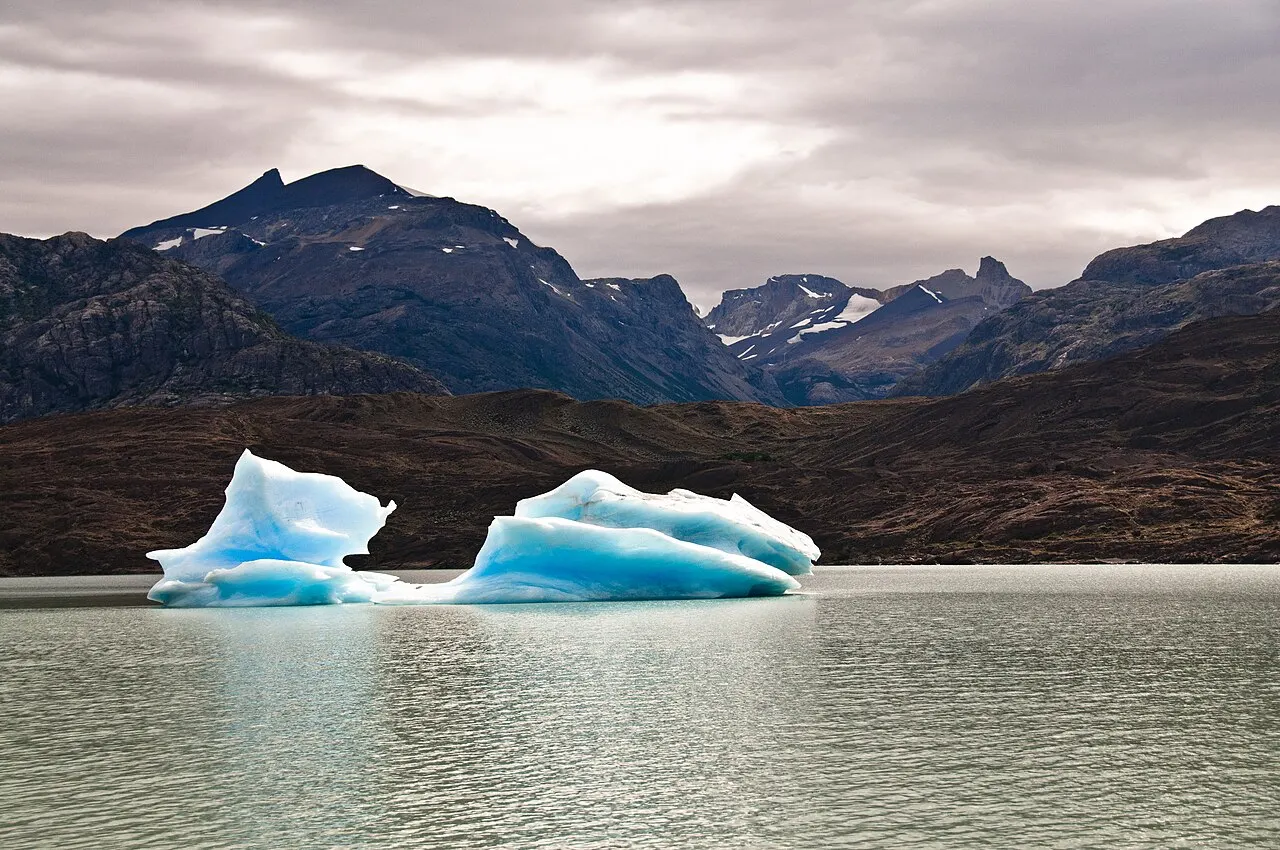
Upsala Glacier
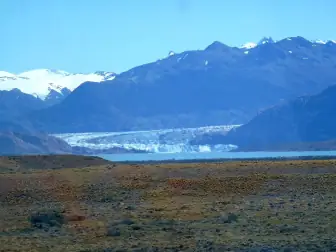
The third-largest glacier of the Southern Patagonian Ice Field, named for Uppsala University in Sweden, which funded the first studies in the area. It is also one of those retreating fastest: the retreat sped up from 2008, and the cruise passes among the icebergs it sheds. It is visited by boat, on the same cruise as the Spegazzini.
The ice field's third-largest glacier, retreating faster since 2008, is seen on the same cruise as Spegazzini, among the icebergs it sheds; it does not need a separate day.
Check access

Glaciarium
An interpretive center dedicated to Patagonian ice, opened in 2011 on a hill on the edge of town, with a view of Lago Argentino. With models, dioramas, screens, and a 3D film, it explains how a glacier forms, how the Perito Moreno's rupture works, and who the explorers of the ice field were. The visit takes 90 to 120 minutes. At the same address is the Glacio Bar, an ice bar.
In 90 to 120 minutes it explains how glaciers form and how Perito Moreno's rupture works; the best option for the afternoon after a cruise or a day of poor weather.
Check access
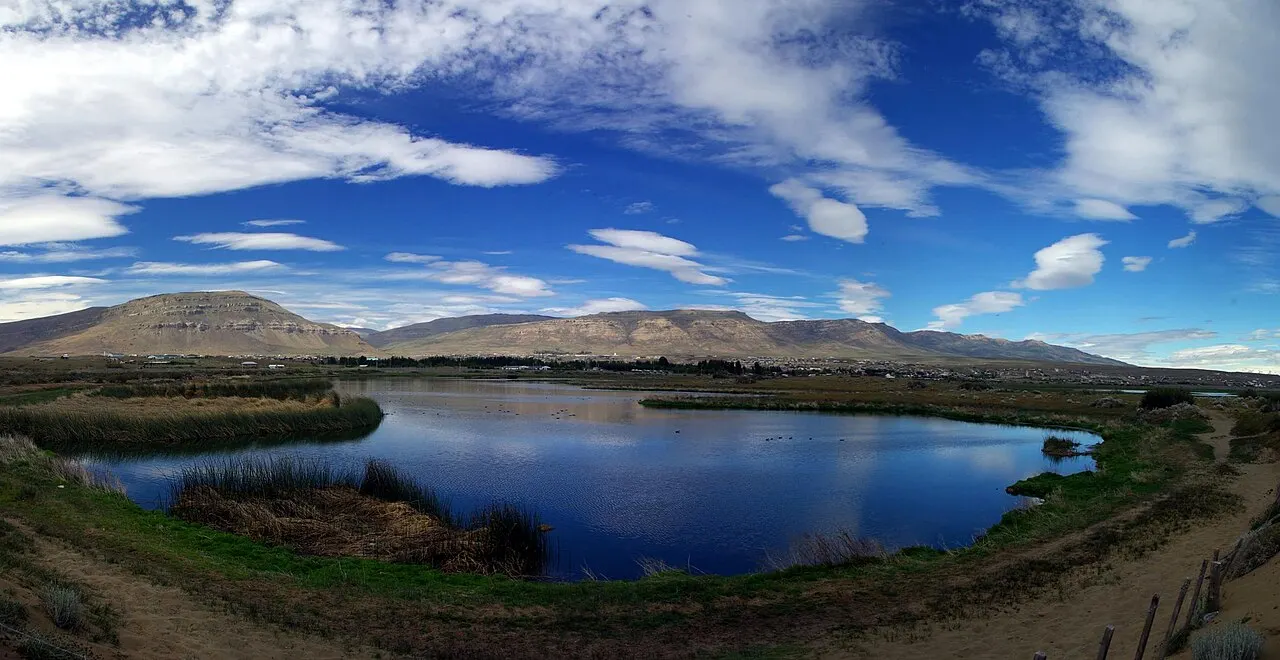
Laguna Nimez Reserve
A nature reserve on Avenida Costanera, at the edge of Lago Argentino, sought out for birdwatching. It is open year-round and is a walk from the center; it is the outing for the afternoon of arrival or the end of a tour day.
The birdwatching reserve is by the lake, a walk from the center, and fills the late afternoon on arrival day without a car or tour.
Check access

Laguna Torre
A glacial lagoon in the Cerro Torre valley, 10 km from the village, about 3.5 h each way and 250 m of elevation gain, with a view of the glacier and the mountain. Those short on time can stop at the Mirador Torre, 3 km and 1 h 15 min away.
The trail toward Cerro Torre is 10 km one way with just 250 m of elevation gain, gentler than Laguna de los Tres; it works for a second hiking day or for those stopping at Mirador Torre, 3 km along.
Check access
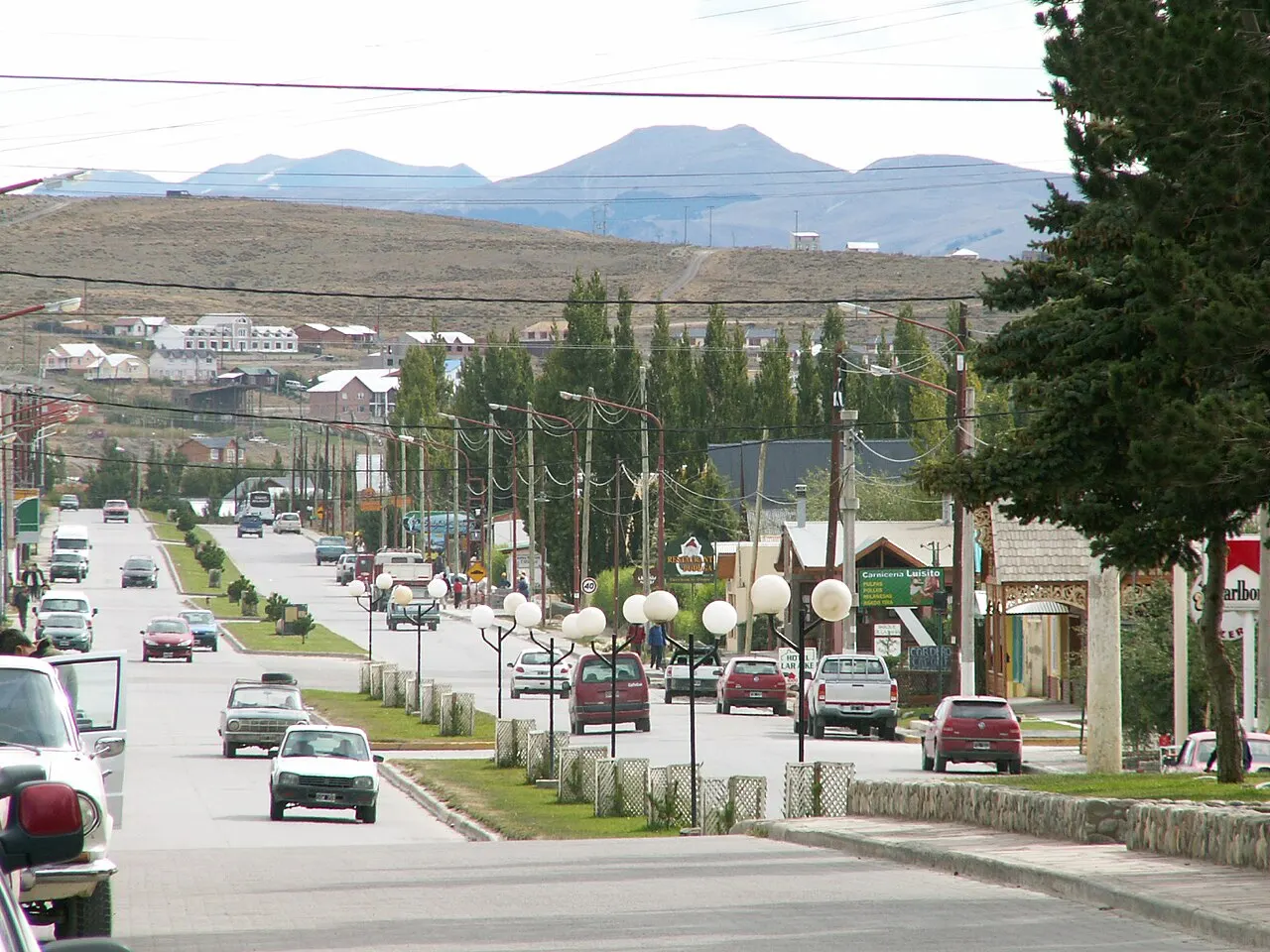
Avenida del Libertador
The town's main street, with the Paseo de los Artesanos, the tour agencies, the national park office, and the Museo Regional Horacio Echeverría. It serves as a place to buy and to meet, but it is a commercial street, with no landmark that justifies a visit of its own.
The street of agencies, Paseo de los Artesanos and the park office is useful for buying a tour and having dinner, but has no landmark worth a separate visit; you pass through it anyway.
Check access
Punta Walichu
A site with rock paintings and an interpretive walk on Ruta 11, near town, open year-round and tied to the Aonikenk occupation of the region.
The rock paintings connect the town to the Aonikenk presence and are nearby on Ruta 11, but this is a short visit for a free afternoon after the glacier and the cruise.
Check access
Nilo’s itinerary
Start with the basic programme and choose extensions for the time you have.
Plan my days in the app ↗Day 1 · The Perito Moreno from the walkways
Buy the park ticket at ventaweb.apn.gob.ar before you leave and bring the ID used for the purchase.
Leave early along Provincial Route 11: it is 80 km and about 1 h 30 min by car, or go on a tour with transfer.
Start with the Senda Central (600 m, about 1 h) to get the overview of the front and the Canal de los Témpanos.
Go down the Senda Inferior (1,100 m, about 2 h) to the balcony closest to the ice and wait for the ice falls behind the railing. Save some energy for the steps on the way back.
If you want to step onto the ice, swap this day for the Hielo & Aventura minitrekking, with crampons and a short boat ride to the base at the glacier. The press cites the 8 to 65 age range and a day of about 9 h 30 min; confirm age and schedule with the operator when booking.
Respect the hours: from September to April entry closes at 6 p.m. and you must leave by 8 p.m. Return to town and walk to the Laguna Nimez Reserve, on Avenida Costanera, open year-round; confirm the hours at +54 2902 495536.
Day 2 · The cruise to the Upsala and the Spegazzini
Go to Puerto Punta Bandera, 47 km west, by car or on the transfer sold with the tour.
Board the Todo Glaciares cruise, of about 7 h: from September to March it runs from 8:30 a.m. to 4 p.m., and from April to August, from 9:30 a.m. to 5 p.m. Bring the park ticket; on the second day, within 72 hours, it is half price.
Pass through the Brazo Upsala, among the icebergs, and get off at the Spegazzini refuge to see the front of up to 135 m from the walkways.
Back in town, visit the Glaciarium, on the hill at the edge of town, if it is still open: the visit takes 90 to 120 minutes.
Have Patagonian lamb al asador for dinner in the center and book the morning bus to El Chaltén.
Day 3 · The road to El Chaltén and the short viewpoints
Take the morning bus to El Chaltén: 220 km of pavement along Ruta 40 and Ruta 41.
Stop at the park's Ceferino Fonzo Visitor Center to check the mountain forecast and trail conditions.
In the afternoon, climb to the Mirador de los Cóndores (1 km, about 45 min, 100 m of elevation gain), with a view of the village, Fitz Roy, and Cerro Torre.
If there is still light, continue to the Mirador de las Águilas (2 km, about 1 h), with Lago Viedma and the steppe.
Sleep in El Chaltén and prepare water, food, and a waterproof layer for the long trail.
Day 4 · The Laguna de los Tres at the foot of Fitz Roy
Leave early on the Fitz Roy trail, which starts in the village.
Stop at the Mirador Fitz Roy (4 km, about 1 h 30 min) and at the Laguna Capri (4 km, about 1 h 45 min) if the weather is closing in: they are the closest views that don't require the final stretch.
In steady weather, continue to the Laguna de los Tres: 10 km and about 4 h one way, with 750 m of elevation gain and a very steep last stretch.
Come down without hurry, counting the light: the park asks that no one return at night.
Sleep in El Chaltén again.

If you stay longer
Day 5 · The Laguna Torre or the Viedma, and the way back
Walk to the Laguna Torre: 10 km and about 3 h 30 min each way, with 250 m of elevation gain, which is about 7 h round trip. With less time, stop at the Mirador Torre (3 km, 1 h 15 min each way).
Or swap the trail for the cruise to the Viedma Glacier, leaving from Bahía Túnel, 18 km from the village, from 10:30 a.m. to 2:30 p.m.
After the trail, you can only get back to El Calafate if there is a bus in the late afternoon; confirm the schedule at the terminal the day before. If there isn't one, sleep one more night in El Chaltén and do the 220 km the next morning.
Food
Patagonian lamb al asador
Meat from the same sheep estancias that made the region. The lamb is opened and roasted whole on an iron cross driven in beside the fire, slowly, and it is the regional dish of Patagonia.
Calafate
The dark blue fruit of the thorny shrub that gives the town its name. Ripe in summer, it becomes sweets, jam, syrup, and liqueur, sold all along Avenida del Libertador. One version of the Tehuelche and Selk'nam legend says that whoever tastes the calafate always returns to Patagonia.
Craft beer
There are local breweries in town, and at least one offers a guided tour with tasting year-round, listed by the Tourism Secretariat.
Mate
The infusion of yerba mate drunk from a gourd with a bombilla, common all over Argentina. On the trails, used yerba also counts as trash: the park asks that you carry it back out.
Where to eat
- Center and Avenida del Libertador · $$
Parrillas and restaurants with Patagonian lamb al asador.
- Center and Avenida del Libertador · $
Sweets, jams, and calafate liqueur in the regional shops; good for a snack and for gifts.
- El Chaltén · $
Food to carry in your pack, bought in the village before setting out: the park asks that you bring water and food for the trails.
$: snack, regional sweets, and food to carry · $$: main course at a parrilla or restaurant in the center · $$$: lamb al asador with wine at an estancia or hotel restaurant · 2026-10-15
Day trips
El Chaltén and Fitz Roy
220 km to the north, the whole stretch paved along Ruta 40 and Ruta 41, with regular daily buses. The village is the gateway to the park's North Zone, with trails that start from its streets: the Chorrillo del Salto, a 20 m waterfall 3 km away, the Mirador de los Cóndores, 1 km away, and the Laguna de los Tres and Laguna Torre, 10 km each. A day trip only reaches the short viewpoints; for the lagoons, sleep there.
Viedma Glacier from Bahía Túnel
The Solo Patagonia boat leaves from Bahía Túnel, 18 km from El Chaltén, and lasts about 4 h. Those in El Calafate can take the full-day version, bus included, from 7:30 a.m. to 7:30 p.m., which also stops in El Chaltén and at the Chorrillo del Salto. From October to March it runs every day; from April to September, on odd-numbered days of the month and on Saturdays.
Where to begin
The Perito Moreno from the walkways
Buy the park ticket at ventaweb.apn.gob.ar before you leave and bring the ID used for the purchase.
The cruise to the Upsala and the Spegazzini
Go to Puerto Punta Bandera, 47 km west, by car or on the transfer sold with the tour.
The Laguna de los Tres at the foot of Fitz Roy
Leave early on the Fitz Roy trail, which starts in the village.
The Laguna Torre or the Viedma, and the way back
Walk to the Laguna Torre: 10 km and about 3 h 30 min each way, with 250 m of elevation gain, which is about 7 h round trip. With less time, stop at the Mirador Torre (3 km, 1 h 15 min each way).
Money
The currency is the Argentine peso (ARS), written with the same “$” as the dollar. At the reference rate of September 24, 2026, one dollar was worth about ARS 1,517; peso prices change fast, so treat the amounts below as a dated reference. The biggest expenses are the park and the tours. Since June 1, 2026, the Los Glaciares day pass costs ARS 50,000 at the general rate, ARS 25,000 at the national rate, and ARS 8,000 for province residents; the second day, within 72 hours of the first entry, is 50% off, and there are 3-day (ARS 100,000 at the general rate) and 7-day (ARS 175,500) Flexipasses. The El Chaltén gate appears in the official table on its own line, with the same values; the page does not say whether a pass bought for one sector is valid in the other. Children up to 6 do not pay. The ticket is bought at ventaweb.apn.gob.ar, with a passport or ID in hand, and no tour includes it. According to Hielo & Aventura's 2025/2026 rates cited by the press in May 2026, the minitrekking on the Perito Moreno cost ARS 320,000 per adult, or ARS 384,000 with transfer; the 2026/2027 season may have a different rate. On the Solo Patagonia website, in October 2026, the Todo Glaciares cruise cost ARS 330,000 per adult, plus ARS 65,000 for the transfer from town.
Getting there and around
From the airport to town, 23 km
Comandante Armando Tola International Airport (FTE) is 23 km east of the center, along Provincial Route 11. It receives daily flights from Buenos Aires and other Argentine cities, Ushuaia among them, and seasonal international flights; check the month's frequency. The shared transfer by Chaltén Travel between the airport and the hotel cost ARS 14,000 per person, at a rate valid from January 2026 to April 2027. There are also taxis and remises at the exit.
To the Perito Moreno and Punta Bandera
The walkways are 80 km from town on paved Provincial Route 11, about 1 h 30 min by car. Puerto Punta Bandera, where the cruises to the Upsala and the Spegazzini leave, is 47 km away on routes 11 and 8. Those who don't drive go on a tour or on a transfer from the agencies; Solo Patagonia sells the transfer to the port separately. At the glacier there are two parking lots: the lower one for private cars and the upper one for cars carrying visitors with reduced mobility.
El Chaltén and Chile
El Chaltén is 220 km away, the whole stretch paved, along Ruta 40 and Provincial Route 41, with regular daily buses between the two terminals. From the El Calafate terminal, buses leave for other cities in Argentina and for Puerto Natales and Punta Arenas, in Chile. In town, three urban lines (A, A1, and B) serve the neighborhoods, but the center is walkable. Renting a car gives freedom for the glacier and El Chaltén; check road conditions before leaving, especially in winter.
Safety
El Calafate is a small, quiet town, and the real risks are in the park. On the Perito Moreno walkways, the surface is slippery in rain, ice, or snow; walk with your hands free, hold the railing on the steps, and do not go past the barriers, because ice splinters fly dozens of meters. On the El Chaltén trails, the weather changes quickly, the last stretch of the Laguna de los Tres is very steep, and there is no cell signal; bring water, food, a flashlight, rain gear, gloves, and sunscreen. The yellowjacket, an invasive species, stings more than once and is dangerous for the allergic: do not swat at it and keep food covered. Trekking and climbing in remote areas require registration with the park. Emergencies in the park: (02902) 492504 at the walkways and (02902) 497010 at the park office; in the North Zone, +54 9 2966 15383599.
Etiquette tips
Stay behind the walkway railings
Climbing over or going past the barriers at the Perito Moreno is forbidden: ice falls throw splinters dozens of meters. The benches are for sitting, not for climbing on.
No drones in the park
Drones are prohibited in Los Glaciares, on the walkways and on the El Chaltén trails.
Take all your trash back, including mate yerba
The park asks that paper, fruit peels, and used yerba go back with you. The latrines are not a place for trash.
No fires and no pets
In the North Zone, making fires is forbidden; camp stoves only in camping areas and at designated viewpoints. Pets are not allowed in the park.
Keep your distance from wildlife
The huemul, an endangered deer, lives in the park's forests: if you meet one, stay far away, stay quiet, and tell the park ranger. With a puma, do not run or turn your back; if it seems aggressive, raise your arms and shout.
Mistakes to avoid
Treating El Chaltén as a day trip for a hike
The Laguna de los Tres is 10 km from the village, about 4 h one way, and El Chaltén is 220 km from El Calafate. Adding road and trail, it doesn't fit in a day. Sleep in El Chaltén.
Forgetting the park ticket
No tour includes the Los Glaciares entry, charged on Ruta 11 and at the El Chaltén gate. Buy it at ventaweb.apn.gob.ar and bring the ID used for the purchase.
Thinking the minitrekking suits everyone
The walk on the ice with crampons from Hielo & Aventura has an age limit (the range the press cites is 8 to 65; confirm with the operator) and is not recommended for pregnant women or for anyone with limited mobility. For everyone else, the walkways and the boat show the same glacier.
Reaching the glacier in the late afternoon in winter
From May to August, entry to the Perito Moreno sector closes at 4 p.m. Leaving town late, 80 km away, leaves little time on the walkways.
Coming back from the trail in the dark
The park brochure asks you to estimate your walking time well and not to return at night. There is no cell signal on the North Zone trails; agree on a meeting point and time with whoever is hiking with you.
Useful phrases
¿Cuánto sale la entrada al parque?
How much is the park entrance? In Argentine Spanish, “sale” is the usual way to ask a price
¿A qué hora sale el bus a El Chaltén?
What time does the bus to El Chaltén leave?
¿Hay lugar en la excursión de mañana?
Is there room on tomorrow's tour?
¿Aceptan tarjeta?
Do you take cards?
¿Cómo está el sendero hoy?
How is the trail today? The question to ask at the Visitor Center before heading out
¿Vos sabés dónde para el transfer?
Do you know where the transfer stops? “Vos” is the usual form of “you” in Argentina
Where to stay
- Center and Avenida del Libertador · First trip, without a car · $$: The agencies, the restaurants, and the departure points for transfers to the glacier and to Punta Bandera are a few blocks away, on flat ground.
- Costanera and Bahía Redonda · Those who want quiet and a view of the lake · $$: It is near the Laguna Nimez and the waterfront, farther from the bustle of the avenue. From the center, it is a walk.
- El Chaltén · Those who will do the Fitz Roy and Torre trails · $$: The trails start from the village on foot. Sleeping there is the only way to do the Laguna de los Tres without adding 440 km of road to the same day.
$: hostel bed · $$: hotel or hostería in the center · $$$: hotel with a lake view, or an estancia · 2026-10-15
Districts
Center and Avenida del Libertador
The main avenue concentrates hotels, tour agencies, restaurants, gear shops, and the Paseo de los Artesanos. It is where tours are bought and where the transfers to the glacier and to Punta Bandera depart. Everything is a few blocks apart, on flat ground.
Costanera and Bahía Redonda
The shore of Lago Argentino, with Avenida Costanera, the Laguna Nimez reserve, and Bahía Redonda, a shallow bay where the Club Andino organizes ice skating in winter. It is the quietest part for a walk at the end of the afternoon.
Magallanes Peninsula
The road to the glacier, Provincial Route 11, enters the park and runs along the peninsula to the Perito Moreno walkways, 80 km from town. It is also where the minitrekking boards.
El Chaltén
The village of 1,865 residents (2022 census) at the foot of Fitz Roy, 220 km from town, with lodging, restaurants, and the park's Ceferino Fonzo Visitor Center. The North Zone trails begin in the village streets.
History
before the 20th century · The Aonikenk and the name Kehek Aike
The Aonikenk, the southern Tehuelche people, hunted guanaco on the steppe and called the place Kehek Aike. For them Cerro Chaltén, now Fitz Roy, was a sacred mountain. There are rock paintings at Punta Walichu, on the way out of town along Ruta 11.
1877 · Moreno renames the Chaltén
The explorer Francisco Pascasio Moreno, the Perito Moreno, named the Chaltén Monte Fitz Roy, in honor of the commander of HMS Beagle. He was also the one who named the lake Argentino, for the color of its water.
1879–1899 · Three names for the same glacier
Captain Juan Tomás Rogers sighted the glacier in 1879 and called it Francisco Gormaz; Rudolph Hauthal called it Bismarck; in 1899 Lieutenant Iglesias gave it the name that stuck, Perito Moreno.
1921 · The strikes and the La Anita estancia
The hands on the wool estancias of Santa Cruz went on strike against their working conditions. In December 1921, at the La Anita estancia, between El Calafate and the Perito Moreno, the Army shot rural workers. Since 2010 a cenotaph at the site has been a place of memory.
1927 · Official founding
On December 7, 1927 the Argentine government founded the settlement at the point where the wool carts stopped for supplies, on the south shore of Lago Argentino.
1937–1946 · The national park and its headquarters in El Calafate
Los Glaciares National Park was created in 1937. Between 1943 and 1946, the Administración de Parques Nacionales built the park headquarters in town and brought electric light, the first cinema, roads, bridges, and the first inn to a settlement of about 100 residents.
1981 · World Heritage Site
UNESCO declared Los Glaciares National Park a World Heritage Site. It is the largest protected area in the Argentine national system.
1985 · El Chaltén is born
On October 12, 1985 the province founded El Chaltén at the foot of Fitz Roy, to settle a mountain zone where stretches of the border were still disputed with Chile.
2000 · The airport
The terminal of Comandante Armando Tola airport opened in November 2000. With it, and with the peso's devaluation in the early 2000s, tourism grew fast, and the town's population went from 6,410 in 2001 to 16,655 in 2010.
2011 · The Glaciarium
The Glaciarium opened, an interpretive center dedicated to the Southern Patagonian Ice Field, on a hill on the edge of town, with a view of Lago Argentino.
2019–2024 · The Perito Moreno begins to thin
Considered stable for decades, the Perito Moreno began losing thickness faster. A study published in Nature measured the lowering of the surface near the front at 0.34 m a year between 2000 and 2019 and at 5.5 m a year between 2019 and 2024.
2022 · A town of 22,000
The census counted 22,844 residents, against 16,655 in 2010 and 6,410 in 2001. It is the fifth-largest town in Santa Cruz province.
Complete history
Before the town: steppe, guanaco, and wool
The south shore of Lago Argentino was Aonikenk territory, the Tehuelche people who hunted guanaco on the steppe and called the place Kehek Aike. When Francisco Moreno traveled through the region in the 1870s, he gave names that stuck: the lake became Argentino, for the color of its water, and the Chaltén, a sacred mountain to the Aonikenk, became Fitz Roy. In the early 20th century the land was divided into estancias of Corriedale and Merino sheep, and the wool went down by cart to the Atlantic ports. The town was born from one of those cart stops, and its name comes from the calafate, the thorny shrub with dark blue fruit whose resin was used to caulk boats.
1921: the estancia strikes
The wool estancias also explain the hardest episode in the region's history. Between 1920 and 1922 the rural hands of Santa Cruz went on strike against their working conditions, and the national government sent in the Army. At the La Anita estancia, between El Calafate and the Perito Moreno, the largest shooting of workers took place, in December 1921. The story became known as Rebellious Patagonia, through the book by Osvaldo Bayer and the film by Héctor Olivera, and since 2010 a cenotaph at the estancia has marked the site as a place of memory.
From national park to airport
El Calafate was founded in 1927, but it was the park that made it a town. Created in 1937, Los Glaciares set up its headquarters in the settlement in the 1940s and brought light, roads, and the first inn to a place of about 100 residents. Tourism began to grow in the 1970s, and the leap came in 2000, with the airport, followed by the peso's devaluation in the early 2000s. The population went from 6,410 in 2001 to 22,844 in 2022. In 1985, 220 km to the north, the province founded El Chaltén to hold the border with Chile, and the village became the base for anyone who comes to hike and climb on Fitz Roy.
The ice we measure today
The park protects the Argentine side of the Southern Patagonian Ice Field, a cap of about 12,500 km² shared with Chile, from which 48 main glaciers descend. The Upsala has been retreating since it was first documented and sped up from 2008. The Perito Moreno was the known exception, with its front advancing and retreating in cycles and the ruptures of the ice dam in the Brazo Rico recorded from 1917 to 2018. A study published in Nature showed that, between 2019 and 2024, the surface near the front began to drop 5.5 m a year, against 0.34 m a year in the previous period.
Geography and shape of the city
The shore of Lago Argentino
El Calafate sits on the south shore of Lago Argentino, at about 199 m above sea level, between the dry steppe to the east and the mountain range to the west. The lake covers 1,415 km², is the largest of the big Patagonian lakes lying entirely in Argentina, and reaches about 500 m deep; it drains to the Atlantic through the Santa Cruz River. The town stretches along Avenida del Libertador, parallel to the shore, with the shallow Bahía Redonda bay and the Laguna Nimez reserve at the water's edge.
The ice field and the arms of the lake
To the west, the Southern Patagonian Ice Field releases glaciers that come down to the arms of the lake. The Perito Moreno, at 254 km², reaches the water between the Brazo Rico and the Canal de los Témpanos, opposite the Magallanes Peninsula, 80 km from town on Provincial Route 11. Farther north, the Brazo Norte splits into the Brazo Upsala and the Brazo Spegazzini, which can only be reached by boat from Puerto Punta Bandera, 47 km away. Lago Argentino and the front of the Perito Moreno sit only 177 m above sea level, and it is that low altitude that puts such large glaciers within reach of visitors.
Steppe, forest, and mountain
In a few kilometers the landscape changes three times. Near town it is steppe, with tough grasses, calafate, and neneo, plants adapted to little rain and to the strong wind that dries out leaves. Beside the glaciers and lakes grow forests of lenga, ñire, and guindo; the lenga and the ñire turn red in early autumn. Above 1,000 m comes the high mountain. The town's climate is cold and dry, with about 161 mm of rain a year, and the strong steppe wind goes along on any outdoor outing.
El Chaltén and the North Zone
220 km to the north, on paved road, El Chaltén lies in the valley of the río de las Vueltas, beside Lago Viedma, at the foot of Fitz Roy (3,405 m) and Cerro Torre (3,102 m). The trails start on foot from the village. The Viedma Glacier, the largest in Argentina, descends to Lago Viedma, and the boat leaves from Bahía Túnel, 18 km from the village.
Lago Argentino and the front of the Perito Moreno sit 177 m above sea level, and that is why a glacier this size can be seen from a walkway, with no mountain to climb.
Culture
A town made by the park
El Calafate lives from tourism and is organized around it: the agencies cluster on Avenida del Libertador, and that is where buses and transfers to the glacier and to Punta Bandera leave early. The Administración de Parques Nacionales is at the origin of the modern town, and the park office is still on the same avenue. The Glaciarium turned ice science into a rainy-day activity, and the Fiesta Nacional del Lago Argentino, in February, is the town's festival.
Aonikenk, estancias, and memory
The names tell the layers. Kehek Aike was the Aonikenk name for the place, and Chaltén the name of the sacred mountain that maps called Fitz Roy. The wool estancias left behind lamb, shearing sheds, and the memory of the 1921 strikes, recalled in monuments in several towns of the province, El Calafate among them, and at the cenotaph on the La Anita estancia.
El Chaltén, national capital of trekking
El Chaltén presents itself as the Capital Nacional del Trekking, and in February it celebrates the Fiesta Nacional del Trekking. The village draws hikers and climbers to the granite walls of Fitz Roy and Cerro Torre; for climbing and trekking in remote areas, registration with the park is mandatory.
One version of the Tehuelche and Selk'nam legend says that whoever tastes the calafate fruit always returns to Patagonia.
Festivals and events
Fiesta Nacional del Lago Argentino, February
The town's national festival, in summer. Check the year's dates with the Tourism Secretariat (+54 2902 491090).
Fiesta Nacional del Trekking, February
In El Chaltén, the festival of the Capital Nacional del Trekking, at the peak of the hiking season.
Skating on Bahía Redonda, winter
When the shallow bay freezes, the Club Andino Lago Argentino organizes ice skating on Bahía Redonda. It depends on how cold each year is.
Books and films
La Patagonia rebelde (1974), directed by Héctor Olivera
The film about the strikes of the rural hands of Santa Cruz between 1920 and 1922, with exteriors shot in the province. It was banned by Isabel Perón's government in October 1974 and only returned to screens with democracy. It explains the origin of the estancias around El Calafate and the memory of the La Anita estancia.
La Patagonia rebelde, by Osvaldo Bayer
Bayer's historical investigation into the same strikes, published in the 1970s under the title Los vengadores de la Patagonia trágica and later collected as La Patagonia rebelde. It is the source of the film and the book that made the 1921 shooting known.
Frequently asked questions
El Calafate: How do you get from the airport to the center?
Comandante Armando Tola International Airport (FTE) is 23 km east of the center; the shared transfer by Chaltén Travel cost ARS 14,000 per person, at a rate valid from January 2026 to April 2027, and there are also taxis and remises at the exit.
El Calafate: How much is the entrance to Los Glaciares National Park?
Since June 1, 2026, the day pass costs ARS 50,000 at the general rate, and the second day, within 72 hours of the first entry, is 50% off. It is bought at ventaweb.apn.gob.ar, and no tour includes it.
El Calafate: How many days should you stay?
Four days, five if you can: two in El Calafate, for the Perito Moreno and the cruise to the Upsala and the Spegazzini, and the rest in El Chaltén. Those with three days must choose between the glacier and the cruise from El Calafate, or the glacier and two nights in El Chaltén.
El Calafate: Can you do El Chaltén as a day trip?
El Chaltén is 220 km to the north, the whole stretch paved, with regular daily buses. A day trip only reaches the short viewpoints; for the Laguna de los Tres and Laguna Torre, 10 km each, sleep there.
El Calafate: When is the best time to go?
October to April, when the cruise to the Upsala and Spegazzini runs every day. In El Chaltén, check trail conditions and snow at the Visitor Center. From May to August the glacier sector closes earlier, July’s average high is 5.2 °C and the cruise runs every other day.
Other cities in the country
Argentina ↗- Days
- 3–4
- When
- Mar–May · Sep–Nov
- Per person/day
- Average 90–140 USDMid-range · per person/day
Cost scope
Per person per day: accommodation, meals, urban transport, visits and a small allowance for extras. Flights excluded; larger purchases vary. Editorial estimate, not a quote.
- Days
- 3
- When
- Jan–Mar · Dec
- Per person/day
- Average 90–160 USDMid-range · per person/day
Cost scope
Per person per day: accommodation, meals, urban transport, visits and a small allowance for extras. Flights excluded; larger purchases vary. Editorial estimate, not a quote.
- Days
- 4
- When
- Mar–Apr · Nov
- Per person/day
- Average 70–100 USDMid-range · per person/day
Cost scope
Per person per day: accommodation, meals, urban transport, visits and a small allowance for extras. Flights excluded; larger purchases vary. Editorial estimate, not a quote.
- Days
- 4–5
- When
- Mar–May · Oct–Nov
- Per person/day
- Average 83,200 ARSMid-range · per person/day
Cost scope
Per person per day: accommodation, meals, urban transport, visits and a small allowance for extras. Flights excluded; larger purchases vary. Editorial estimate, not a quote.
- Days
- 6–7
- When
- Apr–Nov
- Per person/day
- Average 66,100 ARSMid-range · per person/day
Cost scope
Per person per day: accommodation, meals, urban transport, visits and a small allowance for extras. Flights excluded; larger purchases vary. Editorial estimate, not a quote.
- Days
- 3
- When
- Jan–Apr · Oct–Dec
- Per person/day
- Average 95,400 ARSMid-range · per person/day
Cost scope
Per person per day: accommodation, meals, urban transport, visits and a small allowance for extras. Flights excluded; larger purchases vary. Editorial estimate, not a quote.